



G protein-coupled Bile Acid Receptor 1 Agonist
-
Allolithocholic acid (Standard)
 0 ImagesCat. No.: HY-143712RCAS No.: 2276-94-0
Allolithocholic acid (Standard) is the analytical standard of Allolithocholic acid (HY-143712). This product is intended for research and analytical applications. Allolithocholic acid is an orally active metabolite of Lithocholic acid (HY-B0172). Allolithocholic acid is a dual GPBAR1 agonist (EC50 = 2.7 μM) and RORγt inverse agonist (IC50 = 3.4 μM). Allolithocholic acid modulates immune and metabolic pathways, regulates immune cell polarization, prevents M1 macrophage and Th17 CD4 cell polarization. Allolithocholic acid improves insulin sensitivity, reduces liver lipid accumulation, reverses liver immunological, inflammatory and metabolic signaling dysregulation, restores bile acid homeostasis, adipose tissue histopathology/function, and intestinal microbiota composition, modulates intestinal immunity. Allolithocholic acid can be used for the researches of cancer, inflammayion, immunology and metabolic disease.
-
Ursodeoxycholic acid-13C
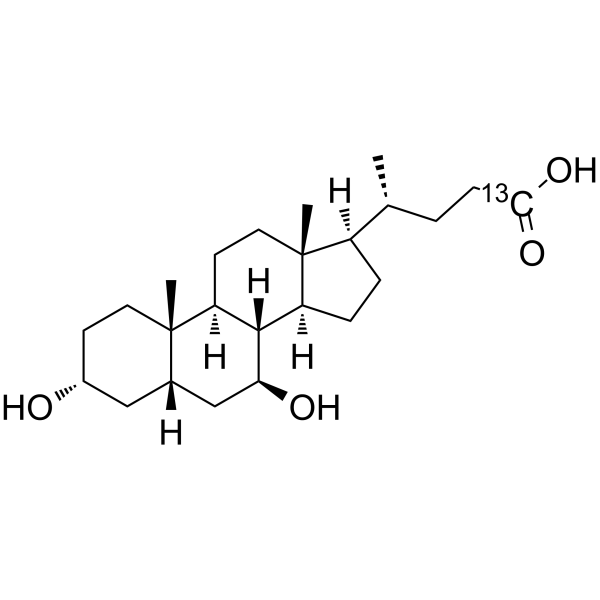 0 ImagesCat. No.: HY-13771S1CAS No.: 63296-46-8Synonyms: Ursodeoxycholate-13C; Ursodiol-13C; UDCA-13C
Ursodeoxycholic acid-13C is the 13C labeled Ursodeoxycholic acid. Ursodeoxycholic acid (Ursodeoxycholate) is a secondary bile acid issued from the transformation of (cheno)deoxycholic acid by intestinal bacteria, acting as a key regulator of the intestinal barrier integrity and essential for lipid metabolism. Ursodeoxycholic acid acts as signaling molecule, exerting its effects by interacting with bile acid activated receptors, including G-protein coupled bile acid receptor 5 (TGR5, GPCR19) and the farnesoid X receptor (FXR). Ursodeoxycholic acid can be used for the research of a variety of hepatic and gastrointestinal diseases. Orally active.
-
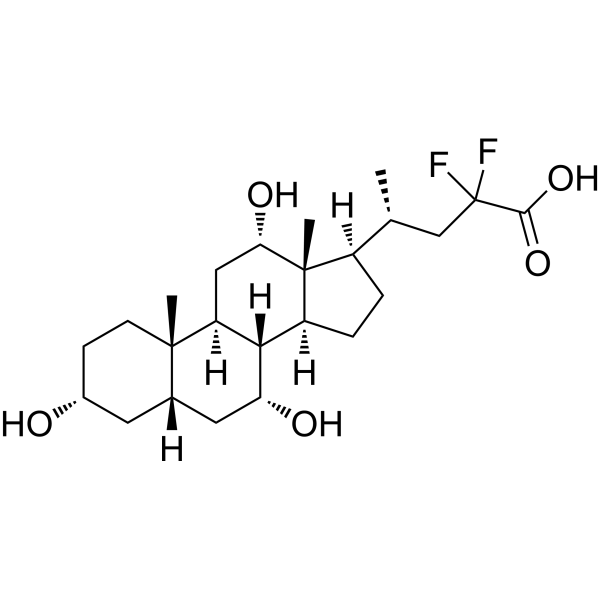
LT-188A
 0 ImagesCat. No.: HY-173466CAS No.: 2922530-99-0
LT-188A is a potent TGR5 agonist with an EC50 of 23 μM. LT-188A decreases the levels of inflammatory mediators in macrophages.
-
RO5527239
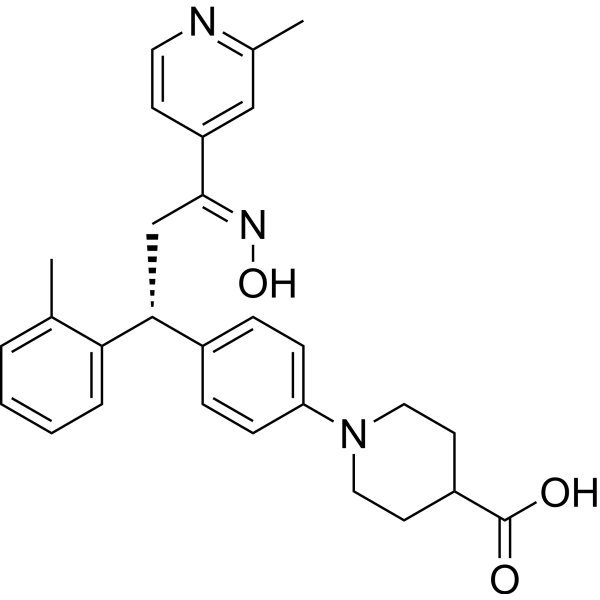 0 ImagesCat. No.: HY-116453CAS No.: 1354812-99-9
RO5527239 is an orally active TGR5 agonist, that induces a stimulatory response from intestinal L cells and specificially secrets the endogenous hormone GLP-2.
-
TGR5 agonist 2
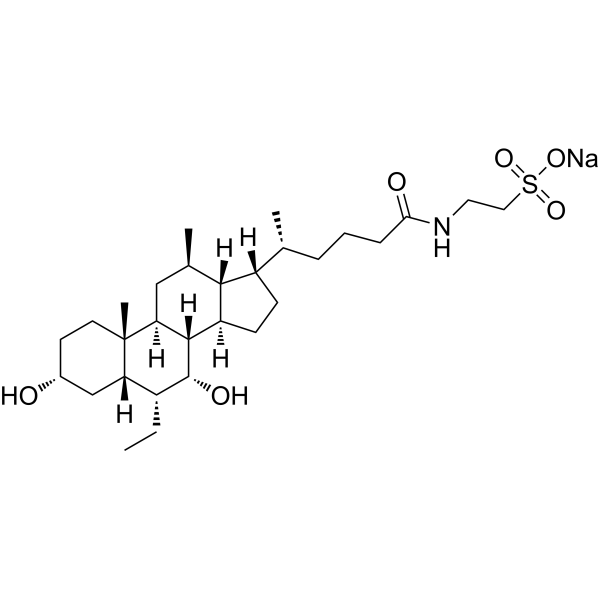 0 ImagesCat. No.: HY-149808CAS No.: 3027426-06-5
TGR5 agonist 2 (compound 19) is a potent TGR5 agonist with an EC50 value of 0.27 µM.
-
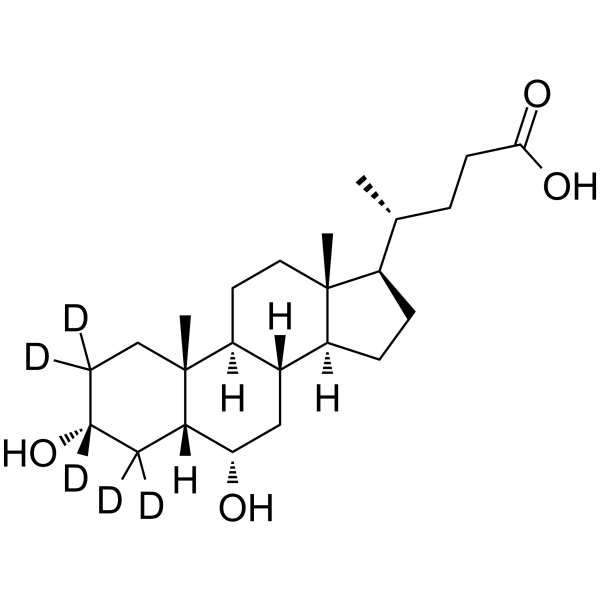
Allolithocholic Acid-d4
 0 ImagesCat. No.: HY-143712S1Synonyms: 3α-hydoxy-5α-Cholaoic Acid-d4, allo-LCA-d4
Allolithocholic Acid-d4 (3α-hydoxy-5α-Cholaoic Acid-d4, allo-LCA-d4) is deuterium labeled Allolithocholic acid (HY-143712). Allolithocholic acid is an orally active metabolite of Lithocholic acid (HY-B0172). Allolithocholic acid is a dual GPBAR1 agonist (EC50 = 2.7 μM) and RORγt inverse agonist (IC50 = 3.4 μM). Allolithocholic acid modulates immune and metabolic pathways, regulates immune cell polarization, prevents M1 macrophage and Th17 CD4 cell polarization. Allolithocholic acid improves insulin sensitivity, reduces liver lipid accumulation, reverses liver immunological, inflammatory and metabolic signaling dysregulation, restores bile acid homeostasis, adipose tissue histopathology/function, and intestinal microbiota composition, modulates intestinal immunity. Allolithocholic acid can be used for the researches of cancer, inflammayion, immunology and metabolic disease.
-
TGR5 agonist 3
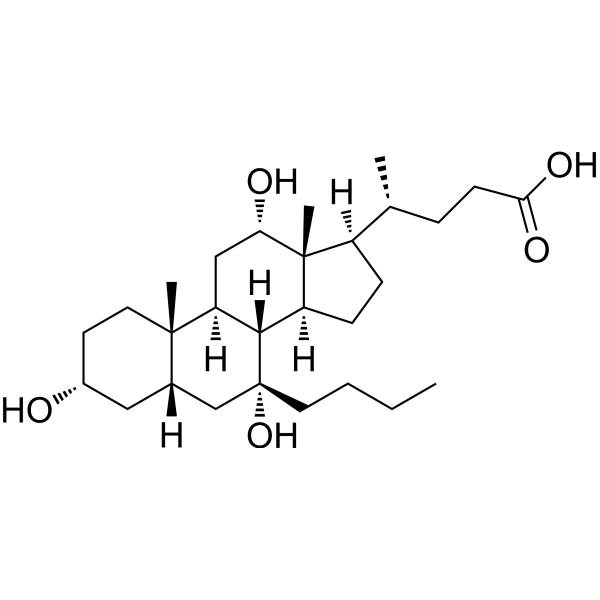 0 ImagesCat. No.: HY-155306CAS No.: 2148317-51-3
TGR5 agonist 3 (compound 8), a Cholic acid derivative, is a selective TGR5 agonist with an EC50 of 5 μM.
-
TGR5 agonist 1
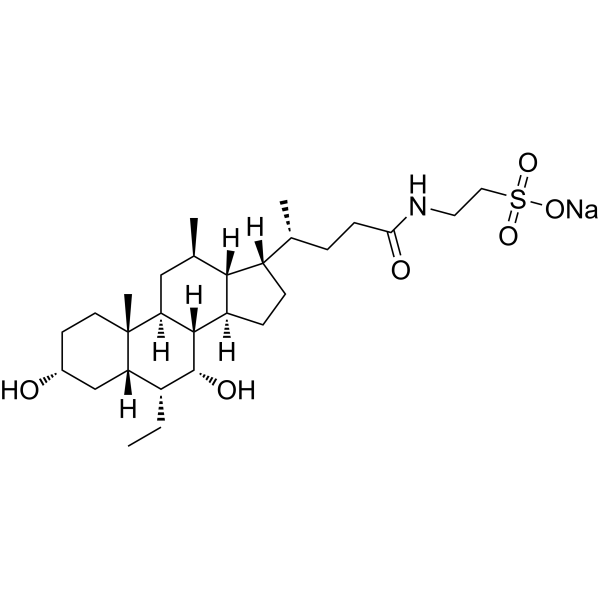 0 ImagesCat. No.: HY-149807CAS No.: 3027426-02-1
TGR5 agonist 1 (compound 18) is a potent TGR5 agonist with an EC50 value of 0.31 µM.
-
Cholic acid 7-sulfate-d4
 0 ImagesCat. No.: HY-126855SCAS No.: 1332881-66-9Synonyms: 7-Sulfocholic acid-d4
Cholic acid 7-sulfate-d4 (7-Sulfocholic acid-d4) is the deuterium labeled Cholic acid 7-sulfate (HY-126855). Cholic acid 7-sulfate is a selective agonist targeting TGR5 (EC50=0.17 μM) and a ligand for MHC class I-related protein (MR1). As a gut-restricted TGR5 agonist, cholic acid 7-sulfate binds to TGR5 on enteroendocrine L cells, induces GLP-1 secretion, and improves glucose tolerance in a TGR5-dependent manner. Cholic acid 7-sulfate also acts as an endogenous ligand for MR1, promoting the survival of mucosal-associated invariant T cells MAIT and the expression of homeostatic gene signatures, affecting MAIT cell development and function. Cholic acid 7-sulfate is mainly used in the research of diabetes and MAIT cell-related immune regulation.
-
TGR5 agonist 10
 0 ImagesCat. No.: HY-181102CAS No.: 3081614-92-5
TGR5 agonist 10 is a selective, allosteric and orally active Takeda G protein coupled receptor 5 (TGR5) agonist with EC50s of 0.8 μM and 0.6 μM for human TGR5 and mouse TGR5, respectively. TGR5 agonist 10 demonstrates selectivity for TGR5 over FXR. TGR5 agonist 10 activates hTGR5 and mTGR5 to induce cAMP accumulation, and positively modulates lithocholic acid functional activity and potency at hTGR5, with higher selectivity for cAMP formation over β-arrestin2 recruitment. TGR5 agonist 10 exerts glucose-lowering effects in Mus musculus oral glucose tolerance tests. TGR5 agonist 10 can be used for the research of diabetes.
-
TGR5 agonist 6
 0 ImagesCat. No.: HY-168140CAS No.: 2925211-47-6
TGR5 agonist 6 (compund 22b) is a non-systemic gut-targeted TGR5 agonist with significant and sustained blood sugar-lowering effects and an acceptable safety profile.
-
TGR5 agonist 9
 0 ImagesCat. No.: HY-180845CAS No.: 2931879-67-1
TGR5 agonist 9 is a highly selective and orally active TGR5 allosteric agonist with EC₅₀ values for hTGR5 and mTGR5 of 0.48 and 0.49 μM, respectively. TGR5 agonist 9 can recruit β-arrestin 1 (EC₅₀ = 78.8 μM) and β-arrestin 2 (EC₅₀ = 12.3 μM), and has a higher efficacy in cAMP accumulation (EC₅₀ = 0.48 μM). TGR5 agonist 9 exhibits a significant hypoglycemic effect in the ICR mouse model. TGR5 agonist 9 can be used for research on diabetes.
-
TGR5 Receptor Agonist (Standard)
 0 ImagesSynonyms: CCDC (Standard)
TGR5 Receptor Agonist (Standard) is the analytical standard of TGR5 Receptor Agonist. This product is intended for research and analytical applications. TGR5 Receptor Agonist (CCDC), a potent Takeda G protein-coupled receptor 5 (TGR5; GPCR19) agonist, shows improved potency in the U2-OS cells and melanophore cells with pEC50s of 6.8 and 7.5, respectively. TGR5 Receptor Agonist can induce peripheral and central hypersensitivity to bladder distension in mice, and increase intracellular Ca2+ concentration. TGR5 Receptor Agonist can also reduces food intake and improves insulin responsiveness, in diet-induced obese mice. TGR5 Receptor Agonist can be used to research diabetes, bladder hypersensitivity and anti-obesity.



