



G protein-coupled Bile Acid Receptor 1 Agonist
-
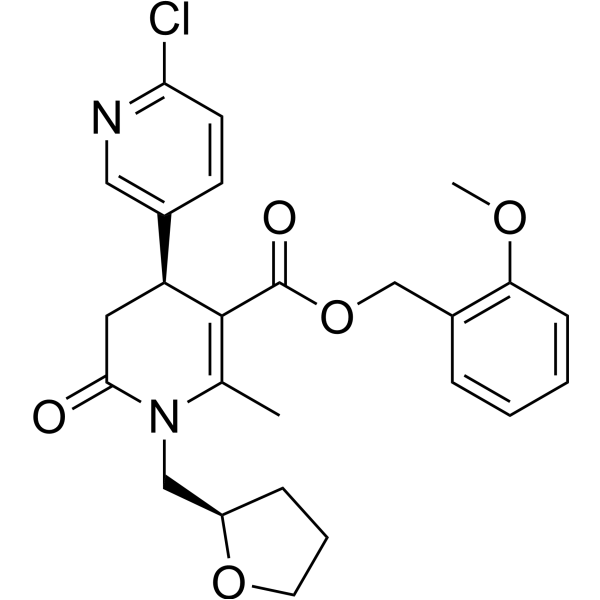
TGR5 Receptor Agonist 4
 0 Images
TGR5 Receptor Agonist 4 is an agonist of Bile Acid Receptor (TGR5), with EC50 for hTGR5 and mTGR5 of 2 nM and 3 nM, respectively. TGR5 Receptor Agonist 4 plays important roles in hypoglycemic and weight loss.
-
Taurodeoxycholic acid (Standard)
 0 Images
Taurodeoxycholic acid (Standard) is the analytical standard of Taurodeoxycholic acid. This product is intended for research and analytical applications. Taurodeoxycholate sodium salt is a bile salt-related anionic detergent. Taurodeoxycholic acid is formed in the liver by conjugation of deoxycholate with Taurine (HY-B0351). Taurodeoxycholic acid is used for isolation of membrane proteins including inner mitochondrial membrane proteins. Taurodeoxycholic acid (TDCA) exhibits anti-inflammatory and neuroprotective effects[1][2][3][9][10].
-
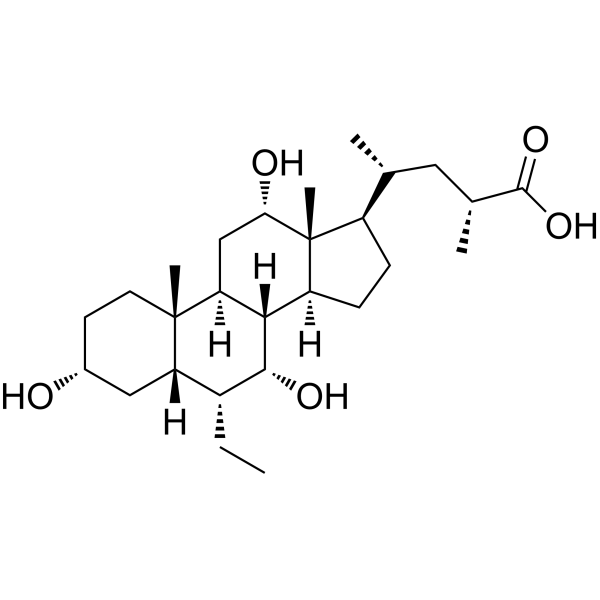
INT-777 (R-enantiomer)
 0 ImagesCat. No.: HY-15677ACAS No.: 1198786-98-9Synonyms: S-EMCA R enantiomer
INT-777 (R-enantiomer) is the R-enantiomer of INT-777, with EC50 of 4.79 μM for TGR5, and less potent than INT-777.
-
2-Bromo-LSD D-Tartrate
 0 ImagesSynonyms: BOL-148 D-Tartrate; Bromolysergide D-Tartrate
2-Bromo-LSD D-Tartrate (BOL-148 D-Tartrate) is a blood-brain barrier-permeable 5-HT2A partial agonist and competitive partial antagonist. 2-Bromo-LSD D-Tartrate acts as both a potent partial agonist (with an EC50 of 0.81 nM for Gq dissociation) and a potent partial antagonist (with a KB of 0.18 nM for Gq dissociation) at the 5-HT2A receptor. 2-Bromo-LSD D-Tartrate exhibits partial agonist activity at multiple aminergic GPCRs, including 5-HT2A. 2-Bromo-LSD D-Tartrate lacks 5-HT2B agonist activity. 2-Bromo-LSD D-Tartrate induces dendritogenesis and spinogenesis. 2-Bromo-LSD D-Tartrate reverses the behavioral effects of chronic stress and increases active coping behaviors in mice.

-
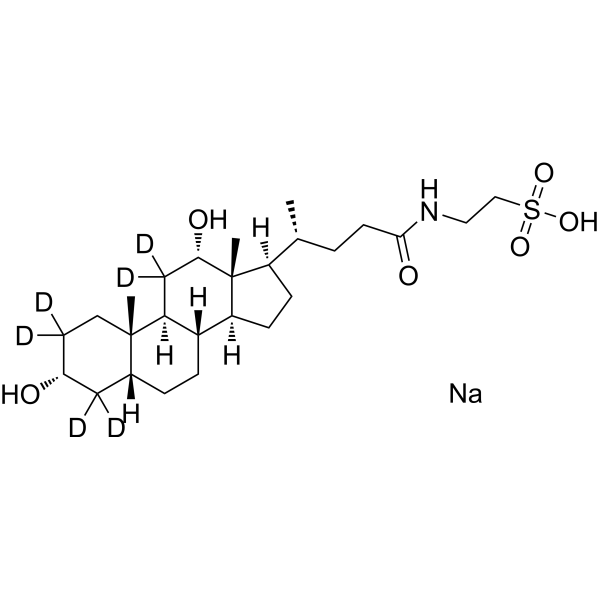
Taurodeoxycholate-d6 sodium
 0 Images
Taurodeoxycholate-d6 sodium salt is a bile salt-related anionic detergent. Taurodeoxycholate-d6 sodium salt is formed in the liver by conjugation of deoxycholate with Taurine (HY-B0351). Taurodeoxycholate-d6 sodium salt is used for isolation of membrane proteins including inner mitochondrial membrane proteins. Taurodeoxycholate-d6 (TDCA) exhibits anti-inflammatory and neuroprotective effects.
-
PEN (rat)
 0 Images
PEN (rat), one of the most abundant hypothalamic neuropeptide and derived from the proprotein ProSAAS, is an endogenous ligand of GPR83.
-
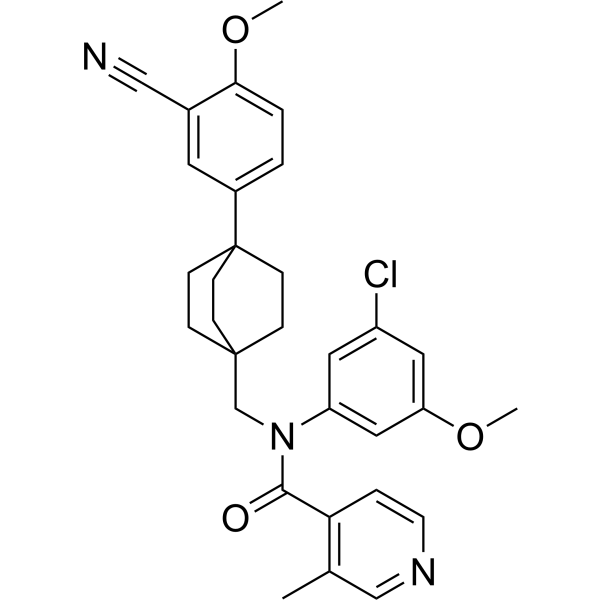
FXR/TGR5 agonist 1
 0 Images
FXR/TGR5 agonist 1 has agonist action on FXR and TGR5, and can be used for the research of fatty liver disease.
-
CAY10789
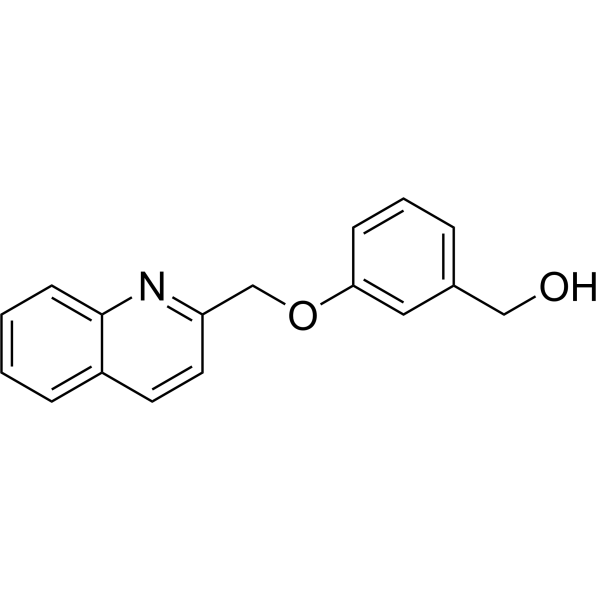 0 Images
CAY10789 is a potent CysLT1R (cysteinyl leukotriene receptor 1) antagonist (IC50=2.80 μM) and GPBAR1 (G-protein-coupled bile acid receptor 1) agonist (EC50=3 μM). CAY10789 significantly reduces the adhesion of U937 cells to HAEC, reduces the expression of TNF-α. CAY10789 shows very promising metabolic stability and excellent pharmacokinetics. CAY10789 can be used for the research of colitis, metabolic syndromes, and other GPBAR1/CysLT1R-related diseases.
-
Hyodeoxycholic acid sodium
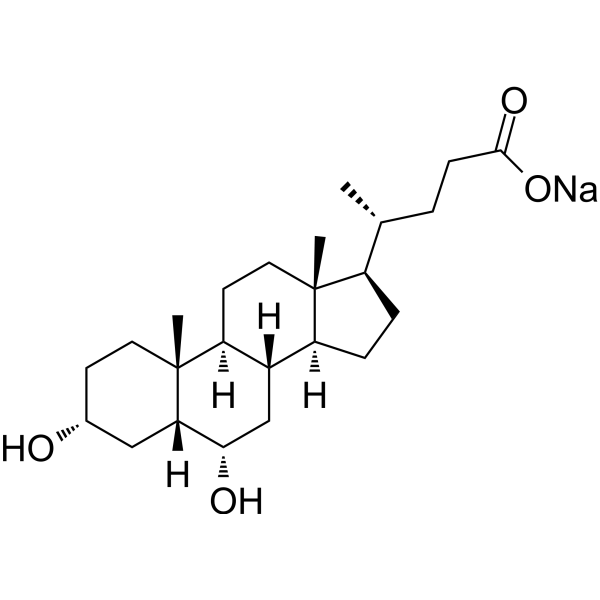 0 ImagesCat. No.: HY-N0169ACAS No.: 10421-49-5Synonyms: HDCA sodium
Hyodeoxycholic acid sodium is a secondary bile acid formed in the small intestine by the gut flora, and acts as a TGR5 (GPCR19) agonist, with an EC50 of 31.6 µM in CHO cells.
-
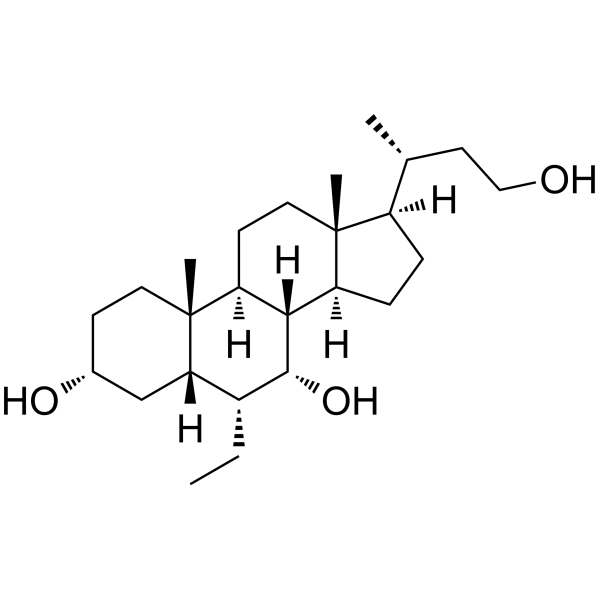
Taurodeoxycholate sodium salt (Standard)
 0 Images
Taurodeoxycholate sodium salt (Standard) is a bile salt (Standard)-related anionic detergent. Taurodeoxycholate sodium salt (Standard) is formed in the liver by conjugation of deoxycholate with Taurine (HY-B0351). Taurodeoxycholate sodium salt (Standard) is used for isolation of membrane proteins including inner mitochondrial membrane proteins. Taurodeoxycholate (TDCA) exhibits anti-inflammatory and neuroprotective effects.
-
GPBAR1-IN-3
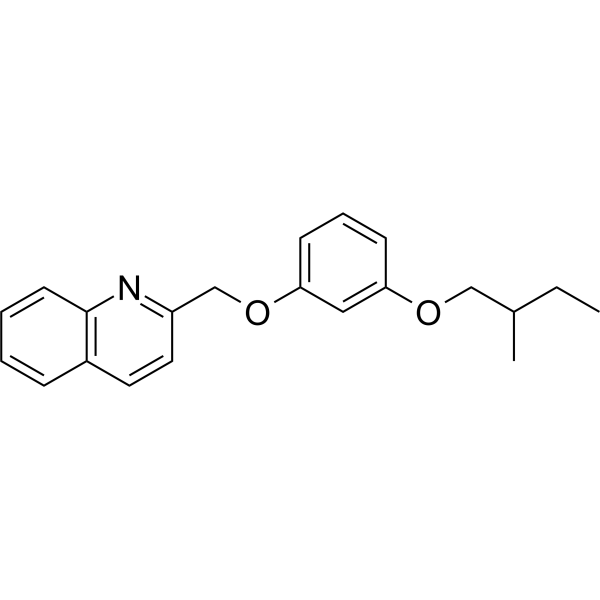 0 ImagesCat. No.: HY-145234CAS No.: 2760546-05-0
GPBAR1-IN-3 (Compound 14) is a selective GPBAR1 agonist (EC50=0.17 μM) and a CysLT1R antagonist.

-
GPBAR-A
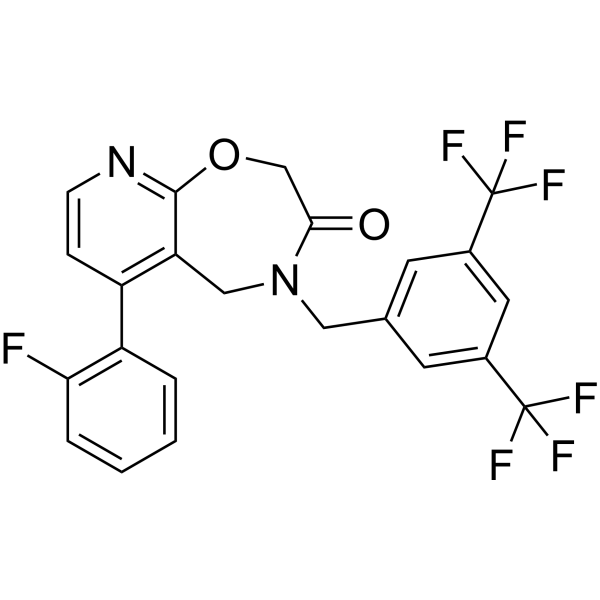 0 ImagesCat. No.: HY-107612CAS No.: 877052-79-4
GPBAR-A is a specific agonist of the bile acid receptor GPBAR1. GPBAR-A can be used for the research of diabetes mellitus.
-
LIFR/GPBAR1 modulator 1
 0 ImagesCat. No.: HY-178477
LIFR/GPBAR1 modulator 1 is an orally active, potent GPBAR1 agonist (EC50 = 0.2 μM) and LIFR inhibitor (IC50 = 7.9 μM). LIFR/GPBAR1 modulator 1 upregulates leukaemia inhibitory factor (LIF)-mediated mRNA expression of LIFR and GPBAR1 and significantly reduces the expression of pro-fibrosis markers (COL1A1, ASMA, and TGFβ), and reduces TIMP1 expression and increases MMP9 expression. LIFR/GPBAR1 modulator 1 can be used for the study of human fibrotic disorders.
-
RG-239
 0 ImagesCat. No.: HY-177050CAS No.: 1199222-56-4
RG-239 is an orally active TGR5 agonist with an EC50 of 120 nM, significantly outperforming Betulinic acid (HY-10529) (EC50 = 1.04 μM). RG-239 demonstrates higher selectivity for TGR5 compared to the FXRα. RG-239 increases mitochondrial activity in adipocytes and promotes neurite outgrowth at higher concentrations. RG-239 inhibits LPS (HY-D1056)-induced iNOS expression and nitrite production in Raw264.7 and microglia cells. RG-239 can be used for the study of type 2 diabetes[1][2][3][4][5].
-
FXR agonist 18
 0 ImagesCat. No.: HY-183692CAS No.: 3061938-00-6
FXR agonist 18 is an orally active FXR agonist, with an EC50 of 10 nM against human FXR and an EC50 of 1360 nM against human TGR5. FXR agonist 18 inhibits inflammatory responses by reducing nitrite production, downregulating the expression of pro-inflammatory genes (Tnf, Adgre1, Cyp8b1, upregulating the expression of FXR, Hmox1, Nqo1, Nrf2, and enhancing antioxidant responses. FXR agonist 18 ameliorates liver fibrosis in mice, exhibits protective effects in mice with cholestatic liver injury, and shows anti-MASH efficacy. FXR agonist 18 can be used in studies of metabolic dysfunction-associated steatohepatitis.

-
TGR5 agonist 7
 0 ImagesCat. No.: HY-168329
TGR5 agonist 7 (Compound 22-Na) is a gut-restricted, orally active agonist for G protein-coupled bile acid receptor TGR5 (GPBAR1 or GPR131) with an EC50 < 1 μM. TGR5 agonist 7 exhibits blood glucose lowering effect in mouse model, and can be used in diabete research.



