



Taurodeoxycholate sodium salt (Standard)

Based on 1 Customer Validation
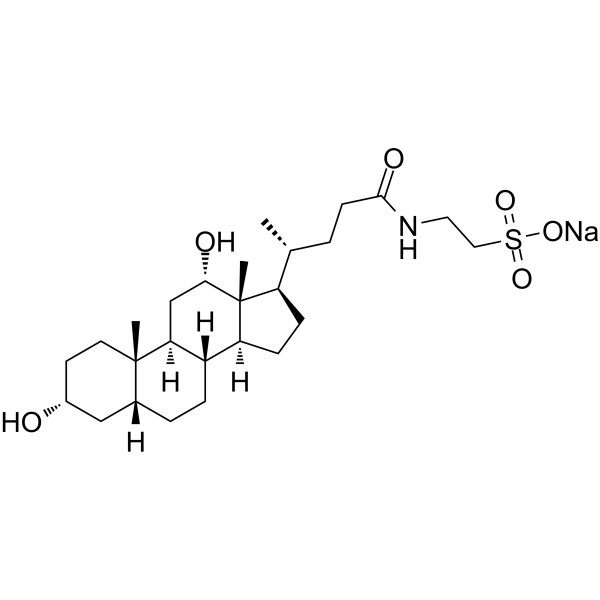
Taurodeoxycholate sodium salt (Standard) is a bile salt (Standard)-related anionic detergent. Taurodeoxycholate sodium salt (Standard) is formed in the liver by conjugation of deoxycholate with Taurine (HY-B0351). Taurodeoxycholate sodium salt (Standard) is used for isolation of membrane proteins including inner mitochondrial membrane proteins. Taurodeoxycholate (TDCA) exhibits anti-inflammatory and neuroprotective effects.
For research use only. We do not sell to patients.
- Purity : 99.89%
- CAS No.: 1180-95-6
- Formula: C26H44NNaO6S
- Molecular Weight:521.69
-
Storage:
Please store the product under the recommended conditions in the Certificate of Analysis.


To place orders, for customer services and technical support, please contact: MedChemExpress USA
Tel: 609-228-6898 E-mail: [email protected] [email protected]


-
 Product Information
-
Chemical Information
- Purity & Documentation
-
 Help & FAQs


-
HY-128853
Taurodeoxycholate sodiumAnti-inflammatory Agent -
HY-N0593
Deoxycholic acidBile Acid Receptor Activator -
HY-N0593R
Deoxycholic acid (Standard)Bile Acid Receptor Activator -
HY-N0169
Hyodeoxycholic acidGPBAR1 Agonist -
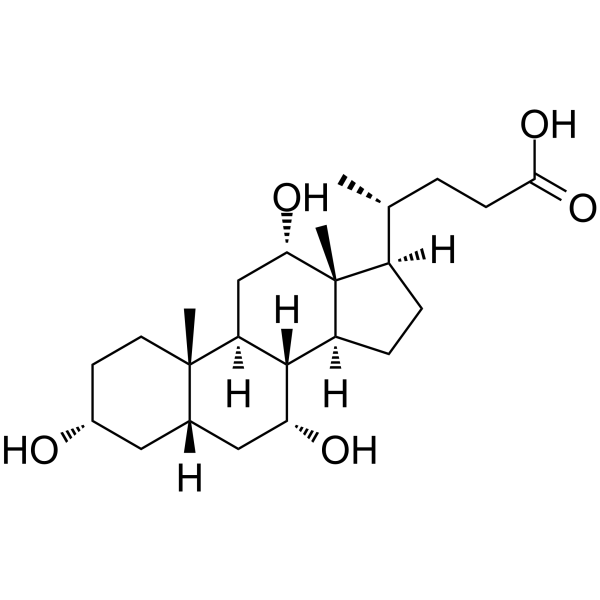
HY-N0324
Cholic acidEndogenous Metabolite -
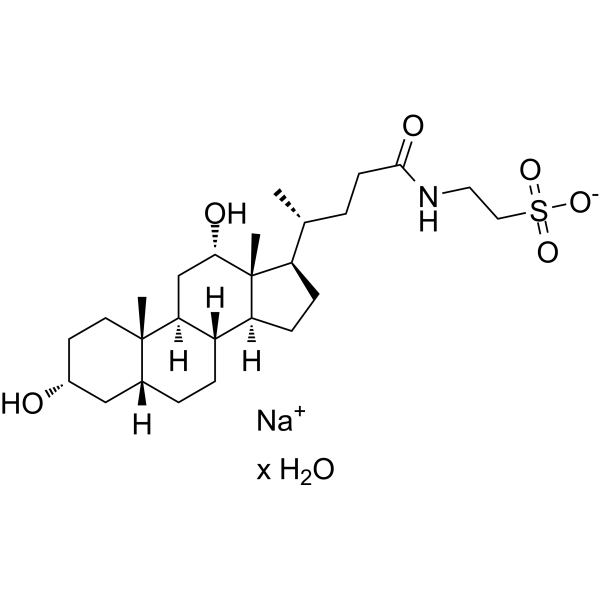
HY-W089835
Sodium taurodeoxycholate hydrateAnti-inflammatory Agent -
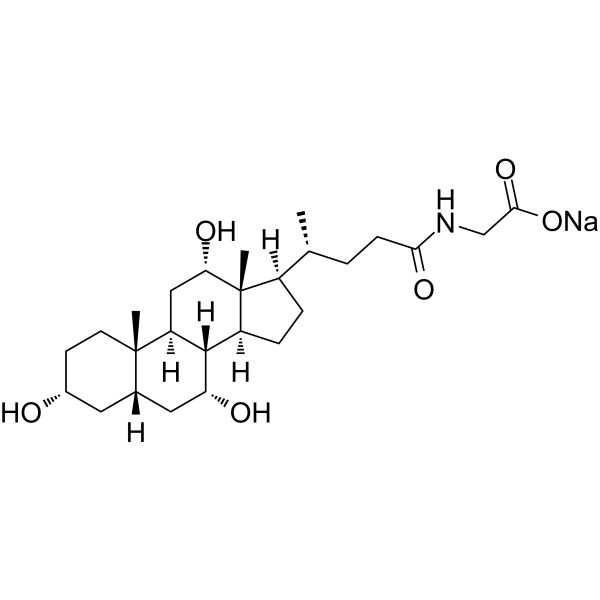
HY-N1423A
Glycocholic acid sodiumBile Acid Derivative -
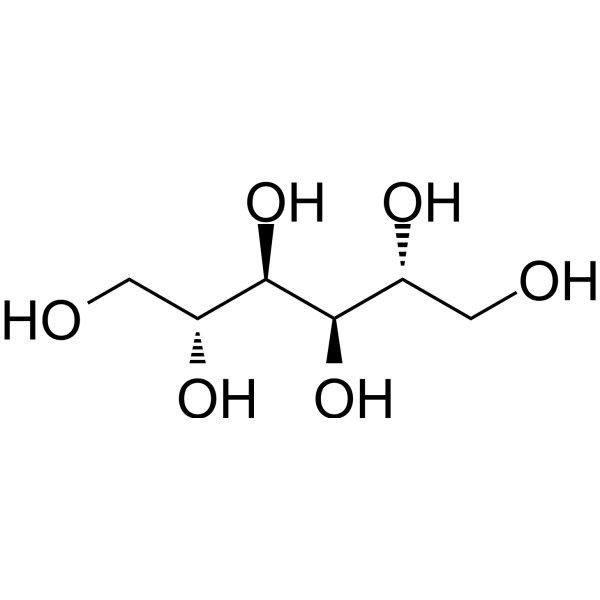
HY-N0378
D-MannitolResistant Sugar/Osmotic Diuretics -
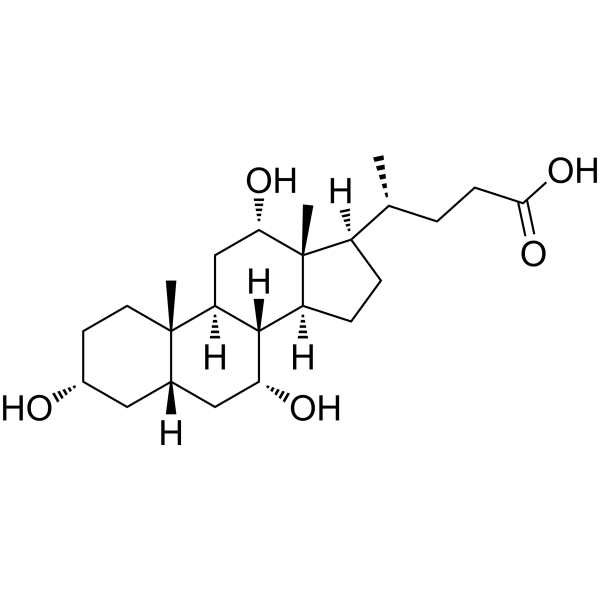
HY-N0324R
Cholic acid (Standard)Endogenous Metabolite -

HY-N0169R
Hyodeoxycholic acid (Standard)GPBAR1 Agonist -
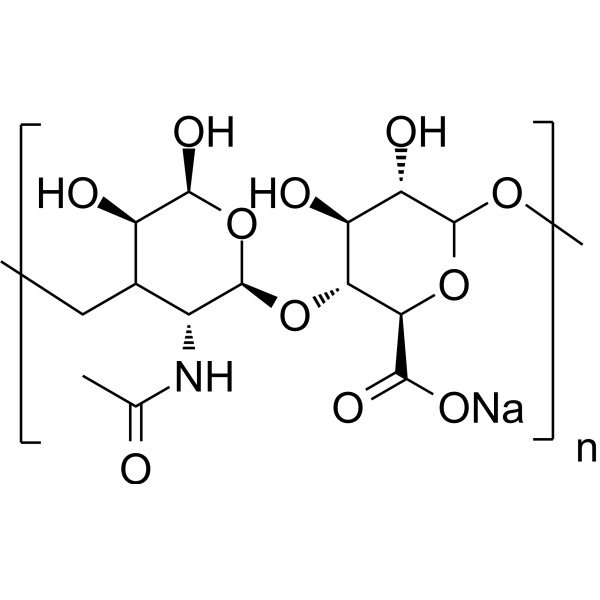
HY-B0633
Hyaluronic acid sodiumGlycosaminoglycan -
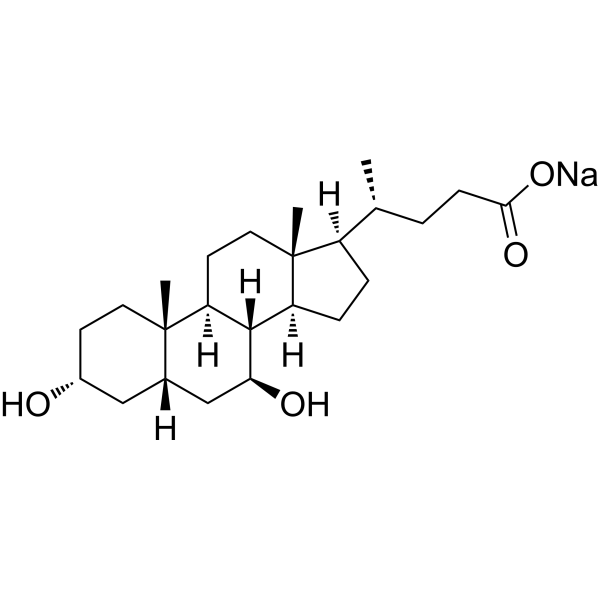
HY-13771A
Ursodeoxycholic acid sodiumGPCR19 Agonist /FXR Antagonist


Product Information
Information
Application
The compound is the grade of analytical standard, which is the reference standard supplied assay. It is commonly used in qualitative, quantitative and methodological research experiments in HPLC, GC and MS.


Chemical Information
-
CAS No. 1180-95-6
-
Appearance Solid
-
Molecular Weight 521.69
-
Formula C26H44NNaO6S
-
Color White to off-white
-
SMILES
C[C@H](CCC(NCCS(=O)(O[Na])=O)=O)[C@H]1CC[C@@]2([H])[C@]3([H])CC[C@]4([H])C[C@H](O)CC[C@]4(C)[C@@]3([H])C[C@H](O)[C@]12C
-
Structure Classification
-
Initial Source
-
Shipping
Room temperature in continental US; may vary elsewhere.
-
Storage
Please store the product under the recommended conditions in the Certificate of Analysis.


Purity & Documentation
-
SDS (394 KB)
- English - EN (394 KB)
- Français - FR (394 KB)
- Deutsch - DE (394 KB)
- Norwegian - NO (394 KB)
- Español - ES (394 KB)
- Swedish - SV (394 KB)
- Italian - IT (394 KB)
- Korean - KR (394 KB)
- Portuguese - PT (394 KB)
-
Handling Instructions (2659 KB)
References
[1]. Villavicencio-Queijeiro A, et al. The fully-active and structurally-stable form of the mitochondrial ATP synthase of Polytomella sp. is dimeric. J Bioenerg Biomembr. 2009 Feb;41(1):1-13. [Content Brief]
[2]. Kispal G, et al. Isolation and characterization of 3-hydroxyacyl coenzyme A dehydrogenase-binding protein from pig heart inner mitochondrial membrane. J Biol Chem. 1986 Oct 25;261(30):14209-13. [Content Brief]
[3]. Choi HJ, et al. Evaluation of acute and subacute toxicity of sodium taurodeoxycholate in rats. Drug Chem Toxicol. 2021 May;44(3):268-276. [Content Brief]
[4]. Sato H, et al. Novel potent and selective bile acid derivatives as TGR5 agonists: biological screening, structure-activity relationships, and molecular modeling studies. J Med Chem. 2008 Mar 27;51(6):1831-41. [Content Brief]
[5]. Gertzen CG, et al. Mutational mapping of the transmembrane binding site of the G-protein coupled receptor TGR5 and binding mode prediction of TGR5 agonists. Eur J Med Chem. 2015 Nov 2;104:57-72. [Content Brief]
[6]. Benz C, et al. Effect of tauroursodeoxycholic acid on bile acid-induced apoptosis in primary human hepatocytes. Eur J Clin Invest. 2000 Mar;30(3):203-9. [Content Brief]
[7]. Xie Q, et al. Effect of tauroursodeoxycholic acid on endoplasmic reticulum stress-induced caspase-12 activation. Hepatology. 2002 Sep;36(3):592-601. [Content Brief]
[8]. Yamaguchi J, et al. Taurodeoxycholate increases intestinal epithelial cell proliferation through c-myc expression. Surgery. 2004 Feb;135(2):215-21. [Content Brief]
[9]. Zou Y, et al. Taurodeoxycholate ameliorates DSS-induced colitis in mice. Int Immunopharmacol. 2023 Sep;122:110628. [Content Brief]
[10]. Keene CD, et al. A bile acid protects against motor and cognitive deficits and reduces striatal degeneration in the 3-nitropropionic acid model of Huntington's disease. Exp Neurol. 2001 Oct;171(2):351-60. [Content Brief]
[11]. Keene CD, et al. Tauroursodeoxycholic acid, a bile acid, is neuroprotective in a transgenic animal model of Huntington's disease. Proc Natl Acad Sci U S A. 2002 Aug 6;99(16):10671-6. [Content Brief]
[12]. Chang S, et al. Taurodeoxycholate Increases the Number of Myeloid-Derived Suppressor Cells That Ameliorate Sepsis in Mice. Front Immunol. 2018 Sep 18;9:1984. [Content Brief]

Calculators
Concentration (start) × Volume (start) = Concentration (final) × Volume (final)


Taurodeoxycholate sodium salt (Standard) Related Classifications
HY-128853R Related Classifications
 Powered by Bioz