



Keap1-Nrf2
Keap1-Nrf2 is the major regulator of cytoprotective responses to electrophilic chemicals or reactive oxygen species (ROS). Keap1 is an E3 ligase, which induces the degradation of Nrf2 by ubiquitin-proteasome system (UPS). Upregulation of Nrf2 inducing by inactivation of Keap1 is often observed in cancer cells. Aberrant activation of Nrf2 in cancer cells accelerates proliferation and metabolism. For this case, Nrf2 is an attractive molecule as a therapeutic target in cancer and a lot number of Nrf2 inhibitors are developed. What’s interesting, Nrf2 induction is also reported to be treatment strategies for accelerating the detoxification of carcinogens and protect the body from chemical carcinogenesis.
All Product Categories
-
Keap1-Nrf2 Related Products (525)
Related Products (525)

-
Antibodies (7)
-
VO-OHPic
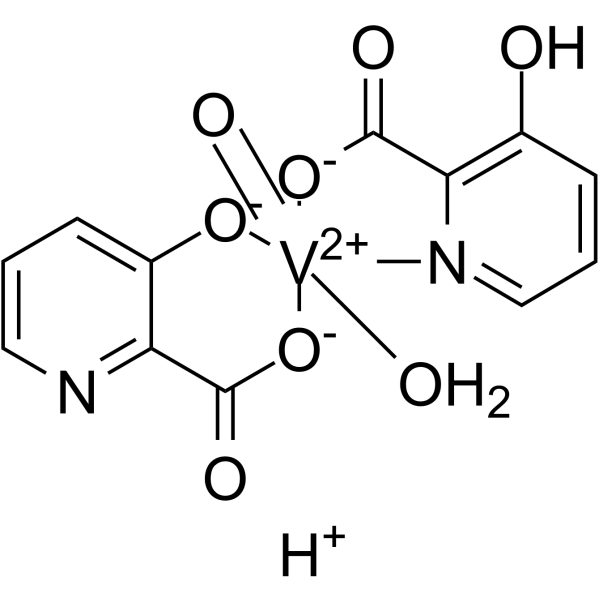 0 ImagesCat. No.: HY-110067CAS No.: 675848-25-6VO-OHPic is a reversible, noncompetitive PTEN inhibitor with an human IC50 value of 46 nM. VO-OHPic inhibits PTEN signaling, activates Akt-GSK3β and Nrf-2/HO-1 pathways, induces apoptosis resistance and elevates IL-10 levels. VO-OHPic inhibits autophagy, ferroptosis and oxidative stress. VO-OHPic can be used for the research of acute myocardial infarction, intervertebral disc degeneration, cardiomyopathy and cancer.
-
Gymnoside II
 0 ImagesCat. No.: HY-N16929CAS No.: 899430-02-5Gymnoside II is one of the main bioactive constituents isolated from Bletilla striata. Gymnoside II inhibits nano SiO2-induced A549 cell viability reduction, apoptosis, and ROS generation by activating Nrf2. Gymnoside II upregulates HO-1 and γ-GCSc, while downregulating the Bax/Bcl-2 ratio. Gymnoside II is applicable for research on nano SiO2-induced pulmonary injury.
-
Dyclonine
 0 ImagesDyclonine (Dyclocaine) is an orally active, blood-brain barrier-permeable piperidine phenylacetone small molecule commonly used as a local anesthetic. Dyclonine acts as a highly selective allosteric antagonist of TRPV3; it also reversibly inhibits G9a, ALDH2 and ALDH3A1, non-competitively blocks AChE. Dyclonine activates the Nrf2/ARE pathway, relieves the epigenetic silencing of FXN, blocks Aβ42 aggregation, and promotes remyelination and reparative polarization of microglia. Dyclonine alleviates pruritus via TRPV3 inhibition; it is used in studies of neurodegenerative disease models based on its AChE inhibitory, antioxidant and remyelinating effects; it sensitizes drug-resistant tumors through ALDH inhibition, and combined use with protease inhibitors induces more tumor cell apoptosis; it inhibits Candida albicans in vitro. Dyclonine can be used for research on multiple diseases including neurodegenerative diseases, cancer and pruritic dermatitis.
-
VH9
 0 ImagesCat. No.: HY-P11916VH9 is a Free radical scavenger. VH9 binds to the active pocket of Keap1, blocks the interaction between Keap1 and Nrf2, and activates the Keap1-Nrf2 antioxidant pathway. VH9 inhibits ROS production. VH9 scavenges ABTS and DPPH free radicals through hydrogen bonding and hydrophobic interactions. VH9 protects cells from oxidative stress damage.
-
Nrf2 activator-5
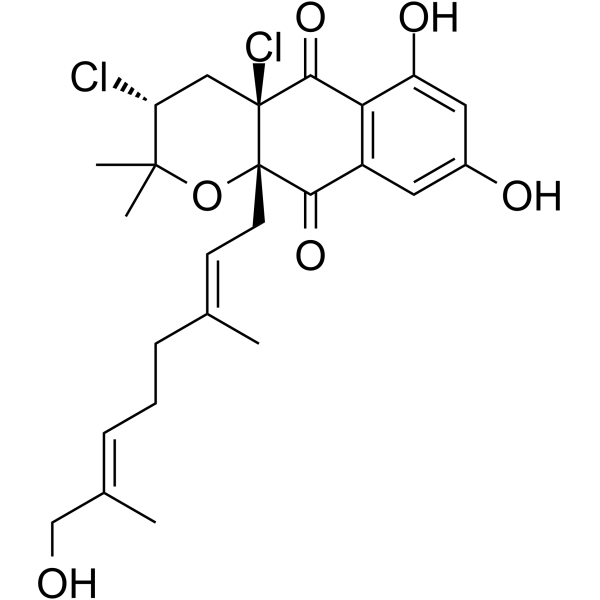 0 ImagesCat. No.: HY-146168CAS No.: 1012860-13-7Nrf2 activator-5 (compound 1) is a potent Nrf2 activator that can attenuate H2O2-induced oxidative stress and LPS-stimulated inflammation in BV-2 microglial cells. Nrf2 activator-5 exhibits antioxidant and anti-inflammatory activities.
-
Keap1-Nrf2-IN-3
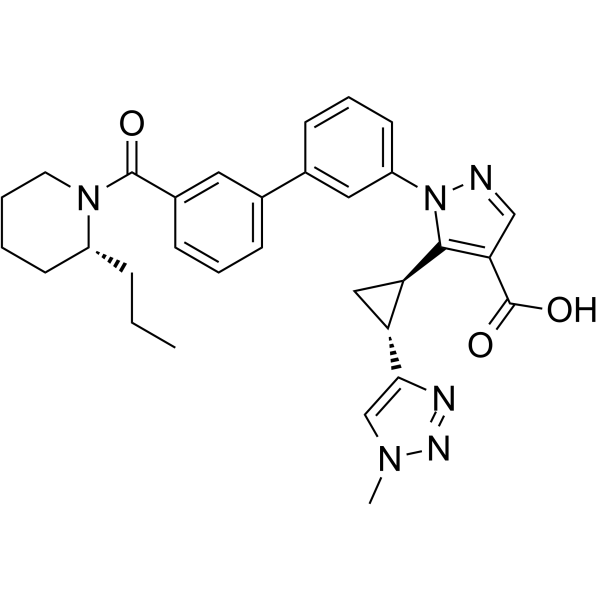 0 ImagesCat. No.: HY-139862CAS No.: 2095066-47-8Keap1-Nrf2-IN-3 is a KEAP1:NRF2 protein−protein interaction inhibitor, and with a Kd value of 2.5 nM for KEAP1 protein.
-
SG16
 0 ImagesCat. No.: HY-172598CAS No.: 3075750-60-3Synonyms: Keap1-Nrf2-IN-28SG16 (Keap1-Nrf2-IN-28) is an orally active Keap1-Nrf2 inhibitor. SG16 disrupts the binding of Keap1 to Nrf2, promotes the nuclear translocation of Nrf2, upregulates the downstream antioxidant proteins HO-1 and GCLM, and simultaneously inhibits microglial overactivation and proinflammatory cytokine secretion. By activating the Nrf2 pathway, SG16 can be used in studies on oxidative stress, ischemic stroke and acute liver injury.
-
Bovinic acid (Standard)
 0 ImagesCat. No.: HY-113162RCAS No.: 2540-56-9Bovinic acid (Standard) is the analytical standard of Bovinic acid (HY-113162). This product is intended for research and analytical applications. Bovinic acid is an orally active anti-inflammatory agent. Bovinic acid inhibits oxidative stress and ferroptosis by regulating the Keap1-Nrf2 signaling pathway. Bovinic acid exerts hepatoprotective effects against alcohol-associated liver disease. Bovinic acid can be used for the research of alcohol-associated liver disease.
-
Ferroptosis inducer-13
 0 ImagesCat. No.: HY-179481CAS No.: 3085517-19-4Ferroptosis inducer-13 is a 5′-prenylated chalcone derivative that effectively induces ferroptosis in human non-small cell lung cancer (NSCLC) cells by altering the activity of the Nrf2/xCT/GPX4 pathway. Ferroptosis inducer-13 exhibits potent anti-proliferative effects in vitro, and inhibits tumour growth in a NSCLC mouse model. Ferroptosis inducer-13 can be used for NSCLC research.
-
Oltipraz-d3
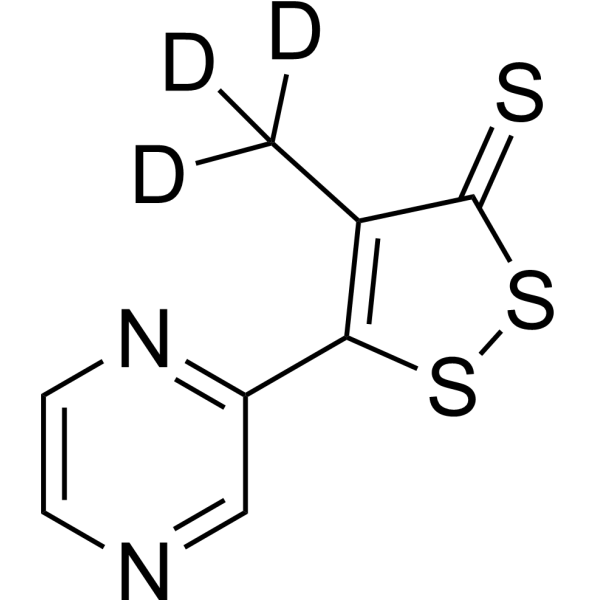 0 ImagesCat. No.: HY-12519SCAS No.: 2012598-51-3Synonyms: RP 35972-d3; NSC 347901-d3
-
FXR agonist 18
 0 ImagesCat. No.: HY-183692CAS No.: 3061938-00-6FXR agonist 18 is an orally active FXR agonist, with an EC50 of 10 nM against human FXR and an EC50 of 1360 nM against human TGR5. FXR agonist 18 inhibits inflammatory responses by reducing nitrite production, downregulating the expression of pro-inflammatory genes (Tnf, Adgre1, Cyp8b1, upregulating the expression of FXR, Hmox1, Nqo1, Nrf2, and enhancing antioxidant responses. FXR agonist 18 ameliorates liver fibrosis in mice, exhibits protective effects in mice with cholestatic liver injury, and shows anti-MASH efficacy. FXR agonist 18 can be used in studies of metabolic dysfunction-associated steatohepatitis.
-
Rutaecarpine (Standard)
 0 ImagesRutaecarpine (Standard) is the analytical standard of Rutaecarpine. This product is intended for research and analytical applications. Rutaecarpine, an alkaloid of Evodia rutaecarpa, is an inhibitor of COX-2 with an IC50 value of 0.28 μM. Rutaecarpine can target and activate the NRF2/HO-1 pathway to reduce craniofacial injury. Rutaecarpine sttenuates oxidative stress-induced traumatic brain injury (TBI) and reduces secondary injury via the PGK1/KEAP1/NRF2 signaling pathway. Rutaecarpine can cross the blood-brain barrier (BBB).
-
Pachypodol (Standard)
 0 ImagesCat. No.: HY-N3121RCAS No.: 33708-72-4Pachypodol (Standard) is the analytical standard of Pachypodol (HY-N3121). This product is intended for research and analytical applications. Pachypodol is an orally active methoxyflavonoid compound. Pachypodol activates the ERK-dependent Nrf2 pathway and inhibits Apoptosis. Pachypodol exhibits activities such as antioxidant, cytoprotective, anti-inflammatory effects. Pachypodol improves cognition. Pachypodol exerts protective effects against cardiac and liver damage. Pachypodol has anticancer activity against colon cancer.
-
Oltipraz (GMP)
 0 ImagesCat. No.: HY-12519GCAS No.: 64224-21-1Synonyms: RP 35972 (GMP); NSC 347901 (GMP)
-
Clemastine fumarate (Standard)
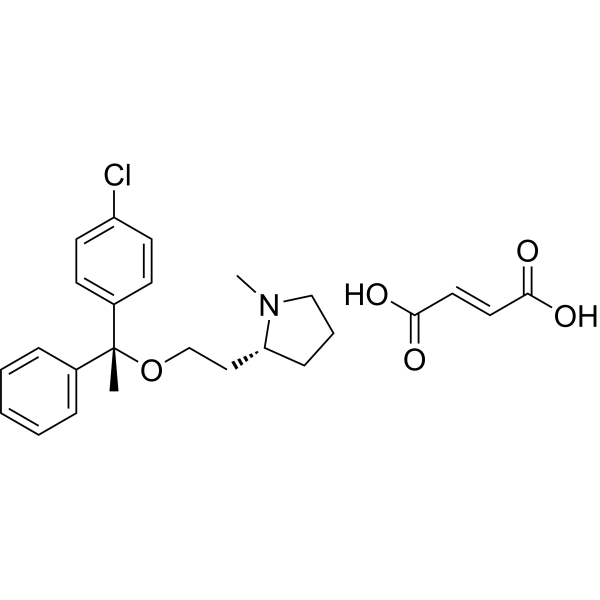 0 ImagesSynonyms: HS-592 fumarate (Standard); Meclastine fumarate (Standard)Clemastine (HS-592; Meclastine) fumarate (Standard) is the analytical standard of Clemastine fumarate. This product is intended for research and analytical applications. Clemastine fumarate is an orally active, blood-brain barrier-permeable H1 histamine receptor (H1 histamine receptor) antagonist with potent antiallergic effects. Clemastine fumarate also antagonizes muscarinic acetylcholine receptors (mAChR), particularly the M1 and M4 subtypes. In addition to antihistamine effects, Clemastine fumarate exhibits multiple pharmacological activities, especially in promoting central nervous system remyelination, activating autophagy and pyroptosis, exerting anti-apoptotic and neuroprotective effects, and suppressing inflammation .
-
Fraxinellone analog 1
 0 ImagesCat. No.: HY-163772CAS No.: 3077293-85-4Fraxinellone analog 1 (compound 2) is a potent and rapid activator of the Nrf2 mediated antioxidant defense system, which protects against glutamate-mediated excitotoxicity and induces the expression of antioxidant genes Gpx4, Sod1, and Nqo1. Fraxinellone analog 1 has neuroprotective effects and regulatory effects against oxidative stress and inflammation, and can be used in the study of neurodegenerative diseases.
-
Dyclonine-d9 hydrochloride
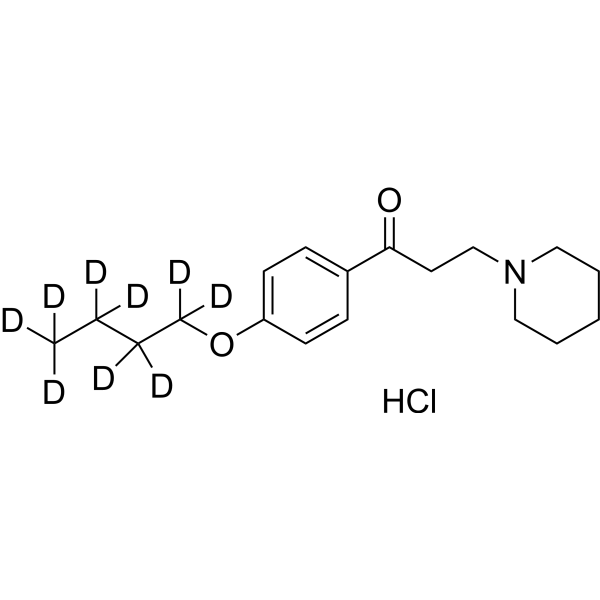 0 ImagesCat. No.: HY-B0364ASSynonyms: Dyclocaine-d9 hydrochlorideDyclonine-d9 hydrochloride (Dyclocaine-d9 hydrochloride) is the deuterated-labeled Dyclonine hydrochloride (HY-B0364A). Dyclonine hydrochloride (Dyclocaine hydrochloride) is an orally active, blood-brain barrier-permeable piperidine phenylacetone small molecule commonly used as a local anesthetic. Dyclonine hydrochloride acts as a highly selective allosteric antagonist of TRPV3; it also reversibly inhibits G9a, ALDH2 and ALDH3A1, non-competitively blocks AChE. Dyclonine hydrochloride activates the Nrf2/ARE pathway, relieves the epigenetic silencing of FXN, blocks Aβ42 aggregation, and promotes remyelination and reparative polarization of microglia. Dyclonine hydrochloride alleviates pruritus via TRPV3 inhibition; it is used in studies of neurodegenerative disease models based on its AChE inhibitory, antioxidant and remyelinating effects; it sensitizes drug-resistant tumors through ALDH inhibition, and combined use with protease inhibitors induces more tumor cell apoptosis; it inhibits Candida albicans in vitro. Dyclonine hydrochloride can be used for research on multiple diseases including neurodegenerative diseases, cancer and pruritic dermatitis.
-
4-Octyl itaconate-Bn-S-NH2
 0 ImagesCat. No.: HY-1805294-Octyl itaconate-Bn-S-NH2 (Compound 8b) is a vasodilator. 4-Octyl itaconate-Bn-S-NH2 can slowly and stably release H₂S, and it alleviates oxidative stress through an antioxidant reaction that depends on the activation of Nrf2. 4-Octyl itaconate-Bn-S-NH2 inhibits the production of intracellular ROS caused by H₂O₂ damage and the cytotoxicity of cells, and activates potassium channel. 4-Octyl itaconate-Bn-S-NH2 can be used for research on hypertension.
-
HDAC-IN-77
 0 ImagesCat. No.: HY-169014HDAC-IN-77 (HL-5s) is an HDAC inhibitor. HDAC-IN-77 can induce ferroptosis and inhibit the Nrf2/HO-1 signaling pathway. HDAC-IN-77 can be used in cancer research.
-
L-Cystine disodium monohydrate
 0 ImagesCat. No.: HY-W772717CAS No.: 199329-53-8L-Cystine disodium monohydrate is an orally active extracellular form of L-Cysteine (HY-Y0337), occurring in proteins of plants and animals. L-Cystine disodium monohydrate elevates Nrf2 protein expression and activates Nrf2 transcription factor. L-Cystine disodium monohydrate reduces ROS generation and protects against oxidant- or Doxorubicin (HY-15142A)-induced apoptosis. L-Cystine disodium monohydrate combined with L-theanine (HY-15121) enhances the production of antigen-specific IgG by increasing glutathione (GSH) levels and T helper 2 (Th2) mediated responses in mice. L-Cystine disodium monohydrate is promising for research of cystinuria and kidney stones.




