



Keap1-Nrf2 Modulator
- 1
- 2
-
Poricoic acid A
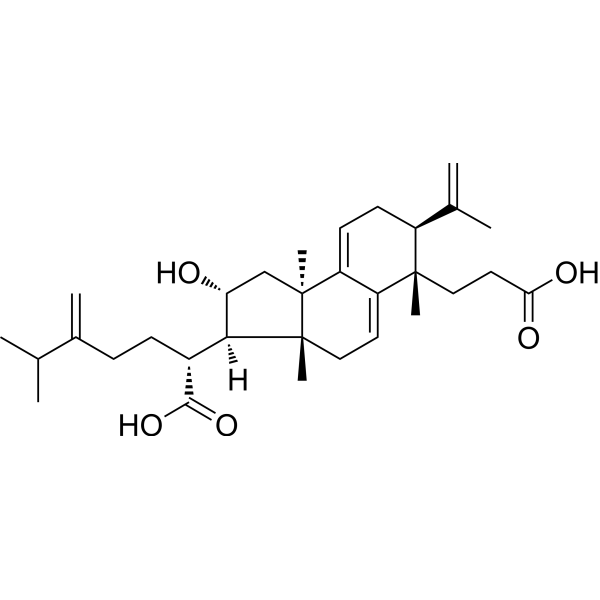 0 ImagesSynonyms: Poricoic acid A(F)
Poricoic acid A can be isolated from Poria cocos. Poricoic acid A is an orally active anti-tumor agent. Poricoic acid A enhances melatonin inhibition of AKI-to-CKD transition by regulating Gas6/AxlNFκB/Nrf2 axis. Poricoic acid A also attenuatea fibroblast activation and abnormal extracellular matrix remodeling in renal fibrosis by activating AMPK and inhibiting Smad3. Poricoic acid A significantly reduces the magnitude of rise in serum creatinine and urea levels in rat model when combined with Melatonin. Poricoic acid A ameliorates renal fibrosis and podocyte injury by attenuating oxidative stress and inflammation through regulating NF-κB and Nrf2 in IRI rodent model in combination with Melatonin.
-
Bovinic acid
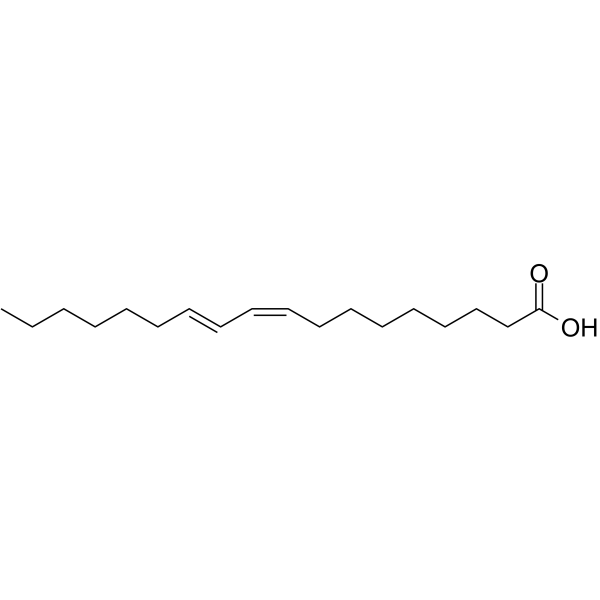 0 Images
Bovinic acid is an orally active anti-inflammatory agent. Bovinic acid inhibits oxidative stress and ferroptosis by regulating the Keap1-Nrf2 signaling pathway. Bovinic acid exerts hepatoprotective effects against alcohol-associated liver disease. Bovinic acid can be used for the research of alcohol-associated liver disease.
-
Carbocisteine
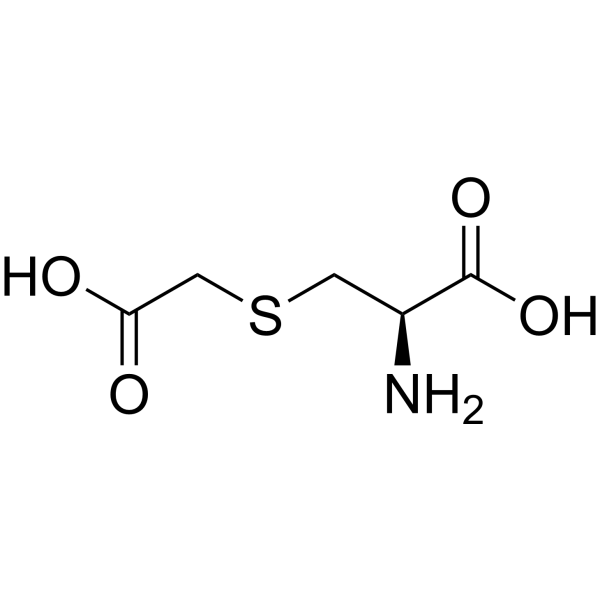 0 Images
Carbocisteine is an orally active mucolytic agent. Carbocisteine attenuates the phosphorylation of NF-κB p65 and ERK1/2. Carbocisteine modulates Nrf2/HO-1 and NFκB interplay. Carbocisteine inhibits Apoptosis. Carbocisteine is used in chronic obstructive pulmonary disease (COPD) research.
-
Swertiamarin
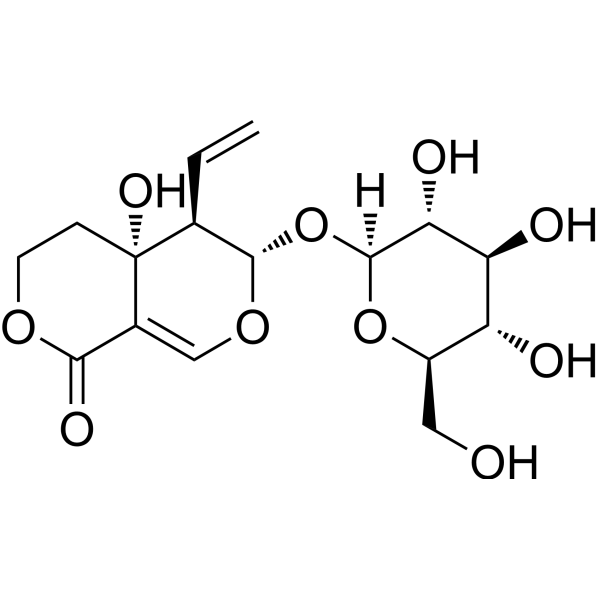 0 Images
Swertiamarin is an orally active natural product with hypoglycemic, lipid-lowering, anti-rheumatic, and antioxidant activities. Swertiamarin can regulate the levels of pro-inflammatory cytokines, MMP, and NF-κB, and promote osteoblast proliferation. Swertiamarin has antioxidant and hepatoprotective effects against carbon tetrachloride induced rat liver toxicity through the Nrf2/HO-1 pathway. Swertiamarin can attenuate inflammatory mediators by regulating JAK2/STAT3 transcription factors in adjuvant induced arthritis rats. Swertiamarin can be used in the research of diabetes and arthritis.
-
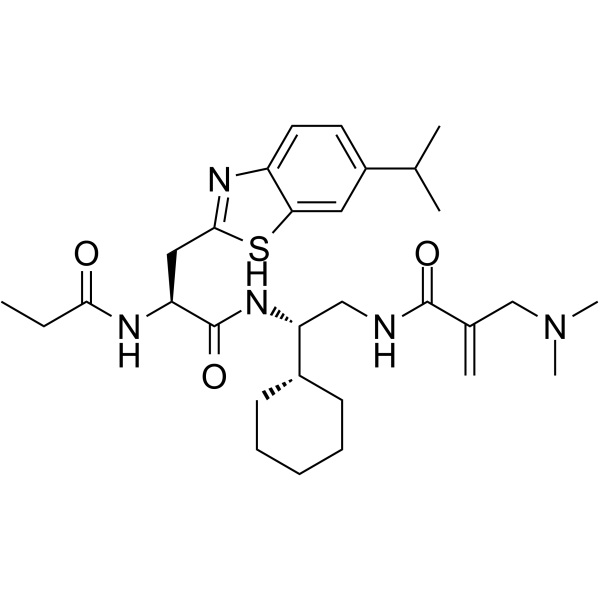
DI-1859
 0 Images
DI-1859 is a DCN1 and cullin 3 inhibitor with a Ki of <1 nM against human DCN1. DI-1859 forms a covalent bond with Cys115 of DCN1, cleaves its dimethylamino group, disrupts the DCN1-UBC12 interaction, and selectively inhibits the neddylation modification of cullin 3 relative to other cullins. DI-1859 inactivates CRL3, promotes the accumulation of NRF2 and SLC7A11, upregulates the expression of HO-1 and NQO1, reduces reactive oxygen species (ROS) levels, enhances insulin signaling, promotes insulin secretion, activates RhoA, regulates the phosphorylation of AKT, without completely blocking the neddylation modification of cullin 3 or restoring the expression of IRS-1. DI-1859 can be used in the research of Acetaminophen (HY-66005)-induced hepatotoxicity, hyperglycemia, metabolic dysfunction-associated steatotic liver disease, insulin resistance, breast cancer and lung cancer.
-
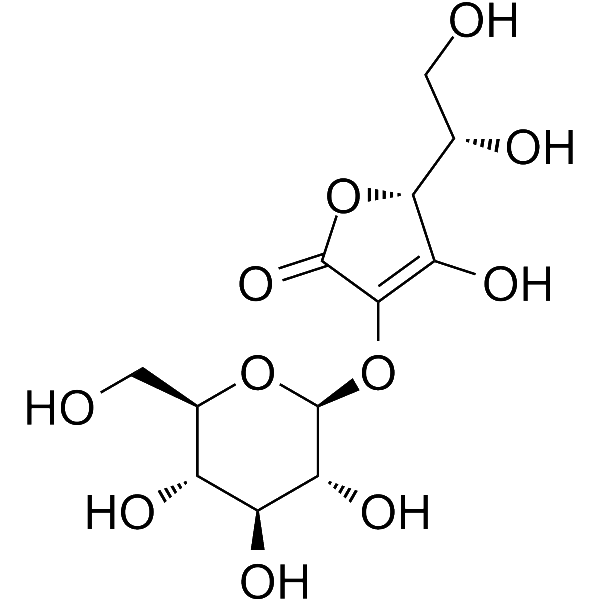
2-O-β-D-Glucopyranosyl-L-ascorbic acid
 0 ImagesCat. No.: HY-N6958CAS No.: 562043-82-7Synonyms: AA-2βG
2-O-β-D-Glucopyranosyl-L-ascorbic acid (AA-2βG) is an orally active vitamin C derivative. 2-O-β-D-Glucopyranosyl-L-ascorbic acid exhibits multiple activities including antioxidant, anti-tumor and immunomodulatory effects. 2-O-β-D-Glucopyranosyl-L-ascorbic acid mediates tumor cell apoptosis, induces cell cycle arrest, scavenges free radicals and eliminates oxidative stress. 2-O-β-D-Glucopyranosyl-L-ascorbic acid can be used in studies related to cancer, inflammation and immunity.
-
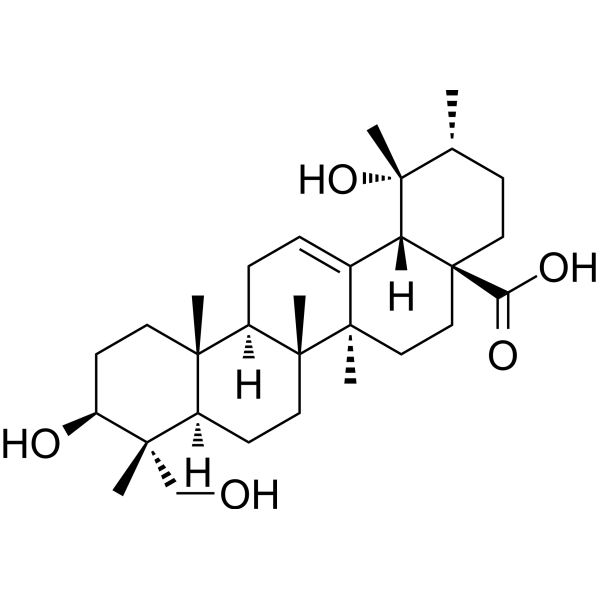
Rotundic acid
 0 Images
Rotundic acid is an orally effective triterpenoid with a Kd value of 51.3 µM for PTP1B. Rotundic acid downregulates the AKT/mTOR pro-survival pathway and modulates the MAPK pathway. Rotundic acid induces cell cycle S-phase arrest, DNA damage and apoptosis; it inhibits migration, invasion, angiogenesis and proliferation of cancer cells. Rotundic acid improves leptin sensitivity, regulates gut microbiota and reduces cellular senescence. Rotundic acid can be used in research related to hepatocellular carcinoma, obesity, aging, acute lung injury and type 2 diabetes.
-
Swertiamarin (Standard)
 0 ImagesCat. No.: HY-N0807RCAS No.: 17388-39-5
Swertiamarin (Standard) is the analytical standard of Swertiamarin. This product is intended for research and analytical applications. Swertiamarin is an orally active iridoid compound with hypoglycemic, hypolipidemic, anti rheumatic and antioxidant activities, which can be used in the research of diabetes and arthritis.
-
Bovinic acid (Standard)
 0 ImagesCat. No.: HY-113162RCAS No.: 2540-56-9
Bovinic acid (Standard) is the analytical standard of Bovinic acid (HY-113162). This product is intended for research and analytical applications. Bovinic acid is an orally active anti-inflammatory agent. Bovinic acid inhibits oxidative stress and ferroptosis by regulating the Keap1-Nrf2 signaling pathway. Bovinic acid exerts hepatoprotective effects against alcohol-associated liver disease. Bovinic acid can be used for the research of alcohol-associated liver disease.
-
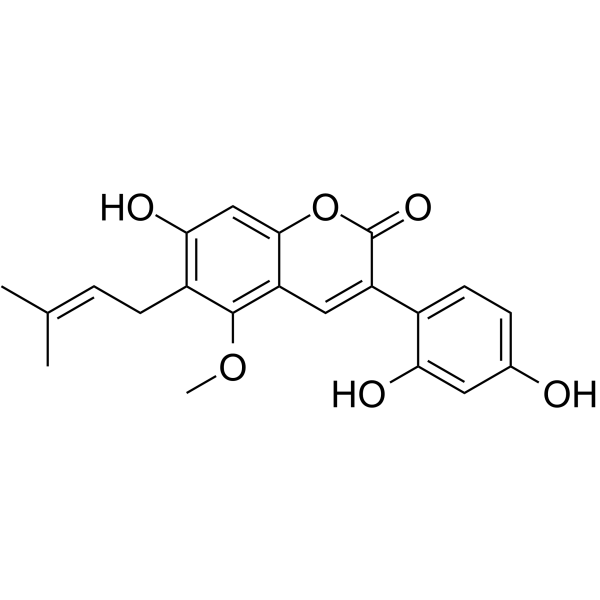
Glycycoumarin (Standard)
 0 ImagesCat. No.: HY-N4113RCAS No.: 94805-82-0
Glycycoumarin (Standard) is the analytical standard of Glycycoumarin. This product is intended for research and analytical applications. Glycycoumarin is a potent antispasmodic agent. Glycycoumarin is a major bioactive coumarin of licorice and exhibits antispasmodic activity. Glycycoumarin also has hepatoprotective effect. Glycycoumarin can be used for the research of abdominal pain and liver diseases.
-
AChE/Nrf2 modulator 1
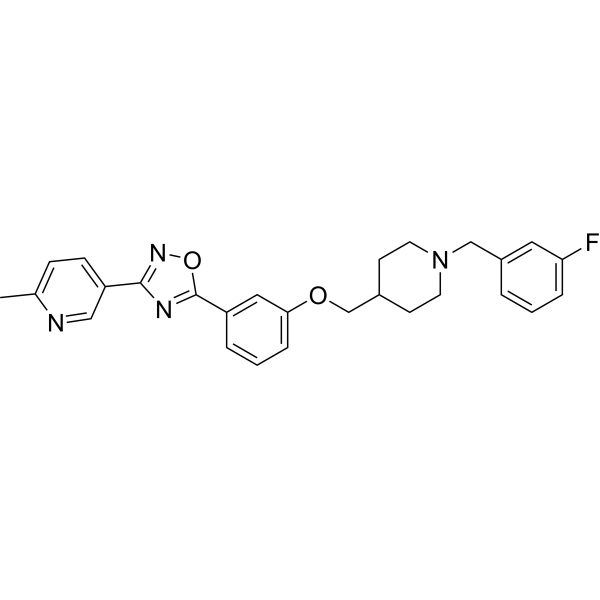 0 ImagesCat. No.: HY-152037CAS No.: 2417117-84-9
AChE/Nrf2 modulator 1 is an orally active acetylcholinesterase (AChE)/nuclear factor erythroid 2-related factor 2 (Nrf2) modulator. AChE/Nrf2 modulator 1 has Nrf2 inductive activity and AChE inhibitory activity for eeAChE and hAChE with IC50 values of 0.07 μM and 0.38 μM, respectively. AChE/Nrf2 modulator 1 can be used for the research of Alzheimer's disease.
-
MPQPPAK
 0 ImagesCat. No.: HY-P12336
MPQPPAK is a polypeptide obtained from the enzymatic hydrolysis of C-phycocyanin (HY-D1025) and possesses neuroprotective activity. MPQPPAK enhances the activities of antioxidant enzymes SOD, CAT, and GSH-Px, reduces ROS, inhibits apoptosis and acetylcholinesterase (AChE) activity in brain tissue, and decreases protein carbonyl content. In the MPTP (HY-W114750)-induced zebrafish Parkinson's disease model, MPQPPAK exhibits antioxidant effects, inhibits autophagy and apoptosis, reverses the loss of dopaminergic neurons and cerebral blood vessels, and alleviates motor deficits. MPQPPAK can be used for research on Parkinson's disease.
-
α-Tubulin polymerization-IN-1
 0 ImagesCat. No.: HY-173039
α-Tubulin polymerization-IN-1 (Compound 8l) is an inhibitor for α-Tubulin polymerization. α-Tubulin polymerization-IN-1 modulates the NRF2/KEAP-1 signaling pathway, induces ROS generation in PC-3 cell, thereby inducing apoptosis in PC-3. α-Tubulin polymerization-IN-1 inhibits the proliferation of PC-3 cell with a GI50 of 0.17 µM, arrests the cell cycle at G2/M phase. α-Tubulin polymerization-IN-1 exhibits antitumor efficacy in mouse model.
-
MTAAAR
 0 ImagesCat. No.: HY-P12337
MTAAAR is a polypeptide obtained from the enzymatic hydrolysis of C-phycocyanin (HY-D1025) and possesses neuroprotective activity. MTAAAR enhances the activities of antioxidant enzymes SOD, CAT, and GSH-Px, reduces ROS, inhibits apoptosis and acetylcholinesterase (AChE) activity in brain tissue, and decreases protein carbonyl content. In the MPTP (HY-W114750)-induced zebrafish Parkinson's disease model, MTAAAR exhibits antioxidant effects, inhibits autophagy and apoptosis, reverses the loss of dopaminergic neurons and cerebral blood vessels, and alleviates motor deficits. MTAAAR can be used for research on Parkinson's disease.
-
Ferroptosis-IN-24
 0 ImagesCat. No.: HY-182390CAS No.: 3126217-49-7
Ferroptosis-IN-24 is a non-classical ferroptosis inhibitor capable of crossing the blood-brain barrier, with nanomolar inhibitory activity against ferroptosis induced by RSL3 (HY-100218A) and Erastin (HY-15763). Ferroptosis-IN-24 alleviates oxidative stress, reduces lipid peroxidation accumulation, and restores redox homeostasis. Ferroptosis-IN-24 is applicable to research related to cerebral ischemia-reperfusion injury and acute liver injury.
-
Obtusaquinone
 0 ImagesCat. No.: HY-N19738CAS No.: 21105-15-7
Obtusaquinone is a blood-brain barrier-permeable Keap1 inhibitor with anticancer activity. Obtusaquinone covalently binds to cysteine residues of Keap1, promotes its ubiquitination and proteasomal degradation, and activates the Nrf2 pathway. Obtusaquinone induces endoplasmic reticulum stress and DNA damage through abnormal accumulation of ROS, and triggers apoptosis of cancer cells. Obtusaquinone prolongs survival in orthotopic xenograft models of pediatric high-grade glioma, and exhibits antitumor activity in glioblastoma and breast cancer models. Obtusaquinone can be used in studies related to glioma and breast cancer.
-
CF-Vanillin
 0 ImagesCat. No.: HY-181474CAS No.: 1323378-95-5
CF-Vanillin is an orally active hypolipidemic/hepatic protector with strong binding affinity for PPAR-α. CF-Vanillin exerts antioxidant and anti-inflammatory effects by activating the Nrf2/HO-1 signaling pathway. CF-Vanillin reduces triglyceride and total cholesterol levels and alleviates liver injury. CF-Vanillin can be used in the research of diseases such as hyperlipidemia and liver injury.
-
25-Methoxyalisol F
 0 ImagesCat. No.: HY-N20728CAS No.: 2221029-53-2
25-Methoxyalisol F is a regulator of NOX4 and phosphorylated Nrf2 with anti-pulmonary fibrosis activity. 25-Methoxyalisol F modulates the NOX4-Nrf2 signaling pathway, regulates the expression of NOX4 and p-Nrf2, and ameliorates TGF-β1-induced cellular damage. 25-Methoxyalisol F can be used in studies related to pulmonary fibrosis.
- 1
- 2



