



MDM-2/p53
The p53 tumor suppressor is a principal mediator of growth arrest, senescence, and apoptosis in response to a broad array of cellular damage. p53 is a short-lived protein that is maintained at low, often undetectable, levels in normal cells. Under stress conditions, the p53 protein accumulates in the cell, binds in its tetrameric form to p53-response elements and induces the transcription of various genes.
MDM-2 is transcriptionally activated by p53 and MDM-2, in turn, inhibits p53 activity in several ways. MDM-2 binds to the p53 transactivation domain and thereby inhibits p53-mediated transactivation. MDM-2 also contains a signal sequence that is similar to the nuclear export signal of various viral proteins and, after binding to p53, it induces its nuclear export. As p53 is a transcription factor, it needs to be in the nucleus to be able to access the DNA; its transport to the cytoplasm by MDM-2 prevents this. Finally, MDM-2 is a ubiquitin ligase, so is able to target p53 for degradation by the proteasome.
In many tumors p53 is inactivated by the overexpression of the negative regulators MDM2 and MDM4 or by the loss of activity of the MDM2 inhibitor ARF. The pathway can be reactivated in these tumors by small molecules that inhibit the interaction of MDM2 and/or MDM4 with p53. Such molecules are now in clinical trials.
All Product Categories
-
MDM-2/p53 Inhibitors
(108)
View all products
-
MDM-2/p53 Agonists
(8)
View all products
-
MDM-2/p53 Antagonists
(4)
View all products
-
MDM-2/p53 Activators
(132)
View all products
-
MDM-2/p53 Modulators
(24)
View all products
-
MDM-2/p53 MDM2 Inhibitors
(67)
View all products
-
MDM-2/p53 p53 Activators
(108)
View all products
-
MDM-2/p53 p53 Inhibitors
(16)
View all products
-
MDM-2/p53 Inducers
(17)
View all products
-
MDM-2/p53 Degraders
(6)
View all products
-
MDM-2/p53 Controls
(6)
View all products
-
MDM-2/p53 Ligands
(7)
View all products
-
MDM-2/p53 Related Products (579)
Related Products (579)

-
Antibodies (17)
-
MDM-2/p53 Signaling Pathway
-
PhiKan 083 (Standard)
 0 ImagesCat. No.: HY-108637RCAS No.: 880813-36-5PhiKan 083 (Standard) is the analytical standard of PhiKan 083 (HY-108637). This product is intended for research and analytical applications. PhiKan 083 is a carbazole derivative, which binds to the surface cavity and stabilizes Y220C (a p53 mutant), with a Kd of 167 μM. PhiKan 083 can be used for cancer research.
-
Grosvenorine (Standard)
 0 ImagesCat. No.: HY-N3031RCAS No.: 156980-60-8Grosvenorine (Standard) is the analytical standard of Grosvenorine. This product is intended for research and analytical applications. Grosvenorine is an orally active flavonoid glycoside found in S. grosvenorii. Grosvenorine exhibits antibacterial, antioxidant and antiinflammation activities. Grosvenorine can induce apoptosis and increases anti-apoptotic Bcl-2 protein expression and reduces pro-apoptotic P53 protein expression in gastric tissues. Grosvenorine enhances mucin/glycoprotein secretion, regulates gastric pH, and reduces gastric lesion incidence.Grosvenorine increases glutathione peroxidase, catalase, and SOD levels, reduces lipid peroxidation (MDA), and lowers TNF-α and IL-6 levels. Grosvenorine can be used for the researches of bacterial infection and Gastric ulcer.
-
Hexamethylene bisacetamide (Standard)
 0 ImagesSynonyms: HMBA (Standard)Hexamethylene bisacetamide (Standard) is the analytical standard of Hexamethylene bisacetamide. This product is intended for research and analytical applications. Hexamethylene bisacetamide (HMBA) is a differentiation inducer and selective bromine domain inhibitor that can differentiate across the blood-brain barrier. Hexamethylene bisacetamide can induce tumor cell differentiation and inhibit cell proliferation, showing antitumor activity. Hexamethylene bisacetamide induces apoptosis by Notch1, Bcl-2 and p53 signaling pathways. In addition, Hexamethylene bisacetamide improves the obesity phenotype of mice.
-
YO-2
 0 ImagesCat. No.: HY-183877CAS No.: 288254-44-4YO-2 is a plasmin inhibitor and TP53 upregulator with anti-tumor and apoptosis-inducing activities. YO-2 upregulates the expression of TP53 and the tumor-suppressive miR-103/107, downregulates LRP1, and induces cellular DNA fragmentation and caspase cascade activation. YO-2 effectively blocks the growth of melanoma. YO-2 has been widely used in studies related to melanoma and colon cancer.
-
Petunidin-3-O-glucoside chloride (Standard)
 0 ImagesPetunidin-3-O-glucoside chloride (Standard) is the analytical standard of Petunidin-3-O-glucoside chloride (HY-N7832). This product is intended for research and analytical applications. Petunidin-3-O-glucoside chloride is a blood-brain barrier-penetrating tyrosinase inhibitor with an IC50 of 10.3 μM and a Ki of 9.0 μM. Petunidin-3-O-glucoside also acts as an α-glucosidase inhibitor with an IC50 of 218.2 µM. Petunidin-3-O-glucoside chloride inhibits the SIRT3/p53-mediated mitochondrial pathway and the PI3K/Akt-ERK pathway, suppresses glycolysis, and induces cell apoptosis. Petunidin-3-O-glucoside chloride scavenges ROS to exert antioxidant activity. It can be used in research related to glioblastoma multiforme, skin anti-aging and whitening, as well as obesity.
-
MDM2-p53-IN-18
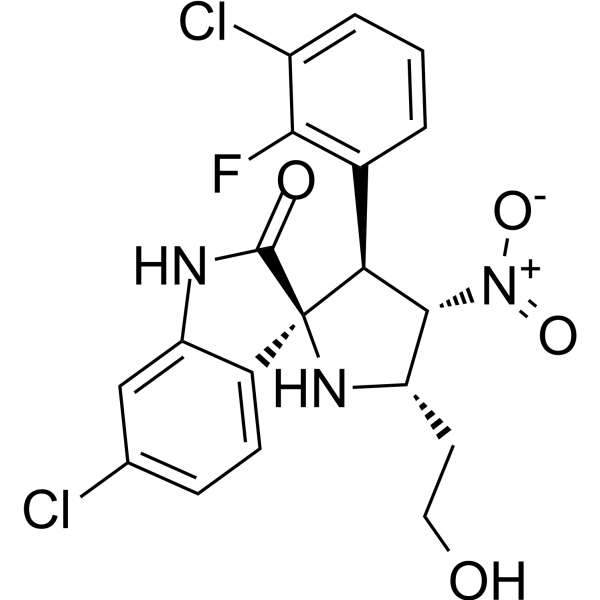 0 ImagesCat. No.: HY-161039CAS No.: 1818291-95-0MDM2-p53-IN-18 (Compd A-7b) is a MDM2-p53 interaction inhibitor.
-
Idasanutlin (Standard)
 0 ImagesSynonyms: RG7388 (Standard)Idasanutlin (Standard) (RG7388 (Standard)) is the analytical standard of Idasanutlin (HY-15676). This product is intended for research and analytical applications. Idasanutlin (RG7388) is an orally bioavailable MDM2 inhibitor with an IC50 of 6 nM. Idasanutlin disrupts MDM2-p53 binding, stabilizes and activates p53, triggering cell cycle arrest, apoptosis, and reduced cancer cell viability. Idasanutlin reduces EGFR protein expression and phosphorylation, suppresses downstream SHP2, MEK1/2, ERK1/2, AKT, mTOR, p70(S6K1), and S6 signaling. Idasanutlin induces mitochondrial ROS production, drives p38 MAPK phosphorylation, upregulates NOXA, and mediates caspase-3-dependent apoptosis and gasdermin E-mediated pyroptosis. Idasanutlin can be used for the research of TP53-mutant non-small cell lung cancer, T-cell acute lymphoblastic leukemia, colorectal carcinoma, melanoma, diffuse large B-cell lymphoma, mantle cell lymphoma, non-Hodgkin lymphoma, severe fever with thrombocytopenia syndrome, neuroblastoma, acute lymphoblastic leukemia, relapsed or refractory acute myeloid leukemia, osteosarcoma, solid tumors, and hematological tumors.
-
Versicolorin A
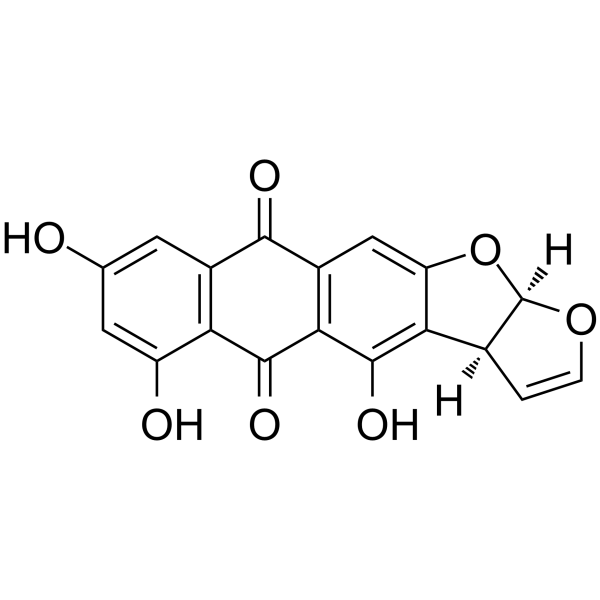 0 ImagesVersicolorin A is a biosynthetic precursor of Aflatoxin B1 (HY-N6615). Versicolorin A induces phosphorylation of p53. Versicolorin A activates the aryl hydrocarbon receptor AhR and significantly induces the expression of CYP1A1. Versicolorin A exerts genotoxic and cytotoxic effects. Versicolorin A enhances the genotoxicity of aflatoxin B1 in cells by promoting CYP450-mediated bioactivation of aflatoxin B1. Versicolorin A can be used in research related to colorectal cancer and hepatocellular carcinoma.
-
Nutlin-2
 0 ImagesCat. No.: HY-130303CAS No.: 548472-76-0
-
COTI-2 hydrochloride
 0 ImagesCat. No.: HY-19896ACAS No.: 1204956-74-0COTI-2 hydrochloride is an orally active thiosemicarbazone anticancer agent and p53 mutant activator. COTI-2 hydrochloride induces Apoptosis. COTI-2 hydrochloride triggers the activation of AMPK and the inhibition of the mTOR pathway. COTI-2 hydrochloride induces DNA damage and replication stress responses. COTI-2 hydrochloride binds to misfolded mutant p53 proteins, thereby inducing conformational changes that restore p53 to its normal state and reactivate its function. COTI-2 hydrochloride acts on a variety of cancer cell lines and xenografts. COTI-2 hydrochloride can be used in research related to colorectal cancer, small cell lung cancer, glioblastoma, breast cancer, and ovarian cancer.
-
Pifithrin-β
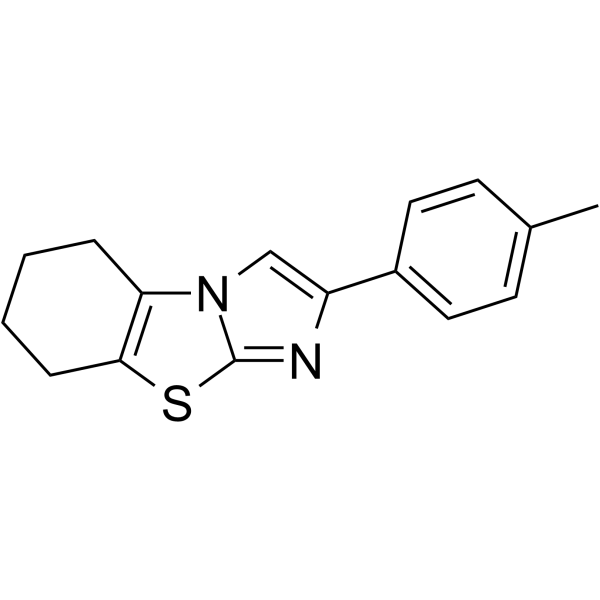 0 ImagesCat. No.: HY-16702CAS No.: 60477-34-1Synonyms: PFT β; Cyclic Pifithrin-αPifithrin-β (PFT β) is a potent p53 inhibitor with an IC50 of 23 μM.
-
HX531 (Standard)
 0 ImagesCat. No.: HY-108521RCAS No.: 188844-34-0HX531 (Standard) is the analytical standard of HX531 (HY-108521). This product is intended for research and analytical applications. HX531 is an orally active RXR antagonist with an IC50 of 18 nM. HX531 upregulates the p53-p21Cip1 pathway. HX531 abrogates the anti-apoptotic effect of t-RA. HX531 exerts anti-obesity, anti-diabetic and anti-melanoma activities.
-
RO5353
 0 ImagesCat. No.: HY-12580CAS No.: 1360821-61-9
-
USP7-IN-20
 0 ImagesCat. No.: HY-183942CAS No.: 2196246-28-1USP7-IN-20 is a highly selective USP7 inhibitor that binds allosterically to the allosteric pocket of USP7 in a non-competitive and reversible manner. USP7-IN-20 downregulates MDM2 protein levels and stabilizes p53, thereby inducing p21 expression and enhancing the ubiquitin-dependent degradation of MDM2. USP7-IN-20 effectively binds endogenous USP7 to inhibit cancer cell proliferation, and also induces apoptosis by promoting the cleavage of PARP and caspase 3. USP7-IN-20 can be widely used in cancer-related basic and translational research.
-
MX69 (Standard)
 0 ImagesCat. No.: HY-100892RCAS No.: 1005264-47-0
-
KYP-2047 (Standard)
 0 ImagesCat. No.: HY-100475RCAS No.: 796874-99-2KYP-2047 (Standard) is the analytical standard of KYP-2047 (HY-100475). This product is intended for research and analytical applications. KYP-2047 is a potent and BBB-penetrating prolyl-oligopeptidase (POP) inhibitor, with an Ki value of 0.023 nM. KYP-2047 reduces glioblastoma proliferation through angiogenesis and apoptosis modulation.
-
Nutlin-3a (Standard)
 0 ImagesCat. No.: HY-10029RCAS No.: 675576-98-4Synonyms: Rebemadlin (Standard)Nutlin-3a (Standard) is the analytical standard of Nutlin-3a (HY-10029). This product is intended for research and analytical applications. Nutlin-3a (Rebemadlin), an active enantiomer of Nutlin-3, is a potent murine double minute (MDM2) inhibitor (IC50=90 nM). Nutlin-3a inhibits MDM2-p53 interactions and stabilizes the p53 protein, and induces cell autophagy and apoptosis. Nutlin-3a has the potential for the study of TP53 wild-type ovarian carcinomas.
-
MDM2-p53-IN-20
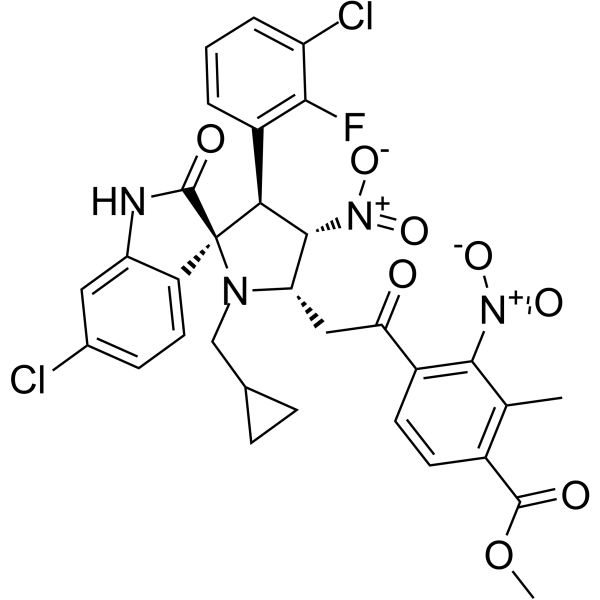 0 ImagesCat. No.: HY-161041CAS No.: 2095120-09-3MDM2-p53-IN-20 (Compd B-11j) is a synthetic MDM2-p53 interaction inhibitor that play an important role in cancer.
-
p53 and MDM2 proteins-interaction-inhibitor (racemic)
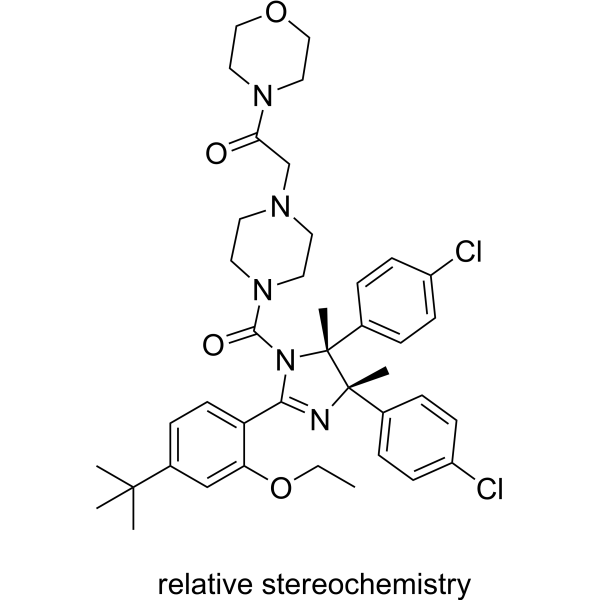 0 ImagesCat. No.: HY-70028CAS No.: 939983-14-9
-
TDP-665759
 0 ImagesCat. No.: HY-18329CAS No.: 787632-66-0




