



MDM-2/p53
The p53 tumor suppressor is a principal mediator of growth arrest, senescence, and apoptosis in response to a broad array of cellular damage. p53 is a short-lived protein that is maintained at low, often undetectable, levels in normal cells. Under stress conditions, the p53 protein accumulates in the cell, binds in its tetrameric form to p53-response elements and induces the transcription of various genes.
MDM-2 is transcriptionally activated by p53 and MDM-2, in turn, inhibits p53 activity in several ways. MDM-2 binds to the p53 transactivation domain and thereby inhibits p53-mediated transactivation. MDM-2 also contains a signal sequence that is similar to the nuclear export signal of various viral proteins and, after binding to p53, it induces its nuclear export. As p53 is a transcription factor, it needs to be in the nucleus to be able to access the DNA; its transport to the cytoplasm by MDM-2 prevents this. Finally, MDM-2 is a ubiquitin ligase, so is able to target p53 for degradation by the proteasome.
In many tumors p53 is inactivated by the overexpression of the negative regulators MDM2 and MDM4 or by the loss of activity of the MDM2 inhibitor ARF. The pathway can be reactivated in these tumors by small molecules that inhibit the interaction of MDM2 and/or MDM4 with p53. Such molecules are now in clinical trials.
All Product Categories
-
MDM-2/p53 Inhibitors
(108)
View all products
-
MDM-2/p53 Agonists
(8)
View all products
-
MDM-2/p53 Antagonists
(4)
View all products
-
MDM-2/p53 Activators
(132)
View all products
-
MDM-2/p53 Modulators
(24)
View all products
-
MDM-2/p53 MDM2 Inhibitors
(67)
View all products
-
MDM-2/p53 p53 Activators
(108)
View all products
-
MDM-2/p53 p53 Inhibitors
(16)
View all products
-
MDM-2/p53 Inducers
(17)
View all products
-
MDM-2/p53 Degraders
(6)
View all products
-
MDM-2/p53 Controls
(6)
View all products
-
MDM-2/p53 Ligands
(7)
View all products
-
MDM-2/p53 Related Products (579)
Related Products (579)

-
Antibodies (17)
-
MDM-2/p53 Signaling Pathway
-
Bromuconazole
 0 ImagesCat. No.: HY-W715812CAS No.: 116255-48-2Bromuconazole is a triazole fungicide with oral efficacy and blood-brain barrier permeability. Bromuconazole protects crops from various fungal contaminations. Bromuconazole exhibits cytotoxicity against a variety of cancer cells, induces G0/G1 cell cycle arrest and inhibits DNA synthesis in cancer cells, and triggers cytoskeletal structural disorder, genotoxic damage, apoptotic (apoptosis) cell death, and mitochondrial membrane depolarization. Bromuconazole activates caspase-3, induces excessive production of ROS, p53 and Bax, lipid peroxidation, increased activities of SOD and CAT, and downregulates Bcl-2. By upregulating p-ERK1/2 and p-JNK, Bromuconazole disrupts the MAPK signaling pathway, impairs the cellular stress response of human trophoblast cells and endometrial cells, and damages the implantation process. Bromuconazole is applicable to research related to glioma, colon cancer, reproductive injury (implantation dysfunction), and cardiac dysfunction.
-
p53-MDM2-IN-3
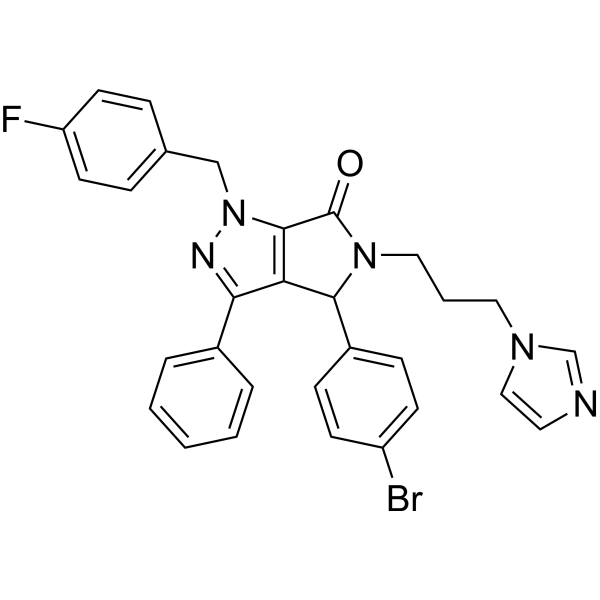 0 ImagesCat. No.: HY-121893CAS No.: 1542066-74-9p53-MDM2-IN-3 (Compound 5s) is an orally active p53-MDM2 inhibitor with a Ki value of 0.25 μM. p53-MDM2-IN-3 exerts antitumor activity by inhibiting NF-κB pathway.
-
Rhodojaponin VI
 0 ImagesRhodojaponin VI is an orally active diterpenoid compound found in hododendron molle G. Don
(Ericaceae) (RM). Rhodojaponin VI binds rat N-Ethylmaleimide-sensitive fusion (NSF) with a Kd of 1.03 μM. Rhodojaponin VI blocks the MDM2-Notch1 signalling pathway by reducing MDM2 and Notch1 expression. Rhodojaponin VI indirectly reduces Cav2.2 current intensity by inhibiting NSF-mediated Cav2.2 trafficking. Rhodojaponin VI alleviates glomerulonephritis progression and podocyte injury in passive heymann nephritis rats. Rhodojaponin VI also has antinociceptive effects. Rhodojaponin VI can be used for the researches of heymann nephritis and pain.
-
HBX 41108 (Standard)
 0 ImagesHBX 41108 (Standard) is the analytical standard of HBX 41108 (HY-101666). This product is intended for research and analytical applications. HBX 41108 is an inhibitor of ubiquitin-specific protease 7 (USP7) with an IC50 of 424 nM. HBX 41108 inhibits USP7-mediated p53 deubiquitination to stabilize p53 and inhibits cancer cell growth. BX 41108 can be used in cancer and diabetes research.
-
Conessine dihydrobromide
 0 ImagesCat. No.: HY-107566ACAS No.: 5913-82-6Conessine dihydrobromide is an orally active and BBB-penetrable selective histamine H3 receptor antagonist. The pKi values of Conessine dihydrobromide for rat and human H3 receptors are 7.61 and 8.27, respectively. Conessine dihydrobromide is an inhibitor of the multidrug efflux pump system in Pseudomonas aeruginosa and can enhance the activity of antibiotics. Conessine dihydrobromide has antimalarial activity. Conessine dihydrobromide can also be used in the research of muscle atrophy.

-
AKCI
 0 ImagesCat. No.: HY-119948CAS No.: 669750-88-3AKCI is a type of AURKC-IκBα interaction inhibitor, with an IC50 value of 24.9 μM. In MDA-MB-231 cells, AKCI can induce G2/M cell cycle arrest by regulating the p53/p21/CDC2/cyclin B1 pathway, inhibit cell migration and invasion, and reduce colony formation and tumor growth. AKCI can be used for research on breast cancer.
-
p53 Activator 11
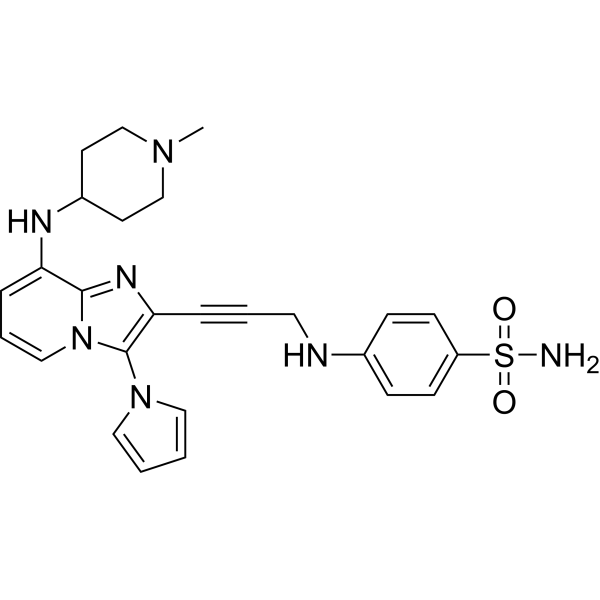 0 ImagesCat. No.: HY-160450CAS No.: 2850211-42-4p53 Activator 11 (compound A-1) is a potent p53 activator with an EC50 value of 0.478 µM for p53 (Y220C). p53 Activator 11 has the potential for the research of cancer.
-
Higenamine (Standard)
 0 ImagesSynonyms: Norcoclaurine (Standard); Demethyl-Coclaurine (Standard)Higenamine (Norcoclaurine), a β2-AR agonist with antioxidant capability, is a key component of the Chinese herb aconite root that prescribes for treating symptoms of heart failure in the oriental Asian countries. Higenamine is also a α1-adrenergic receptor antagonist with hypotensive effect. is a selective LSD1 inhibitor (IC50=1.47 μM) that can be isolated from aconite. Higenamine hydrochloride has anti-inflammatory and antibacterial activity. Higenamine protects myocyte Apoptosis and ischemia/reperfusion (I/R) injury through selective activation of beta2-adrenergic receptor (β2-AR). Higenamine also reduces I/R-induced myocardial infarction in mice. Higenamine can attenuate IL-1β-induced Apoptosis through ROS-mediated PI3K/Akt signaling pathway. Higenamine protects brain cells from oxygen deprivation. Higenamine can promote bone formation in osteoporosis through the SMAD2/3 pathway. Higenamine can be used to study cancer, inflammation, cardiorenal syndrome and other diseases.
-
Sulfabenzamide (Standard)
 0 ImagesSulfabenzamide (N-Sulfanilylbenzamide) (Standard) is the analytical standard of Sulfabenzamide (HY-B0960). This product is intended for research and analytical applications. Sulfabenzamide is a sulfonamide antibacterial agent. Sulfabenzamide exhibit antibacterial activity against Staphylococcus aureus (ATCC 25923) and Escherichia coli (ATCC 8739). Sulfabenzamide can promote autophagic cell autophagy in breast cancer cells through p53/ DRAM pathway. Sulfabenzamide increases caspase-3 activity, deactivates PARP1 and DNA-PK, downregulates AKT1 and AKT2. Sulfabenzamide can be used for the researches of breast cancer and bacterial infections.
-
MIRA-1 (Standard)
 0 ImagesCat. No.: HY-108639RCAS No.: 72835-26-8Synonyms: NSC 19630 (Standard)MIRA-1 (Standard) is the analytical standard of MIRA-1 (HY-108639). This product is intended for research and analytical applications. MIRA-1 is a maleimide analogue. MIRA-1 can induce apoptosis in mutant p53 cells via restoration of p53-dependent transcriptional transactivation. MIRA-1 has anticancer activity.
-
HLI98C
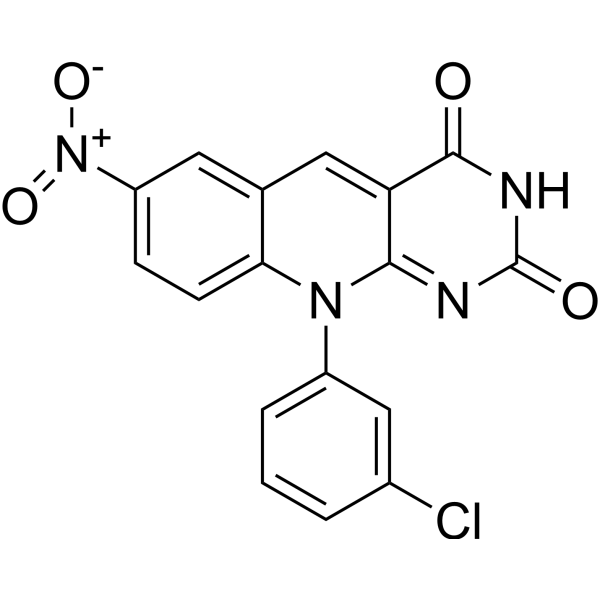 0 ImagesCat. No.: HY-18327CAS No.: 317326-90-2HLI98C is a ubiquitin ligase inhibitor. HLI98C inhibits p53 ubiquitylation. HLI98C inhibits HDM2 auto-ubiquitylation.
-
Pretilachlor (Standard)
 0 ImagesCat. No.: HY-B2035RCAS No.: 51218-49-6Pretilachlor (Standard) is the analytical standard of Pretilachlor (HY-B2035). This product is intended for research and analytical applications. Pretilachlor is a chloroacetamide herbicide with biological activities including endocrine disruption, oxidative stress induction, apoptosis induction, and immunotoxicity. Pretilachlor exerts its effects by interfering with hormone metabolism, inducing oxidative stress, activating apoptotic pathways, and inhibiting immune functions. Pretilachlor upregulates the transcription of P53, Mdm2, and Bbc3, and increases the activities of Caspase3 and Caspase9; it upregulates the transcription of genes in the HPG/HPT axis and the activity of aromatase; it induces oxidative stress, elevates ROS levels, and upregulates CAT, SOD, and GPX. Pretilachlor downregulates the transcription of CXCL-C1C, IL-1β, and IL-8. Pretilachlor disrupts the normal physiological processes and embryonic development of fish, exhibiting significant toxicity. Pretilachlor can be used in studies related to weeding, environmental pollution, and behavioral toxicity in fish.
-
Pifithrin-α hydrobromide (Standard)
 0 ImagesCat. No.: HY-15484RCAS No.: 63208-82-2Synonyms: Pifithrin hydrobromide (Standard); PFTα hydrobromide (Standard)Pifithrin-α (hydrobromide) (Standard) is the analytical standard of Pifithrin-α (hydrobromide). This product is intended for research and analytical applications. Pifithrin-α hydrobromide is a p53 inhibitor which blocks its transcriptional activity and prevents cells from apoptosis. Pifithrin-α hydrobromide is also an aryl hydrocarbon receptor (AhR) agonist.

-
GSK3326595 (Standard)
 0 ImagesSynonyms: EPZ015938 (Standard)GSK3326595 (Standard) is the analytical standard of GSK3326595 (HY-101563). This product is intended for research and analytical applications. GSK3326595 is a protein arginine methyltransferase 5 (PRMT5) inhibitor. GSK3326595 decreases SARS-CoV-2 infection, inhibits cancer cell proliferation and induces pro-inflammatory macrophage polarization and increases hepatic triglyceride levels without affecting atherosclerosis. GSK3326595 can be used for research of relapsed/refractory mantle cell lymphoma.
-
Alrizomadlin (Standard)
 0 ImagesCat. No.: HY-101518RCAS No.: 1818393-16-6Synonyms: APG-115 (Standard); AA-115 (Standard)Alrizomadlin (Standard) is the analytical standard of Alrizomadlin (HY-101518). This product is intended for research and analytical applications. Alrizomadlin (APG-115) is an orally active MDM2 protein inhibitor binding to MDM2 protein with IC50 and Ki values of 3.8 nM and 1 nM, respectively. Alrizomadlin blocks the interaction of MDM2 and p53 and induces cell-cycle arrest and apoptosis in a p53-dependent manner.
-
SCH529074 (Standard)
 0 ImagesCat. No.: HY-110088RCAS No.: 922150-11-6SCH529074 (Standard) is the analytical standard of SCH529074 (HY-110088). This product is intended for research and analytical applications. SCH529074 is a potent and orally active p53 activator. SCH529074 binds specifically and conformation-dependently to p53 DBD ( DNA binding domain) with a Ki of 1-2 μM in a saturable manner. SCH529074 restores mutant p53 function and interrupts HDM2-mediated ubiquitination of wild Type p53. SCH529074 can be used for the study of non-small-cell lung carcinoma (NSCLC).
-
RG7112 (Standard)
 0 ImagesCat. No.: HY-10959RCAS No.: 939981-39-2Synonyms: RO5045337 (Standard)
-
Nutlin-3 (Standard)
 0 ImagesNutlin-3 (Standard) is the analytical standard of Nutlin-3. This product is intended for research and analytical applications. Nutlin-3 is a commercial available p53-MDM2 inhibitor, with Ki of 90 nM.




