



TGF-beta/Smad
Transforming growth factor beta
Transforming growth factor-beta (TGF-β) is a member of a superfamily of pleiotropic proteins that regulate multiple cellular processes such as growth, development and differentiation. The intracellular effectors of TGF-beta signalling, the Smad proteins, are activated by receptors and translocate into the nucleus, where they regulate transcription. Although this pathway is inherently simple, combinatorial interactions in the heteromeric receptor and Smad complexes, receptor-interacting and Smad-interacting proteins, and cooperation with sequence-specific transcription factors allow substantial versatility and diversification of TGF-beta family responses. Other signalling pathways further regulate Smad activation and function.
In addition, TGF-beta receptors activate Smad-independent pathways that not only regulate Smad signalling, but also allow Smad-independent TGF-beta responses. Aberrant TGF-β signaling is associated with a variety of diseases, such as fibrosis, cardiovascular disease and cancer. Hence, the TGF-β signaling pathway is recognized as a potential drug target.
TGF-beta/Smad Isoform Specific Products
All Product Categories
-
TGF-beta/Smad Inhibitors
(202)
View all products
-
TGF-beta/Smad Agonists
(7)
View all products
-
TGF-beta/Smad Antagonist
(1)
View all products
-
TGF-beta/Smad Activators
(35)
View all products
-
TGF-beta/Smad Modulators
(6)
View all products
-
TGF-beta/Smad Inducers
(6)
View all products
-
TGF-beta/Smad Control
(1)
View all products
-
TGF-β1 Proteins
(39)
View all products
-
TGF-β2 Proteins
(9)
View all products
-
TGF-β3 Proteins
(6)
View all products
-
Smad Family Proteins
(8)
View all products
-
SMAD2 Proteins
(2)
View all products
-
SMAD3 Proteins
(3)
View all products
-
SMAD4 Proteins
(1)
View all products
-
SMAD5 Proteins
(2)
View all products
-
TGF-β Proteins
(53)
View all products
-
TGF-beta/Smad Related Products (282)
Related Products (282)

-
Recombinant Proteins (62)
-
Antibodies (18)
-
TGF-beta/Smad Isoform Comparison
-
Relaxin H3 (human)
 0 ImagesCat. No.: HY-P4890CAS No.: 1158181-62-4Relaxin H3 (human) is a relaxin peptide with anti-inflammatory, anti-apoptotic, anti-pyroptotic, anti-migratory, protective and anti-fibrotic activities. Relaxin H3 (human) acts on RXFP1 to generate cAMP and reduce the levels of ATP and ROS. Relaxin H3 (human) inhibits renal inflammatory pyroptosis (pyroptosis), NLRP3 inflammasome activation, caspase-1 activation, IL-1β/IL-18 secretion, collagen synthesis, TGF-β1 signaling pathway, Smad2 phosphorylation, myofibroblast differentiation, TIMP expression, and HRMEC migration. Relaxin H3 (human) activates AMPK, upregulates MFN2 expression, improves mitochondrial quality control and membrane potential, inhibits apoptosis (apoptosis) and pyroptosis, restores retinal ultrastructure, and reverses excessive left ventricular collagen expression. Relaxin H3 (human) can be used in studies related to kidney stones, nephrocalcinosis, diabetic cardiomyopathy, fibrotic cardiomyopathy, and diabetic retinopathy.
-
Fusaric acid (Standard)
 0 ImagesFusaric acid (Standard) is the analytical standard of Fusaric acid (HY-128483). This product is intended for research and analytical applications. Fusaric acid is an orally active multi-pathway inhibitor with the activity of inducing oxidative stress and apoptosis. Fusaric acid can chelate divalent metal cations, damage mitochondrial membrane structure, and activate apoptosis-related proteases such as Caspase-3/7, -8, and -9. Fusaric acid also regulates Bax/Bcl-2 protein, inhibits fibrosis-related signaling pathways such as NF-κB, TGF-β1/SMADs, and PI3K/AKT/mTOR, and reduces collagen deposition. Fusaric acid is also a dopamine β-hydroxylase inhibitor, which reduces endogenous levels of norepinephrine and epinephrine in the brain, heart, spleen, and adrenal glands. Fusaric acid can play a role in myocardial fibrosis and improve cardiac hypertrophy in heart disease, and can also be used in the study of esophageal cancer and liver cancer.
-
Anabolic agent-1
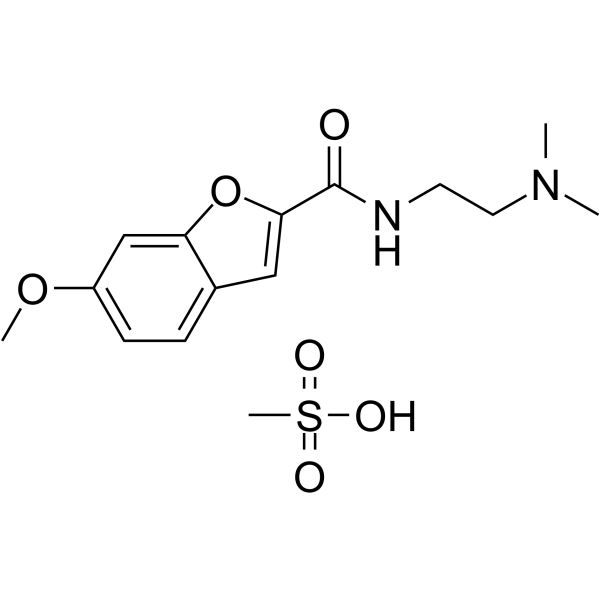 0 ImagesCat. No.: HY-146056CAS No.: 2439179-74-3Compounds, as a new type of bone morphogenetic protein-2 up regulator, can not only correct the bone loss in patients, but also have a wide range of clinical applicability.
-
Hydronidone (Standard)
 0 ImagesHydronidone (Standard) is the analytical standard of Hydronidone (HY-100438). This product is intended for research and analytical applications. Hydronidone is an orally active pyridine derivative. Hydronidone is an inhibitor of phosphodiesterase-4 (PDE4) and cyclo-oxygenase (COX) as well as TGF-β. Hydronidone induces mitochondrial dysfunction and triggers apoptosis. Hydronidone can be used for liver fibrosis, anti-inflammation and anti-cancer study.
-
Fluorofenidone (Standard)
 0 ImagesFluorofenidone (Standard) is the analytical standard of Fluorofenidone (AKF-PD) (HY-121246). This product is intended for research and analytical applications. Fluorofenidone is an orally active compound with anti-fibrotic, antioxidant, and anti-inflammatory pharmacological effects. Fluorofenidone downregulates the expression of ACSL4, upregulates GPX4 expression and inhibits the NF-κB signaling pathway to alleviate inflammation and fibrosis. Fluorofenidone ameliorates cholestasis and fibrosis by inhibiting hepatic Erk/-Egr-1 signaling and Tgfβ1/Smad pathway in mice. Fluorofenidone demonstrates protective effects against chronic lung injury in mice. Fluorofenidone can be used for the study of chronic obstructive pulmonary disease (COPD), pulmonary interstitial fibrosis (PIF) and non-small cell lung cancer (NSCLC).
-
Ligustroflavone (Standard)
 0 ImagesCat. No.: HY-N0546RCAS No.: 260413-62-5Synonyms: Nuezhenoside (Standard)Ligustroflavone (Standard) is the analytical standard of Ligustroflavone (HY-N0546). This product is intended for research and analytical applications. Ligustroflavone is an orally active flavonoid compound. Ligustroflavone can be extracted from Ligustrum lucidum. Ligustroflavone antagonizes the calcium-sensing receptor (CaSR), inhibits the RIPK1/RIPK3/MLKL pathway, and downregulates TGF-β/Smad signaling. Ligustroflavone regulates calcium metabolism, protects bone tissue, reduces cerebral ischemic injury, and inhibits liver fibrosis. Ligustroflavone can be used in the study of diabetic osteoporosis, ischemic stroke, and liver fibrosis.
-
(+)-ITD-1
 0 ImagesCat. No.: HY-137063CAS No.: 1409968-46-2(+)-ITD-1 is an inhibitor for TGF-β, that inhibits the TGF-β2 with an IC50 of 0.46 μM. (+)-ITD-1 promotes the degradation of TGF-b type II receptor (TGFBR2) and the differentiation of cardiomyocyte, and inhibits the mesoderm formation in the early differentiation stage of mouse embryonic stem cells (mESCs).
-
SRI-011381 hydrochloride (Standard)
 0 ImagesSRI-011381 (hydrochloride) (Standard) is the analytical standard of SRI-011381 (hydrochloride) (HY-100347A). This product is intended for research and analytical applications. SRI-011381 hydrochloride is an orally active TGF-β signaling agonist, exhibits neuroprotective effects.
-
Anti-TGFb1 Antibody
 0 ImagesCat. No.: HY-P990517Purity: 98.24%Anti-TGFb1 Antibody is a humanized antibody expressed in CHO cells that targets TGFb1. The Anti-TGFb1 Antibody has a huIgG1 type heavy chain and a huκ type light chain, with a predicted molecular weight (MW) of 145 kDa. The isotype control for Anti-TGFb1 Antibody can refer to Human IgG1 kappa, Isotype Control (HY-P99001).
-
Anti-LAP Antibody
 0 ImagesCat. No.: HY-P990460Anti-LAP Antibody is a humanized antibody expressed in CHO cells, targeting LAP. The Anti-LAP Antibody features a huIgG2 heavy chain and a huκ light chain, with a predicted molecular weight (MW) of 150 kDa. For isotype control of the Anti-LAP Antibody, you can refer to Human IgG2 kappa, Isotype Control (HY-P99002).
-
MPT0B098
 0 ImagesCat. No.: HY-124595CAS No.: 1254363-89-7MPT0B098 is a microtubule inhibitor with a Ki of 0.8 μM and an IC50 of 0.8 μM. MPT0B098 inhibits tubulin polymerization, blocks HuR nuclear-cytoplasmic translocation to decrease HIF-1α mRNA stability, suppresses HIF-1α, TGF-β/Smad, JAK2/STAT3 and FAK/actin cytoskeleton signaling pathways, upregulates SOCS3 to reinforce the inhibition of JAK2/STAT3 cascade, and induces apoptosis. MPT0B098 can be used for research on multiple malignancies including head and neck squamous cell carcinoma and human non-small cell lung cancer.
-
Fluorofenidone-d3
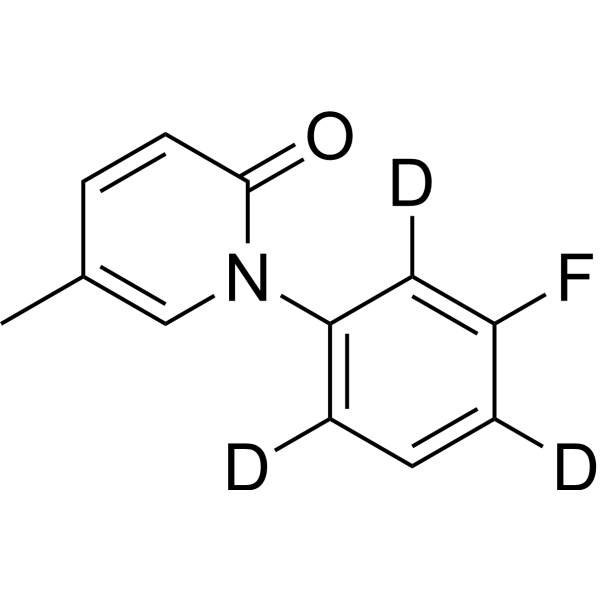 0 ImagesCat. No.: HY-121246SSynonyms: AKF-PD-d3Fluorofenidone-d3 (AKF-PD-d3) is deuterium labeled Fluorofenidone (AKF-PD) (HY-121246). Fluorofenidone is an orally active compound with anti-fibrotic, antioxidant, and anti-inflammatory pharmacological effects. Fluorofenidone downregulates the expression of ACSL4, upregulates GPX4 expression and inhibits the NF-κB signaling pathway to alleviate inflammation and fibrosis. Fluorofenidone ameliorates cholestasis and fibrosis by inhibiting hepatic Erk/-Egr-1 signaling and Tgfβ1/Smad pathway in mice. Fluorofenidone demonstrates protective effects against chronic lung injury in mice. Fluorofenidone can be used for the study of chronic obstructive pulmonary disease (COPD), pulmonary interstitial fibrosis (PIF) and non-small cell lung cancer (NSCLC).
-
Oxymatrine-d3
 0 ImagesCat. No.: HY-W750902CAS No.: 2714484-46-3Oxymatrine-d3 is the deuterium labeled Oxymatrine (HY-N0158). Oxymatrine, an alkaloid from Sophora flavescens Alt. with anti-inflammatory, antifibrosis, and antitumor effects, inhibits the iNOS expression and TGF-β/Smad pathway. Oxymatrine inhibits bocavirus minute virus of canines (MVC) replication, reduces viral gene expression and decreases apoptosis induced by viral infection.
-
3,3-Dimethyl-1-butanol (Standard)
 0 ImagesCat. No.: HY-W012977RCAS No.: 624-95-3Synonyms: DMB (Standard); Neohexanol (Standard)3,3-Dimethyl-1-butanol (Standard) is the analytical standard of 3,3-Dimethyl-1-butanol (HY-W012977). This product is intended for research and analytical applications. 3,3-Dimethyl-1-butanol (DMB) is an orally active inhibitor of trimethylamine (TMA) and trimethylamine N-oxide (TMAO). 3,3-Dimethyl-1-butanol inhibits the signaling pathway of p65 NF-κB and TGF-β1/Smad3. 3,3-Dimethyl-1-butanol has potential applications in cardiovascular disease (CVD).
-
Aloin (mixture of A&B) (Standard)
 0 ImagesAloin (mixture of A&B) (Standard) is the analytical standard of Aloin (mixture of A&B) (HY-N6013). This product is intended for research and analytical applications. Aloin (mixture of A&B) is an orally active anthraquinone derivative isolated from Aloe vera. Aloin (mixture of A&B) mitigates airway impairment and exerts neuroprotective, anti-inflammatory, antioxidant, antibacterial, antifungal, antiviral and antitumor effects. Aloin (mixture of A&B) inhibits Clostridium histolyticum collagenase, granulocyte matrix metalloproteinases and human 20S proteasome. Aloin (mixture of A&B) upregulates the Nrf2/HO-1 pathway, suppresses the TGF-β/Smad2/3 pathway. Aloin (mixture of A&B) reduces IL-4/IL-5/IL-13 levels, and reverses oxidative stress markers (MDA, SOD, GSH). Aloin (mixture of A&B) can be used for research on chronic ulcers, burns, wounds, inflammatory and degenerative disorders, asthma and neuroblastoma.
-
ISTH0036 sodium scrambled negative control
 0 ImagesCat. No.: HY-158821BISTH0036 sodium scrambled negative control is the sequence scrambled negative control of ISTH0036 sodium (HY-158821A). ISTH0036 sodium is a phosphorothioate LNA-modified antisense oligonucleotide gapmer that selectively targets and downregulates TGF-β2 mRNA. ISTH0036 sodium suppresses TGF-β2 expression, reduces choroidal neovascularization and vascular leakage, inhibits fibrosis, blocks epithelial-to-mesenchymal transition, and inhibits angiogenesis while promoting bleb survival. ISTH0036 sodium exhibits long-lasting, dose-dependent ocular tissue distribution and target engagement in rabbit and non-human primate eyes. ISTH0036 sodium can be used for the study of various ocular disorders, such as glaucoma and neovascular retinal diseases.
-
NCB-0846 (Standard)
 0 ImagesNCB-0846 (Standard) is the analytical standard of NCB-0846 (HY-100830). This product is intended for research and analytical applications. NCB-0846 is an orally active, selective inhibitor for Wnt, that inhibits Traf2- and Nck-interacting kinase (TNIK) with an IC50 of 21 nM. NCB-0846 blocks TGF-β signaling pathway by inhibiting SMAD2/3 phosphorylation and nuclear translocation.
-
3'-Methoxy-4'-nitroflavone
 0 ImagesCat. No.: HY-20888CAS No.: 145370-39-4Synonyms: MNF3'-Methoxy-4'-nitroflavone (MNF) is a specific aryl hydrocarbon receptor (AhR) antagonist. 3'-Methoxy-4'-nitroflavone activates AhR by inhibiting CYP1, the metabolic enzyme of the endogenous ligand FICZ (HY-12451), leading to the accumulation of FICZ. 3'-Methoxy-4'-nitroflavone reverses the anti-apoptotic effect of TCDD, attenuates the activation of Akt and Erk1/2 kinases and the expression of TGFα induced by TCDD. 3'-Methoxy-4'-nitroflavone can be used in research related to breast tumor promotion, rheumatoid arthritis, multiple sclerosis and inflammatory bowel disease.
-
Micheliolide (Standard)
 0 ImagesMicheliolide is a sesquiterpene lactone with anti-cancer and anti-inflammatory effects, which is derived from Michelia compressa and Michelia champaca. Micheliolide can attenuate high glucose-stimulated NF-κB activation, IκBα degradation, and the expression of MCP-1, TGF-β1, and FN in mouse mesangial cells. Micheliolide inhibits LPS (HY-D1056)-induced activation of NF-κB and PI3K/Akt/p70S6K pathways to play an anti-inflammatory role. Micheliolide inhibits dextran sodium sulphate (DSS) (HY-116282)-induced inflammatory intestinal disease, colitis-associated cancer and rheumatic arthritis.




