



Fluorescent Dye
Fluorescence is a phenomenon of photoluminescence in luminescence. When an atom is irradiated by light, some electrons around the nucleus jump from their original orbitals to higher energy orbitals under the influence of light energy, i.e., from the ground state to the first or second excited single-line state, etc. Due to the instability of the first or second excited singlet state, the electron returns from the excited singlet state to the ground state accompanied by released energy, resulting in fluorescence.
Fluorescent dyes can be covalently bound or physically adsorbed in the structure of the substance. The fluorescence properties allow for the characterization, localization and quantitative analysis of the labeled object. Fluorescent dyes have shown great potential for the detection of proteins, nucleic acids, cells, and immunoassays, attributed to the advantages in non-radioactive contamination, simple experimental operation and easy observation.
Fluorescent dyes have penetrated many fields such as pharmacology, physiology, environmental science, and information science, as well as functional studies of proteins and drug screening.
All Product Categories
-
Fluorescent Dye Related Products (4891)
Related Products (4891)

-
Antibodies (4)
-
Styryl 6
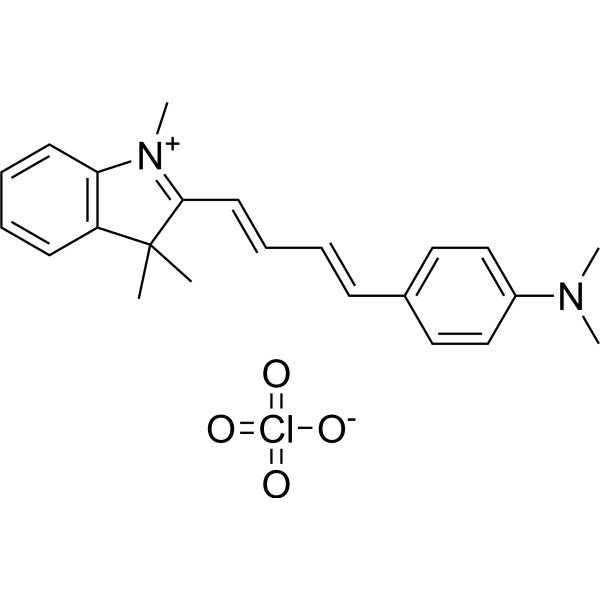 0 ImagesCat. No.: HY-D1762CAS No.: 76433-27-7Styryl 6 is a laser dye.
-
Meso-Cl cyanine 7 free acid chloride
 0 ImagesCat. No.: HY-N16316CAS No.: 3091879-84-1Meso-Cl cyanine 7 free acid chloride is a Meso-Cl cyanine fluorescent dye. Meso-Cl cyanine 7 free acid chloride can be used for labelling amine groups such as those on antibodies, nucleic acids, and proteins and can be detected using a variety of fluorescence detection techniques such as microscopy and flow cytometry (Ex/Em = 778/805 nm).
-
AF647-NHS ester tripotassium
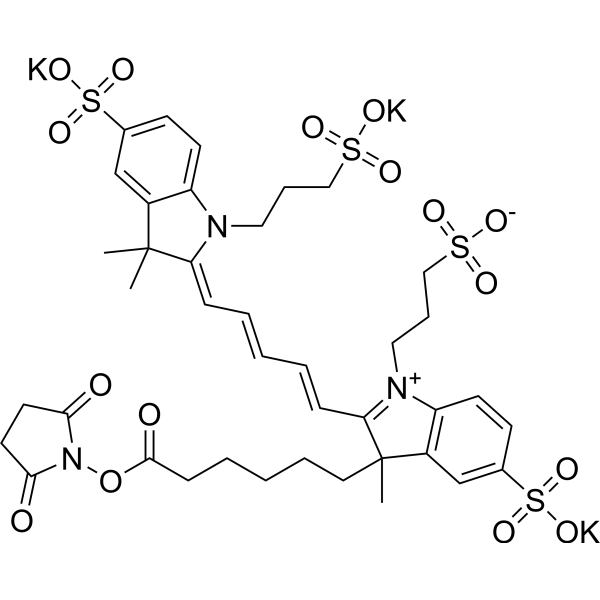 0 ImagesCat. No.: HY-D1119ACAS No.: 1453856-34-2AF647-NHS ester tripotassium is an analogue of Alexa Fluor 647 (AF647) (HY-D1119). NHS ester can covalently bind to molecules with amino groups (such as proteins, antibodies, etc.). AF647 is a bright, far-red fluorescent dye with an excitation wavelength (λex) of 635 nm (conventional fluorescence detection)/620 nm (instantaneous detection). Storage: protect from light.

-
3,3-Dibutylthiacarbocyanine iodide
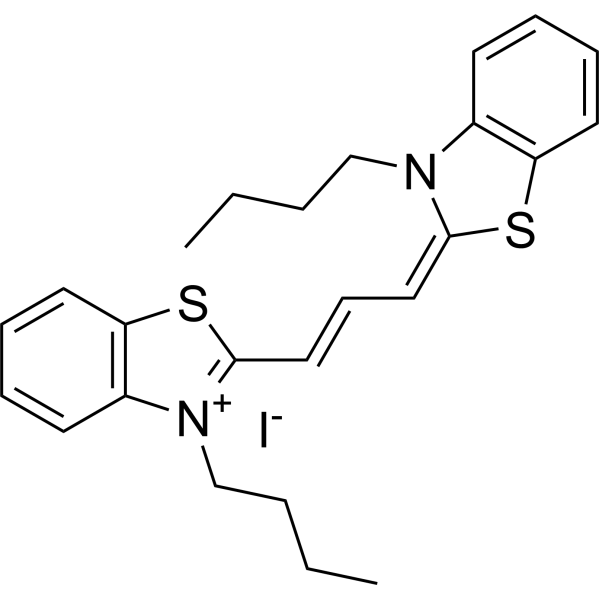 0 ImagesCat. No.: HY-D1483CAS No.: 53213-85-73,3-Dibutylthiacarbocyanine iodide is a fluorescent dye with an excitation of 559 nm and an emission 604 nm.
-
FAM labled Etidaligide sodium
 0 ImagesCat. No.: HY-177631CFAM labled Etidaligide sodiumis a FAM labled Etidaligide sodium.
-
Callose Staining Solution (Aniline Blue, Bright-Field Method)
 0 ImagesCat. No.: HY-DY2041Callose Staining Solution (Aniline Blue, Bright-Field Method) is a fluorescent dye used for detecting callose in plant tissues, green algal cell walls, plant cells, and protoplasts. Callose Staining Solution (Aniline Blue, Bright-Field Method) specifically binds to callose, a β-(1,3)-D-glucan polymer, and exhibits blue-green fluorescence under alkaline conditions with reduced background staining and non-toxicity to living cells. Callose Staining Solution (Aniline Blue, Bright-Field Method) is suitable for observation under UV or epifluorescence microscopy (Ex/Em = 365-370/397-509 nm). Callose Staining Solution (Aniline Blue, Bright-Field Method) can be used in studies related to the visualization of callose deposition in plants.
-
Alizarin Yellow R sodium
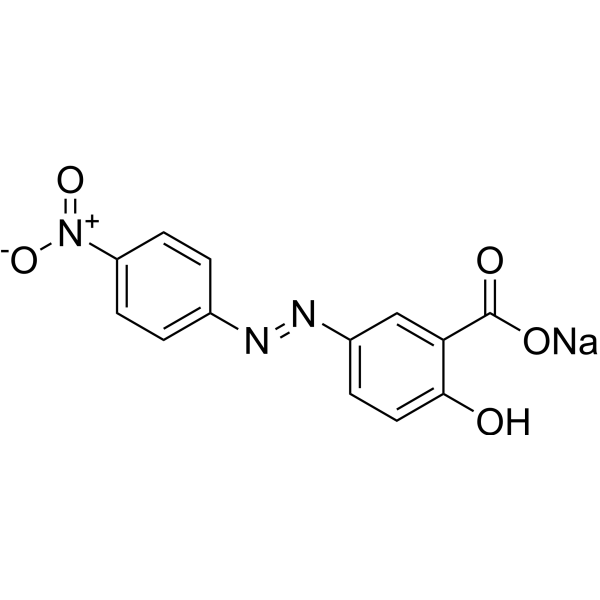 0 ImagesAlizarin Yellow R sodium is a multifunctional dye. Dyes are important tools in biological experiments. They can help researchers observe and analyze cell structures, track biomolecules, evaluate cell functions, distinguish cell types, detect biomolecules, study tissue pathology and monitor microorganisms. Their applications range from basic scientific research to clinical A wide range of diagnostics. Dyes are also widely used in traditional fields such as textile dyeing, as well as in emerging fields such as functional textile processing, food pigments and dye-sensitized solar cells.
-
Biotin-PEG2000-Alk
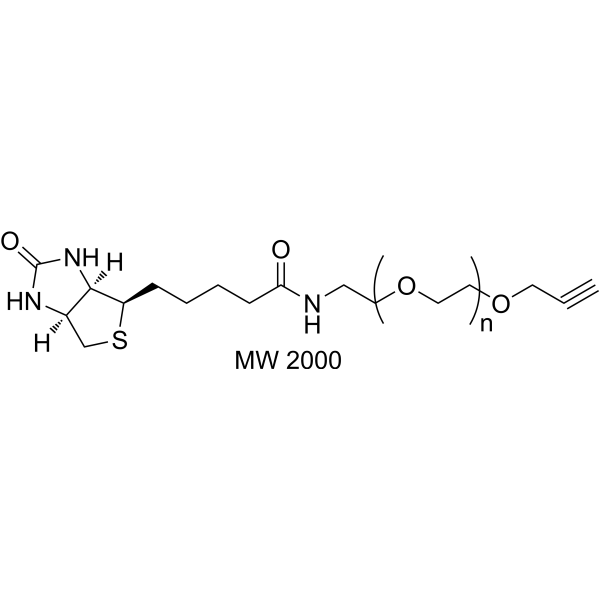 0 ImagesCat. No.: HY-147206BBiotin-PEG2000-Alk is a biotin labeled PEG derivative. Biotin is an enzyme co-factor, can be used for labeling protein; PEG is a hydrophilic and water-soluble polymer with low toxicity; Alk (Alkyne), acyclic (branched or unbranched) aliphatic hydrocarbon, can react with azido, which improve the efficiency of biotin binding targets. Biotin-PEG2000-Alk is a click chemistry reagent, it contains an Alkyne group and can undergo copper-catalyzed azide-alkyne cycloaddition (CuAAc) with molecules containing Azide groups.
-
Mitochondrial-targeted peptide BP19
 0 ImagesCat. No.: HY-P11637Mitochondrial-targeted peptide BP19 is a fluorescent probe for the selective measurement of labile iron in the mitochondriairon. Mitochondrial-targeted peptide BP19 exhibits iron-selective sensing activity with mitochondrial accumulation, reduced fluorescence in iron-loaded cells, and fluorescence reinstatement upon iron chelation. Mitochondrial-targeted peptide BP19 evaluates mitochondrial labile iron levels in cultured fibroblasts with Friedreich's ataxia.
-
MBED
 0 ImagesCat. No.: HY-119581CAS No.: 123363-40-6Synonyms: 9-Methyl-7-bromoeudistomin DMBED (9-Methyl-7-bromoeudistomin D) is a RyR agonist. MBED is a high-affinity caffeine-like probe, helps identify the caffeine-binding site in RyRs.

-
RB-PEG600-COOH
 0 ImagesCat. No.: HY-D2881ASynonyms: Rhodamine B-PEG600-COOHRB-PEG600-COOH (Rhodamine B-PEG600-COOH) is a fluorescent dye composed of Rhodamine B (HY-Y0016), PEG and a COOH. RRB-PEG600-COOH can be used for fluorescent labeling and imaging (Ex/Em=546/610 nm).
-
5(6)-Carboxy-X-rhodamin N-succinimidyl ester
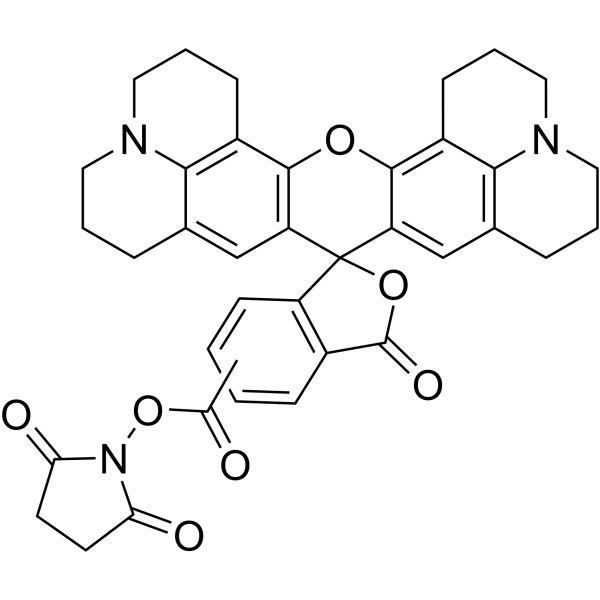 0 ImagesCat. No.: HY-D0044CAS No.: 114616-32-95(6)-Carboxy-X-rhodamin N-succinimidyl ester is a multifunctional dye. Dyes are important tools in biological experiments. They can help researchers observe and analyze cell structures, track biomolecules, evaluate cell functions, distinguish cell types, detect biomolecules, study tissue pathology and monitor microorganisms. Their applications range from basic scientific research to clinical A wide range of diagnostics. Dyes are also widely used in traditional fields such as textile dyeing, as well as in emerging fields such as functional textile processing, food pigments and dye-sensitized solar cells.
-
5-FAM-Pro-Leu-OH
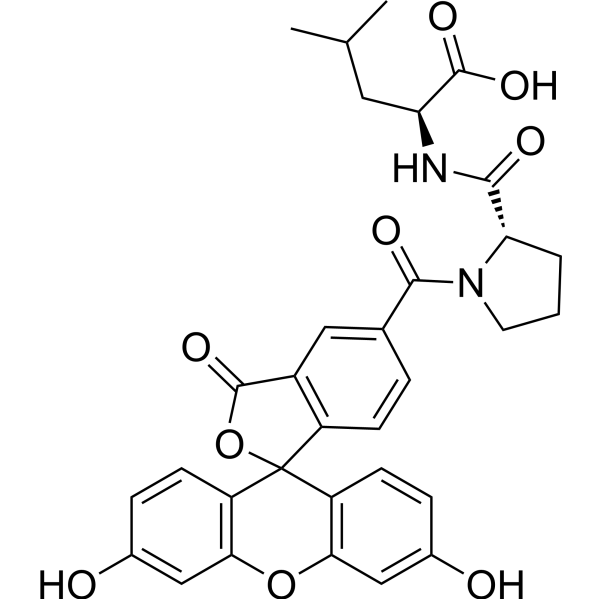 0 ImagesCat. No.: HY-W009686FCAS No.: 1360812-71-05-FAM-Pro-Leu-OH is a biological active peptide. (Used as MMP fluorescent reference standard)
-
Lycopersicon esculentum (Tomato) Lectin-AF350
 0 ImagesCat. No.: HY-NP071ASynonyms: LEL-AF350Lycopersicon esculentum (Tomato) Lectin-AF350 (LEL-AF350) is Lycopersicon esculentum lectin (LEL) labeled with the AF350 fluorescent dye. Lycopersicon esculentum (Tomato) lectin specifically recognizes and binds to glycan structures, primarily targeting N-acetyl-β-D-glucosamine residues. Lycopersicon esculentum (Tomato) Lectin-AF350 can be used to study glycosylation and localize glycan structures on cell surfaces and in tissue sections (Ex/Em = 346/445 nm).
-
NIR-Red Dead Cell-3 Dye
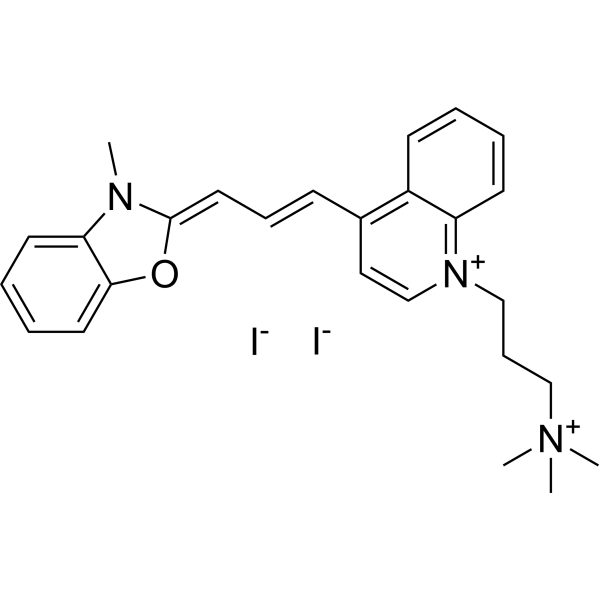 0 ImagesCat. No.: HY-D0919CAS No.: 157199-62-7NIR-Red Dead Cell-3 Dye is a multifunctional dye. Dyes are important tools in biological experiments. They can help researchers observe and analyze cell structures, track biomolecules, evaluate cell functions, distinguish cell types, detect biomolecules, study tissue pathology and monitor microorganisms. Their applications range from basic scientific research to clinical A wide range of diagnostics. Dyes are also widely used in traditional fields such as textile dyeing, as well as in emerging fields such as functional textile processing, food pigments and dye-sensitized solar cells.
-
AF700 PEG12 Maleimide
 0 ImagesCat. No.: HY-D3568AF700 PEG12 Maleimide is a derivative of Alexa Fluor 700 featuring a maleimide reactive group for conjugation with thiol groups. It incorporates a PEG12 linker to enhance hydrophilicity and provide increased spacer length. AF700 PEG12 Maleimide is primarily used for labeling thiol-containing proteins or peptides (Ex/Em = 702/723 nm).
-
Cationic golden yellow 2K
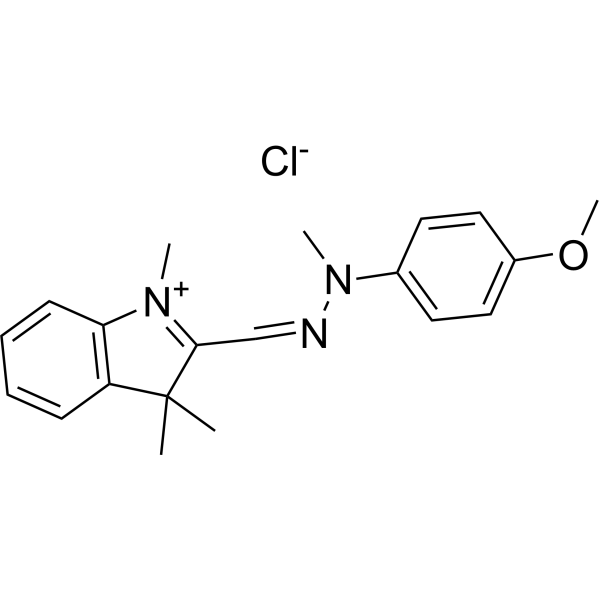 0 ImagesCat. No.: HY-D0553CAS No.: 38936-35-5Cationic golden yellow 2K is a multifunctional dye. Dyes are important tools in biological experiments. They can help researchers observe and analyze cell structures, track biomolecules, evaluate cell functions, distinguish cell types, detect biomolecules, study tissue pathology and monitor microorganisms. Their applications range from basic scientific research to clinical A wide range of diagnostics. Dyes are also widely used in traditional fields such as textile dyeing, as well as in emerging fields such as functional textile processing, food pigments and dye-sensitized solar cells.
-
FG 488 BAPTA-2 AM
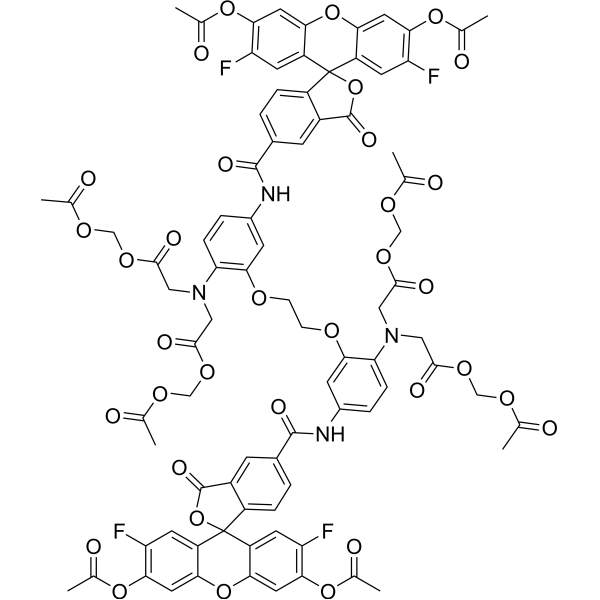 0 ImagesCat. No.: HY-D1561CAS No.: 2484828-10-4FG 488 BAPTA-2 AM is a calcium-specific reporter dye. FG 488 BAPTA-2 AM can be used to detect calcium concentration.




