



Isotope-Labeled Compounds
Isotope-labeled compounds are chemical substances in which some atoms in their molecules are replaced by isotope atoms. The range of stable isotope products can cover from gases to complex molecules. Isotope-labeled compounds could provide a site-specific investigation of structures, making molecules easily detectable by mass spectrometry and NMR, and maintaining the physico-chemical properties of the target molecule at the same time.
MCE isotope-labeled compounds are all stable isotope-labeled compounds and are non-radioactive labeled substances. MCE isotope-labeled compounds are unique tools for identifying and understanding biological and chemical processes. Stable isotope-labeled products are now getting more and more popular among scientists. The scope of application is gradually penetrating into various scientific fields, such as life sciences, food and medicine, agriculture, environment, geology, etc. Stable isotope-labeled compounds have a wide range of applications in the Life Science areas, such as Metabolomics, Proteomics, Clinical studies, Deuterium drugs, etc.
All Product Categories
-
Isotope-Labeled Compounds Related Products (11099)
Related Products (11099)

-
1-(4-Chlorobenzhydryl)piperazine-d8
 0 ImagesCat. No.: HY-W700119CAS No.: 1189925-23-21-(4-Chlorobenzhydryl)piperazine-d8 is the deuterium labeled 1-(4-Chlorobenzhydryl)piperazine (HY-W001978). 1-(4-Chlorobenzhydryl)piperazine is a biochemical reagent that can be used as a biological material or organic compound for life science related research.
-
4β-Hydroxycholesterol-d5
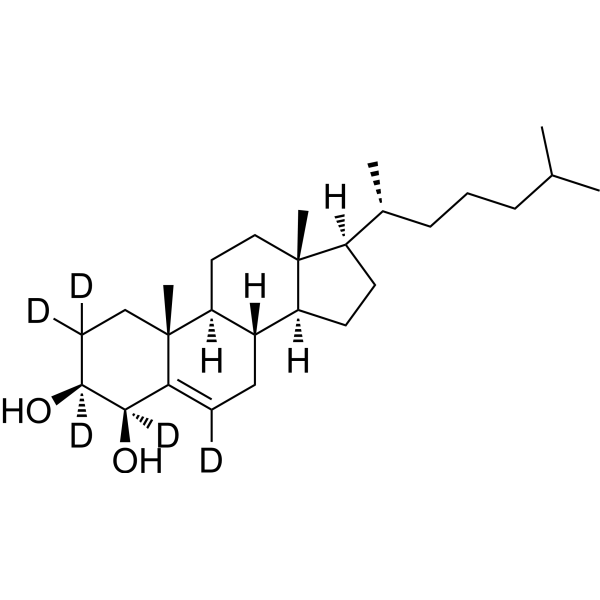 0 ImagesCat. No.: HY-124265S14β-Hydroxycholesterol-d5 is the deuterium labeled 4β-Hydroxycholesterol (HY-124265). 4β-Hydroxycholesterol is a major Cholesterol (HY-N0322) metabolite and a precursor in the synthesis of bile acids that is found in human circulation.
-
Ethyl decanoate-d19
 0 ImagesCat. No.: HY-W724381Synonyms: Decanoic Acid Ethyl Ester-d19Ethyl decanoate-d19 (Decanoic Acid Ethyl Ester-d19) is the deuterium labeled Ethyl decanoate (HY-W014884). Ethyl decanoate is an organic compound commonly used as a flavoring and food additive. It can be used to prepare flavors and food seasonings with various flavors, and is widely used in food, flavors and cosmetics. In addition, this compound is also used as a substrate or intermediate in some biochemical reactions.
-
Clobetasol propionate-d5
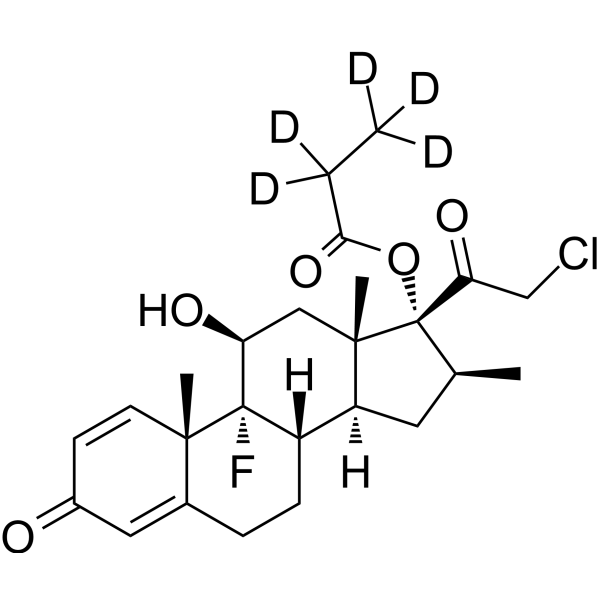 0 ImagesCat. No.: HY-13600S1CAS No.: 2280940-18-1Clobetasol propionate-d5 is a deuterium substitute of Clobetasol propionate. Clobetasol propionate is a potent, selective CYP3A5 inhibitor with a IC50 of 0.206 μM and has potential for use in the study of psoriasis and other skin diseases.
-
21-O-Acetyl dexamethasone 9,11-epoxide-d5
 0 ImagesCat. No.: HY-W74142521-O-Acetyl dexamethasone 9,11-epoxide-d5 is the deuterium labeled 2-((4aS,4bS,5aS,6aS,7R,8R,9aS,9bS)-7-Hydroxy-4a,6a,8-trimethyl-2-oxo-2,4a,5a,6,6a,7,8,9,9a,9b,10,11-dodecahydrocyclopenta[1,2]phenanthro[4,4a-b]oxiren-7-yl)-2-oxoethyl acetate (Dexamethasone Acetate Impurity) (HY-Z8003).
-
Retinyl palmitate-d4
 0 ImagesCat. No.: HY-B1384SSynonyms: Vitamin A palmitate-d4; Retinol palmitate-d4Retinyl palmitate-d4 is the deuterium labeled Retinyl palmitate (HY-B1384). Retinyl palmitate is an ester of Retinol and is the major form of vitamin A found in the epidermis. Retinyl palmitate has been widely used in researches of pharmaceutical and cosmetic formulations.
-
Mabuterol-d9
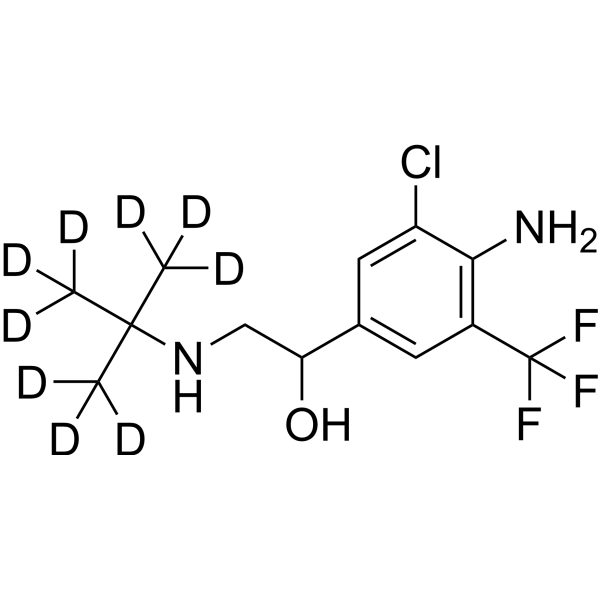 0 ImagesCat. No.: HY-13338SCAS No.: 1246819-58-8Mabuterol-d9 is a deuterium labeled Mabuterol. Mabuterol is an agonist of the β2-adrenergic receptor.
-
Δ4-Dafachronic Acid-d3
 0 ImagesCat. No.: HY-131492SΔ4-Dafachronic Acid-d3 is deuterium labeled Δ4-Dafachronic acid (HY-131492). Δ4‑Dafachronic acid is an endogenous steroid hormone, an agonist of the DAF‑12 nuclear receptor, and a key ligand for the vitamin D receptor (VDR). Δ4‑Dafachronic acid promotes the active escape developmental trajectory in Austrofundulus limnaeus embryos even under diapause‑inducing conditions. Δ4‑Dafachronic acid is suitable for research on the developmental biology.
-
4-(Trifluoromethoxy)benzoic acid-13C
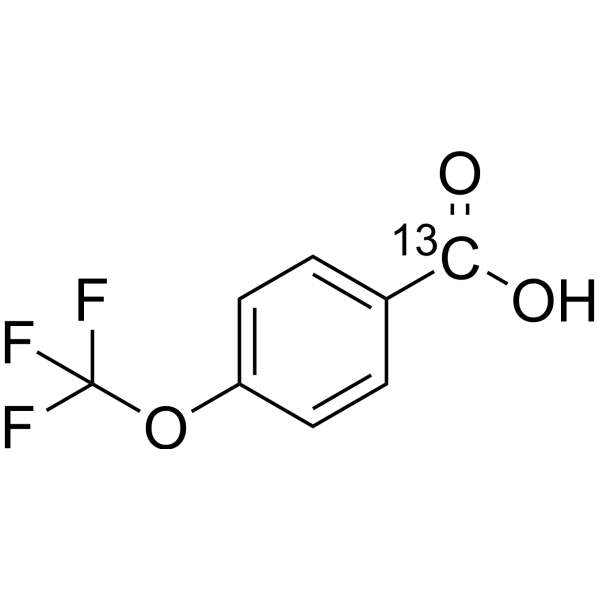 0 ImagesCat. No.: HY-W014633S14-(Trifluoromethoxy)benzoic acid-13C is the 13C labeled 4-(Trifluoromethoxy)benzoic acid.
-
1-Bromononane-d19
 0 ImagesCat. No.: HY-W014559SCAS No.: 1219805-90-91-Bromononane-d19 is the deuterium labeled 1-Bromononane.
-
(2-Chlorophenyl)diphenyl-methanol-d5
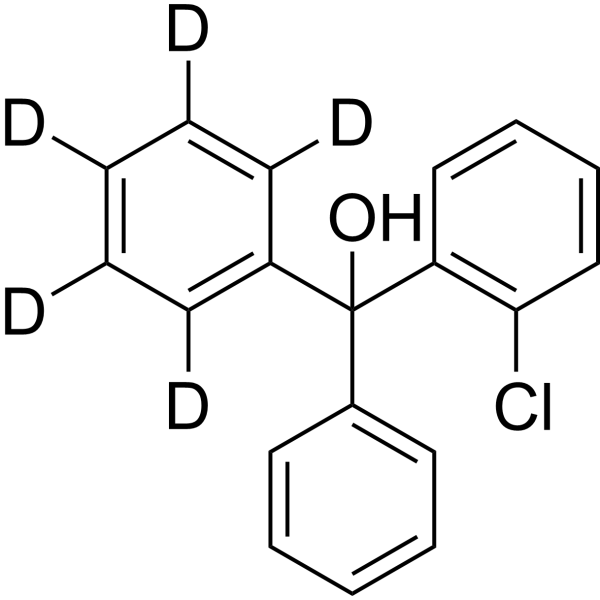 0 ImagesCat. No.: HY-121914SCAS No.: 1219802-30-8(2-Chlorophenyl)diphenyl-methanol-d5 is the deuterium labeled (2-Chlorophenyl)diphenylmethanol.
-
Pyriproxyfen-d4
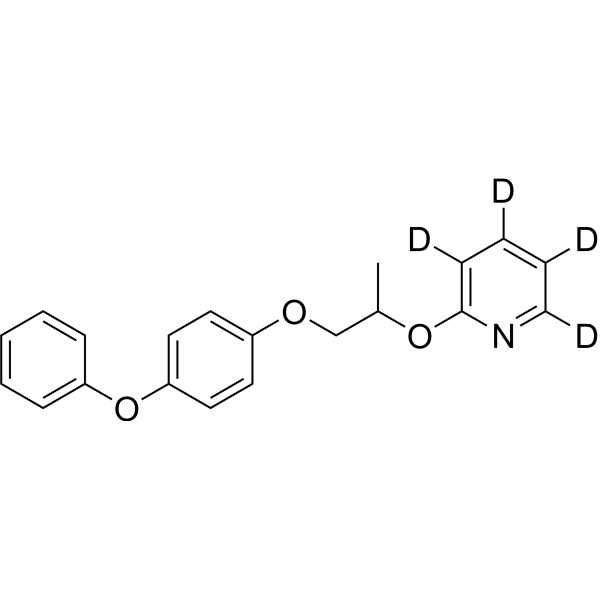 0 ImagesCat. No.: HY-B2031S1CAS No.: 2446366-95-4Synonyms: S-31183-d4Pyriproxyfen-d4 (S-31183-d4) is the deuterium labeled Pyriproxyfen. Pyriproxyfen is a juvenile hormone analog and insect growth regulator. Pyriproxyfen is used in research related to dengue fever and malaria.
-
Ac-D-Glu-OH-d5
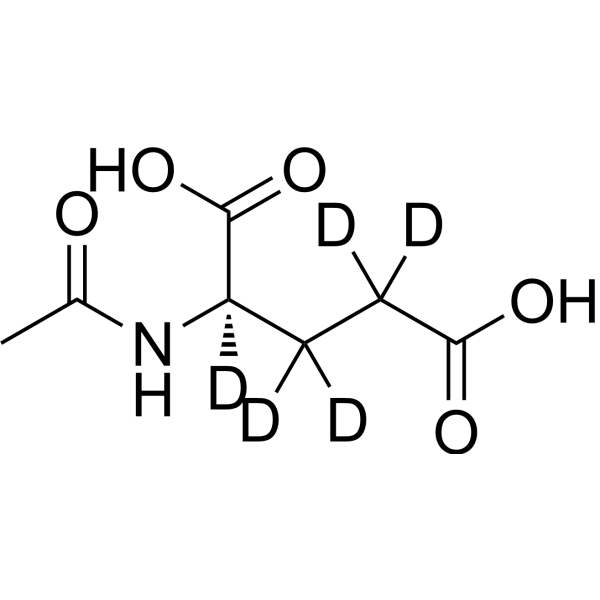 0 ImagesAc-D-Glu-OH-d5 is the deuterium labeled Ac-D-Glu-OH.
-
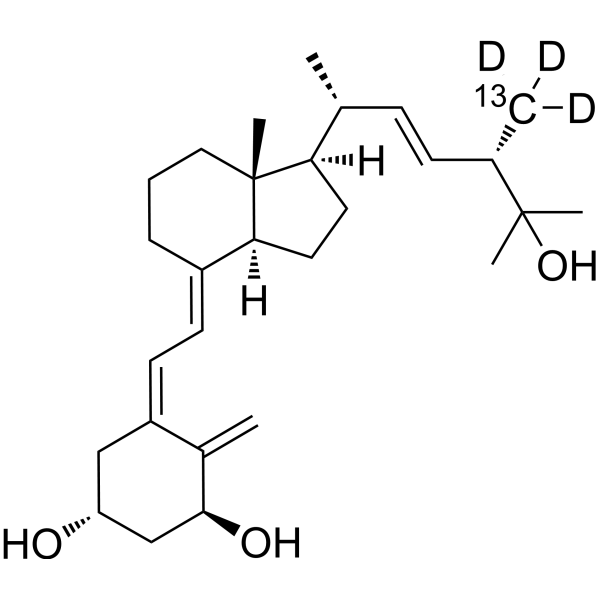
1alpha, 25-Dihydroxy VD2-d6
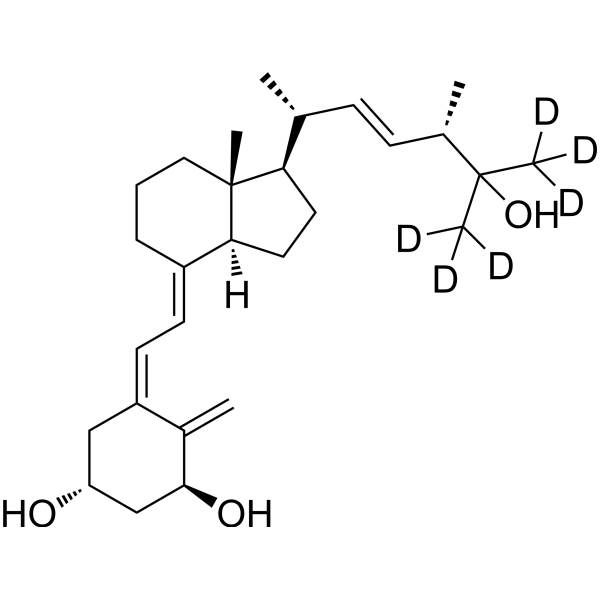 0 ImagesCat. No.: HY-15327CAS No.: 216244-04-11alpha, 25-Dihydroxy VD2-d66 is a deuterated form of vitamin D.
-
XMC-d3
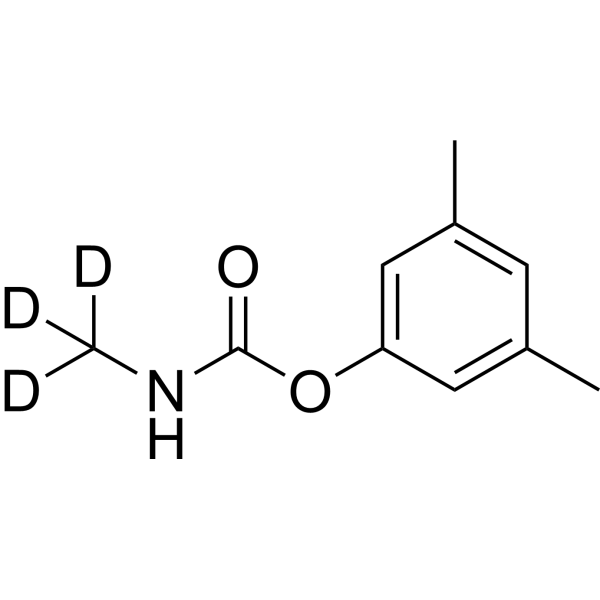 0 ImagesCat. No.: HY-144172SXMC-d3 is the deuterium labeled XMC.
-
Benznidazole-d7
 0 ImagesCat. No.: HY-B1548SSynonyms: Benznidazol-d7; Ro 07-1051-d7; Ro 71051-d7Benznidazole-d7 (Benznidazol-d7; Ro 07-1051-d7; Ro 71051-d7) is the deuterium labeled Benznidazole (HY-B1548). Benznidazole (Ro 07-1051) is an antiparasitic medication, with an IC50 of 20.35 μM for Colombian T. cruzi strains, and has been used in the treatment of Chagas disease.
-
Glycidyl docosahexaenoate-d5
 0 ImagesCat. No.: HY-W741851Glycidyl docosahexaenoate-d5 is the deuterium labeled Glycidyl docosahexaenoate.



