



Isotope-Labeled Compounds
Isotope-labeled compounds are chemical substances in which some atoms in their molecules are replaced by isotope atoms. The range of stable isotope products can cover from gases to complex molecules. Isotope-labeled compounds could provide a site-specific investigation of structures, making molecules easily detectable by mass spectrometry and NMR, and maintaining the physico-chemical properties of the target molecule at the same time.
MCE isotope-labeled compounds are all stable isotope-labeled compounds and are non-radioactive labeled substances. MCE isotope-labeled compounds are unique tools for identifying and understanding biological and chemical processes. Stable isotope-labeled products are now getting more and more popular among scientists. The scope of application is gradually penetrating into various scientific fields, such as life sciences, food and medicine, agriculture, environment, geology, etc. Stable isotope-labeled compounds have a wide range of applications in the Life Science areas, such as Metabolomics, Proteomics, Clinical studies, Deuterium drugs, etc.
All Product Categories
-
Isotope-Labeled Compounds Related Products (11098)
Related Products (11098)

-
Prostaglandin F2α-1-glyceryl ester-d5
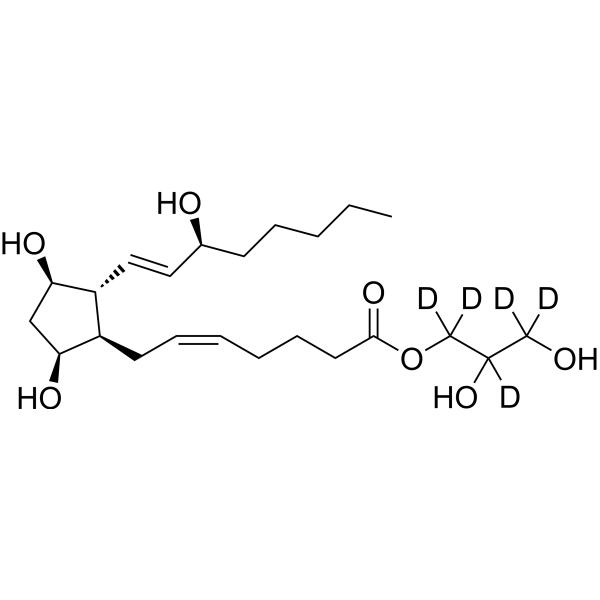 0 ImagesCat. No.: HY-114695SProstaglandin F2α-1-glyceryl ester-d5 is the deuterium labeled Prostaglandin F2α-1-glyceryl ester.
-
6-Phosphoglucono-d-lactone-13C6
 0 ImagesCat. No.: HY-W587796SSynonyms: 6-PGδL-13C6; 6-Phosphonoglucono-D-lactone-13C66-Phosphoglucono-d-lactone-13C6 (6-PGδL-13C6) is the 13C-labeled 6-Phosphoglucono-d-lactone.
-
D-Mannose-13C6,d7
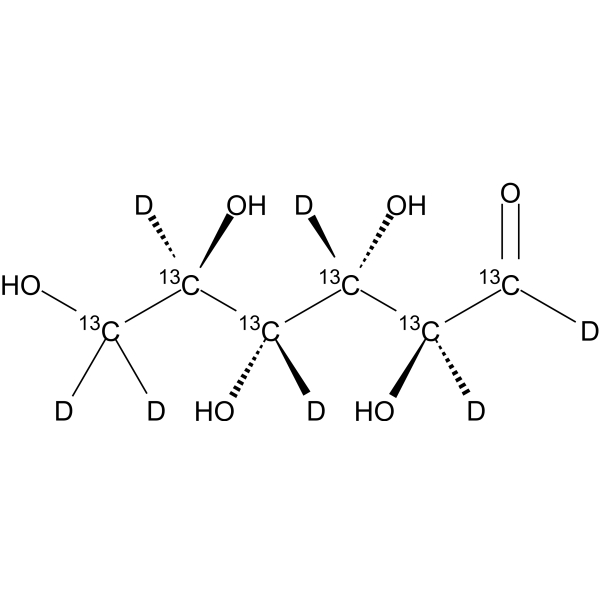 0 ImagesCat. No.: HY-N0379S18D-mannose-13C6,d7 is the deuterium and 13C labeled D-Mannose. D-Mannose is a carbohydrate, which plays an important role in human metabolism, especially in the glycosylationof specific prote.
-
D-Galactose-13C-3
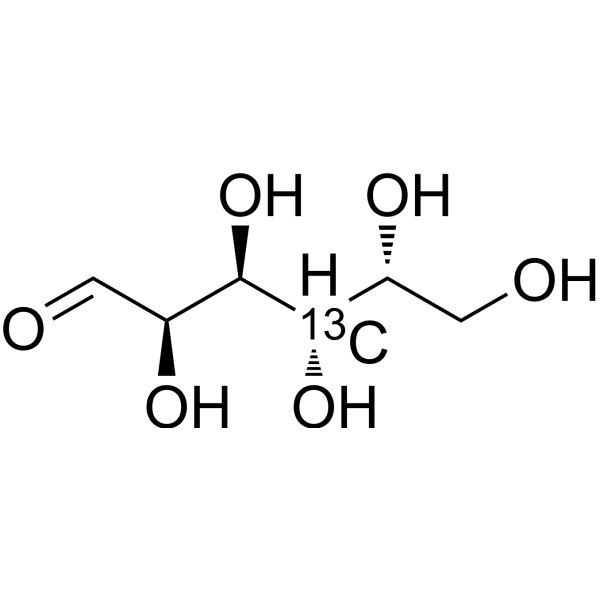 0 ImagesSynonyms: D-(+)-Galactose-13C-3D-Galactose-13C-3 is the 13C labeled D-Galactose. D-Galactose is a natural aldohexose and C-4 epimer of glucose.
-
5-Methoxy-1H-benzo[d]imidazole-d3
![5-Methoxy-1H-benzo[d]imidazole-d3](https://file.medchemexpress.com/product_pic/hy-w010269s.gif "Click to View 5-Methoxy-1H-benzo[d]imidazole-d3 Product Detail") 0 ImagesCat. No.: HY-W010269SCAS No.: 1219805-69-25-Methoxy-1H-benzo[d]imidazole-d3 is the deuterium labeled 5-Methoxy-1H-benzo[d]imidazole.
0 ImagesCat. No.: HY-W010269SCAS No.: 1219805-69-25-Methoxy-1H-benzo[d]imidazole-d3 is the deuterium labeled 5-Methoxy-1H-benzo[d]imidazole.
-
Lurasidone-d8-1 hydrochloride
 0 ImagesCat. No.: HY-W654010Synonyms: SM-13496-d8-1 hydrochlorideLurasidone-d8-1 (hydrochloride) is deuterium labeled Lurasidone (Hydrochloride). Lurasidone (Hydrochloride) (SM-13496 (Hydrochloride)) is an antagonist of both dopamine D2 and 5-HT7 with IC50s of 1.68 and 0.495 nM, respectively. Lurasidone (Hydrochloride) (SM-13496 (Hydrochloride)) is also a partial agonist of 5-HT1A receptor with an IC50 of 6.75 nM.
-
Boc-L-Ala-OH-d
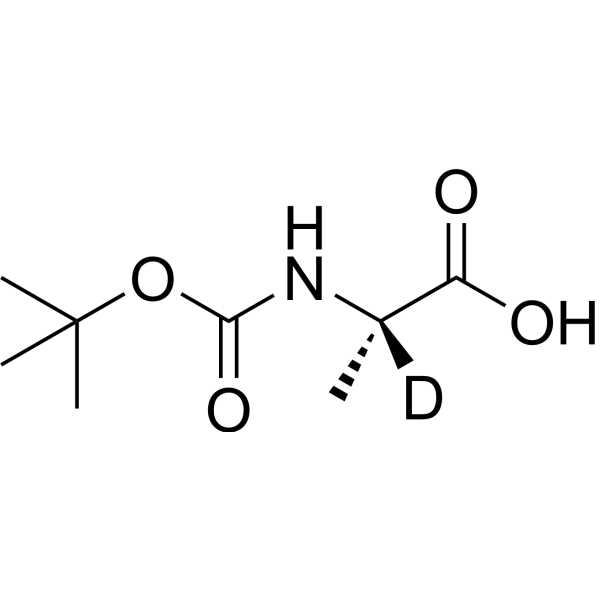 0 ImagesCat. No.: HY-41121S6CAS No.: 88181-11-7Boc-L-Ala-OH-d is the deuterium labeled Boc-L-Ala-OH.
-
Trigonelline-d3-1 chloride
 0 ImagesCat. No.: HY-N0415S1Synonyms: Trigonelline-d3-1 hydrochlorideTrigonelline-d3-1 chloride (Trigonelline-d3-1 hydrochloride) is the deuterium labeled Trigonelline chloride (HY-N0415). Trigonelline chloride is an alkaloid with potential antidiabetic activity that can be isolated from Trigonella foenum-graecum L or Leonurus artemisia. Trigonelline chloride is a potent Nrf2 inhibitor that blocks Nrf2-dependent proteasome activity, thereby enhancing apoptosis in pancreatic cancer cells. Trigonelline chloride also has anti-HSV-1, antibacterial, and antifungal activity, and induces ferroptosis.
-
Taurocholic acid-d4 sodium
 0 ImagesCat. No.: HY-N0545S2Synonyms: Sodium taurocholate-d4-1 ; N-Choloyltaurine-d4-1 sodiumTaurocholic acid-d4-1 sodium (Sodium taurocholate-d4-1) is the deuterium labeled Taurocholic acid sodium (HY-N0545). Taurocholic acid sodium (Sodium taurocholate) has marked bioactive effects such as an inhibitory potential against hepatic artery ligation induced biliary damage by upregulation of VEGF-A expression. Taurocholic acid sodium has immunoregulation effect.
-
Fmoc-Abu-OH-d5
 0 ImagesCat. No.: HY-W009151S2Fmoc-Abu-OH-d5 is the deuterium labeled Fmoc-Abu-OH (HY-W009151). Fmoc-Abu-OH is an alanine derivative.
-
(S)-(-)-Celiprolol Hydrochloride-d9
 0 ImagesCat. No.: HY-W778137CAS No.: 1330266-42-6(S)-(-)-Celiprolol Hydrochloride-d9 is the deuterium labeled (S)-(-)-Celiprolol Hydrochloride (HY-W740762).
-
2-(Pyridin-2-yl)acetic acid-d2 hydrochloride
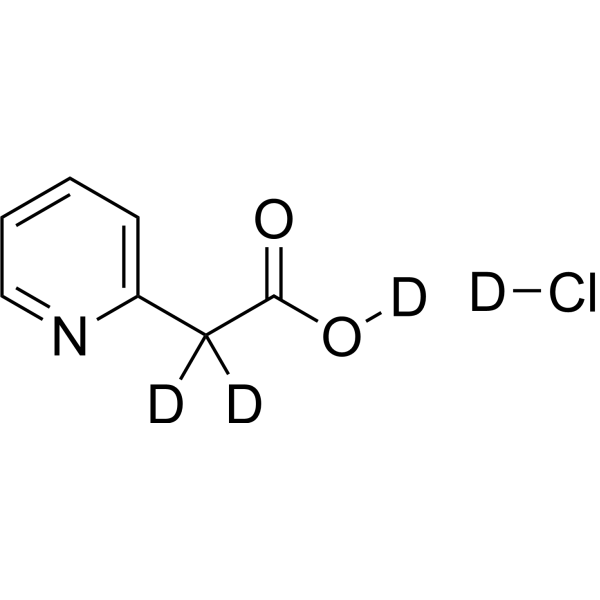 0 ImagesCat. No.: HY-W016825S2CAS No.: 1219802-51-32-(Pyridin-2-yl)acetic acid-d2 hydrochloride is the deuterated derivative of 2-(Pyridin-2-yl)acetic acid hydrochloride (HY-W016825). 2-(Pyridin-2-yl)acetic acid hydrochloride is a heterocyclic aromatic carboxylic acid compound. 2-(Pyridin-2-yl)acetic acid hydrochloride can be used as an organic synthesis intermediate or a metal complex.
-
1-Bromooctadecane-d37
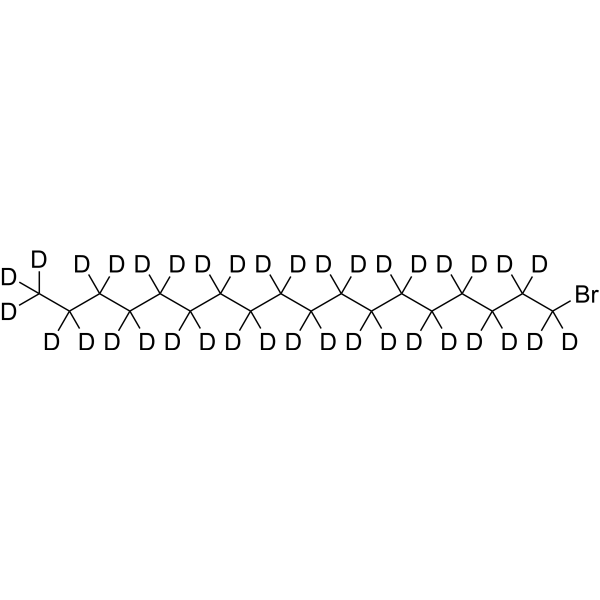 0 ImagesCat. No.: HY-W011222SCAS No.: 187826-28-41-Bromooctadecane-d37 is the deuterium labeled 1-Bromooctadecane.
-
rac-Vofopitant-d3
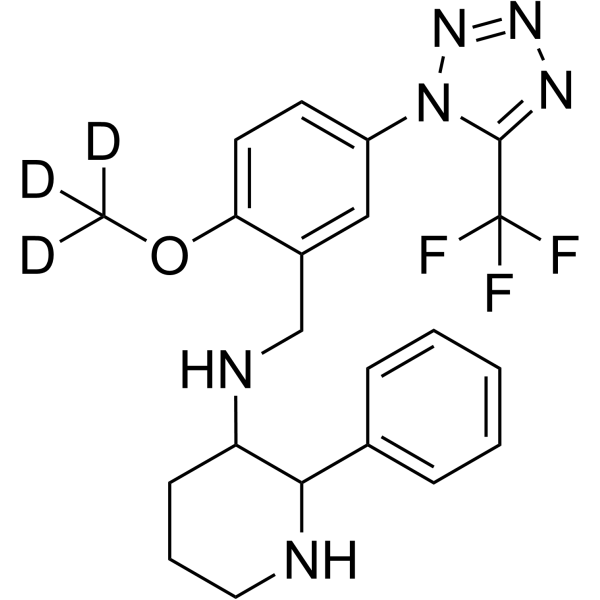 0 ImagesCat. No.: HY-12142SSynonyms: rac-GR 205171-d3rac-Vofopitant-d3 (rac-GR 205171-d3) is a racemic form of deuterated Vofopitant (HY-12142). Vofopitant (GR 205171A) is a blood-brain barrier-permeable NK1 receptor inhibitor with a pKi of 9.02 in mice. Vofopitant blocks vomiting-related responses and inhibits pseudoptyalism. Vofopitant exerts anxiolytic effects, regulates 5-HT receptor function and increases central 5-HT release. Vofopitant improves hyperarousal symptoms of post-traumatic stress disorder. Vofopitant can be used in research related to depression, anxiety, vomiting and postoperative nausea and vomiting.
-
Vardenafil-d5 hydrochloride
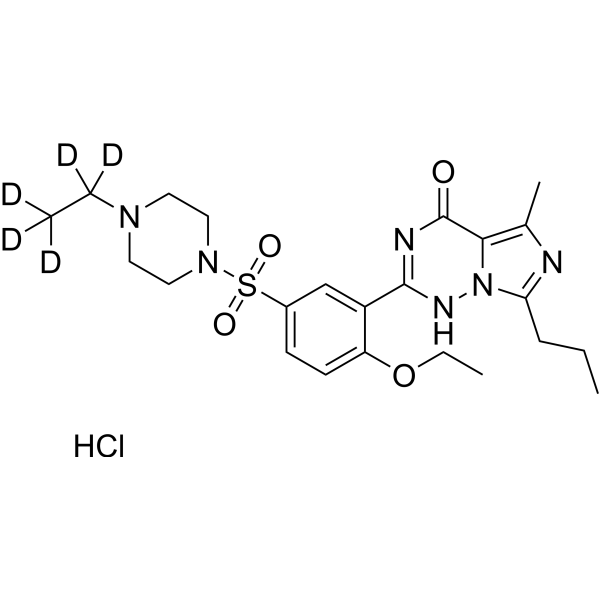 0 ImagesCat. No.: HY-B0442ASPurity: 98.65%Vardenafil-d5 hydrochloride is deuterated labeled Vardenafil hydrochloride (HY-B0442A). Vardenafil hydrochloride is a selective and orally active inhibitor of phosphodiesterase-5 (PDE5), with an IC50 of 0.7 nM. Vardenafil hydrochloride shows inhibitory towards PDE1, PDE6 with IC50s of 180 nM, and 11 nM, while IC50s are >1000 nM for PDE3 and PDE4. Vardenafil hydrochloride competitively inhibits cyclic guanosine monophosphate (cGMP) hydrolysis and thus increases cGMP levels. Vardenafil hydrochloride can be used for the research of erectile dysfunction, hepatitis, diabetes[1]-[6].
-
Minocycline-d6
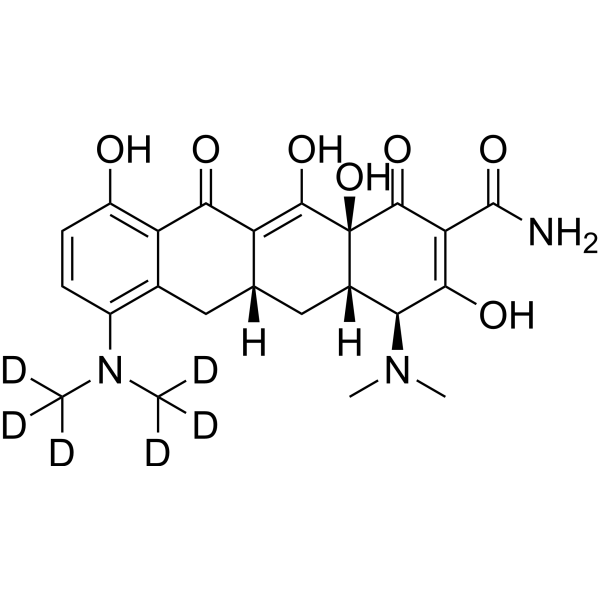 0 ImagesCat. No.: HY-17412ASCAS No.: 1036070-10-6Minocycline-d6 is deuterium labeled Minocycline (HY-17412A). Minocycline is an orally active, potent and BBB-penetrated semi-synthetic tetracycline antibiotic. Minocycline is a hypoxia-inducible factor (HIF)-1α inhibitor. Minocycline shows anti-cancer, anti-inflammatory, and glutamate antagonist effects. Minocycline reduces glutamate neurotransmission and shows neuroprotective properties and antidepressant effects. Minocycline inhibits bacterial protein synthesis through binding with the 30S subunit of the bacterial ribosome, resulting in a bacteriostatic effect.
-
L-Glucose-13C-1
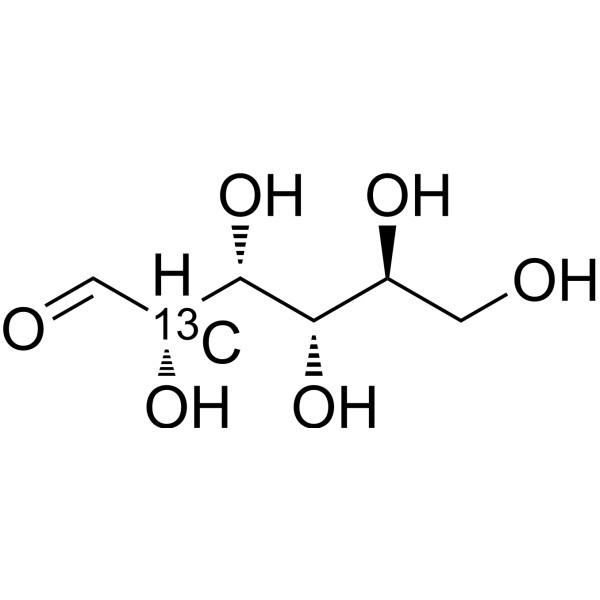 0 ImagesSynonyms: L-(-)-Glucose-13C-1L-Glucose-13C-1 is the 13C labeled L-Glucose. L-Glucose (L-(-)-Glucose) is an enantiomer of D-glucose. L-Glucose can promote food intake.
-
Potassium Azide-15N
 0 ImagesCat. No.: HY-W738715CAS No.: 58524-53-1Potassium Azide-15N is the 15N labeled Potassium Azide (HY-W661390).
-
Iprovalicarb-d8
 0 ImagesCat. No.: HY-W749483Iprovalicarb-d8 is the deuterium labeled Iprovalicarb (HY-121766). Iprovalicarb (Fencaramid; SZX-0722) is a fungicide that can be used for the study of?fungal?diseases in the wine sector.
-
Starch-13C12 (from corn)
 0 ImagesCat. No.: HY-B2225BSStarch-13C12 (from corn) is the 13 labeled Starch (from corn) (HY-B2225B). Starch (from corn) is a carbohydrate extracted from the kernel of the corn plant. It contains two main components, namely amylose and amylopectin. Starches from corn have various applications in the food industry as thickeners, stabilizers and binders. It is commonly used in the production of products such as baked goods, snacks, sauces and soups. In addition, it can be used as a raw material for the production of biofuels and bioplastics.



