



ENT1 Antibody (YA1251)
(Synonyms: SLC29A1; solute carrier family 29 (equilibrative nucleoside transporter); member 1; ENT1)
Based on 1 Customer Validation
ENT1 Antibody (YA1251) is a Rabbit-derived and non-conjugated IgG monoclonal antibody, targeting to ENT1.
-
Host:
Rabbit
-
Isotype:
IgG
-
Application:
IHC-P
-
Reactivity :
Human
-
Formulation:
Supplied in PBS (pH7.4), 0.1% BSA, 40% Glycerol. Preservative: 0.05% Sodium Azide.
-
Conjugation:
Non-conjugated


To place orders, for customer services and technical support, please contact: MedChemExpress USA
Tel: 609-228-6898 E-mail: [email protected] [email protected]





Applications
| Application |
IHC-P

IHC-P: Immunohistochemistry-Paraffin
|
|---|---|
| Dilution Ratio | 1:200-1:1000 |


Product Details
ENT1 Antibody (YA1251) is a Rabbit-derived and non-conjugated IgG monoclonal antibody, targeting to ENT1.
-
Host Rabbit

-
Clonality Recombinant,Monoclonal

-
Species ReactivityHuman
-
Observed Molecular WeightObserved band size: 50 kDa
Note: Due to possible protein modifications or aggregation, the molecular weight should be confirmed by actual measurement, and the predicted value is for reference only.

-
Calculated Molecular Weight Predicted band size: 50 kDa

Synthetic peptide within C-terminus of human SLC29A1.
Endogenous
Affinity Purified
Non-conjugated
Unmodified
IgG


Product Properties
-
Appearance
Solution
-
Formulation
Supplied in PBS (pH7.4), 0.1% BSA, 40% Glycerol. Preservative: 0.05% Sodium Azide.
-
Concentration
Batch-dependent, Please check the COA for the concentration of each lot. Check Lot Concentration
-
Storage & Stability
Stored at -20°C for 1 year. Avoid repeated freeze / thaw cycles.
-
Shipping
Shipping with blue ice.


Verification Images
-
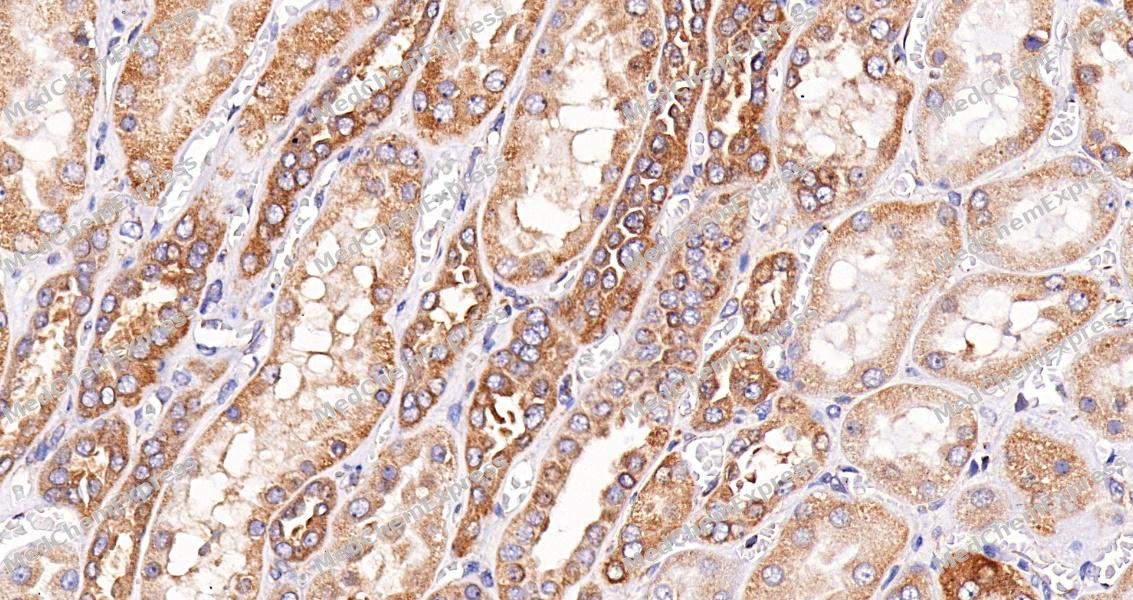 Immunohistochemical analysis of paraffin-embedded Human kidney tissue using ENT1 Antibody (HY-P81506, 1/500) . The section was pretreated using heat mediated antigen retrieval with sodium citrate buffer (PH 6.0)for 8 minutes. The tissues were blocked with quick block buffer for 0.5 hours at room temperature, washed with PBS and PBST, and then incubated with the primary antibody overnight at 4℃. The detection was performed using an HRP conjugated compact polymer system. DAB was used as the chromogen. Tissues were counterstained with hematoxylin and mounted with DPX.
 -
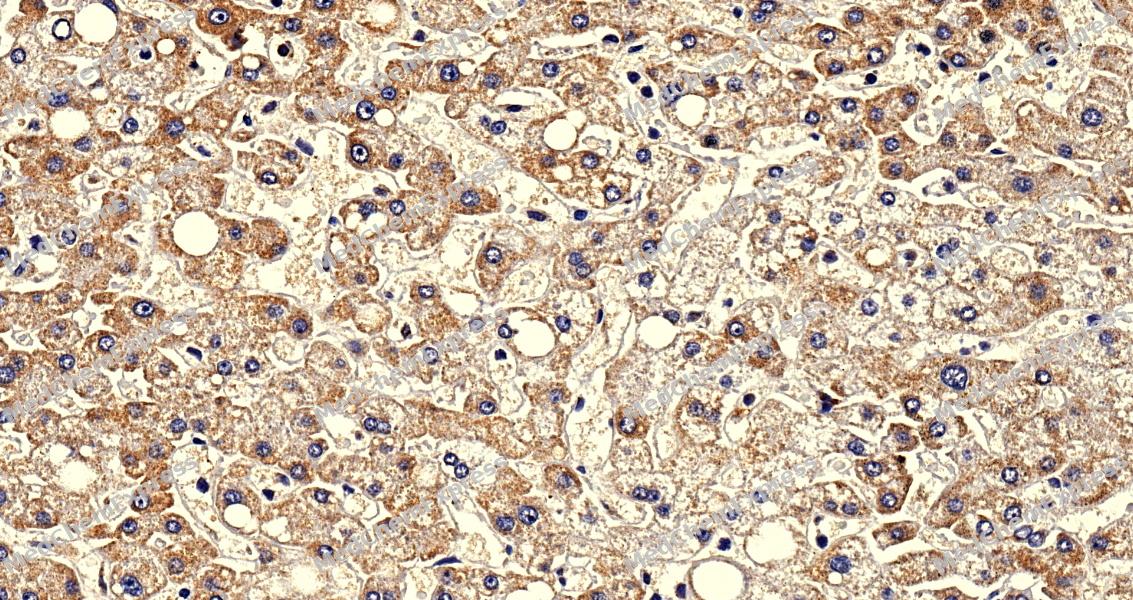 Immunohistochemical analysis of paraffin-embedded Human liver tissue using ENT1 Antibody (HY-P81506, 1/500) . The section was pretreated using heat mediated antigen retrieval with sodium citrate buffer (PH 6.0)for 8 minutes. The tissues were blocked with quick block buffer for 0.5 hours at room temperature, washed with PBS and PBST, and then incubated with the primary antibody overnight at 4℃. The detection was performed using an HRP conjugated compact polymer system. DAB was used as the chromogen. Tissues were counterstained with hematoxylin and mounted with DPX.
 -
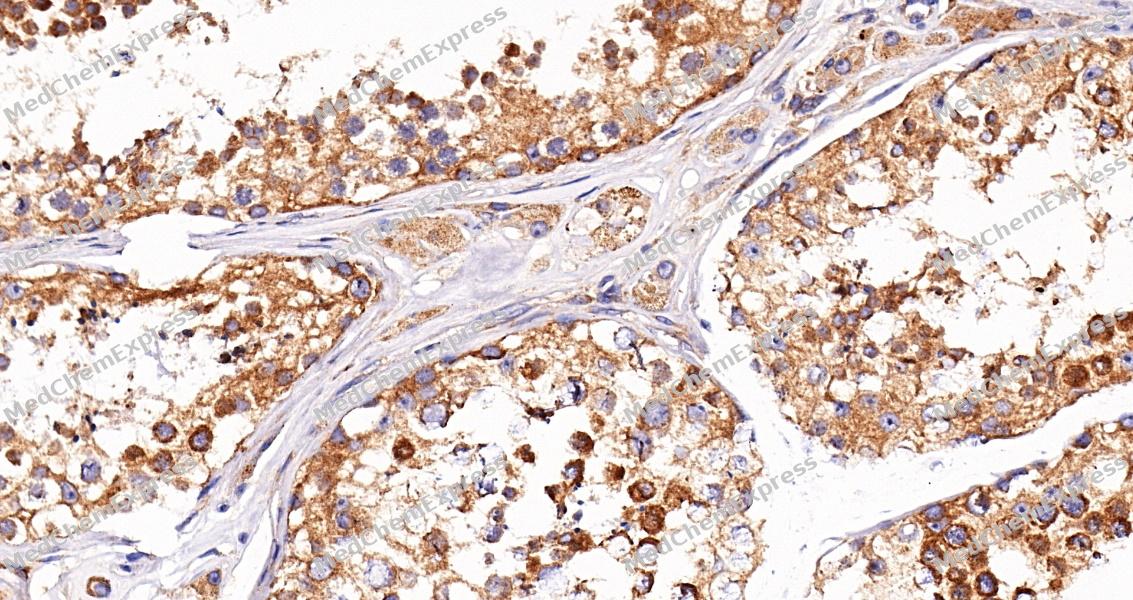 Immunohistochemical analysis of paraffin-embedded Human testis tissue using ENT1 Antibody (HY-P81506, 1/500) . The section was pretreated using heat mediated antigen retrieval with sodium citrate buffer (PH 6.0)for 8 minutes. The tissues were blocked with quick block buffer for 0.5 hours at room temperature, washed with PBS and PBST, and then incubated with the primary antibody overnight at 4℃. The detection was performed using an HRP conjugated compact polymer system. DAB was used as the chromogen. Tissues were counterstained with hematoxylin and mounted with DPX.
 -
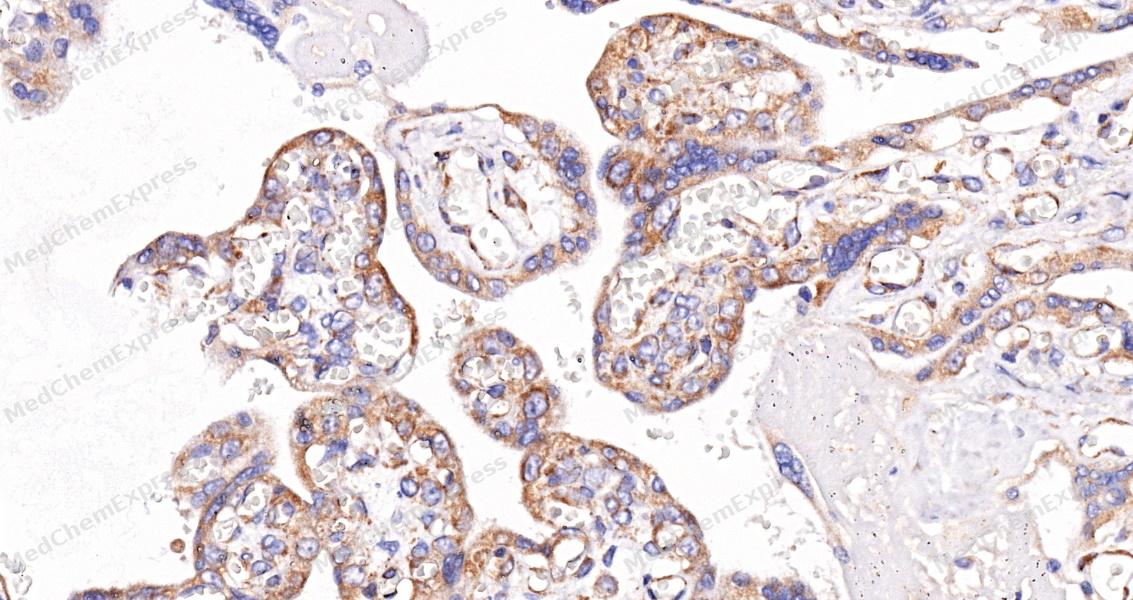 Immunohistochemical analysis of paraffin-embedded Human placenta tissue using ENT1 Antibody (HY-P81506, 1/500) . The section was pretreated using heat mediated antigen retrieval with sodium citrate buffer (PH 6.0)for 8 minutes. The tissues were blocked with quick block buffer for 0.5 hours at room temperature, washed with PBS and PBST, and then incubated with the primary antibody overnight at 4℃. The detection was performed using an HRP conjugated compact polymer system. DAB was used as the chromogen. Tissues were counterstained with hematoxylin and mounted with DPX.
 -
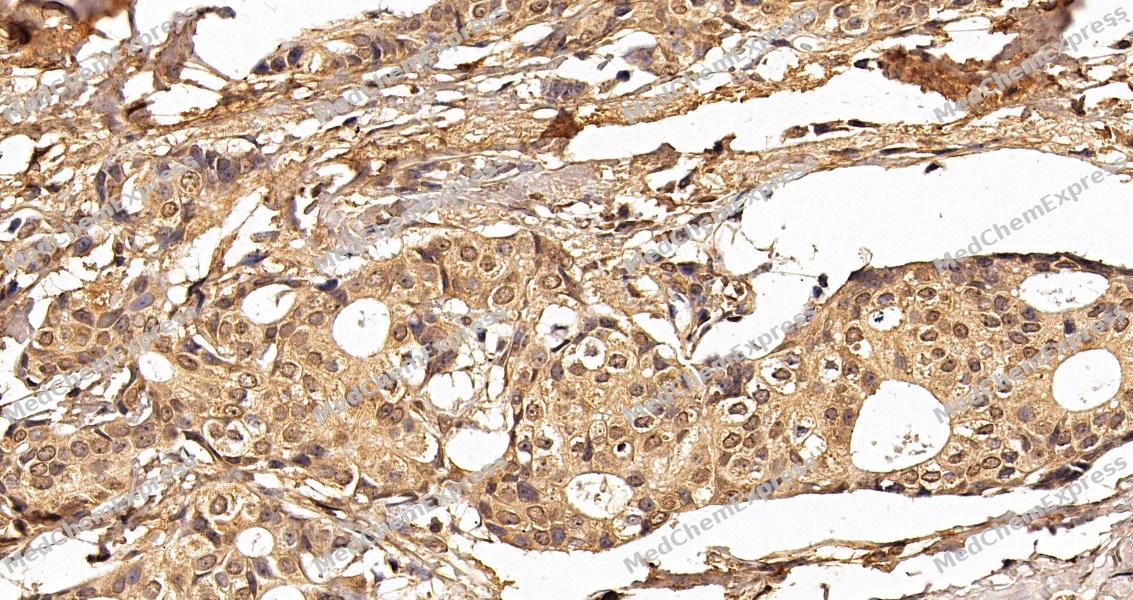 Immunohistochemical analysis of paraffin-embedded Human breast cancer tissue using ENT1 Antibody (HY-P81506, 1/500) . The section was pretreated using heat mediated antigen retrieval with sodium citrate buffer (PH 6.0)for 8 minutes. The tissues were blocked with quick block buffer for 0.5 hours at room temperature, washed with PBS and PBST, and then incubated with the primary antibody overnight at 4℃. The detection was performed using an HRP conjugated compact polymer system. DAB was used as the chromogen. Tissues were counterstained with hematoxylin and mounted with DPX.
 -
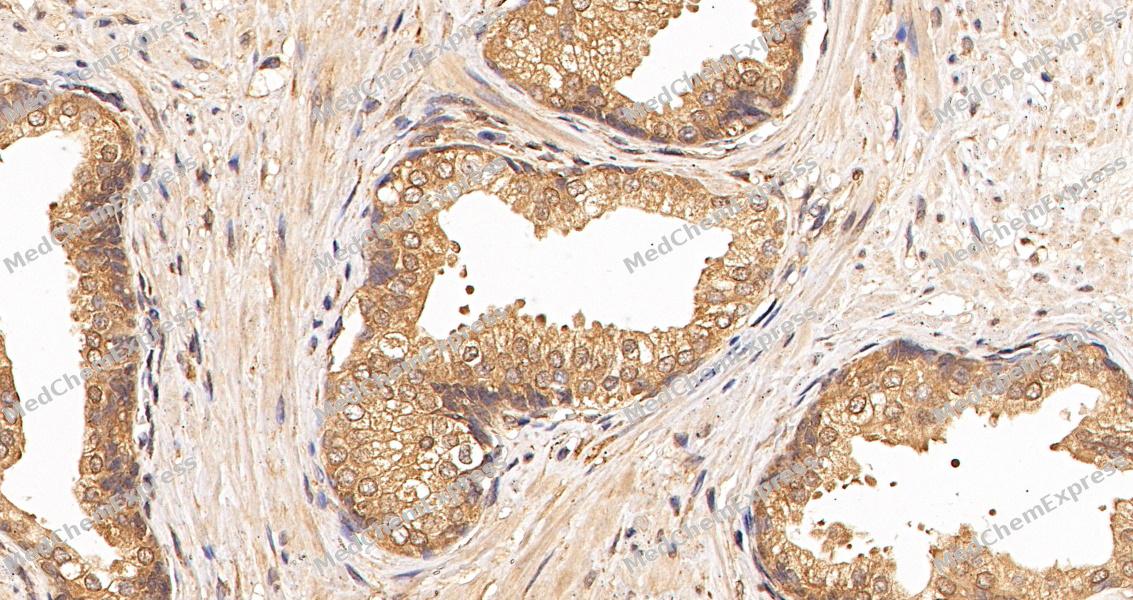 Immunohistochemical analysis of paraffin-embedded Human prostate cancer tissue using ENT1 Antibody (HY-P81506, 1/500) . The section was pretreated using heat mediated antigen retrieval with sodium citrate buffer (PH 6.0)for 8 minutes. The tissues were blocked with quick block buffer for 0.5 hours at room temperature, washed with PBS and PBST, and then incubated with the primary antibody overnight at 4℃. The detection was performed using an HRP conjugated compact polymer system. DAB was used as the chromogen. Tissues were counterstained with hematoxylin and mounted with DPX.


Background
-
Function
NTPDase8, a member of the ectonucleoside triphosphate diphosphohydrolase (E-NTPDase) family, hydrolyzes extracellular nucleoside triphosphates and diphosphates to monophosphates, thereby regulating purinergic signaling[1][2]. Mechanistically, its catalytic activity depends on conserved apyrase regions and requires divalent cations such as Ca2+ or Mg2+ for efficient phosphate bond hydrolysis[1]. NTPDase8 is primarily localized to hepatocyte canalicular membranes, where it modulates bile secretion and extracellular nucleotide concentrations, distinguishing it from NTPDase1-3 that exhibit broader tissue distribution[3][4]. In disease models, NTPDase8 protects against liver ischemia-reperfusion injury by controlling ATP accumulation and mitigating P2 receptor-mediated inflammatory responses in hepatocytes[5]. Compared with related isoforms, NTPDase8 demonstrates selective substrate preference and distinctive kinetic parameters, emphasizing its non-redundant role in hepatic purinergic homeostasis[3][6]. Experimental studies utilizing recombinant expression systems have enabled detailed kinetic characterization, while selective inhibitors such as thienopyrimidine derivatives and sulfamoyl benzamides provide pharmacological tools to probe NTPDase8 activity in vitro[7][8][9]. These inhibitors exhibit isoform-specific binding interactions, allowing differentiation of NTPDase8 activity from other family members and facilitating functional studies in enzymology, liver physiology, and therapeutic screening applications[10][11].
-
Subcellular Localization
Basolateral cell membrane; Multi-pass membrane protein; Apical cell membrane; Multi-pass membrane protein; Cell membrane; Multi-pass membrane protein
-
Expression
Tissue_specificity:Expressed in testis at the blood-testis barrier (at protein level) (PubMed:23639800) . Detected in erythrocytes (at protein level) (PubMed:11584005, PubMed:23219802) . Expressed at relatively high levels in cerebral cortex, particularly the frontal and parietal lobes, and the thalamus and basal ganglia (at protein level) (PubMed:11311901) . In the midbrain expressed at moderate levels, whereas in the other areas of the brainstem, namely medulla and pons, cerebellum and the hippocampus expressed at lower amounts when compared to the other brain regions (at protein level) (PubMed:11311901) . Expressed in Langerhans cells and lymphocytes in the pancreas (at protein level) (PubMed:15501974) . Expressed in kidney, in polarized renal epithelial cells (PubMed:12527552) . Expressed in adipose tissues (PubMed:35790189) . Expressed in placenta (PubMed:8986748) . Expressed in small intestine (PubMed:10755314)
Positive sample: Human pancreas tissue, human colon carcinoma tissue, human placenta tissue. -
Isoforms & Post-Translational Modification
Q99808 has 2 isomers: Q99808-1: 50219 Da (predicted); Q99808-2: 58963 Da (predicted).
Glycosylated -
Subunit
Identified in a complex with STOM
-
SwissProt ID
-
Synonyms
SLC29A1; solute carrier family 29 (equilibrative nucleoside transporter); member 1; ENT1
-
Research Field
Signal Transduction


Documentation
-
Data Sheet (262 KB)
-
SDS (251 KB)
- English - EN (251 KB)
- Français - FR (251 KB)
- Deutsch - DE (251 KB)
- Norwegian - NO (251 KB)
- Español - ES (251 KB)
- Swedish - SV (251 KB)
- Italian - IT (251 KB)
- Korean - KR (251 KB)
- Portuguese - PT (251 KB)
-
User Guide for Antibodies (1077 KB)
References
[1]. Orlic-Milacic M, et al. Phosphate bond hydrolysis by NTPDase proteins. Reactome. 2015
[2]. Martín-Satué M, et al. Localization of plasma membrane bound NTPDases in the murine reproductive tract. Histochem Cell Biol. 2009 May;131(5):615-28. [Content Brief]
[3]. Fausther M, et al. Cloning, purification, and identification of the liver canalicular ecto-ATPase as NTPDase8. Am J Physiol Gastrointest Liver Physiol. 2007 Mar;292(3):G785-95. [Content Brief]
[4]. Rosemberg DB, et al. NTPDase family in zebrafish: Nucleotide hydrolysis, molecular identification and gene expression profiles in brain, liver and heart. Comp Biochem Physiol B Biochem Mol Biol. 2010 Mar;155(3):230-40. [Content Brief]
[5]. Kelestemur T, et al. NTPDase8 Protects Against Liver Ischemia-Reperfusion Injury in Mice. FASEB J. 2025 Jul 15;39(13):e70775. [Content Brief]
[6]. Abbas SZ, et al. Design, synthesis, and enzyme kinetic evaluation of oxadiazole derivatives as nucleoside triphosphate diphosphohydrolase (NTPDase) inhibitors: an integrated in vitro and in silico approach. RSC Adv. 2026 Apr 27;16(24):21705-21723. [Content Brief]
[7]. Zaman G, et al. Synthesis of Thieno[3,2-d]pyrimidine Derivatives through Sequential SN Ar and Suzuki Reactions as Selective h-NTPDase Inhibitors. ChemMedChem. 2023 Jul 17;18(14):e202300165. [Content Brief]
[8]. Zaigham ZH, et al. Synthesis and biological evaluation of sulfamoyl benzamide derivatives as selective inhibitors for h-NTPDases. RSC Adv. 2023 Jul 11;13(30):20909-20915. [Content Brief]
[10]. Khalili M, et al. Underserved Does Not Mean Undeserved: Unfurling the HCV Care in the Safety Net. Dig Dis Sci. 2018 Dec;63(12):3250-3252. [Content Brief]
[11]. Begum Z, et al. Identification of thienopyrimidine glycinates as selective inhibitors for h-NTPDases. Bioorg Chem. 2022 Dec;129:106196. [Content Brief]

 Powered by Bioz
