



PAK1 Antibody (YA1363)
(Synonyms: PAK1; Serine/threonine-protein kinase PAK 1; Alpha-PAK; p21-activated kinase 1; PAK-1; p65-PAK)Based on 1 publication(s) in Google Scholar
PAK1 Antibody (YA1363) is a Rabbit-derived and non-conjugated IgG monoclonal antibody, targeting to PAK1.
-
Host:
Rabbit
-
Isotype:
IgG
-
Application:
WB, IHC-P, ICC/IF, IP, FC
-
Reactivity :
Human, Mouse, Rat
-
Formulation:
Supplied in 50mM Tris-Glycine(pH 7.4), 0.15M NaCl, 40%Glycerol, 0.01% sodium azide and 0.05% BSA.
-
Conjugation:
Non-conjugated


To place orders, for customer services and technical support, please contact: MedChemExpress USA
Tel: 609-228-6898 E-mail: [email protected] [email protected]



Publications Citing Use of MedChemExpress (MCE) PAK1 Antibody (YA1363)
More

Applications
| Application |
WB

WB: Western Blot
|
IHC-P
IHC-P: Immunohistochemistry-Paraffin
|
ICC/IF
ICC/IF: Immunocytochemistry/
Immunofluorescence |
IP
IP: Immunoprecipitation
|
FC
FC: Flow Cytometry
|
|---|---|---|---|---|---|
| Dilution Ratio | 1:500-1:1000 | 1:50-1:100 | 1:50-1:200 | 1:20 | 1:50-1:100 |


Product Details
PAK1 Antibody (YA1363) is a Rabbit-derived and non-conjugated IgG monoclonal antibody, targeting to PAK1.
-
Host Rabbit

-
Clonality Recombinant,Monoclonal

-
Species ReactivityHuman, Mouse, Rat
-
Observed Molecular WeightObserved band size: 66 kDa
Note: Due to possible protein modifications or aggregation, the molecular weight should be confirmed by actual measurement, and the predicted value is for reference only.

-
Calculated Molecular Weight Predicted band size: 61 kDa

Entrez Gene: 5058 Human ; 29431 Rat
SwissProt: Q13153 Human ; O88643 Mouse ; P35465 Rat
OMIM: 618158 Human
A synthesized peptide derived from human PAK1 aa1-19.
Endogenous
Affinity Chromatography
Non-conjugated
Unmodified
IgG


Product Properties
-
Appearance
Solution
-
Formulation
Supplied in 50mM Tris-Glycine(pH 7.4), 0.15M NaCl, 40%Glycerol, 0.01% sodium azide and 0.05% BSA.
-
Concentration
Batch-dependent, Please check the COA for the concentration of each lot. Check Lot Concentration
-
Storage & Stability
Stored at -20°C for 1 year. Avoid repeated freeze / thaw cycles.
-
Shipping
Shipping with blue ice.


Publications (1)
-
Journal Impact Factor
-
Most Recent
-
Clin Transl Med
Integrated spatial multi-omics profiling of Fusobacterium nucleatum in breast cancer unveils its role in tumour microenvironment modulation and cancer progression. [Abstract]2025 Mar;15(3):e70273. PMID: 40070022


Verification Images
-
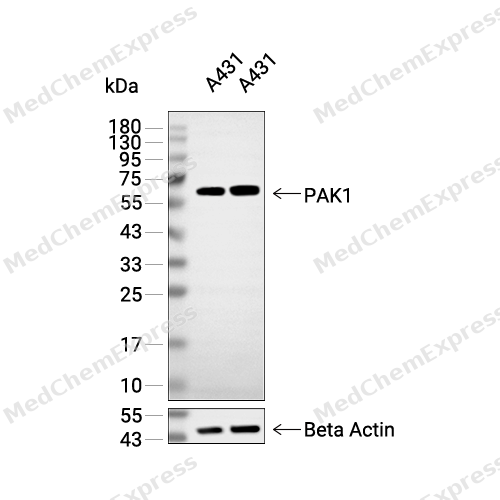 Western blot analysis of extracts from A431 (lane 2(20μg), A431 (lane 3(40μg), using PAK1 Antibody. Proteins were transferred to a PVDF membrane and blocked with 5% BSA in TBST for 2 hour at room temperature. The primary antibody and Loading control antibody (Beta Actin, HY-P80438, 1/3000) was used in 5% BSA in TBST at 4°C overnight. Goat Anti-Mouse/Rabbit IgG-HRP Secondary Antibody (HY-P8004/HY-P8001, 1/10,000) was used for 1 hour at room temperature.
 -
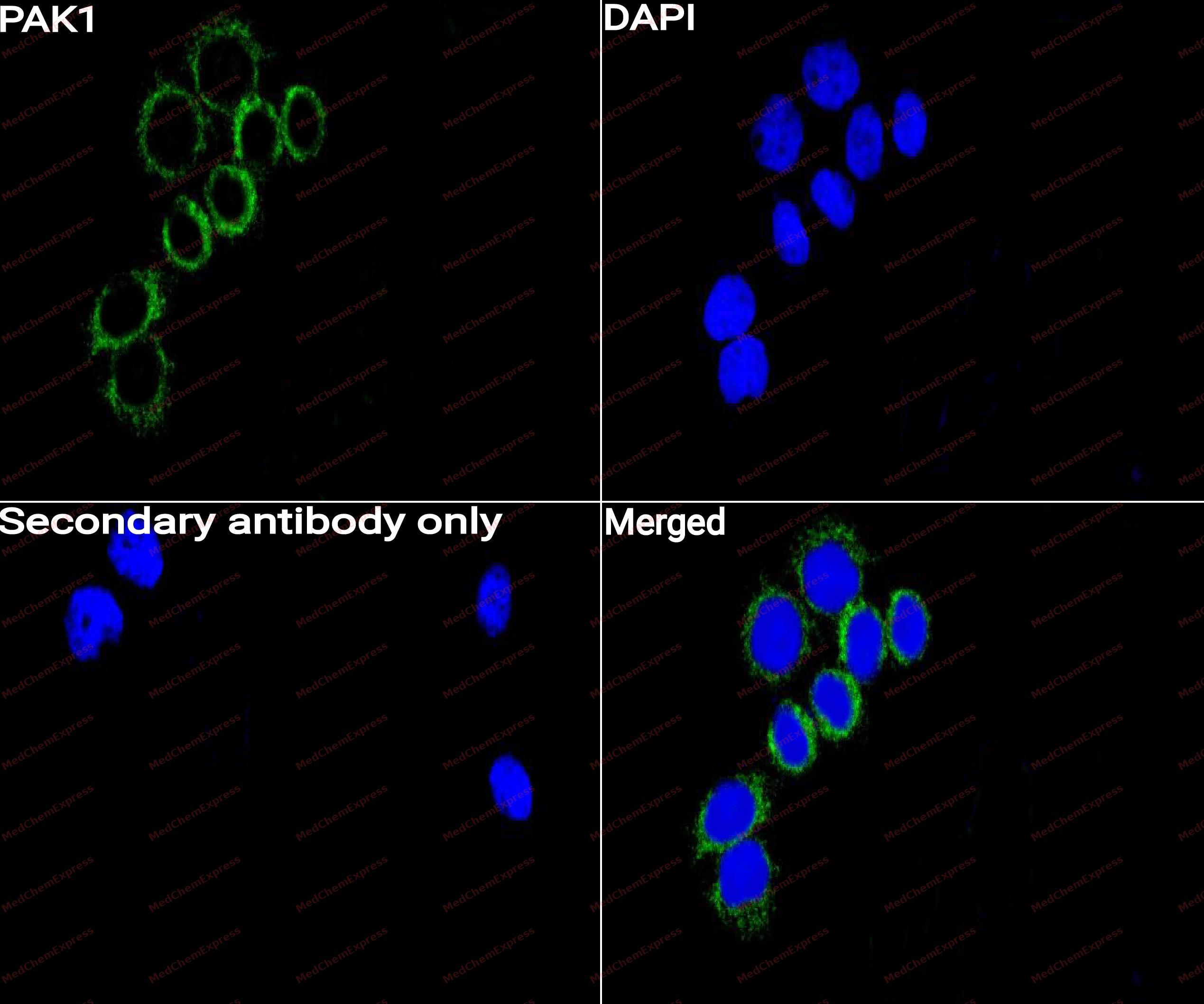 Immunocytochemistry analysis of Hela cells labeling PAK1 with PAK1 Antibody (HY-P81618) at 1/50 dilution. Cells were fixed in 4% paraformaldehyde for 15 minutes at room temperature, permeabilized with 0.1% Triton X-100 for 10 minutes at room temperature, then blocked with QuickBlock™ Blocking Buffer for Immunol Staining for 10 min at room temperature. Cells were then incubated with PAK1 Antibody (HY-P81618) at 1/50 dilution in QuickBlock™ Blocking Buffer for Immunol Staining at 4 ℃. Alexa Fluor® 488-conjugated AffiniPure Goat Anti-Rabbit IgG H&L(HY-P8002, Green) was used as the secondary antibody at 1/1,000 dilution. PBS instead of the primary antibody was used as the secondary antibody only control. The Nuclear counterstain was DAPI (Blue).
 -
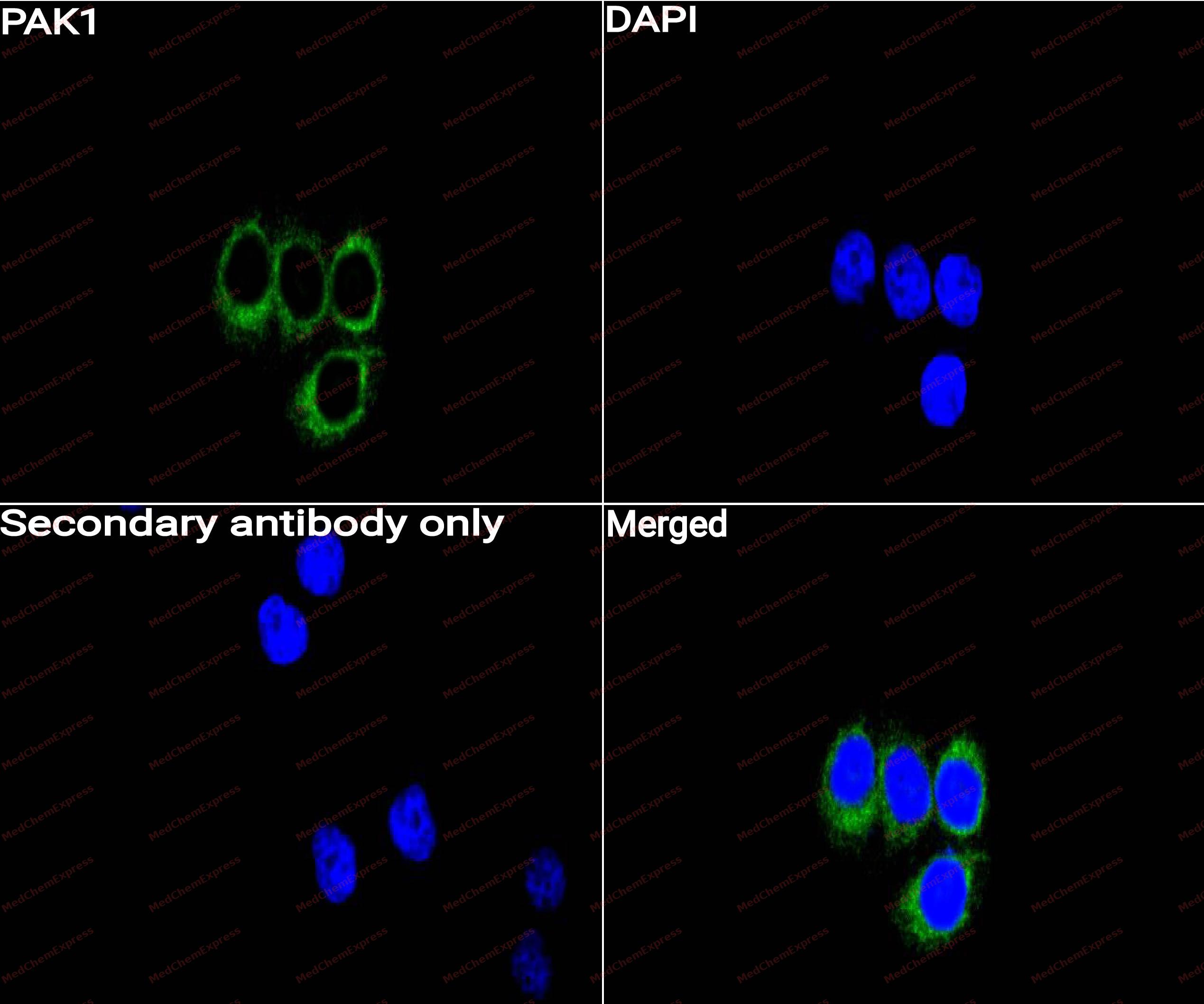 Immunocytochemistry analysis of HepG2 cells labeling PAK1 with PAK1 Antibody (HY-P81618) at 1/50 dilution. Cells were fixed in 4% paraformaldehyde for 15 minutes at room temperature, permeabilized with 0.1% Triton X-100 for 10 minutes at room temperature, then blocked with QuickBlock™ Blocking Buffer for Immunol Staining for 10 min at room temperature. Cells were then incubated with PAK1 Antibody (HY-P81618)at 1/50 dilution in QuickBlock™ Blocking Buffer for Immunol Staining at 4 ℃. Alexa Fluor® 488-conjugated AffiniPure Goat Anti-Rabbit IgG H&L(HY-P8002,Green) was used as the secondary antibody at 1/1,000 dilution. PBS instead of the primary antibody was used as the secondary antibody only control. The Nuclear counterstain was DAPI (Blue).
 -
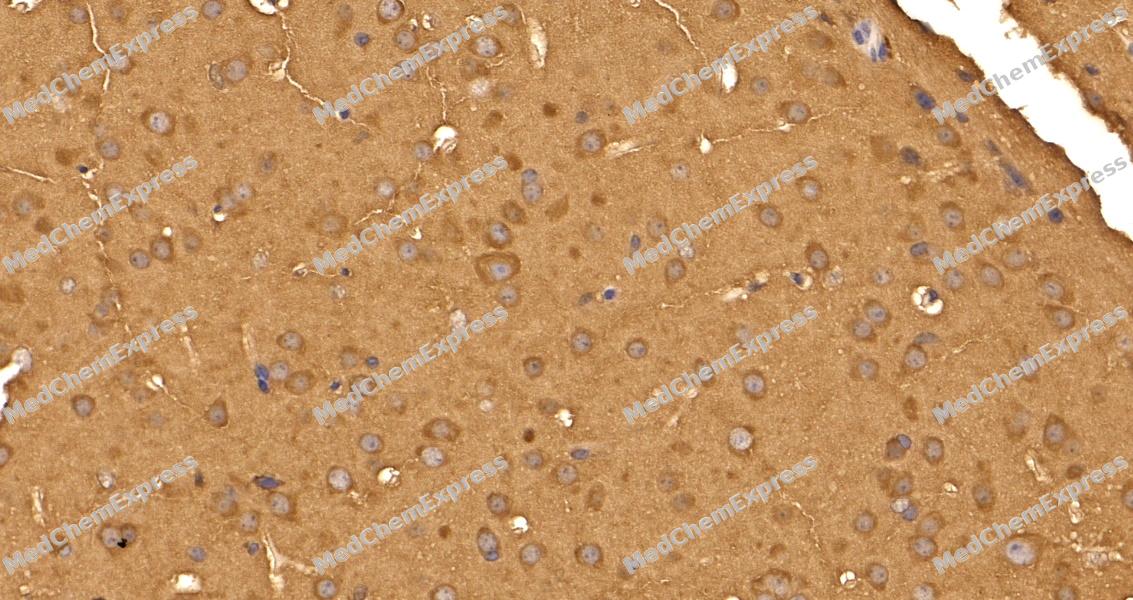 Immunohistochemical analysis of paraffin-embedded mouse brain tissue using PAK1 Antibody. The section was pre-treated using heat mediated antigen retrieval with sodium citrate buffer (pH 6.0) for 8 minutes. The tissues were blocked in QuickBlock for 20 minutes at room temperature, washed with ddH2O and PBS, and then probed with the primary antibody at 1/100 dilution in 4℃ overnight. The detection was performed using an HRP conjugated compact polymer system. DAB was used as the chromogen. Tissues were counterstained with hematoxylin and mounted with DPX.
 -
Immunohistochemical analysis of paraffin-embedded mouse brain tissue using PAK1 Antibody. The section was pre-treated using heat mediated antigen retrieval with sodium citrate buffer (pH 6.0) for 8 minutes. The tissues were blocked in QuickBlock for 20 minutes at room temperature, washed with ddH2O and PBS, and then probed with the primary antibody at 1/100 dilution in 4℃ overnight. The detection was performed using an HRP conjugated compact polymer system. DAB was used as the chromogen. Tissues were counterstained with hematoxylin and mounted with DPX.
-
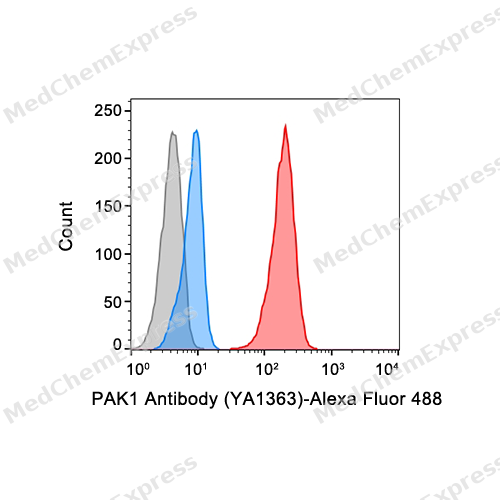 Flow cytometric analysis of 1X10^6 SH-SY5Y cells labeling PAK1 Antibody (YA1363) (HY-P81618, red). Cells were fixed with 4% paraformaldehyde and permeabilised with 90% methanol. Then stained with the primary antibody at 1/50 dilution for an hour at 4℃. Alexa Fluor® 488-conjugated AffiniPure Goat Anti-Rabbit IgG H&L (HY-P8002) was used as the secondary antibody at 1/1,000 dilution for 30 minutes at 4℃. Rabbit IgG Isotype Control (HY-P80879, blue) was used as the isotype control, cells without incubation with primary antibody were used as the unlabeled control (black).


Background
-
Function
PAK1 is a p21-activated serine/threonine kinase that links Rac/Cdc42 signaling to cell motility, survival, proliferation, cytoskeletal organization, transcription, and translation[1]. Mechanistically, PAK family kinases act as downstream effectors of Rho GTPases, with vertebrate PAKs supporting cytoskeletal remodeling, focal adhesion assembly, cell migration, and synaptic plasticity[2]. In cancer models, PAK1 functions as a signaling node downstream of HGF/MET in pancreatic adenocarcinoma, where PAK1 inhibition blocks cytoskeletal effector signaling, tumor cell motility, tumor growth, and metastasis[3]. In colorectal cancer, Group I Pak inhibition impedes adenoma-to-carcinoma transition by reducing β-catenin activity and suppressing an epithelial-mesenchymal transition program[4]. In neurological disease models, PAK1 knockdown reduces ATXN1 levels in mammalian cells, and pharmacological PAK inhibition decreases ATXN1 levels in an SCA1 mouse model[5]. Compared with related isoforms, PAK1 belongs to Group I PAKs, and inhibitor development must address whether to target one isoform or multiple PAK isoforms[1][5]. For experimental applications, ATP-competitive inhibitors, allosteric inhibitors, and peptide inhibitors provide laboratory tools for studying PAK1 biology and disease contexts[6].
-
Subcellular Localization
Cytoplasm; Cell junction, focal adhesion; Cell projection, lamellipodium; Cell membrane; Cell projection, ruffle membrane; Cell projection, invadopodium; Nucleus, nucleoplasm; Chromosome; Cytoplasm, cytoskeleton, microtubule organizing center, centrosome
-
Expression
Tissue_specificity:Overexpression (protein level) in gastric cancer cells and tissues (PubMed: 25766321) -
Isoforms & Post-Translational Modification
Q13153 has 2 isomers: Q13153-1: 60647 Da (predicted); Q13153-2: 61632 Da (predicted).
Autophosphorylated in trans, meaning that in a dimer, one kinase molecule phosphorylates the other one (PubMed:20417602, PubMed:22153498, PubMed:23633677). Activated by autophosphorylation at Thr-423 in response to a conformation change, triggered by interaction with GTP-bound CDC42 or RAC1 (PubMed:10551809). Activated by phosphorylation at Thr-423 by BRSK2 and by PDPK1 (PubMed:10995762, PubMed:22669945). Phosphorylated by JAK2 in response to PRL; this increases PAK1 kinase activity. Phosphorylated at Ser-21 by PKB/AKT; this reduces interaction with NCK1 and association with focal adhesion sites (PubMed:14585966). Upon DNA damage, phosphorylated at Thr-212 and translocates to the nucleoplasm (PubMed:23260667). Phosphorylated at tyrosine residues, which can be enhanced by NTN1 (By similarity) -
Subunit
Homodimer; homodimerization results in autoinhibition (PubMed:30290153). Active as monomer. Interacts with GIT1 (PubMed:27012601). Component of cytoplasmic complexes, which also contains PXN, ARHGEF7 and GIT1. Interacts with NISCH (By similarity). Interacts with DVL1; mediates the formation of a DVL1, MUSK and PAK1 ternary complex involved in AChR clustering (By similarity). Binds to the caspase-cleaved p110 isoform of CDC2L1 and CDC2L2, p110C, but not the full-length proteins (PubMed:12624090). Interacts with ARHGEF7 (PubMed:16101281, PubMed:27012601). Interacts tightly with GTP-bound but not GDP-bound CDC42/P21 and RAC1 (By similarity). Interacts with SCRIB (PubMed:18716323). Interacts with PDPK1 (PubMed:10995762). Interacts (via kinase domain) with RAF1 (PubMed:11733498). Interacts with NCK1 and NCK2 (PubMed:10026169). Interacts with TBCB (PubMed:15831477). Interacts with BRSK2 (By similarity). Interacts with SNAI1 (PubMed:15833848). Interacts with CIB1 isoform 2 (PubMed:23503467). Interacts with CIB1 (via N-terminal region); the interaction is direct, promotes PAK1 activity and occurs in a calcium-dependent manner. Interacts with INPP5K (PubMed:26940976). Interacts with gamma-tubulin (PubMed:27012601). Interacts with RHOU; the interaction promotes PAK1 activation (PubMed:26598620)
-
SwissProt ID
-
Synonyms
PAK1; Serine/threonine-protein kinase PAK 1; Alpha-PAK; p21-activated kinase 1; PAK-1; p65-PAK
-
Research Field
Cell Biology
Documentation
-
Data Sheet (261 KB)
-
SDS (251 KB)
- English - EN (251 KB)
- Français - FR (251 KB)
- Deutsch - DE (251 KB)
- Norwegian - NO (251 KB)
- Español - ES (251 KB)
- Swedish - SV (251 KB)
- Italian - IT (251 KB)
- Korean - KR (251 KB)
- Portuguese - PT (251 KB)
-
User Guide for Antibodies (1077 KB)
References
[1]. Kichina JV, et al. PAK1 as a therapeutic target. Expert Opin Ther Targets. 2010 Jul;14(7):703-25. [Content Brief]
[2]. Field J, et al. The PAKs come of age: Celebrating 18 years of discovery. Cell Logist. 2012 Apr 1;2(2):54-58. [Content Brief]
[3]. Zhou W, et al. PAK1 mediates pancreatic cancer cell migration and resistance to MET inhibition. J Pathol. 2014 Dec;234(4):502-13. [Content Brief]
[4]. Chow HY, et al. Group I Paks are essential for epithelial- mesenchymal transition in an Apc-driven model of colorectal cancer. Nat Commun. 2018 Aug 27;9(1):3473. [Content Brief]
[5]. Bondar VV, et al. PAK1 regulates ATXN1 levels providing an opportunity to modify its toxicity in spinocerebellar ataxia type 1. Hum Mol Genet. 2018 Aug 15;27(16):2863-2873. [Content Brief]
[6]. Semenova G, et al. Targeting PAK1. Biochem Soc Trans. 2017 Feb 8;45(1):79-88. [Content Brief]

 Powered by Bioz
