



ULK1 Antibody (YA019)
(Synonyms: KIAA0722, ULK1, Serine/threonine-protein kinase ULK1, Autophagy-related protein 1 homolog, Unc-51-like kinase 1, ATG1, hATG1)Based on 1 publication(s) in Google Scholar
ULK1 Antibody (YA019) is a Rabbit-derived and non-conjugated IgG monoclonal antibody, targeting to ULK1.
-
Host:
Rabbit
-
Isotype:
IgG
-
Application:
WB, IHC-P
-
Reactivity :
Human, Mouse, Rat
-
Formulation:
Supplied in 1*TBS (pH7.4), 0.05% BSA and 40% Glycerol. Preservative: 0.05% Sodium Azide.
-
Conjugation:
Non-conjugated



To place orders, for customer services and technical support, please contact: MedChemExpress USA
Tel: 609-228-6898 E-mail: [email protected] [email protected]



Publications Citing Use of MedChemExpress (MCE) ULK1 Antibody (YA019)
More

Applications
| Application |
WB

WB: Western Blot
|
IHC-P
IHC-P: Immunohistochemistry-Paraffin
|
|---|---|---|
| Dilution Ratio | 1:500-1:2000 | 1:50-1:200 |


Product Details
ULK1 Antibody (YA019) is a Rabbit-derived and non-conjugated IgG monoclonal antibody, targeting to ULK1.
-
Host Rabbit

-
Clonality Recombinant,Monoclonal

-
Species ReactivityHuman, Mouse, Rat
-
Observed Molecular WeightObserved band size: 130 kDa
Note: Due to possible protein modifications or aggregation, the molecular weight should be confirmed by actual measurement, and the predicted value is for reference only.

-
Calculated Molecular Weight Predicted band size: 113 kDa

Entrez Gene: 8408 Human ; 22241 Mouse ; 360827 Rat
SwissProt: O75385 Human ; O70405 Mouse ;
OMIM: 603168 Human
Synthetic peptide corresponding to Human ULK1.AA range:950-990.
Endogenous
Protein A affinity purified.
Non-conjugated
Unmodified
IgG


Product Properties
-
Appearance
Solution
-
Formulation
Supplied in 1*TBS (pH7.4), 0.05% BSA and 40% Glycerol. Preservative: 0.05% Sodium Azide.
-
Concentration
Batch-dependent, Please check the COA for the concentration of each lot. Check Lot Concentration
-
Storage & Stability
Stored at -20°C for 1 year. Avoid repeated freeze / thaw cycles.
-
Shipping
Shipping with blue ice.


Publications (1)
-
Journal Impact Factor
-
Most Recent


Verification Images
-
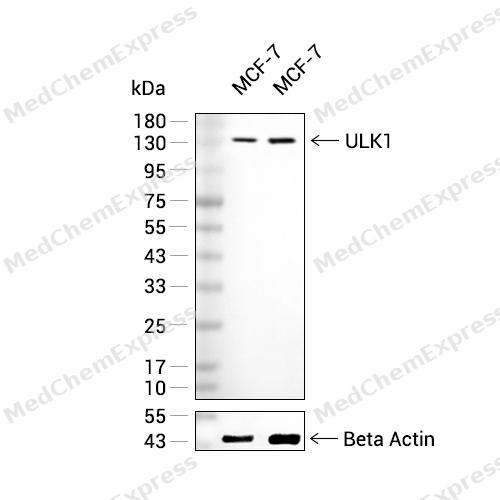 Western blot analysis of extracts from MCF-7 (lane 2(20μg), MCF-7 (lane 3(40μg), using ULK1 Antibody. Proteins were transferred to a PVDF membrane and blocked with 5% BSA in TBST for 2 hour at room temperature. The primary antibody and Loading control antibody (Beta Actin, HY-P80438, 1/3000) was used in 5% BSA in TBST at 4°C overnight. Goat Anti-Mouse/Rabbit IgG-HRP Secondary Antibody (HY-P8004/HY-P8001, 1/10,000) was used for 1 hour at room temperature.
 -
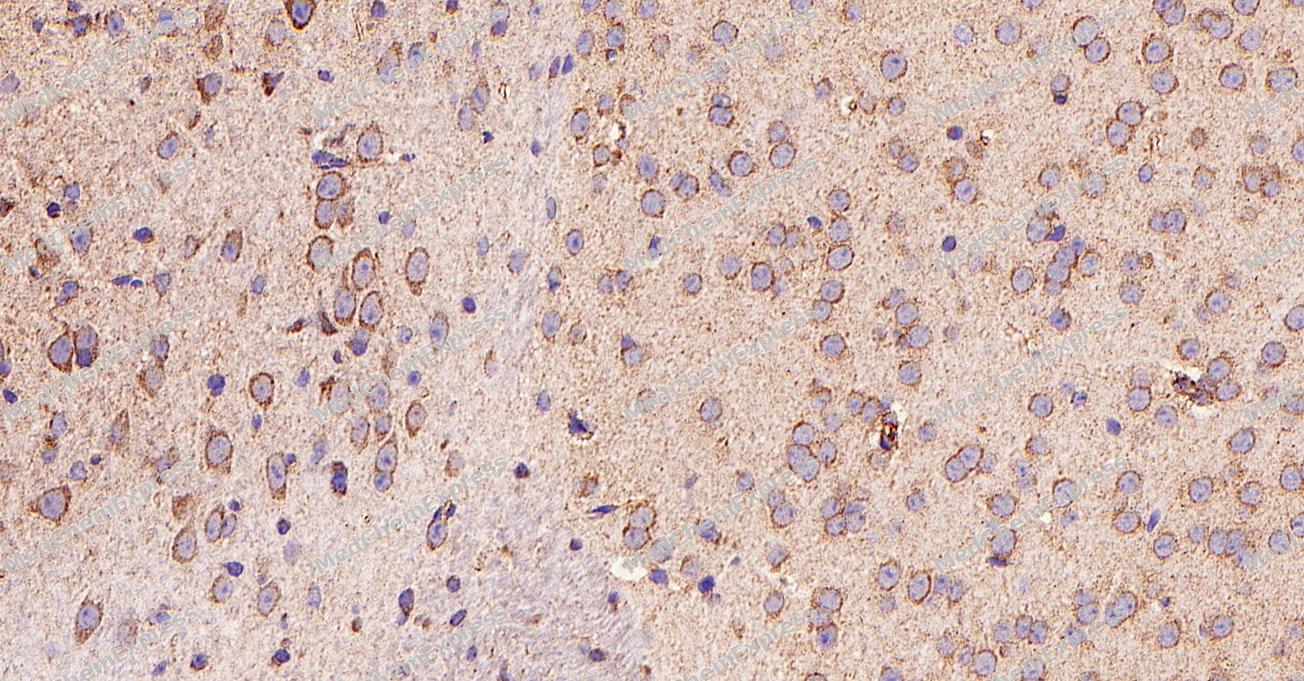
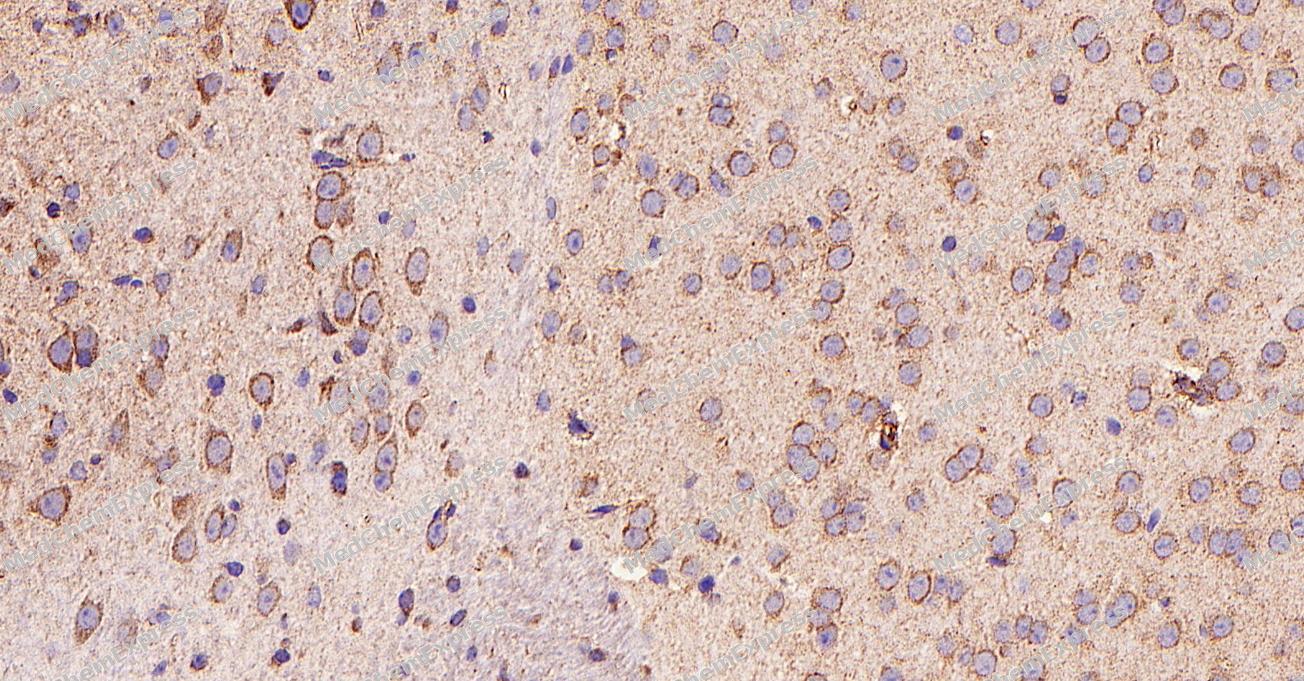 Immunohistochemical analysis of paraffin-embedded Mouse brain tissue using ULK1 Antibody. The section was pre-treated using heat mediated antigen retrieval with Tris-EDTA buffer (pH 8.0) for 8 minutes. The tissues were blocked in QuickBlock for 20 minutes at room temperature, washed with ddH2O and PBS, and then probed with the primary antibody (HY-P80366, 1/200) in 4℃ overnight. The detection was performed using an HRP conjugated compact polymer system. DAB was used as the chromogen. Tissues were counterstained with hematoxylin and mounted with DPX.
 -
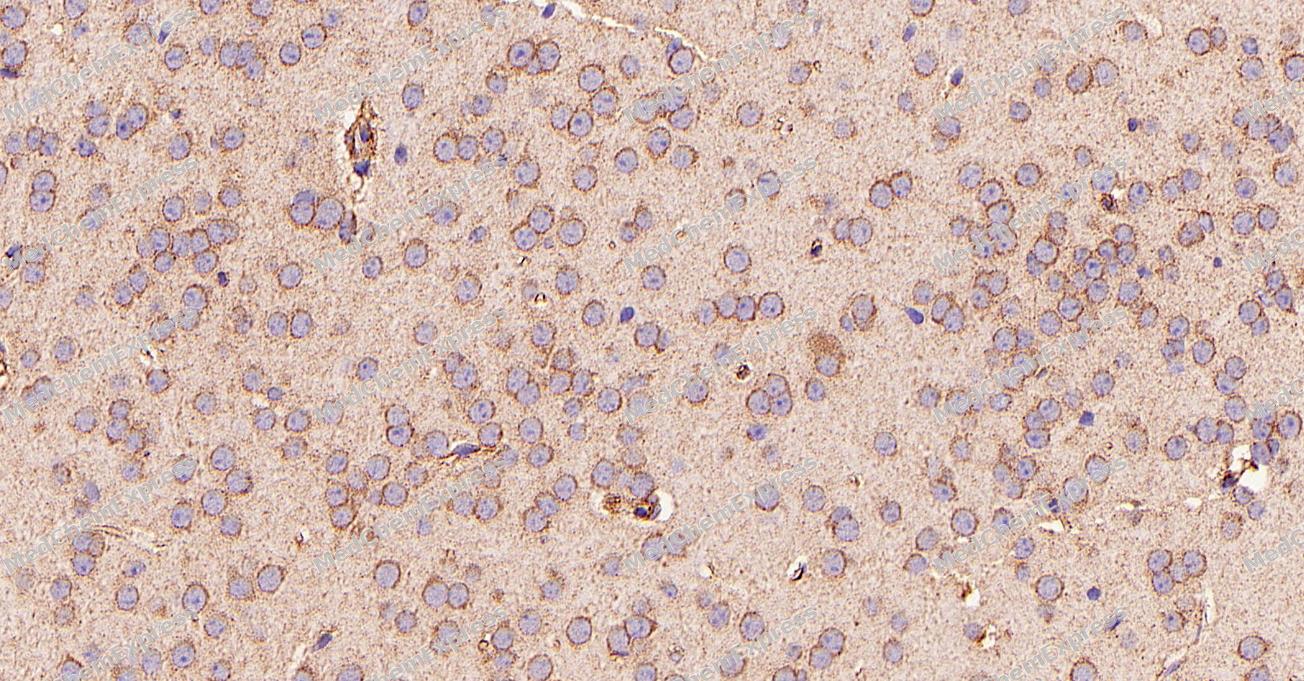
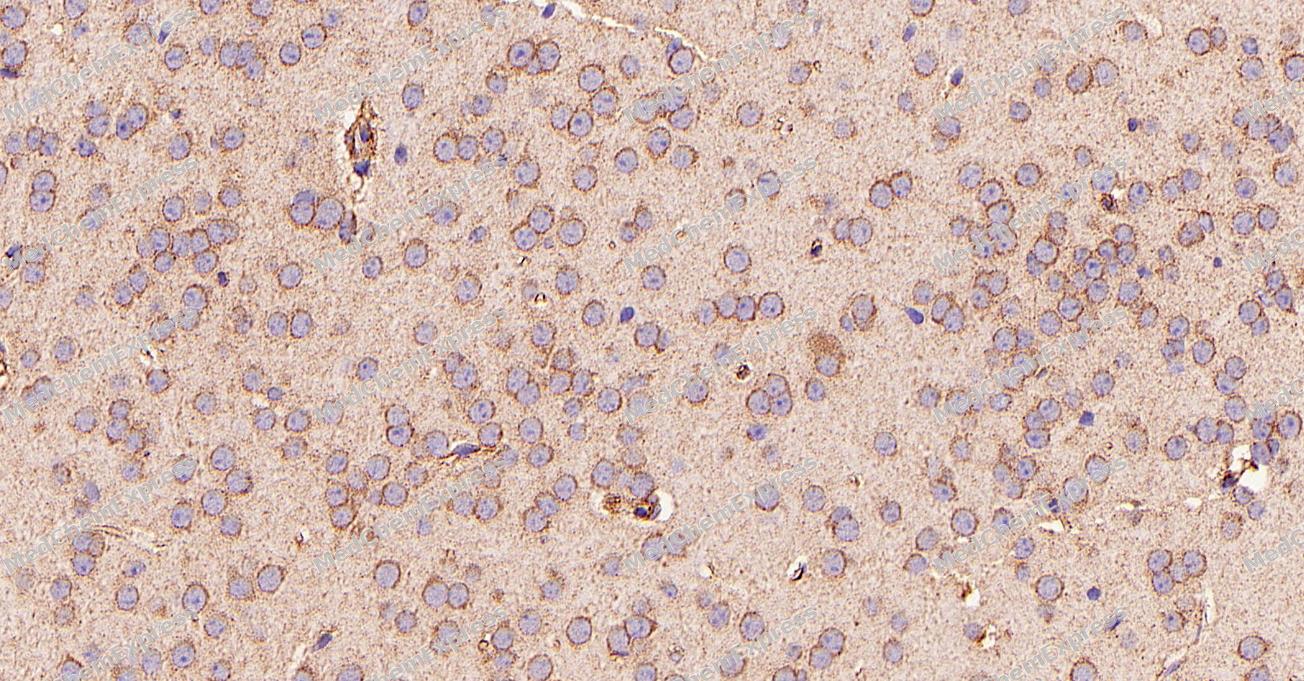 Immunohistochemical analysis of paraffin-embedded Mouse brain tissue using ULK1 Antibody. The section was pre-treated using heat mediated antigen retrieval with Tris-EDTA buffer (pH 8.0) for 8 minutes. The tissues were blocked in QuickBlock for 20 minutes at room temperature, washed with ddH2O and PBS, and then probed with the primary antibody (HY-P80366, 1/200) in 4℃ overnight. The detection was performed using an HRP conjugated compact polymer system. DAB was used as the chromogen. Tissues were counterstained with hematoxylin and mounted with DPX.


Background
-
Function
ULK1 is a serine/threonine kinase and a key initiator of mammalian autophagy, functioning near the apex of a nutrient-sensitive regulatory pathway[1]. Mechanistically, AMPK binds ULK1 and supports ULK1-mediated autophagy, while mTORC1 negatively regulates the ULK1 autophagic complex through phosphorylation-dependent control[2][3]. During starvation, ULK1 links cellular energy sensing to downstream autophagy machinery, including ATG13, FIP200/RB1CC1, ATG101, ATG14L, VPS34, and phagophore formation[3][4]. In disease models, altered ULK1 signaling has been connected with prostate cancer progression, prion infection, clear cell renal cell carcinoma, cardiomyocyte oxidative injury, and pathogen-related autophagy[5][6][7][8][9]. Compared with ULK2, ULK1 shows strong functional overlap in nutrient-starvation autophagy, because combined ULK1/ULK2 loss disrupts autophagy activation more clearly than single loss[10]. Compared with ULK3, ULK1 remains part of the canonical mTOR-AMPK autophagy axis, whereas ULK3 can support mTOR-insensitive autophagic flux in BIN1-deficient hippocampal neurons[11]. For experimental applications, ULK1 pathway modulation can be studied with AMPK activators, mTOR inhibitors, deubiquitinase inhibitor WP1130, and pathway inhibitors targeting CAMKK2-AMPK-ULK1 signaling[2][5][12].
-
Subcellular Localization
Cytoplasm, cytosol; Preautophagosomal structure
-
Expression
Tissue_specificity:Widely expressed. Detectable in the following adult tissues: skeletal muscle, heart, pancreas, brain, placenta, liver, kidneys, and lungs. -
Subunit
Interacts with GABARAP and GABARAPL2 (PubMed:11146101). Interacts (via C-terminus) with ATG13 (PubMed:18936157). Part of a complex consisting of ATG13, ATG101, ULK1 and RB1CC1 (PubMed:19287211). Associates with the mammalian target of rapamycin complex 1 (mTORC1) through an interaction with RPTOR; the association depends on nutrient conditions and is reduced during starvation (PubMed:19211835, PubMed:21795849). Interacts with FEZ1; SCOC interferes with FEZ1-binding (PubMed:22354037). Interacts with TBC1D14 (PubMed:22613832). Interacts (phosphorylated form) with TRIM5 (PubMed:25127057). When phosphorylated at Ser-317, interacts with MEFV and BECN1 simultaneously (PubMed:26347139). Interacts with TRIM21 and IRF3, in the presence of TRIM21 (PubMed:26347139). Interacts with SESN2 (PubMed:25040165). Interacts with SQSTM1 (PubMed:25040165). Interacts with C9orf72 (PubMed:27334615). Interacts with WDR45 (PubMed:28561066). Interacts with ATG13; this interaction is increased in the absence of TMEM39A (PubMed:31806350). Interacts with WIPI2 (PubMed:28890335). Interacts with ATP2A2 (PubMed:28890335). Interacts with AMBRA1 (PubMed:25438055, PubMed:31123703). Interacts with IRGM; promoting the coassembly of ULK1 and BECN1 (PubMed:25891078)
-
SwissProt ID
-
Synonyms
KIAA0722, ULK1, Serine/threonine-protein kinase ULK1, Autophagy-related protein 1 homolog, Unc-51-like kinase 1, ATG1, hATG1
-
Research Field
Signal Transduction
Documentation
-
Data Sheet (263 KB)
-
SDS (252 KB)
- English - EN (252 KB)
- Français - FR (252 KB)
- Deutsch - DE (252 KB)
- Norwegian - NO (252 KB)
- Español - ES (252 KB)
- Swedish - SV (252 KB)
- Italian - IT (252 KB)
- Korean - KR (252 KB)
- Portuguese - PT (252 KB)
-
User Guide for Antibodies (1077 KB)
References
[1]. Chan EY. Regulation and function of uncoordinated-51 like kinase proteins. Antioxid Redox Signal. 2012 Sep 1;17(5):775-85. doi: 10.1089/ars.2011.4396. Epub 2012 Jan 4. PMID: 22074133. et al. Regulation and function of uncoordinated-51 like kinase proteins. Antioxid Redox Signal. 2012 Sep 1;17(5):775-85. [Content Brief]
[2]. Lee JW, et al. The association of AMPK with ULK1 regulates autophagy. PLoS One. 2010 Nov 3;5(11):e15394. [Content Brief]
[3]. Roach PJ. AMPK -> ULK1 -> autophagy. Mol Cell Biol. 2011 Aug;31(15):3082-4. doi: 10.1128/MCB.05565-11. Epub 2011 May 31. PMID: 21628530; PMCID: PMC3147606. et al. AMPK -> ULK1 -> autophagy. Mol Cell Biol. 2011 Aug;31(15):3082-4. [Content Brief]
[4]. Pyo KE, et al. ULK1 O-GlcNAcylation Is Crucial for Activating VPS34 via ATG14L during Autophagy Initiation. Cell Rep. 2018 Dec 4;25(10):2878-2890.e4. [Content Brief]
[5]. Lin C, et al. Inhibition of CAMKK2 impairs autophagy and castration-resistant prostate cancer via suppression of AMPK-ULK1 signaling. Oncogene. 2021 Mar;40(9):1690-1705. [Content Brief]
[6]. Fan XY, et al. Activation of the AMPK-ULK1 pathway plays an important role in autophagy during prion infection. Sci Rep. 2015 Oct 1;5:14728. [Content Brief]
[7]. Radovanovic M, et al. Role of AMPK/mTOR-independent autophagy in clear cell renal cell carcinoma. J Investig Med. 2020 Dec;68(8):1386-1393. [Content Brief]
[8]. Xie C, et al. A novel danshensu/tetramethypyrazine derivative attenuates oxidative stress-induced autophagy injury via the AMPK-mTOR-Ulk1 signaling pathway in cardiomyocytes. Exp Ther Med. 2021 Feb;21(2):118. [Content Brief]
[9]. Yu Y, et al. Guanylate-Binding protein 2b regulates the AMPK/mTOR/ULK1 signalling pathway to induce autophagy during Mycobacterium bovis infection. Virulence. 2022 Dec;13(1):875-889. [Content Brief]
[10]. McAlpine F, et al. Regulation of nutrient-sensitive autophagy by uncoordinated 51-like kinases 1 and 2. Autophagy. 2013 Mar;9(3):361-73. [Content Brief]
[11]. Jin Y, et al. BIN1 deficiency enhances ULK3-dependent autophagic flux and reduces dendritic size in mouse hippocampal neurons. Autophagy. 2025 Jan;21(1):223-242. [Content Brief]
[12]. Drießen S, et al. Deubiquitinase inhibition by WP1130 leads to ULK1 aggregation and blockade of autophagy. Autophagy. 2015;11(9):1458-70. [Content Brief]

 Powered by Bioz
