



VAChT/SLC18A3 Antibody (YA6831)
(Synonyms: AChR antibody; MGC12716 antibody; rVAT antibody; Slc18a3 antibody; Solute carrier family 18 (vesicular acetylcholine) member 3 antibody; Solute carrier family 18 (vesicular monoamine) member 3 antibody; Solute carrier family 18 member 3 antibody; VAChT antibody; VACHT_HUMAN antibody; Vesicular acetylcholine transporter antibody; )
Based on 1 Customer Validation
VAChT/SLC18A3 Antibody (YA6831) is a Rat -derived and non-conjugated monoclonal antibody, targeting to VAChT/SLC18A3.
-
Host:
Rat
-
Application:
IHC-F
-
Reactivity :
Mouse
-
Formulation:
Supplied in PBS (pH7.4), 0.1% BSA, 40% Glycerol. Preservative: 0.05% Sodium Azide.
-
Conjugation:
Non-conjugated


To place orders, for customer services and technical support, please contact: MedChemExpress USA
Tel: 609-228-6898 E-mail: [email protected] [email protected]





Applications
| Application |
IHC-F

IHC-F: Immunohistochemistry-Frozen
|
|---|---|
| Dilution Ratio | 1:500 |


Product Details
VAChT/SLC18A3 Antibody (YA6831) is a Rat -derived and non-conjugated monoclonal antibody, targeting to VAChT/SLC18A3.
-
Host Rat

-
Clonality Recombinant,Monoclonal

-
Species ReactivityMouse Predicted Reactivity: Species independent,Pig
Note: The predicted reactivity is for reference only and should not be considered a guarantee of product performance.
-
Calculated Molecular Weight Predicted band size: 57 kDa

affinity purified.
Non-conjugated
Unmodified


Product Properties
-
Appearance
Liquid
-
Formulation
Supplied in PBS (pH7.4), 0.1% BSA, 40% Glycerol. Preservative: 0.05% Sodium Azide.
-
Concentration
Batch-dependent, Please check the COA for the concentration of each lot. Check Lot Concentration
-
Storage & Stability
Stored at -20°C for 1 year. Avoid repeated freeze / thaw cycles.
-
Shipping
Shipping with blue ice.


Verification Images
-
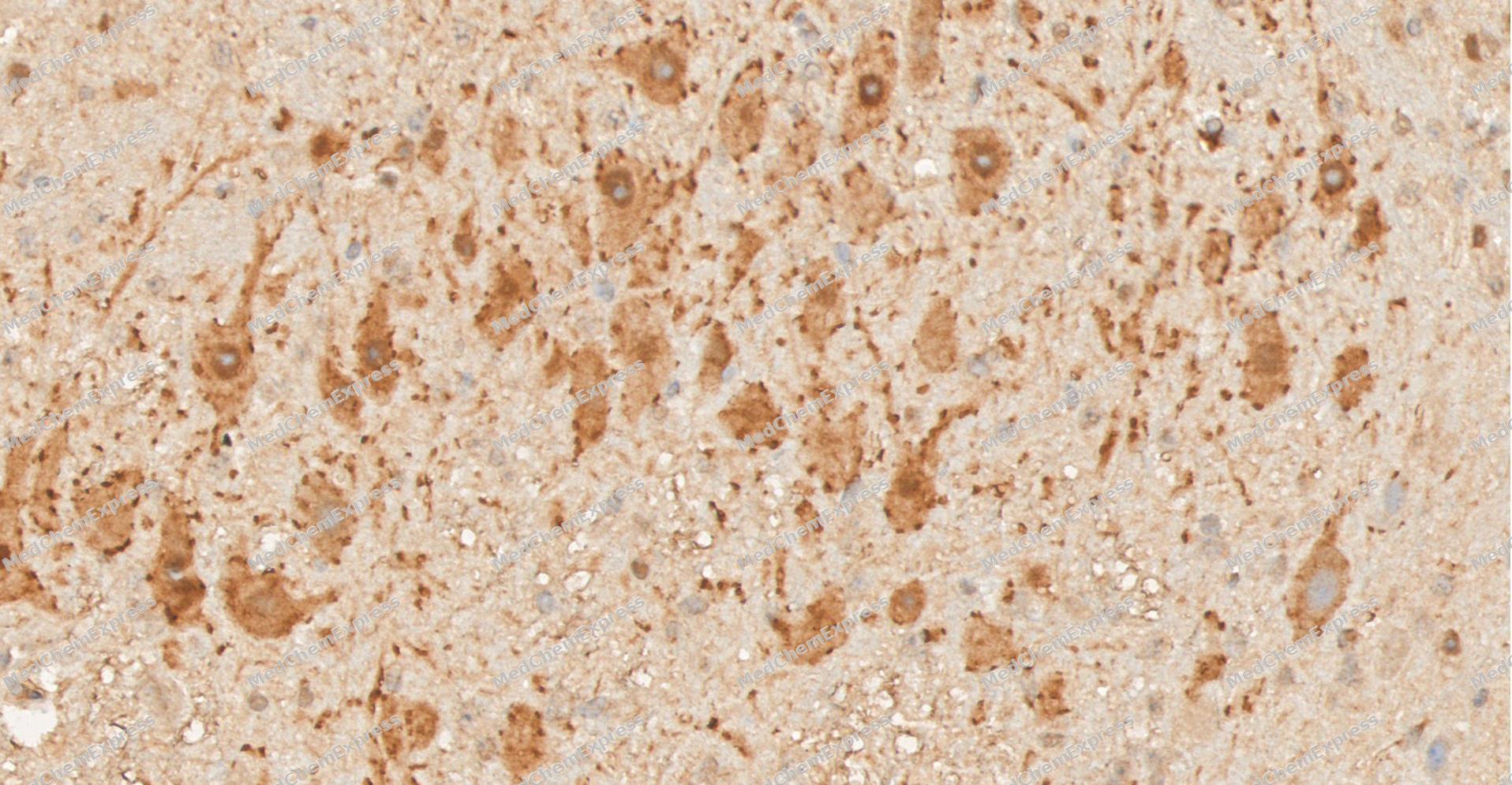 Immunohistochemical analysis of paraffin-embedded Mouse Brain tissue using VAChT/SLC18A3 antibody was performed. The section was pretreated using high-temperature and high-pressure mediated EDTA antigen retrieval buffer (pH 9.0), for 5 minutes. The tissues were incubated with primary antibody (HY-P87138, 1:600 dilution) at room temperature for 60 minutes. Detection was performed using an HRP conjugated compact polymer system. DAB was used as the chromogen. The tissues were counterstained with hematoxylin and mounted with neutral balsam mounting medium.
 -
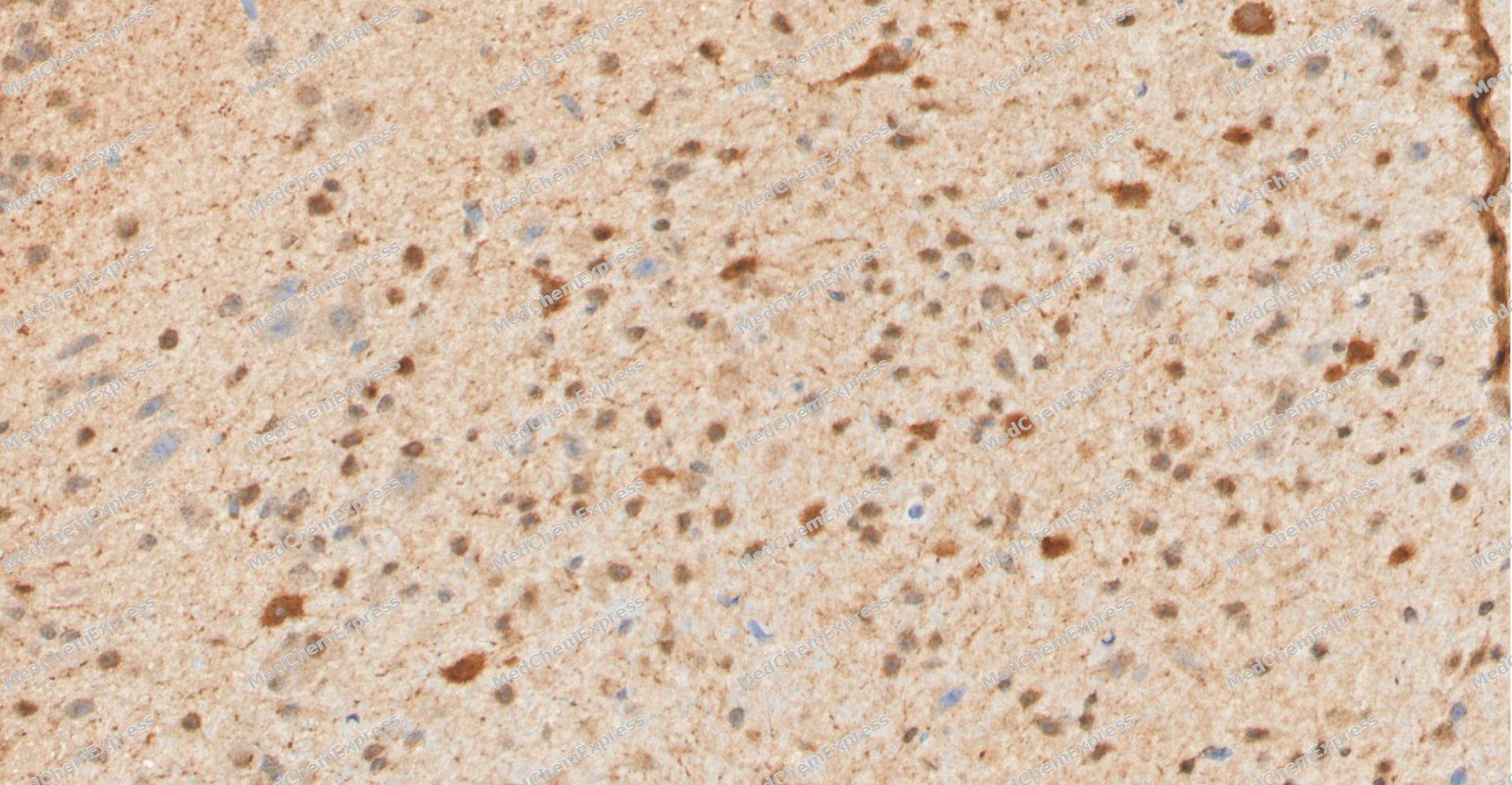 Immunohistochemical analysis of paraffin-embedded Mouse Brain tissue using VAChT/SLC18A3 antibody was performed. The section was pretreated using high-temperature and high-pressure mediated EDTA antigen retrieval buffer (pH 9.0), for 5 minutes. The tissues were incubated with primary antibody (HY-P87138, 1:600 dilution) at room temperature for 60 minutes. Detection was performed using an HRP conjugated compact polymer system. DAB was used as the chromogen. The tissues were counterstained with hematoxylin and mounted with neutral balsam mounting medium.
 -
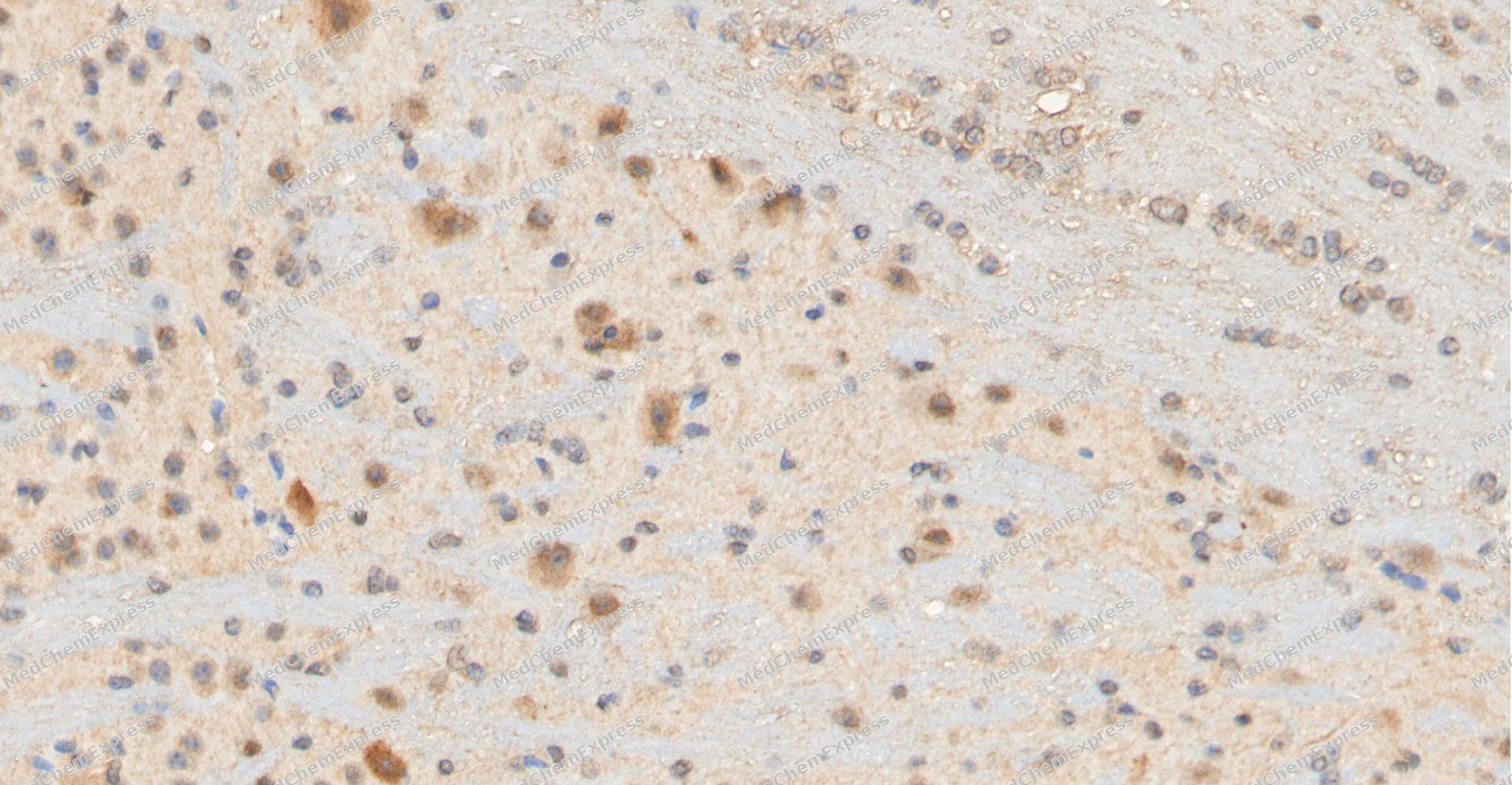 Immunohistochemical analysis of paraffin-embedded Mouse Brain tissue using VAChT/SLC18A3 antibody was performed. The section was pretreated using high-temperature and high-pressure mediated EDTA antigen retrieval buffer (pH 9.0), for 5 minutes. The tissues were incubated with primary antibody (HY-P87138, 1:600 dilution) at room temperature for 60 minutes. Detection was performed using an HRP conjugated compact polymer system. DAB was used as the chromogen. The tissues were counterstained with hematoxylin and mounted with neutral balsam mounting medium.
 -
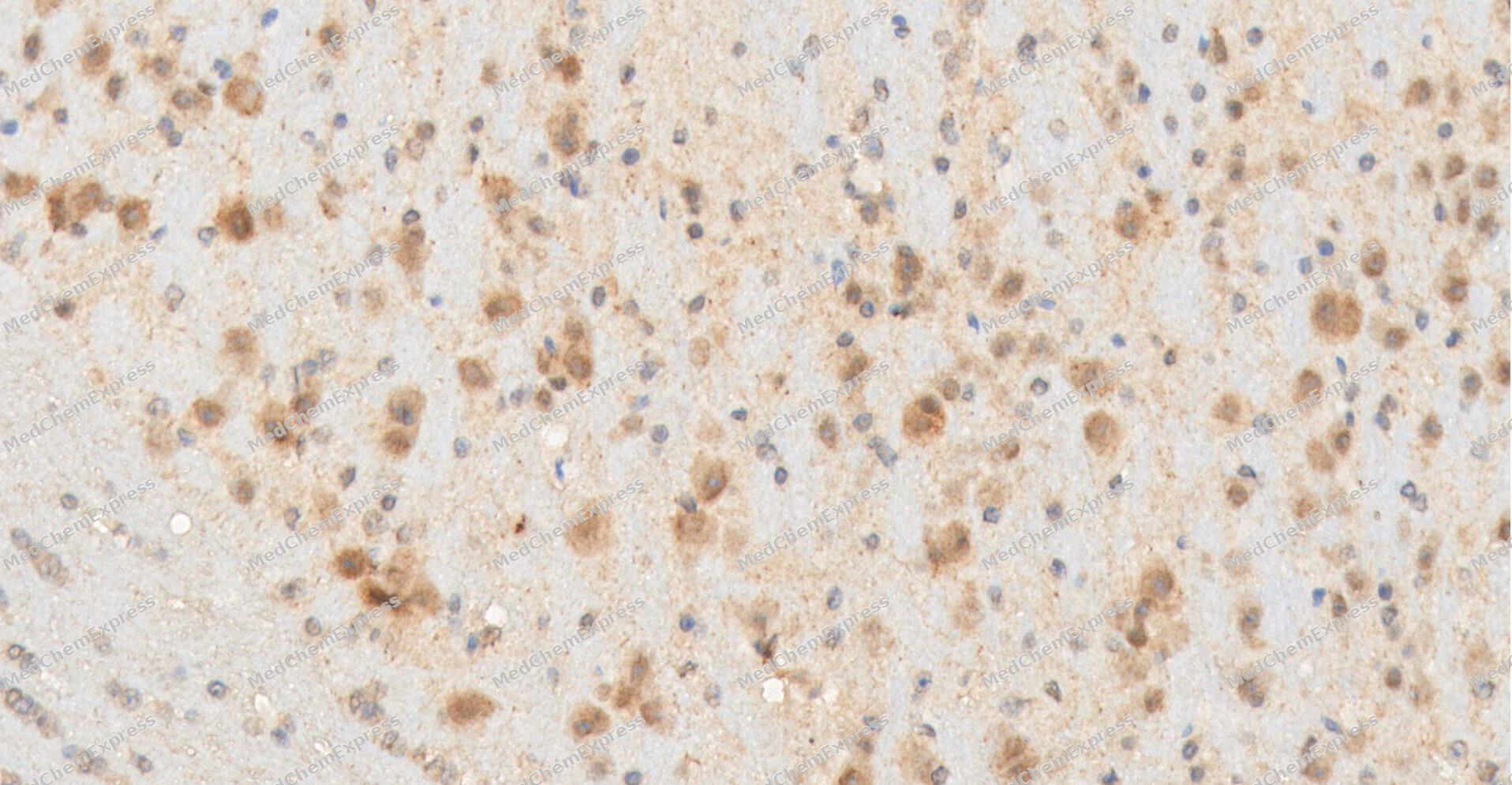 Immunohistochemical analysis of paraffin-embedded Mouse Brain tissue using VAChT/SLC18A3 antibody was performed. The section was pretreated using high-temperature and high-pressure mediated EDTA antigen retrieval buffer (pH 9.0), for 5 minutes. The tissues were incubated with primary antibody (HY-P87138, 1:600 dilution) at room temperature for 60 minutes. Detection was performed using an HRP conjugated compact polymer system. DAB was used as the chromogen. The tissues were counterstained with hematoxylin and mounted with neutral balsam mounting medium.
 -
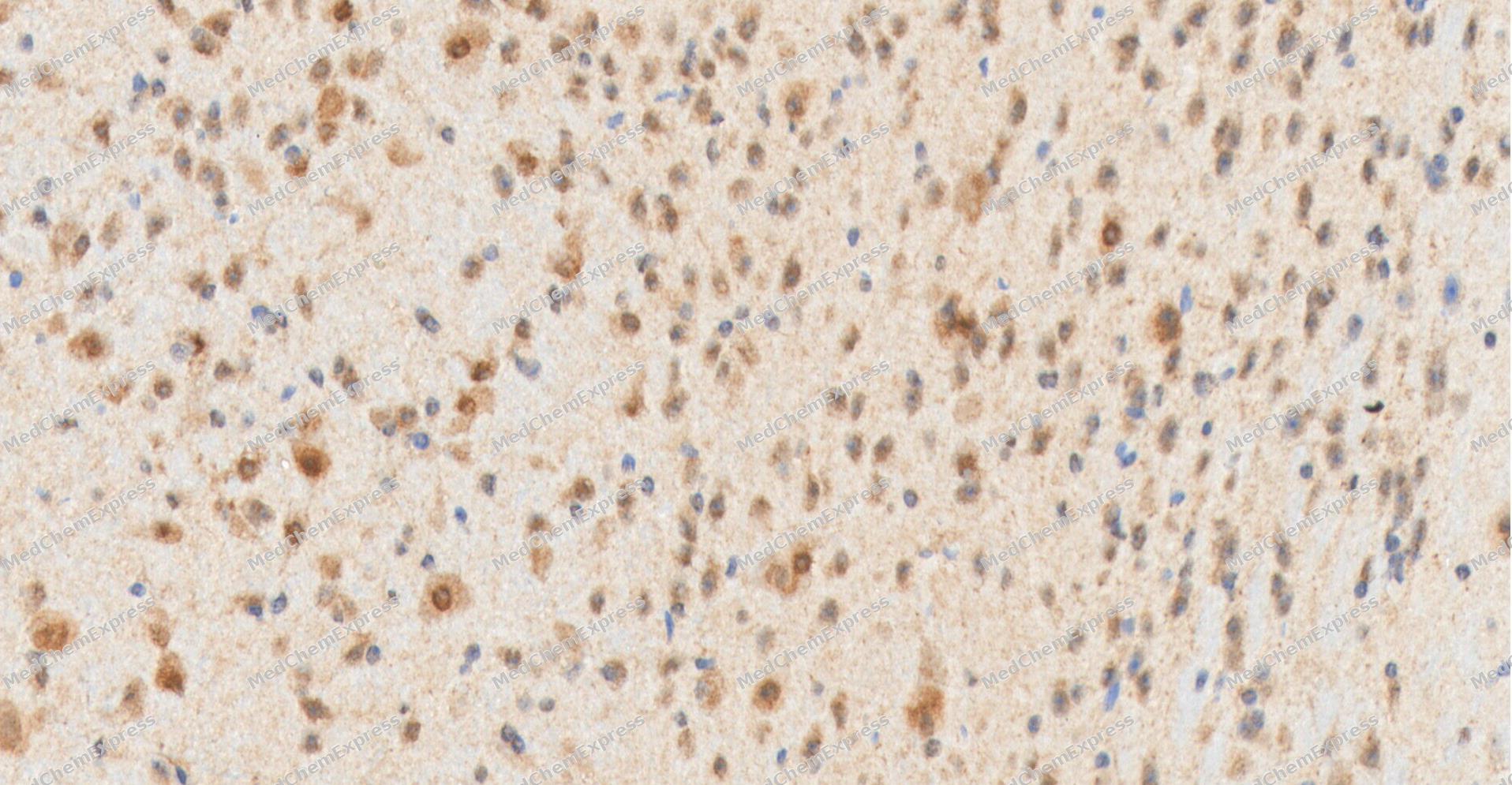 Immunohistochemical analysis of paraffin-embedded Mouse Brain tissue using VAChT/SLC18A3 antibody was performed. The section was pretreated using high-temperature and high-pressure mediated EDTA antigen retrieval buffer (pH 9.0), for 5 minutes. The tissues were incubated with primary antibody (HY-P87138, 1:600 dilution) at room temperature for 60 minutes. Detection was performed using an HRP conjugated compact polymer system. DAB was used as the chromogen. The tissues were counterstained with hematoxylin and mounted with neutral balsam mounting medium.
 -
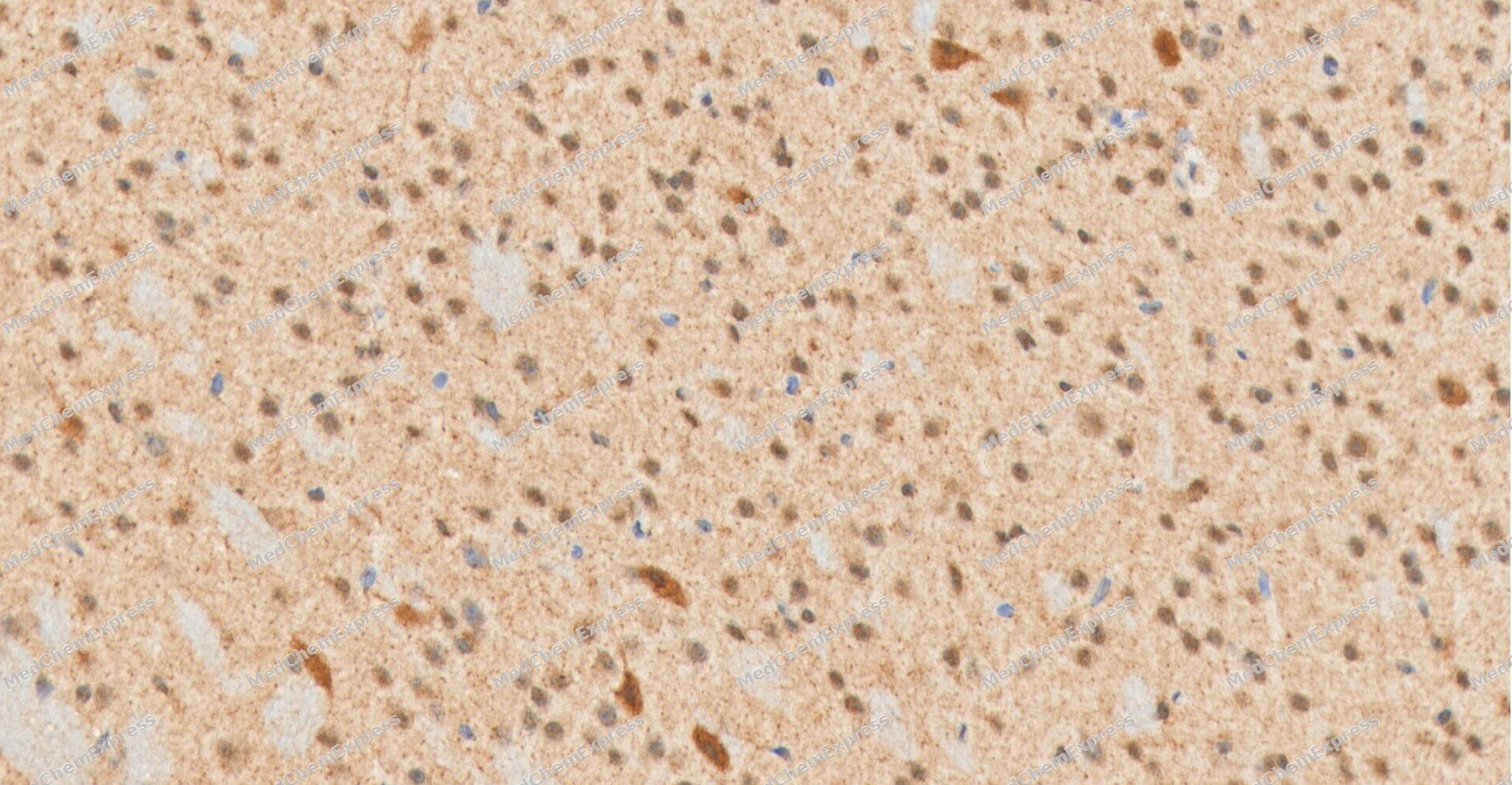 Immunohistochemical analysis of paraffin-embedded Mouse Brain tissue using VAChT/SLC18A3 antibody was performed. The section was pretreated using high-temperature and high-pressure mediated EDTA antigen retrieval buffer (pH 9.0), for 5 minutes. The tissues were incubated with primary antibody (HY-P87138, 1:600 dilution) at room temperature for 60 minutes. Detection was performed using an HRP conjugated compact polymer system. DAB was used as the chromogen. The tissues were counterstained with hematoxylin and mounted with neutral balsam mounting medium.
 -
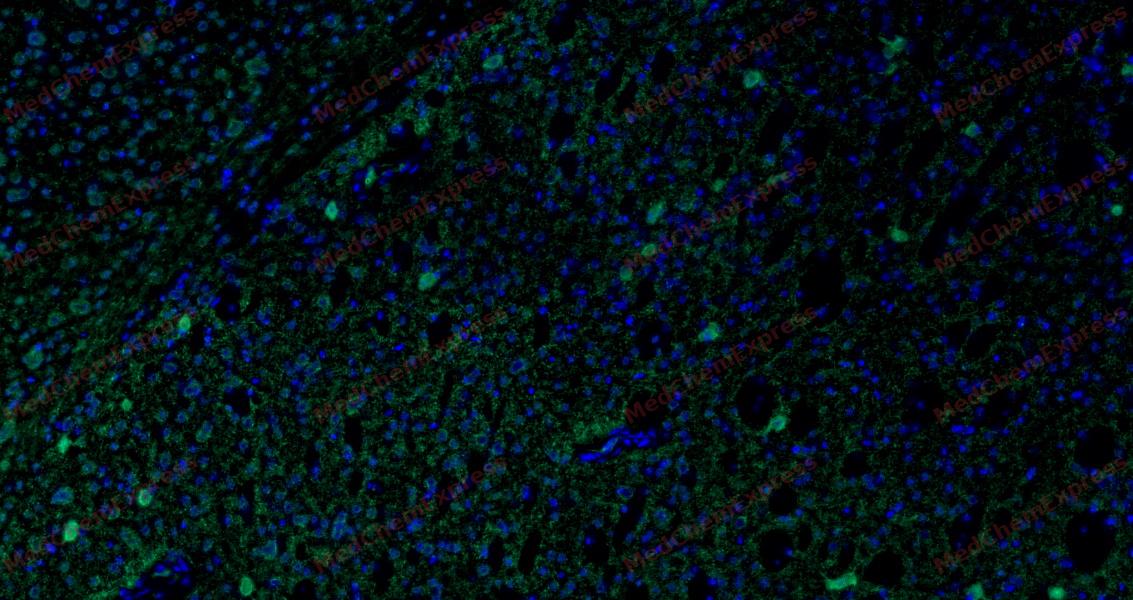 Tyramide signaling amplification based immunofluorescence was performed on paraffin-embedded Mouse Brain tissue using VAChT/SLC18A3 antibody. Antigen retrieval was performed in EDTA buffer pH 9.0 (95 °C, 20 min) followed by cooling to RT. Then incubated with primary antibody (HY-P87138, 1:1000 dilution) at room temperature for 60 minutes and HRP conjugated secondary antibody for 10 minutes. Fluorescence was then developed with Vari Fluor 532 TSA (200×)(HY-D1832). The tissues were counterstained with DAPI and mounted with Anti-fade mounting medium.
 -
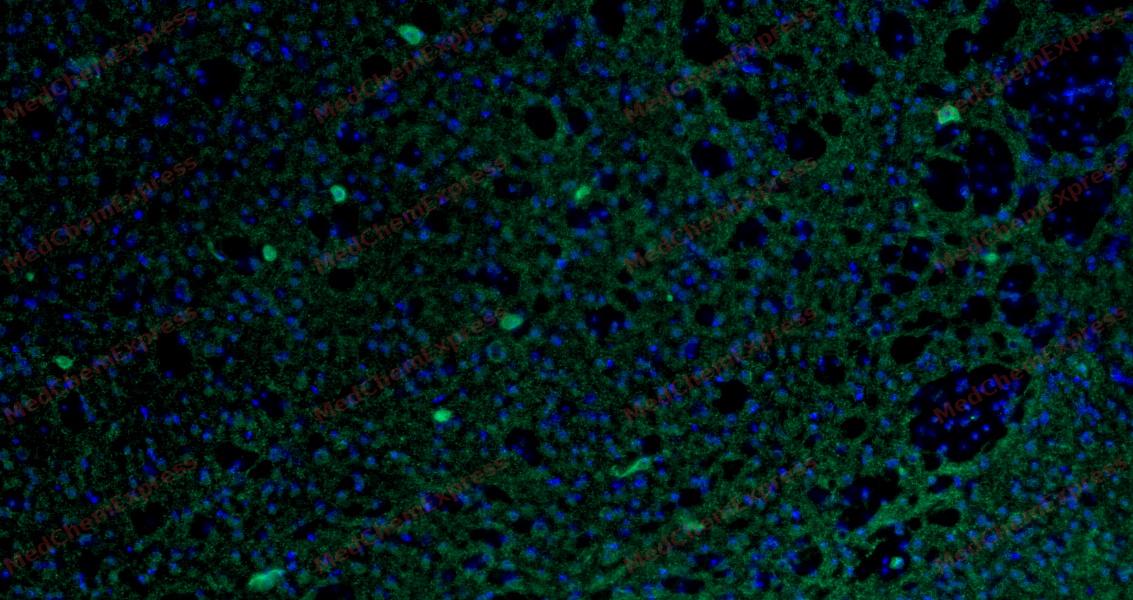 Tyramide signaling amplification based immunofluorescence was performed on paraffin-embedded Mouse Brain tissue using VAChT/SLC18A3 antibody. Antigen retrieval was performed in EDTA buffer pH 9.0 (95 °C, 20 min) followed by cooling to RT. Then incubated with primary antibody (HY-P87138, 1:1000 dilution) at room temperature for 60 minutes and HRP conjugated secondary antibody for 10 minutes. Fluorescence was then developed with Vari Fluor 532 TSA (200×)(HY-D1832). The tissues were counterstained with DAPI and mounted with Anti-fade mounting medium.
 -
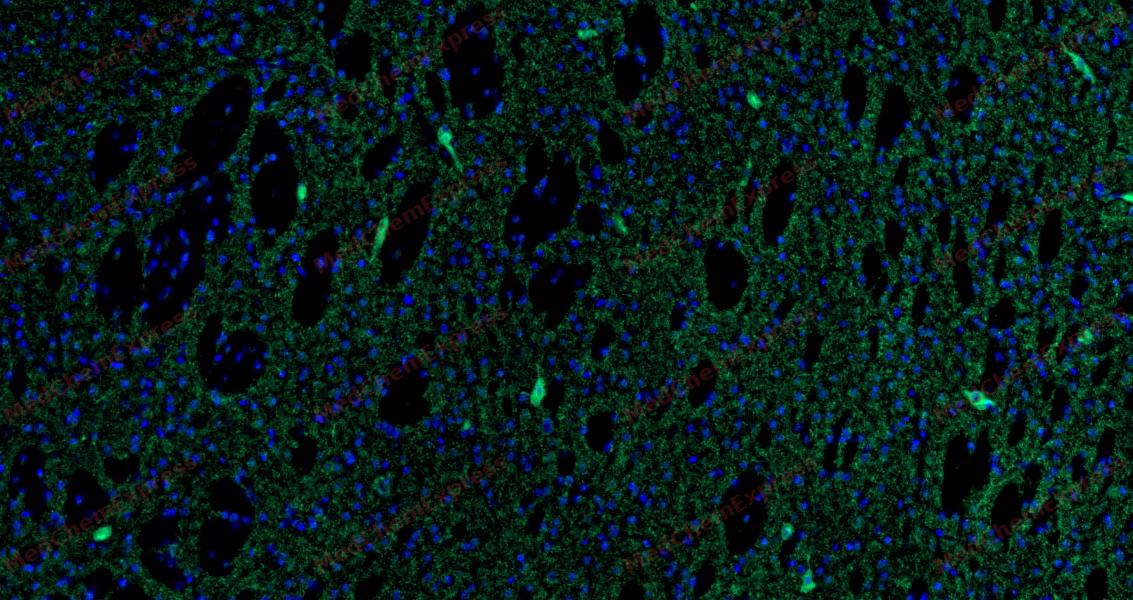 Tyramide signaling amplification based immunofluorescence was performed on paraffin-embedded Mouse Brain tissue using VAChT/SLC18A3 antibody. Antigen retrieval was performed in EDTA buffer pH 9.0 (95 °C, 20 min) followed by cooling to RT. Then incubated with primary antibody (HY-P87138, 1:1000 dilution) at room temperature for 60 minutes and HRP conjugated secondary antibody for 10 minutes. Fluorescence was then developed with Vari Fluor 532 TSA (200×)(HY-D1832). The tissues were counterstained with DAPI and mounted with Anti-fade mounting medium.
 -
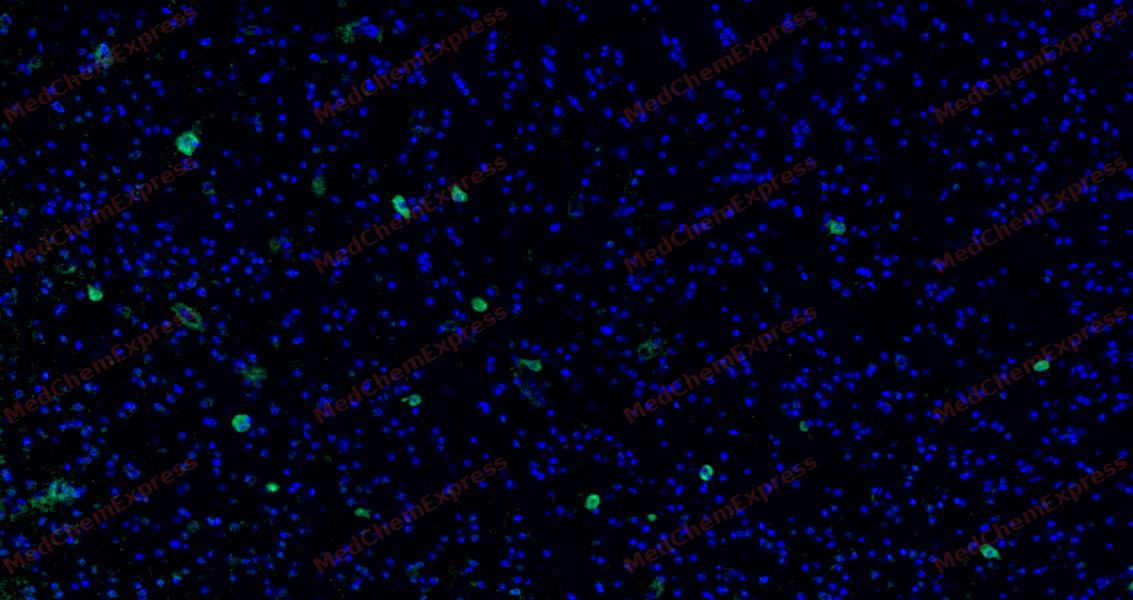 Tyramide signaling amplification based immunofluorescence was performed on paraffin-embedded Mouse Brain tissue using VAChT/SLC18A3 antibody. Antigen retrieval was performed in EDTA buffer pH 9.0 (95 °C, 20 min) followed by cooling to RT. Then incubated with primary antibody (HY-P87138, 1:1000 dilution) at room temperature for 60 minutes and HRP conjugated secondary antibody for 10 minutes. Fluorescence was then developed with Vari Fluor 532 TSA (200×)(HY-D1832). The tissues were counterstained with DAPI and mounted with Anti-fade mounting medium.
 -
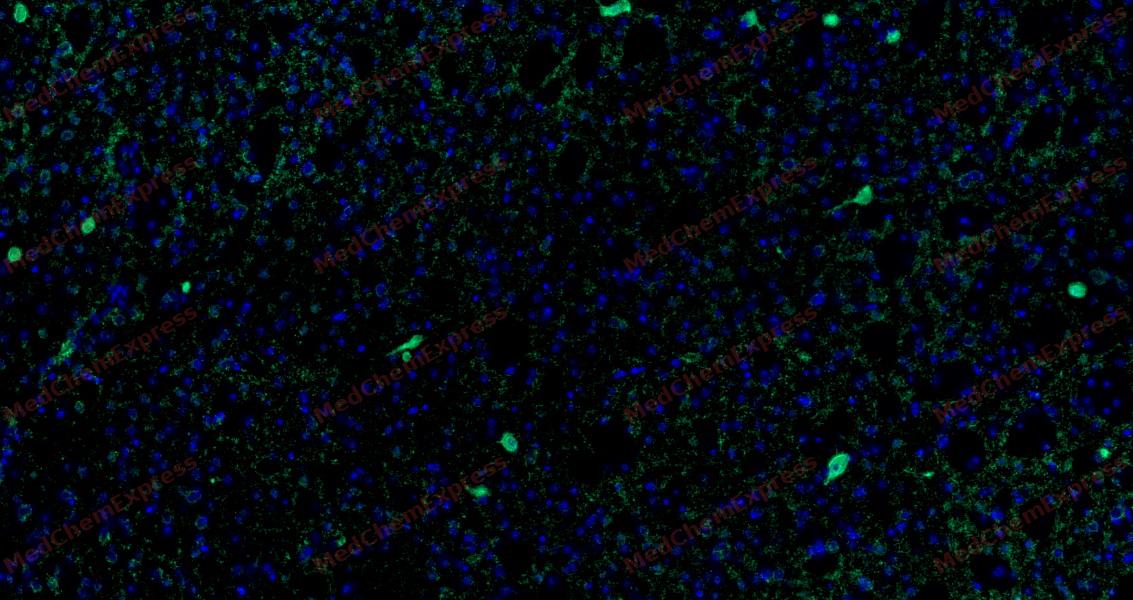 Tyramide signaling amplification based immunofluorescence was performed on paraffin-embedded Mouse Brain tissue using VAChT/SLC18A3 antibody. Antigen retrieval was performed in EDTA buffer pH 9.0 (95 °C, 20 min) followed by cooling to RT. Then incubated with primary antibody (HY-P87138, 1:1000 dilution) at room temperature for 60 minutes and HRP conjugated secondary antibody for 10 minutes. Fluorescence was then developed with Vari Fluor 532 TSA (200×)(HY-D1832). The tissues were counterstained with DAPI and mounted with Anti-fade mounting medium.
 -
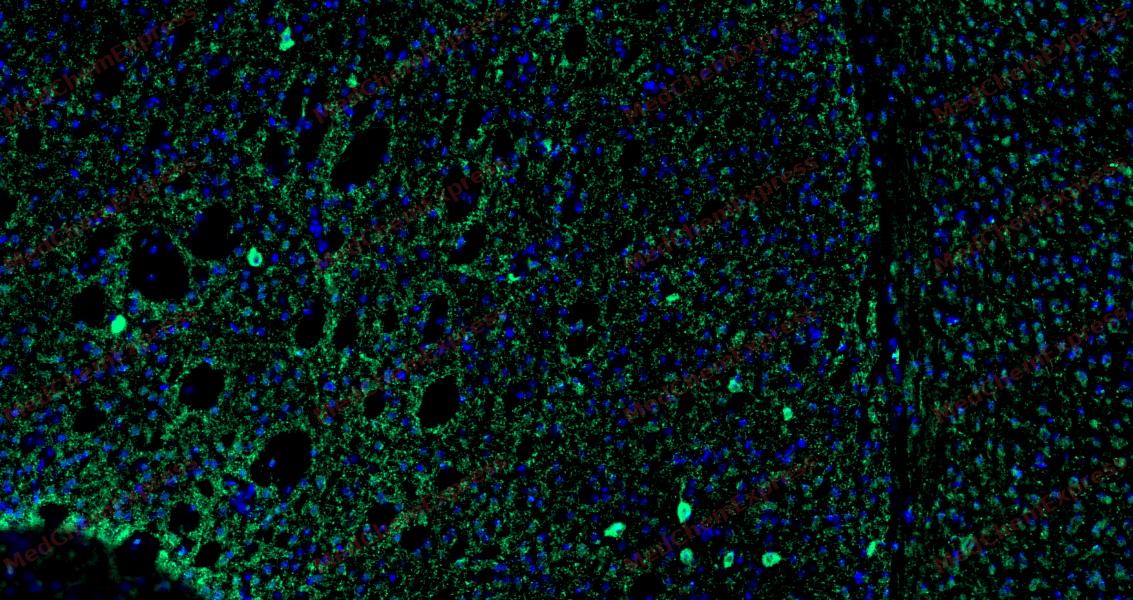 Tyramide signaling amplification based immunofluorescence was performed on paraffin-embedded Mouse Brain tissue using VAChT/SLC18A3 antibody. Antigen retrieval was performed in EDTA buffer pH 9.0 (95 °C, 20 min) followed by cooling to RT. Then incubated with primary antibody (HY-P87138, 1:1000 dilution) at room temperature for 60 minutes and HRP conjugated secondary antibody for 10 minutes. Fluorescence was then developed with Vari Fluor 532 TSA (200×)(HY-D1832). The tissues were counterstained with DAPI and mounted with Anti-fade mounting medium.


Background
-
Function
VAChT/SLC18A3 is an Electrogenic antiporter that exchanges one cholinergic neurotransmitter, acetylcholine or choline, with two intravesicular protons across the membrane of synaptic vesicles. Uses the electrochemical proton gradient established by the V-type proton-pump ATPase to store neurotransmitters inside the vesicles prior to their release via exocytosis. Determines cholinergic vesicular quantal size at presynaptic nerve terminals in developing neuro-muscular junctions with an impact on motor neuron differentiation and innervation pattern. Part of forebrain cholinergic system, regulates hippocampal synapse transmissions that underlie spatial memory formation. Can transport serotonin[1][2].
-
Subcellular Localization
Cytoplasmic vesicle, secretory vesicle, synaptic vesicle membrane
-
Expression
Tissue_Specificity: Peripheral and central cholinergic nervous systems -
Isoforms & Post-Translational Modification
Q16572: 532 amino acids, molecular weight 56903 Da.
-
Subunit
Interacts with SEC14L1
-
SwissProt ID
-
Synonyms
AChR antibody; MGC12716 antibody; rVAT antibody; Slc18a3 antibody; Solute carrier family 18 (vesicular acetylcholine) member 3 antibody; Solute carrier family 18 (vesicular monoamine) member 3 antibody; Solute carrier family 18 member 3 antibody; VAChT antibody; VACHT_HUMAN antibody; Vesicular acetylcholine transporter antibody;


Documentation
-
Data Sheet (231 KB)
-
SDS (252 KB)
- English - EN (252 KB)
- Français - FR (252 KB)
- Deutsch - DE (252 KB)
- Norwegian - NO (252 KB)
- Español - ES (252 KB)
- Swedish - SV (252 KB)
- Italian - IT (252 KB)
- Korean - KR (252 KB)
- Portuguese - PT (252 KB)
-
User Guide for Antibodies (1077 KB)

 Powered by Bioz
