



Ki8751
Based on 4 publication(s) in Google Scholar
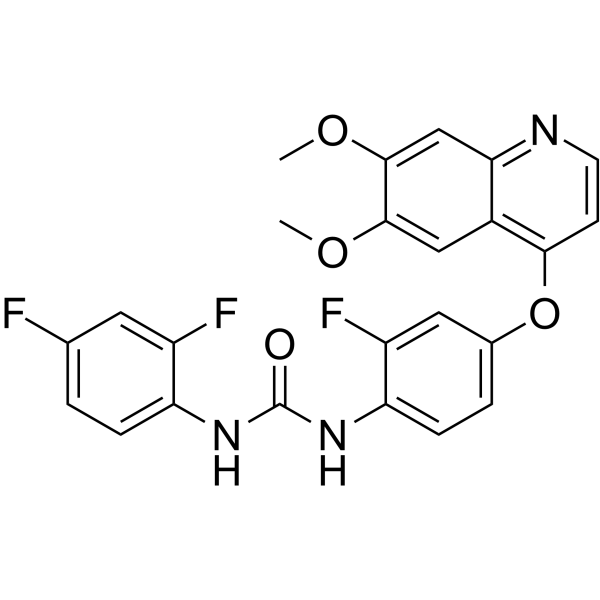
Ki8751 is a potent VEGFR2 inhibitor with an IC50 of 0.9 nM.
Nur für Forschungszwecke. Wir verkaufen nicht an Patienten.
- Reinheit : 99.76%
- CAS. Nr.: 228559-41-9
- Formel: C24H18F3N3O4
- Molecular Weight:469.41
-
Speicherung:Powder -20°C, 3 years , 4°C, 2 years ; In solvent -80°C, 2 years , -20°C, 1 year

To place orders, for customer services and technical support, please contact: MedChemExpress USA
Tel: 609-228-6898 E-mail: [email protected] [email protected]


-
 Biologische Aktivität
-
Chemical Information
-
Lösungsmittel & Löslichkeit
- Reinheit & Dokumentation
- Verweise
-
 Help & FAQs


-
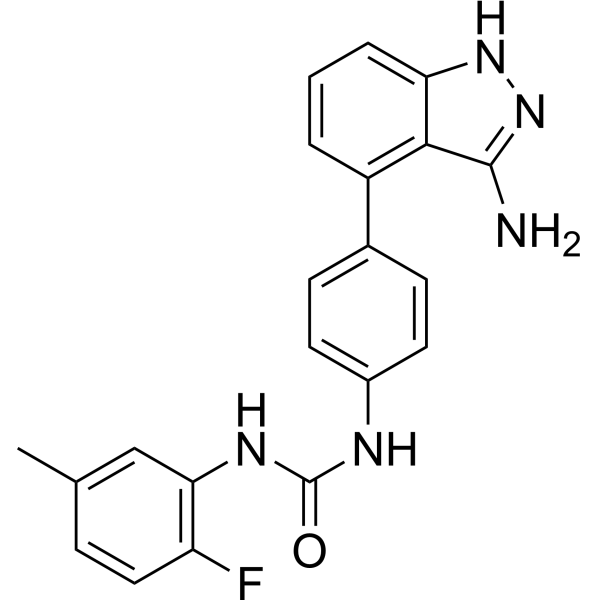
HY-50751
LinifanibMulti-Targeted RTK Inhibitor -
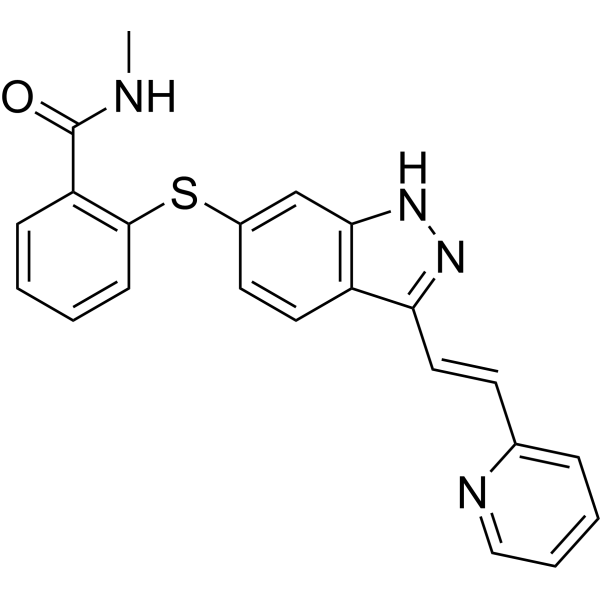
HY-10065
AxitinibTyrosine Kinase Inhibitor -
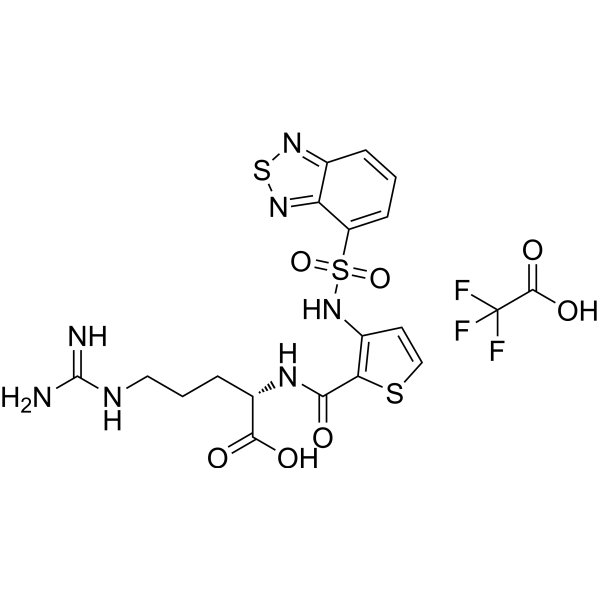
HY-10799
EG00229 trifluoroacetateNRP1 Receptor Antagonist -
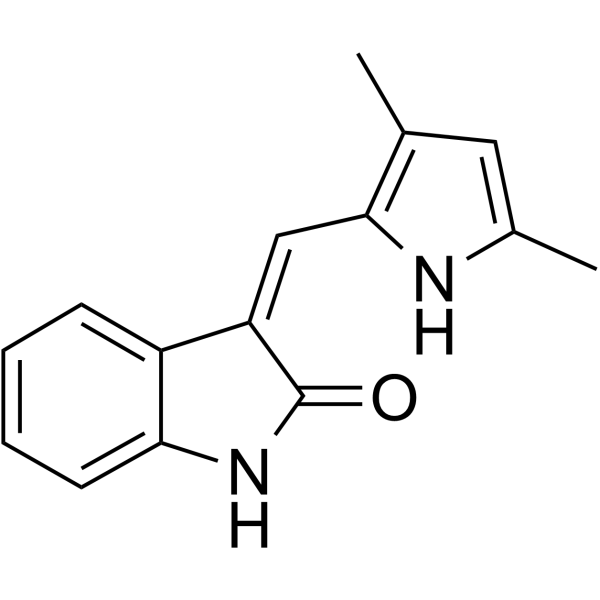
HY-10374
SemaxinibFlk-1/KDR Inhibitor -
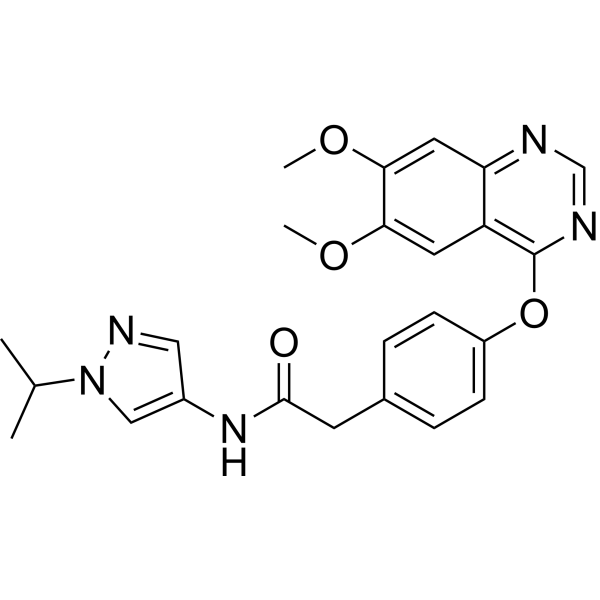
HY-18179
AZD2932c-Kit Inhibitor -
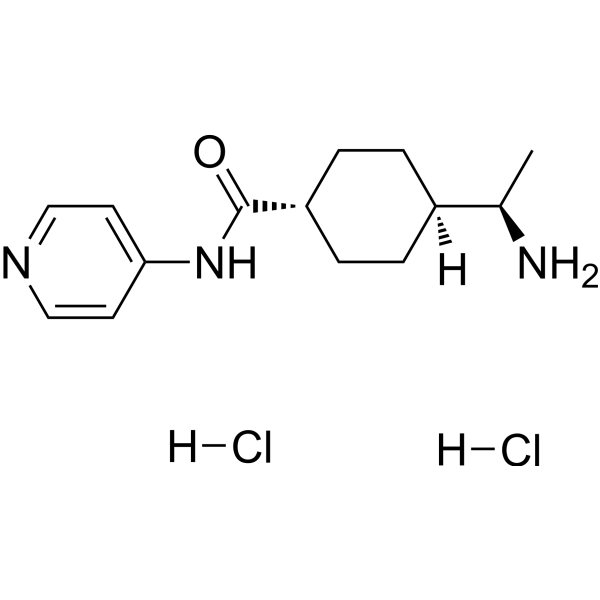
HY-10583
Y-27632 dihydrochlorideROCK Inhibitor -
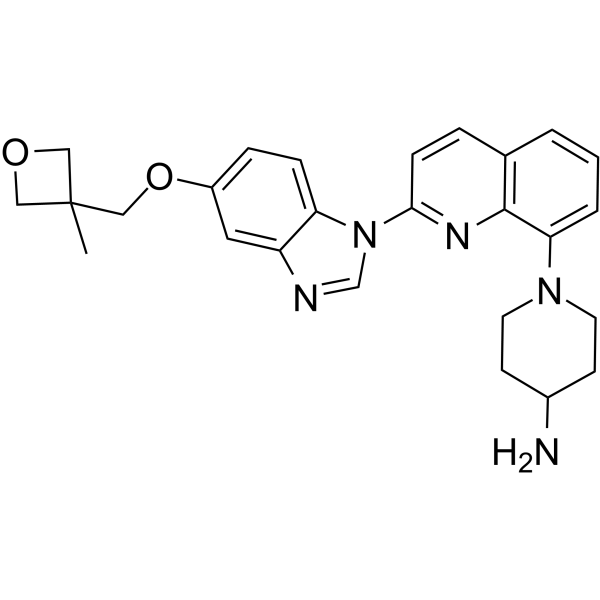
HY-13223
CrenolanibFLT3 Inhibitor -
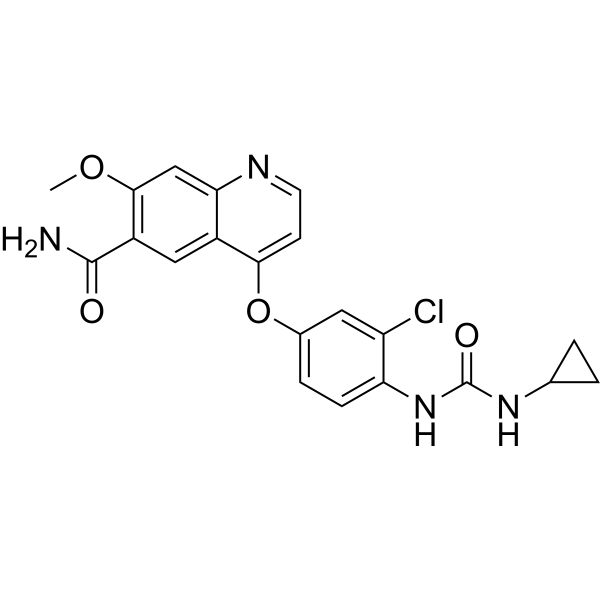
HY-10981
LenvatinibVEGFR/FGFR Inhibitor -
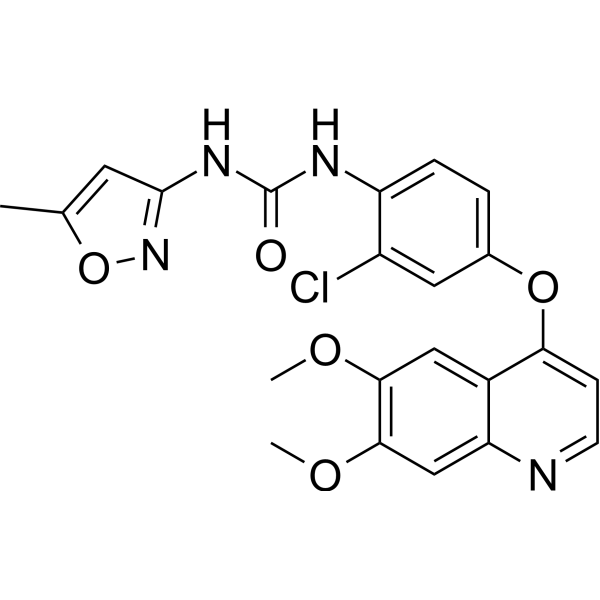
HY-10977
TivozanibVEGFR inhibitor -
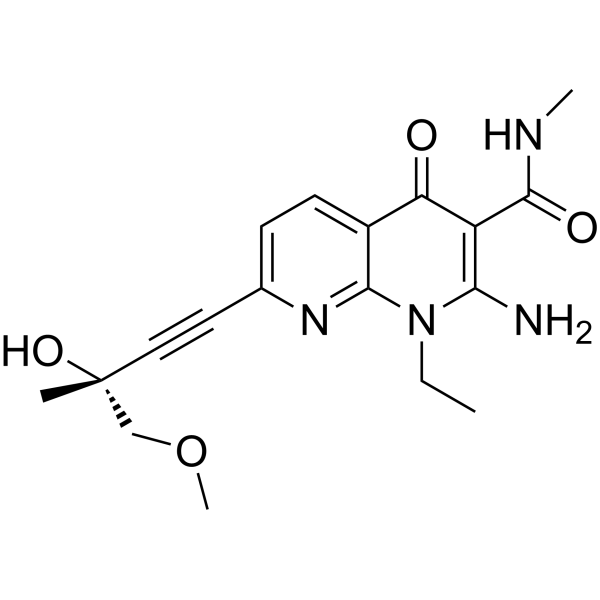
HY-15458
SAR131675VEGFR3 Inhibitor -
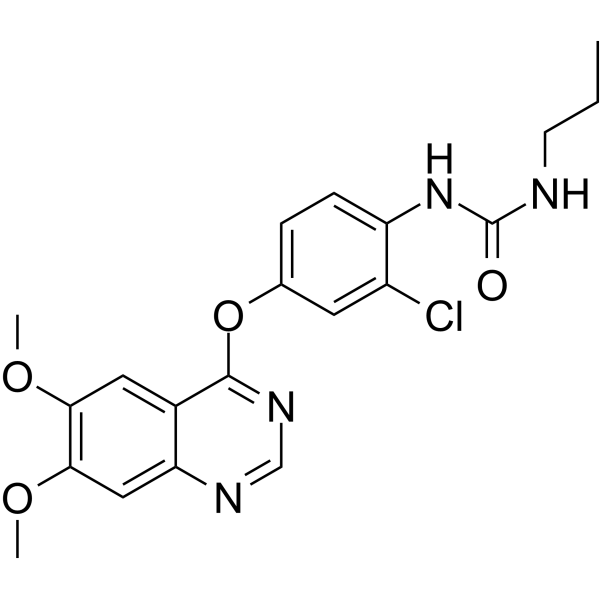
HY-12060
KRN-633VEGFR Inhibitor -
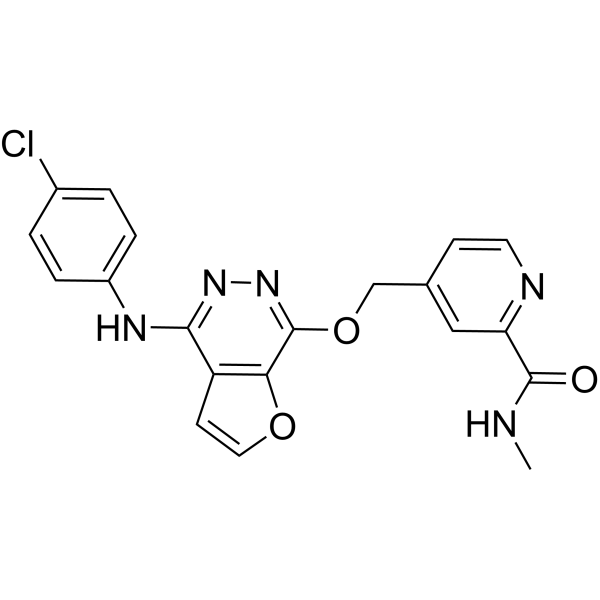
HY-10527
TelatinibVEGFR/PDGFα/c-Kit Inhibitor
Publications Citing Use of MedChemExpress (MCE) Ki8751
More Customer Validation & Images

-
WB
Alle VEGFR Isoform-spezifische Produkte anzeigen
More

Biologische Aktivität
Beschreibung
IC50 & Target
[1]|
VEGFR2 0.9 nM (IC50) |
Cellular Effect
|
Cell Line

|
Type | Value | Description | References |
|---|---|---|---|---|
| Hepatocyte | IC50 |
>10000 nM
Compound: 6ab
|
Inhibition of hepatocyte growth factor receptor in cell-intact assay
Inhibition of hepatocyte growth factor receptor in cell-intact assay
|
[PMID: 15743179] |
| HUVEC | IC50 |
1 μM
Compound: Ki8751
|
Antiangiogenic activity in HUVEC assessed as inhibition of cell proliferation after 72 hrs by MTT assay
Antiangiogenic activity in HUVEC assessed as inhibition of cell proliferation after 72 hrs by MTT assay
|
[PMID: 22148396] |
| HUVEC | IC50 |
1.4 μM
Compound: Ki8751
|
Growth inhibition of HUVEC by WST-8 assay
Growth inhibition of HUVEC by WST-8 assay
|
[PMID: 24601669] |
In Vitro
Ki8751 inhibits VEGFR-2 phosphorylation at an IC50 value of 0.90 nM, and also inhibits the PDGFR family members such as PDGFRR and c-Kit at 67 nM and 40 nM, respectively. However, Ki8751 does not have any inhibitory activity against other kinases such as EGFR, HGFR, InsulinR and others even at 10000 nM. Ki8751 suppresses the growth of the VEGF-stimulated human umbilical vein endothelial cell (HUVEC) on a nanomolar level[1].
MedChemExpress (MCE) has not independently confirmed the accuracy of these methods. They are for reference only.
In Vivo
MedChemExpress (MCE) has not independently confirmed the accuracy of these methods. They are for reference only.


Chemical Information
-
CAS. Nr. 228559-41-9
-
Appearance Solid
-
Molecular Weight 469.41
-
Formel C24H18F3N3O4
-
Color White to off-white
-
SMILES
COC1=CC2=C(C=CN=C2C=C1OC)OC3=CC=C(C(F)=C3)NC(NC4=CC=C(C=C4F)F)=O
-
Versand
Room temperature in continental US; may vary elsewhere.
-
Speicherung
Powder -20°C 3 years 4°C 2 years In solvent -80°C 2 years -20°C 1 year


Publications (4)
-
Journal Impact Factor
-
Most Recent
-
Bioact Mater
Phosphorylation inhibition of protein-tyrosine phosphatase 1B tyrosine-152 induces bone regeneration coupled with angiogenesis for bone tissue engineering. [Abstract]2021 Jan 7;6(7):2039-2057. PMID: 33511306 -
Cell Death Dis
SP1-induced lncRNA-ZFAS1 contributes to colorectal cancer progression via the miR-150-5p/VEGFA axis. [Abstract]2018 Sep 24;9(10):982. PMID: 30250022
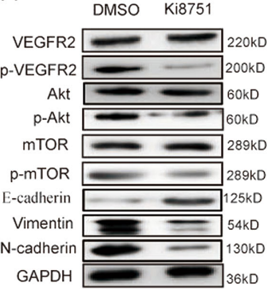
Ki8751 purchased from MedChemExpress. Usage Cited in: Cell Death Dis. 2018 Sep 24;9(10):982. [Abstract]
Western blot is performed to detect the expression of VEGFR2, p-VEGFR2, Akt, p-Akt, mTOR, p-mTOR, E-cadherin, Vimentin, and N-cadherin after adding Ki8751 to HCT116, and HCT8 cells.
-
Cell Rep
2026 Jun 18;45(7):117576. PMID: 42313565 -


Lösungsmittel & Löslichkeit
In Vitro:
DMSO : 33.33 mg/mL (71.00 mM; ultrasonic and warming and heat to 60°C; Hygroscopic DMSO has a significant impact on the solubility of product, please use newly opened DMSO)
Please refer to the solubility information to select the appropriate solvent. Once prepared, please aliquot and store the solution to prevent product inactivation from repeated freeze-thaw cycles.
Storage method and period of stock solution: -80°C, 2 years; -20°C, 1 year. When stored at -80°C, please use it within 2 years. When stored at -20°C, please use it within 1 year.
Please refer to the solubility information to select the appropriate solvent. Once prepared, please aliquot and store the solution to prevent product inactivation from repeated freeze-thaw cycles.
Storage method and period of stock solution: -80°C, 2 years; -20°C, 1 year. When stored at -80°C, please use it within 2 years. When stored at -20°C, please use it within 1 year.
Konzentration (Stammlösung) × Volumen (Stammlösung) = Konzentration (Ziellösung) × Volumen (Ziellösung)
In Vivo:
Select the appropriate dissolution method based on your experimental animal and administration route.
- For the following dissolution methods, please ensure to first prepare a clear stock solution using an In Vitro approach and then sequentially add co-solvents:
- To ensure reliable experimental results, the clarified stock solution can be appropriately stored based on storage conditions. As for the working solution for In Vivo experiments, it is recommended to prepare freshly and use it on the same day.
- The percentages shown for the solvents indicate their volumetric ratio in the final prepared solution. If precipitation or phase separation occurs during preparation, heat and/or sonication can be used to aid dissolution.
Add each solvent one by one: 10% DMSO 40% PEG300 5% Tween-80 45% Saline
Solubility: 2.5 mg/mL (5.33 mM); Suspended solution; Need ultrasonic
This protocol yields a suspended solution of 2.5 mg/mL. Suspended solution can be used for oral and intraperitoneal injection.
Taking 1 mL working solution as an example, add 100 μL DMSO stock solution (25.0 mg/mL) to 400 μL PEG300, and mix evenly; then add 50 μL Tween-80 and mix evenly; then add 450 μL Saline to adjust the volume to 1 mL.
Preparation of Saline: Dissolve 0.9 g sodium chloride in ddH₂O and dilute to 100 mL to obtain a clear Saline solution.
Add each solvent one by one: 10% DMSO 90% (20% SBE-β-CD in Saline)
Solubility: 2.5 mg/mL (5.33 mM); Suspended solution; Need ultrasonic
This protocol yields a suspended solution of 2.5 mg/mL. Suspended solution can be used for oral and intraperitoneal injection.
Taking 1 mL working solution as an example, add 100 μL DMSO stock solution (25.0 mg/mL) to 900 μL 20% SBE-β-CD in Saline, and mix evenly.
Preparation of 20% SBE-β-CD in Saline (4°C, storage for one week): 2 g SBE-β-CD powder is dissolved in 10 mL Saline, completely dissolve until clear.
In Vivo Dissolution Calculator
Please enter the basic information of animal experiments:
-
-
-
-
Recommended: Prepare an additional quantity of animals to account for potential losses during experiments.
Please enter your animal formula composition:
-
%DMSO +
Recommended: Keep the proportion of DMSO in working solution below 2% if your animal is weak.
-
%+
-
+%Tween-80 + +
-
%Saline +
The co-solvents required include: DMSO, . All of co-solvents are available by MedChemExpress (MCE). , Tween 80. All of co-solvents are available by MedChemExpress (MCE).
Working solution concentration: 0.22 mg/mL
Method for preparing stock solution: mg drug dissolved in μL DMSO. Stock solution concentration: mg/mL.
1. Take μL DMSO stock solution;
2. Add μL .
μL , mix evenly;
3. Then add μL Tween 80, mix evenly;
4. Then add μL
Please ensure that the stock solution in the first step is dissolved to a clear state, and add co-solvents in sequence. You can use ultrasonic heating (ultrasonic cleaner, recommended frequency 20-40 kHz), vortexing, etc. to assist dissolution.


Reinheit & Dokumentation
-
Data Sheet (281 KB)
-
SDS (393 KB)
- English - EN (393 KB)
- Français - FR (393 KB)
- Deutsch - DE (393 KB)
- Norwegian - NO (393 KB)
- Español - ES (393 KB)
- Swedish - SV (393 KB)
- Italian - IT (393 KB)
- Korean - KR (393 KB)
- Portuguese - PT (393 KB)
-
Handling Instructions (2659 KB)
Verweise


Complete Stock Solution Preparation Table
Please refer to the solubility information to select the appropriate solvent. Once prepared, please aliquot and store the solution to prevent product inactivation from repeated freeze-thaw cycles.
Storage method and period of stock solution: -80°C, 2 years; -20°C, 1 year. When stored at -80°C, please use it within 2 years. When stored at -20°C, please use it within 1 year.
| Optional Solvent | Concentration Solvent Mass | 1 mg | 5 mg | 10 mg | 25 mg |
|---|---|---|---|---|---|
| DMSO | 1 mM | 2.1303 mL | 10.6517 mL | 21.3033 mL | 53.2583 mL |
| 5 mM | 0.4261 mL | 2.1303 mL | 4.2607 mL | 10.6517 mL | |
| 10 mM | 0.2130 mL | 1.0652 mL | 2.1303 mL | 5.3258 mL | |
| 15 mM | 0.1420 mL | 0.7101 mL | 1.4202 mL | 3.5506 mL | |
| 20 mM | 0.1065 mL | 0.5326 mL | 1.0652 mL | 2.6629 mL | |
| 25 mM | 0.0852 mL | 0.4261 mL | 0.8521 mL | 2.1303 mL | |
| 30 mM | 0.0710 mL | 0.3551 mL | 0.7101 mL | 1.7753 mL | |
| 40 mM | 0.0533 mL | 0.2663 mL | 0.5326 mL | 1.3315 mL | |
| 50 mM | 0.0426 mL | 0.2130 mL | 0.4261 mL | 1.0652 mL | |
| 60 mM | 0.0355 mL | 0.1775 mL | 0.3551 mL | 0.8876 mL |


Ki8751 Related Classifications
HY-12038 Related Classifications
 Powered by Bioz