



Roxithromycin
Based on 7 publication(s) in Google Scholar
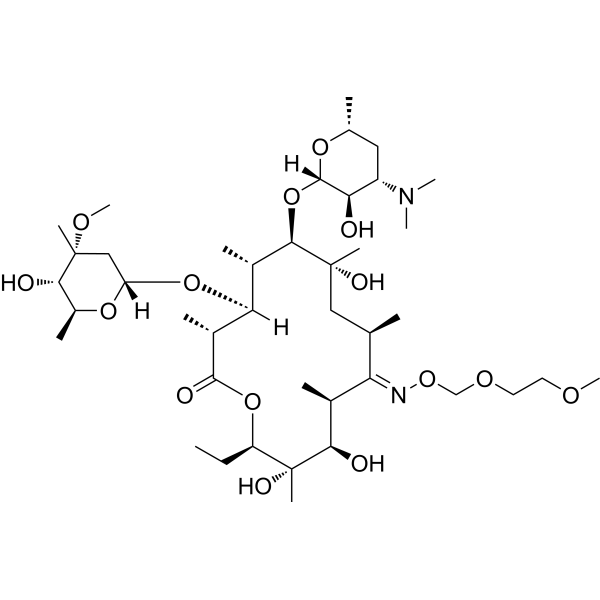
Roxithromycin (RU-28965) is an orally active semi-synthethic macrolide antibiotic. Roxithromycin inhibits protein biosynthesis in the elongation step by binding to 50S bacterial ribosome. Roxithromycin has antimicrobial, antiproliferative, anti-inflammatory, tumour vasculature inhibiting and lung injury ameliorating effects.
Nur für Forschungszwecke. Wir verkaufen nicht an Patienten.
- Reinheit : 99.86%
- CAS. Nr.: 80214-83-1
- Formel: C41H76N2O15
- Molecular Weight:837.05
-
Speicherung:Powder -20°C, 3 years , 4°C, 2 years ; In solvent -80°C, 2 years , -20°C, 1 year

To place orders, for customer services and technical support, please contact: MedChemExpress USA
Tel: 609-228-6898 E-mail: [email protected] [email protected]


-
 Biologische Aktivität
-
Chemical Information
-
Lösungsmittel & Löslichkeit
- Protokoll
- Reinheit & Dokumentation
- Verweise
-
 Help & FAQs


-
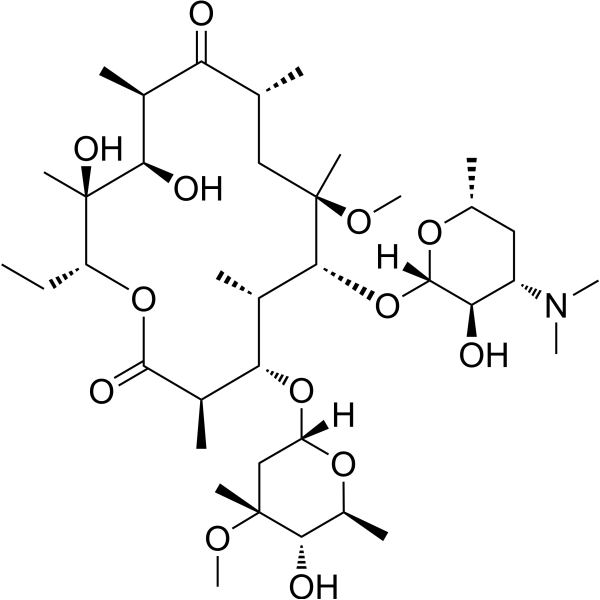
HY-17508
ClarithromycinAntimicrobial Agent -
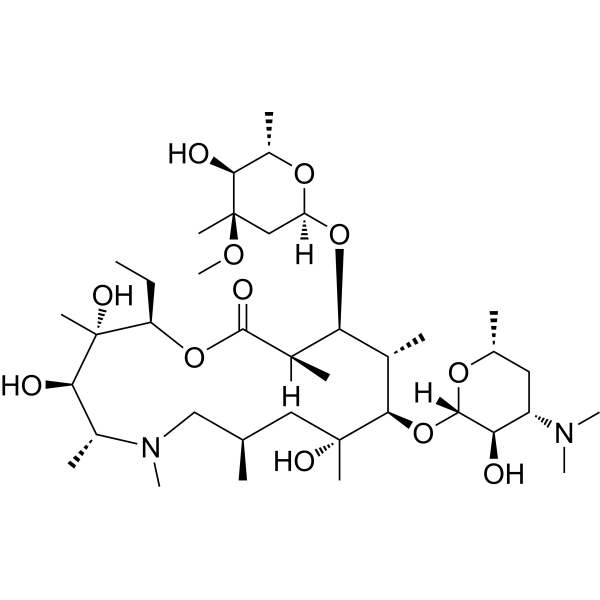
HY-17506
Azithromycin -
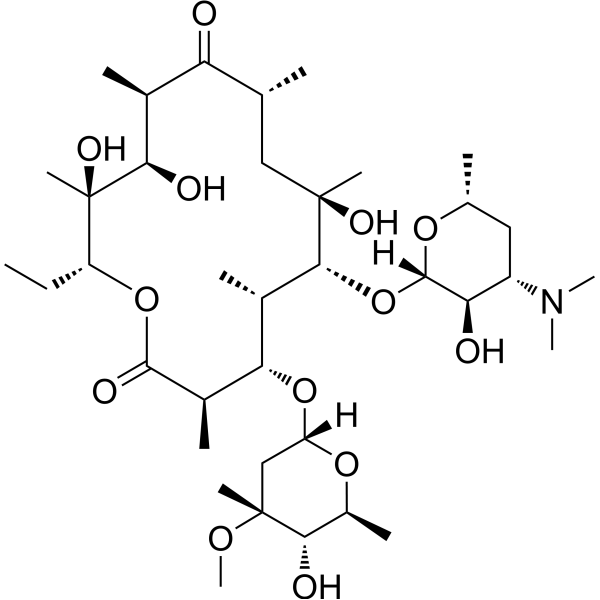
HY-B0220
ErythromycinAntibiotic -
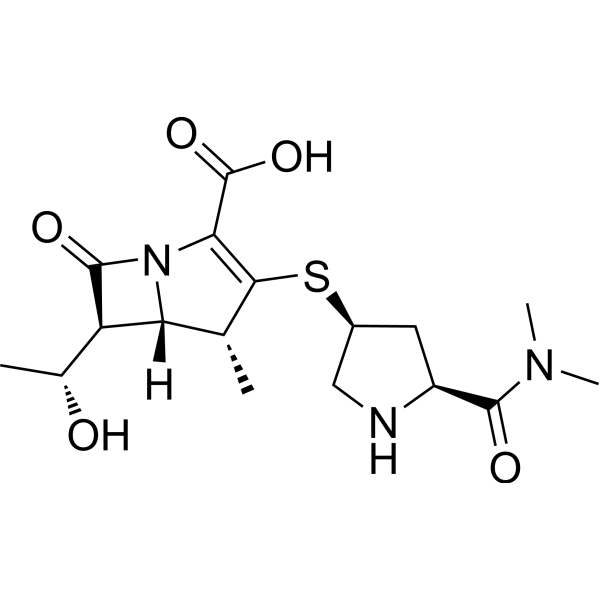
HY-13678
MeropenemAntimicrobial Agent -
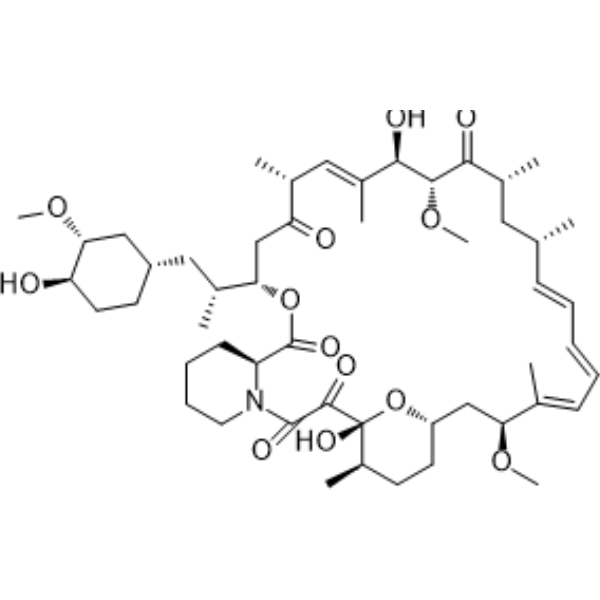
HY-10219
RapamycinmTOR Inhibitor -

HY-B0435R
Roxithromycin (Standard)Bacterial Inhibitor -
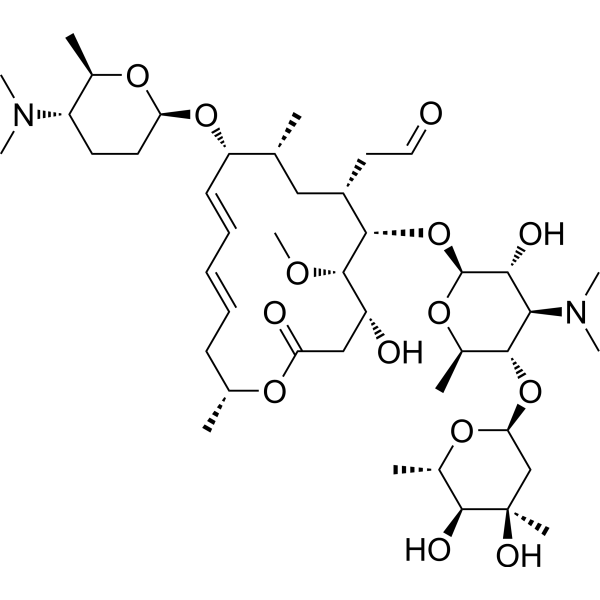
HY-100593
SpiramycinAntibiotic -
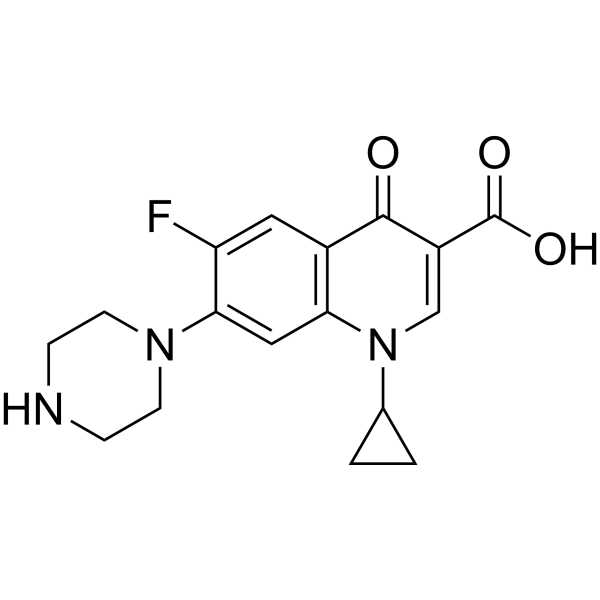
HY-B0356
CiprofloxacinTopoisomerase IV Inhibitor -
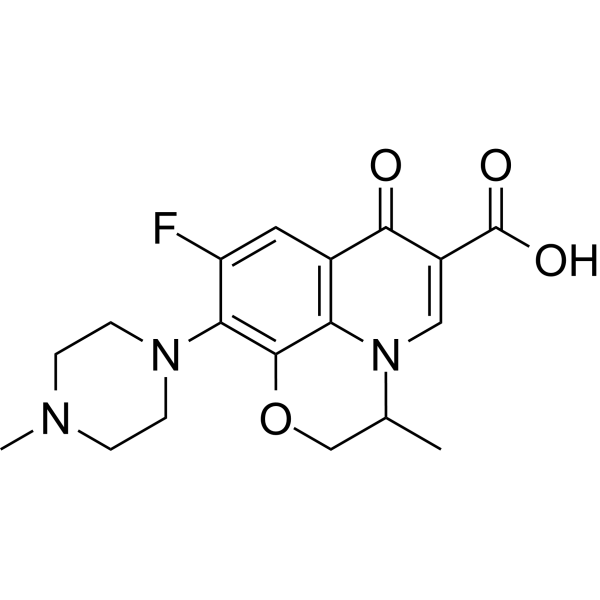
HY-B0125
OfloxacinBacterial Inhibitor -
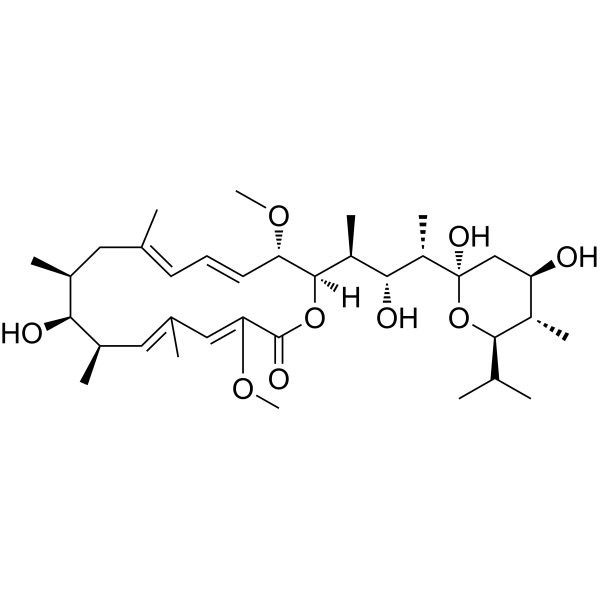
HY-100558
Bafilomycin A1V-ATPase Inhibitor -
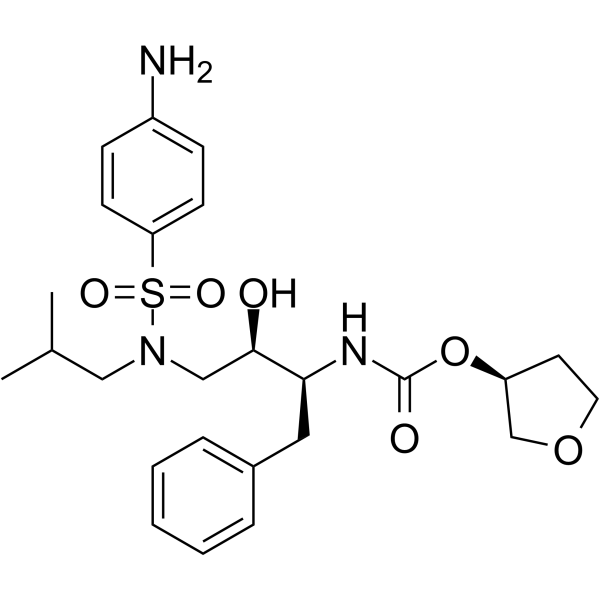
HY-17430
AmprenavirHIV Protease Inhibitor -
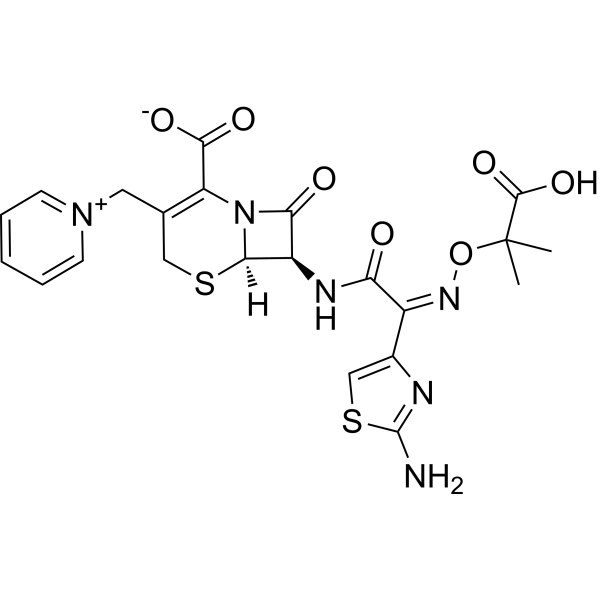
HY-B0593
CeftazidimeAntibiotic
Publications Citing Use of MedChemExpress (MCE) Roxithromycin
MoreAlle Antibiotic Isoform-spezifische Produkte anzeigen
More

Biologische Aktivität
Beschreibung
IC50 & Target
|
Macrolide |
Cellular Effect
|
Cell Line

|
Type | Value | Description | References |
|---|---|---|---|---|
| HeLa | IC50 |
160 μg/mL
Compound: Roxithromycin
|
Antiproliferative effect against HeLa cells after 48 hrs
Antiproliferative effect against HeLa cells after 48 hrs
|
[PMID: 17088489] |
| HeLa | IC50 |
90 μg/mL
Compound: Roxithromycin
|
Inhibition of metabolic activity in HeLa cells assessed as MTT reduction after 48 hrs
Inhibition of metabolic activity in HeLa cells assessed as MTT reduction after 48 hrs
|
[PMID: 17088489] |
| HUVEC | IC50 |
100 μM
Compound: RXM
|
Inhibition of cell proliferation of HUVEC at 12.5 to 200 uM after 72 hrs by MTS assay
Inhibition of cell proliferation of HUVEC at 12.5 to 200 uM after 72 hrs by MTS assay
|
[PMID: 25528335] |
| MG-63 | IC50 |
110 μg/mL
Compound: Roxithromycin
|
Inhibition of metabolic activity in MG63 cells assessed as MTT reduction after 48 hrs
Inhibition of metabolic activity in MG63 cells assessed as MTT reduction after 48 hrs
|
[PMID: 17088489] |
| MG-63 | IC50 |
180 μg/mL
Compound: Roxithromycin
|
Antiproliferative effect against MG63 cells assessed as BrdU incorporation into DNA after 48 hrs after 48 hrs
Antiproliferative effect against MG63 cells assessed as BrdU incorporation into DNA after 48 hrs after 48 hrs
|
[PMID: 17088489] |
| Osteoblast | IC50 |
210 μg/mL
Compound: Roxithromycin
|
Inhibition of metabolic activity in primary human osteoblasts assessed as MTT reduction after 48 hrs
Inhibition of metabolic activity in primary human osteoblasts assessed as MTT reduction after 48 hrs
|
[PMID: 17088489] |
| Osteoblast | IC50 |
70 μg/mL
Compound: Roxithromycin
|
Antiproliferative effect against primary human osteoblasts assessed as BrdU incorporation into DNA after 48 hrs
Antiproliferative effect against primary human osteoblasts assessed as BrdU incorporation into DNA after 48 hrs
|
[PMID: 17088489] |
In Vitro
Roxithromycin is active against various Gram-positive and Gram-negative bacteria, including five strains each of Staphylococcus and Streptococcus (geometric mean MICs = 0.08 and 0.79 µg/mL, respectively), as well as several strains each of Corynebacterium, Haemophilus, and S. pneumoniae (MIC50s = 0.02, 0.01, and 2.5 µg/mL, respectively)[5].
Roxithromycin (48 h) shows antiproliferative effect and inhibition of metabolic activity in HeLa (IC50 of 160 and 90 μg/mL, respectively), MG-63 (IC50 of 180 and 110 μg/mL, respectively) and Osteoblast cells (IC50 of 70 and 210 μg/mL, respectively)[1].
Roxithromycin (12.5-200 μM, 72 h) shows antiproliferative effect in HUVEC cells[2].
Roxithromycin (20-50 μM) inhibits endothelial cell migration and tube formation[6].
Roxithromycin (10 μM) inhibits chemokine-induced chemotaxis of Th1 and Th2 cells but regulatory T cells[7].
Roxithromycin (1-10 μM, 24 h) decreases ultraviolet B irradiation-induced reactive oxygen intermediates production and apoptosis of keratinocytes (SVHK cells)[8].
Roxithromycin (40-120 μM, 3 days) induces apoptosis to eliminate senescent cells (WI-38)[9].
Roxithromycin (10-80 μM, 24 h-72 h) inhibits senescent cell-induced fibroblast activation by inhibiting profibrotic SASP factors in MRC-5 cells[9].
MedChemExpress (MCE) has not independently confirmed the accuracy of these methods. They are for reference only.
-
Cell Line:SVHK cells following UVB-irradiation (30 mJ/cm2)
-
Concentration:0.01, 0.1, 1, 10 μM
-
Incubation Time:24 h
-
Result:Was resistant to UVB-induced cell death and the maximal inhibitory effect was detected at 1 μM
In Vivo
Roxithromycin (40-100 mg/kg, i.p., twice daily) dose-dependently inhibits tumor angiogenesis in a mouse dorsal air sac model of angiogenesis, with reducing the dense capillary network area[6].
Roxithromycin (40-160 mg/kg, p.o., 16 days) attenuates Bleomycin (HY-108345)-induced lung injury, inflammation, and pulmonary fibrosis in mice[9].
Roxithromycin (40-100 mg/kg, i.p., thrice per week from week 10 to 17) inhibits constitutive activation of NF-κB by diminishing oxidative stress in a rat model of hepatocellular carcinoma[10].
Roxithromycin (5-40 mg/kg, i.p., 1 h) attenuates airway inflammation via MAPK/NF-κB activation in a mouse model of allergic asthma[11].
MedChemExpress (MCE) has not independently confirmed the accuracy of these methods. They are for reference only.
-
Animal Model:Male C57BL/6 mice (received a single dose of BLM at 0.85 U/kg by intratracheal instillation)[9]
-
Dosage:40, 80, 160 mg/kg
-
Administration:oral gavage (p.o.), 16 days
-
Result:Displayed a significantly lower lung/body weight ratio than the vehicle-treated mice.
Decreased the inflammatory cell numbers.
Reduced LDH, a useful indicator of lung tissue damage and inflammation in BALF.
Decreased dysfunction, presenting much more intact alveoli and thin, clear alveolar walls.
ameliorated the collagen deposition in a dose-dependent manner.
Decreased transcriptional levels of TGF-β, fibronectin, and collagen I.
Downregulated α-SMA expression.
Clinical Trial
| NCT Number | Sponsor | Condition | Start Date |
Phase
|
|---|---|---|---|---|
| NCT01329991 | Plexxikon| | 2011-05 | PHASE1 |


Chemical Information
-
CAS. Nr. 80214-83-1
-
Appearance Solid
-
Molecular Weight 837.05
-
Formel C41H76N2O15
-
Color White to off-white
-
SMILES
C[C@H]([C@H]([C@](O)(C[C@H](/C1=N\OCOCCOC)C)C)O[C@@](O[C@H](C)C[C@@H]2N(C)C)([H])[C@@H]2O)[C@]([C@H](C(O[C@@H]([C@@](O)([C@H](O)[C@H]1C)C)CC)=O)C)([H])O[C@@](O[C@@H](C)[C@@H]3O)([H])C[C@@]3(C)OC
-
Synonyms
RU-28965
-
Versand
Room temperature in continental US; may vary elsewhere.
-
Speicherung
Powder -20°C 3 years 4°C 2 years In solvent -80°C 2 years -20°C 1 year


Publications (7)
-
Journal Impact Factor
-
Most Recent
-
Theranostics
Antibiotic Azithromycin inhibits brown/beige fat functionality and promotes obesity in human and rodents. [Abstract]2022 Jan 1;12(3):1187-1203. PMID: 35154482 -
Acta Pharm Sin B
Repurposing carrimycin as an antiviral agent against human coronaviruses, including the currently pandemic SARS-CoV-2. [Abstract]2021 Sep;11(9):2850-2858. PMID: 33723501 -
-
-
-
Ann Transl Med
Roxithromycin attenuates inflammation via modulation of RAGE-influenced calprotectin expression in a neutrophilic asthma model. [Abstract]2021 Mar;9(6):494. PMID: 33850891 -
Chemosphere
Mass-balance-model-based evaluation of sewage treatment plant contribution to residual pharmaceuticals in environmental waters. [Abstract]2019 Jun:225:378-387. PMID: 30884299


Lösungsmittel & Löslichkeit
In Vitro:
DMSO : ≥ 100 mg/mL (119.47 mM; Hygroscopic DMSO has a significant impact on the solubility of product, please use newly opened DMSO)
H2O : < 0.1 mg/mL (insoluble)
* "≥" means soluble, but saturation unknown.
Please refer to the solubility information to select the appropriate solvent. Once prepared, please aliquot and store the solution to prevent product inactivation from repeated freeze-thaw cycles.
Storage method and period of stock solution: -80°C, 2 years; -20°C, 1 year. When stored at -80°C, please use it within 2 years. When stored at -20°C, please use it within 1 year.
Please refer to the solubility information to select the appropriate solvent. Once prepared, please aliquot and store the solution to prevent product inactivation from repeated freeze-thaw cycles.
Storage method and period of stock solution: -80°C, 2 years; -20°C, 1 year. When stored at -80°C, please use it within 2 years. When stored at -20°C, please use it within 1 year.
Konzentration (Stammlösung) × Volumen (Stammlösung) = Konzentration (Ziellösung) × Volumen (Ziellösung)
In Vivo:
Select the appropriate dissolution method based on your experimental animal and administration route.
- For the following dissolution methods, please ensure to first prepare a clear stock solution using an In Vitro approach and then sequentially add co-solvents:
- To ensure reliable experimental results, the clarified stock solution can be appropriately stored based on storage conditions. As for the working solution for In Vivo experiments, it is recommended to prepare freshly and use it on the same day.
- The percentages shown for the solvents indicate their volumetric ratio in the final prepared solution. If precipitation or phase separation occurs during preparation, heat and/or sonication can be used to aid dissolution.
Add each solvent one by one: 10% DMSO 40% PEG300 5% Tween-80 45% Saline
Solubility: ≥ 2.5 mg/mL (2.99 mM); Clear solution
This protocol yields a clear solution of ≥ 2.5 mg/mL (saturation unknown).
Taking 1 mL working solution as an example, add 100 μL DMSO stock solution (25.0 mg/mL) to 400 μL PEG300, and mix evenly; then add 50 μL Tween-80 and mix evenly; then add 450 μL Saline to adjust the volume to 1 mL.
Preparation of Saline: Dissolve 0.9 g sodium chloride in ddH₂O and dilute to 100 mL to obtain a clear Saline solution.
Add each solvent one by one: 10% DMSO 90% (20% SBE-β-CD in Saline)
Solubility: 2.5 mg/mL (2.99 mM); Suspended solution; Need ultrasonic
This protocol yields a suspended solution of 2.5 mg/mL. Suspended solution can be used for oral and intraperitoneal injection.
Taking 1 mL working solution as an example, add 100 μL DMSO stock solution (25.0 mg/mL) to 900 μL 20% SBE-β-CD in Saline, and mix evenly.
Preparation of 20% SBE-β-CD in Saline (4°C, storage for one week): 2 g SBE-β-CD powder is dissolved in 10 mL Saline, completely dissolve until clear.
In Vivo Dissolution Calculator
Please enter the basic information of animal experiments:
-
-
-
-
Recommended: Prepare an additional quantity of animals to account for potential losses during experiments.
Please enter your animal formula composition:
-
%DMSO +
Recommended: Keep the proportion of DMSO in working solution below 2% if your animal is weak.
-
%+
-
+%Tween-80 + +
-
%Saline +
The co-solvents required include: DMSO, . All of co-solvents are available by MedChemExpress (MCE). , Tween 80. All of co-solvents are available by MedChemExpress (MCE).
Working solution concentration: 0.22 mg/mL
Method for preparing stock solution: mg drug dissolved in μL DMSO. Stock solution concentration: mg/mL.
1. Take μL DMSO stock solution;
2. Add μL .
μL , mix evenly;
3. Then add μL Tween 80, mix evenly;
4. Then add μL
Please ensure that the stock solution in the first step is dissolved to a clear state, and add co-solvents in sequence. You can use ultrasonic heating (ultrasonic cleaner, recommended frequency 20-40 kHz), vortexing, etc. to assist dissolution.


Reinheit & Dokumentation
-
Data Sheet (285 KB)
-
SDS (458 KB)
- English - EN (458 KB)
- Français - FR (458 KB)
- Deutsch - DE (458 KB)
- Norwegian - NO (458 KB)
- Español - ES (458 KB)
- Swedish - SV (458 KB)
- Italian - IT (458 KB)
- Korean - KR (458 KB)
- Portuguese - PT (458 KB)
-
Handling Instructions (2659 KB)
Verweise
[1]. Duewelhenke N, et al. Influence on mitochondria and cytotoxicity of different antibiotics administered in high concentrations on primary human osteoblasts and cell lines. Antimicrob Agents Chemother. 2007 Jan;51(1):54-63. [Content Brief]
[2]. Takakusagi K, et al. Multimodal biopanning of T7 phage-displayed peptides reveals angiomotin as a potential receptor of the anti-angiogenic macrolide Roxithromycin. Eur J Med Chem. 2015 Jan 27;90:809-21. [Content Brief]
[3]. Yamazaki H, et al. Comparative studies of in vitro inhibition of cytochrome P450 3A4-dependent testosterone 6beta-hydroxylation by roxithromycin and its metabolites, troleandomycin, and erythromycin. Drug Metab Dispos. 1998 Nov;26(11):1053-7. [Content Brief]
[4]. Bertho G, et al. Transferred nuclear Overhauser effect study of macrolide-ribosome interactions: correlation between antibiotic activities and bound conformations. Bioorg Med Chem. 1998 Feb;6(2):209-21. [Content Brief]
[5]. Chantot JF, et al. Antibacterial activity of roxithromycin: a laboratory evaluation. J Antibiot (Tokyo). 1986 May;39(5):660-8. [Content Brief]
[6]. Yatsunami J, et al. Inhibition of tumor angiogenesis by roxithromycin, a 14-membered ring macrolide antibiotic. Cancer Lett. 1998 Sep 25;131(2):137-43. [Content Brief]
[7]. Ito T, et al. Roxithromycin inhibits chemokine-induced chemotaxis of Th1 and Th2 cells but regulatory T cells. J Dermatol Sci. 2009 Jun;54(3):185-91. [Content Brief]
[8]. Takahashi H, et al. Roxithromycin decreases ultraviolet B irradiation-induced reactive oxygen intermediates production and apoptosis of keratinocytes. J Dermatol Sci. 2004 Feb;34(1):25-33. [Content Brief]
[9]. Zhang X, et al. Roxithromycin attenuates bleomycin-induced pulmonary fibrosis by targeting senescent cells. Acta Pharmacol Sin. 2021 Dec;42(12):2058-2068. [Content Brief]
[10]. Ueno S, et al. Roxithromycin inhibits constitutive activation of nuclear factor {kappa}B by diminishing oxidative stress in a rat model of hepatocellular carcinoma. Clin Cancer Res. 2005 Aug 1;11(15):5645-50. [Content Brief]
[11]. Ci X, et al. Short-term roxithromycin treatment attenuates airway inflammation via MAPK/NF-κB activation in a mouse model of allergic asthma. Inflamm Res. 2012 Jul;61(7):749-58. [Content Brief]


Complete Stock Solution Preparation Table
Please refer to the solubility information to select the appropriate solvent. Once prepared, please aliquot and store the solution to prevent product inactivation from repeated freeze-thaw cycles.
Storage method and period of stock solution: -80°C, 2 years; -20°C, 1 year. When stored at -80°C, please use it within 2 years. When stored at -20°C, please use it within 1 year.
| Optional Solvent | Concentration Solvent Mass | 1 mg | 5 mg | 10 mg | 25 mg |
|---|---|---|---|---|---|
| DMSO | 1 mM | 1.1947 mL | 5.9734 mL | 11.9467 mL | 29.8668 mL |
| 5 mM | 0.2389 mL | 1.1947 mL | 2.3893 mL | 5.9734 mL | |
| 10 mM | 0.1195 mL | 0.5973 mL | 1.1947 mL | 2.9867 mL | |
| 15 mM | 0.0796 mL | 0.3982 mL | 0.7964 mL | 1.9911 mL | |
| 20 mM | 0.0597 mL | 0.2987 mL | 0.5973 mL | 1.4933 mL | |
| 25 mM | 0.0478 mL | 0.2389 mL | 0.4779 mL | 1.1947 mL | |
| 30 mM | 0.0398 mL | 0.1991 mL | 0.3982 mL | 0.9956 mL | |
| 40 mM | 0.0299 mL | 0.1493 mL | 0.2987 mL | 0.7467 mL | |
| 50 mM | 0.0239 mL | 0.1195 mL | 0.2389 mL | 0.5973 mL | |
| 60 mM | 0.0199 mL | 0.0996 mL | 0.1991 mL | 0.4978 mL | |
| 80 mM | 0.0149 mL | 0.0747 mL | 0.1493 mL | 0.3733 mL | |
| 100 mM | 0.0119 mL | 0.0597 mL | 0.1195 mL | 0.2987 mL |


Roxithromycin Related Classifications
HY-B0435 Related Classifications
 Powered by Bioz