



α5β1
Integrin α5β1, a heterodimer of α5 and β1 subunits, serves as a primary receptor for fibronectin and mediates cell adhesion, migration, and mechanotransduction[1][2][3]. Mechanistically, α5β1 engagement with fibronectin triggers RhoA/ROCK/myosin-II and Arp2/3 signaling, promoting integrin clustering, focal adhesion formation, and extracellular matrix remodeling[4][5]. In disease models, α5β1 overexpression contributes to cancer progression, including tension-dependent mammary epithelial invasion, angiogenesis, and metastasis in colorectal, cervical, and glioma models[6][7][8][1][9]. Pulmonary arterial hypertension models also implicate α5β1 in vascular remodeling and pro-proliferative phenotypes, where blockade mitigates vessel obstruction and improves right ventricular function[10][11]. Compared with related integrins, α5β1 uniquely mediates fibronectin synergy site adhesion, mechanotransduction, and autophagy initiation via FbaA pathogen recognition, distinguishing it from αv-class integrins that primarily compete during initial adhesion phases[12][4]. Specific agonists or inhibitors, such as RGD peptides, SNAKA51 antibodies, and bispecific α5β1/αv inhibitors, allow targeted modulation of α5β1 functions for experimental and therapeutic applications[13][14][15]. These tools enhance fibronectin matrix assembly, regulate mechanotransduction pathways, and provide preclinical strategies for controlling tumor aggressiveness, vascular remodeling, or immune-mediated clearance[16][14][15].
References:
- [1]. Janouskova H, et al. Integrin α5β1 plays a critical role in resistance to temozolomide by interfering with the p53 pathway in high-grade glioma. Cancer Res. 2012 Jul 15;72(14):3463-70. [Content Brief]
- [2]. Wang J, et al. Integrin α5β1, as a Receptor of Fibronectin, Binds the FbaA Protein of Group A Streptococcus To Initiate Autophagy during Infection. mBio. 2020 Jun 9;11(3):e00771-20. [Content Brief]
- [3]. Bharadwaj M, et al. αV-class integrins exert dual roles on α5β1 integrins to strengthen adhesion to fibronectin. Nat Commun. 2017 Jan 27;8:14348. [Content Brief]
- [4]. Lemay SE, et al. Exploring Integrin α5β1 as a Potential Therapeutic Target for Pulmonary Arterial Hypertension: Insights From Comprehensive Multicenter Preclinical Studies. Circulation. 2025 Apr 22;151(16):1162-1183. [Content Brief]
- [5]. Joshi R, et al. A Novel Bispecific Integrin α5β1/αv Antibody Reprograms the Myc-Regulated Basal Phenotype of Prostate Cancer with NK Cell-Mediated Tumor Elimination. Mol Cancer Res. 2025 Oct 2;23(10):873-888. [Content Brief]
- [6]. Wang HY, et al. Prognostic significance of α5β1-integrin expression in cervical cancer. Asian Pac J Cancer Prev. 2013;14(6):3891-5. [Content Brief]
- [7]. Miroshnikova YA, et al. α5β1-Integrin promotes tension-dependent mammary epithelial cell invasion by engaging the fibronectin synergy site. Mol Biol Cell. 2017 Nov 1;28(22):2958-2977. [Content Brief]
- [8]. Hou J, et al. The Roles of Integrin α5β1 in Human Cancer. Onco Targets Ther. 2020 Dec 31;13:13329-13344. [Content Brief]
- [9]. Schaffner F, et al. Integrin α5β1, the Fibronectin Receptor, as a Pertinent Therapeutic Target in Solid Tumors. Cancers (Basel). 2013 Jan 15;5(1):27-47. [Content Brief]
- [10]. Clark K, Pankov R, Travis MA, Askari JA, Mould AP, Craig SE, et al. A Specific α5β1 Integrin Conformation Promotes Directional Integrin Translocation and Fibronectin Matrix Formation. Journal of Cell Science. 2004;118:291-300.
- [11]. Turner CJ, et al. Integrin-α5β1 is not required for mural cell functions during development of blood vessels but is required for lymphatic-blood vessel separation and lymphovenous valve formation. Dev Biol. 2014 Aug 15;392(2):381-92. [Content Brief]
- [12]. Yang B, et al. Clinicopathological and prognostic significance of α5β1-integrin and MMP-14 expressions in colorectal cancer. Neoplasma. 2013;60(3):254-61. [Content Brief]
- [13]. Sundaram A, et al. Dual antagonists of α5β1/αvβ1 integrin for airway hyperresponsiveness. Bioorg Med Chem Lett. 2020 Nov 15;30(22):127578. [Content Brief]
- [14]. Li X, et al. Role and mechanism of Integrin α5β1 in bone formation and disease. Front Cell Dev Biol. 2025 Aug 14;13:1632710. [Content Brief]
- [15]. Rahmouni S, et al. Hydrogel micropillars with integrin selective peptidomimetic functionalized nanopatterned tops: a new tool for the measurement of cell traction forces transmitted through αvβ3- or α5β1-integrins. Adv Mater. 2013 Nov 6;25(41):5869-74. [Content Brief]
- [16]. Lemay SE, et al. Exploring Integrin α5β1 as a Potential Therapeutic Target for Pulmonary Arterial Hypertension: Insights from Comprehensive Multicenter Preclinical Studies. bioRxiv [Preprint]. 2024 Jun 1:2024.05.27.596052. [Content Brief]
-
α5β1 Related Products (17)
Related Products (17)

-
Antibodies (3)
- 1
-
Cilengitide
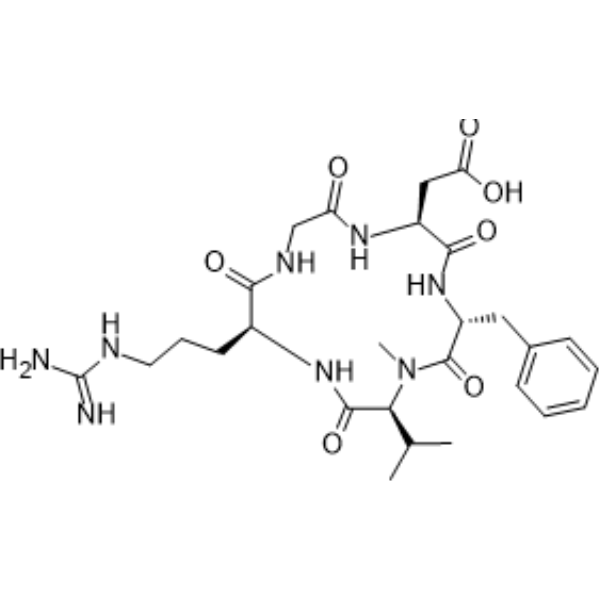 0 ImagesSynonyms: EMD 121974Cilengitide (EMD 121974) is a BBB-permeable integrins antagonist with IC50s of 0.61 nM (ανβ3), 8.4 nM (ανβ5) and 14.9 nM (α5β1), respectively. Cilengitide inhibits the binding of ανβ3 and ανβ5 to Vitronectin with IC50s of 4 nM and 79 nM, respectively. Cilengitide inhibits TGF-β/Smad signaling, mediates PD-L1 expression. Cilengitide also induces apoptosis, shows antiangiogenic effect in the research against glioblastoma and other cancers.
-
RGD peptide (GRGDNP)
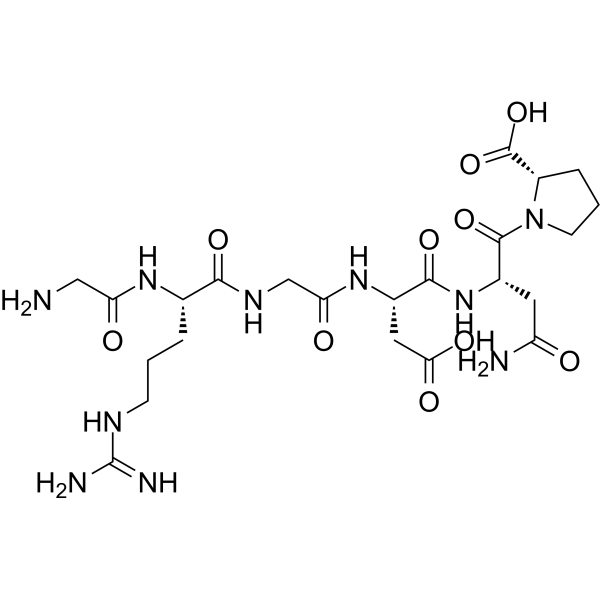 0 ImagesRGD peptide (GRGDNP) is an inhibitor of integrin-ligand interactions. RGD peptide (GRGDNP) competitively inhibits α5β1 binding with extracellular matrice (ECM). RGD peptide (GRGDNP) promotes apoptosis through activation of conformation changes that enhance pro-caspase-3 activation and autoprocessing. RGD peptide (GRGDNP) plays an important role in cell adhesion, migration, growth, and differentiation.
-
ATN-161
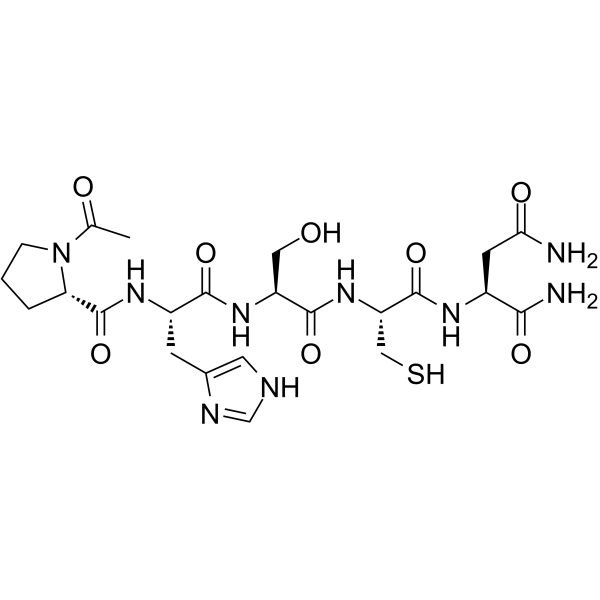 0 ImagesATN-161 is an antagonist of α5β1 integrin and αvβ3 integrin, as well as an inhibitor of fibrosis, an inhibitor of oxidative stress, a tight junction stabilizer, a mitochondrial integrity protector, an angiogenesis inhibitor and an antiviral agent. ATN-161 inhibits NLRP3, MAPK, and ROS. ATN-161 protects mice from SARS-CoV-2 infection. ATN-161 reduces infarct volume, alleviates edema, decreases immune cell infiltration, reduces the area of choroidal neovascularization lesions, lowers tumor microvessel density and viral load. ATN-161 can be used in research related to ischemic stroke, choroidal neovascularization, breast cancer, coronavirus disease 2019 (COVID-19), and liver metastasis of colorectal cancer.
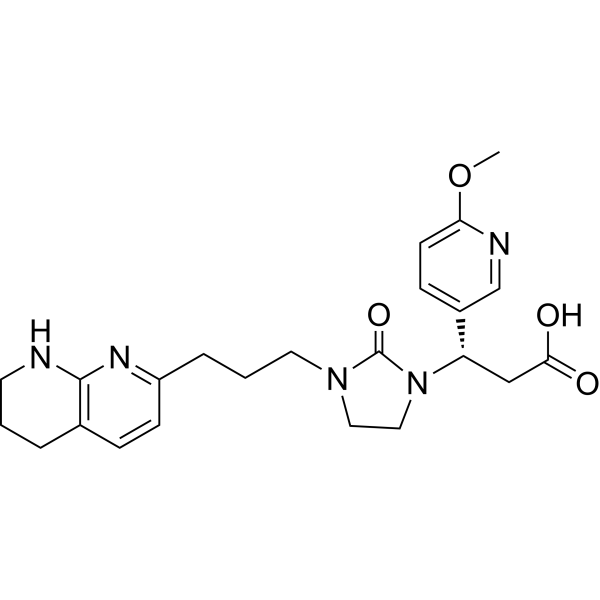
-
Volociximab
 0 ImagesSynonyms: M200; Eos 200-4Volociximab (M200) is a chimeric human/murine IgG4 antibody IIA1 targeting integrin α5β1 (EC50=0.2 nM). Integrin α5β1 is a major fibronectin receptor involved in angiogenesis. Volociximab has antiangiogenic and antitumor activities and inhibits the proliferation of human umbilical vein vascular endothelial cells (HUVECs).
-
Anti-Integrin α5β1 Antibody
 0 ImagesCat. No.: HY-P992084
-
Cyclo(phg-isoDGR-k)-PEG4-non-cleavable-SAR405838
 0 ImagesCat. No.: HY-181606Cyclo (phg-isoDGR-k)-PEG4-non-cleavable-SAR405838 is a dual MDM2 and α5β1 integrin modulator. Cyclo (phg-isoDGR-k)-PEG4-non-cleavable-SAR405838 acts as an antiproliferative agent, apoptosis inducer and cell cycle regulator, induces reactivation of p53 and upregulation of p21, redistributes glioblastoma cells from the G0/G1 phase to the G2/M phase, and enhances apoptosis. Cyclo (phg-isoDGR-k)-PEG4-non-cleavable-SAR405838 is applicable to the research of glioblastoma.
-
RGD peptide (GRGDNP) TFA
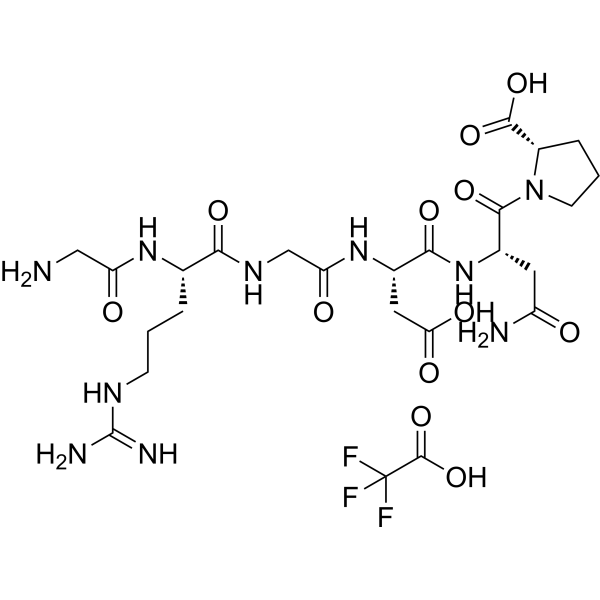 0 ImagesCat. No.: HY-P1740APurity: 99.94%RGD peptide (GRGDNP) TFA is an inhibitor of integrin-ligand interactions. RGD peptide (GRGDNP) TFA competitively inhibits α5β1 binding with extracellular matrice (ECM). RGD peptide (GRGDNP) TFA promotes apoptosis through activation of conformation changes that enhance pro-caspase-3 activation and autoprocessing. RGD peptide (GRGDNP) TFA plays an important role in cell adhesion, migration, growth, and differentiation.
-
α5β1 integrin agonist-1
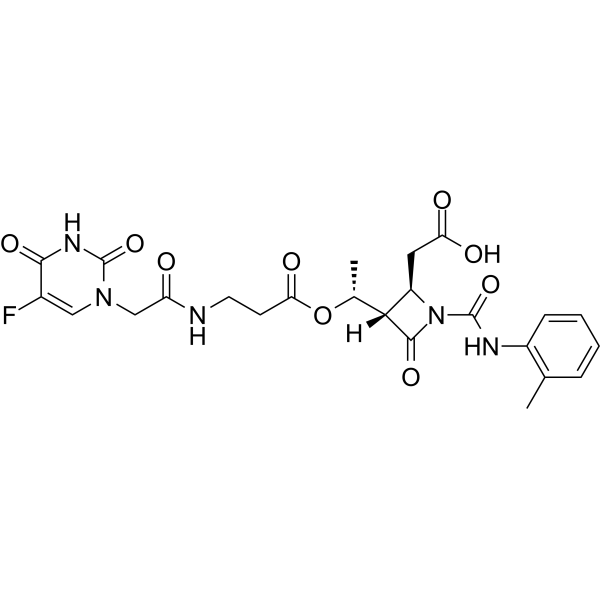 0 Imagesα5β1 integrin agonist-1 is an α5β1 integrin agonist, with an EC50 of 1.5 nM. α5β1 integrin agonist-1 inhabits α4β1 integrin (IC50 = 2.99 μM) in Jurkat/VCAM-1 adhesion assayα5β1 integrin agonist-1 induces concentration-dependent apoptosis and activates the caspase 3/7 pathway in α5β1 integrin-expressing K562 cancer cells. α5β1 integrin agonist-1 can be used for the study of cancer.
-
Echistatin
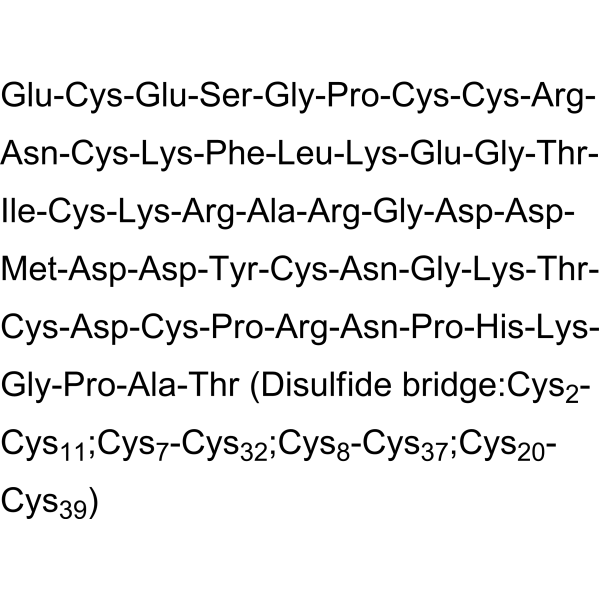 0 ImagesCat. No.: HY-P1189CAS No.: 154303-05-6Echistatin is a naturally derived RGD-containing snake venom peptide. Echistatin exhibits an IC50 of 0.6 nM against mouse αvβ3 integrin, and acts as an antagonist against αvβ3, αIIbβ3, α5β1 integrins, pp125FAK and paxillin. Echistatin reduces the phosphorylation of pp125FAK and paxillin, inhibits the autophosphorylation and kinase activity of pp125FAK, and weakens its binding to pp60src and paxillin. Echistatin disrupts the actin cytoskeleton and focal adhesions, induces melanoma cell detachment from fibronectin, and regulates cell adhesion and motility. Echistatin inhibits osteoclast maturation and migration, bone resorption, platelet aggregation, bone loss, as well as adhesion and metastasis of Lewis lung cancer cells; it also increases the number of osteoclasts and bone coverage area in mice with secondary hyperparathyroidism. Echistatin can be used in research related to melanoma, lung cancer and secondary hyperparathyroidism.
-
Echistatin TFA
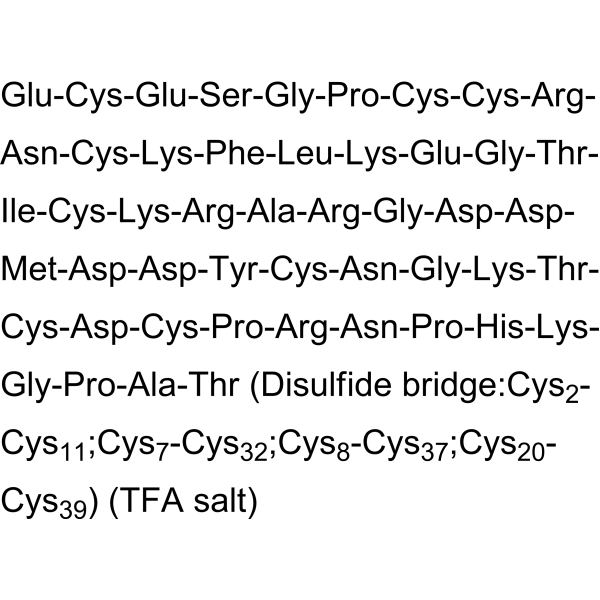 0 ImagesCat. No.: HY-P1189APurity: 99.32%Echistatin TFA is a naturally derived RGD-containing snake venom peptide. Echistatin TFA exhibits an IC50 of 0.6 nM against mouse αvβ3 integrin, and acts as an antagonist against αvβ3, αIIbβ3, α5β1 integrins, pp125FAK and paxillin. Echistatin TFA reduces the phosphorylation of pp125FAK and paxillin, inhibits the autophosphorylation and kinase activity of pp125FAK, and weakens its binding to pp60src and paxillin. Echistatin TFA disrupts the actin cytoskeleton and focal adhesions, induces melanoma cell detachment from fibronectin, and regulates cell adhesion and motility. Echistatin TFA inhibits osteoclast maturation and migration, bone resorption, platelet aggregation, bone loss, as well as adhesion and metastasis of Lewis lung cancer cells; it also increases the number of osteoclasts and bone coverage area in mice with secondary hyperparathyroidism. Echistatin TFA can be used in research related to melanoma, lung cancer and secondary hyperparathyroidism.

-
α5β1 integrin-IN-1
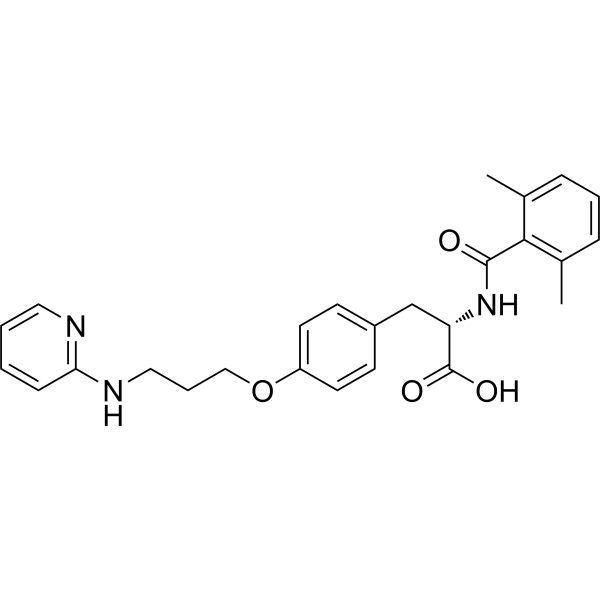
 0 ImagesCat. No.: HY-180057CAS No.: 2649899-08-9α5β1 integrin-IN-1 (compound 65) is a potent and selective α5β1 integrin inhibitor with a pIC50 of 9.4. α5β1 integrin-IN-1 displays >10000-fold selectivity for α5β1 over αVβ3 (pIC50 = 5.5). α5β1 integrin-IN-1 reduces airway smooth muscle (ASM) tension through the disruption of cellular tethering. α5β1 integrin-IN-1 exhibits excellent inhalation pharmacokinetics in rodent. α5β1 integrin-IN-1 can be used for asthma research.
-
MINT1526A
 0 ImagesCat. No.: HY-P991652Synonyms: RG-7594
-
IPS-05002
 0 ImagesCat. No.: HY-118273CAS No.: 1185036-77-4IPS-05002 is an α5β1 antagonist. IPS-05002 can inhibit VEGF-stimulated human umbilical vein endothelial cell (HUVEC) proliferation, adhesion, and migration, and also suppresses tubular network formation. IPS-05002 can upregulate IKB-β, XRCC4, and downregulate Cdc6 in VEGF-induced HUVECs. IPS-05002 can be used for the study of tumor angiogenesis.
-
CLT-28643
 0 ImagesCat. No.: HY-107147CAS No.: 1153631-91-4
- 1




