



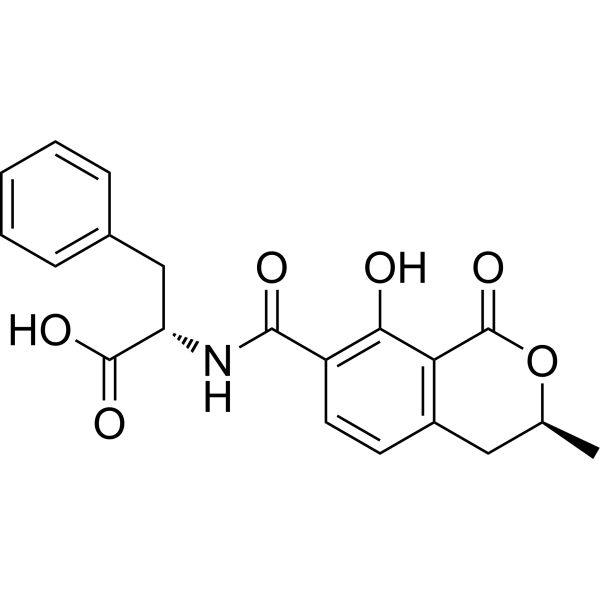
Ochratoxin B

Based on 1 Customer Validation
Ochratoxin B is an orally active secondary metabolite of Aspergillus ochraceus and non-chlorinated analog of the mycotoxin Ochratoxin A. Ochratoxin B reduces the toxic effects of Ochratoxin A (HY-N6788). Ochratoxin B inhibits cell division. Ochratoxin B causes craniofacial malformations in Xenopus laevis embryos.
Nos produits utilisent uniquement pour la recherche. Nous ne vendons pas aux patients.
- Pureté : 99.90%
- CAS No.: 4825-86-9
- Formule: C20H19NO6
- Masse moléculaire:369.37
-
Stockage:
4°C, protect from light
* In solvent : -80°C, 6 months; -20°C, 1 month (protect from light)

To place orders, for customer services and technical support, please contact: MedChemExpress USA
Tel: 609-228-6898 E-mail: [email protected] [email protected]


-
 Activité biologique
-
Chemical Information
-
Solvant et solubilité
- Protocole
- Pureté et documentation
- Références
-
 Help & FAQs


-

HY-N6786R
Ochratoxin B (Standard)Standard of Ochratoxin B -
HY-125699
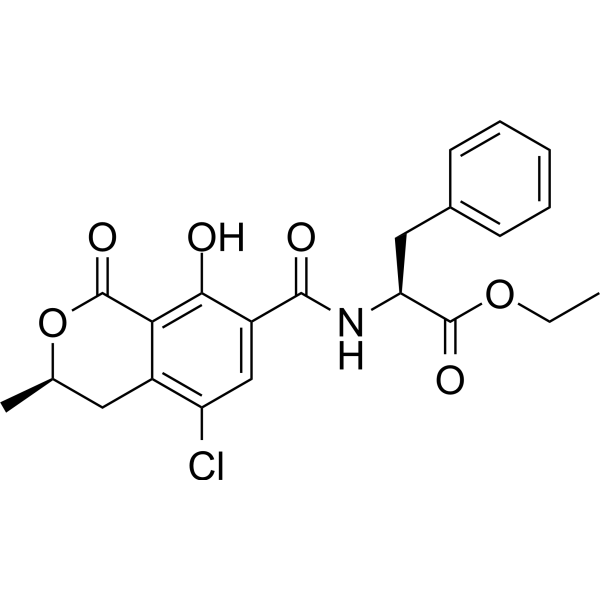
Ochratoxin CMycotoxin -
HY-N6725
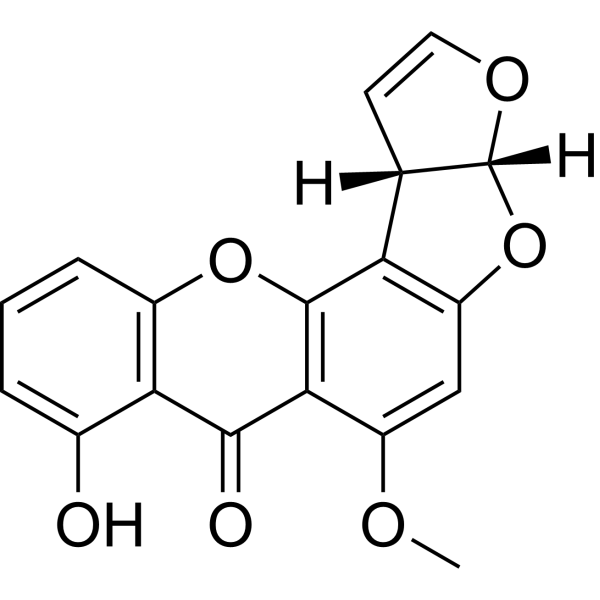
SterigmatocystineDNA Synthesis Inhibitor -
HY-N6688
VerruculogenTremorgenic Mycotoxin -
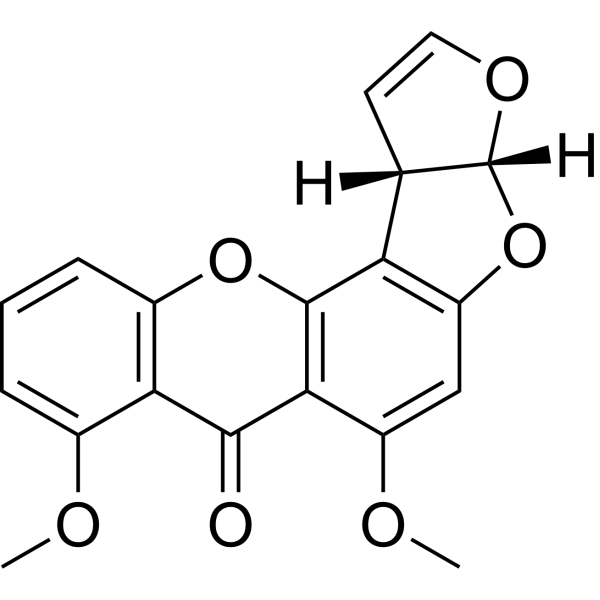
HY-116909
O-MethylsterigmatocystinFungal Metabolites -
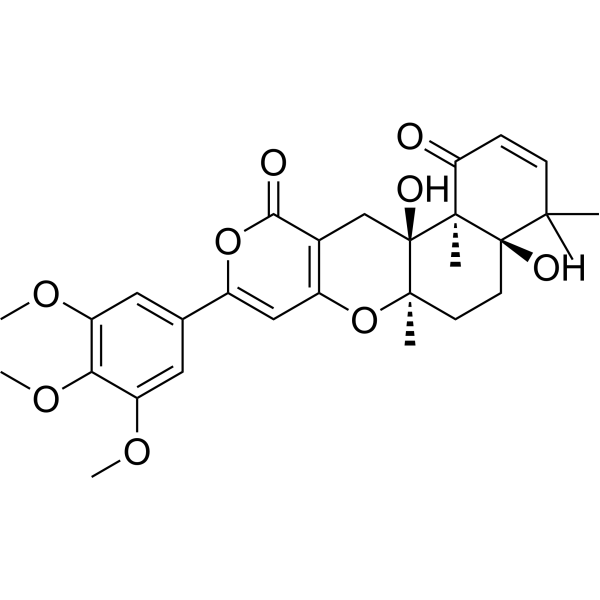
HY-126765
Territrem BFungal Meroterpenoid -
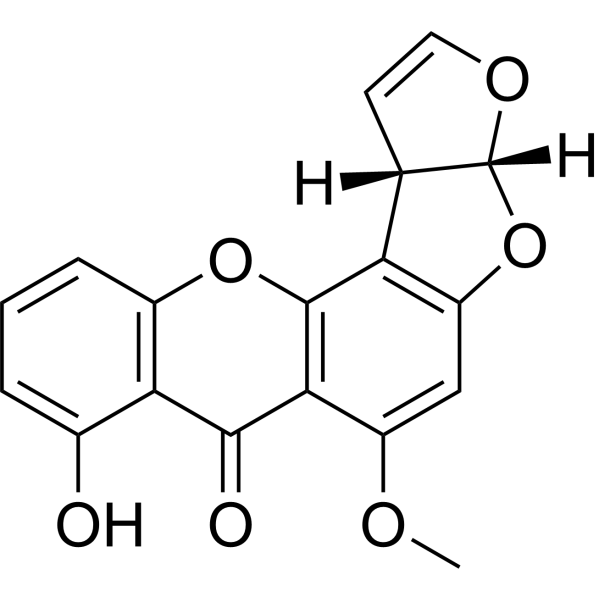
HY-N6725R
Sterigmatocystine (Standard) -
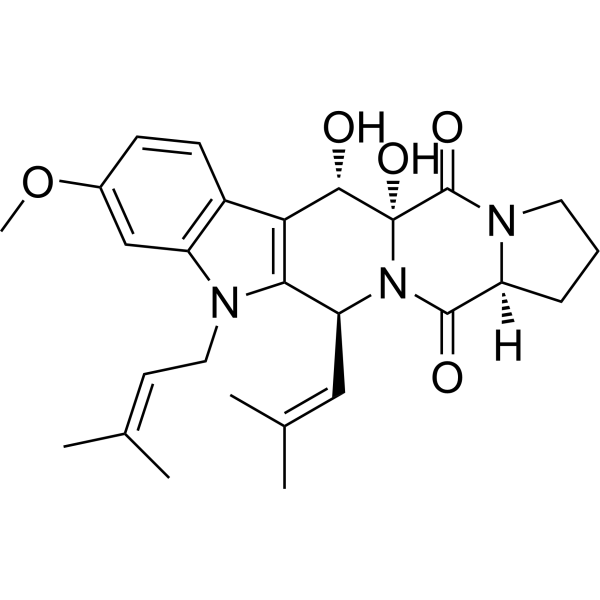
HY-117313
Fumitremorgin BAntifungal Agent
Voir tous les produits spécifiques à Isoform Endogenous Metabolite
More

Activité biologique
Description
IC50 & Target
|
Microbial Metabolite |
In Vitro
Ochratoxin B (1-25 µg/mL) causes pronounced inhibition of HepG2 cell division[1].
Ochratoxin B (96 h) causes craniofacial malformations in Xenopus laevis embryos with less potency than Ochratoxin A[2].
Ochratoxin B (0.001-100 mM; 24-96 h) shows different cytotoxicity levels in primary porcine (PKC), rat (RPTC), human renal proximal epithelial cells (HKC) and porcine renal cell line (LLC-PK1)[3].
Ochratoxin B (2.5-25 μM) at lower concentrations (2.5 and 5 μM) reduces, and at higher subtoxic concentrations (25 μM) increases, Ochratoxin A-mediated toxicity in 3D MDCK cells[4].
MedChemExpress (MCE) has not independently confirmed the accuracy of these methods. They are for reference only.
In Vivo
Ochratoxin B (4 mg/kg; i.p.) considerably reduces the toxic effects of Ochratoxin A when given together with Ochratoxin A in rats[6].
MedChemExpress (MCE) has not independently confirmed the accuracy of these methods. They are for reference only.
-
Animal Model:Male F344 Fisher rats (8-9 weeks old, 150-170 g)[5]
-
Dosage:Single dose of 10 mg/kg bw or repeated doses of 2 mg/kg bw (in corn oil)
-
Administration:Oral gavage, single dose or 5 days/week, 2 weeks
-
Result:Showed a slight increase in mitotic figures in proximal tubule cells (a single high dose).
Showed no changes in clinical chemistry, renal function, and histopathology (repeated administration).
Was more extensively metabolized and more rapidly eliminated than Ochratoxin A.


Chemical Information
-
CAS No. 4825-86-9
-
Appearance Solid
-
Masse moléculaire 369.37
-
Formule C20H19NO6
-
Color White to off-white
-
SMILES
O=C1O[C@H](CC2=C1C(O)=C(C=C2)C(N[C@@H](CC3=CC=CC=C3)C(O)=O)=O)C
-
Structure Classification
-
Initial Source
Aspergillus ochraceus
-
Livraison
Room temperature in continental US; may vary elsewhere.
-
Stockage
4°C, protect from light
* In solvent : -80°C, 6 months; -20°C, 1 month (protect from light)


Solvant et solubilité
In Vitro:
DMSO : 15 mg/mL (40.61 mM; Need ultrasonic and warming; Hygroscopic DMSO has a significant impact on the solubility of product, please use newly opened DMSO)
Please refer to the solubility information to select the appropriate solvent. Once prepared, please aliquot and store the solution to prevent product inactivation from repeated freeze-thaw cycles.
Storage method and period of stock solution: -80°C, 6 months; -20°C, 1 month (protect from light). When stored at -80°C, please use it within 6 months. When stored at -20°C, please use it within 1 month.
Please refer to the solubility information to select the appropriate solvent. Once prepared, please aliquot and store the solution to prevent product inactivation from repeated freeze-thaw cycles.
Storage method and period of stock solution: -80°C, 6 months; -20°C, 1 month (protect from light). When stored at -80°C, please use it within 6 months. When stored at -20°C, please use it within 1 month.
Concentration (start) × Volume (start) = Concentration (final) × Volume (final)


Pureté et documentation
-
Fiche technique (277 KB)
-
SDS (604 KB)
- English - EN (604 KB)
- Français - FR (604 KB)
- Deutsch - DE (604 KB)
- Norwegian - NO (604 KB)
- Español - ES (604 KB)
- Swedish - SV (604 KB)
- Italian - IT (604 KB)
- Korean - KR (604 KB)
- Portuguese - PT (604 KB)
-
Instruction de manipulation (2659 KB)
Références
[1]. Knasmüller S, et al. Structurally related mycotoxins ochratoxin A, ochratoxin B, and citrinin differ in their genotoxic activities and in their mode of action in human-derived liver (HepG2) cells: implications for risk assessment. Nutr Cancer. 2004;50(2):190-7. [Content Brief]
[2]. O'Brien E, et al. Investigation of the teratogenic potential of ochratoxin A and B using the FETAX system. Birth Defects Res B Dev Reprod Toxicol. 2005 Oct;74(5):417-23. [Content Brief]
[3]. Dietrich DR, et al. Species- and sex-specific renal cytotoxicity of ochratoxin A and B in vitro. Exp Toxicol Pathol. 2001 Jun;53(2-3):215-25. [Content Brief]
[4]. Csenki Z, et al. The individual and combined effects of ochratoxin A with citrinin and their metabolites (ochratoxin B, ochratoxin C, and dihydrocitrinone) on 2D/3D cell cultures, and zebrafish embryo models. Food Chem Toxicol. 2021 Dec;158:112674. [Content Brief]
[5]. Mally A, et al. Biotransformation and nephrotoxicity of ochratoxin B in rats. Toxicol Appl Pharmacol. 2005 Aug 1;206(1):43-53. [Content Brief]
[6]. Størmer FC, et al. Metabolism of ochratoxin B and its possible effects upon the metabolism and toxicity of ochratoxin A in rats. Appl Environ Microbiol. 1985 May;49(5):1108-12. [Content Brief]


Complete Stock Solution Preparation Table
Please refer to the solubility information to select the appropriate solvent. Once prepared, please aliquot and store the solution to prevent product inactivation from repeated freeze-thaw cycles.
Storage method and period of stock solution: -80°C, 6 months; -20°C, 1 month (protect from light). When stored at -80°C, please use it within 6 months. When stored at -20°C, please use it within 1 month.
| Optional Solvent | Concentration Solvent Mass | 1 mg | 5 mg | 10 mg | 25 mg |
|---|---|---|---|---|---|
| DMSO | 1 mM | 2.7073 mL | 13.5366 mL | 27.0731 mL | 67.6828 mL |
| 5 mM | 0.5415 mL | 2.7073 mL | 5.4146 mL | 13.5366 mL | |
| 10 mM | 0.2707 mL | 1.3537 mL | 2.7073 mL | 6.7683 mL | |
| 15 mM | 0.1805 mL | 0.9024 mL | 1.8049 mL | 4.5122 mL | |
| 20 mM | 0.1354 mL | 0.6768 mL | 1.3537 mL | 3.3841 mL | |
| 25 mM | 0.1083 mL | 0.5415 mL | 1.0829 mL | 2.7073 mL | |
| 30 mM | 0.0902 mL | 0.4512 mL | 0.9024 mL | 2.2561 mL | |
| 40 mM | 0.0677 mL | 0.3384 mL | 0.6768 mL | 1.6921 mL |


Ochratoxin B Related Classifications
HY-N6786 Related Classifications
 Powered by Bioz