



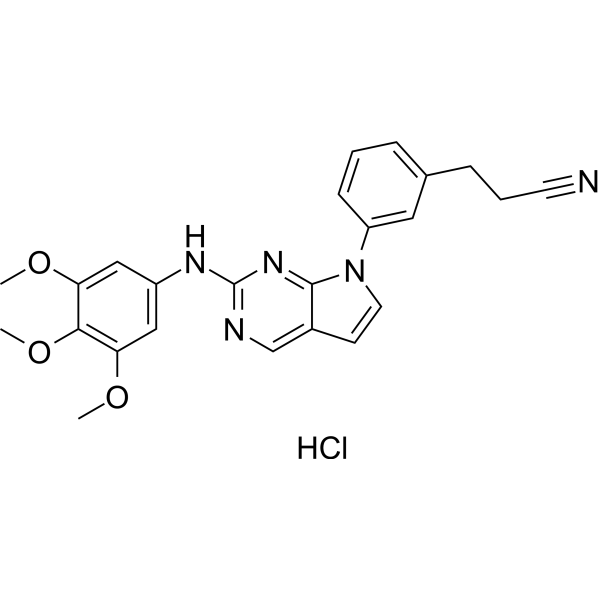
Casein Kinase II Inhibitor IV hydrochloride
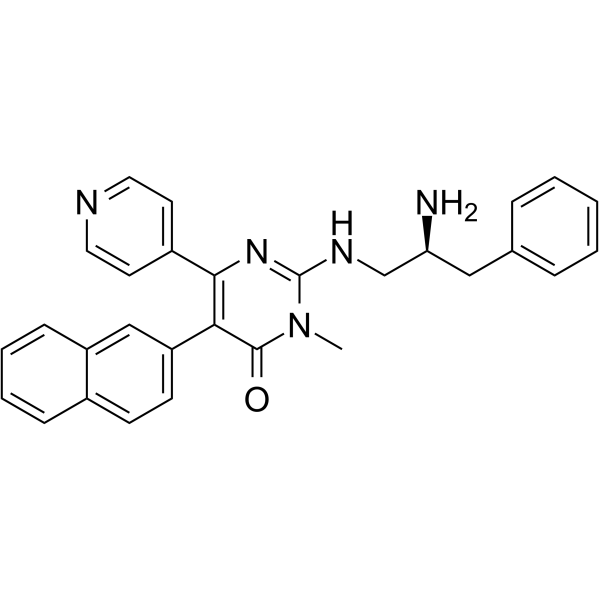
Casein Kinase II Inhibitor IV Hydrochloride is a small-molecule inducer of epidermal keratinocyte differentiation.
For research use only. We do not sell to patients.
- CAS No.: 2320347-54-2
- Formula: C24H24ClN5O3
- Molecular Weight:465.93
-
Storage:
Please store the product under the recommended conditions in the Certificate of Analysis.

To place orders, for customer services and technical support, please contact: MedChemExpress USA
Tel: 609-228-6898 E-mail: [email protected] [email protected]


-
 Biological Activity
-
Chemical Information
- Protocol
- Purity & Documentation
- References
-
 Help & FAQs




Biological Activity
Description
IC50 & Target
Target: Casein Kinase[1]
In Vitro
Treatment of human epidermal keratinocytes (NHEKs) with Casein Kinase II Inhibitor IV leads to an increase in the early differentiation markers keratins 1 and 10 at 48 h. Increased levels of IVL and TGM are observed in cells treated with Casein Kinase II Inhibitor IV at 72 h and persisted at 96 h. In addition, treated with Casein Kinase II Inhibitor IV expresses loricrin, a terminal differentiation marker, at later time points. Similar results are observed by messenger RNA (mRNA) expression analysis of NHEKs treated with Casein Kinase II Inhibitor IV. At early time points (12 and 24 h), treatment with Casein Kinase II Inhibitor IV leads to the upregulation of keratinocyte early differentiation marker genes, including keratin 1 (5.4-fold) and keratin 10 (5.4-fold). Terminal differentiation marker genes, including IVL (1.8-fold), TGM 1 (4.8-fold), loricrin (3.3-fold), and filaggrin (5.6-fold), are upregulated at late time points (36 and 48 h). These results are consistent with the ability of Casein Kinase II Inhibitor IV to induce differentiation of epidermal progenitor cells into terminally differentiated keratinocytes[1].
MedChemExpress (MCE) has not independently confirmed the accuracy of these methods. They are for reference only.


Chemical Information
-
CAS No. 2320347-54-2
-
Molecular Weight 465.93
-
Formula C24H24ClN5O3
-
SMILES
N#CCCC1=CC=CC(N2C=CC3=CN=C(NC4=CC(OC)=C(OC)C(OC)=C4)N=C32)=C1.Cl
-
Shipping
Room temperature in continental US; may vary elsewhere.
-
Storage
Please store the product under the recommended conditions in the Certificate of Analysis.

Protocol
Kinase Assay[1]
For reporter gene assays with transiently transfected cells, the cells are typically transfected in 150 mm-diam dishes when 30-40% confluent. A reporter plasmid, pGL3/3.7 kbp-IVLLuc plasmid, is transfected into the human epidermal keratinocytes (NHEKs). After 24 h, the transfected cells are plated into 96-well assay plates and treated with Casein Kinase II Inhibitor IV to a final concentration of 5 μM. After incubation for 2 d, reporter gene activity is measured using the Bright-Glo luciferase assay system[1].
MedChemExpress (MCE) has not independently confirmed the accuracy of these methods. They are for reference only.


Purity & Documentation
References

Calculators
Concentration (start) × Volume (start) = Concentration (final) × Volume (final)


Casein Kinase II Inhibitor IV hydrochloride Related Classifications
HY-111378A Related Classifications
 Powered by Bioz