



Hematein
Based on 1 publication(s) in Google Scholar
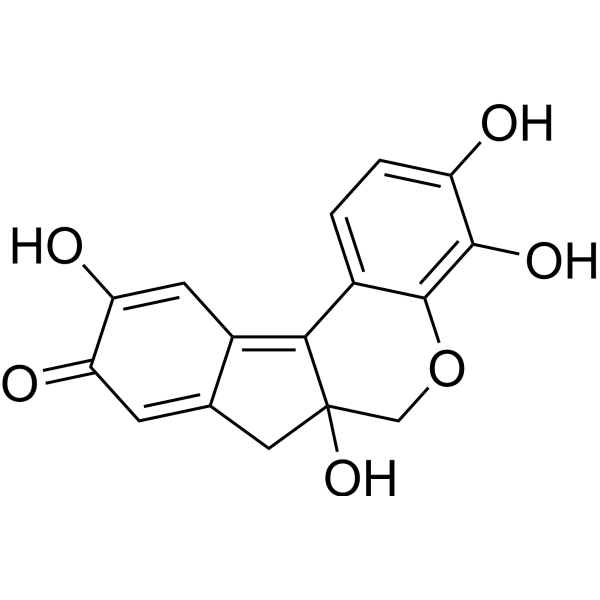
Hematein is a oxidation product of hematoxylin acted as a dye. Hematein is an allosteric casein kinase II inhibitor with an IC50 of 0.74 μM. Hematein inhibits Akt/PKB Ser129 phosphorylation, the Wnt/TCF pathway and increases apoptosis in lung cancer cells.
For research use only. We do not sell to patients.
- Purity : 59.09%
- CAS No.: 475-25-2
- Formula: C16H12O6
- Molecular Weight:300.26
-
Storage:Powder -20°C, 3 years , 4°C, 2 years ; In solvent -80°C, 6 months , -20°C, 1 month

To place orders, for customer services and technical support, please contact: MedChemExpress USA
Tel: 609-228-6898 E-mail: [email protected] [email protected]


-
 Biological Activity
-
Chemical Information
-
Solvent & Solubility
- Protocols
- Purity & Documentation
- References
-
 Help & FAQs


-
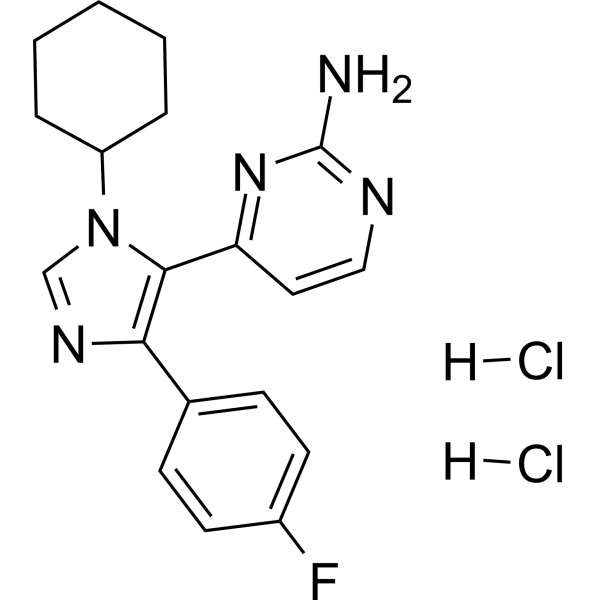
HY-15490
PF-670462 dihydrochlorideCasein Kinase Inhibitor -
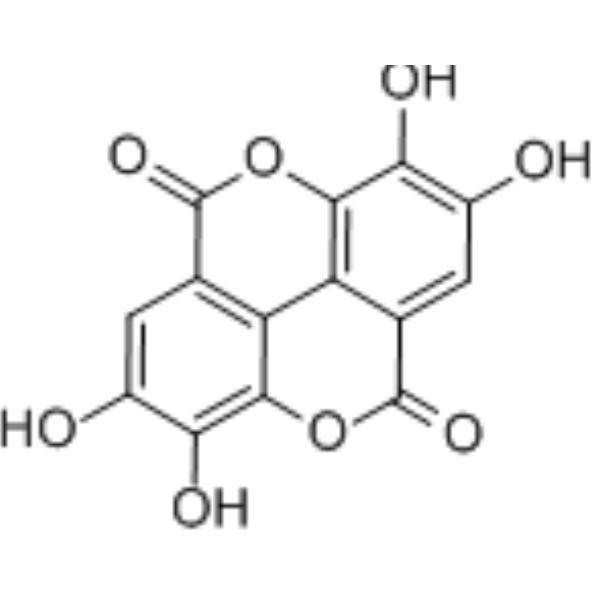
HY-B0183
Ellagic acidSHP2 Inhibitor -
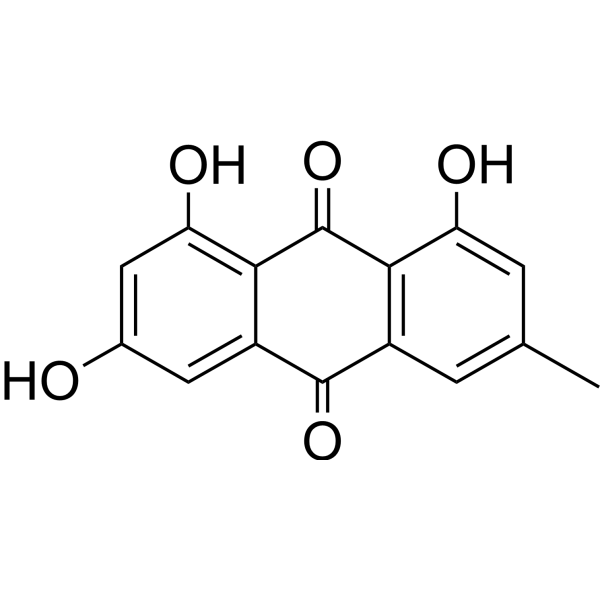
HY-14393
EmodinNatural Anthraquinone -
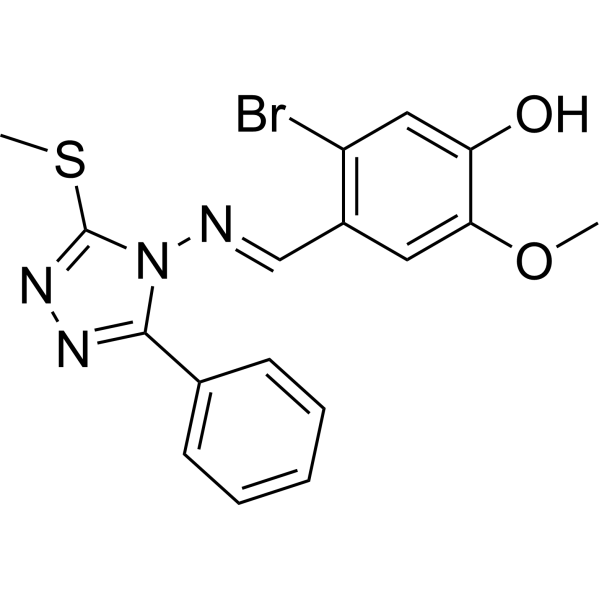
HY-115519
(E/Z)-GO289CK2 Inhibitor -
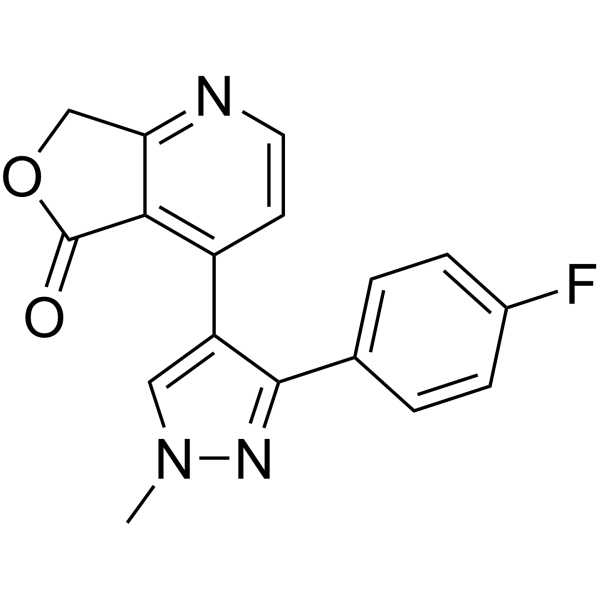
HY-153866
CK1-IN-2CK1 Inhibitor -
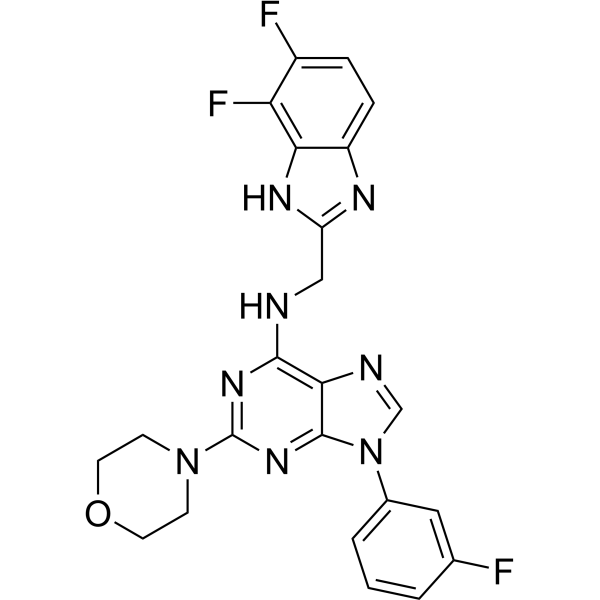
HY-100011
SR-3029CK1δ/ε Inhibitor -
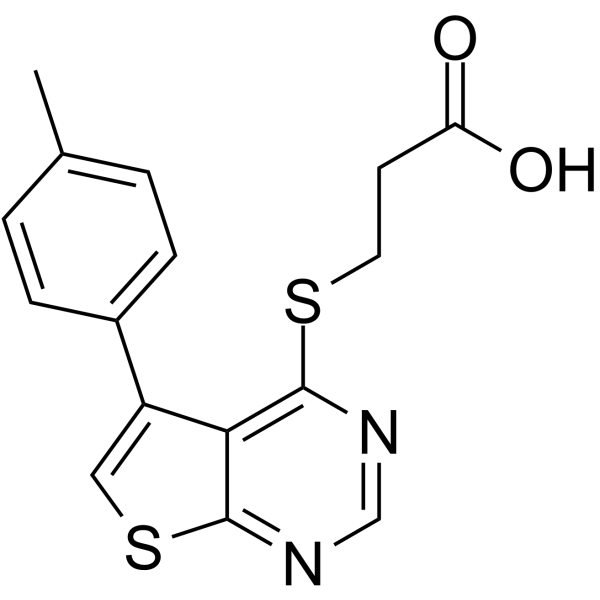
HY-15479
TTP 22Casein Kinase Inhibitor -
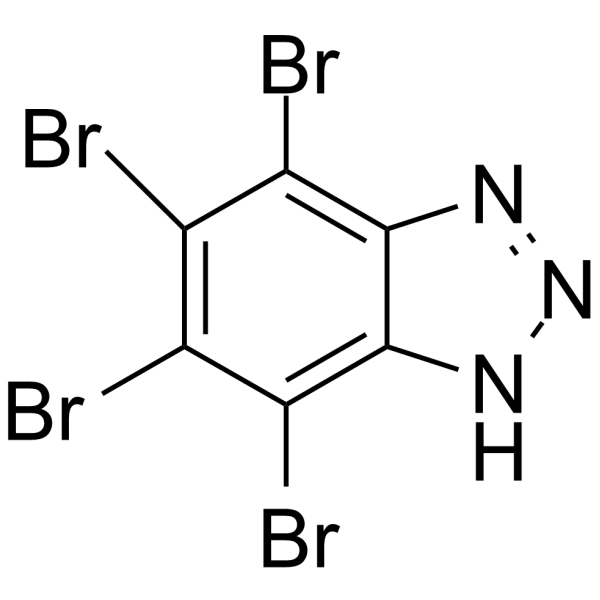
HY-14394
TBBCK2 Inhibitor -
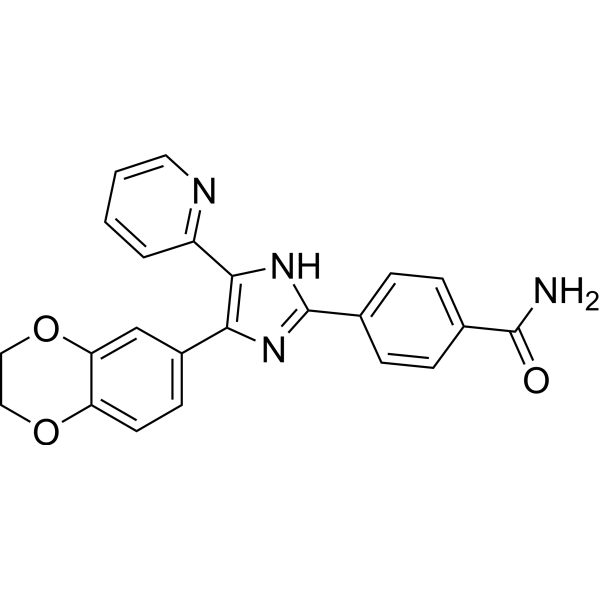
HY-10324
D4476CK1 Inhibitor -

HY-100011R
SR-3029 (Standard)CK1δ/ε Inhibitor -
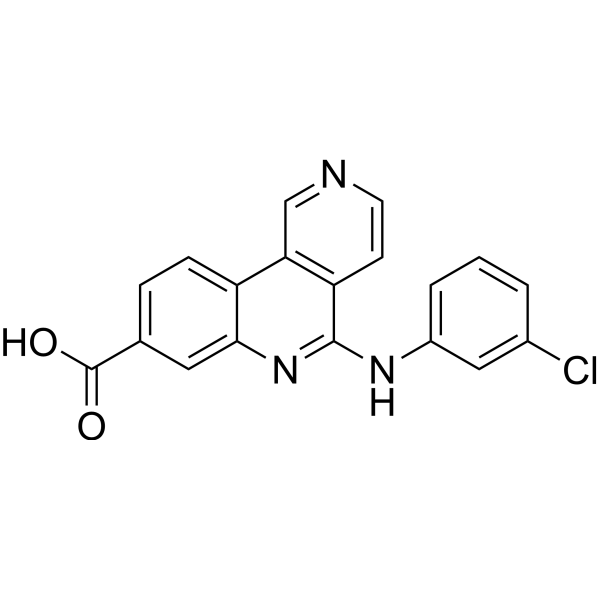
HY-50855
SilmitasertibCasein Kinase 2 Inhibitor -
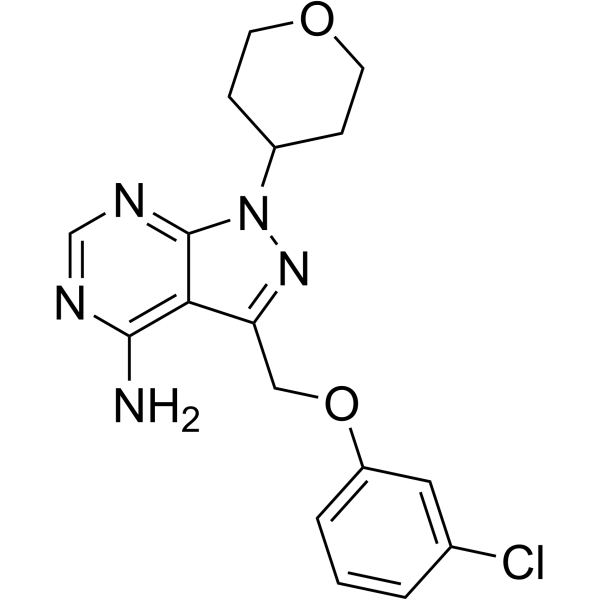
HY-12470
PF-4800567CK1 Inhibitor
Publications Citing Use of MedChemExpress (MCE) Hematein
More

Biological Activity
Description
IC50 & Target
[2]|
CKII 0.74 μM (IC50) |
Cellular Effect
|
Cell Line

|
Type | Value | Description | References |
|---|---|---|---|---|
| HT-29 | EC50 |
11.1 μM
Compound: Hematein
|
Agonist activity at GPR35 receptor in human HT-29 cells after 10 mins by dynamic mass redistribution assay
Agonist activity at GPR35 receptor in human HT-29 cells after 10 mins by dynamic mass redistribution assay
|
[PMID: 24900447] |
| HT-29 | IC50 |
30.4 μM
Compound: Hematein
|
Desensitization of GPR35 receptor in human HT-29 cells assessed as inhibition of zaprinast-induced dynamic mass redistribution after 10 mins
Desensitization of GPR35 receptor in human HT-29 cells assessed as inhibition of zaprinast-induced dynamic mass redistribution after 10 mins
|
[PMID: 24900447] |
| U2OS | EC50 |
4.7 μM
Compound: Hematein
|
Agonist activity at GPR35 receptor in human U2OS cells coexpressing Gal4-VP16-TEV assessed as beta arrestin translocation after 5 hrs by beta lactamase reporter gene assay
Agonist activity at GPR35 receptor in human U2OS cells coexpressing Gal4-VP16-TEV assessed as beta arrestin translocation after 5 hrs by beta lactamase reporter gene assay
|
[PMID: 24900447] |
In Vitro
Hematein (10-100 μM; 14 days) inhibits cells growth in A427 lung cancer cells[1].
Hematein (50 and 100 μM; 48 hours) induces apoptosis in A427 lung cancer cells[1].
Hematein (50 and 100 μM; 48 hours) inhibits CK2-specific Akt phosphorylation[1].
MedChemExpress (MCE) has not independently confirmed the accuracy of these methods. They are for reference only.
-
Cell Line:A427 (HTB-53) cell line
-
Concentration:10-100 μM
-
Incubation Time:14 days
-
Result:Inhibited cells growth.
-
Cell Line:A427 (HTB-53) cell line
-
Concentration:50 and 100 μM
-
Incubation Time:48 hours
-
Result:Induced apoptosis in A427 lung cancer cells.
-
Cell Line:A427 (HTB-53) cell line
-
Concentration:50 and 100 μM
-
Incubation Time:48 hours
-
Result:Inhibited CK2-specific Akt phosphorylation.
In Vivo
MedChemExpress (MCE) has not independently confirmed the accuracy of these methods. They are for reference only.
-
Animal Model:Female athymic BALB/c nude mice (6-week-old) [1]
-
Dosage:50 mg/kg
-
Administration:Intraperitoneal injections; twice a week for 6 weeks
-
Result:Inhibited tumor growth in A427 lung cancer cell xenografts.


Chemical Information
-
CAS No. 475-25-2
-
Appearance Solid
-
Molecular Weight 300.26
-
Formula C16H12O6
-
Color Light brown to black
-
SMILES
O=C1C=C2CC3(C(C4=CC=C(C(O)=C4OC3)O)=C2C=C1O)O
-
Shipping
Room temperature in continental US; may vary elsewhere.
-
Storage
Powder -20°C 3 years 4°C 2 years In solvent -80°C 6 months -20°C 1 month


Publications (1)
-
Journal Impact Factor
-
Most Recent


Solvent & Solubility
In Vitro:
DMSO : 100 mg/mL (333.04 mM; Need ultrasonic; Hygroscopic DMSO has a significant impact on the solubility of product, please use newly opened DMSO)
Please refer to the solubility information to select the appropriate solvent. Once prepared, please aliquot and store the solution to prevent product inactivation from repeated freeze-thaw cycles.
Storage method and period of stock solution: -80°C, 6 months; -20°C, 1 month. When stored at -80°C, please use it within 6 months. When stored at -20°C, please use it within 1 month.
Please refer to the solubility information to select the appropriate solvent. Once prepared, please aliquot and store the solution to prevent product inactivation from repeated freeze-thaw cycles.
Storage method and period of stock solution: -80°C, 6 months; -20°C, 1 month. When stored at -80°C, please use it within 6 months. When stored at -20°C, please use it within 1 month.
Concentration (start) × Volume (start) = Concentration (final) × Volume (final)
In Vivo:
Select the appropriate dissolution method based on your experimental animal and administration route.
- For the following dissolution methods, please ensure to first prepare a clear stock solution using an In Vitro approach and then sequentially add co-solvents:
- To ensure reliable experimental results, the clarified stock solution can be appropriately stored based on storage conditions. As for the working solution for In Vivo experiments, it is recommended to prepare freshly and use it on the same day.
- The percentages shown for the solvents indicate their volumetric ratio in the final prepared solution. If precipitation or phase separation occurs during preparation, heat and/or sonication can be used to aid dissolution.
Add each solvent one by one: 10% DMSO 40% PEG300 5% Tween-80 45% Saline
Solubility: ≥ 2.5 mg/mL (8.33 mM); Clear solution
This protocol yields a clear solution of ≥ 2.5 mg/mL (saturation unknown).
Taking 1 mL working solution as an example, add 100 μL DMSO stock solution (25.0 mg/mL) to 400 μL PEG300, and mix evenly; then add 50 μL Tween-80 and mix evenly; then add 450 μL Saline to adjust the volume to 1 mL.
Preparation of Saline: Dissolve 0.9 g sodium chloride in ddH₂O and dilute to 100 mL to obtain a clear Saline solution.
In Vivo Dissolution Calculator
Please enter the basic information of animal experiments:
-
-
-
-
Recommended: Prepare an additional quantity of animals to account for potential losses during experiments.
Please enter your animal formula composition:
-
%DMSO +
Recommended: Keep the proportion of DMSO in working solution below 2% if your animal is weak.
-
%+
-
+%Tween-80 + +
-
%Saline +
The co-solvents required include: DMSO, . All of co-solvents are available by MedChemExpress (MCE). , Tween 80. All of co-solvents are available by MedChemExpress (MCE).
Working solution concentration: 0.22 mg/mL
Method for preparing stock solution: mg drug dissolved in μL DMSO. Stock solution concentration: mg/mL.
1. Take μL DMSO stock solution;
2. Add μL .
μL , mix evenly;
3. Then add μL Tween 80, mix evenly;
4. Then add μL
Please ensure that the stock solution in the first step is dissolved to a clear state, and add co-solvents in sequence. You can use ultrasonic heating (ultrasonic cleaner, recommended frequency 20-40 kHz), vortexing, etc. to assist dissolution.


Purity & Documentation
-
Data Sheet (282 KB)
-
SDS (251 KB)
- English - EN (251 KB)
- Français - FR (251 KB)
- Deutsch - DE (251 KB)
- Norwegian - NO (251 KB)
- Español - ES (251 KB)
- Swedish - SV (251 KB)
- Italian - IT (251 KB)
- Korean - KR (251 KB)
- Portuguese - PT (251 KB)
-
Handling Instructions (2659 KB)
References


Complete Stock Solution Preparation Table
Please refer to the solubility information to select the appropriate solvent. Once prepared, please aliquot and store the solution to prevent product inactivation from repeated freeze-thaw cycles.
Storage method and period of stock solution: -80°C, 6 months; -20°C, 1 month. When stored at -80°C, please use it within 6 months. When stored at -20°C, please use it within 1 month.
| Optional Solvent | Concentration Solvent Mass | 1 mg | 5 mg | 10 mg | 25 mg |
|---|---|---|---|---|---|
| DMSO | 1 mM | 3.3304 mL | 16.6522 mL | 33.3045 mL | 83.2612 mL |
| 5 mM | 0.6661 mL | 3.3304 mL | 6.6609 mL | 16.6522 mL | |
| 10 mM | 0.3330 mL | 1.6652 mL | 3.3304 mL | 8.3261 mL | |
| 15 mM | 0.2220 mL | 1.1101 mL | 2.2203 mL | 5.5507 mL | |
| 20 mM | 0.1665 mL | 0.8326 mL | 1.6652 mL | 4.1631 mL | |
| 25 mM | 0.1332 mL | 0.6661 mL | 1.3322 mL | 3.3304 mL | |
| 30 mM | 0.1110 mL | 0.5551 mL | 1.1101 mL | 2.7754 mL | |
| 40 mM | 0.0833 mL | 0.4163 mL | 0.8326 mL | 2.0815 mL | |
| 50 mM | 0.0666 mL | 0.3330 mL | 0.6661 mL | 1.6652 mL | |
| 60 mM | 0.0555 mL | 0.2775 mL | 0.5551 mL | 1.3877 mL | |
| 80 mM | 0.0416 mL | 0.2082 mL | 0.4163 mL | 1.0408 mL | |
| 100 mM | 0.0333 mL | 0.1665 mL | 0.3330 mL | 0.8326 mL |


Hematein Related Classifications
HY-119751 Related Classifications
 Powered by Bioz