



DiD perchlorate (solution)
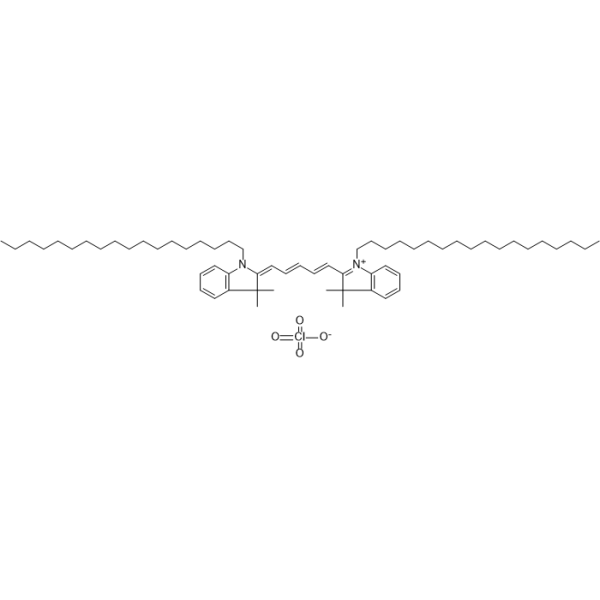
DiD perchlorate (solution)is a long-chain carbocyanine dye. Carbocyanine dyes are widely used as Di to label cells, organelles, liposomes, viruses and lipoproteins.
Solvent and concentration: DMSO: 5 mM
For research use only. We do not sell to patients.
- CAS No.: 127274-91-3
- Formula: C61H99ClN2O4
- Molecular Weight:959.90
-
Storage:
Please store the product under the recommended conditions in the Certificate of Analysis.


To place orders, for customer services and technical support, please contact: MedChemExpress USA
Tel: 609-228-6898 E-mail: [email protected] [email protected]


-
 Biological Activity
-
Chemical Information
- Purity & Documentation
- References
-
 Help & FAQs


-
HY-D1028
DiD perchlorateDye -
HY-D0083
DiIFluorescent Dye -
HY-D0969
DiOFluorescent Probe -
HY-D0815
Propidium IodideFluorochrome -
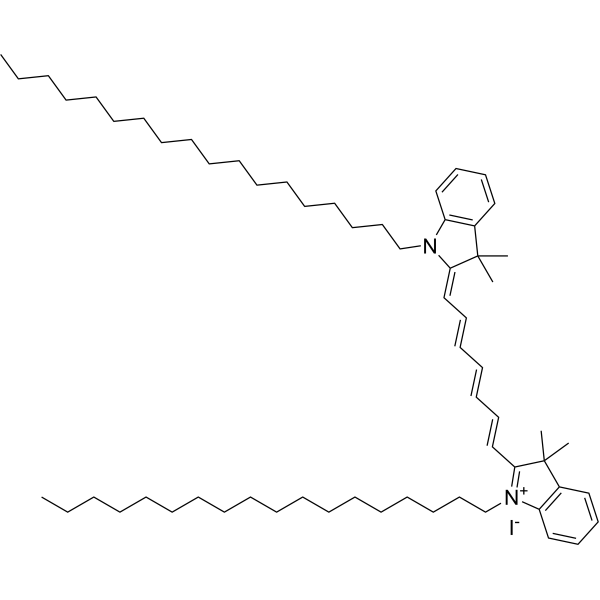
HY-D1048
DiRMembrane Dye -
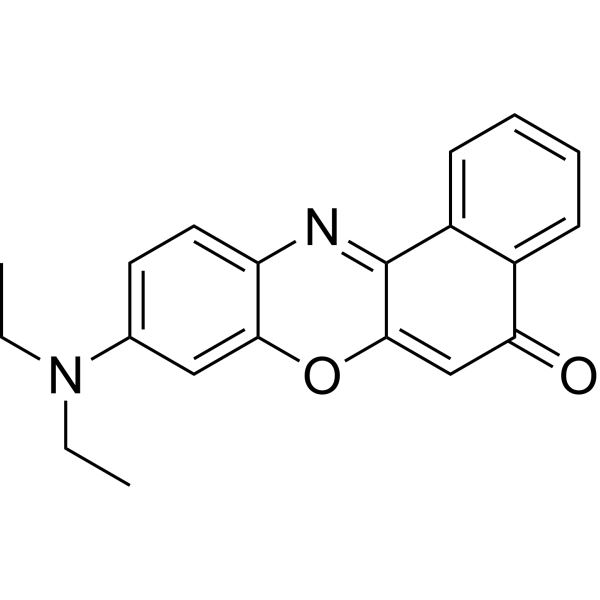
HY-D0718
Nile RedHydrophobic Fluorescent Stain -
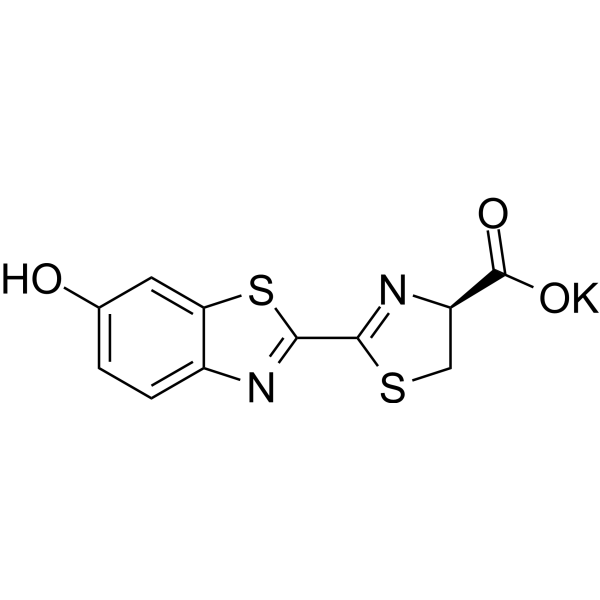
HY-12591B
D-Luciferin potassiumSubstrate for Luciferase -
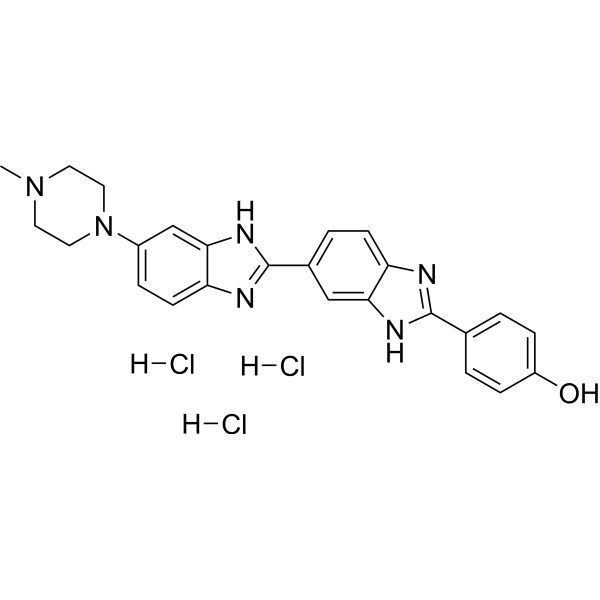
HY-15558A
Hoechst 33258 trihydrochlorideDNA Staining -

HY-DY1006
Propidium Iodide (solution)Fluorochrome -

HY-DY1012
DiI (solution)Fluorescent Dye -

HY-DY1013
DiR (solution)Membrane Dye -

HY-DY1008
Nile Red (solution)Hydrophobic Fluorescent Stain


Biological Activity
Description
Solvent and concentration: DMSO: 5 mM
In Vitro
Guidelines (Following is our recommended protocol. This protocol only provides a guideline, and should be modified according to your specific needs).
General Protocol
1. Preparing Stain Solutions of Di
1) Prepare working solutions: Dilute the stock solutions into a suitable buffer such as serum-free culture medium, HBSS or PBS to make 1 to 5 μM working solutions. We do not recommend storing the aqueous solution for more than one day.
Note: The final concentration of the working solution should be empirically determined for different cell types and/or experimental conditions.
2. Suspension cells
1) Centrifuge at 1000 g at 4°C for 3-5 minutes and then discard the supernatant. Wash twice with PBS, 5 minutes each time.The cell density is 1×10⁶/mL
2) Add 1 mL of Di working solution, and then incubate at room temperature for 5-30 minutes.
3) Centrifuge at 400 g at 4°C for 3-4 minutes and then discard the supernatant.
4) Wash twice with PBS, 5 minutes each time.
5) Resuspend cells with serum-free cell culture medium or PBS.Observation by fluorescence microscopy or flow cytometry.
3. Adherent cells
1) Culture adherent cells on sterile coverslips.
2) Remove the coverslip from the medium and aspirate the excess medium.
3) Add 100 μL of working solution, gently shake it to completely cover the cells,and then incubate at room temperature for 5-30 minutes.
4) Wash twice with medium, 5 minutes each time. Observation by fluorescence microscopy or flow cytometry.
MedChemExpress (MCE) has not independently confirmed the accuracy of these methods. They are for reference only. .
In Vivo
MedChemExpress (MCE) has not independently confirmed the accuracy of these methods. They are for reference only.


Chemical Information
-
CAS No. 127274-91-3
-
Molecular Weight 959.90
-
Formula C61H99ClN2O4
-
SMILES
CCCCCCCCCCCCCCCCCCN1C2=C(C=CC=C2)C(C)(C)/C1=C\C=C\C=C\C3=[N+](C4=C(C=CC=C4)C3(C)C)CCCCCCCCCCCCCCCCCC.O=Cl(=O)([O-])=O
-
Shipping
Room temperature in continental US; may vary elsewhere.
-
Storage
Please store the product under the recommended conditions in the Certificate of Analysis.


Purity & Documentation
References
[1]. Kenji Yumoto, et al. A novel method for monitoring tumor dormancy using fluorescent dye DiD. Cytometry A. 2014 Jun; 85(6): 548–555. [Content Brief]
[2]. Meng Li, et al. In Vivo Tracking of Human Adipose-derived Mesenchymal Stem Cells in a Rat Knee Osteoarthritis Model with Fluorescent Lipophilic Membrane Dye. J Vis Exp. 2017; (128): 56273. [Content Brief]
[3]. Lo Celso C, et al. Live-animal tracking of individual haematopoietic stem/progenitor cells in their niche. [Content Brief]
[4]. Gan WB, et al. Multicolor "DiOlistic" labeling of the nervous system using lipophilic dye combinations. Neuron. 2000 Aug;27(2):219-25. [Content Brief]

Calculators
Concentration (start) × Volume (start) = Concentration (final) × Volume (final)


DiD perchlorate (solution) Related Classifications
HY-DY1084 Related Classifications
 Powered by Bioz