



DiI (solution)

Based on 1 Customer Validation
DiI (solution) is a long-chain carbocyanine dye. Carbocyanine dyes are widely used as Di to label cells, organelles, liposomes, viruses and lipoproteins.
Solvent and concentration: DMSO: 5 mM
For research use only. We do not sell to patients.
- CAS No.: 41085-99-8
- Formula: C59H97ClN2O4
- Molecular Weight:933.89
-
Storage:
Please store the product under the recommended conditions in the Certificate of Analysis.


To place orders, for customer services and technical support, please contact: MedChemExpress USA
Tel: 609-228-6898 E-mail: [email protected] [email protected]


-
 Biological Activity
-
Chemical Information
- Purity & Documentation
- References
-
 Help & FAQs


-
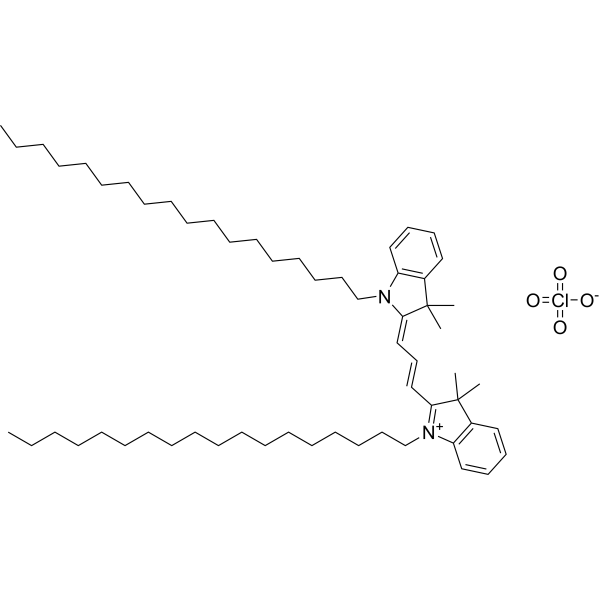
HY-D0083
DiIFluorescent Dye -
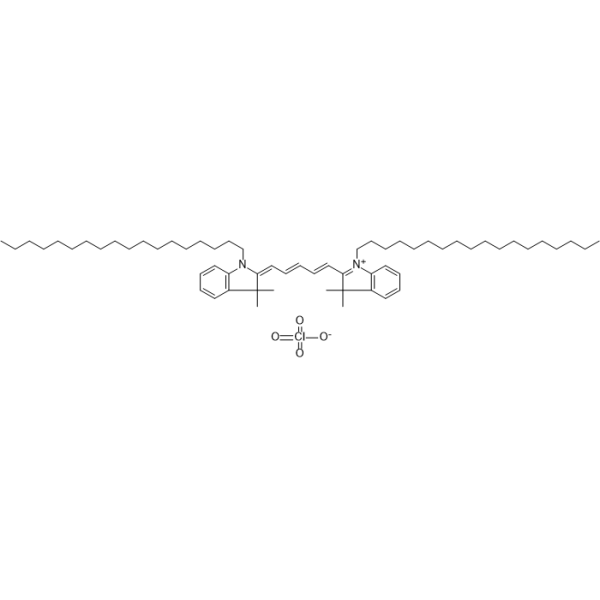
HY-D1028
DiD perchlorateDye -
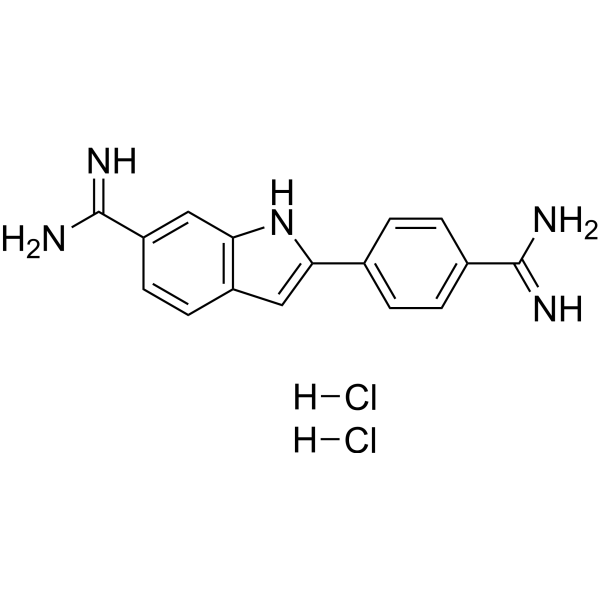
HY-D0814
DAPI dihydrochlorideFluorescent DNA Stain -
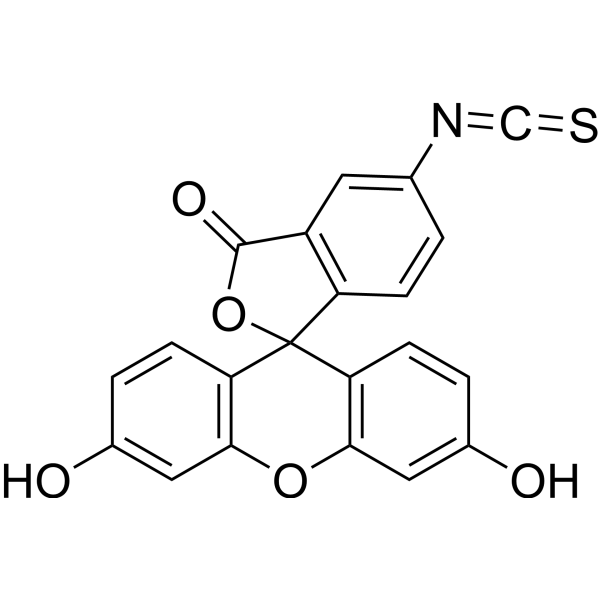
HY-66019
FITCFluorochrome -
HY-101879
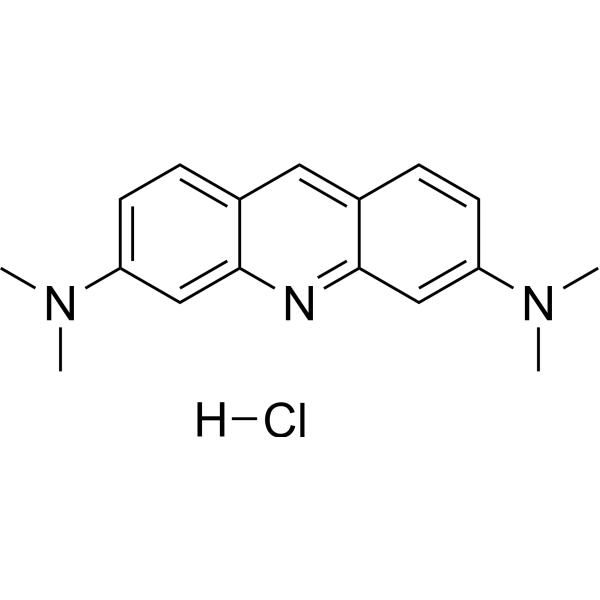
Acridine Orange hydrochlorideNucleic Acid dye -

HY-DY1081
DAPI dihydrochloride (solution)Fluorescent DNA Stain -
HY-D0815
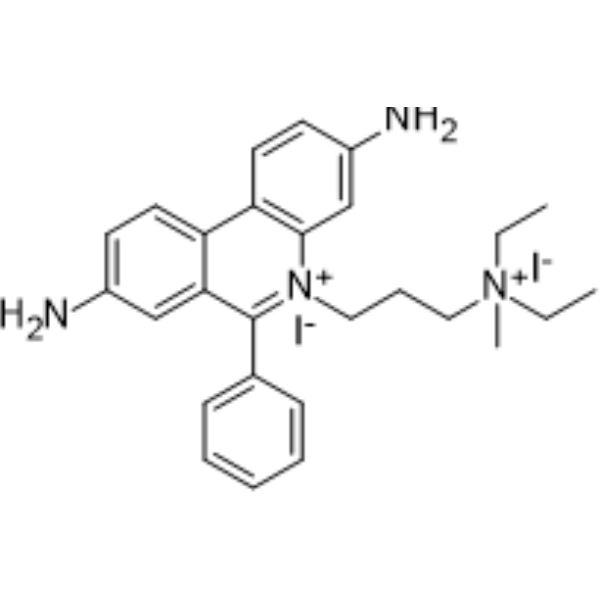
Propidium IodideFluorochrome -
HY-D1048
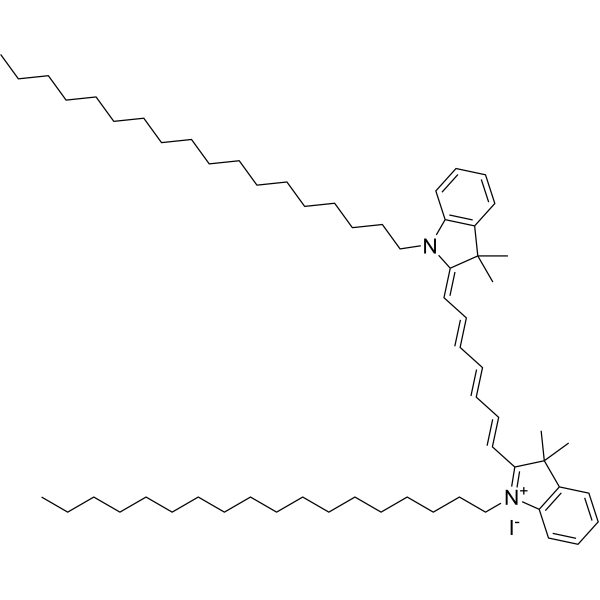
DiRMembrane Dye -
HY-D0969
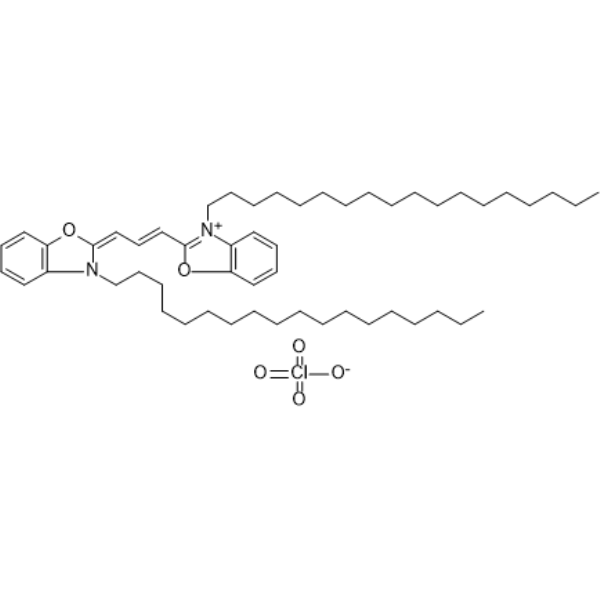
DiOFluorescent Probe -
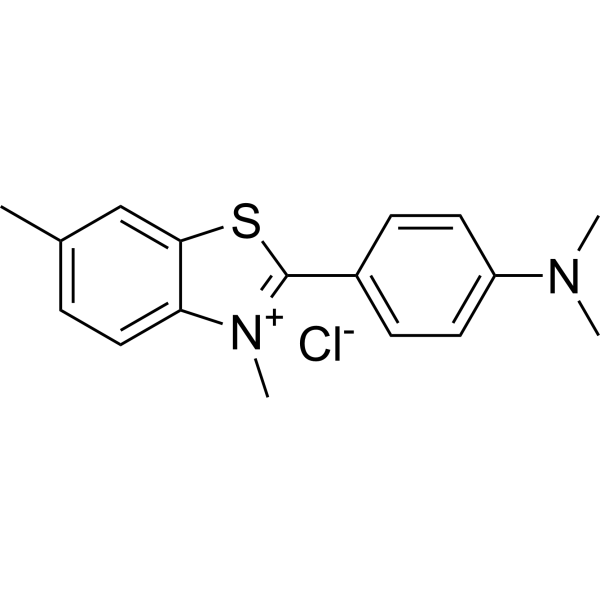
HY-D0218
Thioflavin Tβ-amyloid Dye -
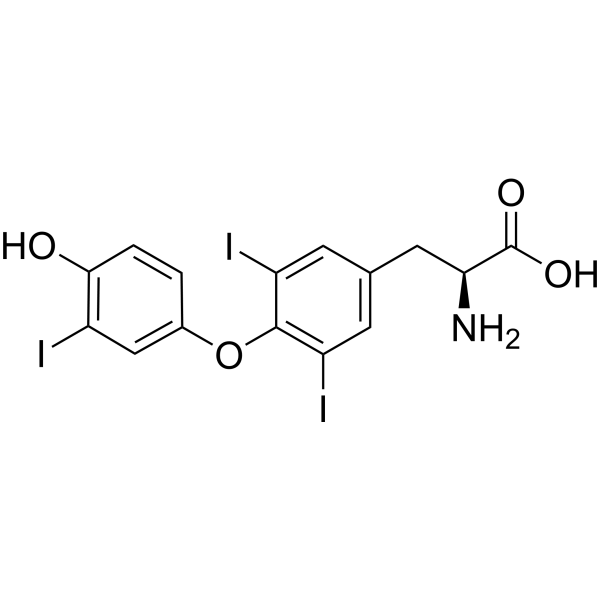
HY-A0070A
LiothyronineTIGIT/PVR Blocker -
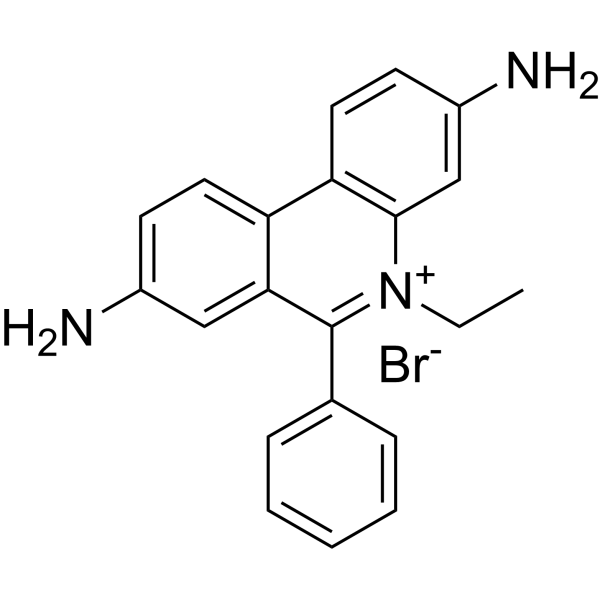
HY-D0021
EthD bromideFluorescent Tag


Biological Activity
Description
Solvent and concentration: DMSO: 5 mM
In Vitro
Guide (The following is our recommended solution. This solution is merely a guideline and should be modified according to your specific needs.)
1. Preparation solution: Dilute the reserve solution to a suitable buffer such as serum-free medium, HBSS, or PBS to prepare a working solution of 1 to 5 μM.
2. Suspension cells
a. Centrifuge at 1000g for 3-5 minutes at 4°C, discard the supernatant, wash twice with PBS, each time for 5 minutes, and the cell density is 1×10⁶/mL.
b. Add 1 mL of DiI working solution, incubate at room temperature for 5-30 minutes.
C. Centrifuge at 4°C, 400g for 3-4 minutes, discard the supernatant.
d. Wash twice with PBS, each time for 5 minutes.
e. Resuspend the cells in serum-free cell culture medium or PBS, and observe with a fluorescence microscope or flow cytometer.
3. Adherent cells
a. Cultivate adherent cells on a sterile cover glass.
b. Remove the cover glass from the culture medium and aspirate the excess medium.
c. Add 100 μL of the working solution, gently shake to fully cover the cells, incubate at room temperature for 5-30 minutes.
d. Wash twice with the culture medium, each time for 5 minutes. Observe through a fluorescence microscope or flow cytometer.
MedChemExpress (MCE) has not independently confirmed the accuracy of these methods. They are for reference only.
In Vivo
MedChemExpress (MCE) has not independently confirmed the accuracy of these methods. They are for reference only.


Chemical Information
-
CAS No. 41085-99-8
-
Appearance Liquid
-
Molecular Weight 933.89
-
Formula C59H97ClN2O4
-
Color Purple to purplish red
-
SMILES
CCCCCCCCCCCCCCCCCC[N+]1=C(/C=C/C=C2N(CCCCCCCCCCCCCCCCCC)C3=C(C=CC=C3)C/2(C)C)C(C)(C)C4=C1C=CC=C4.O=Cl(=O)([O-])=O
-
Shipping
Room temperature in continental US; may vary elsewhere.
-
Storage
Please store the product under the recommended conditions in the Certificate of Analysis.


Purity & Documentation
-
Data Sheet (270 KB)
-
SDS (251 KB)
- English - EN (251 KB)
- Français - FR (251 KB)
- Deutsch - DE (251 KB)
- Norwegian - NO (251 KB)
- Español - ES (251 KB)
- Swedish - SV (251 KB)
- Italian - IT (251 KB)
- Korean - KR (251 KB)
- Portuguese - PT (251 KB)
-
Handling Instructions (2659 KB)
References
[1]. D P Kuffler, et al. Long-term survival and sprouting in culture by motoneurons isolated from the spinal cord of adult frogs. J Comp Neurol. 1990 Dec 22;302(4):729-38. [Content Brief]
[2]. Gan WB, et al. Multicolor "DiOlistic" labeling of the nervous system using lipophilic dye combinations. Neuron. 2000 Aug;27(2):219-25. [Content Brief]
[3]. D P Kuffler, et al. Long-term survival and sprouting in culture by motoneurons isolated from the spinal cord of adult frogs. J Comp Neurol. 1990 Dec 22;302(4):729-38. [Content Brief]

Calculators
Concentration (start) × Volume (start) = Concentration (final) × Volume (final)


DiI (solution) Related Classifications
HY-DY1012 Related Classifications
 Powered by Bioz