



Gypenoside A
Based on 1 publication(s) in Google Scholar
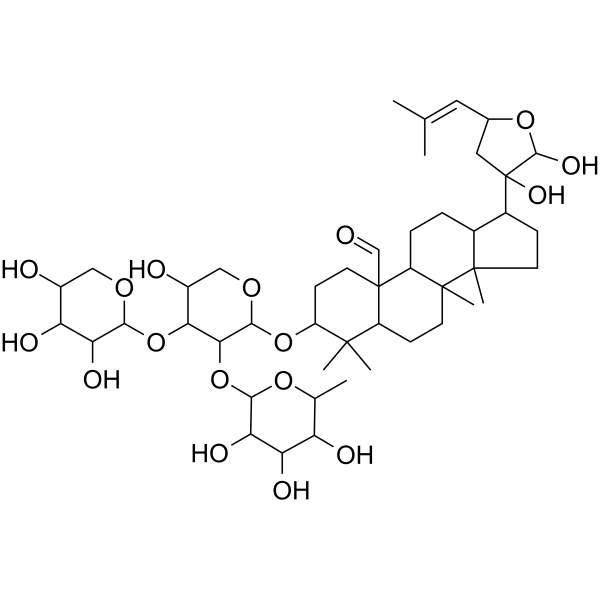
Gypenoside A is an orally active triterpenoid compound that can be isolated from Gynostemma pentaphyllum. Gypenoside A has anti-inflammatory and antioxidant activities. Gypenoside A also has a certain protective effect on cardiomyocytes and can inhibit apoptosis. Gypenoside A can be used in the research of cardiovascular diseases and inflammation-related diseases.
For research use only. We do not sell to patients.
- Purity : 99.79%
- CAS No.: 157752-01-7
- Formula: C46H74O17
- Molecular Weight:899.07
-
Storage:
4°C, protect from light
* In solvent : -80°C, 6 months; -20°C, 1 month (protect from light)

To place orders, for customer services and technical support, please contact: MedChemExpress USA
Tel: 609-228-6898 E-mail: [email protected] [email protected]


-
 Biological Activity
-
Chemical Information
-
Solvent & Solubility
- Protocols
- Purity & Documentation
- References
-
 Help & FAQs


Publications Citing Use of MedChemExpress (MCE) Gypenoside A
MoreAll AMPK Isoforms
More

Biological Activity
Description
|
FOXO1 |
IL-6 |
IL-13 |
IL-5 |
IL-4 |
In Vitro
Gypenoside A (0-10 μM; 24 h) can reduce the secretion of cytokines and chemokines and inhibit the production of ROS in TNF-α/IL-4-treated BEAS-2B cells[1].
Gypenoside A (10-20 μM; 24 h) can increase cell viability and inhibit apoptosis in OGD/R-treated H9c2 cells. The mechanism involves the activation of the AMPK/Foxo1 signaling pathway and a decrease in the expression level of miR-143-3p[2].
MedChemExpress (MCE) has not independently confirmed the accuracy of these methods. They are for reference only.
-
Cell Line:Oxygen-glucose deprivation/re-oxygenation (OGD/R) treated H9c2 cells
-
Concentration:10 and 20 μM
-
Incubation Time:24 h
-
Result:Restored the levels of p-AMPK and p-Foxo1.
In Vivo
Gypenoside A (100 mg/kg; gavage; single dose) can improve hemodynamic parameters, reduce apoptosis and infarct area in myocardial tissue in a rat myocardial ischemia/reperfusion injury model[2].
Pharmacokinetic Analysis in Rats[3]
| Route | Dose (mg/kg) | AUC(0-t) (ng/mL·h) | AUC(0-∞) (ng/mL·h) | t1/2z (h) | CLz/F (L/h/kg) | Vz/F (L/kg) | Cmax (ng/mL) |
| p.o. | 5 | 14.9 | 15.9 | 1.4 | 319.9 | 665.4 | 8.6 |
| i.v. | 1 | 332.9 | 334.3 | 0.8 | 3.0 | 3.3 | 621.9 |