



Poly(acrylic acid) (MW 1250000)
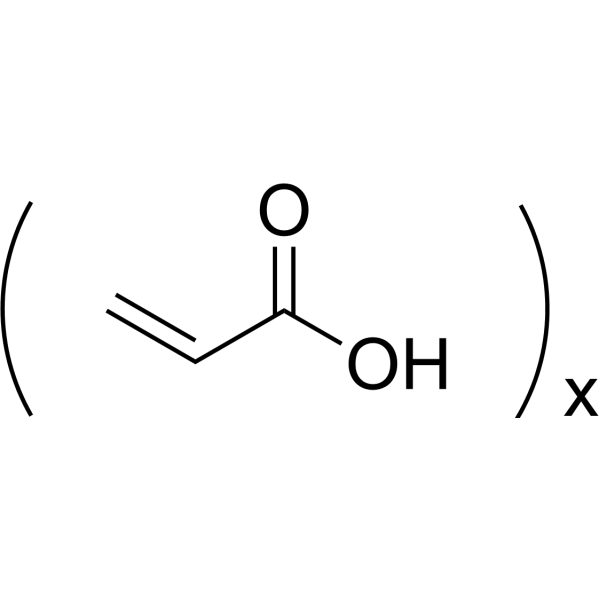
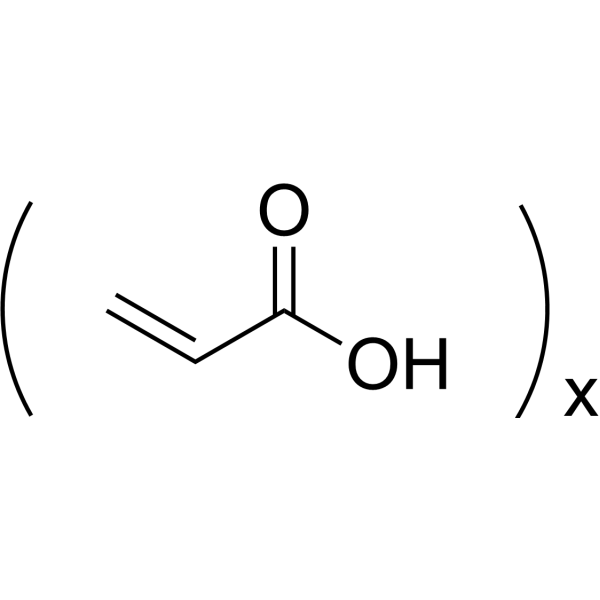
Poly(acrylic acid) (MW 1250000) is a polyacrylic acid with a molecular weight of 1250000 (an anionic polymer), which can be used as a corrosion inhibitor and surface stabilizer. Poly(acrylic acid) can be used to construct an anionic nanogel to encapsulate positively charged enzymes and to modify MoS2 nanoparticles to build a transdermal drug delivery system .
For research use only. We do not sell to patients.
- CAS No.: 9003-01-4
- Formula: (C3H4O2)x
- Molecular Weight:1250000(Average)
-
Storage:
Store at room temperature 3 years.
In solvent -80°C, 2 years , -20°C, 1 year


To place orders, for customer services and technical support, please contact: MedChemExpress USA
Tel: 609-228-6898 E-mail: [email protected] [email protected]


-
 Biological Activity
-
Chemical Information
-
Solvent & Solubility
- Purity & Documentation
- References
-
 Help & FAQs


-
HY-W243303A
Poly(acrylic acid) (MW 2000) -

HY-W243303M
Poly(acrylic acid) (MW 100000) (35% in water) -
HY-W243303E
Poly(acrylic acid) (MW 450000) -

HY-W250110E
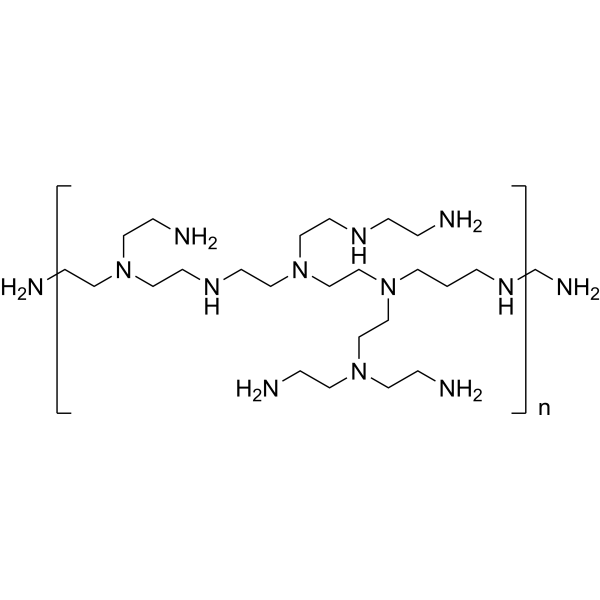
Polyethylenimine (branched) (MW 25000) -

HY-W243303B
Poly(acrylic acid) (MW 3000000) -

HY-W243303C
Poly(acrylic acid) (MW 4000000) -
HY-W250110
Polyethylenimine (branched) (30% in water) -

HY-W250110I
Polyethylenimine (branched) (MW 10000) -

HY-401383
Poly(acrylic acid) (MW 10000~60000) -

HY-W243303O
Poly(acrylic acid) (MW 1250000) (viscous liquid) -
HY-Y0850E
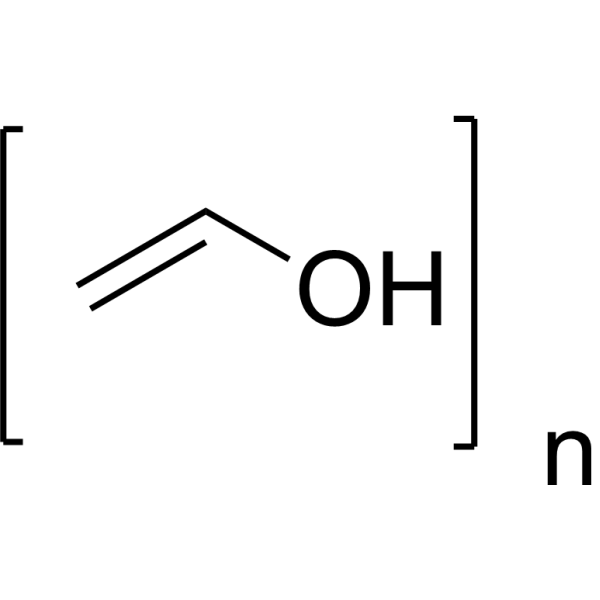
Polyvinyl alcohol (Mw 30000-70000, 87-90% hydrolyzed) -
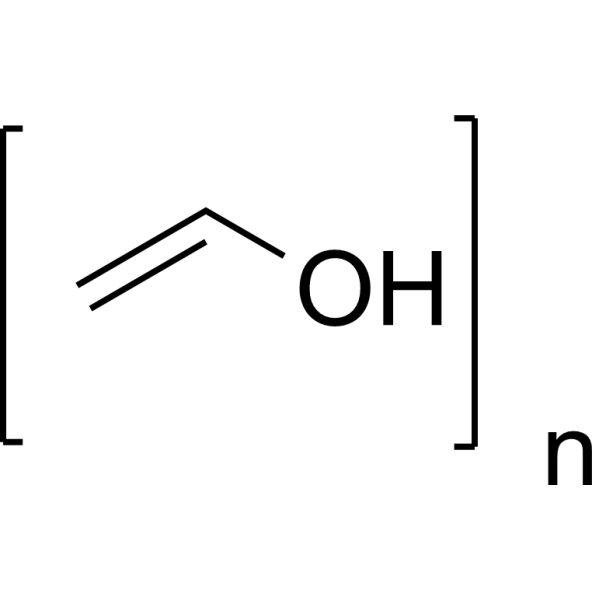
HY-Y0850
Polyvinyl alcohol (Mw 146000-186000, 99+% hydrolyzed)


Biological Activity
Description
In Vitro
Poly(acrylic acid) can be used to construct nanogels that selectively encapsulate positively charged cytochrome c and lysozyme with loading capacities of 100 μg/mg and 125 μg/mg, respectively, while exhibiting negligible adsorption toward negatively charged lipases[1].
Poly(acrylic acid) (Mv 1500000) can be used to modify MoS2 nanoparticles to enhance their colloidal stability, drug loading capacity, and serve as an interaction site between the drug and the nanocarrier[2].
Poly(acrylic acid) can chemically bond to the surfaces of both pristine and silane-modified nano-SiO2 particles, facilitating the preparation of microgels[3].
Poly(acrylic acid) derived nanocomposites have been used to form advanced hybrid materials for batteries, sensors, antibacterial applications[4].
MedChemExpress (MCE) has not independently confirmed the accuracy of these methods. They are for reference only.


Chemical Information
-
CAS No. 9003-01-4
-
Appearance Solid
-
Molecular Weight 1250000(Average)
-
Formula (C3H4O2)x
-
Color White to off-white
-
SMILES
O=C(C=C)O.[x]
-
Shipping
Room temperature in continental US; may vary elsewhere.
-
Storage
Store at room temperature 3 years
In solvent -80°C 2 years -20°C 1 year


Solvent & Solubility
In Vitro:
H2O : 33.33 mg/mL (ultrasonic and warming and heat to 60°C)


Purity & Documentation
-
Data Sheet (271 KB)
-
SDS (252 KB)
- English - EN (252 KB)
- Français - FR (252 KB)
- Deutsch - DE (252 KB)
- Norwegian - NO (252 KB)
- Español - ES (252 KB)
- Swedish - SV (252 KB)
- Italian - IT (252 KB)
- Korean - KR (252 KB)
- Portuguese - PT (252 KB)
-
Handling Instructions (2659 KB)
References

Calculators
Concentration (start) × Volume (start) = Concentration (final) × Volume (final)


Poly(acrylic acid) (MW 1250000) Related Classifications
HY-W243303D Related Classifications
 Powered by Bioz