317 Results for "

ternary complex

" in MedChemExpress (MCE) Product Catalog:
Products (317)

317 Results for "ternary complex" in MCE Product Catalog:

Cat. No.: HY-181607
Target:  

YAP

Research Areas:  

Others

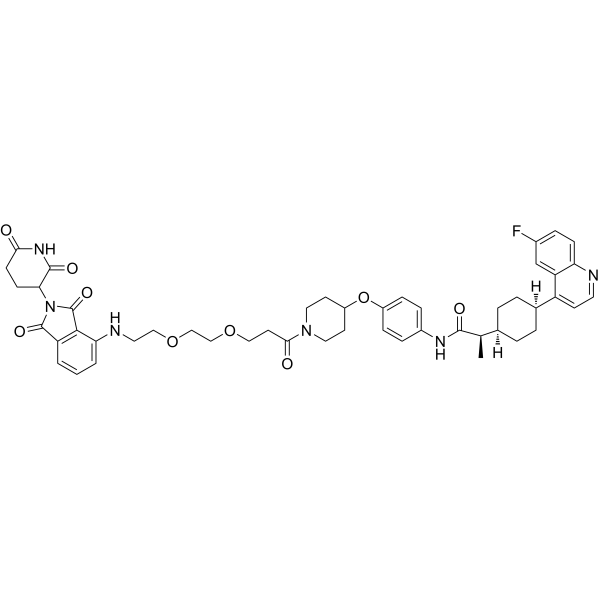
TEAD ligand-Linker Conjugate 3 (the blue structure + black structure of A536 in the literature) is a conjugate of a TEAD1-targeting ligand and a linker. TEAD ligand-Linker Conjugate 3 can be coupled with an IAP ligand (HY-181531) to form an IAP-recruiting bifunctional protein degrader (IPD) (HY-181594), also known as a SNIPER degrader. This TEAD SNIPER simultaneously binds to the TEAD1 palmitoylation pocket and the BIR3 domain of cIAP1 to form a ternary complex, efficiently inducing the ubiquitination and degradation of both TEAD1 and cIAP1 (DC50=110 nM, Dmax=51%; IC50=122 nM for cIAP1). TEAD ligand-Linker Conjugate 3 and its synthesized SENIPER molecule can be utilized in research on Hippo pathway dysregulation-related diseases, such as NF2-mutant tumors .
loading...
    loading...
Cat. No.: HY-184915
CAS No.: 3065495-08-8
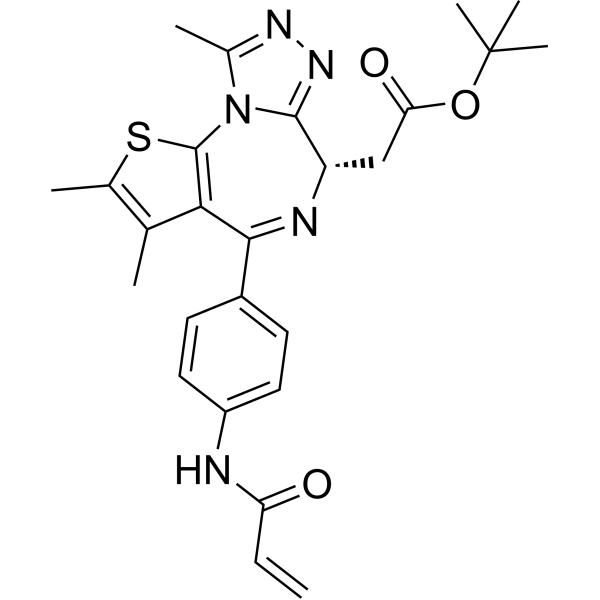
APH003 is an orally active IRAK4 PROTAC degrader with a DC50 of 0.74 nM in human peripheral blood mononuclear cells (hPBMCs). APH003 recruits IRAK4 to CRBN to form a ternary complex, mediates the ubiquitination and degradation of IRAK4 via the ubiquitin-proteasome pathway, and inhibits the kinase activity of IRAK4. APH003 inhibits LPS- or IL-1β/LPS-induced phosphorylation of ERK, JNK and NF-κB. APH003 inhibits the secretion of TNF-α, IL-6, IL-8 and IL-13 by stimulated hPBMCs. APH003 exhibits anti-inflammatory activity in rat TNBS-induced intestinal inflammation models and mouse IL-33-induced skin inflammation models. APH003 can be used in research related to inflammatory bowel disease and skin inflammation .
loading...
    loading...
Cat. No.: HY-W1128879
CAS No.: 2271314-01-1
Synonyms: SKPer1
Research Areas:  

Cancer

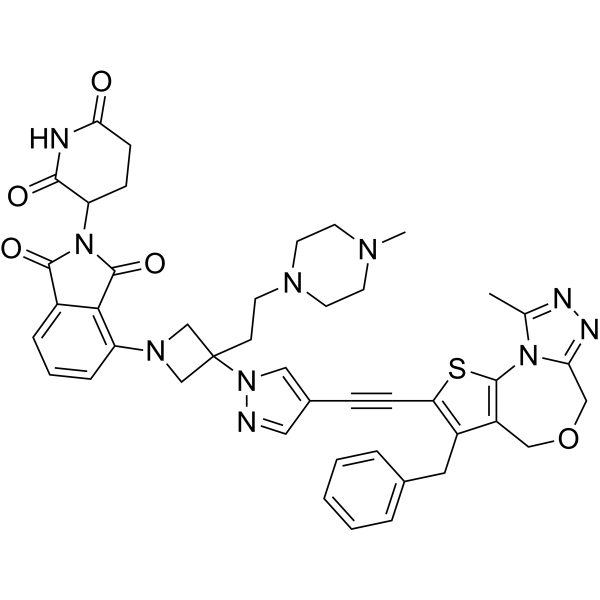
XMU-MP-8 (SKPer1) is a potent molecular glue degrader that targets the oncoprotein SKP2. XMU-MP-8 simultaneously binds to the F-box domain of SKP2 (Kd ≈ 36 μM) and the N-terminal TPR domain of the E3 ligase STUB1 (Kd ≈ 2.5 μM), forming a stable SKP2-SKPer1-STUB1 ternary complex (Kd ≈ 8.9 nM) that induces SKP2 ubiquitination and proteasomal degradation. XMU-MP-8 selectively eliminates SKP2-expressing cancer cells. XMU-MP-8 exhibits substantial tumour suppression with good safety profiles in vivo. XMU-MP-8 can be used for cancer research, such as non-small cell lung adenocarcinoma (NSCLC) and prostatic adenocarcinoma .
loading...
    loading...
Cat. No.: HY-L137
124 compounds

Targeted protein degradation(TPD) is a novel and promising approach to new drug discovery and development. It shows great potential for treating diseases with “undruggable” pathogenic protein targets and for overcoming drug resistance. Molecular glues and PROTACs are both targeted protein degraders that have attracted the most attention.

Molecular glues are small molecular degraders that mainly induce novel interaction between an E3 ligase and a target protein to form a ternary complex, leading to protein ubiquitination and subsequent proteasome degradation. Compared with PROTACs, molecular glues generally possess more favorable drug-like properties, such as lower MW, higher cell permeability, and better oral absorption. Molecular glues are emerging as a promising new therapeutic strategy.

MCE supplies a unique collection of 124 molecular glues which target various proteins. MCE Molecular Glue Compound Library is a useful tool to conduct scientific research and disease mechanism study.

Cat. No.: HY-151886
CAS No.: 2759420-43-2
NU223612 is a cereblon (CRBN)-recruiting IDO1 PROTAC degrader, with a DC50 value of 0.329-0.5438 μM against human IDO1, and it is capable of penetrating the blood-brain barrier. NU223612 directly binds to IDO1, mediates the degradation of both wild-type and catalytically inactive mutant IDO1 proteins, and does not degrade TDO2. NU223612 inhibits IDO1-mediated enzymatic activity. NU223612 directly binds to CRBN and promotes the formation of a cooperative ternary complex with IDO1. NU223612 induces ubiquitin-dependent proteasomal degradation of the IDO1 protein. NU223612 suppresses IDO1-mediated non-enzymatic phosphorylation of NF-κB p65 and the DNA-binding activity of downstream transcription factors. NU223612 can be used in studies of glioblastoma (malignant glioma) .
loading...
    loading...
Cat. No.: HY-156827
CAS No.: 3079093-16-3
Purity:  98.08%
MMH1 is a novel BRD4 molecular glue degrader. MMH1 functions by recruiting the CUL4 DCAF16 ligase to the second bromodomain of BRD4 (BRD4 BD2). MMH1 binds to the JQ1-binding site of BRD4 BD2, acts as a template to covalently modify Cys58 of DCAF16, stabilizes the BRD4-DCAF16 ternary complex, and thereby promotes BRD4 degradation via the CRL4DCAF16 ubiquitin ligase pathway. Using BRD4 BD2 as a structural template, MMH1 covalently modifies Cys87 of GAK and induces the GAK-BRD4 BD2 interaction. Through its covalent mechanism, MMH1 exhibits sustained BRD4 degradation activity, and shows selective degradation activity for BRD4 BD2 over BRD4 BD1 .
loading...
    loading...
Cat. No.: HY-159728
PROTAC PRMT3 degrader 1 is a selective PRMT3 PROTAC degrader with a DC50 of 2.566 μM. PROTAC PRMT3 degrader 1 forms a ternary complex with MDM2 E3 ubiquitin ligase to induce proteasomal and neddylation-dependent degradation of PRMT3. PROTAC PRMT3 degrader 1 activates intrinsic apoptosis, endoplasmic reticulum stress signaling pathways. PROTAC PRMT3 degrader 1 downregulates E2F, MYC, oxidative phosphorylation pathways. PROTAC PRMT3 degrader 1 reduces cellular asymmetric dimethylarginine (ADMA) levels. PROTAC PRMT3 degrader 1 inhibits acute leukemia cell growth. PROTAC PRMT3 degrader 1 acts with glycolysis inhibitor 2-DG to reduce ATP production, induce intrinsic apoptosis, drive synergistic antiproliferative effects. PROTAC PRMT3 degrader 1 can be used for the research of acute leukemia .
loading...
    loading...
Cat. No.: HY-181080
CAS No.: 3110679-68-7
Research Areas:  

Cancer

TOP1/TDP1-IN-1 is a DNA topoisomerase 1B (TOP1) and tyrosyl-DNA phosphodiesterase 1 (TDP1) inhibitor with a TDP1 IC50 of 17.8 μM. TOP1/TDP1-IN-1directly suppresses TOP1 catalytic activity without forming a DNA-TOP1 ternary complex, inhibits TDP1-mediated repair of TOP1-induced DNA damage, and exhibits low acute toxicity. TOP1/TDP1-IN-1 disrupts DNA repair pathways, induces apoptosis, suppresses clonogenic growth, and elicits antiproliferative effects in cancer cells. TOP1/TDP1-IN-1 can be used for the research of non-small cell lung cancer, cervical cancer, colon cancer .
loading...
    loading...
Cat. No.: HY-187534
Research Areas:  

Cancer

VEGFR2 AUTOTAC-1 is a VEGFR2 AUTOTAC degrader. VEGFR2 AUTOTAC-1 recruits p62, activates the autophagy-lysosome pathway through the p62-LC3 axis cascade, forms a ternary complex with VEGFR2 and p62, and drives UPS-independent post-translational degradation of VEGFR2. VEGFR2 AUTOTAC-1 induces G1 phase arrest and endogenous apoptosis in cells via the mitochondrial and caspase apoptotic pathways, thereby inhibiting cancer cell proliferation, migration and malignant phenotypes; meanwhile, it inhibits endothelial cell tube formation, migration and endothelial-mesenchymal transition by regulating E-cadherin and MMP2. VEGFR2 AUTOTAC-1 is applicable to research related to triple-negative breast cancer.(Pink: VEGFR2 target protein ligand (HY-187558); Blue: p62 ligand (HY-W014292); Black: Linker)
loading...
    loading...
Cat. No.: HY-184158
HATC is a HIF-1α AUTAC degrader. HATC links HIF-1α to LC3 to form a ternary complex that undergoes degradation via the autophagy-lysosome fusion pathway. HATC induces dose-dependent HIF-1α degradation in multiple cell types. HATC reduces visceral fat accumulation, hepatic lipid deposition, senescent cell aggregation, and bone loss; alleviates age-related intervertebral disc degeneration, liver dysfunction, kyphosis, and alveolar dilation; decreases circulating lactic acid levels; improves physical performance; and reverses age-related changes in granulocyte proportions. HATC extends median and maximum lifespan, reduces transcriptomic age, and causes no obvious persistent toxicity. HATC can be used in the research of age-related diseases (pink: LC3 ligand (HY-50759); blue: HIF-1α ligand (HY-P10426); Linker: (HY-W008264)) .
loading...
    loading...
Cat. No.: HY-169134
Research Areas:  

Cancer

PROTAC 20S proteasome subunit β5 degrader 1 is a PROTAC degrader targeting the 20S proteasome subunit β5, with a DC50 of 0.11 μM. PROTAC 20S proteasome subunit β5 degrader 1 forms a ternary complex with the CRBN E3 ligase, induces ubiquitination of the 20S proteasome subunit β5, and promotes its degradation via the proteasomal pathway. PROTAC 20S proteasome subunit β5 degrader 1 disrupts cell cycle progression, promotes apoptosis, and inhibits cell proliferation and migration. PROTAC 20S proteasome subunit β5 degrader 1 exhibits significant proliferation-inhibitory activity against various tumor cells, suppresses tumor growth in in vivo xenograft models, and overcomes the resistance of multiple myeloma cells to Bortezomib (HY-10227). PROTAC 20S proteasome subunit β5 degrader 1 can be used in studies related to pharyngeal cancer and drug-resistant multiple myeloma .
loading...
    loading...
Cat. No.: HY-187396
Research Areas:  

Cancer

FD1-C10-CB is a PROTAC degrader targeting the BRD4 protein. FD1-C10-CB binds to FEM1B to form a ternary complex with BRD4, achieving FEM1B-dependent degradation of BRD4 via the ubiquitin-proteasome system. FD1-C10-CB binds to CD36 to mediate endocytic cellular delivery, thereby enhancing its degrading activity. FD1-C10-CB mediates protein degradation through the Cullin-dependent ubiquitin-proteasome pathway, rather than the lysosomal autophagy pathway. FD1-C10-CB induces a decrease in BRD4 protein levels, and its degrading activity is competitively inhibited by FL47 or JQ1. FD1-C10-CB can be used in the research of breast cancer and osteosarcoma .
loading...
    loading...
Cat. No.: HY-149878
CAS No.: 3037514-38-5
Purity:  98.81%
Research Areas:  

Cancer

BD-9136 is a selective BRD4 PROTAC degrader with a DC50 of 1.2 nM, and exhibits a selectivity of ≥1000-fold over BRD2 and BRD3. BD-9136 preferentially forms a ternary complex with the BD1 domain of BRD4, and downregulates the expression of B7-H4 by disrupting the PR-P300-BRD4 axis. BD-9136 depletes BRD4 protein in tumor tissues, inhibits tumor growth, reduces B7-H4 protein expression, increases CD8+ T cell infiltration, and enhances tumor sensitivity to anti-PD-L1. Degradation of BRD4 by BD-9136 rescues the erythroid differentiation block induced by LSD1 inhibition, and transient administration restores erythroid output while retaining HbF induction. BD-9136 causes no adverse effects in mice at effective doses. BD-9136 can be used in studies related to acute myeloid leukemia, acute lymphoblastic leukemia and breast cancer .
loading...
    loading...
Cat. No.: HY-179560
Research Areas:  

Cancer

PMV6-PEG4-BI2536 is an RIPTAC-like bifunctional molecule that promotes the formation of the p53 Y220C-PLK1 ternary complex (EC50 = 1.4 μM). PMV6-PEG4-BI2536 causes PLK1 mislocalization and inhibits PLK1 activity, inducing G2/M phase arrest and apoptosis in p53 Y220C-mutant cells, while sparing cells with wild-type TP53. PMV6-PEG4-BI2536 can be used in research on uterine, gastric, pancreatic, prostate, and breast cancers harboring the p53 Y220C mutation. PMV6-PEG4-BI2536 is composed of PMV6 (a p53 Y220C mutant-binding ligand), PEG4 (a linker), and BI2536 (HY-159493) (a PLK inhibitor) .
loading...
    loading...
Cat. No.: HY-L936V0
11412 compounds

Molecular Glue Virtual Library is constructed using generative AI technology, integrating the structural features, activity data of known molecular glues, and interaction information of ternary complexes (target protein-E3-molecular glue). Endowed with structural novelty, drug-likeness, diversity and synthesizability, it is applicable to molecular glue-based AI drug screening and large-scale virtual screening.

MCE builds this library based on high-quality molecular building blocks by virtue of robust computing power, coupled with rigorous reaction rules and optimized compound generation strategies. To ensure library quality, molecules with high synthetic difficulty, poor drug-likeness, PAINS and other undesirable molecules are excluded first. Subsequently, scaffold-based compound analysis is performed to screen drug-like diverse molecules for synthesizability evaluation; those with excessively high synthetic difficulty are removed, ultimately forming a large-scale molecular glue virtual library with structural diversity, synthesizability and drug-likeness.

Compounds in the library can be synthesized in only 1-2 chemical reaction steps. With MCE’s experienced chemical synthesis team, custom synthesis of different scales from milligram to kilogram can be easily achieved to meet diverse customer needs.

Cat. No.: HY-170524
CAS No.: 3052313-73-9
Research Areas:  

Infection

TDI-015051 is a highly selective, orally active antiviral agent that targets the coronavirus NSP14 guanine-N7 methyltransferase. TDI-015051 binds to substrates in a non-competitive manner and forms a stable ternary complex, precisely blocking the capping and methylation processes of viral mRNA. TDI-015051 potently inhibits a variety of coronaviruses (including SARS-CoV-2 and MERS). By impairing viral replication and translation and inducing a moderate type I interferon-mediated immune response, it significantly reduces pulmonary viral load and exhibits a synergistic effect with Nirmatrelvir (HY-138687). In addition, TDI-015051 does not inhibit non-coronavirus methyltransferases, and the drug-resistant mutations it induces impair viral fitness, demonstrating excellent antiviral properties and safety. TDI-015051 can be used for research on COVID-19 and the replication mechanism of coronaviruses .The IC50 values of TDI-015051 against SARS-CoV-2, α-hCoV-NL63, α-hCoV-229E, β-hCoV-MERS are 0.15 nM, 1.7 nM, 2.6 nM and 3.6 nM, respectively, and the Ka value against SARS-CoV-2 is 0.061 nM .
loading...
    loading...
Cat. No.: HY-170820
CAS No.: 3006788-11-7
XYD049 is a CRBN-based molecular glue degrader targeting GSPT1, with a DC50 of 19 nM. XYD049 mediates the formation of a ternary complex between CRBN and GSPT1, thereby triggering CRBN- and proteasome-dependent degradation of GSPT1. By degrading GSPT1, XYD049 downregulates castration-resistant prostate cancer (CRPC)-related oncogenes, including BCL2, CDK2, E2F3, EGFR, HSP90B1, TMPRSS2, AR, AR-V7, PSA and c-Myc. XYD049 inhibits cancer cell growth and suppresses tumor growth in mice. XYD049 can be used for research on castration-resistant prostate cancer. XYD049 consists of a linker (black part) NH2-C5-NH-Boc (HY-W004710), a CRBN-based E3 ligase ligand (blue part) Thalidomide 4-fluoride (HY-41547), and a target protein ligand (red part) GSPT1 ligand-1 (HY-170821), among which the E3 ligase ligand plus linker forms the conjugate E3 Ligase Ligand-linker Conjugate 158 (HY-170822) .
loading...
    loading...

