44 Results for "

TFP

" in MedChemExpress (MCE) Product Catalog:
Products (44)

44 Results for "TFP" in MCE Product Catalog:

Cat. No.: HY-140905
Target:  

PROTAC Linkers

Research Areas:  

Cancer

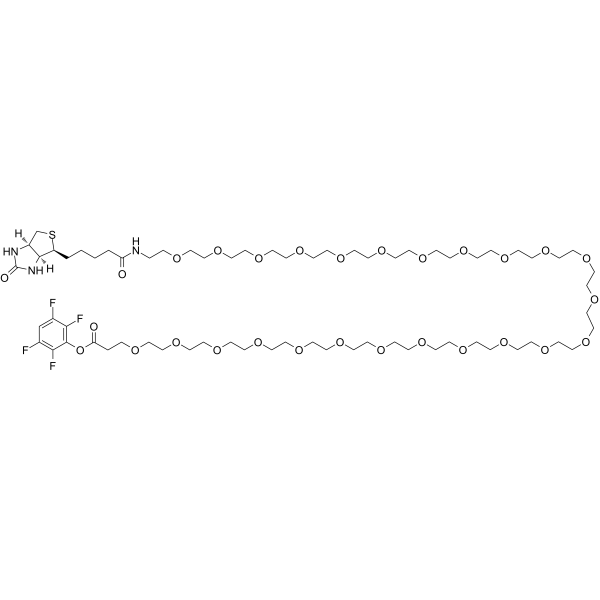
Biotin-PEG24-TFP ester is a PEG-based PROTAC linker that can be used in the synthesis of PROTACs .
loading...
    loading...
Cat. No.: HY-140959
CAS No.: 2413909-84-7
Target:  

Liposome

Research Areas:  

Cancer

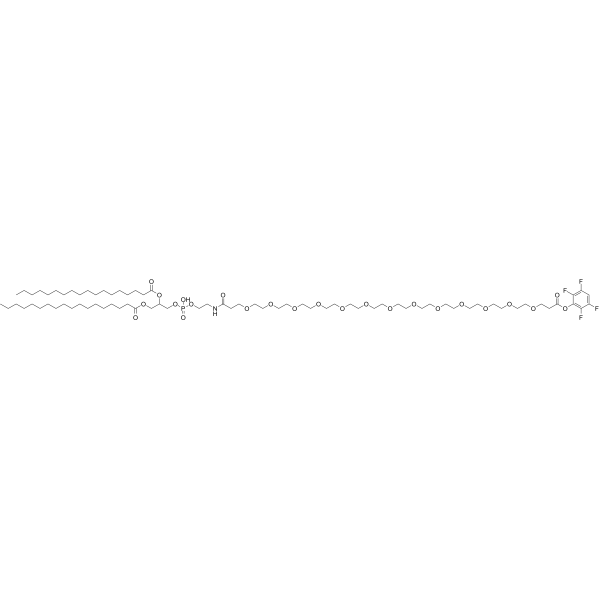
DSPE-PEG13-TFP ester is a PEG-based PROTAC linker that can be used in the synthesis of PROTACs .
loading...
    loading...
Cat. No.: HY-141174
Target:  

PROTAC Linkers

Research Areas:  

Cancer

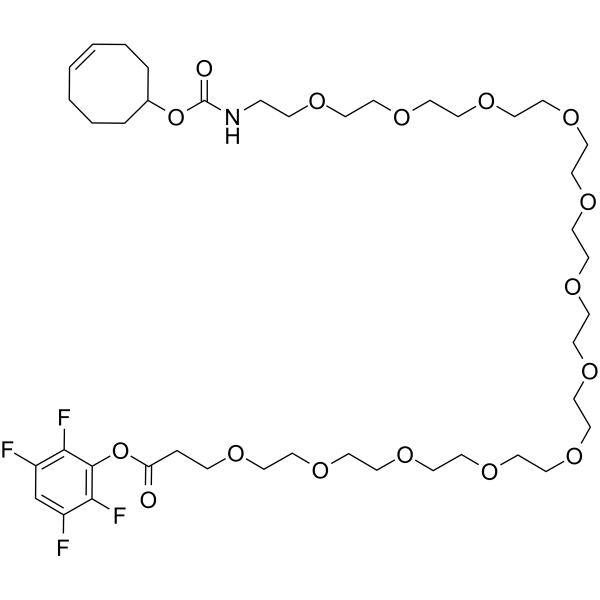
TCO-PEG12-TFP ester is a PEG-based PROTAC linker that can be used in the synthesis of PROTACs .
loading...
    loading...
Cat. No.: HY-141258
CAS No.: 2567199-52-2
Target:  

PROTAC Linkers

Research Areas:  

Cancer

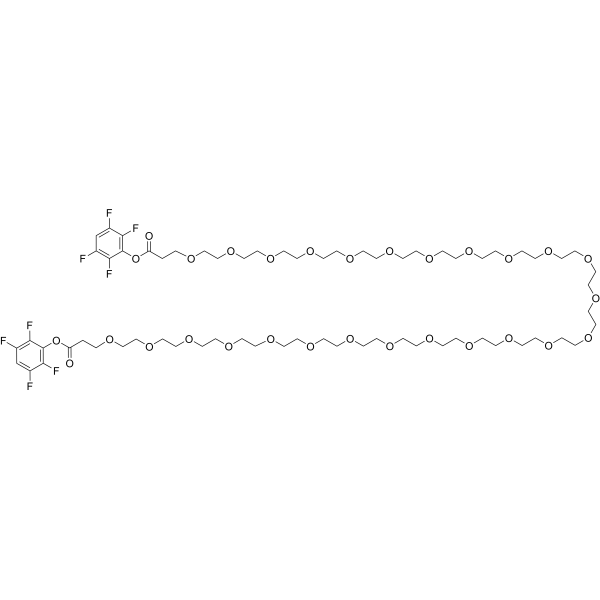
Bis-PEG25-TFP ester is a PEG-based PROTAC linker that can be used in the synthesis of PROTACs .
loading...
    loading...
Cat. No.: HY-140979
CAS No.: 1924596-31-5
Target:  

PROTAC Linkers

Research Areas:  

Cancer

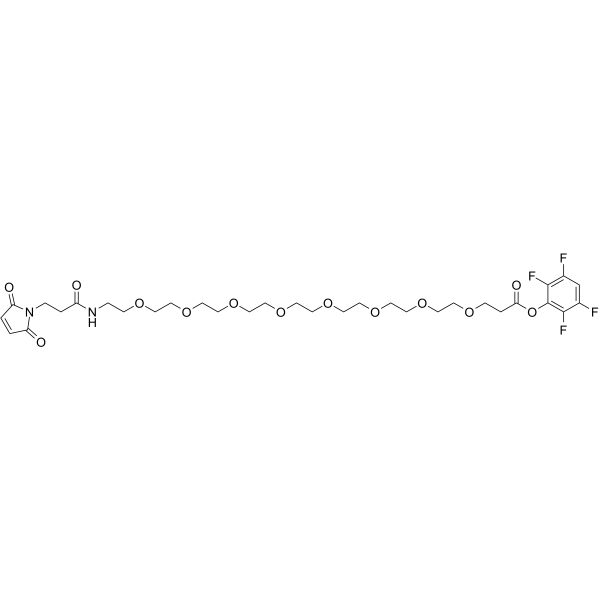
Mal-amido-PEG8-TFP ester is a PEG-based PROTAC linker that can be used in the synthesis of PROTACs .
loading...
    loading...
Cat. No.: HY-140624
CAS No.: 3031166-52-3
Target:  

PROTAC Linkers

Research Areas:  

Cancer

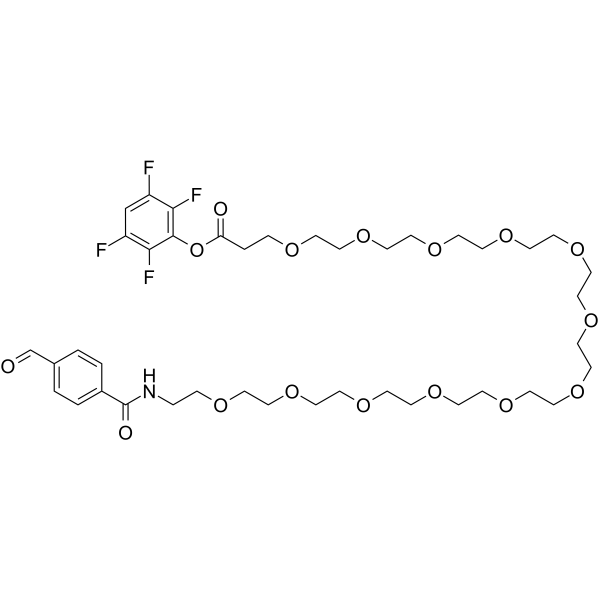
Ald-Ph-PEG12-TFP ester is a PEG-based PROTAC linker that can be used in the synthesis of PROTACs .
loading...
    loading...
Cat. No.: HY-140625
Target:  

PROTAC Linkers

Research Areas:  

Cancer

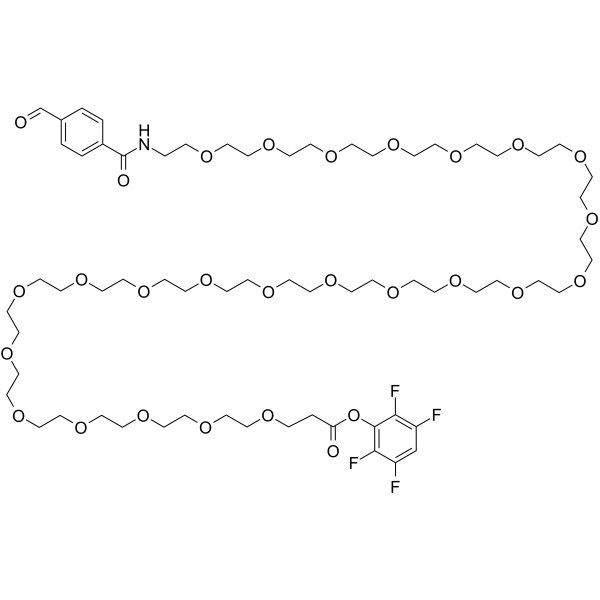
Ald-Ph-PEG24-TFP ester is a PEG-based PROTAC linker that can be used in the synthesis of PROTACs .
loading...
    loading...
Cat. No.: HY-140980
Target:  

PROTAC Linkers

Research Areas:  

Cancer

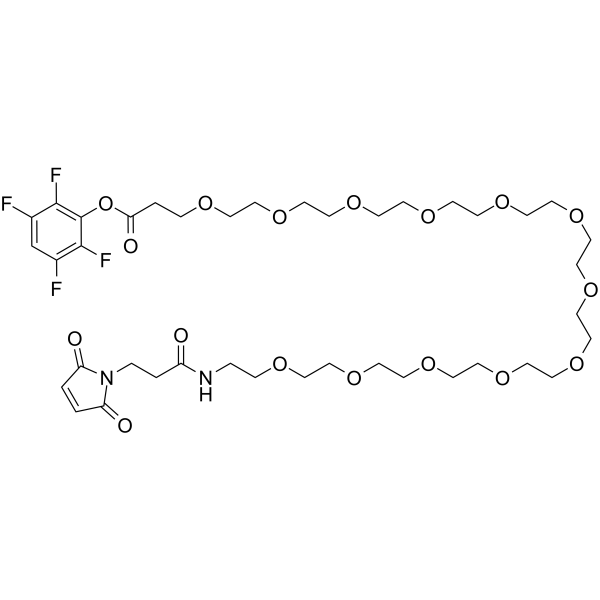
Mal-amido-PEG12-TFP ester is a PEG-based PROTAC linker that can be used in the synthesis of PROTACs .
loading...
    loading...
Cat. No.: HY-140981
CAS No.: 2384191-62-0
Target:  

PROTAC Linkers

Research Areas:  

Cancer

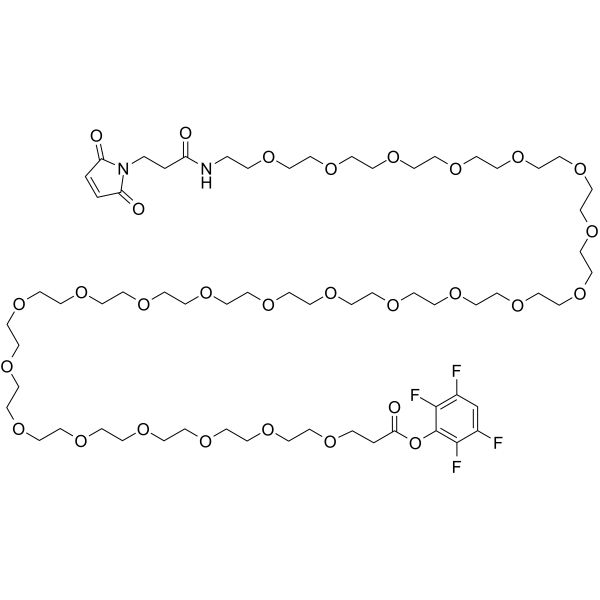
Mal-amido-PEG24-TFP ester is a PEG-based PROTAC linker that can be used in the synthesis of PROTACs .
loading...
    loading...
Cat. No.: HY-134561
CAS No.: 651055-83-3
Synonyms: 6A-8TFP
Target:  

Prion Protein

Research Areas:  

Infection

6-Amino-8-trifluoromethylphenanthridine (6A-8tFP) is an antiprion agent and a derivative of 6-aminophenanthridine (HY-135189). It inhibits protein folding activity of the ribosome (PFAR) when used at a concentration of 150 μM.2 6A-8tFP directly competes with protein substrates for the ribosomal active site.
loading...
    loading...
Cat. No.: HY-140998
CAS No.: 2408741-87-5
Target:  

PROTAC Linkers

Research Areas:  

Cancer

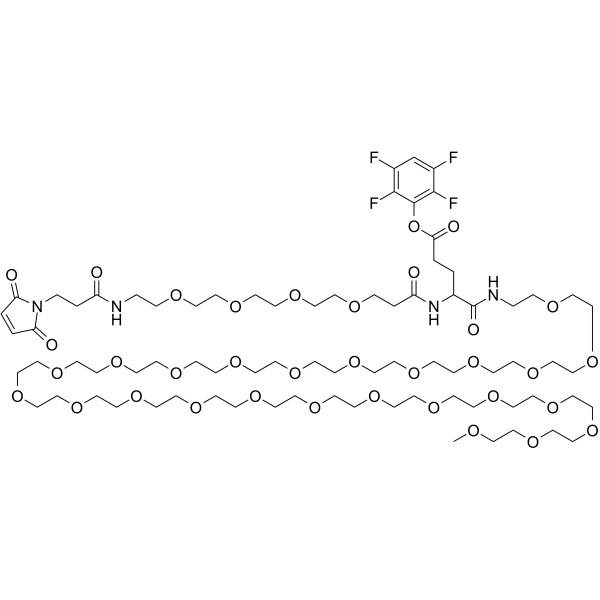
Mal-PEG4-Glu(TFP ester)-NH-m-PEG24 is a PEG-based PROTAC linker that can be used in the synthesis of PROTACs .
loading...
    loading...
Cat. No.: HY-W800683
CAS No.: 220446-74-2
Research Areas:  

Others

4-Azide-TFP-Amide-SS-Sulfo-NHS consists of an aryl azide, a cleavable disulfide bond, and an NHS ester. The aryl azide can be photo-activated with UV light (250 to 350 nm) for conjugation with biomolecules. Fluoro helps to stabilize the free radical intermediate. The NHS ester reacts with amines. The disulfide bond can be cleaved by reducing agents.
loading...
    loading...
Cat. No.: HY-RS15043
Research Areas:  

Others

TRIM39 Human Pre-designed siRNA Set A contains three designed siRNAs for TRIM39 gene (Human), as well as a negative control, a positive control, and a FAM-labeled negative control.

loading...
    loading...
Cat. No.: HY-167791
CAS No.: 2389064-50-8
DOTA-PEG4-TFP is a conjugate of the chelating agent DOTA (HY-W053583) and a linker. DOTA-PEG4-TFP can be used in the synthesis of radionuclide compounds.
loading...
    loading...
Cat. No.: HY-W190933
CAS No.: 1818294-37-9
Research Areas:  

Others

Bis-PEG6-TFP ester is a PEG linker with two terminal TFP ester moieties. TFP esters are amine reactive and are also more stable than NHS esters against hydrolysis. The PEG chain increases the water solubility properties of compounds in aqueous media. The water solubility properties of PEG chains are enhanced as the PEG chain grows.
loading...
    loading...
Cat. No.: HY-D2747
CAS No.: 1638784-10-7
BP Fluor 405 acid is a water-soluble, blue-fluorescent dye that is often used in multi-color applications, including flow cytometry and super-resolution microscopy using STORM. Its excitation is ideally suited for the 407 nm spectral line of the krypton laser or the 408 nm violet laser diode. BP Fluor 405 conjugates are pH-insensitive from pH 4 to pH 10. The carboxylic acid of BP Fluor 405 is a reagent of choice for the preparation of custom activated esters that often are not commercially available. Examples of such activated esters include sulfo-NHS, TFP (2,3,5,6-Tetrafluorophenol), and STP (4-Sulfo-2,3,5,6-Tetrafluorophenol, Sodium Salt). Another common application for the non-activated carboxylic acid is peptide modification during solid phase synthesis, which usually requires in-situ activation with peptide coupling regents, e.g. HATU. BP Fluor 405 acid is also often used for control experiments, and for calibration.
loading...
    loading...
Cat. No.: HY-167987
CAS No.: 2716184-56-2
Research Areas:  

Cancer

Guraxetan-NH-PEG3-TFP ester (Fig.3) is a chelating agent and linker conjugate that can be used in the synthesis of radiopharmaceuticals .
loading...
    loading...
Cat. No.: HY-167789
CAS No.: 2389064-47-3
Research Areas:  

Cancer

DOTA(tBu3)-PEG4-TFP is a chelating agent and linker conjugate that can be used in the synthesis of radiopharmaceuticals .
loading...
    loading...
Cat. No.: HY-W800632
CAS No.: 191163-45-8
Research Areas:  

Others

4-Azide-TFP-Amide-SS-propionic acid contains an aryl azide, a cleavable disulfide bond, and a carboxylic acid. The aryl azide can be photo-activated with UV light (250 to 350 nm) for conjugation with biomolecules. Fluoro helps to stabilize the free radical intermediate. The carboxylic acid can be reacted with amines in the presence of an activator to form an amide bond. The disulfide bond can be cleaved via reducing agents.
loading...
    loading...
Cat. No.: HY-W800635
CAS No.: 2566404-74-6
Research Areas:  

Others

4-Azide-TFP-Amide-PEG4-acid contains an aryl azide and a carboxylic acid with a PEG spacer to increase aqueous solubility and decrease steric hinderance during ligation. The aryl azide can be photo-activated with UV light (250 to 350 nm) for conjugation with biomolecules. Fluoro helps to stabilize the free radical intermediate. The carboxylic acid can be reacted with amines in the presence of an activator to form an amide bond.
loading...
    loading...

