
51 Results for "

mannitol

" in MedChemExpress (MCE) Product Catalog:
Products (51)

51 Results for "mannitol" in MCE Product Catalog:

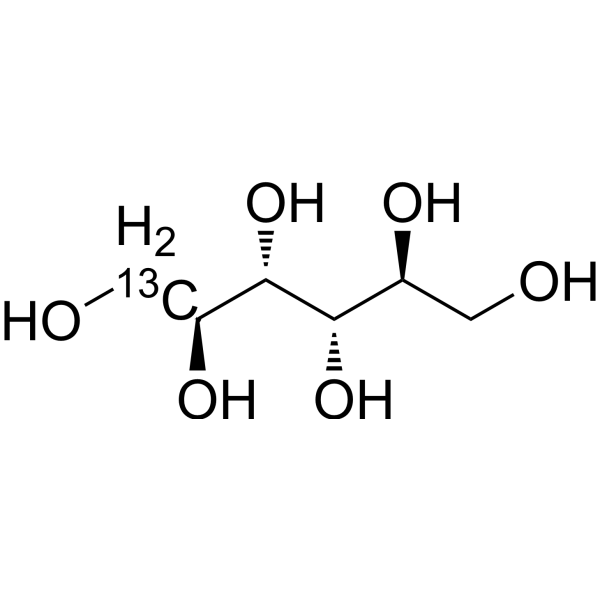
Cat. No.: HY-139312S
L-Mannitol-1-13C is the 13C-labeled L-Mannitol (HY-139312). L-Mannitol is a synthetic L-configured acyclic sugar alcohol. L-Mannitol scavenges free radicals, reduces injection-related inflammation and swelling, and inhibits hyaluronic acid degradation. L-Mannitol can be oxidized as a substrate to L-fructose. L-Mannitol serves as a pharmaceutical excipient and can be used in relevant research in the food and pharmaceutical fields .
loading...
    loading...
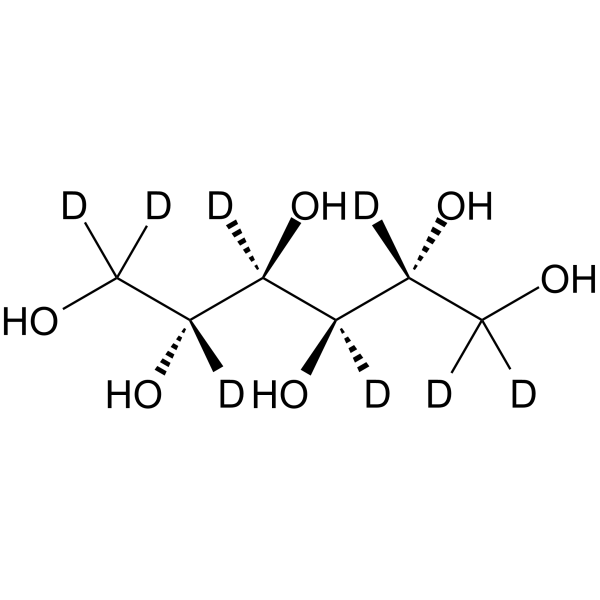
Cat. No.: HY-N0378S
Synonyms: mannitol-d8; Mannite-d8
D-Mannitol-d8 is the deuterium labeled D-Mannitol (HY-N0378). D-Mannitol (Mannitol) is an oral, resistant sugar widely used in the food and pharmaceutical industries to promote the absorption and retention of calcium and magnesium through cecal fermentation, while acting as a osmotic diuretic to reduce tissue edema. D-Mannitol can enhance brown fat formation, improve insulin effect, reduce blood sugar levels, And through the start the β3-adrenergic receptor (β3-AR), PGC1α and PKA induced by means of white fat cells into brown fat cells . D-Mannitol is commonly used to maintain osmotic pressure between the plant cytoplasm and the culture medium and protect cells when the cell wall is weakened or even removed .
loading...
    loading...
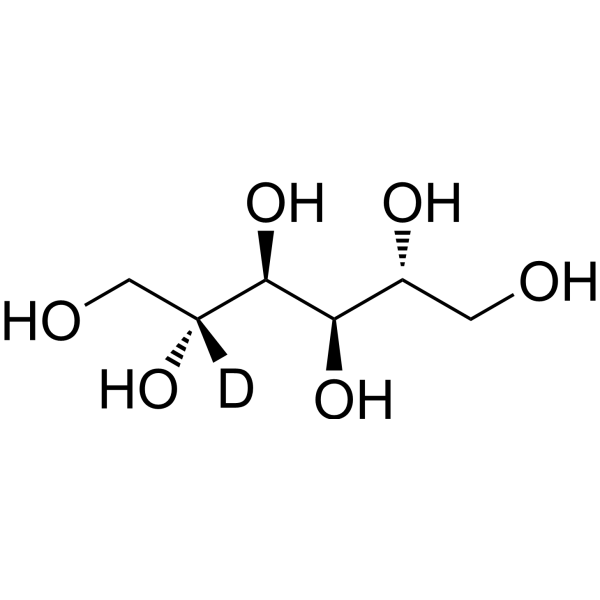
Cat. No.: HY-N0378S5
CAS No.: 75607-68-0
Synonyms: mannitol-d1; Mannite-d1
D-Mannitol-d is the deuterium labeled D-Mannitol (HY-N0378). D-Mannitol (Mannitol) is an oral, resistant sugar widely used in the food and pharmaceutical industries to promote the absorption and retention of calcium and magnesium through cecal fermentation, while acting as a osmotic diuretic to reduce tissue edema. D-Mannitol can enhance brown fat formation, improve insulin effect, reduce blood sugar levels, And through the start the β3-adrenergic receptor (β3-AR), PGC1α and PKA induced by means of white fat cells into brown fat cells . D-Mannitol is commonly used to maintain osmotic pressure between the plant cytoplasm and the culture medium and protect cells when the cell wall is weakened or even removed .
loading...
    loading...
Cat. No.: HY-N1970R
CAS No.: 31721-94-5
5,7-Dihydroxychromone (Standard) is the analytical standard of 5,7-Dihydroxychromone (HY-N1970). This product is intended for research and analytical applications. 5,7-Dihydroxychromone is a flavonoid compound with antioxidant properties. 5,7-Dihydroxychromone induces Nrf2 nuclear translocation, increases Nrf2/ARE binding activity, and up-regulates Nrf2-dependent antioxidant genes HO-1, NQO1, GCLc. 5,7-Dihydroxychromone attenuates excessive ROS generation, inhibits activated caspase-3, caspase-9, cleaved PARP expression, and prevents neuronal apoptosis and cell death. 5,7-Dihydroxychromone increases LXRα and PPARγ mRNA expression, induces preadipocyte differentiation, and regulates blood glucose levels. 5,7-Dihydroxychromone inhibits radial growth of soil pathogenic fungi, radicle elongation of select seedlings, and transiently inhibits Bradyrhizobium sp. growth in high mannitol medium. 5,7-Dihydroxychromone can be used for the research of Parkinson’s disease, type 2 diabetes mellitus and pathogenic fungal infection .
loading...
    loading...
Cat. No.: HY-N0378BGL
CAS No.: 69-65-8
Synonyms: mannitol, M100 (GMP Like); Mannite, M100 (GMP Like)
D-Mannitol, M100 (GMP Like) (Mannitol, M100 (GMP Like)) is the GMP Like class D-Mannitol that can be used as pharmaceutical excipients. D-Mannitol (Mannitol) is an oral, resistant sugar widely used in the food and pharmaceutical industries to promote the absorption and retention of calcium and magnesium through cecal fermentation, while acting as a osmotic diuretic to reduce tissue edema. D-Mannitol can enhance brown fat formation, improve insulin effect, reduce blood sugar levels, And through the start the β3-adrenergic receptor (β3-AR), PGC1α and PKA induced by means of white fat cells into brown fat cells .
loading...
    loading...
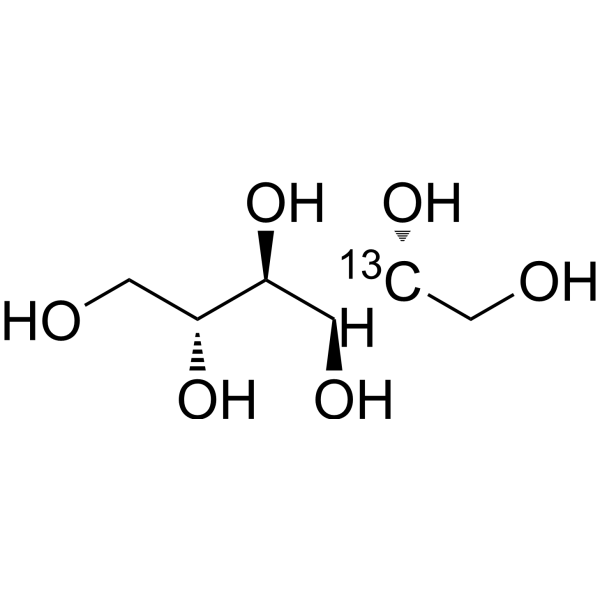
Cat. No.: HY-N0378S3
CAS No.: 287100-69-0
Synonyms: mannitol-2-13C; Mannite-2-13C
D-Mannitol-2- 13C is the 13C labeled D-Mannitol (HY-N0378). D-Mannitol (Mannitol) is an oral, resistant sugar widely used in the food and pharmaceutical industries to promote the absorption and retention of calcium and magnesium through cecal fermentation, while acting as a osmotic diuretic to reduce tissue edema. D-Mannitol can enhance brown fat formation, improve insulin effect, reduce blood sugar levels, And through the start the β3-adrenergic receptor (β3-AR), PGC1α and PKA induced by means of white fat cells into brown fat cells . D-Mannitol is commonly used to maintain osmotic pressure between the plant cytoplasm and the culture medium and protect cells when the cell wall is weakened or even removed .
loading...
    loading...
Cat. No.: HY-167814
CAS No.: 14317-07-8
Trimethylsilyl-D-(+)-mannitol is a compound with osmoprotective activity that can effectively scavenge reactive oxygen species (ROS) and provide protection for plants and microorganisms.
loading...
    loading...
Cat. No.: HY-W701437
CAS No.: 13121-61-4
1,5-Anhydro-D-mannitol peracetate is a biochemical assay reagent.
loading...
    loading...
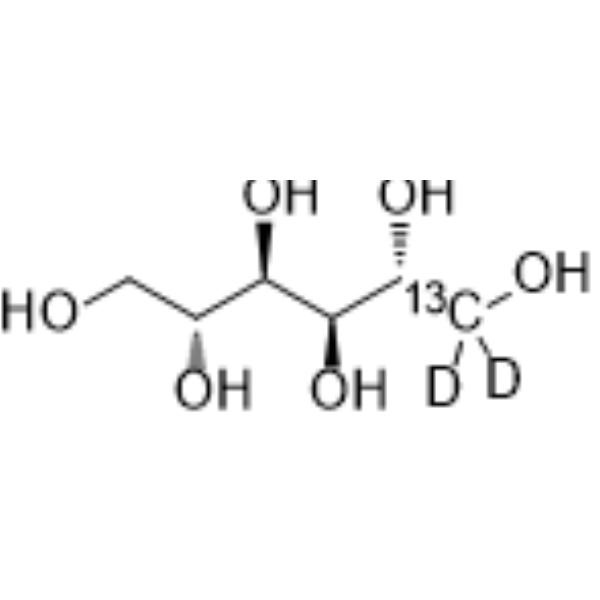
Cat. No.: HY-N0378S6
CAS No.: 1217463-58-5
Synonyms: mannitol-13C,d2; Mannite-13C,d2
D-Mannitol- 13C,d2 is the deuterium and 13C labeled D-Mannitol (HY-N0378). D-Mannitol (Mannitol) is an oral, resistant sugar widely used in the food and pharmaceutical industries to promote the absorption and retention of calcium and magnesium through cecal fermentation, while acting as a osmotic diuretic to reduce tissue edema. D-Mannitol can enhance brown fat formation, improve insulin effect, reduce blood sugar levels, And through the start the β3-adrenergic receptor (β3-AR), PGC1α and PKA induced by means of white fat cells into brown fat cells . D-Mannitol is commonly used to maintain osmotic pressure between the plant cytoplasm and the culture medium and protect cells when the cell wall is weakened or even removed .
loading...
    loading...
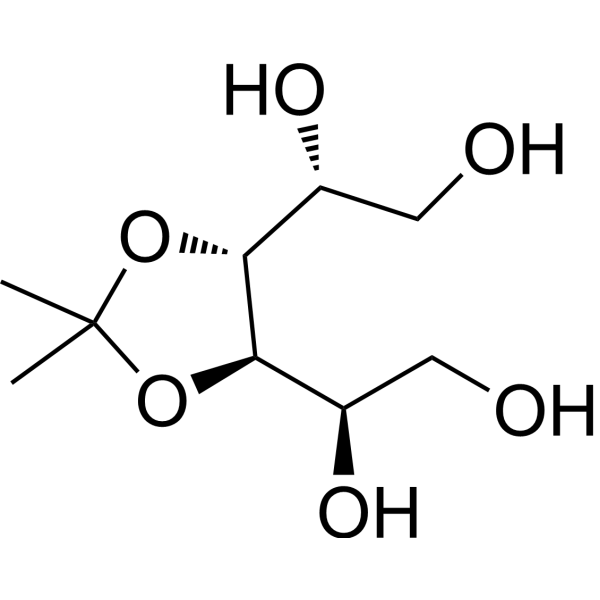
Cat. No.: HY-44327
CAS No.: 3969-84-4
3,4-O-Isopropylidene-D-mannitol is a biochemical reagent that can be used as a biological material or organic compound for life science related research.
loading...
    loading...
Cat. No.: HY-172447
CAS No.: 146747-37-7
Target:  

Antibiotic Bacterial

Research Areas:  

Infection

1,5-Dideoxy-1,5-imino-D-mannitol is an antibiotic with antibacterial effects .
loading...
    loading...
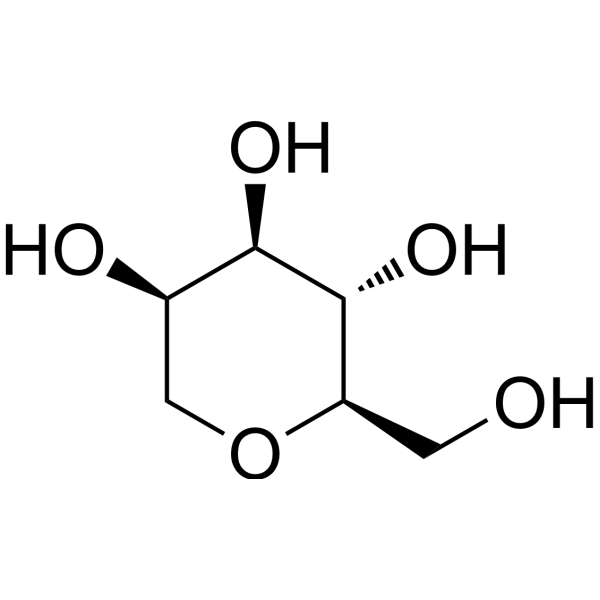
Cat. No.: HY-N9911
CAS No.: 492-93-3
1,5-Anhydro-D-mannitol is the analogue of 1,5-Anhydrosorbitol (HY-113075), and can be used as an experimental control. 1,5-Anhydrosorbitol is a short-term marker for glycemic control.
loading...
    loading...
Cat. No.: HY-W552365
CAS No.: 3969-61-7
2,3:5,6-Di-O-isopropylidene-D-mannitol is a class of biochemical reagents used in glycobiology research. Glycobiology studies the structure, synthesis, biology, and evolution of sugars. It involves carbohydrate chemistry, enzymology of glycan formation and degradation, protein-glycan recognition, and the role of glycans in biological systems. This field is closely related to basic research, biomedicine, and biotechnology .
loading...
    loading...
Cat. No.: HY-W555109
CAS No.: 54253-49-5
1,6-Dideoxy-1,1-bis(ethylsulfonyl)-L-mannitol is a class of biochemical reagents used in glycobiology research. Glycobiology studies the structure, synthesis, biology, and evolution of sugars. It involves carbohydrate chemistry, enzymology of glycan formation and degradation, protein-glycan recognition, and the role of glycans in biological systems. This field is closely related to basic research, biomedicine, and biotechnology .
loading...
    loading...
Cat. No.: HY-113024R
CAS No.: 1189-37-3
D-Mannitol (Standard) is the analytical standard of D-Mannitol. This product is intended for research and analytical applications. D-Mannitol (Mannitol) is an oral, resistant sugar widely used in the food and pharmaceutical industries to promote the absorption and retention of calcium and magnesium through cecal fermentation, while acting as a osmotic diuretic to reduce tissue edema. D-Mannitol can enhance brown fat formation, improve insulin effect, reduce blood sugar levels, And through the start the β3-adrenergic receptor (β3-AR), PGC1α and PKA induced by means of white fat cells into brown fat cells .
loading...
    loading...
Cat. No.: HY-W698627
CAS No.: 128741-75-3
Diethylene glycol monohexyl ether is a biochemical assay reagent.
loading...
    loading...
Cat. No.: HY-153209
Research Areas:  

Others

Adjuvant-4 is a vaccine adjuvant that enhances antigen-specific antibody titers and cytotoxic T lymphocyte (CTL) responses . Adjuvant is generally an oil-in-water emulsifier of mineral oil and mannitol monooleate.
loading...
    loading...
Cat. No.: HY-153209G
Adjuvant-4 (GMP) is a GMP grade Adjuvant-4. Adjuvant-4 is a vaccine adjuvant that enhances antigen-specific antibody titers and cytotoxic T lymphocyte (CTL) responses . Adjuvant is generally an oil-in-water emulsifier of mineral oil and mannitol monooleate.
loading...
    loading...
Cat. No.: HY-129923R
CAS No.: 161796-77-6
Target:  

HBV Reference Standards

Research Areas:  

Neurological Disease

(R)-Omeprazole (sodium) (Standard) is the analytical standard of (R)-Omeprazole (sodium). This product is intended for research and analytical applications. (R)-Omeprazole sodium is a gastric acid resistant compound with activity to inhibit gastric acid secretion. (R)-Omeprazole sodium is metabolized in vivo, and its metabolism is primarily affected by cytochrome P450 enzymes. The interaction between (R)-Omeprazole sodium and mannitol may affect its bioavailability in formulations. (R)-Omeprazole sodium exhibits reversible direct and metabolism-dependent inhibition of CYP2C19 .
loading...
    loading...
Cat. No.: HY-134338R
CAS No.: 1314008-27-9
Research Areas:  

Others

(R)-Omeprazole (sodium) (Standard) is the analytical standard of (R)-Omeprazole (sodium). This product is intended for research and analytical applications. (R)-Omeprazole sodium is a gastric acid resistant compound with activity to inhibit gastric acid secretion. (R)-Omeprazole sodium is metabolized in vivo, and its metabolism is primarily affected by cytochrome P450 enzymes. The interaction between (R)-Omeprazole sodium and mannitol may affect its bioavailability in formulations. (R)-Omeprazole sodium exhibits reversible direct and metabolism-dependent inhibition of CYP2C19 .
loading...
    loading...

