35 Results for "

neurological dysfunction

" in MedChemExpress (MCE) Product Catalog:
Products (35)

35 Results for "neurological dysfunction" in MCE Product Catalog:

Cat. No.: HY-B0916S
CAS No.: 1219798-56-7
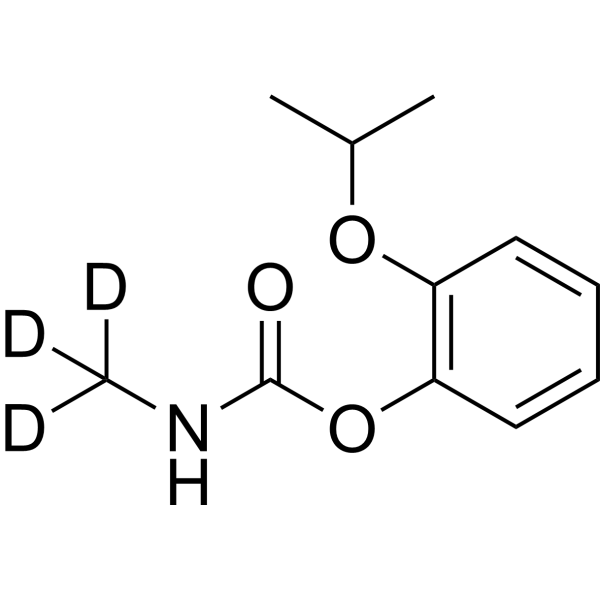
Propoxur-d3 is the deuterated form of Propoxur (HY-B0916). Propoxur is a reversible, competitive, orally active AChE inhibitor that can cross the blood-brain barrier. Propoxur inhibits AChE activity to induce neurotoxicity, while promoting MMP-2 expression and enhancing tumor cell migration and invasion by inducing intracellular ROS generation and activating the ERK/Nrf2 signaling pathway. On the one hand, Propoxur inhibits AChE, leading to acetylcholine accumulation and causing neurological dysfunction; on the other hand, it promotes Nrf2 nuclear translocation through ROS-dependent ERK1/2 phosphorylation, and upregulates MMP-2 and other invasion-related proteins. Propoxur is also a carbamate insecticide used to combat turf, forestry, and household pests .
loading...
    loading...
Cat. No.: HY-160168
CAS No.: 2662512-02-7
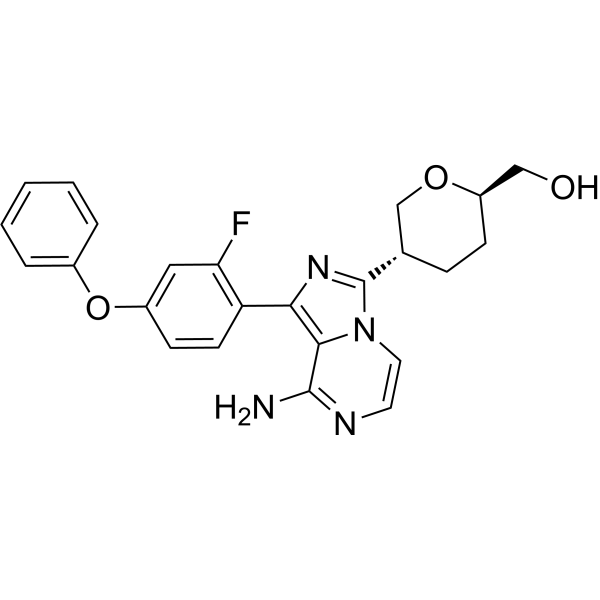
BTK-IN-31 (Compound 2) is a selective, non-covalently reversible, and blood-brain barrier (BBB) permeable Btk inhibitor. BTK-IN-31 has research potential in immune disorders, cancer, cardiovascular disease, viral infections, inflammation, metabolic/endocrine dysfunction, and neurological disorders .
loading...
    loading...
Cat. No.: HY-106661
CAS No.: 320777-05-7
Target:  

Amyloid-β

GLY-230 is an orally active compound. GLY-230 can inhibit nonenzymatic glycation and reduce glycated albumin. GLY-230 can reduce brain Aβ42 levels. GLY-230 can be used for the researches of metabolic and neurological disease, such as diabetic renal dysfunction .
loading...
    loading...
Cat. No.: HY-114555
CAS No.: 1007109-16-1
Target:  

GlyT

Research Areas:  

Neurological Disease

TASP0315003 is a glycine transporter 1 (GlyT1) inhibitor. TASP0315003 potentiates NMDA receptor function by increasing synaptic glycine levels. TASP0315003 can improve cognitive dysfunction and the negative symptoms of schizophrenia without having undesirable central nervous system side effects. TASP0315003 can be used for the research of neurological disease .
loading...
    loading...
Cat. No.: HY-107669
CAS No.: 849461-91-2
Target:  

nAChR

Research Areas:  

Neurological Disease

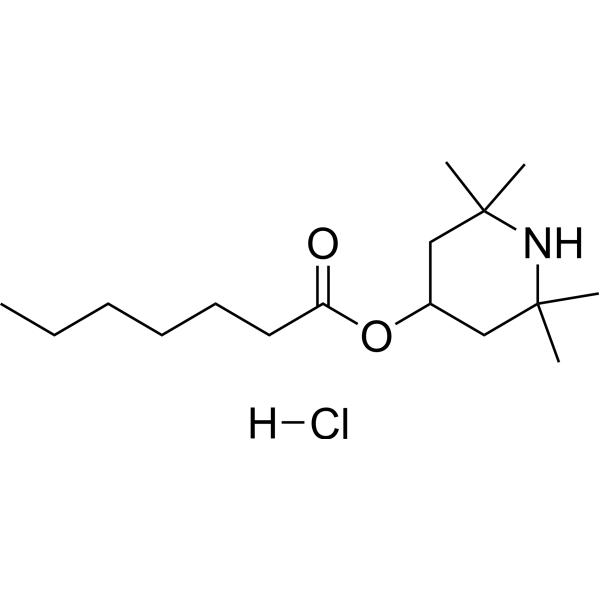
nAChR-IN-1 (hydrochloride) is a tetramethylpiperidine heptanoate, a selective nicotinic acetylcholine receptor (nAChR) inhibitor that inhibits nAChRs lacking α5, α6, or β3 subunits. nAChR-IN-1 has the effect of preventing nerve disorder, can be used for nicotinic acetylcholine receptor dysfunction or neurological disorders research .
loading...
    loading...
Cat. No.: HY-P0119S
Lixisenatide (Leu- 13C6, 15N) TFA is the 13C- and 15N-labeled Lixisenatide (HY-P0119). Lixisenatide is a glucagon-like peptide-1 (GLP-1) receptor agonist. Lixisenatide inhibits the inflammatory response through down regulation of pro-inflammatory cytokines, and suppresses of the Akt-MEK1/2 signaling pathway. Lixisenatide can inhibit oxidative stress, mitochondrial dysfunction and apoptosis. Lixisenatide can be used for the researches of inflammation, metabolic disease, neurological disease and cardiovascular disease, such as rheumatoid arthritis, diabetes, Alzheimer's disease and atherosclerosis .
loading...
    loading...
Cat. No.: HY-B0916R
CAS No.: 114-26-1
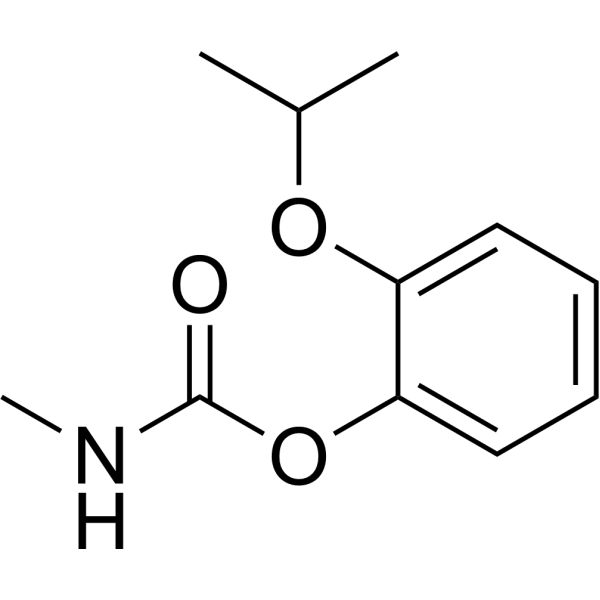
Propoxue (Standard) is the analytical standard of Propoxue (HY-B0916). This product is intended for research and analytical applications. Propoxur is a reversible, competitive, orally active AChE inhibitor that can cross the blood-brain barrier. Propoxur inhibits AChE activity to induce neurotoxicity, while promoting MMP-2 expression and enhancing tumor cell migration and invasion by inducing intracellular ROS generation and activating the ERK/Nrf2 signaling pathway. On the one hand, Propoxur inhibits AChE, leading to acetylcholine accumulation and causing neurological dysfunction; on the other hand, it promotes Nrf2 nuclear translocation through ROS-dependent ERK1/2 phosphorylation, and upregulates MMP-2 and other invasion-related proteins. Propoxur is also a carbamate insecticide used to combat turf, forestry, and household pests .
loading...
    loading...
Cat. No.: HY-B1065R
CAS No.: 2490-97-3
Synonyms: α-N-Acetyl-L-glutamine (Standard); N2-Acetylglutamine (Standard)
Aceglutamide (α-N-Acetyl-L-glutamine; N2-Acetylglutamine) (Standard) is the analytical standard of Aceglutamide (HY-B1065). This product is intended for research and analytical applications. Aceglutamide (α-N-Acetyl-L-glutamine; N2-Acetylglutamine) is a neuroprotectant that can penetrate the blood-brain barrier. Aceglutamide can enhance the antioxidant systems of glutathione (GSH), thioredoxin (Trx) and Nrf2. Aceglutamide also inhibits ASK1 and TRAF1, activates the Akt/Bcl-2 anti-apoptotic pathway, enhances the activity of antioxidant enzymes and reduces oxidative damage. Aceglutamide can improve neurological deficits after cerebral ischemia, reduce infarct volume, and inhibit neuronal apoptosis, especially substantia nigra dopaminergic neurons. Aceglutamide can reduce cerebral ischemia/reperfusion injury, improve motor dysfunction, and is used in ischemic stroke-related research .
loading...
    loading...
Cat. No.: HY-116193R
CAS No.: 1481636-41-2
5-PAHSA (Standard) is the analytical standard of 5-PAHSA. This product is intended for research and analytical applications. 5-PAHSA increases insulin sensitivity, and has orally active anti-inflammatory and neuroprotective effects in mice HFD-induced diabetes mice. 5-PAHSA can be used for research of neurological dysfunction in diabetics .
loading...
    loading...
Cat. No.: HY-N9878
CAS No.: 1029004-83-8
Pistaciamide is an N-phenyl-pyrrolidone derivative, and its related pyrrolidone derivatives are commonly used in the treatment of neurological disorders, making it relevant for research of neurological dysfunction. Pistaciamide can be naturally extracted from the 90% ethanol extract of fresh shoots and inflorescences of Pistacia chinensis Bunge. (a plant of the Anacardiaceae family) .
loading...
    loading...
Cat. No.: HY-L118
199 compounds

Sodium channels conduct sodium ions (Na+) through a cell's plasma membrane that are the source of excitatory currents for the nervous system and muscle. Na channels are classified according to the trigger that opens the channel for such ions, i.e. either a voltage-change (Voltage-gated, voltage-sensitive, or voltage-dependent sodium channel also called VGSCs or Nav channel) or a binding of a substance (a ligand) to the channel (ligand-gated sodium channels). Dysfunction in voltage-gated sodium channels correlates with neurological and cardiac diseases, including epilepsy, myopathies, pain and cardiac arrhythmias. Sodium channel blockers are used in the treatment of cardiac arrhythmia, pain and convulsion.

MCE offers a unique collection of 199 sodium channel blocker and antagonists, all of which have the identified inhibitory effect on sodium channels. MCE Sodium Channel Blocker Library can be used for neurological and cardiac diseases drug discovery and sodium channel research.

Cat. No.: HY-50722B
CAS No.: 357400-14-7
NNC 55-0396 free base is a blood-brain-barrier-permeable T-type Ca 2+ channel inhibitor and pan-P450 inhibitor. NNC 55-0396 free base selectively inhibits T-type Ca2+ channels, suppresses HIF-1α expression and stability and inhibits Kv currents. NNC 55-0396 free base reduces brain infarct and attenuates neurological dysfunction. NNC 55-0396 free base inhibits the activity of multiple P450 enzymes. NNC 55-0396 (free base) can be used for the research of brain injury, hypertension, and glioblastoma .
loading...
    loading...
Cat. No.: HY-W750153
CAS No.: 2140327-65-5
Propoxur-d7 is the deuterium labeled Propoxur. Propoxur is a reversible, competitive, orally active AChE inhibitor that can cross the blood-brain barrier. Propoxur inhibits AChE activity to induce neurotoxicity, while promoting MMP-2 expression and enhancing tumor cell migration and invasion by inducing intracellular ROS generation and activating the ERK/Nrf2 signaling pathway. On the one hand, Propoxur inhibits AChE, leading to acetylcholine accumulation and causing neurological dysfunction; on the other hand, it promotes Nrf2 nuclear translocation through ROS-dependent ERK1/2 phosphorylation, and upregulates MMP-2 and other invasion-related proteins. Propoxur is also a carbamate insecticide used to combat turf, forestry, and household pests .
loading...
    loading...
Cat. No.: HY-N18667
CAS No.: 84696-21-9
Centella asiatica extract is an orally active herbal extract. Centella asiatica extract scavenges free radicals, increases stratum corneum hydration, improves epidermal barrier function, and reduces skin redness and skin pH. Centella asiatica extract inhibits pro-inflammatory cytokines, suppresses p38 MAPK phosphorylation, reduces mast cell infiltration, and decreases the expression of TNF-α, IL-4, IL-5, IL-6, IL-17, CXCL9, iNOS and COX-2. Centella asiatica extract upregulates the expression of BDNF and downregulates the expression of VGLUT1, and exhibits neuroprotective effects under hypoxic conditions. Centella asiatica extract inhibits pro-inflammatory M1 macrophage polarization and prevents adipose tissue senescence. Centella asiatica extract can be used in studies related to hypoxia-induced neurological dysfunction, atopic dermatitis, and obesity-induced insulin resistance .
loading...
    loading...
Cat. No.: HY-L013
3,961 compounds

Neuronal Signaling is involved in the regulation of the mechanisms of the central nervous system (CNS) such as its structure, function, genetics and physiology as well as how this can be applied to understand diseases of the nervous system. Every information processing system in the CNS is composed of neurons and glia, neurons have evolved unique capabilities for intracellular signaling (communication within the cell) and intercellular signaling (communication between cells). G protein-coupled receptors (GPCRs), including 5-HT receptor, histamine receptor, opioid receptor, etc. are the largest class of sensory proteins and are important therapeutic targets in Neuronal Signaling. Besides, Notch signaling, such as β- and γ-secretase, also plays multiple roles in the development of the CNS including regulating neural stem cell (NSC) proliferation, survival, self-renewal and differentiation. GPCR dysfunction caused by receptor mutations and environmental challenges contributes to many neurological diseases. Notch signaling in neurons, glia, and NSCs is also involved in pathological changes that occur in disorders such as stroke, Alzheimer's disease and CNS tumors. Thus, targeting Neuronal Signaling, such as notch signaling and GPCRs, can be used as therapeutic interventions for several different CNS disorders.

MCE designs a unique collection of 3,961 Neuronal Signaling-related compounds that act as a useful tool for the research of neuronal regulation and neuronal diseases.

