124 Results for "

neuronal function

" in MedChemExpress (MCE) Product Catalog:
Products (124)

124 Results for "neuronal function" in MCE Product Catalog:

Cat. No.: HY-W768207
CAS No.: 159496-15-8
Cytidine-1',2',3',4',5'- 13C5 is the 13C-labeled Cytidine (HY-B0158). Cytidine is a pyrimidine nucleoside and acts as a component of RNA. Cytidine is a precursor of uridine. Cytidine controls neuronal-glial glutamate cycling, affecting cerebral phospholipid metabolism, catecholamine synthesis, and mitochondrial function .
loading...
    loading...
Cat. No.: HY-N4192
CAS No.: 1329-10-8
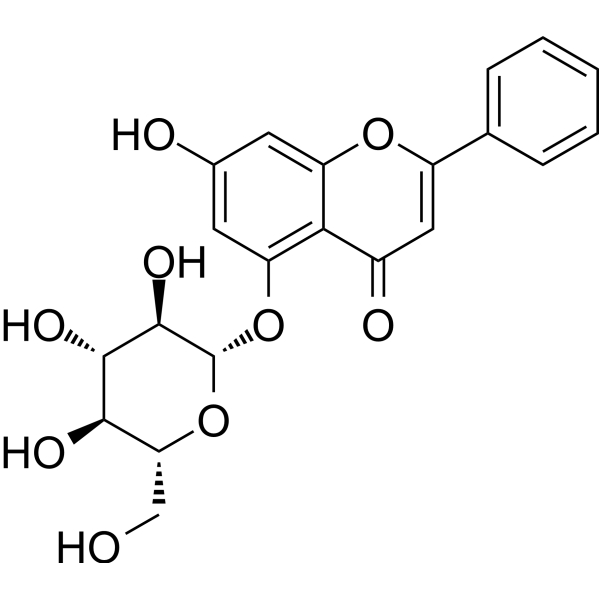
Toringin, a bioflavonoid, is isolated from the bark of Docyniopsis tschonoski. Toringin progressively decreases not only the cis-effect of the expanded CTG repeats but cytotoxicity as well. Exposure to isosakuranetin, Toringin rescues PC12 neuronal cells. Flavonoids are efficacious for ameliorating the RNA gain of function caused by expanded CTG repeats, and have various biological activities and beneficial actions against cancers, coronary heart disease, among other pathologies .
loading...
    loading...
Cat. No.: HY-177573
CAS No.: 89210-68-4
Target:  

GABA Receptor

Research Areas:  

Neurological Disease

Cholesteryl γ-aminobutyrate is a γ-aminobutyric acid (GABA)-mimetic prodrug. Cholesteryl γ-aminobutyrate inhibits the orthodromically-evoked discharge of pyramidal cells in the CA1 region of the hippocampus. Cholesteryl γ-aminobutyrate suppresses the open-field activity of mice and rats in a dose-dependent manner and inhibits Bicuculline (HY-N0219)-induced seizures in mice. Cholesteryl γ-aminobutyrate can be used for the study of CNS diseases related to impaired GABAergic neuronal function .
loading...
    loading...
Cat. No.: HY-P11226
CAS No.: 659739-64-7
Target:  

Amyloid-β CaMK Apoptosis

Research Areas:  

Neurological Disease

TI-16 is a peptide that targets β-amyloid (Aβ) protein. TI-16 can cross the blood-brain barrier. TI-16 can increase the concentration of intracellular free CaM, thereby restoring calcium ion homeostasis and reducing Aβ toxicity. TI-16 can reduce the deposition of Aβ in the brain, improve neuronal pathology, inhibit cell apoptosis, and improve cognitive function in mice. TI-16 is commonly used in the study of Alzheimer's disease .
loading...
    loading...
Cat. No.: HY-10996
CAS No.: 1262770-73-9
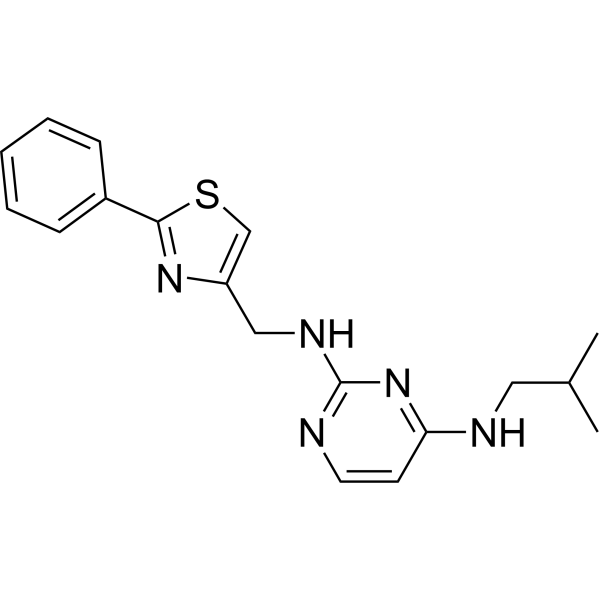
KHS101 is a blood-brain barrier-penetrant anticancer agent that primarily functions by inhibiting HSPD1 (IC50 = 14.4 μM) and TACC3 across different cellular backgrounds. KHS101 promotes the aggregation of HSPD1 with client proteins, destabilizes TACC3, and reduces the levels of TACC3, Aurora A and PLK1. KHS101 induces autophagy, apoptosis, cell cycle exit and neuronal differentiation; it suppresses cancer cell growth, motility, EMT and stemness; it also impairs mitochondrial bioenergetics and glycolysis in glioblastoma cells. KHS101 can be used in research related to glioblastoma multiforme and breast cancer .
loading...
    loading...
Cat. No.: HY-125095
CAS No.: 804519-64-0
Purity:  99.43%
Synonyms: Tunodafil hydrochloride
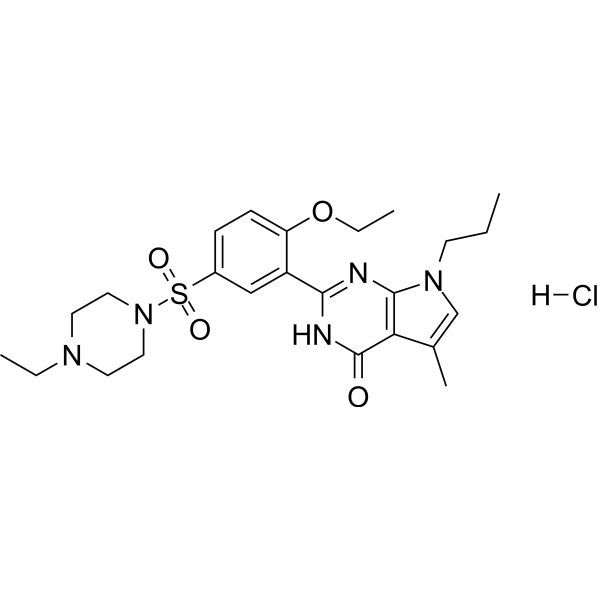
Yonkenafil (Tunodafil) hydrochloride, a novel phosphodiesterase 5 (PDE5) inhibitor, is effective in reducing cerebral infarction, neurological deficits, edema, and neuronal damage in the infarcted area. Yonkenafil (Tunodafil) hydrochloride may improve cognitive function by modulating neurogenesis and has a potential therapeutic effect on Alzheimer's disease .
loading...
    loading...
Cat. No.: HY-15116
CAS No.: 117427-00-6
Research Areas:  

Neurological Disease

ONO 1603, a novel prolyl endopeptidase inhibitor investigated as a potential antidementia drug, demonstrated neuroprotective and neurotrophic effects in cerebellar granule cells similar to tetrahydroaminoacridine (THA). At a concentration of 0.03 microM, ONO 1603 promoted neuronal survival, enhanced neurite outgrowth, increased m3-muscarinic acetylcholine receptor (mAChR) mRNA levels, and stimulated mAChR-mediated signaling pathways. These findings suggest that ONO 1603 shares pharmacological similarities with THA, indicating its potential as a therapeutic agent for Alzheimer's disease by enhancing cholinergic neurotransmission and neuronal function .
loading...
    loading...
Cat. No.: HY-107669
CAS No.: 849461-91-2
Target:  

nAChR

Research Areas:  

Neurological Disease

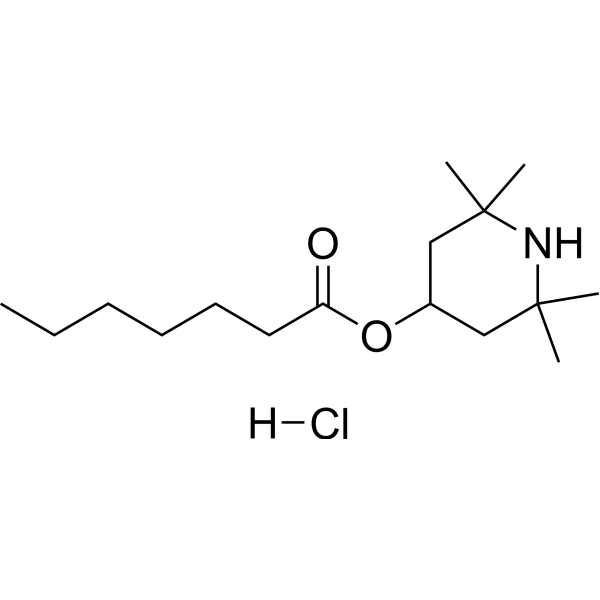
nAChR-IN-1 (hydrochloride) is a tetramethylpiperidine heptanoate, a selective nicotinic acetylcholine receptor (nAChR) inhibitor that inhibits nAChRs lacking α5, α6, or β3 subunits. nAChR-IN-1 has the effect of preventing nerve disorder, can be used for nicotinic acetylcholine receptor dysfunction or neurological disorders research .
loading...
    loading...
Cat. No.: HY-U00033
CAS No.: 127985-21-1
Target:  

Endogenous Metabolite

Research Areas:  

Neurological Disease

Iomazenil is a benzodiazepine receptor antagonist with partial inverse agonist activity. Iomazenil can assess the binding potential of central benzodiazepine receptors in the cerebral cortex and may reflect neuronal function in viable tissue. Iomazenil use is associated with improved cognitive function in adult patients with ischemic cerebral pathology after indirect revascularization surgery. Iomazenil demonstrated restoration of benzodiazepine receptor binding potential in the affected hemisphere after surgery on brain SPECT imaging .
loading...
    loading...
Cat. No.: HY-B0503S
CAS No.: 2923524-84-7
Synonyms: Thiouracil-13C,15N2
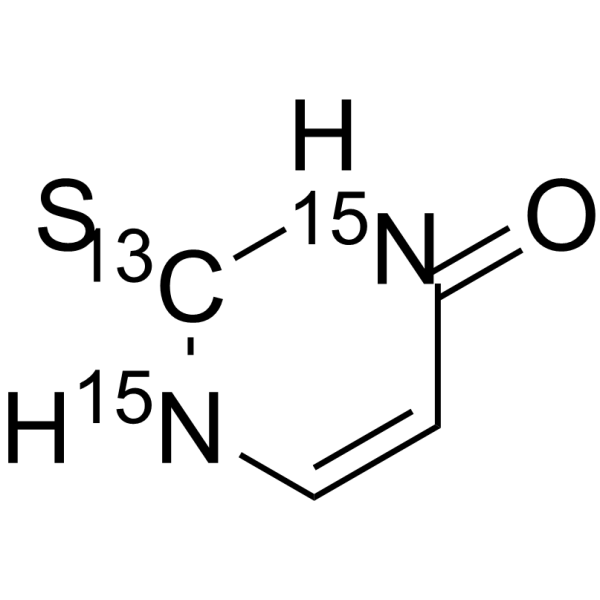
2-Thiouracil- 13C, 15N2 is the 13C, 15N labeled 2-Thiouracil. 2-Thiouracil (Thiouracil) is an antithyroid compound. 2-Thiouracil can function as a highly specific melanoma seeker. 2-Thiouracil is a selective inhibitor of neuronal nitric oxide synthase (nNOS) with a Ki of 20 μM.
loading...
    loading...
Cat. No.: HY-E70837
Target:  

JNK

Research Areas:  

Cancer

JNK2 is a neuronal-specific isoform of JNK. JNK2 deficiency leads to reduced c-Jun degradation, thereby augmenting c-Jun levels and cellular proliferation. JNK2 Recombinant Human Active Protein Kinase is a recombinant JNK2 protein that can be used to study JNK2-related functions .
loading...
    loading...
Cat. No.: HY-B0158S8
Synonyms: Cytosine β-D-riboside-d13; Cytosine-1-β-D-ribofuranoside-d13
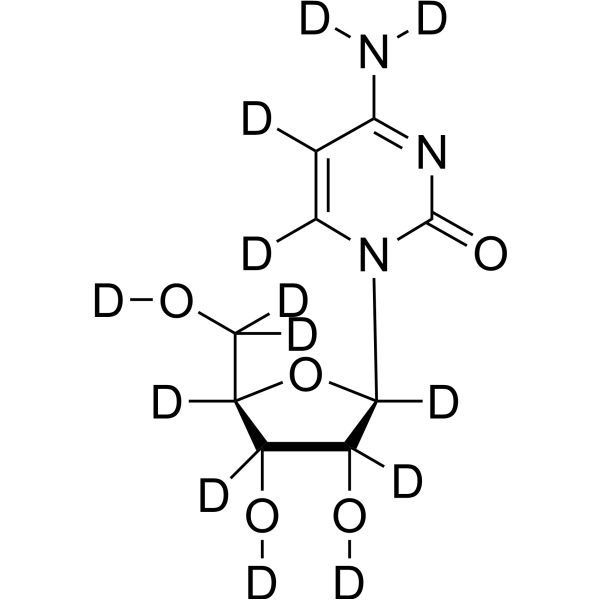
Cytidine-d13 (Cytosine β-D-riboside-d13) is deuterium labeled Cytidine (HY-B0158). Cytidine is a pyrimidine nucleoside and acts as a component of RNA. Cytidine is a precursor of uridine. Cytidine controls neuronal-glial glutamate cycling, affecting cerebral phospholipid metabolism, catecholamine synthesis, and mitochondrial function .
loading...
    loading...
Cat. No.: HY-126758
CAS No.: 36149-87-8
Ludartin a sesquiterpene lactone, which can be isolated from the plant Artemisia carruthii Wood. Ludartin reduces the expression of myeloperoxidase and malondialdehyde, enhances the expression of glutathione and superoxide dismutase in spinal cord tissue. Ludartin inhibits neuronal apoptosis. Ludartin inhibits the upregulation of tumor necrosis factor-α, interleukin-1β, and interleukin-6. Ludartin improves the motor function of rats with spinal cord injury .
loading...
    loading...
Cat. No.: HY-W779021
CAS No.: 41547-82-4
Synonyms: Adenine riboside-15N; D-Adenosine-15N
Adenosine- 15N (Adenine riboside- 15N) is 15N labeled Adenosine. Adenosine (Adenine riboside), a ubiquitous endogenous autacoid, acts through the enrollment of four G protein-coupled receptors: A1, A2A, A2B, and A3. Adenosine affects almost all aspects of cellular physiology, including neuronal activity, vascular function, platelet aggregation, and blood cell regulation .
loading...
    loading...
Cat. No.: HY-W709349
CAS No.: 33400-45-2
Synonyms: D 9998 hydrochloride
Flupirtine (D 9998) hydrochloride is an orally active, blood-brain barrier-crossing non-opioid analgesic and neuroprotective agent. Flupirtine hydrochloride is a neuronal potassium channel opener (Kv7 activator), a NMDA receptor antagonist and a GABA receptor activator. Flupirtine hydrochloride stabilizes blood-brain-barrier integrity, reduces oxidative stress and brain leukocyte infiltration, enhances angioneurogenesis, suppresses calcium influx, stabilizes neuronal resting membrane potential, and counteracts focal cerebral ischemia. Flupirtine hydrochloride exhibits analgesic, muscle relaxant properties, protects neurons from excitotoxic, ischemic, or cytokine-mediated death. Flupirtine hydrochloride functions as a non-opioid analgesic without antipyretic or antiphlogistic properties, shows no relevant affinity to opiate receptor. Flupirtine hydrochloride can be used for the research of focal cerebral ischemia, pain, Alzheimer’s disease, or multiple sclerosis .
loading...
    loading...
Cat. No.: HY-17001R
CAS No.: 75507-68-5
Synonyms: D 9998 Maleate (Standard)
Flupirtine Maleate (Standard) is the analytical standard of Flupirtine Maleate (HY-17001). This product is intended for research and analytical applications. Flupirtine Maleate is an orally active, blood-brain barrier-crossing non-opioid analgesic and neuroprotective agent. Flupirtine Maleate is a neuronal potassium channel opener (Kv7 activator), a NMDA receptor antagonist and a GABA receptor activator. Flupirtine Maleate stabilizes blood-brain-barrier integrity, reduces oxidative stress and brain leukocyte infiltration, enhances angioneurogenesis, suppresses calcium influx, stabilizes neuronal resting membrane potential, and counteracts focal cerebral ischemia. Flupirtine Maleate exhibits analgesic, muscle relaxant properties, protects neurons from excitotoxic, ischemic, or cytokine-mediated death. Flupirtine Maleate functions as a non-opioid analgesic without antipyretic or antiphlogistic properties, shows no relevant affinity to opiate receptor. Flupirtine Maleate can be used for the research of focal cerebral ischemia, pain, Alzheimer’s disease, or multiple sclerosis .
loading...
    loading...
Cat. No.: HY-113410R
CAS No.: 626-51-7
3-Methylglutaric acid (Standard) is the analytical standard of 3-Methylglutaric acid (HY-113410). This product is intended for research and analytical applications. 3-Methylglutaric acid is a non-selective inhibitor of mitochondrial function and Na +, K +-ATPase, with an inhibition rate of 30% on rat cortical synaptosomal Na +, K +-ATPase. 3-Methylglutaric acid can induce reactive oxygen species (ROS) generation, thereby causing oxidative damage and inhibiting mitochondrial redox potential and ion pump function of cell membranes. 3-Methylglutaric acid can be used to study the neuropathological mechanisms of metabolic diseases and the role of oxidative stress-mediated neuronal damage in neurodegeneration .
loading...
    loading...
Cat. No.: HY-113410S
CAS No.: 1219798-68-1
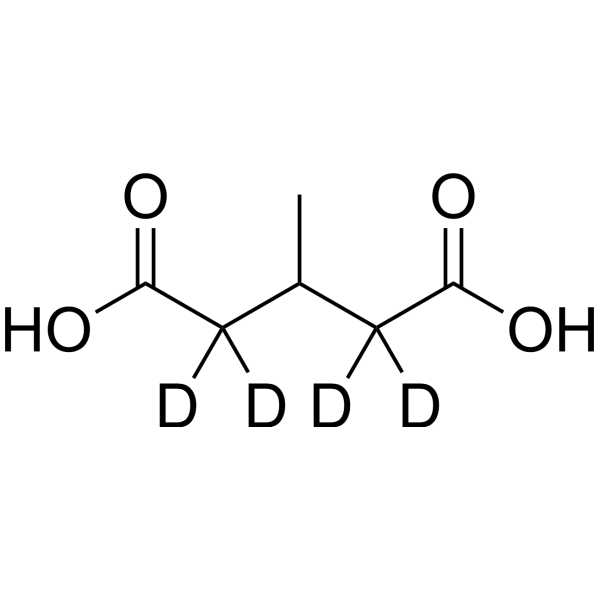
3-Methylglutaric acid-d4 is the deuterium labeled 3-Methylglutaric acid (HY-113410). 3-Methylglutaric acid is a non-selective inhibitor of mitochondrial function and Na +, K +-ATPase, with an inhibition rate of 30% on rat cortical synaptosomal Na +, K +-ATPase. 3-Methylglutaric acid can induce reactive oxygen species (ROS) generation, thereby causing oxidative damage and inhibiting mitochondrial redox potential and ion pump function of cell membranes. 3-Methylglutaric acid can be used to study the neuropathological mechanisms of metabolic diseases and the role of oxidative stress-mediated neuronal damage in neurodegeneration .
loading...
    loading...
Cat. No.: HY-100481
CAS No.: 139088-45-2
Synonyms: RPR101048
Research Areas:  

Neurological Disease

RP 72540 is a selective CCK-B receptor antagonist, with IC50 values of 2.4, 1.2, and 3.8 nM for CCK-B receptors in the guinea pig cerebral cortex, rat cerebral cortex, and mouse brain, respectively. RP 72540 effectively inhibits CCK-8-induced neuronal firing and dose-dependently inhibits gastric acid secretion, making it potentially valuable in studies of acid secretion. RP 72540 is an important tool for investigating the physiological functions of CCK B receptors .
loading...
    loading...
Cat. No.: HY-173307
Nrf2 activator 19 is a BBB-penetrable NRF2/HO-1 activator. Nrf2 activator 19 exerts potent antioxidant and neuroprotective effects. Nrf2 activator 19 can also effectively reduce brain damage, reduce Reactive Oxygen Species (ROS) accumulation. Nrf2 activator 19 inhibits neuronal apoptosis. Nrf2 activator 19 promotes the recovery of neurological function and motor ability. Nrf2 activator 19 shows significant potential in ischemic stroke research .
loading...
    loading...

