125 Results for "

neuronal function

" in MedChemExpress (MCE) Product Catalog:
Products (125)

125 Results for "neuronal function" in MCE Product Catalog:

Cat. No.: HY-B0886AR
CAS No.: 54-92-2
Iproniazid (Standard) is the analytical standard of Iproniazid (HY-B0886A). This product is intended for research and analytical applications. Iproniazid is an orally active, irreversible, non-selective monoamine oxidase (MAO) inhibitor. Iproniazid inhibits MAO activity and enhances Rotenone (HY-B1756)-induced Apoptosis. Iproniazid modulates neurotransmitter levels, affects neuronal function, induces hepatic necrosis, and interferes with the endocrine system. Iproniazid can be used in the research of depression, Parkinson's disease, and hepatotoxicity .
loading...
    loading...
Cat. No.: HY-17001AR
CAS No.: 56995-20-1
Synonyms: D 9998 (Standard)
Flupirtine (Standard) (D 9998 (Standard)) is the analytical standard of Flupirtine (HY-17001A). This product is intended for research and analytical applications. Flupirtine is an orally active, blood-brain barrier-crossing non-opioid analgesic and neuroprotective agent. Flupirtine is a neuronal potassium channel opener (Kv7 activator), a NMDA receptor antagonist and a GABA receptor activator. Flupirtine stabilizes blood-brain-barrier integrity, reduces oxidative stress and brain leukocyte infiltration, enhances angioneurogenesis, suppresses calcium influx, stabilizes neuronal resting membrane potential, and counteracts focal cerebral ischemia. Flupirtine exhibits analgesic, muscle relaxant properties, protects neurons from excitotoxic, ischemic, or cytokine-mediated death. Flupirtine functions as a non-opioid analgesic without antipyretic or antiphlogistic properties, shows no relevant affinity to opiate receptor. Flupirtine can be used for the research of focal cerebral ischemia, pain, Alzheimer’s disease, or multiple sclerosis .
loading...
    loading...
Cat. No.: HY-176712
Target:  

GSNOR Apoptosis

Research Areas:  

Neurological Disease

GSNOR-IN-1, a prodrug of GSNOR-IN-2 (HY-176275), is a BBB-penetrable S-nitrosoglutathione reductase (GSNOR) inhibitor. GSNOR-IN-1 has significant protective activity against OGD/R-induced injury. GSNOR-IN-1 regulates calcium signaling and synaptic function via Clstn1 S-nitrosation and inhibits neuronal apoptosis. GSNOR-IN-1 significantly reduces infarct volume while improving neurological deficits in ischemic stroke rat models. GSNOR-IN-1 has neuroprotective activity, promising for ischemic stroke research .
loading...
    loading...
Cat. No.: HY-107825R
CAS No.: 577-85-5
Flavonol (Standard) is the analytical standard of Flavonol. This product is intended for research and analytical applications. Flavonol is a cholinesterase (ChE) inhibitor, with an IC50 value of 120 μM and a Ki value of 74 μM. Flavonol has antioxidant, free radical-scavenging, antibacterial properties, and immune modulation functions. Flavonol inhibits the PriA helicase of Staphylococcus aureus. Flavonol can suppress the production of NO in LPS-activated RAW 264.7 cells by inhibiting the expression of the iNOS enzyme. Flavonol shows protective and analgesic effects in mice through various neuronal pathways. Flavonol can be used in research related to tumors and atherosclerosis diseases .
loading...
    loading...
Cat. No.: HY-153172
CAS No.: 2274723-90-7
Synonyms: Phenylbenzothiazole-PEG4-OH; SPG302
Target:  

Drug Intermediate

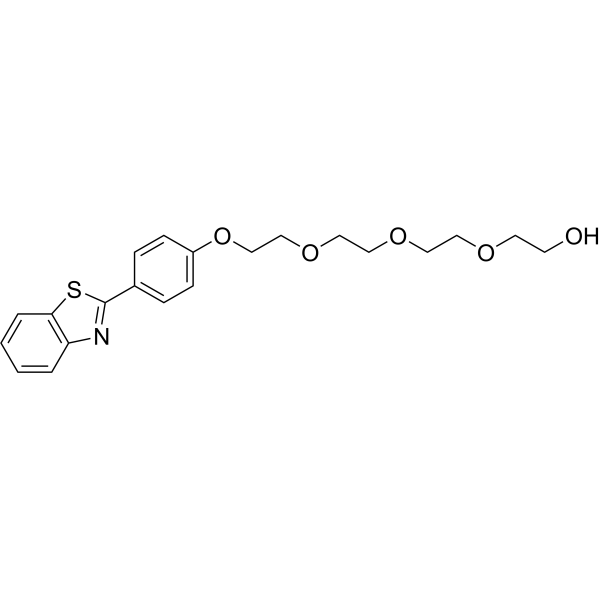
Tazbentetol (Phenylbenzothiazole-PEG4-OH) is a synaptogenic compound. Tazbentetol partially preserves inner retinal neurotransmission function and maintains retinal function. Tazbentetol increases dendritic spine glutamatergic synapses via cytoskeleton signaling pathways, enhances synaptic density both in vitro and in vivo, and restores glutamatergic synapses. Tazbentetol improves the progression of motor symptoms and enhances memory. Tazbentetol can be used in the research of glaucoma, diabetic retinopathy and amyotrophic lateral sclerosis .
loading...
    loading...
Cat. No.: HY-135167
CAS No.: 867178-11-8
Target:  

CaMK

Research Areas:  

Neurological Disease

HOCPCA is a compound with neuroprotective activity that improves sensorimotor function in mice after experimental stroke. HOCPCA selectively binds to the CaMKIIα hub domain, modulates signaling of different CaMKII pools, and alleviates abnormal CaMKII signaling after cerebral ischemia. HOCPCA promotes hippocampal neuronal activity and enhances working memory. HOCPCA also normalizes Thr286 autophosphorylation in the cytoplasm after ischemia and downregulates ischemia-specific expression of active CaMKII enzymatic cleavage fragments. HOCPCA binds to the GHB binding site with 27-fold higher affinity than GHB and has good blood-brain barrier penetration ability .
loading...
    loading...
Cat. No.: HY-107111A
CAS No.: 932373-86-9
Research Areas:  

Neurological Disease

GSK1034702 hydrochloride is an orally active and allosteric agonist of M1 mAChR (pEC50=8.1) that can cross the blood-brain barrier. GSK1034702 hydrochloride activates the Gq/11 protein-mediated signaling pathway, enhancing neuronal firing and long-term potentiation (LTP) in the CA1 region of the hippocampus. GSK1034702 hydrochloride can modulate hippocampal function, improve memory encoding in the nicotine withdrawal cognitive dysfunction model, and show pro-cognitive effects in rodents. GSK1034702 hydrochloride can be used for the study of the mechanisms of cognitive impairment diseases such as Alzheimer's disease, and has certain peripheral M receptor activation-related side effects (such as gastrointestinal reactions) .
loading...
    loading...
Cat. No.: HY-P992380

Target:  

PD-1/PD-L1

Research Areas:  

Neurological Disease

IBC-Ab002 is a humanized anti-PD-L1 monoclonal antibody with a modified Fc backbone that shortens its circulating half-life. IBC-Ab002 inhibits PD-L1, triggers immune responses by blocking the PD-1/PD-L1 pathway, promotes the recruitment of myeloid-derived immune cells to the brain, enhances the clearance of toxic substances in the brain, improves neuronal function and reduces inflammation. IBC-Ab002 reduces the risk of accelerated onset of autoimmune diabetes in susceptible mice. IBC-Ab002 can be used in research related to Alzheimer's disease .
loading...
    loading...
Cat. No.: HY-186073
CAS No.: 300399-36-4
Target:  

HDAC

Research Areas:  

Neurological Disease

HDAC1 activator-1 is a specific HDAC1 activator with orally activity, exerting no significant effects on other HDAC family members. HDAC1 activator-1 exhibits neuroprotective activity, ameliorates cognitive and motor function deficits by reducing neuronal loss and gliosis. HDAC1 activator-1 specifically activates HDAC1 in SH-SY5Y cells and exerts regulatory effects on aberrant cell cycle and DNA damage. HDAC1 activator-1 can be used for the research of TDP-43 proteinopat1-related neurodegenerative diseases including Amyotrophic Lateral Sclerosis (ALS) and cerebral ischemia-related neurological injury .
loading...
    loading...
Cat. No.: HY-L013
3,961 compounds

Neuronal Signaling is involved in the regulation of the mechanisms of the central nervous system (CNS) such as its structure, function, genetics and physiology as well as how this can be applied to understand diseases of the nervous system. Every information processing system in the CNS is composed of neurons and glia, neurons have evolved unique capabilities for intracellular signaling (communication within the cell) and intercellular signaling (communication between cells). G protein-coupled receptors (GPCRs), including 5-HT receptor, histamine receptor, opioid receptor, etc. are the largest class of sensory proteins and are important therapeutic targets in Neuronal Signaling. Besides, Notch signaling, such as β- and γ-secretase, also plays multiple roles in the development of the CNS including regulating neural stem cell (NSC) proliferation, survival, self-renewal and differentiation. GPCR dysfunction caused by receptor mutations and environmental challenges contributes to many neurological diseases. Notch signaling in neurons, glia, and NSCs is also involved in pathological changes that occur in disorders such as stroke, Alzheimer's disease and CNS tumors. Thus, targeting Neuronal Signaling, such as notch signaling and GPCRs, can be used as therapeutic interventions for several different CNS disorders.

MCE designs a unique collection of 3,961 Neuronal Signaling-related compounds that act as a useful tool for the research of neuronal regulation and neuronal diseases.

Cat. No.: HY-138667
CAS No.: 2540502-26-7
Target:  

Potassium Channel

Research Areas:  

Neurological Disease

PRX-2904 is an orally effective and selective KNa1.1 (KCNT1/Slack/Slo2.2) inhibitor with an IC50 of 40 nM against human KNa1.1-WT. PRX-2904 reduces abnormal neuronal firing in KCNT1 gain-of-function (GoF) models by inhibiting KNa1.1 channel activity. PRX-2904 is useful for research on epilepsy associated with KCNT1 gain-of-function variants .
loading...
    loading...
Cat. No.: HY-178395S
Tricosanoic acid-d45 is the deuterium labeled Tricosanoic acid (HY-W009081). Tricosanoic acid is an endogenous agonist of long-chain saturated fatty acids and free fatty acid receptor FFAR1, which can activate hair growth. Tricosanoic acid (C23:0) has the activity of improving cognitive function by regulating neuronal membrane fluidity, inhibiting neuroinflammatory response, participating in myelination and neuronal energy metabolism. Tricosanoic acid expression levels are low in the prefrontal cortex of Alzheimer's disease (AD) models; while better cognitive performance corresponds to higher serum concentration levels. Tricosanoic acid can be used as a biomarker for diseases related to cognitive decline .
loading...
    loading...
Cat. No.: HY-W746542
CAS No.: 2732915-45-4
Tricosanoic acid-d3 is the deuterium labeled Tricosanoic acid (HY-W009081). Tricosanoic acid is an endogenous agonist of long-chain saturated fatty acids and free fatty acid receptor FFAR1, which can activate hair growth. Tricosanoic acid (C23:0) has the activity of improving cognitive function by regulating neuronal membrane fluidity, inhibiting neuroinflammatory response, participating in myelination and neuronal energy metabolism. Tricosanoic acid expression levels are low in the prefrontal cortex of Alzheimer's disease (AD) models; while better cognitive performance corresponds to higher serum concentration levels. Tricosanoic acid can be used as a biomarker for diseases related to cognitive decline .
loading...
    loading...
Cat. No.: HY-101449R
CAS No.: 385786-48-1
Adaptaquin (Standard) is the analytical standard of Adaptaquin (HY-101449). This product is intended for research and analytical applications. Adaptaquin is a BBB-penetrable HIF-PHDs inhibitor. Adaptaquin has anti-inflammatory and neuroprotective effects. Adaptaquin can effectively inhibit lipid peroxidation, maintain mitochondrial function, and reduce neuronal death. Adaptaquin can be used in the research of nervous system diseases such as Parkinson's disease .
loading...
    loading...
Cat. No.: HY-182459
CAS No.: 198968-25-1
Target:  

HCN Channel

Research Areas:  

Neurological Disease

Org 34167 freebase is a blood-brain barrier permeable HCN channel modulator. Org 34167 freebase possesses high Caco-2 cell permeability. Org 34167 freebase modulates HCN channel function to alter activation properties and suppress neuronal hyperexcitability. Org 34167 freebase induces tremors in mice at specific doses. Org 34167 freebase acts as a research tool for studies on developmental and epileptic encephalopathies as well as depression .
loading...
    loading...
Cat. No.: HY-180828
Target:  

NO Synthase

iNOs-IN-8 (Compound 13h) is an efficient and highly selective inducible nitric oxide synthase (iNOS) inhibitor, with an IC50 of 238 nM. iNOs-IN-8 exhibits significant neuroprotective effects in oxygen-glucose deprivation/reoxygenation (OGD/R) and hydrogen peroxide-induced neuronal and endothelial cell damage. iNOs-IN-8 significantly reduces the volume of cerebral infarction and improves neurological function in rat models. iNOs-IN-8 can be used for the study of ischemic stroke .
loading...
    loading...
Cat. No.: HY-W709349S
Synonyms: D 9998-d6 hydrochloride
Flupirtine-d6 (D 9998-d6) hydrochloride is the deuterium labeled Flupirtine hydrochloride (HY-W709349). Flupirtine hydrochloride is an orally active, blood-brain barrier-crossing non-opioid analgesic and neuroprotective agent. Flupirtine hydrochloride is a neuronal potassium channel opener (Kv7 activator), a NMDA receptor antagonist and a GABA receptor activator. Flupirtine hydrochloride stabilizes blood-brain-barrier integrity, reduces oxidative stress and brain leukocyte infiltration, enhances angioneurogenesis, suppresses calcium influx, stabilizes neuronal resting membrane potential, and counteracts focal cerebral ischemia. Flupirtine hydrochloride exhibits analgesic, muscle relaxant properties, protects neurons from excitotoxic, ischemic, or cytokine-mediated death. Flupirtine hydrochloride functions as a non-opioid analgesic without antipyretic or antiphlogistic properties, shows no relevant affinity to opiate receptor. Flupirtine hydrochloride can be used for the research of focal cerebral ischemia, pain, Alzheimer’s disease, or multiple sclerosis .
loading...
    loading...
Cat. No.: HY-181897
CAS No.: 1903786-86-6
mHTT ligand-1 is an mHTT ligand. As a Ligand for Target Protein for PROTAC, mHTT ligand-1 can be used to develop and design PROTAC-based mHTT degraders, such as PROTAC mHTT Degrader-1 (HY-181879). mHTT ligand-1 is applicable to research related to Huntington's disease .
loading...
    loading...
Cat. No.: HY-B0886R
CAS No.: 305-33-9
Iproniazid (phosphate) (Standard) is the analytical standard of Iproniazid phosphate (HY-B0886). This product is intended for research and analytical applications. Iproniazid phosphate is an orally active, irreversible, non-selective monoamine oxidase (MAO) inhibitor. Iproniazid phosphate inhibits MAO activity and enhances Rotenone (HY-B1756)-induced Apoptosis. Iproniazid phosphate modulates neurotransmitter levels, affects neuronal function, induces hepatic necrosis, and interferes with the endocrine system. Iproniazid phosphate can be used in the research of depression, Parkinson's disease, and hepatotoxicity .
loading...
    loading...
Cat. No.: HY-186316
CAS No.: 2769053-56-5
KDS12025 is a blood-brain barrier-permeable, orally active H2O2-decomposing peroxidase enhancer. KDS12025 enhances the H2O2-decomposing pseudoperoxidase activity of Hb without altering oxygen transport function, and reduces intracellular H2O2 load. KDS12025 reduces abnormal H2O2 levels and inhibits the production of COL1. KDS12025 restores cerebral blood flow, maintains neuronal excitability, membrane properties, synaptic connections and corticospinal tract fibers, reduces cerebral edema and exerts neuroprotective effects. KDS12025 improves motor function and overall neurological function. KDS12025 can be used in the research of ischemic stroke, Alzheimer's disease, Parkinson's disease, amyotrophic lateral sclerosis, aging-related neurodegenerative diseases and rheumatoid arthritis .
loading...
    loading...

