

111 Results for "

uncoupled

" in MedChemExpress (MCE) Product Catalog:
Products (111)

111 Results for "uncoupled" in MCE Product Catalog:

Cat. No.: HY-168639
Research Areas:  

Metabolic Disease

AP39 prodrug 1 (Compound M1) is a mitochondria-targeted H2S prodrug. AP39 prodrug 1 induces ROS-dependent mild mitochondrial uncoupling, activating mitochondria-associated AMPK to suppress Palmitic acid (PA) (HY-N0830)-induced lipid deposition in hepatocytes .
loading...
    loading...
Cat. No.: HY-153812
CAS No.: 675197-89-4
Synonyms: AST070
Target:  

Anion Exchangers

Research Areas:  

Metabolic Disease

AST 7062601 (AST070) is a Ucp1 inducer that strongly induces endogenous Ucp1 expression in primary mouse brown adipocytes. Ucp1 refers to uncoupling protein, found in brown and beige fat cells. In mammals, UCP1 oxidizes fatty acids and uncouples ATP production in mitochondria to promote energy dissipation as heat. AST 7062601 can be used to study thermogenic, uncoupled respiration .
loading...
    loading...
Cat. No.: HY-169926
Research Areas:  

Cancer

AK-4 is a glucose-lowering agent, acting function as a mitochondrial uncoupler .
loading...
    loading...
Cat. No.: HY-106472
CAS No.: 40198-53-6
Synonyms: EMD 26644
Target:  

Bacterial

Research Areas:  

Infection

Tioxaprofen is a new anti-mycotic drug against Trichophyton mentagrophytes and T. rubrum, and is a potent uncoupling agent of mitochondrial respiration .
loading...
    loading...
Cat. No.: HY-121292
CAS No.: 34148-01-1
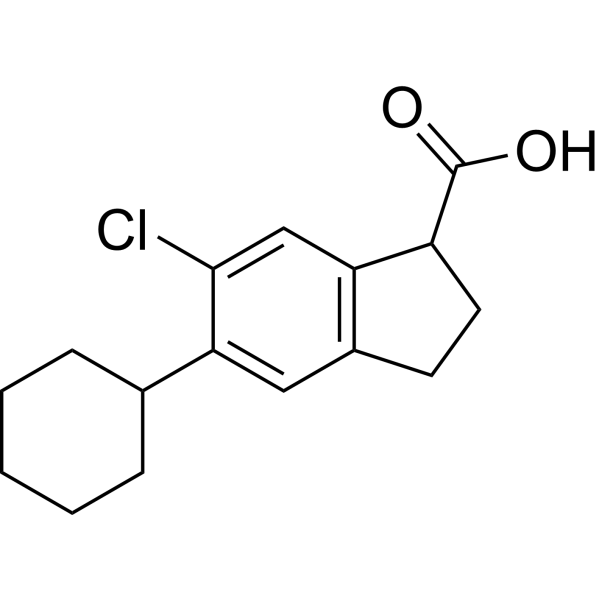
Clidanac is a potent anti-inflammatory agent. Clidanac can uncouple the oxidative phosphorylation and can be used for the research of rheumatoid arthritis .
loading...
    loading...
Cat. No.: HY-137922
CAS No.: 2379550-82-8
Research Areas:  

Metabolic Disease

SHS4121705 is an orally effective mitochondrial uncoupling agent with an IC50 of 4.3 μM in L6 myoblasts. SHS4121705 can be used in the study of non-alcoholic steatohepatitis (NASH) .
loading...
    loading...
Cat. No.: HY-139994
CAS No.: 2820169-36-4
Synonyms: XP
Research Areas:  

Metabolic Disease

XN methyl pyrazole (XP) is an orally active, blood-brain barrier permeable uncoupler/proton carrier. XN methyl pyrazole uncouples oxidative phosphorylation, depolarizes mitochondrial transmembrane potential, increases energy expenditure, spontaneous activity levels, and cortical inosine monophosphate levels. XN methyl pyrazole reduces plasma purine and energy metabolite levels, improves glucose tolerance, and decreases weight gain, while avoiding potential estrogenic side effects. XN methyl pyrazole can be used in studies related to diet-induced obesity and insulin resistance .
loading...
    loading...
Cat. No.: HY-N10094
CAS No.: 522-19-0
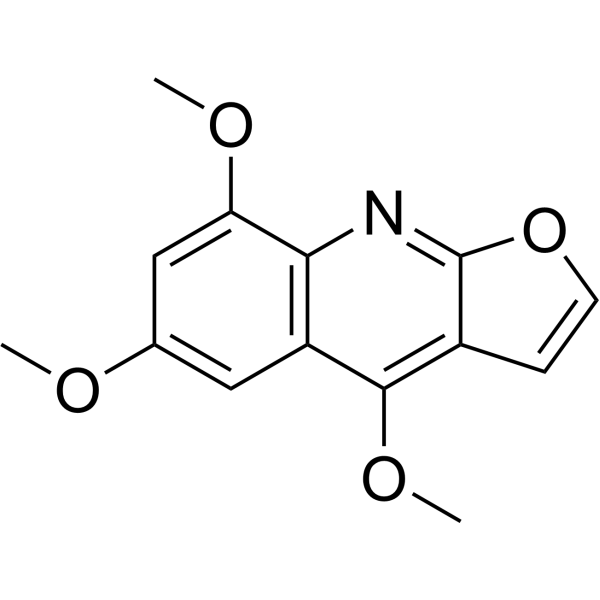
Maculosidine is a furoquinoline alkaloid that can be isolated from Balfourodendron riedelianum. Maculosidine inhibits ATP synthesis, basal, phosphorylating and uncoupled electron transport in plants. Maculosidine inhibits Hill reaction on spinach chloroplasts .
loading...
    loading...
Cat. No.: HY-113371R
CAS No.: 6061-96-7
Synonyms: Methylcitric acid (Standard)
Omeprazole (sodium) (Standard) is the analytical standard of Omeprazole (sodium). This product is intended for research and analytical applications. Omeprazole sodium (H 16868 sodium), a proton pump inhibitor (PPI), is available for treatment of acid-related gastrointestinal disorders. Omeprazole sodium shows competitive inhibition of CYP2C19 activity with a Ki of 2 to 6 μM . Omeprazole sodium also inhibits growth of Gram-positive and Gram-negative bacteria . Omeprazole is a potent brain penetrant neutral sphingomyelinase (N-SMase) inhibitor (exosome inhibitor) .
loading...
    loading...
Cat. No.: HY-P5315
CAS No.: 2769088-82-4
Target:  

NO Synthase

Research Areas:  

Others

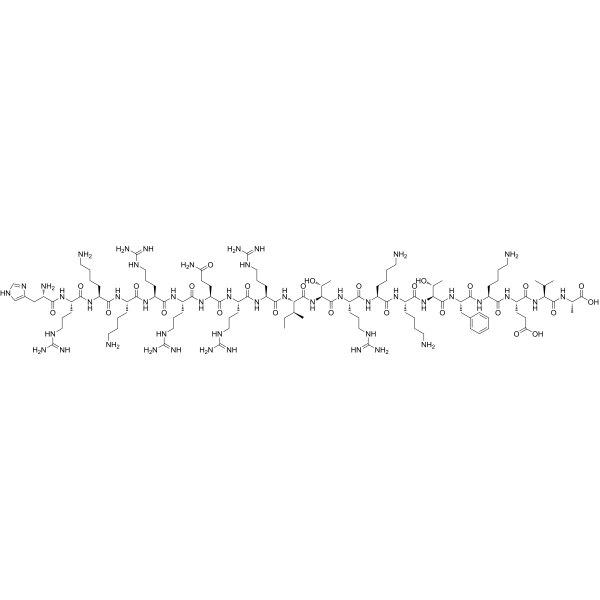
eNOS pT495 decoy peptide is a specific decoy peptide to prevent T495 phosphorylation reduced eNOS uncoupling and mitochondrial redistribution. eNOS pT495 decoy peptide is used in ventilator-induced lung injury research .
loading...
    loading...
Cat. No.: HY-159881
Target:  

Mitophagy

Research Areas:  

Metabolic Disease

SHS206 (compound 6n) is an orally active mitochondrial uncoupler that reduces hepatic triglyceride levels. SHS206 exhibits in vivo efficacy in the GAN mouse model and shows inhibitory effects on metabolic dysfunction-associated steatohepatitis (MASH) .
loading...
    loading...
Cat. No.: HY-B1729S
CAS No.: 21273-38-1
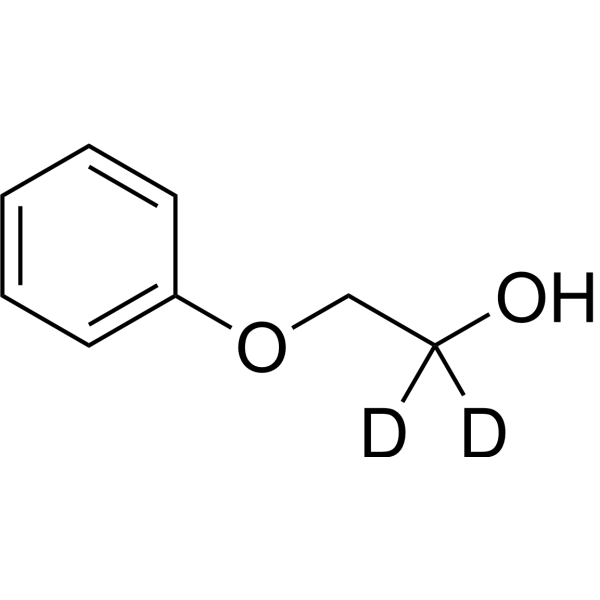
Phenoxyethanol-d2 is the deuterium labeled Phenoxyethanol . Phenoxyethanol has a broad spectrum of antimicrobial agent. Phenoxyethanol is an uncouple agent in oxidative phosphorylation from respiration and competitively inhibits malate dehydrogenase. Phenoxyethanol is used as a preservative in cosmetic, vaccine, and textile, et al .
loading...
    loading...
Cat. No.: HY-B1729S1
CAS No.: 1219804-65-5
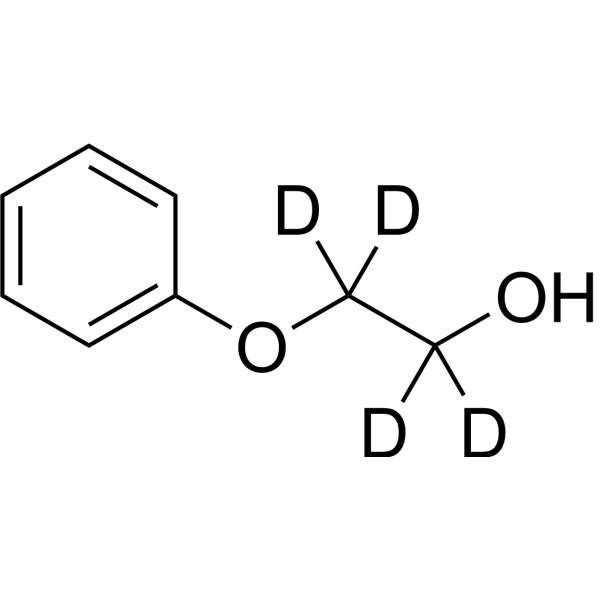
Phenoxyethanol-d4 is the deuterium labeled Phenoxyethanol. Phenoxyethanol has a broad spectrum of antimicrobial agent. Phenoxyethanol is an uncouple agent in oxidative phosphorylation from respiration and competitively inhibits malate dehydrogenase. Phenoxyethanol is used as a preservative in cosmetic, vaccine, and textile, et al .
loading...
    loading...
Cat. No.: HY-W032022S2
CAS No.: 52598-04-6
1-Hexanol-d3 is the deuterium labeled 1-Hexanol . 1-Hexanol, a primary alcohol, is a surfactant that can be employed in industrial processes to enhance interfacial properties . 1-Hexanol uncouples mitochondrial respiration by a non-protonophoric mechanism .
loading...
    loading...
Cat. No.: HY-W032022S3
CAS No.: 64118-18-9
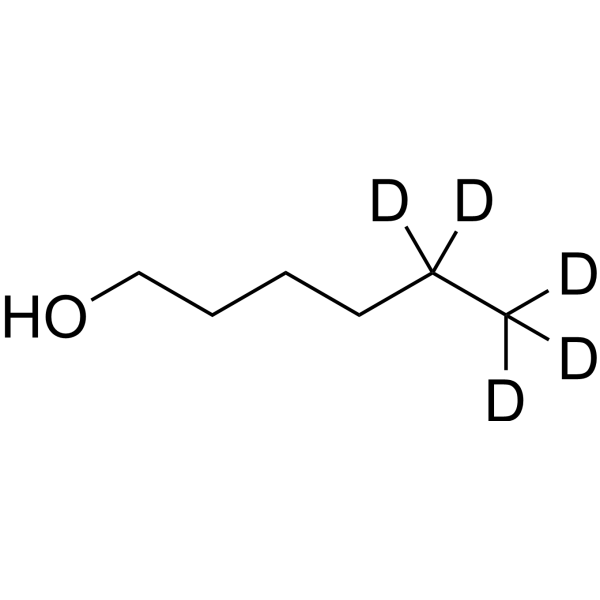
1-Hexanol-d5 is the deuterium labeled 1-Hexanol . 1-Hexanol, a primary alcohol, is a surfactant that can be employed in industrial processes to enhance interfacial properties . 1-Hexanol uncouples mitochondrial respiration by a non-protonophoric mechanism .
loading...
    loading...
Cat. No.: HY-W032022S4
CAS No.: 1335436-46-8
1-Hexanol-d2 is deuterated labeled 1-Hexanol (HY-W032022). 1-Hexanol, a primary alcohol, is a surfactant that can be employed in industrial processes to enhance interfacial properties . 1-Hexanol uncouples mitochondrial respiration by a non-protonophoric mechanism .
loading...
    loading...
Cat. No.: HY-157933
Research Areas:  

Infection

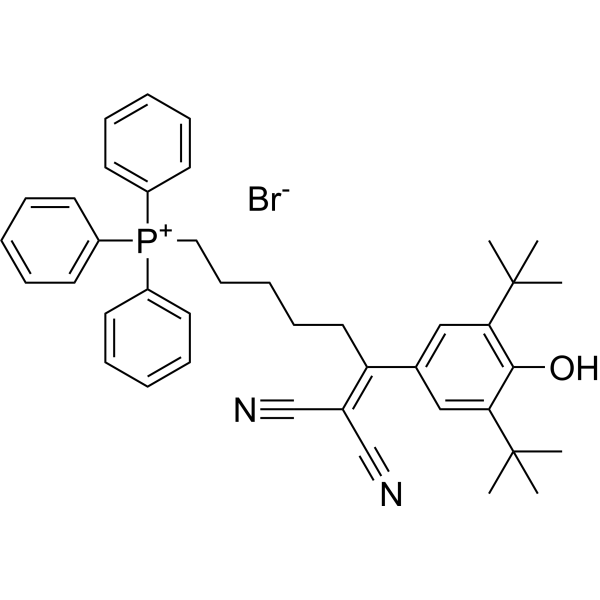
SF-C5-TPP is an potent mitochondria-targeted protonophoric uncoupler. SF-C5-TPP has significant proton transfer activity on model planar bilayer lipid membranes. SF-C5-TPP inhibits the growth of Bacillus subtilis with a MIC of 2 μM >[1].
loading...
    loading...
Cat. No.: HY-14881S2
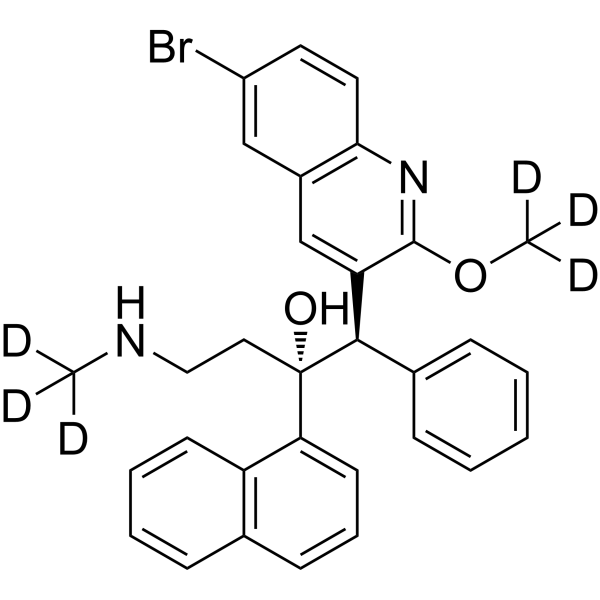
Bedaquiline impurity 2-d6 is deuterium labeled Bedaquiline. Bedaquiline (TMC207) is a diarylquinoline agent and inhibits Mycobacterium tuberculosis (Mtb) F1FO-ATP synthase through targeting of both the c- and the ε-subunit . Bedaquiline has uncoupler activity. Bedaquiline is used for the multi-agent resistant tuberculosis .
loading...
    loading...
Cat. No.: HY-174787
Target:  

mRNA

Research Areas:  

Cancer

Human ACKR3 mRNA encodes the human atypical chemokine receptor 3 (ACKR3) protein, a member of the G-protein coupled receptor family. ACKR3 is a typical chemokine receptor that controls chemokine levels and localization via high-affinity chemokine binding that is uncoupled from classic ligand-driven signal transduction cascades, resulting instead in chemokine sequestration, degradation, or transcytosis.
loading...
    loading...
Cat. No.: HY-N6687R
CAS No.: 52665-69-7
Synonyms: A-23187 (Standard); Antibiotic A-23187 (Standard)
Calcimycin (Standard) is the analytical standard of Calcimycin. This product is used for research and analytical applications. Calcimycin is an antibiotic and a unique divalent cation ionophore, such as calcium ions and magnesium ions. Calcimycin induces Ca 2+ -dependent cell death by increasing the intracellular calcium concentration. Calcimycin inhibits the growth of Gram-positive bacteria and some fungi, and also inhibits the activity of ATPase and uncouples the oxidative phosphorylation (OXPHOS) of mammalian cells, inducing apoptosis and autophagy.
loading...
    loading...

