926 Results for "

dysfunction

" in MedChemExpress (MCE) Product Catalog:
Products (926)

926 Results for "dysfunction" in MCE Product Catalog:

Cat. No.: HY-P990774
CAS No.: 2768386-15-6
Synonyms: ASP-7266; TRAB-1; UPB-101

Target:  

Interleukin Related

연구분야:  

Inflammation/Immunology

Verekitug (ASP-7266; TRAB-1; UPB-101) is a human monoclonal antibody targeting the thymic stromal lymphopoietin receptor (TSLPR), with a mean half-life of approximately 20 days. At doses of Verekitug ≥100 mg, complete and sustained TSLPR-specific occupancy is achieved, and the antibody does not bind to IL-7Rα. By inhibiting TSLP-driven inflammatory responses, Verekitug blocks TSLP-induced cell proliferation and TARC expression, while reducing fractional exhaled NO levels, blood eosinophil counts, and levels of IL-5 and IgE. Verekitug significantly improves scores for nasal polyps, nasal congestion and olfactory dysfunction, with favorable safety and good tolerability; potential adverse reactions include headache, upper respiratory tract infection, sinusitis and nasopharyngitis. Verekitug is used in relevant studies on asthma, chronic rhinosinusitis with nasal polyps and chronic obstructive pulmonary disease .
loading...
    loading...
Cat. No.: HY-P990990
CAS No.: 2803875-75-2
Synonyms: YN011; YN012; YN015
Efsubaglutide alfa is a long-acting humanised GLP-1 receptor agonist . Efsubaglutide alfa binds specifically to the GLP-1 receptor, enhancing glucose-dependent insulin secretion, suppressing glucagon release, and promoting β-cell proliferation and increased β-cell mass. Efsubaglutide alfa improves glucose tolerance, increases pancreatic insulin content, and enhances β-cell secretory responses in isolated human islets. Efsubaglutide alfa reduces liver steatosis, lowers NAFLD Activity Scores, improves perisinusoidal collagen features, reduces serum ALT and AST levels, improves fasting glucose and triglyceride levels, and reduces body weight, liver weight and liver-to-body weight ratio. Efsubaglutide alfa can be used for the research of type 2 diabetes. Efsubaglutide alfa can be used for the research of metabolic dysfunction-associated steatohepatitis .
loading...
    loading...
Cat. No.: HY-P992060

Target:  

CD20 NF-κB

연구분야:  

Inflammation/Immunology Cancer

Anti-Mouse CD20 Antibody (18B12) is a B cell depleting agent that targets mouse CD20. Anti-Mouse CD20 Antibody (18B12) not only inhibits the growth of mesothelioma, lung cancer and thymoma, but also significantly enhances the efficacy of adenoviral tumor antigen vaccines and induces tumor regression by increasing the number of tumor-specific CD8 + T cells. Anti-Mouse CD20 Antibody (18B12) reduces B cell infiltration into the central nervous system of mice with experimental autoimmune encephalomyelitis, and delays motor dysfunction and neuronal death after spinal cord injury by alleviating inflammatory responses and tissue damage. Anti-Mouse CD20 Antibody (18B12) is widely applicable to research in fields related to mesothelioma, lung cancer, thymoma, experimental autoimmune encephalomyelitis and spinal cord injury .
loading...
    loading...
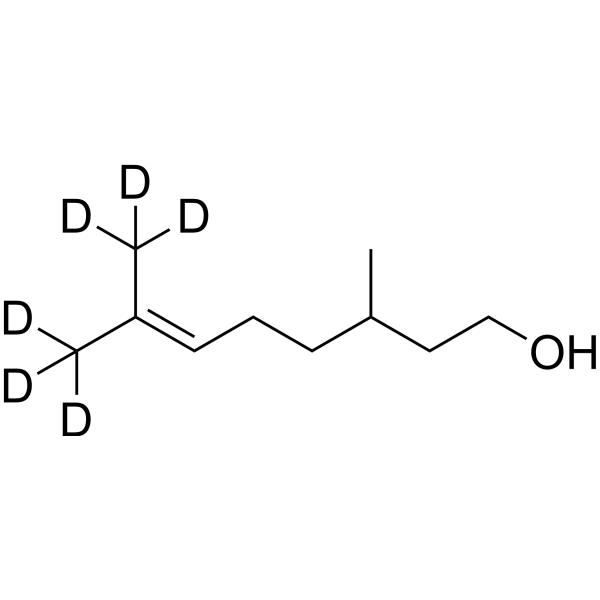
Cat. No.: HY-W010201S
CAS No.: 220687-53-6
Synonyms: (±)-Citronellol-d6; (±)-β-Citronellol-d6
Citronellol-d6 is deuterated labeled Citronellol (HY-W010201). Citronellol ((±)-Citronellol) is an orally active inducer of apoptosis. Citronellol can prevent oxidative stress, mitochondrial dysfunction, and apoptosis in the SH-SY5Y cell Parkinson's disease model induced by 6-OHDA by regulating the ROS-NO, MAPK/ERK, and PI3K/Akt signaling pathways. Citronellol can induce necroptosis in human lung cancer cells through the TNF-α pathway and accumulation of ROS. Citronellol can reduce the levels of LC-3 and p62 to regulate the autophagy pathway, inhibit oxidative stress and neuroinflammation, and thus have neuroprotective effects on Parkinson's rats. Citronellol exhibits anti-fungal activity against Trichophyton rubrum by inhibiting ergosterol synthesis .
loading...
    loading...
Cat. No.: HY-W010201S1
Synonyms: (±)-Citronelloll-d3; (±)-β-Citronelloll-d3
Citronellol-d3 ( (±)-Citronelloll-d3) is the deuterium labeled Citronellol (HY-W010201). Citronellol ((±)-Citronellol) is an orally active inducer of apoptosis. Citronellol can prevent oxidative stress, mitochondrial dysfunction, and apoptosis in the SH-SY5Y cell Parkinson's disease model induced by 6-OHDA by regulating the ROS-NO, MAPK/ERK, and PI3K/Akt signaling pathways. Citronellol can induce necroptosis in human lung cancer cells through the TNF-α pathway and accumulation of ROS. Citronellol can reduce the levels of LC-3 and p62 to regulate the autophagy pathway, inhibit oxidative stress and neuroinflammation, and thus have neuroprotective effects on Parkinson's rats. Citronellol exhibits anti-fungal activity against Trichophyton rubrum by inhibiting ergosterol synthesis .
loading...
    loading...
Cat. No.: HY-L263
70 compounds

Energy metabolism is the most fundamental biochemical process in living organisms, encompassing glycolysis, the TCA cycle, oxidative phosphorylation, the pentose phosphate pathway, and fatty acid oxidation. These core pathways directly regulate cell survival, proliferation, differentiation, and apoptosis. Dysregulation of energy metabolism is closely linked to major diseases including cancer, diabetes, obesity, cardiovascular diseases, neurodegenerative disorders, and ischemia‑reperfusion injury. Targeting these metabolic pathways has become a frontier in drug discovery and mechanistic research.

The MCE Energy Metabolite Compound Library features 70 structurally defined small‑molecule compounds. It covers energy substrates, pathway intermediates, coenzymes and redox carriers, nucleotide derivatives, and microenvironmental modulators. This library is applicable to research areas including tumor metabolism, insulin resistance, mitochondrial dysfunction, oxidative stress, neuroprotection, and cardiometabolic diseases, providing a high‑quality tool for mechanistic studies, biomarker discovery, and high‑throughput drug screening.

Cat. No.: HY-181934
CAS No.: 3125957-10-7
ClpP activator-2 (Compound GU18) is a ClpP activator with a Kd of 5.01 μM for HsClpP. ClpP activator-2 enhances the proteolytic activity of HsClpP and promotes the degradation of α-casein by HsClpP, with an EC50 of 1.09 μM. ClpP activator-2 induces the accumulation of mitochondrial reactive oxygen species (ROS), leading to damage to mitochondrial structure and function. ClpP activator-2 exhibits significant in vivo anti-multiple myeloma activity .
loading...
    loading...
Cat. No.: HY-N17612
CAS No.: 366477-44-3
Haplophytin-A is a quinoline alkaloid. Haplophytin-A is a potent apoptosis inducer that exerts robust anti-leukemic activity by activating the caspase-8-dependent apoptotic pathway. Haplophytin-A can be used for the research of promyelocytic leukemia .
loading...
    loading...
Cat. No.: HY-112726A
CAS No.: 1478364-40-7
Synonyms: BI-1467335 free base
Target:  

VAP-1 MMP

PXS-4728A free base is an orally active, selective VAP-1/SSAO inhibitor with an IC50 of 5 nM and a Ki of 175 nM. PXS-4728A free base inhibits the expression of MMP-9. It reduces cell rolling, adhesion and migration, decreases cell infiltration levels, pro-inflammatory cytokines, chemokines and collagen deposition, and improves pulmonary function. PXS-4728A free base reduces the formation and progression of atherosclerotic plaques, and decreases blood lipid and blood glucose levels as well as body weight gain. PXS-4728A free base can be used in research related to chronic obstructive pulmonary disease, cystic fibrosis, acute pulmonary inflammation, acute lung injury, bronchiolitis obliterans syndrome, rhinovirus-exacerbated asthma, sepsis, Klebsiella pneumoniae pulmonary infection and atherosclerosis .
loading...
    loading...
Cat. No.: HY-184587
Antibacterial agent 356 is an orally active antibacterial agent. Antibacterial agent 356 binds to the Mrr1 transcription factor, inhibits the expression of the MDR1 efflux pump gene, reduces the efflux of Rhodamine 123, and increases the accumulation of intracellular substrates in drug-resistant Candida albicans cells. Antibacterial agent 356 induces mitochondrial membrane potential reduction and ROS accumulation in Candida albicans, inhibits the yeast-hypha transition process, and suppresses its biofilm formation. Antibacterial agent 356 reverses efflux pump-mediated drug resistance in azole-resistant Candida albicans with overexpressed Mdr1. Antibacterial agent 356 improves the survival rate of Galleria mellonella larvae infected with azole-resistant Candida albicans*CA632, and reduces the renal fungal load and renal tissue damage in infected BALB/c mice. Antibacterial agent 356 can be used for the research of Candida albicans infection .
loading...
    loading...
Cat. No.: HY-184749
Target:  

Topoisomerase Apoptosis

연구분야:  

Cancer

Topoisomerase I-IN-24 (compound 5l) is a topoisomerase I (topoisomerase I) inhibitor. Topoisomerase I-IN-24 inhibits topoisomerase I activity in a concentration-dependent manner, suppresses cancer cell migration, induces apoptosis (apoptosis), and arrests the cell cycle at the G1 phase. Topoisomerase I-IN-24 can be used in the research of lung cancer, hepatocellular carcinoma and cervical adenocarcinoma .
loading...
    loading...
Cat. No.: HY-187518
CAS No.: 3134912-65-2
연구분야:  

Infection

NMT-IN-9 is an arylpyrrolidone-based NMT inhibitor with an IC50 of 93.20 nM and a KD of 5.57 × 10 -9 M against NMT. NMT-IN-9 exhibits broad-spectrum antifungal activity against Candida albicans, Candida glabrata, Candida tropicalis, Cryptococcus neoformans and Aspergillus fumigatus, with an MIC of 2-16 μg/mL, and retains activity against fluconazole-resistant Candida isolates, with an MIC of 8-16 μg/mL. NMT-IN-9 induces intracellular ROS accumulation, mitochondrial membrane depolarization, DNA damage, apoptosis and necrotic cell death in fungal cells, and disrupts fungal cell integrity. NMT-IN-9 can be used for studies on NMT-targeted antifungal mechanisms and fluconazole-resistant Candida infections .
loading...
    loading...
Cat. No.: HY-155719
Target:  

Paraptosis

연구분야:  

Cancer

fac-[Re(CO)3(L3)(H2O)][NO3] (compound 3), the rhenium(I) tricarbonyl aqua complex, is an anticancer agent associated with mitochondrial dysfunction. fac-[Re(CO)3(L3)(H2O)][NO3] is cytotoxic to prostate cancer cells with IC50=0.32 μM (PC-3 cells). fac-[Re(CO)3(L3)(H2O)][NO3] mainly accumulates in mitochondria, down-regulates ATP production in PC3 cells, and promotes paraptosis. However, fac-[Re(CO)3(L3)(H2O)][NO3] did not induce necrosis, apoptosis and autophagy .
loading...
    loading...
Cat. No.: HY-174829
CAS No.: 13198-99-7
7,4'-Dimethoxy-3-hydroxyflavone is an orally active PAR4 antagonist. 7,4'-Dimethoxy-3-hydroxyflavone inhibits PAR4-mediated human platelet aggregation with an IC50 of 1.4 μM. 7,4'-Dimethoxy-3-hydroxyflavone inhibits PAR4-mediated human platelet aggregation and PAR4 signaling pathways, including NF-κB, Ca 2+/protein kinase C, Akt, ERK and p38. 7,4'-Dimethoxy-3-hydroxyflavone prevents vascular PAR4 expression, endothelial dysfunction and ameliorates oxidative stress in Streptozotocin (STZ) (HY-13753)-induced diabetic mice. 7,4'-Dimethoxy-3-hydroxyflavone prevents thrombosis in mice without affecting bleeding time [1][2].
loading...
    loading...
Cat. No.: HY-176149
연구분야:  

Cancer

Fluoxetine-Conjugated Platinum(IV) prodrug-1 (Compound 8) is an eEF2K inhibitor. Fluoxetine-Conjugated Platinum(IV) prodrug-1 inhibits cancer cell proliferation, induces DNA damage, cell cycle arrest at S phase and apoptosis. Fluoxetine-Conjugated Platinum(IV) prodrug-1 induces ROS accumulation and mitochondrial dysfunction. Fluoxetine-Conjugated Platinum(IV) prodrug-1 inhibits TNBC cell migration and invasion by inhibiting MMP-2 activity. Fluoxetine-Conjugated Platinum(IV) prodrug-1 induces autophagy in TNBC cells by activating AMPK. Fluoxetine-Conjugated Platinum(IV) prodrug-1 has antitumor activity and activates immunosuppression in the 4T1-Luc mouse model. Fluoxetine-Conjugated Platinum(IV) prodrug-1 can be used in triple-negative breast cancer (TNBC) research .
loading...
    loading...
Cat. No.: HY-183309
Target:  

FXR 17β-HSD

연구분야:  

Inflammation/Immunology

FXR/HSD17B13-modulator-2 is a dual FXR activator and HSD17B13 inhibitor with human FXR EC50 of 128 nM, human HSD17B13 IC50 of 0.18 μM, high selectivity over related nuclear receptors and HSD17B isoforms, and oral effectiveness.FXR/HSD17B13-modulator-2 alleviates fatty liver, regulates lipid metabolism, reduces inflammation, and attenuates hepatic fibrosis.FXR/HSD17B13-modulator-2 is the first non-carboxylic acid dual FXR/HSD17B13 modulator.FXR/HSD17B13-modulator-2 can be used for the research of metabolic dysfunction-associated steatohepatitis .
loading...
    loading...
Cat. No.: HY-183403
CAS No.: 457075-21-7
Synonyms: CHF 2819 free base
Target:  

Cholinesterase (ChE)

연구분야:  

Neurological Disease

Ganstigmine (CHF 2819 free base) is a potent, orally active, blood-brain barrier-permeable acetylcholinesterase (AChE) inhibitor, with an IC50 value of 65 nM against human AChE, 310 nM against human butyrylcholinesterase (BChE), and 5.12 μM against Torpedo californica AChE. Ganstigmine increases extracellular acetylcholine levels in the brain of rodents without altering the concentrations of other neurotransmitters, stimulates cholinergic transmission, and induces the release of soluble non-amyloidogenic amyloid precursor protein. Ganstigmine exhibits neuroprotective activity independent of cholinesterase inhibition, prevents neuronal death, alleviates β-amyloid-induced neurodegeneration, rescues cholinergic neuron loss, and reverses Scopolamine (HY-N0296)-induced amnesia and memory deficits. Ganstigmine shows cholinesterase inhibition-independent neuroprotective effects against growth factor deprivation and Aβ25-35 toxicity. Ganstigmine can be used in research on Alzheimer's disease, cholinergic dysfunction, and neuroprotection .
loading...
    loading...
Cat. No.: HY-184265
CAS No.: 1993461-76-9
Synonyms: Mito-Esc
Mito-Esculetin (Mito-Esc) is an orally active mitochondria-targeted derivative of Esculetin (HY-N0284). Mito-Esculetin inhibits LPS-induced phosphorylation of STAT3 Tyr-705, partially reverses LPS-mediated depletion of SIRT3, and enhances the AMPK-SIRT1 signaling axis. Mito-Esculetin inhibits PAI-1 activity, regulates miRNA, and induces phosphorylation of IRS and AKT. Mito-Esculetin suppresses oxidant-induced endothelial dysfunction, Ang-II (HY-13948)- and high glucose-induced atherosclerotic plaque formation, Palmitate (HY-N0830)-induced insulin resistance, as well as high glucose-mediated endothelial cell senescence and inflammatory responses. Mito-Esculetin reduces body weight and non-esterified fatty acid (NEFA) levels. Mito-Esculetin can be used in research related to acute coronary syndrome, type 2 diabetes, and hyperglycemia-induced atherosclerosis .
loading...
    loading...
Cat. No.: HY-B0464R
CAS No.: 304-20-1
Hydralazine (hydrochloride) (Standard) is the analytical standard of Hydralazine (hydrochloride). This product is intended for research and analytical applications. Hydralazine hydrochloride is an orally active, blood-brain barrier-permeable DNA methyltransferase inhibitor with vasodilatory, arterial smooth muscle relaxant and hypotensive activities. Hydralazine hydrochloride reactivates silenced tumor suppressor genes via mediating DNA demethylation, while exerting neuroprotective and anti-inflammatory properties. Hydralazine hydrochloride inhibits NOS-2 (iNOS) and COX-2, and reduces the production of NO and PGEE2; meanwhile, Hydralazine hydrochloride scavenges reactive oxygen species and inhibits macrophage activation. Hydralazine hydrochloride alleviates motor dysfunction, neuropathic inflammatory pain, and formalin-induced somatic and emotional pain responses. In addition, Hydralazine hydrochloride directly induces DNA strand breaks and sister chromatid exchange, exhibiting certain mutagenic characteristics. Hydralazine hydrochloride has been widely used in studies on hypertension, various cancers (such as cervical cancer, leukemia), spinal cord injury and the mechanisms of inflammatory pain .
loading...
    loading...
Cat. No.: HY-B0464S
CAS No.: 2749234-32-8
Hydralazine-d4 hydrochloride is the deuterium labeled Hydralazine hydrochloride. Hydralazine hydrochloride is an orally active, blood-brain barrier-permeable DNA methyltransferase inhibitor with vasodilatory, arterial smooth muscle relaxant and hypotensive activities. Hydralazine hydrochloride reactivates silenced tumor suppressor genes via mediating DNA demethylation, while exerting neuroprotective and anti-inflammatory properties. Hydralazine hydrochloride inhibits NOS-2 (iNOS) and COX-2, and reduces the production of NO and PGEE2; meanwhile, Hydralazine hydrochloride scavenges reactive oxygen species and inhibits macrophage activation. Hydralazine hydrochloride alleviates motor dysfunction, neuropathic inflammatory pain, and formalin-induced somatic and emotional pain responses. In addition, Hydralazine hydrochloride directly induces DNA strand breaks and sister chromatid exchange, exhibiting certain mutagenic characteristics. Hydralazine hydrochloride has been widely used in studies on hypertension, various cancers (such as cervical cancer, leukemia), spinal cord injury and the mechanisms of inflammatory pain .
loading...
    loading...

