130 Results for "

Addiction

" in MedChemExpress (MCE) Product Catalog:
Products (130)

130 Results for "Addiction" in MCE Product Catalog:

Cat. No.: HY-106980A
CAS No.: 266686-77-5
Synonyms: (-)-18-Methoxycoronaridine hydrochloride
18-Methoxycoronaridine ((-)-18-Methoxycoronaridine) hydrochloride is an orally active and selective α3β4 nicotinic acetylcholine receptor (nAChR) antagonist. 18-Methoxycoronaridine hydrochloride is an inhibitor of serotonin transporter (SERT) and norepinephrine transporter (NET), with IC50 values of 51.6 μM and 121 μM for SERT and NET, respectively. 18-Methoxycoronaridine hydrochloride inhibits the function of SERT and NET, promotes 5-HT3A receptor desensitization, blocks α3β4 nAChR, and modulates receptor signaling pathways associated with reinforcement. 18-Methoxycoronaridine hydrochloride also exhibits potent antiparasitic activity. 18-Methoxycoronaridine hydrochloride can be used in research related to depression, obesity, alcoholism, smoking addiction, and cutaneous leishmaniasis .
loading...
    loading...
Cat. No.: HY-124446
CAS No.: 523-88-6
Research Areas:  

Metabolic Disease

Dibromsalicil (Compound 31) is a carboxylesterase (CES) inhibitor with activity of 72.7 nM against hiCE (human intestinal carboxylesterase) and 53.5 nM against rCE (rabbit liver carboxylesterase). Dibromsalicil has almost no activity against hCE1 (human liver carboxylesterase) and cholinesterase .
loading...
    loading...
Cat. No.: HY-182011
CAS No.: 3029155-57-2
Target:  

GPR6

Research Areas:  

Neurological Disease

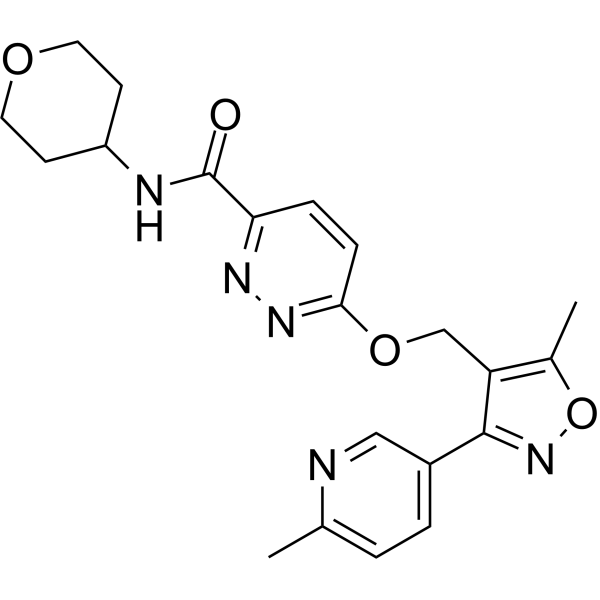
GPR6 inverse agonist 2 (Compound 575) is a selective GPR6 inverse agonist, with IC50 values of < 0.1 μM and 1~30 μM against GPR6 and GPR3, respectively. GPR6 inverse agonist 2 exhibits preliminary cardiac safety, with an IC50 of 21.71 μM for hERG. GPR6 inverse agonist 2 can be used in the research of movement disorders such as Parkinson's disease .
loading...
    loading...
Cat. No.: HY-129215
CAS No.: 652978-45-5
RTI-371 is a highly selective atypical dopamine transporter (DAT) inhibitor that crosses the blood-brain barrier. RTI-371 exhibits potent inhibitory activity in cell lines transfected with human DAT (IC50 = 8.7 nM) and shows high binding affinity for rat DAT with a Ki value of 7.81 nM. RTI-371 also acts as a positive allosteric modulator of the human cannabinoid 1 receptor (hCB1 receptor), enhancing the activity of cannabinoid receptor agonists in a concentration-dependent manner. RTI-371 can be used for the research of Parkinson's disease .
loading...
    loading...
Cat. No.: HY-B0445B
CAS No.: 7298-93-3
Synonyms: α-Nicotinamide Adenine Dinucleotide
α-NAD (α-Nicotinamide Adenine Dinucleotide) serves as a substrate for reninase, functions as an analog of β-NAD, affects the kinetics of NAD-dependent enzymes, and also plays a critical role as a cofactor in mitochondrial redox reactions .
loading...
    loading...
Cat. No.: HY-110168
CAS No.: 913830-15-6
Purity:  98.36%
Target:  

nAChR

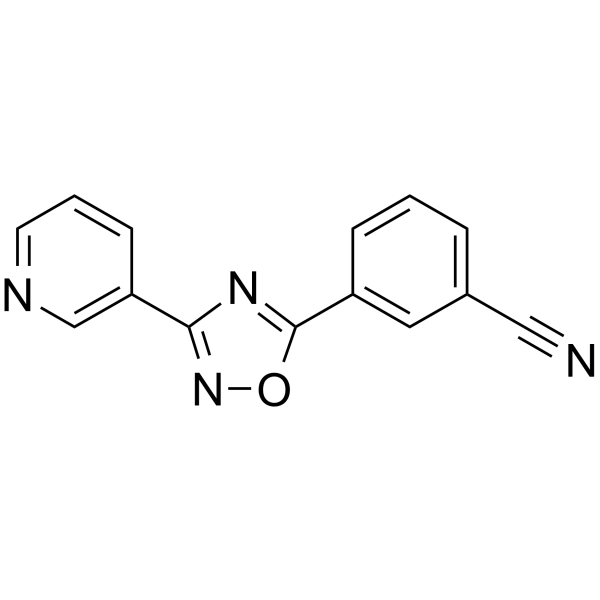
NS 9283 (A-969933) is a α4β2 nicotinic acetylcholine receptor (α4β2 nAChR) positive allosteric modulator that preferentially targets the (α4)3 (β2)2 stoichiometric conformation. NS 9283 increases the potency of ACh-induced currents without enhancing the maximal effect of ACh. NS 9283 also enhances prefrontal glutamate release, modulates attention-related electrophysiological responses, and potentiates the antinociceptive effects associated with α4β2 nAChR agonists. NS 9283 can be used in research related to inflammatory pain, postoperative pain, osteoarthritis pain, and Parkinson's disease .
loading...
    loading...
Cat. No.: HY-110168R
CAS No.: 913830-15-6
NS 9283 (Standard) is the analytical standard of NS 9283 (HY-110168). This product is intended for research and analytical applications. NS 9283 (A-969933) is a α4β2 nicotinic acetylcholine receptor (α4β2 nAChR) positive allosteric modulator that preferentially targets the (α4)3 (β2)2 stoichiometric conformation. NS 9283 increases the potency of ACh-induced currents without enhancing the maximal effect of ACh. NS 9283 also enhances prefrontal glutamate release, modulates attention-related electrophysiological responses, and potentiates the antinociceptive effects associated with α4β2 nAChR agonists. NS 9283 can be used in research related to inflammatory pain, postoperative pain, osteoarthritis pain, and Parkinson's disease .
loading...
    loading...
Cat. No.: HY-110168S
NS 9283-d4 is the deuterated-labeled NS 9283 (HY-110168). NS 9283 (A-969933) is a α4β2 nicotinic acetylcholine receptor (α4β2 nAChR) positive allosteric modulator that preferentially targets the (α4)3 (β2)2 stoichiometric conformation. NS 9283 increases the potency of ACh-induced currents without enhancing the maximal effect of ACh. NS 9283 also enhances prefrontal glutamate release, modulates attention-related electrophysiological responses, and potentiates the antinociceptive effects associated with α4β2 nAChR agonists. NS 9283 can be used in research related to inflammatory pain, postoperative pain, osteoarthritis pain, and Parkinson's disease .
loading...
    loading...
Cat. No.: HY-132806
CAS No.: 2230009-48-8
Purity:  99.93%
Synonyms: RG-7816; RO-7017773
Target:  

GABA Receptor

Research Areas:  

Neurological Disease

Alogabat is a positive allosteric modulator (PAM) and agonist (Ki <100 nM) of the GABAA α5 receptor, targeting the α5β3γ2 subunit with a Ki of 8.7 nM. Alogabat increases the expression level of α5β3γ2 in oocytes (1.97-fold). GABAA has been implicated in cognitive impairment associated with central nervous system (CNS) disorders, brain cancer (including brain tumors such as medulloblastoma), and can be used in the study of mild cognitive impairment (MCI), amnestic MCI (aMCI), age-associated memory impairment (AAMI), age-related cognitive decline (ARCD), dementia, Alzheimer's disease (AD), prodromal AD, post-traumatic stress disorder (PTSD), schizophrenia, bipolar disorder, amyotrophic lateral sclerosis (ALS), cognitive impairment associated with cancer treatment, mental retardation, Parkinson's disease (PD), autism spectrum disorder, fragile X, Rett syndrome, obsessive-compulsive behavior, and substance addiction .
loading...
    loading...
Cat. No.: HY-L083
3,806 compounds

Mutations in oncogenes and tumor suppressor genes can modify multiple signaling pathways and in turn cell metabolism, which facilitates tumorigenesis. The paramount hallmark of tumor metabolism is “aerobic glycolysis” or the Warburg effect, coined by Otto Warburg in 1926, in which cancer cells produce most of energy from glycolysis pathway regardless of whether in aerobic or anaerobic condition. Usually, cancer cells are highly glycolytic (glucose addiction) and take up more glucose than do normal cells from outside. The increased uptake of glucose is facilitated by the overexpression of several isoforms of membrane glucose transporters (GLUTs). Likewise, the metabolic pathways of glutamine, amino acid and fat metabolism are also altered. Recent trends in anti-cancer drug discovery suggests that targeting the altered metabolic pathways of cancer cells result in energy crisis inside the cancer cells and can selectively inhibit cancer cell proliferation by delaying or suppressing tumor growth.

MCE provides a unique collection of 3,806 compounds which cover various tumor metabolism-related signaling pathways. These compounds can be used for anti-cancer metabolism targets identification, validation as well anti-cancer drug discovery.

