




12 Results for "

α-helical structure

" in MedChemExpress (MCE) Product Catalog:
Products (12)

12 Results for "α-helical structure" in MCE Product Catalog:

2
2 Cited Publications
Cat. No.: HY-N6708
CAS No.: 27061-78-5
Alamethicin is a linear 20-amino acid antibiotic, which can induce voltage-gated conductance in model and cell membranes. Alamethicin exhibits antimicrobial activity against Gram-positive bacteria, but not Gram-negative bacteria. Alamethicin can form an amphipathic α-helical structure in biological membranes .
loading...
    loading...
Cat. No.: HY-P4076
CAS No.: 791642-10-9
Research Areas:  

Infection

MPG peptides, Pβ is an amphipathic cell-penetrating peptide. MPG peptides, Pβ consists of three components: the hydrophobic fusion sequence (GALFLGFLGAAGSTMGA) of HIV glycoprotein 41, a spacer domain (WSQP), and the nuclear localization signal (KKKRKV) of the large T antigen of Simian virus 40. MPG peptides, Pβ can form stable non-covalent complexes with nucleic acids (including DNA) through electrostatic interactions and improve their intracellular delivery. MPG peptides, Pβ can be used in studies of HIV-1-related immune responses .
loading...
    loading...
Cat. No.: HY-W004864
CAS No.: 288617-73-2
Research Areas:  

Others

Fmoc-(S)-2-(4-pentenyl) Ala-OH is an Fmoc-protected unnatural amino acid. Fmoc-(S)-2-(4-pentenyl) Ala-OH can be used for polypeptide synthesis, such as NYAD-13 (HY-P10834) .
loading...
    loading...
Cat. No.: HY-P10531
CAS No.: 2413353-86-1
Target:  

Peptides

Research Areas:  

Others

ALFA-tag is a small and stable α-helical structure composed of 15 amino acids. ALFA-tag is highly hydrophilic and can be placed at the N-terminus, C-terminus, or between two independently folded domains of the target protein without affecting the function of the protein. ALFA-tag is widely used as an epitope tag and is used for the detection and manipulation of proteins in living cells .
loading...
    loading...
Cat. No.: HY-P5557
CAS No.: 1429184-62-2
Target:  

Bacterial Necroptosis

Research Areas:  

Infection Inflammation/Immunology

TP4 (Nile tilapia piscidin) is an orally active amphipathic α-helical cationic antimicrobial peptide. TP4 (Nile tilapia piscidin) exerts broad-spectrum bactericidal activity against Gram-positive and Gram-negative bacteria by disrupting cell membrane structures, and also exhibits certain hemolytic activity. TP4 (Nile tilapia piscidin) regulates the innate immune system and enhances the expression of lysozymes, cytokines and antioxidant enzymes to resist bacterial infection. TP4 (Nile tilapia piscidin) also stimulates the proliferation of keratinocytes and fibroblasts, and significantly promotes the healing of wounds infected with MRSA. TP4 (Nile tilapia piscidin) can be used in research related to bacterial infection, peritonitis, wound healing and other fields .
loading...
    loading...
Cat. No.: HY-P4823
CAS No.: 136799-54-7
Target:  

Adenylate Cyclase PTHR

Research Areas:  

Metabolic Disease

PTH (1-37) human is an adenylate cyclase stimulator and a normocalcemic regulator. PTH (1-37) human participates in cAMP-dependent signal transduction to affect the proliferation of skeletal tissue cells and bone metabolism. PTH (1-37) human induces cyclic adenosine monophosphate responses in human primary osteoblast-like cells and is also widely used in osteoporosis-related research .
loading...
    loading...
Cat. No.: HY-P2530
CAS No.: 187987-64-0
Target:  

Peptides

Research Areas:  

Others

KALA is an amphiphilic peptide that forms an α-helical structure at physiological pH. KALA modifies a plasmid DNA-encapsulating liposomal membrane and is used as a fusogenic peptide in order to achieve effective liver targeting and transfection of DNA via galactose receptors .
loading...
    loading...
Cat. No.: HY-W006886
CAS No.: 945212-26-0
Research Areas:  

Others

Fmoc-(R)-2-(7-octenyl) Ala-OH is an unnatural Fmoc-protected amino acid and modification module. Fmoc-(R)-2-(7-octenyl) Ala-OH serves as a key building block for all-hydrocarbon cross-linking modification of antimicrobial peptides, and facilitates the generation of stapled peptide derivatives. When introduced into specific sites of the parent peptide, Fmoc-(R)-2-(7-octenyl) Ala-OH effectively increases the α-helix content of the peptide chain, thereby significantly enhancing its antimicrobial activity and proteolytic stability. Fmoc-(R)-2-(7-octenyl) Ala-OH is widely used in research on bacterial infections and the development of related antimicrobial agents . Stapled peptide is a specially chemically modified polypeptide. It locks the peptide chain into a stable α-helical structure by introducing a "staple"-like chemical bridge (usually an all-carbon backbone) at specific positions of the peptide chain.
loading...
    loading...
Cat. No.: HY-D0193A
CAS No.: 2611-82-7
Synonyms: Acid Red 18 (85%); New Coccine (85%)
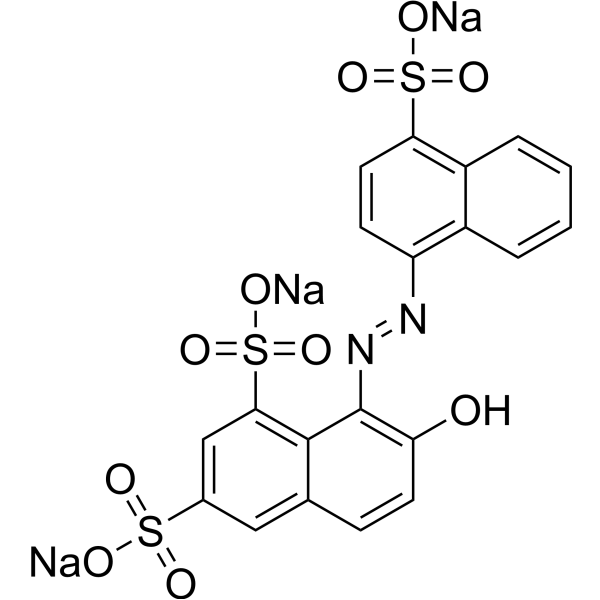
Ponceau 4R (85%) (Acid Red 18 (85%); New Coccine (85%)) is an orally active synthetic food colorant and a HSA-binding aggregator. Ponceau 4R (85%) binds to HSA, inducing its partial unfolding, conformational changes and aggregation. Ponceau 4R (85%) serves as a food colorant and can be used in research on diseases including type Ⅱ diabetes, Parkinson's disease, Huntington's disease and spongiform encephalopathy .
loading...
    loading...
Cat. No.: HY-150536
Target:  

HIV HIV Protease

Research Areas:  

Infection

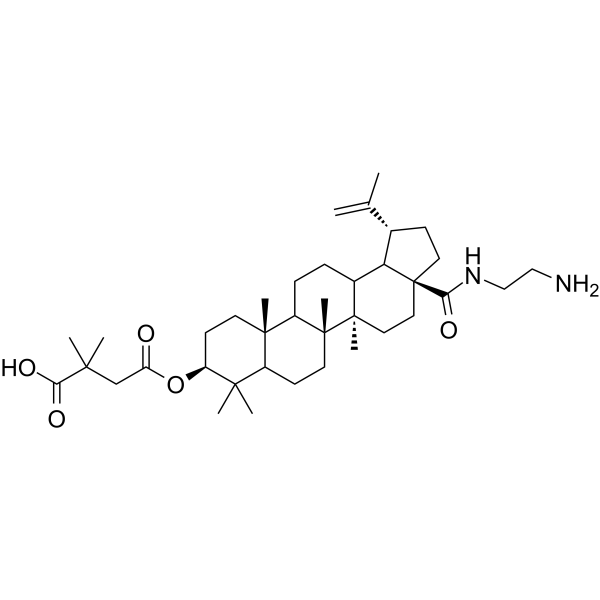
EP39 is a potent HIV-1 maturation inhibitor. EP39 interacts with the SP1 domain of Gag. EP39 decreases the dynamics of CA-SP1 junction, by binding to the QVT motif of the SP1 domain, and perturbs the natural coil-helix equilibrium on both sides of the SP1 domain by stabilizing the transient alpha helical structure. EP39 acts by arresting maturation of HIV-1 thereby blocking its infectivity .
loading...
    loading...
Cat. No.: HY-P11353
CAS No.: 117138-19-9
Research Areas:  

Infection Cancer

HA2 peptide is a potent pH-responsive fusion peptide derived from hemagglutinin (HA), corresponding to the N-terminal fusion peptide domain consisting of 23 amino acid residues of HIV-1 gp41 envelope glycoprotein. HA2 peptide adopts a random coil structure under physiological pH conditions; in acidic endosomes, protonation of carboxyl groups reduces negative charge, inducing a transition to an α-helical conformation that can fuse with and destabilize the endosomal membrane. After binding to membranes, the N-terminal and middle regions of HA2 peptide mainly adopt a β-strand conformation, while the C-terminal region remains unstructured. HA2 peptide induces lipid mixing and promotes aqueous content leakage from large unilamellar vesicles whose lipid composition matches that of HIV-1 viruses and target T cells. HA2 peptide is anionic and can bind to cationic peptides to achieve siRNA condensation. HA2 peptide can be used in studies related to cancer and human immunodeficiency virus (HIV) infection .
loading...
    loading...
Cat. No.: HY-P10534A
ccβ acetate is a 17-residue peptide that folds into a coiled-coil trimer at low temperatures and aggregates to form amyloid fibrils at high temperatures. ccβ acetate serves as a simple model system for investigating α-helix to β-sheet conformational transitions and template-mediated aggregation processes associated with prion and amyloidogenic diseases. ccβ acetate can be used in studies of prion diseases and Alzheimer's disease .
loading...
    loading...
  • 1

