Search Result
Results for "
ACAT Inhibitor
" in MedChemExpress (MCE) Product Catalog:
4
Isotope-Labeled Compounds
| Cat. No. |
Product Name |
Target |
Research Areas |
Chemical Structure |
-
- HY-13215
-
Avasimibe
Maximum Cited Publications
17 Publications Verification
CI-1011; PD-148515
|
Acyltransferase
|
Cancer
|
|
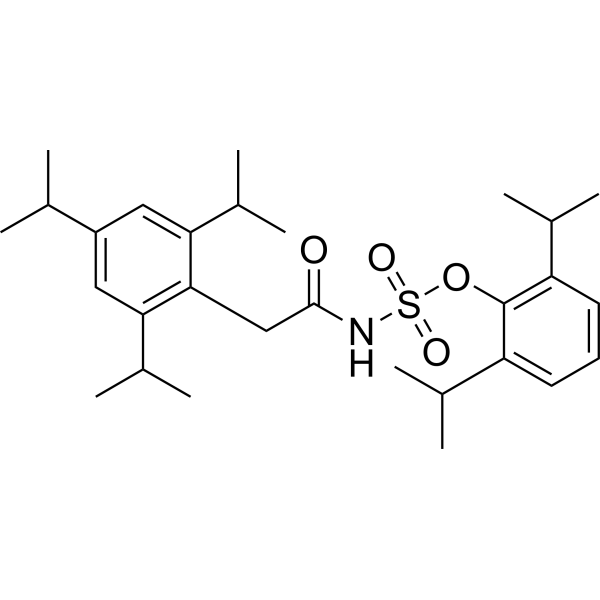
Avasimibe (CI-1011; PD-148515) is an orally active acyl coenzyme A-cholesterol acyltransferase (ACAT; also called SOAT)) inhibitor with IC50s of 24 and 9.2 µM for ACAT1 and ACAT2, respectively . Avasimibe can be used for the research of prostate cancer .
|
-
-
- HY-100400A
-
-
-
- HY-N4193
-
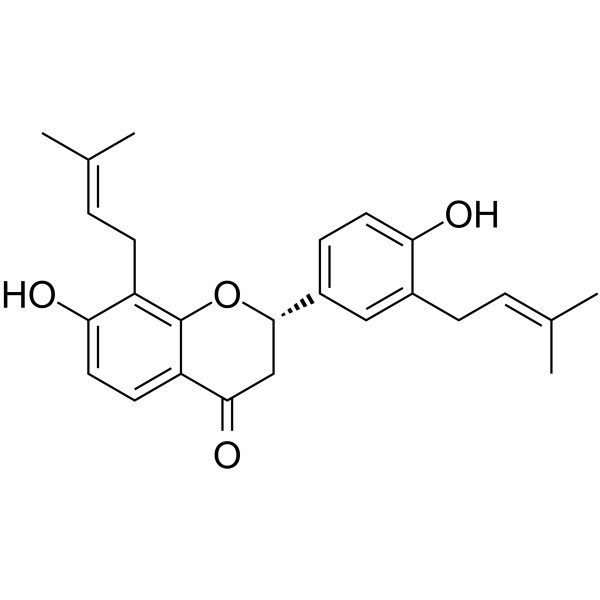
Glabrol
3 Publications Verification
|
Acyltransferase
|
Cardiovascular Disease
|
|
Glabrol (Compound 1), One isoprenyl flavonoid was isolated from ethanol extract of licorice roots, is a potent and non-competitive Acyl-coenzyme A: cholesterol acyltransferase (ACAT) inhibitor with an IC50 value of 24.6 μM for rat liver microsomal ACAT activity .
|
-
-
- HY-111880
-
-
-
- HY-100399
-
|
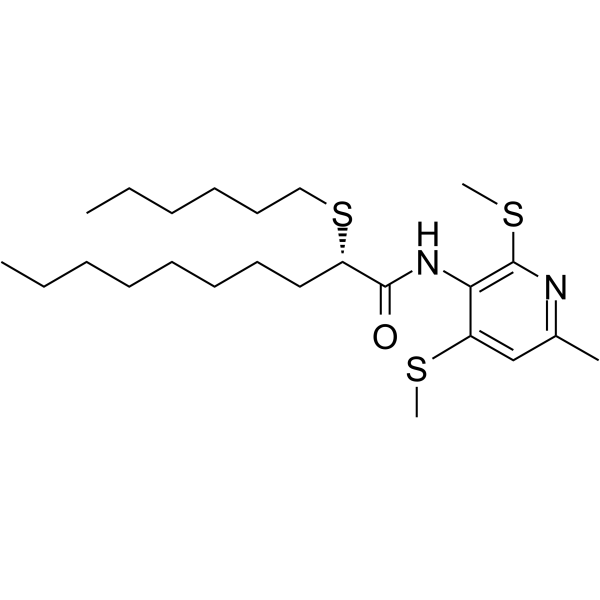
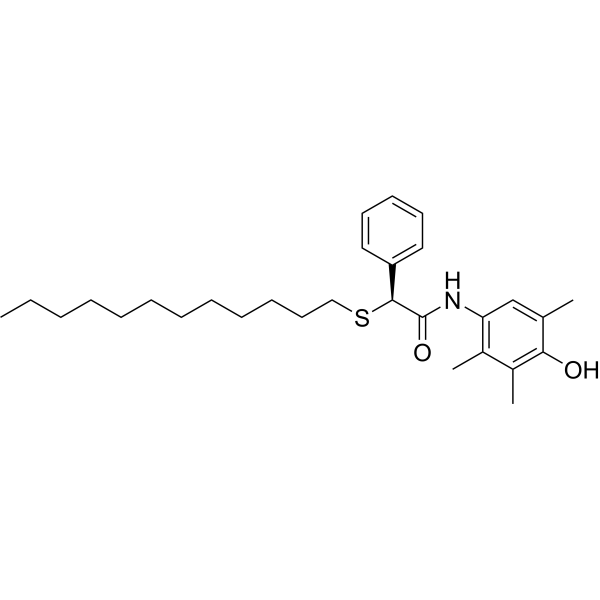
PD-132301; ATR-101
|
Acyltransferase
Apoptosis
|
Cancer
|
|
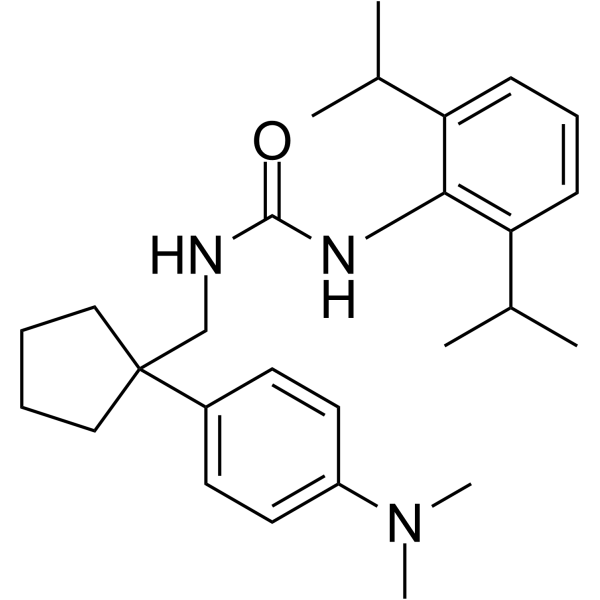
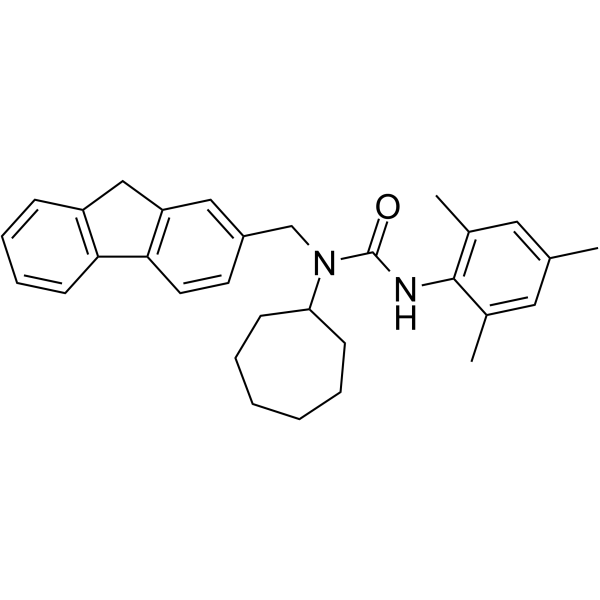
Nevanimibe (PD-132301) is an orally active and selective acyl-coenzyme A:cholesterol O-acyltransferase 1 (ACAT1) inhibitor with an EC50 of 9 nM. Nevanimibe inhibits ACAT2 with an EC50 of 368 nM. Nevanimibe induces cell apoptosis and has the potential for adrenocortical cancer .
|
-
-
- HY-100399A
-
|
PD-132301 hydrochloride; ATR101 hydrochloride
|
Acyltransferase
Apoptosis
|
Cancer
|
|
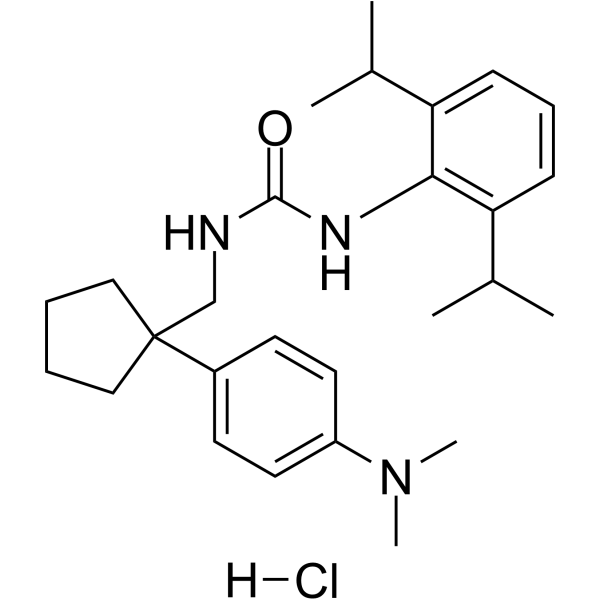
Nevanimibe hydrochloride (PD-132301 hydrochloride) is an orally active and selective acyl-coenzyme A:cholesterol O-acyltransferase 1 (ACAT1) inhibitor with an EC50 of 9 nM. Nevanimibe hydrochloride inhibits ACAT2 with an EC50 of 368 nM. Nevanimibe hydrochloride induces cell apoptosis and has the potential for adrenocortical cancer .
|
-
-
- HY-112487
-
|
|
Acyltransferase
|
Endocrinology
|
|
Sandoz 58-035 is a competitive inhibitor of cholesterol acyltransferase (ACAT). Sandoz 58-035 effectively inhibits (>98%) hormonally stimulated cholesterol esterification in cells .
|
-
-
- HY-117832
-
-
-
- HY-107572
-
|
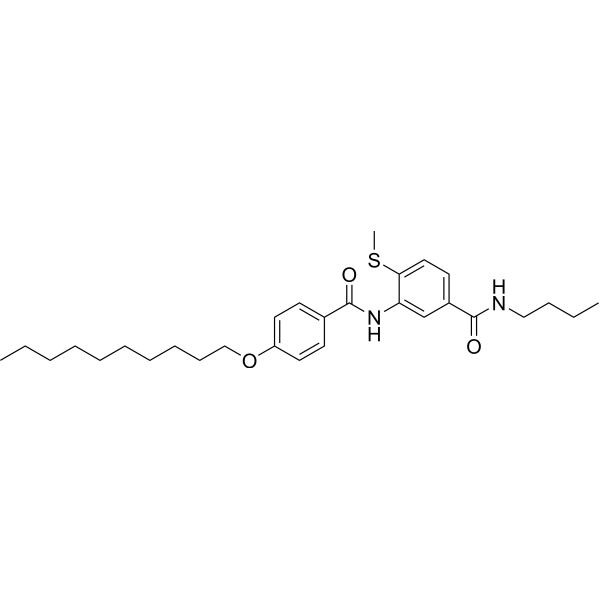
CI 976
|
Acyltransferase
|
Metabolic Disease
|
|
PD 128042 (CI 976) is a potent, orally active, and selective inhibitor of ACAT (acyl coenzyme A:cholesterol acyltransferase) with an IC50s of 73 nM. PD 128042 is also a potent LPAT (lysophospholipid acyltransferase) inhibitor. PD 128042 inhibits Golgi-associated LPAT activity (IC50=15 μM). PD 128042 inhibits multiple membrane trafficking steps, including ones found in the endocytic and secretory pathway .
|
-
-
- HY-105445
-
-
-
- HY-100401
-
|
CS-505 free base
|
Acyltransferase
|
Cardiovascular Disease
|
|
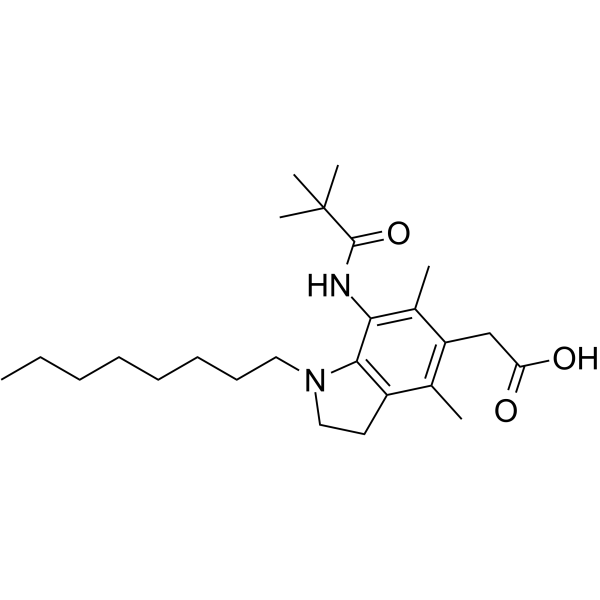
Pactimibe (CS-505 free base) is a dual ACAT1/2 inhibitor with IC50s of 4.9 μM and 3.0 μM, respectively. Pactimibe (CS-505 free base) inhibits ACAT with IC50s of 2.0 μM, 2.7 μM, 4.7 μM in the liver, macrophages and THP-1 cells, respectively . Pactimibe (CS-505 free base) noncompetitively inhibits oleoyl-CoA with a Ki value of 5.6 μM. Moreover, Pactimibe (CS-505 free base) obviously inhibits cholesteryl ester formation with an IC50 of 6.7 μM. Pactimibe (CS-505 free base) possesses anti-atherosclerotic potential with lowering plasma cholesterol activity .
|
-
-
- HY-N3807
-
|
|
Acyltransferase
ERK
NF-κB
|
Infection
Cardiovascular Disease
Cancer
|
|
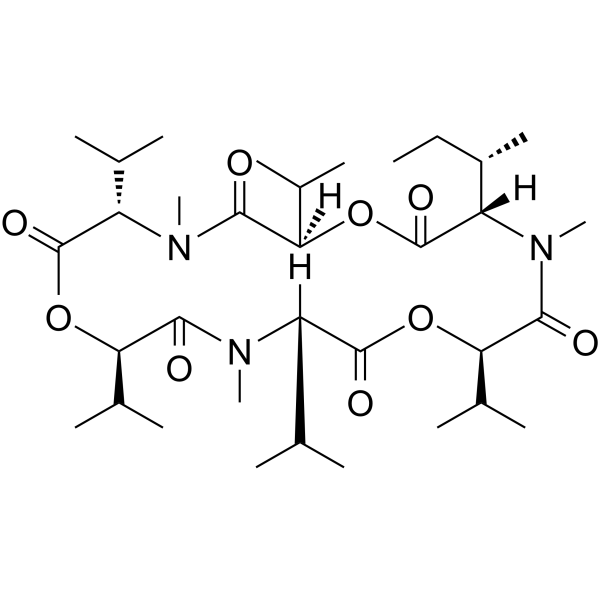
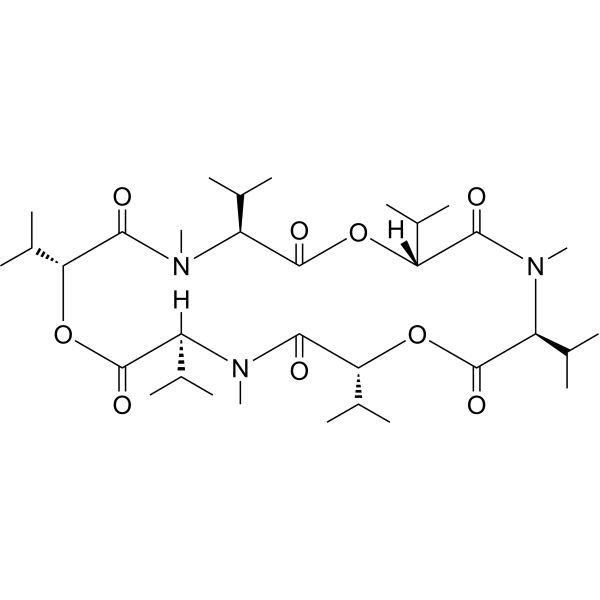
Enniatin B1 is a Fusarium mycotoxin. Enniatin B1 inhibits acyl-CoA: cholesterol acyltransferase (ACAT) activity with an IC50 of 73 μM in an enzyme assay using rat liver microsomes . Enniatin B1 crosss the blood-brain barrier . Enniatin B1 decreases the activation of ERK (p44/p42). Enniatin B1 inhibits moderately TNF-α-induced NF-κB activation .
|
-
-
- HY-107396
-
|
|
Acyltransferase
|
Cardiovascular Disease
|
|
YM-750 is a potent acyl-CoA:cholesterol acyltransferase (ACAT) inhibitor (IC50=0.18 μM). ACAT catalyzes the formation of cholesteryl esters from cholesterol and long-chain fatty-acyl-coenzyme A .
|
-
-
- HY-16437
-
-
-
- HY-100401A
-
|
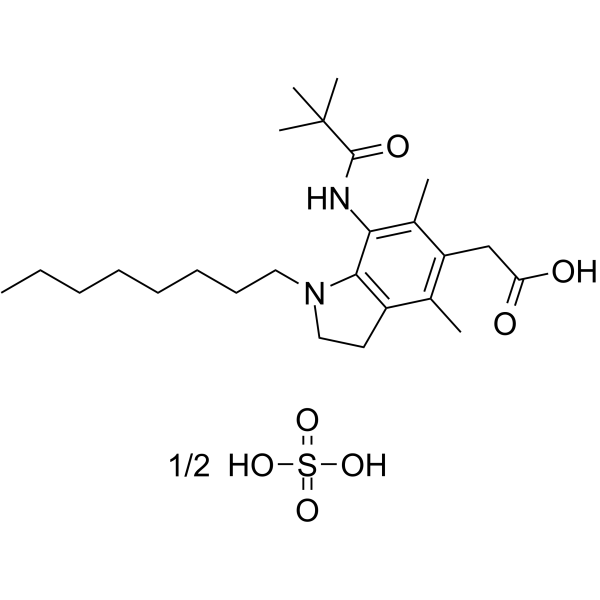
CS-505
|
Acyltransferase
|
Cardiovascular Disease
|
|
Pactimibe sulfate (CS-505) is a dual ACAT1/2 inhibitor with IC50s of 4.9 μM and 3.0 μM, respectively. Pactimibe sulfate (CS-505) inhibits ACAT with IC50s of 2.0 μM, 2.7 μM, 4.7 μM in the liver, macrophages and THP-1 cells, respectively . Pactimibe sulfate (CS-505) noncompetitively inhibits oleoyl-CoA with a Ki value of 5.6 μM. Moreover, Pactimibe sulfate (CS-505) obviously inhibits cholesteryl ester formation with an IC50 of 6.7 μM. Pactimibe sulfate (CS-505) possesses anti-atherosclerotic potential with lowering plasma cholesterol activity .
|
-
-
- HY-121254
-
-
-
- HY-N10788
-
|
|
Acyltransferase
|
Inflammation/Immunology
|
|
Pomonic acid is an acyl-coenzyme A: cholesterol acyltransferase (ACAT) inhibitor. Pomonic acid reduces the esterification of free cholesterol to cholesteryl esters and the accumulation of intracellular cholesteryl esters. Pomonic acid can be used in the research of atherosclerosis .
|
-
-
- HY-N3806
-
|
|
Acyltransferase
ERK
|
Infection
Cardiovascular Disease
Cancer
|
|
Enniatin B is a Fusarium mycotoxin. Enniatin B inhibits acyl-CoA: cholesterol acyltransferase (ACAT) activity with an IC50 of 113 μM in an enzyme assay using rat liver microsomes . Enniatins B decreases the activation of ERK (p44/p42) .
|
-
-
- HY-19286
-
|
F 12511
|
Acyltransferase
|
Cancer
|
|
Eflucimibe (F 12511) is a new acyl-coenzyme A cholesterol O-acyltransferase (ACAT) inhibitor. Eflucimibe can be used in the research of atherosclerosis .
|
-
-
- HY-169813
-
|
|
Acyltransferase
|
Cardiovascular Disease
|
|
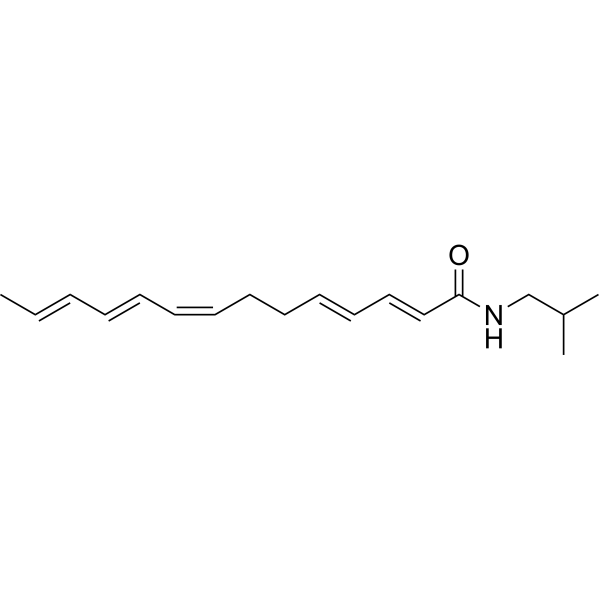
Yakuchinone B is an Acyl-CoA: cholesterol O-acyltransferase (ACAT) inhibitor with hypocholesterolemic activity, which is found in the seeds of Zingiberaceae. Yakuchinone B inhibits rat hepatic ACAT with an IC50 value of 20.6 μM. Yakuchinone B is promising for research of hypercholesterolemia and atherosclerosis .
|
-
-
- HY-124064
-
|
|
Acyltransferase
|
Metabolic Disease
|
|
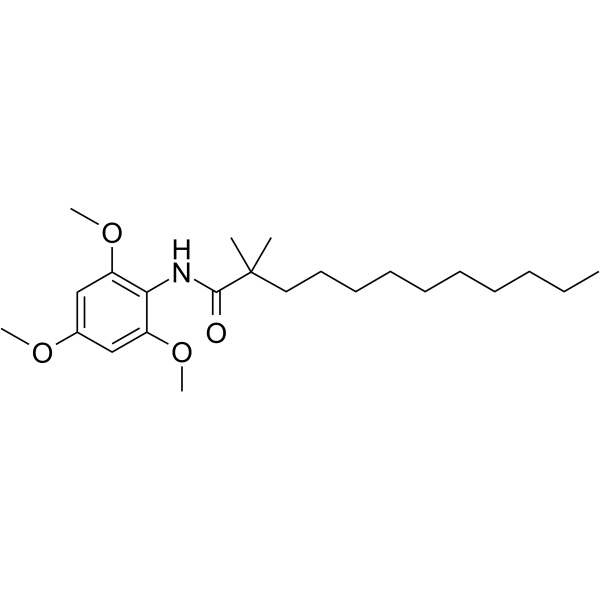
TMP-153 is an orally active inhibitor of ACAT with an IC50 value of approximately 5-10 nM against hepatic and intestinal ACAT in varicose animals. TMP-153 exhibits cholesterol-lowering effects and can be utilized in the research of atherosclerosis .
|
-
-
- HY-N10224
-
|
|
Acyltransferase
|
Metabolic Disease
|
|
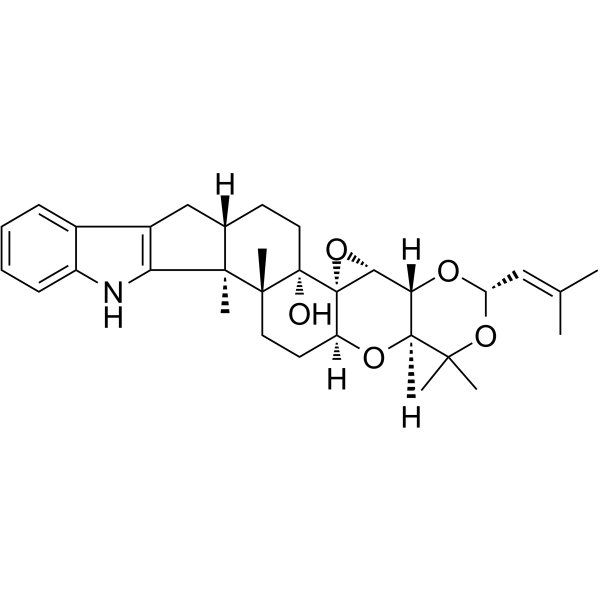
Terpendole C, produced by Albophoma yamanashiensis, shows potent inhibitory activity against acyl-CoA: cholesterol acyltransferase (ACAT) .
|
-
-
- HY-N8331
-
-
-
- HY-129344
-
|
|
Acyltransferase
|
Metabolic Disease
|
|
CL 277082 is a potent and selective acyl CoA:cholesterol acyltransferase (ACAT) inhibitor in microsomes. CL 277082 inhibits ACAT with IC50 values of 0.14 μM for intestinal mucosal microsomes, 0.74 μM for liver, and 1.18 μM for rat adrenal. CL 277082 is a ACAT-catalyzed cholesterol esterification and cholesterol absorption inhibitor .
|
-
-
- HY-101576
-
-
-
- HY-100288
-
-
-
- HY-N6702
-
-
-
- HY-101627
-
-
-
- HY-16281
-
|
DuP 128
|
Acyltransferase
|
Metabolic Disease
|
|
Lecimibide (DuP 128) is a potent and specific acyl-CoA:cholesterol acyltransferase (ACAT) inhibitor for antihyperlipidemia research .
|
-
-
- HY-120082
-
|
|
Acyltransferase
|
Metabolic Disease
|
|
FR-182980 is an orally active ACAT1 inhibitor (IC50: 30 nM). FR-182980 has hypocholesterolemic activity and can be used for research of atherosclerosis .
|
-
-
- HY-123040
-
-
-
- HY-19251
-
|
|
Acyltransferase
|
Cardiovascular Disease
Metabolic Disease
|
|
CL-283796 is a potent and orally active acyl-CoA:cholesterol acyltransferase (ACAT) inhibitor. CL-283796 reduces low-density lipoprotein (LDL) cholesterol without affecting cholesterol absorption in African green monkeys. CL-283796 can be used for hypercholesterolemia research .
|
-
-
- HY-N10234
-
|
|
Acyltransferase
|
Infection
|
|
Phenylpyropene A, a fungal metabolite, is a potent acyl-CoA: cholesterol acyltransferase (ACAT) inhibitor with an IC50 of 0.8 μM .
|
-
-
- HY-121407
-
|
|
Acyltransferase
|
Infection
Cancer
|
|
Lateritin is a potent inhibitor of acyl-CoA:cholesterol acyltransferase (ACAT), isolated from the mycelial cake of Gibberella lateritium IFO 7188 . Lateritin also inhibits the growth of a mini-panel of human cancer cell lines, gram-positive bacteria, and Candida albicans .
|
-
-
- HY-129340
-
|
|
Acyltransferase
|
Cardiovascular Disease
|
|
AS-183 is an inhibitor of cholesterol acyltransferase (ACAT) (IC50=0.94 µM). AS-183 also inhibits the formation of cholesterol esters in HepG2, CaCo2 and THP-1 cells with IC50 values of 18.1, 25.5 and 34.5 µM, respectively. AS-183 can be used in the study of atherosclerosis and hypercholesterolemia .
|
-
-
- HY-139020
-
-
-
- HY-139024
-
-
-
- HY-139025
-
-
-
- HY-139021
-
-
-
- HY-139021A
-
|
|
Acyltransferase
|
Inflammation/Immunology
|
|
ACAT-IN-4 hydrochloride (Example 208) is an acyl-Coenzyme A:cholesterol acyltransferase (ACAT) inhibitor. ACAT-IN-4 hydrochloride inhibits NF-κB mediated transcription .
|
-
-
- HY-139022
-
-
-
- HY-101648
-
-
-
- HY-139026
-
|
|
Acyltransferase
|
Inflammation/Immunology
|
|
ACAT-IN-9 is an acyl-Coenzyme A:cholesterol acyltransferase (ACAT) inhibitor extracted from patent EP1236468A1, example 207. ACAT-IN-9 inhibits NF-κB mediated transcription .
|
-
-
- HY-139019
-
|
|
Acyltransferase
|
Inflammation/Immunology
|
|
ACAT-IN-2 is an acyl-Coenzyme A:cholesterol acyltransferase (ACAT) inhibitor extracted from patent EP1236468A1, example 187. ACAT-IN-2 inhibits NF-κB mediated transcription .
|
-
-
- HY-139023
-
|
|
Acyltransferase
|
Inflammation/Immunology
|
|
ACAT-IN-6 is an acyl-Coenzyme A:cholesterol acyltransferase (ACAT) inhibitor extracted from patent EP1236468A1, example 200. ACAT-IN-6 potently inhibits NF-κB mediated transcription .
|
-
-
- HY-139027A
-
|
|
Acyltransferase
|
Inflammation/Immunology
|
|
ACAT-IN-10 dihydrochloride is an acyl-Coenzyme A:cholesterol acyltransferase (ACAT) inhibitor extracted from patent EP1236468A1, example 197. ACAT-IN-10 dihydrochloride weakly inhibits NF-κB mediated transcription .
|
-
-
- HY-139027
-
|
|
Acyltransferase
|
Inflammation/Immunology
|
|
ACAT-IN-10 is an acyl-Coenzyme A:cholesterol acyltransferase (ACAT) inhibitor extracted from patent EP1236468A1, example 197. ACAT-IN-10 weakly inhibits NF-κB mediated transcription .
|
-
-
- HY-U00369
-
|
|
Acyltransferase
|
Cardiovascular Disease
|
|
FCE 28654 is an inhibitor of acylCoA: cholesterol acyltransferase (ACAT), weakly inhibiting ACAT in microsomes from rabbit aorta and intestine, and monkey liver, with IC50s of 2.55, 1.08 and 5.69 μM, respcetively.
|
-
-
- HY-N14649
-
-
-
- HY-N14648
-
-
- HY-N14573
-
-
- HY-13215R
-
|
CI-1011 (Standard); PD-148515 (Standard)
|
Acyltransferase
Reference Standards
|
Cancer
|
|
Avasimibe (Standard) is the analytical standard of Avasimibe. This product is intended for research and analytical applications. Avasimibe (CI-1011; PD-148515) is an orally active acyl coenzyme A-cholesterol acyltransferase (ACAT; also called SOAT)) inhibitor with IC50s of 24 and 9.2 µM for ACAT1 and ACAT2, respectively . Avasimibe can be used for the research of prostate cancer .
|
-
- HY-N14525
-
|
|
Acyltransferase
|
Infection
|
|
Glisoprenin A is a cholesterol acyltransferase (ACAT) inhibitor, and it can inhibit the formation of Appressorium on the hydrophobic surface of Magnaporthegrisea .
|
-
- HY-N14715
-
|
|
Acyltransferase
|
Metabolic Disease
|
|
Gypsetin can inhibit acylcoenzyme A, cholesterol acyltransferase (ACAT) activity, inhibit rat liver microbody ACAT with an IC50 of 18 μM, and its action is competitive with oleoyl-COA substrate, Ki value is 5.5 μM. Gypsetin also inhibits Oleic acid from forming cholesterol esters with an IC50 of 0.65 μM .
|
-
- HY-N14688
-
-
- HY-167664
-
|
|
Acyltransferase
|
Metabolic Disease
|
|
KY-455 is a novel inhibitor of acyl-CoA:cholesterol acyltransferase (ACAT). KY-455 inhibita rabbit intestinal, hepatic, macrophage and adrenal ACAT with IC50 values of 0.4, 0.9, 2.9 and 4.1 μmol/L, respectively.
|
-
- HY-N14574
-
|
|
Acyltransferase
|
Infection
|
|
Glisoprenin C is a cholesterol acyltransferase (ACAT) inhibitor, and it can inhibit the formation of Appressorium on the hydrophobic surface of Magnaporthegrisea .
|
-
- HY-N14816
-
|
|
Acyltransferase
|
Infection
|
|
Glisoprenin E is a cholesterol acyltransferase (ACAT) inhibitor, and it can inhibit the formation of Appressorium on the hydrophobic surface of Magnaporthegrisea .
|
-
- HY-N14813
-
|
|
Acyltransferase
|
Infection
|
|
Glisoprenin D is a cholesterol acyltransferase (ACAT) inhibitor, and it can inhibit the formation of Appressorium on the hydrophobic surface of Magnaporthegrisea .
|
-
- HY-N9552
-
|
|
Acyltransferase
|
Infection
|
|
Purpactin A is a cholesterol acyltransferase (ACAT) inhibitor found in Pen. Purpurogenum FO-6 .
|
-
- HY-100400AR
-
|
|
Reference Standards
Acyltransferase
|
Cardiovascular Disease
|
|
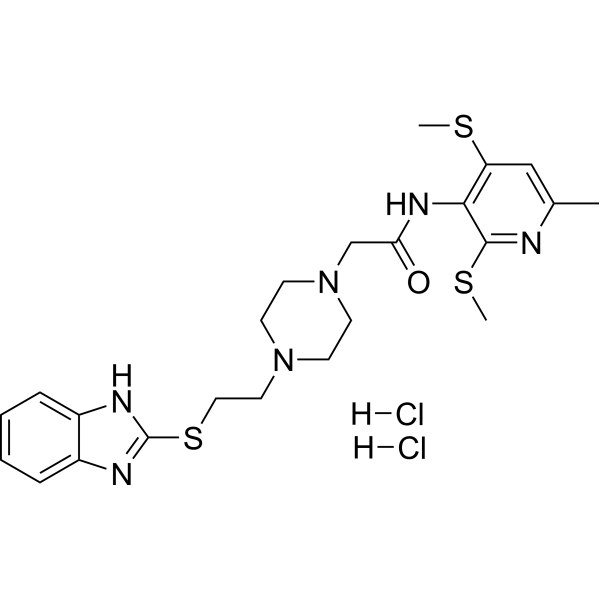
K-604 (dihydrochloride) (Standard) is the analytical standard of K-604 (dihydrochloride). This product is intended for research and analytical applications. K-604 dihydrochloride is a potent and selective acyl-CoA:cholesterol acyltransferase 1 (ACAT-1) inhibitor with an IC50 of 0.45±0.06 μM.
|
-
- HY-100399AR
-
|
PD-132301 hydrochloride (Standard); ATR101 hydrochloride (Standard)
|
Reference Standards
Acyltransferase
Apoptosis
|
Cancer
|
|
Nevanimibe hydrochloride (Standard) is the analytical standard of Nevanimibe hydrochloride. This product is intended for research and analytical applications. Nevanimibe hydrochloride (PD-132301 hydrochloride) is an orally active and selective acyl-coenzyme A:cholesterol O-acyltransferase 1 (ACAT1) inhibitor with an EC50 of 9 nM. Nevanimibe hydrochloride inhibits ACAT2 with an EC50 of 368 nM. Nevanimibe hydrochloride induces cell apoptosis and has the potential for adrenocortical cancer .
|
-
- HY-19183
-
-
- HY-N14968
-
|
|
Parasite
Fungal
|
Infection
|
|
Enniatin F has insecticidal and antifungal activity. Enniatin F also can inhibit acyl-CoA, cholesterol acyltransferase (ACAT) .
|
-
- HY-122078
-
|
|
Acyltransferase
|
Metabolic Disease
|
|
FR-190809 is a potent, nonadrenotoxic, orally efficacious acyl-CoA:cholesterol O-acyltransferase (ACAT) inhibitor, with an IC50 of 45 nM .
|
-
- HY-118486
-
|
|
Acyltransferase
|
Metabolic Disease
|
|
LDL-IN-1 (Compound 1) is an antioxidant, and is active against copper mediated LDL oxidation (IC50 = 52 μM). LDL-IN-1 is also an Acyl-CoA:cholesterol acyltransferase-1 and -2 (ACAT-1/2) inhibitor, with IC50s of 60 μM. LDL-IN-1 can be used for anti-atherosclerotic research .
|
-
- HY-N9524
-
|
|
Acyltransferase
|
Metabolic Disease
|
|
Ilexoside XLVIII is an acyl CoA cholesteryl acyl transferase (ACAT) inhibitor. Ilexoside XLVIII is a triterpene saponin isolated from an aqueous extract of the leaves of Ilex kudincha .
|
-
- HY-106902
-
|
|
Acyltransferase
|
Cardiovascular Disease
|
|
F-1394 is an orally active acyl-CoA:cholesterol acyltransferase (ACAT) inhibitor that inhibits dietary cholesterol absorption in mice. F-1394 can be used in cardiovascular disease research .
|
-
- HY-N14614
-
|
|
Acyltransferase
|
Metabolic Disease
|
|
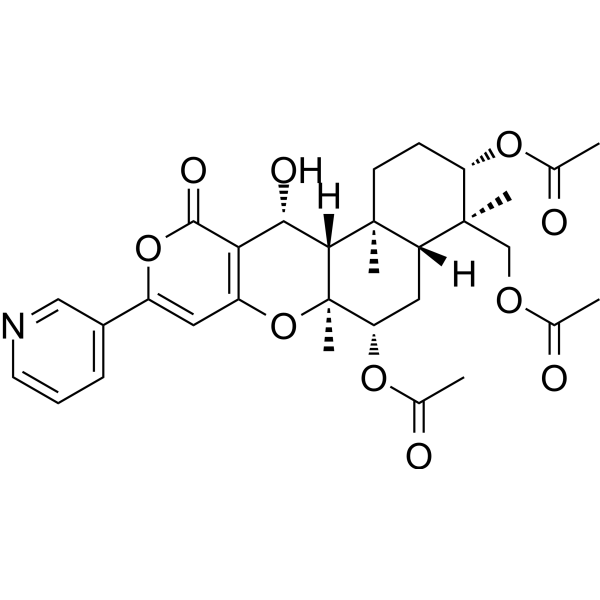
Pyripyropene B is a powerful acyl-CoA: cholesterol acyltransferase 2 (ACAT2) inhibitor found in the fungus Aspergillus fumigatus FO 1289. Pyripyropene B inhibits acyl-CoA: cholesterol acyltransferase with an IC50 of 117 nM .
|
-
- HY-117466
-
|
|
Acyltransferase
|
Metabolic Disease
|
|
FR186054 is an oral active acyl-Coenzyme A:cholesterol acyltransferase (ACAT) inhibitor with the IC50 of 99 nM. FR186054 shows hypocholesterolemic effect and can be used for study of hypercholesterolemia and atherosclerosis .
|
-
- HY-121762
-
|
|
Acyltransferase
|
Cardiovascular Disease
|
|
NTE-122 (dihydrochloride) is an inhibitor of acyl-CoA:cholesterol acyltransferase (ACAT), with the IC50 in liver and aorta of cholesterol-fed rabbits of 7.6nM, 4.4nM and 9.6 nM, respectively, that plays an important role in atherosclerosis .
|
-
- HY-114952
-
|
|
Acyltransferase
|
Cardiovascular Disease
|
|
SM-32504 is an effective ACAT inhibitor that can significantly reduce serum cholesterol levels in mouse models fed with high-fat and high-cholesterol diets. SM-32504 can be used for research on hypercholesterolemia and atherosclerosis .
|
-
- HY-106818A
-
|
AJ-2615
|
Acyltransferase
Calcium Channel
|
Cardiovascular Disease
Metabolic Disease
|
|
Monatepil maleate (AJ-2615) is a potent and orally active Ca 2+-channel antagonist and a noncompetitive ACAT inhibitor. Monatepil maleate decreases blood pressure and improves plasma lipid metabolism. Monatepil maleate has the potential for the research of hyperlipidemia .
|
-
- HY-114619
-
|
Oleic acid anilide; OAA
|
Acyltransferase
|
Others
|
|
Oleyl anilide (Oleic acid anilide) is a toxic agent found in some stocks of toxic oil, which is associated with toxic oil syndrome (TOS). Oleyl anilide is an inhibitor of acyl-coenzyme A:cholesterol acyltransferase (ACAT) (IC50: 26 µM) .
|
-
- HY-N15411
-
|
|
Acyltransferase
Phytohormone
|
Metabolic Disease
|
|
Helminthosporol is a natural plant growth-regulator that can promote the growth of rice and lettuce seedlings. Helminthosporol can also inhibit the activity of acyl-CoA: cholesterol acyltransferase (ACAT) in rat liver microsomes and the synthesis of cholesterol esters in macrophages .
|
-
- HY-106938
-
|
WAY-ACA 147
|
Acyltransferase
|
Cardiovascular Disease
Metabolic Disease
|
|
Eldacimibe is an ACAT2 inhibitor. Eldacimibe can lower plasma cholesterol levels by blocking cholesterol absorption and can prevent macrophages from turning into foam cells. Eldacimibe can be used in the study of cardiovascular diseases (atherosclerosis), endocrine and metabolic diseases (hypercholesterolemia) .
|
-
- HY-N6704
-
|
|
ERK
Apoptosis
|
Cancer
|
|
Enniatin A1 isolated from Fusarium mycotoxins is a cyclic hexadepsipeptide consisting of alternating D-α-hydroxyisovaleric acids and N-methyl-L-amino acids. Enniatin A1 possesses anticarcinogenic properties by induction of apoptosis and disruption of ERK signalling pathway. Enniatin A1 inhibits ACAT with an IC50 of 49 μM in rat liver microsomes .
|
-
- HY-107572R
-
|
CI 976 (Standard)
|
Acyltransferase
Reference Standards
|
Metabolic Disease
|
|
PD 128042 (Standard) is the analytical standard of PD 128042. This product is intended for research and analytical applications. PD 128042 (CI 976) is a potent, orally active, and selective inhibitor of ACAT (acyl coenzyme A:cholesterol acyltransferase) with an IC50s of 73 nM. PD 128042 is also a potent LPAT (lysophospholipid acyltransferase) inhibitor. PD 128042 inhibits Golgi-associated LPAT activity (IC50=15 μM). PD 128042 inhibits multiple membrane trafficking steps, including ones found in the endocytic and secretory pathway .
|
-
- HY-120984
-
|
|
Endogenous Metabolite
|
Metabolic Disease
|
|
AcylCoA:cholesterol acyltransferase (ACAT) is an intracellular cholesteryl ester synthase tied closely to the absorption of dietary cholesterol.1 Oleic acid-2,6-diisopropylanilide is an inhibitor of acylCoA:cholesterol acyltransferase with an IC50 of 7 nM.2 When co-administered to rabbits or rats fed a high fat, high cholesterol diet, oleic acid-2,6-diisopropylanilide decreased low density lipoproteins and elevated high density lipoprotein levels when administered at 0.05%.
|
-
- HY-101576R
-
|
|
Acyltransferase
Reference Standards
|
Metabolic Disease
|
|
RP 70676 (Standard) is the analytical standard of RP 70676 (HY-101576). This product is intended for research and analytical applications. RP 70676 is a potent inhibitor of ACAT, with IC50 of 25 and 44 nM for rat and rabbit ACAT.
|
-
- HY-P11865
-
|
|
Caspase
Apoptosis
|
Cancer
|
|
Ac-ATS010-KE is a selective polypeptide inhibitor of caspase-3. Ac-ATS010-KE protects cells from FasL-induced apoptosis. The unmethylated form of Ac-ATS010-KE exhibits better cell viability than the fully methylated form. Ac-ATS010-KE can be used in research on cancers such as colorectal cancer and the development of caspase-3-targeted molecular probes .
|
-
- HY-N18066
-
|
|
Drug Derivative
Acyltransferase
NF-κB
PPAR
Fatty Acid Synthase (FASN)
Keap1-Nrf2
|
Cardiovascular Disease
Metabolic Disease
Inflammation/Immunology
|
|
Esculeogenin A is the sapogenol of tomato saponin Esculeoside A (HY-N18067). Esculeogenin A is an orally active hepatoprotective, hypolipidemic, and antioxidant agent. Esculeogenin A regulates molecular targets like PPARα, SREBP1, Nrf2, NF-κB, ACAT1/ACAT2 to promote hepatic fatty acid oxidation, suppress de novo lipogenesis, enhance antioxidant defense, and inhibit inflammation. Esculeogenin A improves liver function, alleviates hyperlipidemia, and inhibits hepatic steatosis and foam cell formation, preventing nonalcoholic fatty liver disease in high-fat-diet-fed rats and reducing atherosclerotic lesions in apoE-deficient mice. Esculeogenin A can be used for the research of nonalcoholic fatty liver disease, atherosclerosis, and hyperlipidemia .
|
-
- HY-19140
-
|
|
Acyltransferase
|
Metabolic Disease
|
|
YM17E hydrochloride is an acyl CoA:cholesterol acyltransferase (ACAT) inhibitor, with IC50 of 44 nM. YM17E hydrochloride has hypocholesterolemic effect .
|
-
- HY-107396R
-
|
|
Reference Standards
Acyltransferase
|
Cardiovascular Disease
|
|
YM-750 (Standard) is the analytical standard of YM-750 (HY-107396). This product is intended for research and analytical applications. YM-750 is a potent acyl-CoA:cholesterol acyltransferase (ACAT) inhibitor (IC50=0.18 μM). ACAT catalyzes the formation of cholesteryl esters from cholesterol and long-chain fatty-acyl-coenzyme A .
|
-
- HY-100401AR
-
|
CS-505 (Standard)
|
Acyltransferase
Reference Standards
|
Cardiovascular Disease
|
|
Pactimibe (sulfate) (Standard) is the analytical standard of Pactimibe (sulfate) (HY-100401A). This product is intended for research and analytical applications. Pactimibe sulfate (CS-505) is a dual ACAT1/2 inhibitor with IC50s of 4.9 μM and 3.0 μM, respectively. Pactimibe sulfate (CS-505) inhibits ACAT with IC50s of 2.0 μM, 2.7 μM, 4.7 μM in the liver, macrophages and THP-1 cells, respectively . Pactimibe sulfate (CS-505) noncompetitively inhibits oleoyl-CoA with a Ki value of 5.6 μM. Moreover, Pactimibe sulfate (CS-505) obviously inhibits cholesteryl ester formation with an IC50 of 6.7 μM. Pactimibe sulfate (CS-505) possesses anti-atherosclerotic potential with lowering plasma cholesterol activity .
|
-
- HY-167717
-
|
(Rac)-F 12511
|
Endogenous Metabolite
|
Metabolic Disease
|
|
(Rac)-Eflucimibe ((Rac)-F 12511) is an ACAT inhibitor with endogenous hypercholesterolemia modulating activity. (Rac)-Eflucimibe has shown high potency and efficacy as an anti-hypercholesterol compound in different hypercholesterolemia animal models .
|
-
- HY-19112
-
|
|
Acyltransferase
|
Metabolic Disease
Endocrinology
|
|
447C88 is an acyl-coenzyme A cholesterol acyltransferase (ACAT) inhibitor with an IC50 of 23 nM. 447C88 can reduce plasma cholesterol levels and can be used in the research of endocrine and metabolic diseases such as hyperlipidemia .
|
-
- HY-105445R
-
|
|
Reference Standards
Acyltransferase
|
Neurological Disease
|
|
CP-113818 (Standard) is the analytical standard of CP-113818 (HY-105445). This product is intended for research and analytical applications. CP-113818 is a potent cholesterol acyltransferase (ACAT) inhibitor. CP-113818 can be used for the research of Alzheimer's disease .
|
-
- HY-N6702S
-
|
|
Isotope-Labeled Compounds
Acyltransferase
|
Infection
|
|
Enniatin A- 13C36 is the 13C-labeled Enniatin A (HY-N6702). Enniatin A is a Fusarium mycotoxin. Enniatin A inhibits acyl-CoA: cholesterol acyltransferase (ACAT) activity with an IC50 of 22 μM in an enzyme assay using rat liver microsomes .
|
-
- HY-N3806S
-
|
|
Isotope-Labeled Compounds
Acyltransferase
ERK
|
Infection
|
|
Enniatin B- 13C33 is the 13C-labeled Enniatin B (HY-N3806). Enniatin B is a Fusarium mycotoxin. Enniatin B inhibits acyl-CoA: cholesterol acyltransferase (ACAT) activity with an IC50 of 113 μM in an enzyme assay using rat liver microsomes . Enniatins B decreases the activation of ERK (p44/p42) .
|
-
- HY-N17326
-
|
|
Acyltransferase
Phosphatase
Interleukin Related
|
Metabolic Disease
Inflammation/Immunology
|
|
Ilekudinol B is an inhibitor of ACAT and PTP1B, with an IC50 of 5.3 μM and a Ki of 11.6 μM against human PTP1B. Ilekudinol B inhibits the classical pathway of the complement system, with an IC50 of 51 μM. Ilekudinol B inhibits TNF-α-induced cellular IL-8 secretion, promotes glucose uptake in skeletal muscle myotubes, and acts as an insulin mimetic and insulin sensitizer. Ilekudinol B can be used in research related to type 2 diabetes, obesity, and inflammatory diseases .
|
-
- HY-N6704S
-
|
|
Isotope-Labeled Compounds
ERK
Apoptosis
|
Cancer
|
|
Enniatin A1- 13C35 is the 13C-labeled Enniatin A1 (HY-N6704). Enniatin A1 isolated from Fusarium mycotoxins is a cyclic hexadepsipeptide consisting of alternating D-α-hydroxyisovaleric acids and N-methyl-L-amino acids. Enniatin A1 possesses anticarcinogenic properties by induction of apoptosis and disruption of ERK signalling pathway. Enniatin A1 inhibits ACAT with an IC50 of 49 μM in rat liver microsomes .
|
-
- HY-N3807S
-
|
|
Isotope-Labeled Compounds
Acyltransferase
ERK
NF-κB
|
Infection
|
|
Enniatin B1- 13C34 is the 13C-labeled Enniatin B1 (HY-N3807). Enniatin B1 is a Fusarium mycotoxin. Enniatin B1 inhibits acyl-CoA: cholesterol acyltransferase (ACAT) activity with an IC50 of 73 μM in an enzyme assay using rat liver microsomes . Enniatin B1 crosss the blood-brain barrier . Enniatin B1 decreases the activation of ERK (p44/p42). Enniatin B1 inhibits moderately TNF-α-induced NF-κB activation .
|
-
| Cat. No. |
Product Name |
Target |
Research Area |
-
- HY-P11865
-
|
|
Caspase
Apoptosis
|
Cancer
|
|
Ac-ATS010-KE is a selective polypeptide inhibitor of caspase-3. Ac-ATS010-KE protects cells from FasL-induced apoptosis. The unmethylated form of Ac-ATS010-KE exhibits better cell viability than the fully methylated form. Ac-ATS010-KE can be used in research on cancers such as colorectal cancer and the development of caspase-3-targeted molecular probes .
|
| Cat. No. |
Product Name |
Category |
Target |
Chemical Structure |
-
- HY-N4193
-
-
-
- HY-111880
-
-
-
- HY-117832
-
-
-
- HY-N3807
-
-
-
- HY-121254
-
-
-
- HY-N10788
-
-
-
- HY-N3806
-
-
-
- HY-169813
-
-
-
- HY-N10224
-
-
-
- HY-N8331
-
-
-
- HY-N6702
-
-
-
- HY-N10234
-
-
-
- HY-129340
-
|
|
Natural Products
Microorganisms
Source Classification
|
Acyltransferase
|
|
AS-183 is an inhibitor of cholesterol acyltransferase (ACAT) (IC50=0.94 µM). AS-183 also inhibits the formation of cholesterol esters in HepG2, CaCo2 and THP-1 cells with IC50 values of 18.1, 25.5 and 34.5 µM, respectively. AS-183 can be used in the study of atherosclerosis and hypercholesterolemia .
|
-
-
- HY-N14649
-
-
-
- HY-N14648
-
-
-
- HY-N14573
-
-
-
- HY-N14525
-
-
-
- HY-N14715
-
|
|
Natural Products
Microorganisms
Source Classification
|
Acyltransferase
|
|
Gypsetin can inhibit acylcoenzyme A, cholesterol acyltransferase (ACAT) activity, inhibit rat liver microbody ACAT with an IC50 of 18 μM, and its action is competitive with oleoyl-COA substrate, Ki value is 5.5 μM. Gypsetin also inhibits Oleic acid from forming cholesterol esters with an IC50 of 0.65 μM .
|
-
-
- HY-N14688
-
-
-
- HY-N14574
-
-
-
- HY-N14816
-
-
-
- HY-N14813
-
-
-
- HY-N9552
-
-
-
- HY-N14968
-
-
-
- HY-N9524
-
-
-
- HY-N14614
-
-
-
- HY-N15411
-
-
-
- HY-N6704
-
-
-
- HY-N18066
-
|
|
Structural Classification
Solanum lycopersicum L.
Solanaceae
Plants
Steroids
Source Classification
|
Drug Derivative
Acyltransferase
NF-κB
PPAR
Fatty Acid Synthase (FASN)
Keap1-Nrf2
|
|
Esculeogenin A is the sapogenol of tomato saponin Esculeoside A (HY-N18067). Esculeogenin A is an orally active hepatoprotective, hypolipidemic, and antioxidant agent. Esculeogenin A regulates molecular targets like PPARα, SREBP1, Nrf2, NF-κB, ACAT1/ACAT2 to promote hepatic fatty acid oxidation, suppress de novo lipogenesis, enhance antioxidant defense, and inhibit inflammation. Esculeogenin A improves liver function, alleviates hyperlipidemia, and inhibits hepatic steatosis and foam cell formation, preventing nonalcoholic fatty liver disease in high-fat-diet-fed rats and reducing atherosclerotic lesions in apoE-deficient mice. Esculeogenin A can be used for the research of nonalcoholic fatty liver disease, atherosclerosis, and hyperlipidemia .
|
-
-
- HY-N17326
-
-
| Cat. No. |
Product Name |
Chemical Structure |
-
- HY-N6702S
-
|
|
|
Enniatin A- 13C36 is the 13C-labeled Enniatin A (HY-N6702). Enniatin A is a Fusarium mycotoxin. Enniatin A inhibits acyl-CoA: cholesterol acyltransferase (ACAT) activity with an IC50 of 22 μM in an enzyme assay using rat liver microsomes .
|
-
-
- HY-N3806S
-
|
|
|
Enniatin B- 13C33 is the 13C-labeled Enniatin B (HY-N3806). Enniatin B is a Fusarium mycotoxin. Enniatin B inhibits acyl-CoA: cholesterol acyltransferase (ACAT) activity with an IC50 of 113 μM in an enzyme assay using rat liver microsomes . Enniatins B decreases the activation of ERK (p44/p42) .
|
-
-
- HY-N6704S
-
|
|
|
Enniatin A1- 13C35 is the 13C-labeled Enniatin A1 (HY-N6704). Enniatin A1 isolated from Fusarium mycotoxins is a cyclic hexadepsipeptide consisting of alternating D-α-hydroxyisovaleric acids and N-methyl-L-amino acids. Enniatin A1 possesses anticarcinogenic properties by induction of apoptosis and disruption of ERK signalling pathway. Enniatin A1 inhibits ACAT with an IC50 of 49 μM in rat liver microsomes .
|
-
-
- HY-N3807S
-
|
|
|
Enniatin B1- 13C34 is the 13C-labeled Enniatin B1 (HY-N3807). Enniatin B1 is a Fusarium mycotoxin. Enniatin B1 inhibits acyl-CoA: cholesterol acyltransferase (ACAT) activity with an IC50 of 73 μM in an enzyme assay using rat liver microsomes . Enniatin B1 crosss the blood-brain barrier . Enniatin B1 decreases the activation of ERK (p44/p42). Enniatin B1 inhibits moderately TNF-α-induced NF-κB activation .
|
-
Your information is safe with us. * Required Fields.
Inquiry Information
- Product Name:
- Cat. No.:
- Quantity:
- MCE Japan Authorized Agent:

