Search Result
Results for "
ADP-induced aggregation
" in MedChemExpress (MCE) Product Catalog:
2
Biochemical Assay Reagents
7
Isotope-Labeled Compounds
| Cat. No. |
Product Name |
Target |
Research Areas |
Chemical Structure |
-
- HY-19638A
-
|
AR-C69931MX tetrasodium
|
P2Y Receptor
|
Cardiovascular Disease
Inflammation/Immunology
|
|
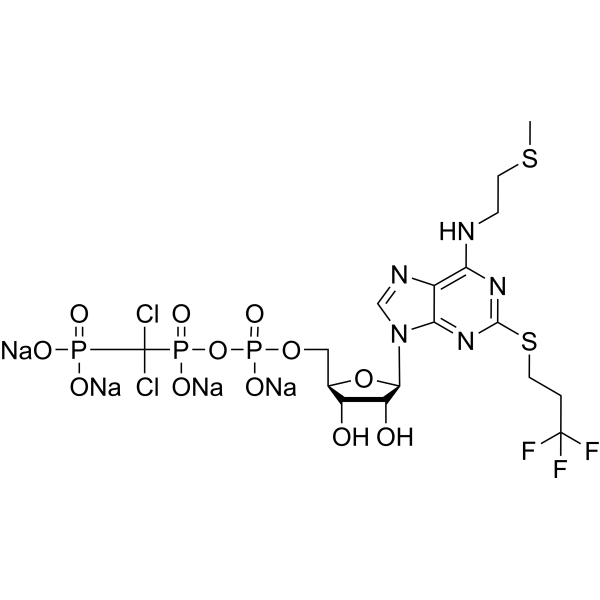
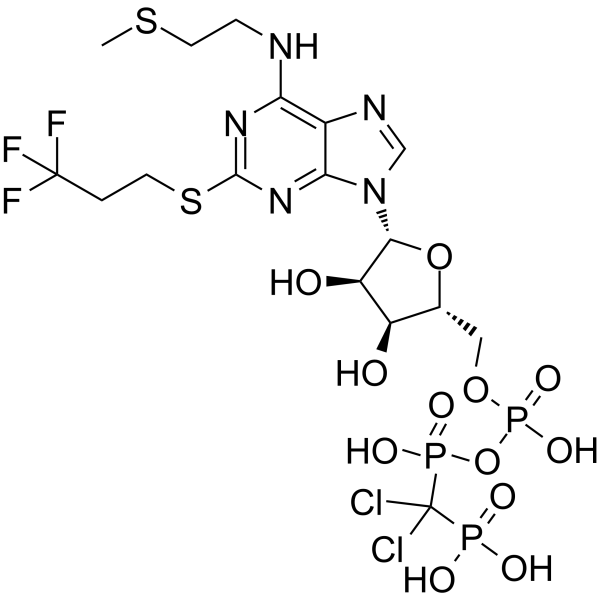
Cangrelor tetrasodium, an adenosine triphosphate analogue, is a reversible and selective platelet P2Y12 antagonist, with prompt and potent antiplatelet effects. Cangrelor tetrasodium directly blocks adenosine diphosphate (ADP)-induced activation and aggregation of platelets. Cangrelor tetrasodium is also a nonspecific GPR17 antagonist .
|
-
-
- HY-17459
-
|
(S)-(+)-Clopidogrel bisulfate; (S)-(+)-Clopidogrel hydrogen sulfate
|
Cytochrome P450
P2Y Receptor
|
Cardiovascular Disease
Cancer
|
|
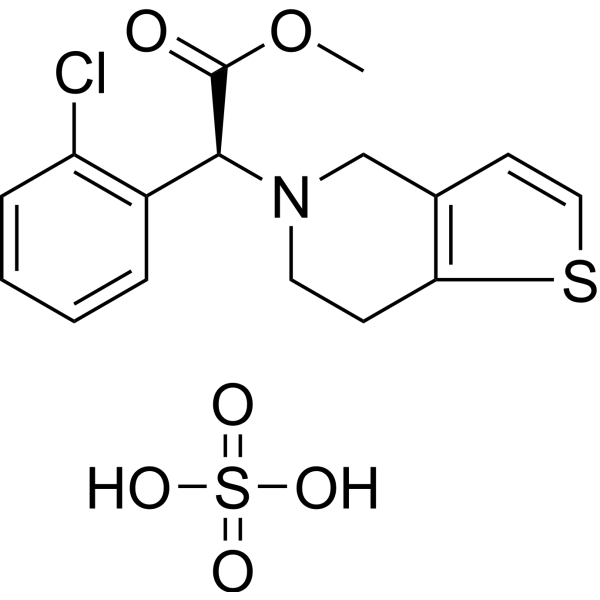
Clopidogrel hydrogen sulfate is an antiplatelet agent to prevent blood clots. Clopidogrel hydrogen sulfate inhibits CYP2B6 and CYP2C19 with IC50s of 18.2 nM and 524 nM, respectively . Clopidogrel hydrogen sulfate is a potent antithrombotic agent that inhibits ADP-induced platelet aggregation .Clopidogrel hydrogen sulfate also is an orally active P2Y(12) inhibitor .
|
-
-
- HY-15284
-
|
PCR 4099
|
P2Y Receptor
|
Cardiovascular Disease
|
|
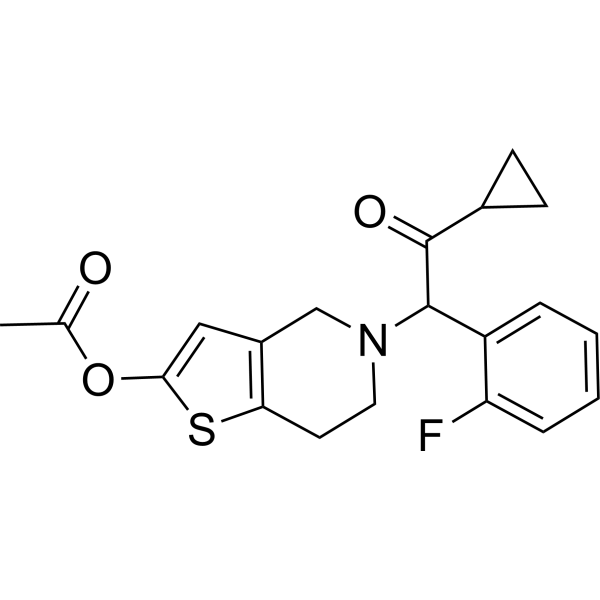
Prasugrel (PCR 4099), a thienopyridine and proagent, inhibits platelet function. Prasugrel is an orally active and potent P2Y12 receptor antagonist, and inhibits ADP-induced platelet aggregation .
|
-
-
- HY-P0074
-
GPRP
3 Publications Verification
Gly-Pro-Arg-Pro; Pefa 6003
|
Thrombin
|
Cardiovascular Disease
|
|
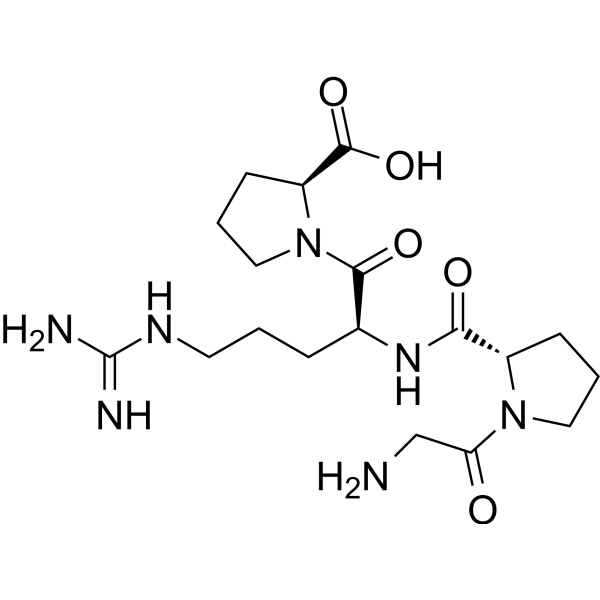
GPRP (Gly-Pro-Arg-Pro; Pefa 6003) is a fibrin polymerization inhibitor that inhibits the interaction between fibrinogen and the platelet membrane glycoprotein Ⅱb/IIIa complex (glycoprotein IIb/IIIa receptor) . GPRP increases the level of free thrombin in activated platelet-rich plasma by reducing the adsorption of thrombin onto fibrin. GPRP inhibits platelet aggregation and prolongs the thrombin-initiated clotting time in plasma. GPRP is applicable for research related to thrombosis and thrombotic diseases .
|
-
-
- HY-15284A
-
|
PCR 4099 hydrochloride
|
P2Y Receptor
|
Cardiovascular Disease
|
|
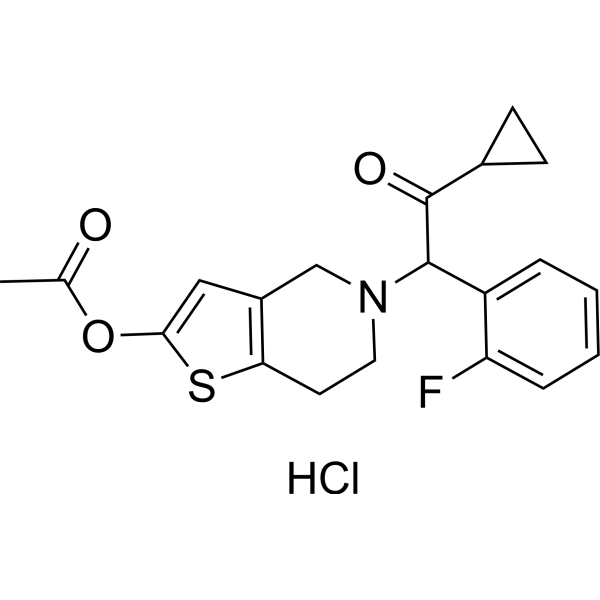
Prasugrel hydrochloride (PCR 4099 hydrochloride), a thienopyridine and proagent, inhibits platelet function. Prasugrel hydrochloride is an orally active and potent P2Y12 receptor antagonist, and inhibits ADP-induced platelet aggregation .
|
-
-
- HY-108658
-
|
|
P2Y Receptor
|
Cardiovascular Disease
|
|
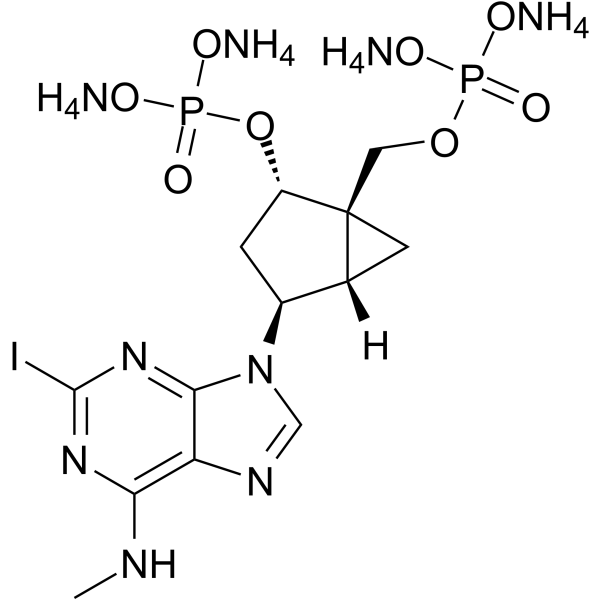
MRS2500 tetraammonium is a potent, selective and stable antagonist of the P2Y1 receptor (Ki=0.78 nM for recombinant human P2Y1 receptor). MRS2500 tetraammonium inhibits the ADP-induced aggregation of human platelets with an IC50 value of 0.95 nM. Antithrombotic activity .
|
-
-
- HY-W009276
-
|
Methyl GLA
|
Apoptosis
|
Cancer
|
|
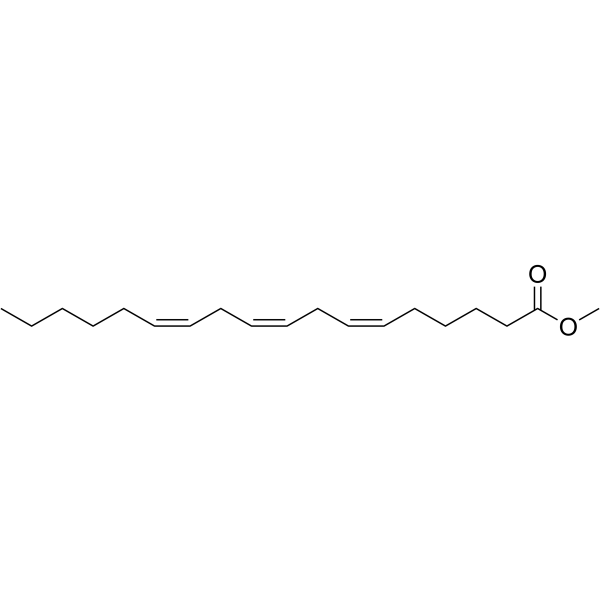
γ-Linolenic Acid methyl ester (Methyl GLA) is an esterified version of γ-Linolenic Acid (GLA), which is an ω-6 fatty acid, serves as melanoma cell proliferation inhibitors. γ-Linolenic Acid methyl ester inhibits ADP-induced blood platelet aggregation and induces apoptosis .
|
-
-
- HY-W250153
-
|
|
P2Y Receptor
|
Cardiovascular Disease
|
|
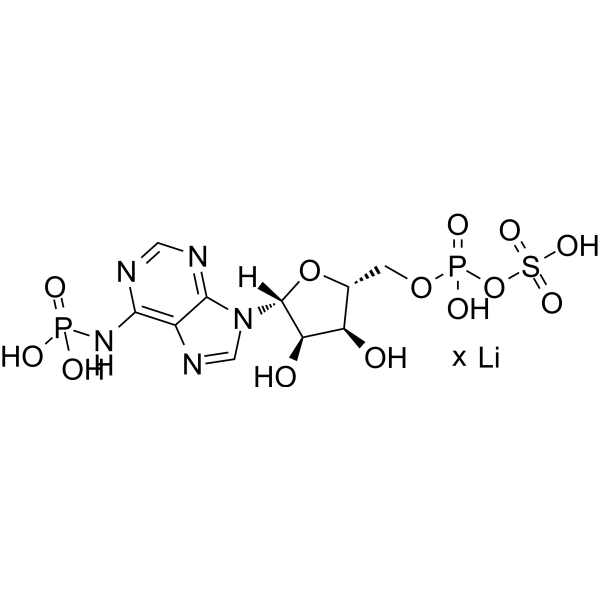
Adenosine 3'-phosphate 5'-phosphosulfate lithium, an adenine nucleotide derivative, is a selective P2Y1 antagonist with no effect on P2Y2, P2Y4, or P2Y6 receptors. Adenosine 3'-phosphate 5'-phosphosulfate lithium can competitive inhibit ADP-induced platelet aggregation, as well as the ability of ADP to cause shape change and increases in Ca 2+ in platelets, but had no effect on the inhibition of stimulated adenylate cyclase by ADP. Adenosine 3'-phosphate 5'-phosphosulfate lithium is a co-substrate used for the sulfonation of glycans. Adenosine 3'-phosphate 5'-phosphosulfate lithium can be used for Golgi-resident PAP-specific 3'-phosphatase-coupled sulfotransferase assays, which as donor substrate to transfer a sulfonate group .
|
-
-
- HY-123669A
-
|
|
P2Y Receptor
|
Cardiovascular Disease
|
|
Trans-R-138727 is the trans isomer of R-138727 (HY-123669). R-138727 is the active metabolite of the antiplatelet agent Prasugrel (HY-15284). R-138727 is an irreversible inhibitor for the platelet receptor P2Y12, and inhibits ADP-induced platelet activation and aggregation .
|
-
-
- HY-19638
-
|
AR-C69931MX
|
P2Y Receptor
|
Cardiovascular Disease
Inflammation/Immunology
|
|
Cangrelor (AR-C69931MX), an adenosine triphosphate analogue, is an intravenous, reversible and selective platelet P2Y12 antagonist, with prompt and potent antiplatelet effects. Cangrelor directly blocks adenosine diphosphate (ADP)-induced activation and aggregation of platelets. Cangrelor is also a nonspecific GPR17 antagonist .
|
-
-
- HY-N5021
-
|
AHSYB
|
Others
|
Neurological Disease
|
|
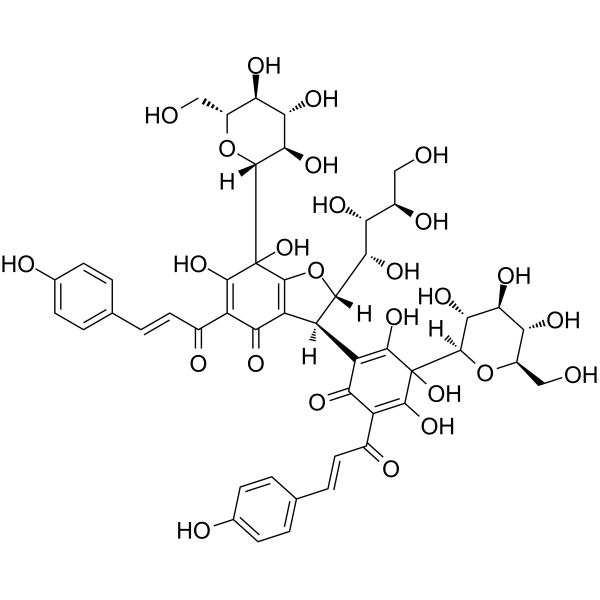
Anhydrosafflor yellow B (AHSYB) is a quinochalcone C-glycoside isolated from Carthamus tinctorius. Anhydrosafflor yellow B inhibits ADP-induced platelet aggregation, exhibits significant anti-oxidative effects in vitro, and possesses certain activity against H2O2-induced cytotoxicity in cultured PC12 cells and primary neuronal cells .
|
-
-
- HY-164090
-
|
|
P2Y Receptor
|
Cardiovascular Disease
|
|
Adenosine 3'-phosphate 5'-phosphosulfate, an adenine nucleotide derivative, is a selective P2Y1 antagonist with no effect on P2Y2, P2Y4, or P2Y6 receptors. Adenosine 3'-phosphate 5'-phosphosulfate can competitive inhibit ADP-induced platelet aggregation, as well as the ability of ADP to cause shape change and increases in Ca 2+ in platelets, but had no effect on the inhibition of stimulated adenylate cyclase by ADP. Adenosine 3'-phosphate 5'-phosphosulfate is a co-substrate used for the sulfonation of glycans. Adenosine 3'-phosphate 5'-phosphosulfate can be used for Golgi-resident PAP-specific 3'-phosphatase-coupled sulfotransferase assays, which as donor substrate to transfer a sulfonate group .
|
-
-
- HY-N3228
-
|
|
Others
|
Cardiovascular Disease
|
|
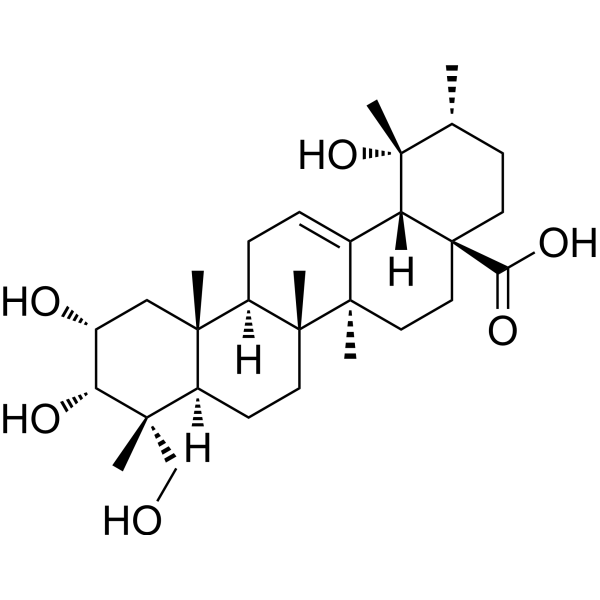
Myrianthic acid is a pentacyclic triterpenoid compound. Myrianthic acid can exist in the root wood of Myrianthus arboreus and the leaves of Campsis grandiflora. Myrianthic acid inhibits adrenaline-induced platelet aggregation, with a IC50 of 46.2 μM for this activity. Myrianthic acid can be used in studies related to thrombosis .
|
-
-
- HY-149454
-
|
|
P2Y Receptor
|
Cancer
|
|
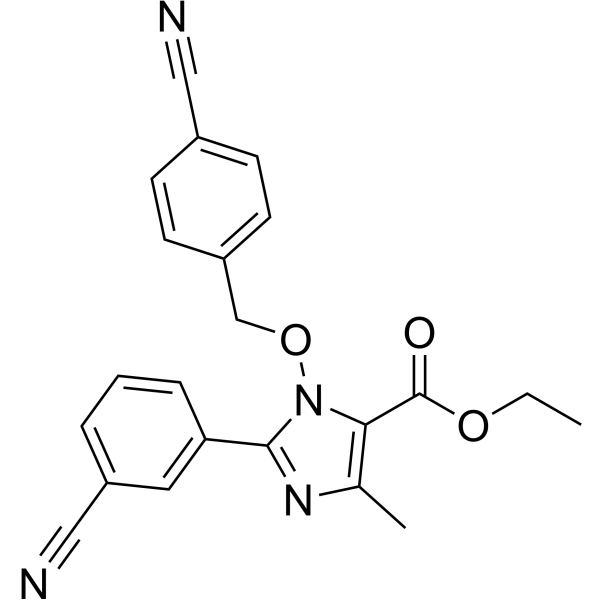
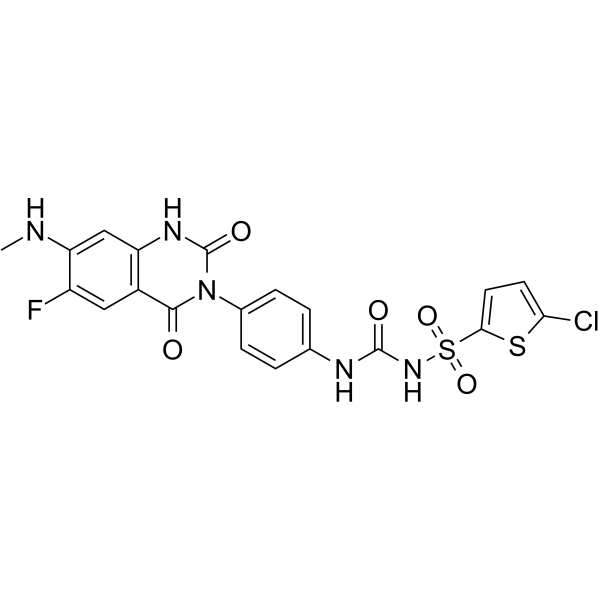
P2Y1/P2Y12 antagonist-1 (compound 24w) is an orally available dual inhibitor of P2Y1 and P2Y12 with antiplatelet activity. P2Y1/P2Y12 antagonist-1 inhibits ADP-induced platelet aggregation in rabbit plasma with an IC50 of 4.23 μM. P2Y1/P2Y12 antagonist-1 exhibits potent inhibitory effects in rat thrombosis model.
|
-
-
- HY-15284S2
-
|
PCR 4099-d4
|
P2Y Receptor
|
Cardiovascular Disease
|
|
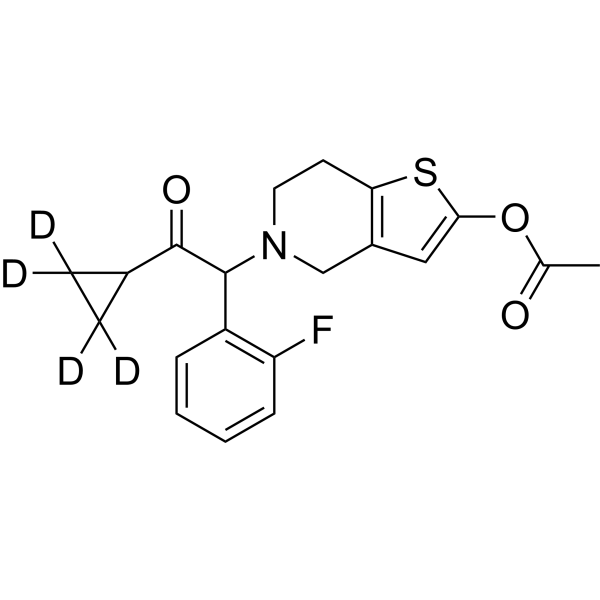
Prasugrel-d4 is the deuterium labeled Prasugrel . Prasugrel (PCR 4099), a thienopyridine and proagent, inhibits platelet function. Prasugrel is an orally active and potent P2Y12 receptor antagonist, and inhibits ADP-induced platelet aggregation .
|
-
-
- HY-N7614
-
|
Schidigerasaponin F2; Timosaponin AII
|
Others
|
Cardiovascular Disease
|
|
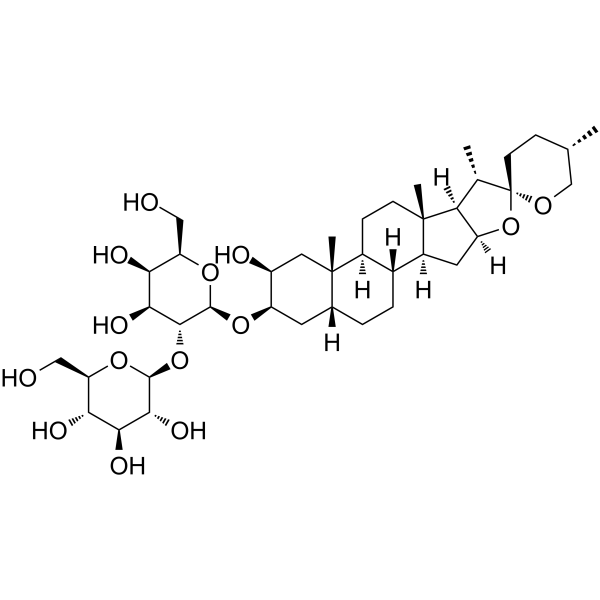
Anemarrhenasaponin A2 (Schidigerasaponin F2) is a steroidal saponin isolated from the rhizomes of Anemarrhena asphodeloides. Anemarrhenasaponin A2 inhibits ADP-induced platelet aggregation .
|
-
-
- HY-119860
-
|
ONO 41483
|
Drug Derivative
|
Cardiovascular Disease
|
|
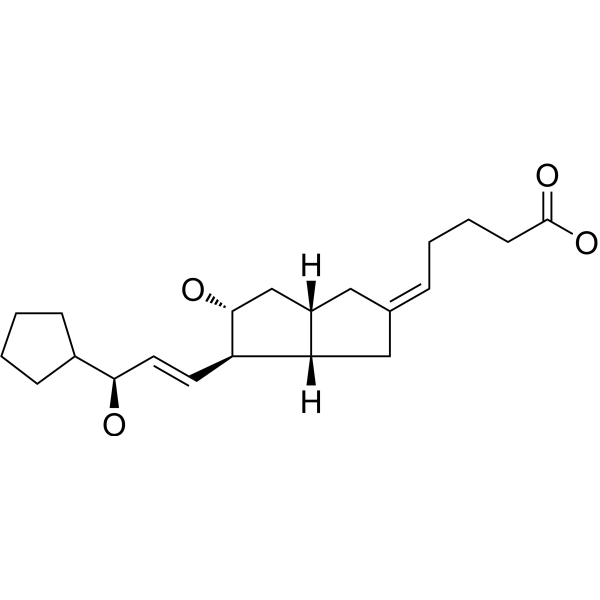
Ataprost (ONO 41483) is an orally active Carboprostacyclin (HY-112322) analogue. Ataprost exhibits 2.6 times more active than Carboprostacyclin in inhibiting ADP-induced platelet aggregation in vitro. Ataprost has the ability to relieve coronary spasm .
|
-
-
- HY-N9422
-
|
|
P2Y Receptor
|
Cardiovascular Disease
|
|
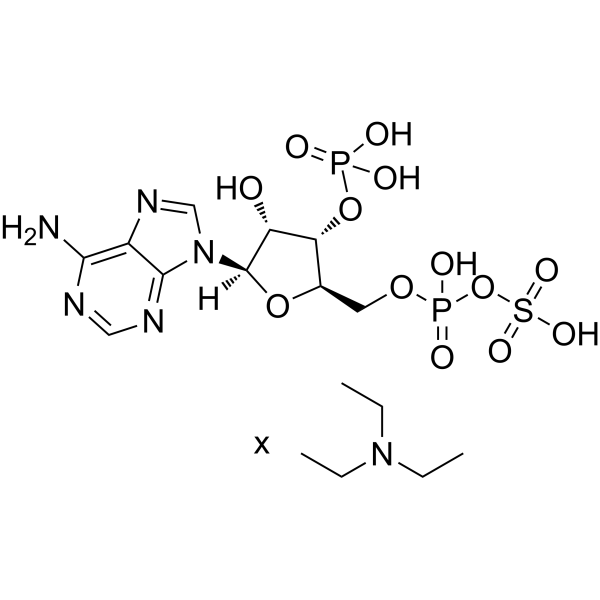
Adenosine 3'-phosphate 5'-phosphosulfate triethylamine, an adenine nucleotide derivative, is a selective P2Y1 antagonist with no effect on P2Y2, P2Y4, or P2Y6 receptors. Adenosine 3'-phosphate 5'-phosphosulfate triethylamine can competitive inhibit ADP-induced platelet aggregation, as well as the ability of ADP to cause shape change and increases in Ca 2+ in platelets, but had no effect on the inhibition of stimulated adenylate cyclase by ADP. Adenosine 3'-phosphate 5'-phosphosulfate triethylamine is a co-substrate used for the sulfonation of glycans. Adenosine 3'-phosphate 5'-phosphosulfate triethylamine can be used for Golgi-resident PAP-specific 3'-phosphatase-coupled sulfotransferase assays, which as donor substrate to transfer a sulfonate group .
|
-
-
- HY-113096
-
|
PGD1
|
Endogenous Metabolite
|
Metabolic Disease
|
|
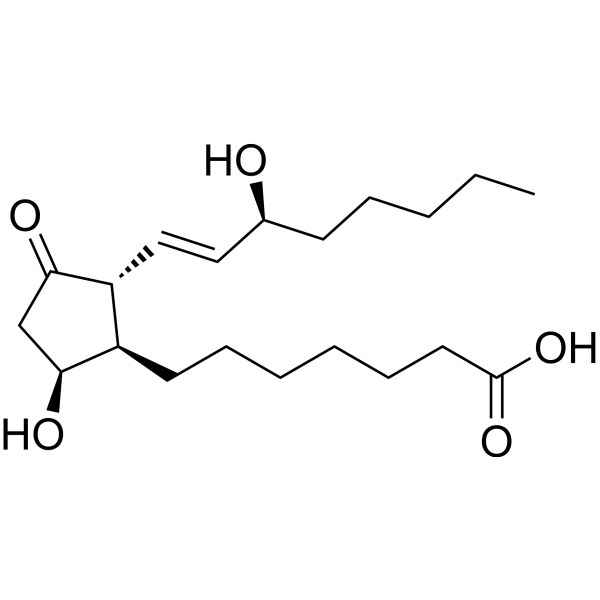
Prostaglandin D1 is a prostanoid which causes contractile and relaxant on isolated human pial arteries, it is also an inhibitor of ADP-induced platelet aggregation with an IC50 value of 320 ng/ml. Prostaglandin D1 can be used for metabolic research .
|
-
-
- HY-108633
-
|
|
PARP
|
Cancer
|
|
AR-C66096 (FPL 66096) tetrasodium is a selective platelet P2YT receptor antagonist. AR-C66096 tetrasodium effectively blocks ADP-induced platelet aggregation. AR-C66096 tetrasodium can be used in the research of thromboembolism .
|
-
-
- HY-148300
-
|
|
P2Y Receptor
|
Cardiovascular Disease
|
|
AR-C66096 is a potent and selective antagonist of the Gi-coupled P2Y12 receptor. AR-C66096 suppresses platelet thrombus stability under physiological flow conditions. AR-C66096 inhibits ADP-induced aggregation in whole blood aggregometry. AR-C66096 can be used for antithrombotic research .
|
-
-
- HY-19638AR
-
|
AR-C69931MX tetrasodium (Standard)
|
P2Y Receptor
Reference Standards
|
Cardiovascular Disease
Inflammation/Immunology
|
|
Cangrelor (tetrasodium) (Standard) is the analytical standard of Cangrelor (tetrasodium). This product is intended for research and analytical applications. Cangrelor tetrasodium, an adenosine triphosphate analogue, is a reversible and selective platelet P2Y12 antagonist, with prompt and potent antiplatelet effects. Cangrelor tetrasodium directly blocks adenosine diphosphate (ADP)-induced activation and aggregation of platelets. Cangrelor tetrasodium is also a nonspecific GPR17 antagonist .
|
-
-
- HY-W250153A
-
|
|
P2Y Receptor
|
Cardiovascular Disease
|
|
Adenosine 3'-phosphate 5'-phosphosulfate lithium hydrate, an adenine nucleotide derivative, is a selective P2Y1 antagonist with no effect on P2Y2, P2Y4, or P2Y6 receptors. Adenosine 3'-phosphate 5'-phosphosulfate lithium hydrate can competitive inhibit ADP-induced platelet aggregation, as well as the ability of ADP to cause shape change and increases in Ca 2+ in platelets, but had no effect on the inhibition of stimulated adenylate cyclase by ADP. Adenosine 3'-phosphate 5'-phosphosulfate lithium hydrate is a co-substrate used for the sulfonation of glycans. Adenosine 3'-phosphate 5'-phosphosulfate lithium hydrate can be used for Golgi-resident PAP-specific 3'-phosphatase-coupled sulfotransferase assays, which as donor substrate to transfer a sulfonate group .
|
-
-
- HY-116850
-
|
EG626; Phthalazinol; SC-32840
|
Phosphodiesterase (PDE)
|
Neurological Disease
|
|
Oxagrelate is a specific inhibitor of cyclic adenosine monophosphate phosphodiesterase and exhibits concentration-dependent inhibition of collagen- and ADP-induced platelet aggregation in vitro .
|
-
-
- HY-P1702
-
|
|
Integrin
|
Others
|
|
GR83895 is a RGD based peptide, and inhibits ADP-induced platelet aggregation of human gel-filtered platelets (IC50= 0.9 μM) .
|
-
-
- HY-N13135
-
|
|
Others
|
Cardiovascular Disease
|
|
Kadsutherin G (compound 3) is a lignin isolated from Kadsura. Kadsutherin G inhibits adenosine diphosphate (ADP)-induced platelet aggregation by 33.1 % .
|
-
-
- HY-N13134
-
|
|
Others
|
Cardiovascular Disease
|
|
Kadsutherin F (compound 2) is a lignin that can be isolated from Kadsura. Kadsutherin F has an inhibitory effect on adenosine diphosphate (ADP)-induced platelet aggregation with an inhibition rate of 49.47% .
|
-
-
- HY-15284B
-
|
PCR 4099 (Maleic acid)
|
P2Y Receptor
|
Cardiovascular Disease
|
|
Prasugrel (PCR 4099) Maleic acid is a thienopyridine and proagent, inhibits platelet function. Prasugrel Maleic acid is an orally active and potent P2Y12 receptor antagonist, and inhibits ADP-induced platelet aggregation .
|
-
-
- HY-101370
-
|
|
P2X Receptor
|
Metabolic Disease
|
|
2-Methylthio-ATP tetrasodium is a non-specific P2-receptor agonist. 2-Methylthio-ATP tetrasodium causes noncompetitive inhibition of ADP-induced human platelet aggregation .
|
-
-
- HY-113113
-
|
13,14-Dihydroprostaglandin E1
|
Endogenous Metabolite
|
Metabolic Disease
|
|
13,14-Dihydro PGE1 is a metabolite of PGE1 (Prostaglandin E1) which inhibits the ADP-induced platelet aggregation (ID50 = 10.8 ng/mL platelet rich plasma) .
|
-
-
- HY-N4266
-
|
|
Others
|
Cardiovascular Disease
|
|
Vinaginsenoside R8, a triterpenoid glycoside isolated from the rhizomes of Panacis majoris. Vinaginsenoside R8 displays activities against adenosine diphosphate (ADP)-induced platelet aggregation (IC50=25.18 μM) .
|
-
-
- HY-136142
-
|
|
Drug Metabolite
|
Others
|
|
Prasugrel chloride impurity is a catp impurity of Prasugrel, exacted from patent US20130345428A1, line 0053. Prasugrel is an orally active and potent P2Y12 receptor antagonist, and inhibits ADP-induced platelet aggregation .
|
-
-
- HY-15284S1
-
|
PCR 4099-d3
|
P2Y Receptor
|
Cardiovascular Disease
|
|
Prasugrel-d3 is the deuterium labeled Prasugrel. Prasugrel (PCR 4099), a thienopyridine and proagent, inhibits platelet function. Prasugrel is an orally active and potent P2Y12 receptor antagonist, and inhibits ADP-induced platelet aggregation .
|
-
-
- HY-15284S
-
|
PCR 4099-d5
|
Isotope-Labeled Compounds
P2Y Receptor
|
Cardiovascular Disease
|
|
Prasugrel-d5 is deuterium labeled Prasugrel. Prasugrel (PCR 4099), a thienopyridine and prodrug, inhibits platelet function. Prasugrel is an orally active and potent P2Y12 receptor antagonist, and inhibits ADP-induced platelet aggregation .
|
-
-
- HY-122048
-
|
AR-C67085MX; PSB 0413; FPL 67085
|
P2Y Receptor
|
Cardiovascular Disease
|
|
AR-C67085 (PSB 0413; FPL 67085) is a potent platelet P2T receptor antagonist with an pIC50 value of 8.60. AR-C67085 inhibits ADP-induced platelet aggregation .
|
-
-
- HY-W419570
-
|
|
P2Y Receptor
|
Cardiovascular Disease
|
|
(Rac)-BX 048 is a BX 048 racemate. BX 048 is a P2Y12 receptor antagonist. BX 048 inhibits ADP-induced platelet aggregation in human, dog and rat whole blood. BX 048 also inhibits Arachidonic acid (HY-109590) induced platelet aggregation (IC50 of 15 μM) .
|
-
-
- HY-113723
-
|
|
P2Y Receptor
|
Cardiovascular Disease
|
|
MRS2298? is a potent acyclic P2Y1 receptor antagonist with a Ki of 29.6 nM. MRS2298 inhibits the ADP-induced aggregation of human platelets with an IC50 of 62.8 nM. MRS2298 inhibits Ca 2+ rise in platelets with an IC50 of 810 nM .
|
-
-
- HY-15284R
-
|
PCR 4099 (Standard)
|
Reference Standards
P2Y Receptor
|
Cardiovascular Disease
|
|
Prasugrel (Standard) is the analytical standard of Prasugrel. This product is intended for research and analytical applications. Prasugrel (PCR 4099), a thienopyridine and proagent, inhibits platelet function. Prasugrel is an orally active and potent P2Y12 receptor antagonist, and inhibits ADP-induced platelet aggregation .
|
-
-
- HY-15284AR
-
|
PCR 4099 hydrochloride (Standard)
|
Reference Standards
P2Y Receptor
|
Cardiovascular Disease
|
|
Prasugrel (hydrochloride) (Standard) is the analytical standard of Prasugrel (hydrochloride). This product is intended for research and analytical applications. Prasugrel hydrochloride (PCR 4099 hydrochloride), a thienopyridine and proagent, inhibits platelet function. Prasugrel hydrochloride is an orally active and potent P2Y12 receptor antagonist, and inhibits ADP-induced platelet aggregation .
|
-
-
- HY-15284S3
-
|
PCR 4099-13C6
|
Isotope-Labeled Compounds
P2Y Receptor
|
Cardiovascular Disease
|
|
Prasugrel-13C6 is a deuterated labeled Prasugrel . Prasugrel (PCR 4099), a thienopyridine and proagent, inhibits platelet function. Prasugrel is an orally active and potent P2Y12 receptor antagonist, and inhibits ADP-induced platelet aggregation .
|
-
-
- HY-137591
-
|
|
Drug Metabolite
|
Endocrinology
|
|
13,14-Dihydro-15-keto-PGE1 is an inactive metabolite of PGE1. 13, 14-Dihydro-15-Keto-pGE1 inhibited platelet aggregation in ADP-induced human isolated platelet-rich plasma with IC50 14.8 μg/mL .
|
-
-
- HY-113096S
-
|
PGD1-d4
|
Isotope-Labeled Compounds
Endogenous Metabolite
|
Metabolic Disease
|
|
Prostaglandin D1-d4 (PGD1-d4) is deuterium labeled Prostaglandin D1. Prostaglandin D1 is a prostanoid which causes contractile and relaxant on isolated human pial arteries, it is also an inhibitor of ADP-induced platelet aggregation with an IC50 value of 320 ng/ml. Prostaglandin D1 can be used for metabolic research .
|
-
-
- HY-113113S
-
|
13,14-Dihydroprostaglandin E1-d4; PGE0-d4
|
Isotope-Labeled Compounds
Endogenous Metabolite
|
Metabolic Disease
|
|
13,14-Dihydro PGE1-d4 (13,14-Dihydroprostaglandin E1-d4) is deuterium labeled 13,14-Dihydro PGE1. 13,14-Dihydro PGE1 is a metabolite of PGE1 (Prostaglandin E1) which inhibits the ADP-induced platelet aggregation (ID50 = 10.8 ng/mL platelet rich plasma) .
|
-
-
- HY-W009276R
-
|
Methyl GLA (Standard)
|
Reference Standards
Apoptosis
|
Cancer
|
|
γ-Linolenic Acid methyl ester (Standard) is the analytical standard of γ-Linolenic Acid methyl ester. This product is intended for research and analytical applications. γ-Linolenic Acid methyl ester (Methyl GLA) is an esterified version of γ-Linolenic Acid (GLA), which is an ω-6 fatty acid, serves as melanoma cell proliferation inhibitors. γ-Linolenic Acid methyl ester inhibits ADP-induced blood platelet aggregation and induces apoptosis .
|
-
-
- HY-137355
-
|
15(S)-15-Methyl PGD2
|
Prostaglandin Receptor
|
Cardiovascular Disease
Metabolic Disease
|
|
15(S)-15-methyl Prostaglandin D2 (15(S)-15-methyl PGD2) is a metabolically stable synthetic analog of PGD2. In contrast to PGD2, 15(S)-15-methyl PGD2 induces vasoconstriction and increases systemic blood pressure with much reduced inhibitory activity on ADP-induced platelet aggregation. It also exhibits strong antifertility activity in hamsters (200-fold more potent than PGD2).
|
-
-
- HY-17459R
-
|
(S)-(+)-Clopidogrel bisulfate (Standard); (S)-(+)-Clopidogrel hydrogen sulfate (Standard)
|
Reference Standards
Cytochrome P450
P2Y Receptor
|
Cardiovascular Disease
Cancer
|
|
Clopidogrel (hydrogen sulfate) (Standard) is the analytical standard of Clopidogrel (hydrogen sulfate). This product is intended for research and analytical applications. Clopidogrel hydrogen sulfate is an antiplatelet agent to prevent blood clots. Clopidogrel hydrogen sulfate inhibits CYP2B6 and CYP2C19 with IC50s of 18.2 nM and 524 nM, respectively . Clopidogrel hydrogen sulfate is a potent antithrombotic agent that inhibits ADP-induced platelet aggregation .Clopidogrel hydrogen sulfate also is an orally active P2Y(12) inhibitor .
|
-
-
- HY-17459S
-
|
(S)-(+)-Clopidogrel bisulfate-d3; (S)-(+)-Clopidogrel-d3 hydrogen sulfate
|
P2Y Receptor
Cytochrome P450
|
Cardiovascular Disease
|
|
Clopidogrel-d3 (hydrogen sulfate) is the deuterium labeled Clopidogrel hydrogen sulfate . Clopidogrel hydrogen sulfate is an antiplatelet agent to prevent blood clots. Clopidogrel hydrogen sulfate inhibits CYP2B6 and CYP2C19 with IC50s of 18.2 nM and 524 nM, respectively. Clopidogrel hydrogen sulfate is a potent antithrombotic agent that inhibits ADP-induced platelet aggregation.Clopidogrel hydrogen sulfate also is an orally active P2Y(12) inhibitor .
|
-
-
- HY-112658
-
|
|
Adrenergic Receptor
Adenosine Receptor
|
Endocrinology
|
|
p-Iodoclonidine hydrochloride is a partial agonist of α2-adrenergic receptor. p-Iodoclonidine hydrochloride also has minimal agonist activity in inhibiting adenylate cyclase in platelet membranes, and potentiates ADP induced platelet aggregation with an EC50 of 1.5 μM .
|
-
-
- HY-110057
-
|
NOR 3
|
NO Synthase
|
Cardiovascular Disease
|
|
FK409 (NOR 3) is an oral active vascular relaxant agnet and can be isolated from microbial product. FK409 can be used for study of cardiovascular diseases .
|
-
-
- HY-N17941
-
|
|
Others
|
Cardiovascular Disease
|
|
19-Anhydro-4-epirotungenic acid is a triterpenoid compound that can be isolated from the bark of Ilex rotunda Thunb. 19-Anhydro-4-epirotungenic acid shows no activity against ADP-induced platelet aggregation .
|
-
- HY-116028
-
|
15-Deoxy-Δ12,14-PGD2
|
Endogenous Metabolite
Prostaglandin Receptor
PPAR
Src
|
Cardiovascular Disease
|
|
15-deoxy-Δ12,14-Prostaglandin D2 (15-Deoxy-Δ12,14-PGD2), a metabolite of PGD2 (HY-101988), is an agonist of prostaglandin receptor 2 (DP2). 15-deoxy-Δ12,14-Prostaglandin D2 binds to DP2 (Ki=50 nM) and induces eosinophil activation (EC50=8 nM). 15-deoxy-Δ12,14-Prostaglandin D2 also stimulates the recruitment of steroid receptor coactivator-1 (SRC-1) to peroxisome proliferator-activated receptor γ (PPARγ), inducing PPARγ-mediated transcription. 15-deoxy-Δ12,14-Prostaglandin D2 (15-Deoxy-Δ12,14-PGD2) is cytotoxic to L1210 murine leukemia cells (IC50=0.3 μg/ml) and inhibits ADP-induced platelet aggregation (IC50=320 ng/mL).
|
-
- HY-N19129
-
|
|
Others
|
Others
|
|
Macrostemonoside E is a steroidal glycoside present in Allium macrostemon Bunge, which inhibits ADP-induced aggregation of human platelets in vitro (IC50=0.417 mM) .
|
-
- HY-167848
-
|
XL-118
|
Others
|
Cardiovascular Disease
|
|
DMP-728 free base (XL-118) is a highly potent and selective GPIIb/IIIa antagonist with antiplatelet and antithrombotic activities. DMP-728 free base can inhibit ADP-induced human platelet aggregation in vitro, with an IC50 of 46 nmol/L, and can significantly reduce the interaction between fibrinogen and human platelets or Binding of purified human GPIIb/IIIa receptors. DMP-728 free base exhibits dose-dependent antiplatelet effects in anesthetized mongrel dogs, effectively inhibiting ADP-induced platelet aggregation and prolonging template bleeding time .
|
-
- HY-165434
-
|
EL 784
|
Prostaglandin Receptor
|
Cardiovascular Disease
|
|
Naxaprostene is a prostacyclin analogue. Naxaprostene was much more selective for IP receptors and tended towards partial agonism. Naxaprostene inhibits ADP-induced platelet aggregation. It has been shown to prevent rabbit carotid artery thrombosis.
|
-
- HY-N17826
-
-
- HY-N19844
-
|
|
Others
|
Cardiovascular Disease
|
|
3-Heptadecylcatechol is an urushiphenol compound found in Toxicodendron vernicifluum resin and poison oak urushiol. 3-Heptadecylcatechol exhibits anti-platelet aggregation and immune regulation activity. 3-Heptadecylcatechol can be used for the research of thrombotic disorders .
|
-
- HY-N18260
-
-
| Cat. No. |
Product Name |
Type |
-
- HY-W250153
-
|
|
Biochemical Assay Reagents
|
|
Adenosine 3'-phosphate 5'-phosphosulfate lithium, an adenine nucleotide derivative, is a selective P2Y1 antagonist with no effect on P2Y2, P2Y4, or P2Y6 receptors. Adenosine 3'-phosphate 5'-phosphosulfate lithium can competitive inhibit ADP-induced platelet aggregation, as well as the ability of ADP to cause shape change and increases in Ca 2+ in platelets, but had no effect on the inhibition of stimulated adenylate cyclase by ADP. Adenosine 3'-phosphate 5'-phosphosulfate lithium is a co-substrate used for the sulfonation of glycans. Adenosine 3'-phosphate 5'-phosphosulfate lithium can be used for Golgi-resident PAP-specific 3'-phosphatase-coupled sulfotransferase assays, which as donor substrate to transfer a sulfonate group .
|
-
- HY-W250153A
-
|
|
Biochemical Assay Reagents
|
|
Adenosine 3'-phosphate 5'-phosphosulfate lithium hydrate, an adenine nucleotide derivative, is a selective P2Y1 antagonist with no effect on P2Y2, P2Y4, or P2Y6 receptors. Adenosine 3'-phosphate 5'-phosphosulfate lithium hydrate can competitive inhibit ADP-induced platelet aggregation, as well as the ability of ADP to cause shape change and increases in Ca 2+ in platelets, but had no effect on the inhibition of stimulated adenylate cyclase by ADP. Adenosine 3'-phosphate 5'-phosphosulfate lithium hydrate is a co-substrate used for the sulfonation of glycans. Adenosine 3'-phosphate 5'-phosphosulfate lithium hydrate can be used for Golgi-resident PAP-specific 3'-phosphatase-coupled sulfotransferase assays, which as donor substrate to transfer a sulfonate group .
|
| Cat. No. |
Product Name |
Target |
Research Area |
-
- HY-P0074
-
GPRP
3 Publications Verification
Gly-Pro-Arg-Pro; Pefa 6003
|
Thrombin
|
Cardiovascular Disease
|
|
GPRP (Gly-Pro-Arg-Pro; Pefa 6003) is a fibrin polymerization inhibitor that inhibits the interaction between fibrinogen and the platelet membrane glycoprotein Ⅱb/IIIa complex (glycoprotein IIb/IIIa receptor) . GPRP increases the level of free thrombin in activated platelet-rich plasma by reducing the adsorption of thrombin onto fibrin. GPRP inhibits platelet aggregation and prolongs the thrombin-initiated clotting time in plasma. GPRP is applicable for research related to thrombosis and thrombotic diseases .
|
-
- HY-P1702
-
|
|
Integrin
|
Others
|
|
GR83895 is a RGD based peptide, and inhibits ADP-induced platelet aggregation of human gel-filtered platelets (IC50= 0.9 μM) .
|
| Cat. No. |
Product Name |
Category |
Target |
Chemical Structure |
| Cat. No. |
Product Name |
Chemical Structure |
-
- HY-15284S2
-
|
|
|
Prasugrel-d4 is the deuterium labeled Prasugrel . Prasugrel (PCR 4099), a thienopyridine and proagent, inhibits platelet function. Prasugrel is an orally active and potent P2Y12 receptor antagonist, and inhibits ADP-induced platelet aggregation .
|
-
-
- HY-15284S1
-
|
|
|
Prasugrel-d3 is the deuterium labeled Prasugrel. Prasugrel (PCR 4099), a thienopyridine and proagent, inhibits platelet function. Prasugrel is an orally active and potent P2Y12 receptor antagonist, and inhibits ADP-induced platelet aggregation .
|
-
-
- HY-15284S
-
|
|
|
Prasugrel-d5 is deuterium labeled Prasugrel. Prasugrel (PCR 4099), a thienopyridine and prodrug, inhibits platelet function. Prasugrel is an orally active and potent P2Y12 receptor antagonist, and inhibits ADP-induced platelet aggregation .
|
-
-
- HY-15284S3
-
|
|
|
Prasugrel-13C6 is a deuterated labeled Prasugrel . Prasugrel (PCR 4099), a thienopyridine and proagent, inhibits platelet function. Prasugrel is an orally active and potent P2Y12 receptor antagonist, and inhibits ADP-induced platelet aggregation .
|
-
-
- HY-113096S
-
|
|
|
Prostaglandin D1-d4 (PGD1-d4) is deuterium labeled Prostaglandin D1. Prostaglandin D1 is a prostanoid which causes contractile and relaxant on isolated human pial arteries, it is also an inhibitor of ADP-induced platelet aggregation with an IC50 value of 320 ng/ml. Prostaglandin D1 can be used for metabolic research .
|
-
-
- HY-113113S
-
|
|
|
13,14-Dihydro PGE1-d4 (13,14-Dihydroprostaglandin E1-d4) is deuterium labeled 13,14-Dihydro PGE1. 13,14-Dihydro PGE1 is a metabolite of PGE1 (Prostaglandin E1) which inhibits the ADP-induced platelet aggregation (ID50 = 10.8 ng/mL platelet rich plasma) .
|
-
-
- HY-17459S
-
|
|
|
Clopidogrel-d3 (hydrogen sulfate) is the deuterium labeled Clopidogrel hydrogen sulfate . Clopidogrel hydrogen sulfate is an antiplatelet agent to prevent blood clots. Clopidogrel hydrogen sulfate inhibits CYP2B6 and CYP2C19 with IC50s of 18.2 nM and 524 nM, respectively. Clopidogrel hydrogen sulfate is a potent antithrombotic agent that inhibits ADP-induced platelet aggregation.Clopidogrel hydrogen sulfate also is an orally active P2Y(12) inhibitor .
|
-
| Cat. No. |
Product Name |
|
Classification |
-
- HY-W250153
-
|
|
|
Nucleotide Analogs
Adenine Nucleotide
|
|
Adenosine 3'-phosphate 5'-phosphosulfate lithium, an adenine nucleotide derivative, is a selective P2Y1 antagonist with no effect on P2Y2, P2Y4, or P2Y6 receptors. Adenosine 3'-phosphate 5'-phosphosulfate lithium can competitive inhibit ADP-induced platelet aggregation, as well as the ability of ADP to cause shape change and increases in Ca 2+ in platelets, but had no effect on the inhibition of stimulated adenylate cyclase by ADP. Adenosine 3'-phosphate 5'-phosphosulfate lithium is a co-substrate used for the sulfonation of glycans. Adenosine 3'-phosphate 5'-phosphosulfate lithium can be used for Golgi-resident PAP-specific 3'-phosphatase-coupled sulfotransferase assays, which as donor substrate to transfer a sulfonate group .
|
-
- HY-164090
-
|
|
|
Nucleotide Analogs
Adenine Nucleotide
|
|
Adenosine 3'-phosphate 5'-phosphosulfate, an adenine nucleotide derivative, is a selective P2Y1 antagonist with no effect on P2Y2, P2Y4, or P2Y6 receptors. Adenosine 3'-phosphate 5'-phosphosulfate can competitive inhibit ADP-induced platelet aggregation, as well as the ability of ADP to cause shape change and increases in Ca 2+ in platelets, but had no effect on the inhibition of stimulated adenylate cyclase by ADP. Adenosine 3'-phosphate 5'-phosphosulfate is a co-substrate used for the sulfonation of glycans. Adenosine 3'-phosphate 5'-phosphosulfate can be used for Golgi-resident PAP-specific 3'-phosphatase-coupled sulfotransferase assays, which as donor substrate to transfer a sulfonate group .
|
-
- HY-W250153A
-
|
|
|
Nucleotide Analogs
Adenine Nucleotide
|
|
Adenosine 3'-phosphate 5'-phosphosulfate lithium hydrate, an adenine nucleotide derivative, is a selective P2Y1 antagonist with no effect on P2Y2, P2Y4, or P2Y6 receptors. Adenosine 3'-phosphate 5'-phosphosulfate lithium hydrate can competitive inhibit ADP-induced platelet aggregation, as well as the ability of ADP to cause shape change and increases in Ca 2+ in platelets, but had no effect on the inhibition of stimulated adenylate cyclase by ADP. Adenosine 3'-phosphate 5'-phosphosulfate lithium hydrate is a co-substrate used for the sulfonation of glycans. Adenosine 3'-phosphate 5'-phosphosulfate lithium hydrate can be used for Golgi-resident PAP-specific 3'-phosphatase-coupled sulfotransferase assays, which as donor substrate to transfer a sulfonate group .
|
Your information is safe with us. * Required Fields.
Inquiry Information
- Product Name:
- Cat. No.:
- Quantity:
- MCE Japan Authorized Agent:

