



Elinogrel

Based on 1 Customer Validation
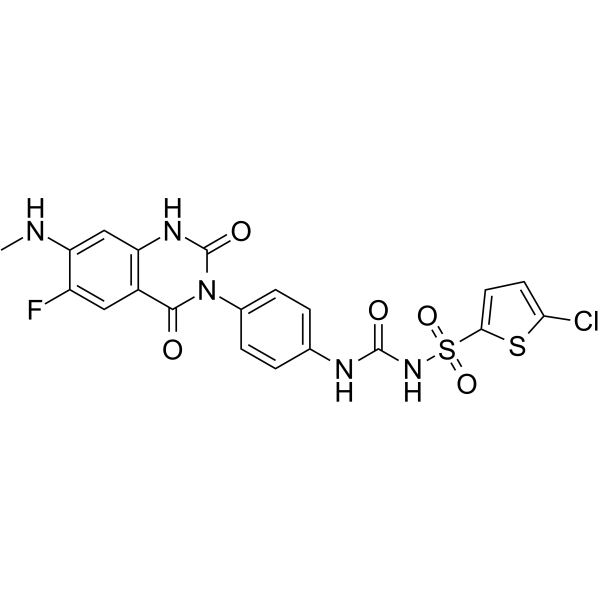
Elinogrel (PRT060128) is an orally active, selective, competitive, and reversible direct-acting platelet P2Y12 antagonist (IC50 = 20 nM). Elinogrel blocks ADP-induced signaling by directly and reversibly competing for binding to the platelet P2Y12 receptor. Elinogrel exhibits rapid and potent anti-platelet aggregation and antithrombotic activities. Elinogrel is suitable for research into acute coronary syndrome and antithrombotic.
For research use only. We do not sell to patients.
- Purity : 98.29%
- CAS No.: 936500-94-6
- Formula: C20H15ClFN5O5S2
- Molecular Weight:523.95
-
Storage:Powder -20°C, 3 years , 4°C, 2 years ; In solvent -80°C, 6 months , -20°C, 1 month

To place orders, for customer services and technical support, please contact: MedChemExpress USA
Tel: 609-228-6898 E-mail: [email protected] [email protected]


-
 Biological Activity
-
Chemical Information
-
Solvent & Solubility
- Purity & Documentation
- References
-
 Help & FAQs


-
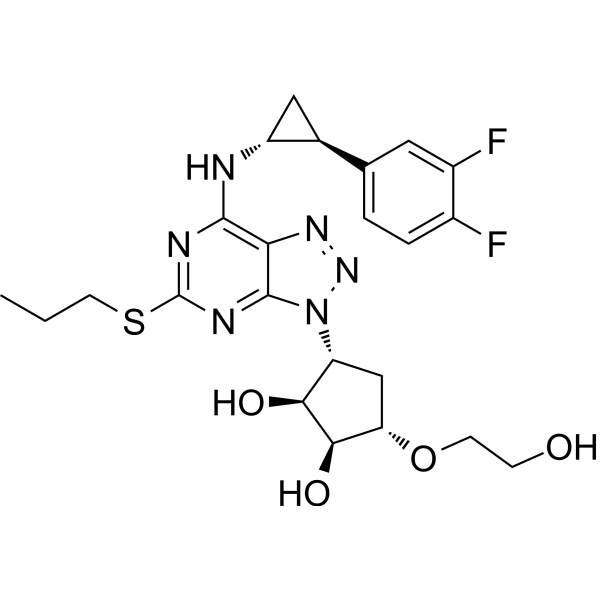
HY-10064
TicagrelorP2Y12 Antagonist -
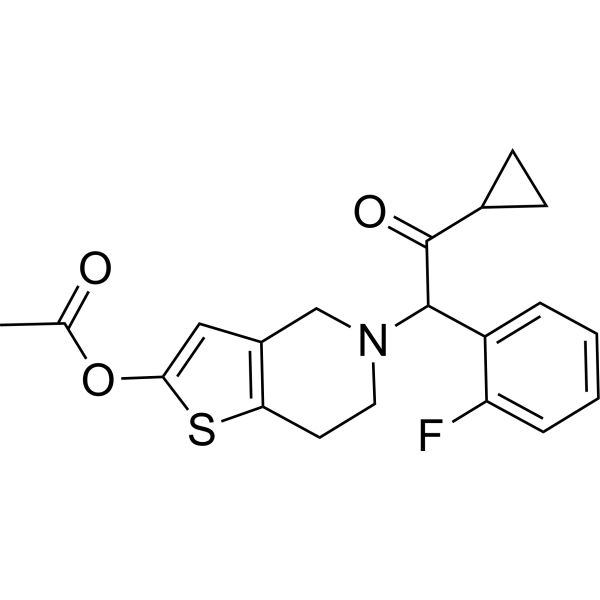
HY-15284
PrasugrelP2Y12 Receptor Antagonist -
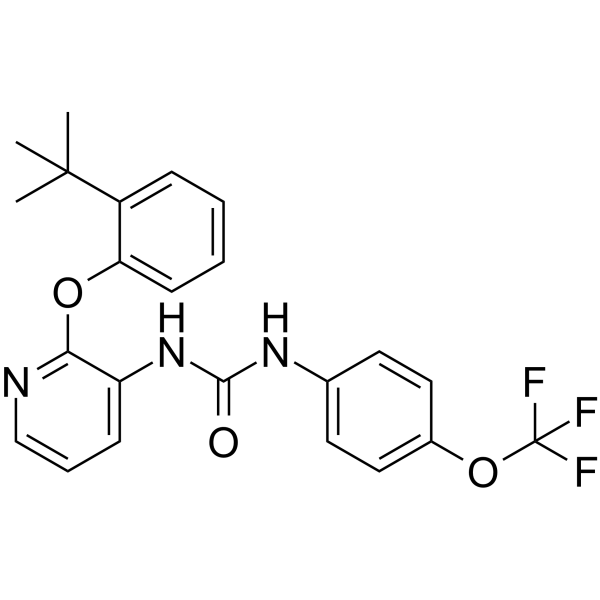
HY-13831
BPTUP2Y1 Antagonist -
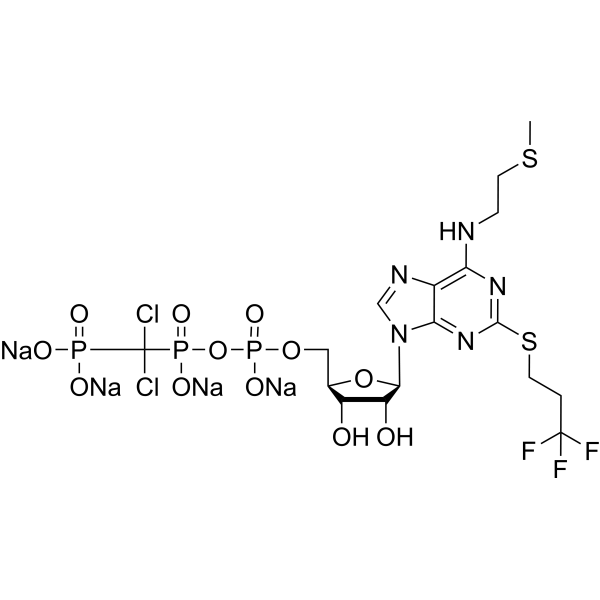
HY-19638A
Cangrelor tetrasodiumP2Y12 Antagonist -
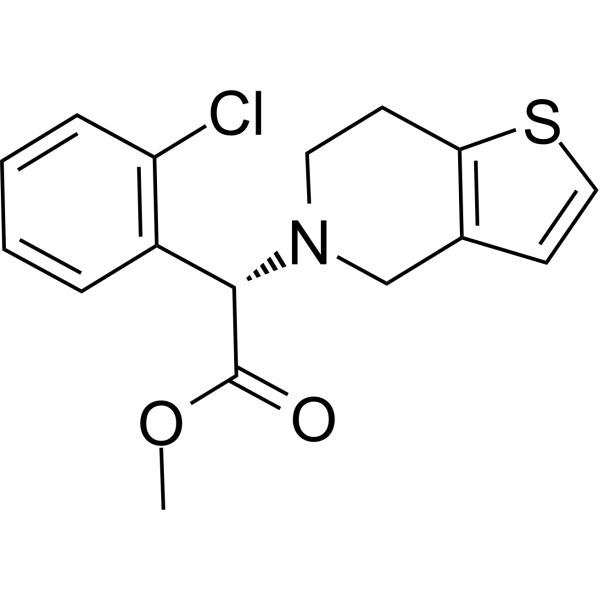
HY-15283
ClopidogrelAntiplatelet Agent -
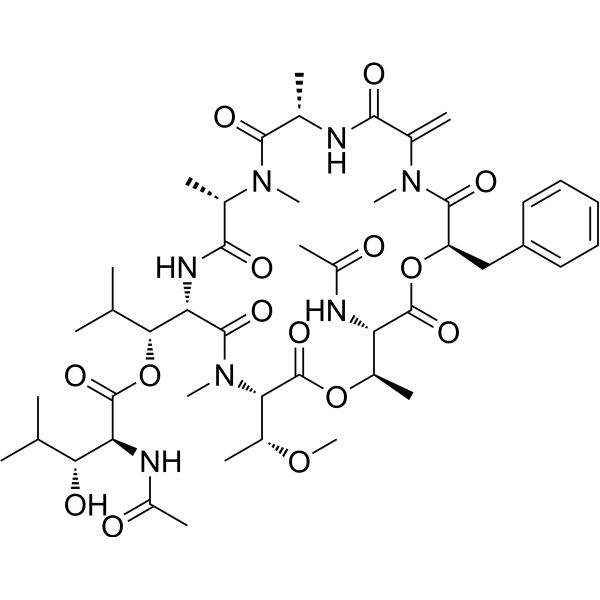
HY-111557
YM-254890Gαq/11 Selective Inhibitor -
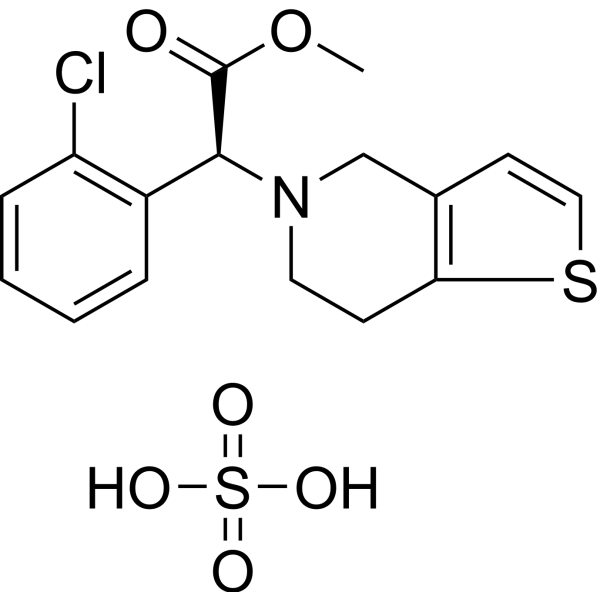
HY-17459
Clopidogrel hydrogen sulfateAntiplatelet Agent -
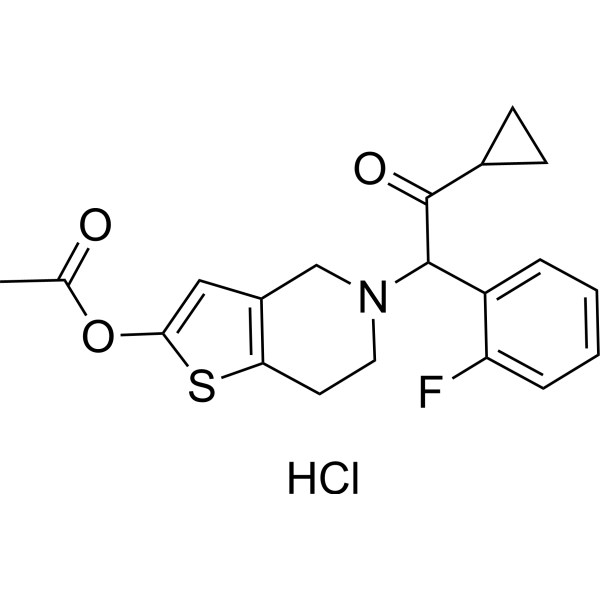
HY-15284A
Prasugrel hydrochlorideP2Y12 Receptor Antagonist -
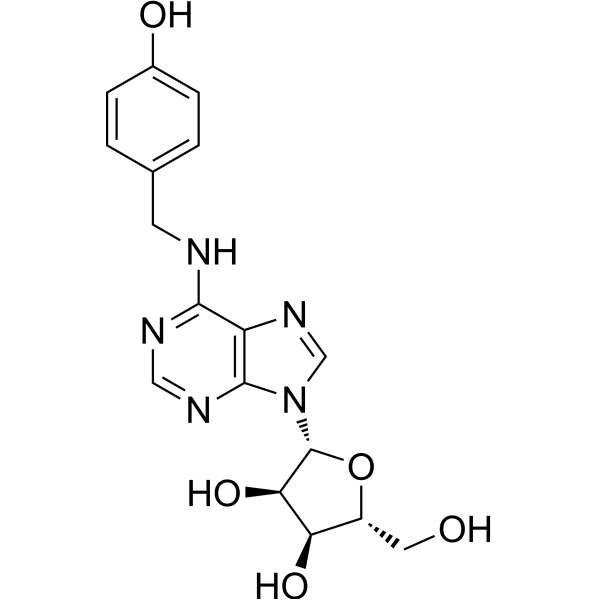
HY-18775
N6-(4-Hydroxybenzyl)adenosineENT1 Inhibitor/A2aR Agonist -
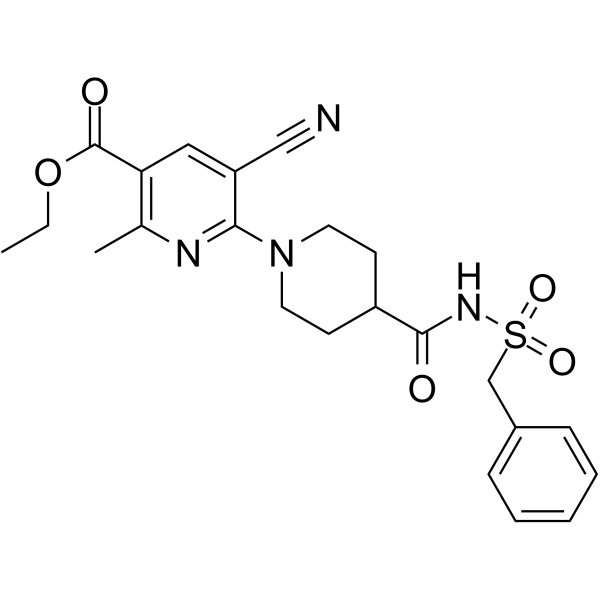
HY-15799
AZD1283P2Y12 Receptor Antagonist -
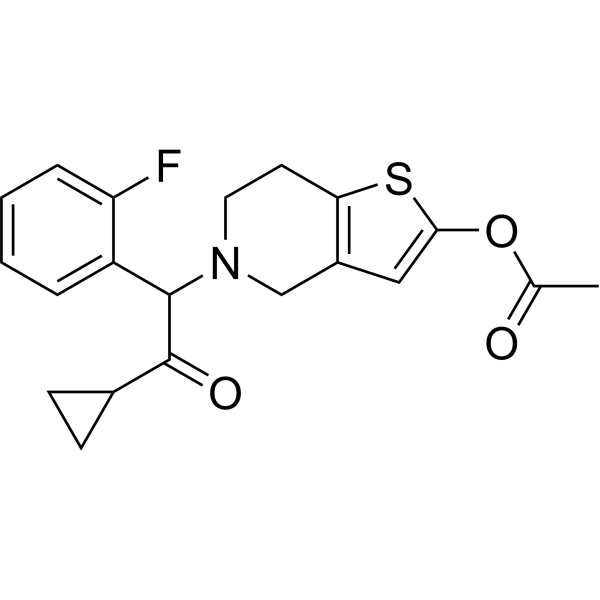
HY-15284R
Prasugrel (Standard)P2Y12 Receptor Antagonist -
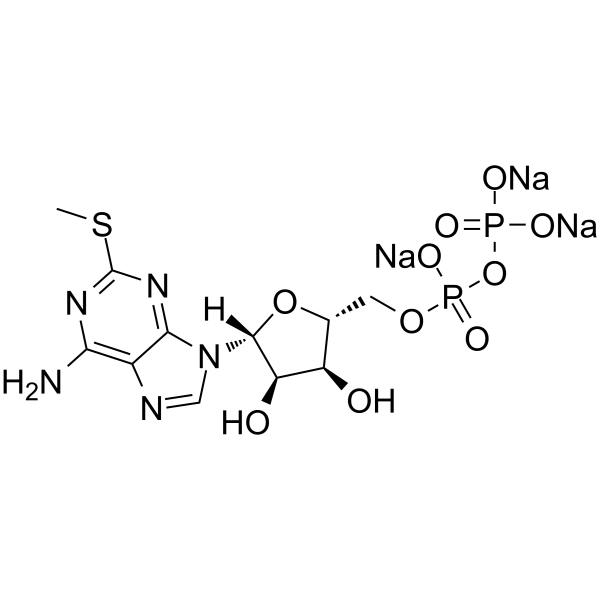
HY-108648
2-MeS-ADP trisodiumP2Y Receptor Agonist
All P2Y Receptor Isoforms
More

Biological Activity
Description
|
P2Y12 Receptor 20 nM (IC50) |
In Vitro
Elinogrel (PRT060128) (30 μM; 20 min) serves to define and distinguish P2Y12-specific binding sites in mouse and human platelets (platelet-rich plasma or washed platelets)[2].
Elinogrel exhibits high affinity for the P2Y12 receptor (Ki = 23 nM) and possesses anti-platelet aggregation activity (IC50 = 2.81 μM)[4].
MedChemExpress (MCE) has not independently confirmed the accuracy of these methods. They are for reference only.
In Vivo
Elinogrel (1 mg/kg; i.v.; single dose; 15-minute observation) abolishes residual thrombus formation in an FeCl3-induced thrombosis model in wild-type C57BL/6J mice pretreated with Clopidogrel (HY-15283) (50 mg/kg; oral; for 3 days)[2].
MedChemExpress (MCE) has not independently confirmed the accuracy of these methods. They are for reference only.
-
Animal Model:Wild-type C57BL/6J mice, 10% FeCl3-induced mesenteric artery thrombosis Model[2]
-
Dosage:60 mg/kg
-
Administration:p.o.; twice daily; for 3 days; 40-minute post-injury observation
-
Result:Provided a superior level of inhibition of thrombosis.
Reproduced the phenotype of P2Y12(-/-) mice.
-
Animal Model:Clopidogrel-treated wild-type C57BL/6J mice, 10% FeCl3-induced mesenteric artery thrombosis model[2]
-
Dosage:1 mg/kg
-
Administration:i.v.; single dose; 15-minute observation
-
Result:Eliminated the residual thrombotic process observed in clopidogrel-treated animals.
Clinical Trial
| NCT Number | Sponsor | Condition | Start Date |
Phase

|
|---|---|---|---|---|
| NCT01329991 | 2011-05 | PHASE1 |


Chemical Information
-
CAS No. 936500-94-6
-
Appearance Solid
-
Molecular Weight 523.95
-
Formula C20H15ClFN5O5S2
-
Color White to off-white
-
SMILES
O=S(C1=CC=C(Cl)S1)(NC(NC2=CC=C(N3C(NC4=C(C=C(F)C(NC)=C4)C3=O)=O)C=C2)=O)=O
-
Synonyms
PRT060128
-
Shipping
Room temperature in continental US; may vary elsewhere.
-
Storage
Powder -20°C 3 years 4°C 2 years In solvent -80°C 6 months -20°C 1 month


Solvent & Solubility
In Vitro:
DMSO : 62.5 mg/mL (119.29 mM; Need ultrasonic; Hygroscopic DMSO has a significant impact on the solubility of product, please use newly opened DMSO)
Please refer to the solubility information to select the appropriate solvent. Once prepared, please aliquot and store the solution to prevent product inactivation from repeated freeze-thaw cycles.
Storage method and period of stock solution: -80°C, 6 months; -20°C, 1 month. When stored at -80°C, please use it within 6 months. When stored at -20°C, please use it within 1 month.
Please refer to the solubility information to select the appropriate solvent. Once prepared, please aliquot and store the solution to prevent product inactivation from repeated freeze-thaw cycles.
Storage method and period of stock solution: -80°C, 6 months; -20°C, 1 month. When stored at -80°C, please use it within 6 months. When stored at -20°C, please use it within 1 month.
Concentration (start) × Volume (start) = Concentration (final) × Volume (final)
In Vivo:
Select the appropriate dissolution method based on your experimental animal and administration route.
- For the following dissolution methods, please ensure to first prepare a clear stock solution using an In Vitro approach and then sequentially add co-solvents:
- To ensure reliable experimental results, the clarified stock solution can be appropriately stored based on storage conditions. As for the working solution for In Vivo experiments, it is recommended to prepare freshly and use it on the same day.
- The percentages shown for the solvents indicate their volumetric ratio in the final prepared solution. If precipitation or phase separation occurs during preparation, heat and/or sonication can be used to aid dissolution.
Add each solvent one by one: 10% DMSO 40% PEG300 5% Tween-80 45% Saline
Solubility: ≥ 2.08 mg/mL (3.97 mM); Clear solution
This protocol yields a clear solution of ≥ 2.08 mg/mL (saturation unknown).
Taking 1 mL working solution as an example, add 100 μL DMSO stock solution (20.8 mg/mL) to 400 μL PEG300, and mix evenly; then add 50 μL Tween-80 and mix evenly; then add 450 μL Saline to adjust the volume to 1 mL.
Preparation of Saline: Dissolve 0.9 g sodium chloride in ddH₂O and dilute to 100 mL to obtain a clear Saline solution.
In Vivo Dissolution Calculator
Please enter the basic information of animal experiments:
-
-
-
-
Recommended: Prepare an additional quantity of animals to account for potential losses during experiments.
Please enter your animal formula composition:
-
%DMSO +
Recommended: Keep the proportion of DMSO in working solution below 2% if your animal is weak.
-
%+
-
+%Tween-80 + +
-
%Saline +
The co-solvents required include: DMSO, . All of co-solvents are available by MedChemExpress (MCE). , Tween 80. All of co-solvents are available by MedChemExpress (MCE).
Working solution concentration: 0.22 mg/mL
Method for preparing stock solution: mg drug dissolved in μL DMSO. Stock solution concentration: mg/mL.
1. Take μL DMSO stock solution;
2. Add μL .
μL , mix evenly;
3. Then add μL Tween 80, mix evenly;
4. Then add μL
Please ensure that the stock solution in the first step is dissolved to a clear state, and add co-solvents in sequence. You can use ultrasonic heating (ultrasonic cleaner, recommended frequency 20-40 kHz), vortexing, etc. to assist dissolution.


Purity & Documentation
-
Data Sheet (274 KB)
-
SDS (251 KB)
- English - EN (251 KB)
- Français - FR (251 KB)
- Deutsch - DE (251 KB)
- Norwegian - NO (251 KB)
- Español - ES (251 KB)
- Swedish - SV (251 KB)
- Italian - IT (251 KB)
- Korean - KR (251 KB)
- Portuguese - PT (251 KB)
-
Handling Instructions (2659 KB)
References
[1]. Angiolillo DJ, et al. Pharmacokinetic and pharmacodynamic effects of elinogrel: results of the platelet function substudy from the intravenous and oral administration of elinogrel to evaluate tolerability and efficacy in nonurgent percutaneous coronary intervention patients (INNOVATE-PCI) trial. Circ Cardiovasc Interv. 2012 Jun;5(3):347-56. [Content Brief]
[2]. Haberstock-Debic H, et al. A clopidogrel-insensitive inducible pool of P2Y12 receptors contributes to thrombus formation: inhibition by elinogrel, a direct-acting, reversible P2Y12 antagonist. J Pharmacol Exp Ther. 2011 Oct;339(1):54-61. [Content Brief]
[3]. Jacobson KA, et al. Pharmacochemistry of the platelet purinergic receptors. Purinergic Signal. 2011 Sep;7(3):305-24. [Content Brief]
[4]. Zech G, et al. Identification of high-affinity P2Y₁₂ antagonists based on a phenylpyrazole glutamic acid piperazine backbone. J Med Chem. 2012 Oct 25;55(20):8615-29. [Content Brief]


Complete Stock Solution Preparation Table
Please refer to the solubility information to select the appropriate solvent. Once prepared, please aliquot and store the solution to prevent product inactivation from repeated freeze-thaw cycles.
Storage method and period of stock solution: -80°C, 6 months; -20°C, 1 month. When stored at -80°C, please use it within 6 months. When stored at -20°C, please use it within 1 month.
| Optional Solvent | Concentration Solvent Mass | 1 mg | 5 mg | 10 mg | 25 mg |
|---|---|---|---|---|---|
| DMSO | 1 mM | 1.9086 mL | 9.5429 mL | 19.0858 mL | 47.7145 mL |
| 5 mM | 0.3817 mL | 1.9086 mL | 3.8172 mL | 9.5429 mL | |
| 10 mM | 0.1909 mL | 0.9543 mL | 1.9086 mL | 4.7714 mL | |
| 15 mM | 0.1272 mL | 0.6362 mL | 1.2724 mL | 3.1810 mL | |
| 20 mM | 0.0954 mL | 0.4771 mL | 0.9543 mL | 2.3857 mL | |
| 25 mM | 0.0763 mL | 0.3817 mL | 0.7634 mL | 1.9086 mL | |
| 30 mM | 0.0636 mL | 0.3181 mL | 0.6362 mL | 1.5905 mL | |
| 40 mM | 0.0477 mL | 0.2386 mL | 0.4771 mL | 1.1929 mL | |
| 50 mM | 0.0382 mL | 0.1909 mL | 0.3817 mL | 0.9543 mL | |
| 60 mM | 0.0318 mL | 0.1590 mL | 0.3181 mL | 0.7952 mL | |
| 80 mM | 0.0239 mL | 0.1193 mL | 0.2386 mL | 0.5964 mL | |
| 100 mM | 0.0191 mL | 0.0954 mL | 0.1909 mL | 0.4771 mL |


Elinogrel Related Classifications
HY-11021 Related Classifications
 Powered by Bioz