3249 Results for "

Arf Family GTPase

" in MedChemExpress (MCE) Product Catalog:
Products (3249)

3249 Results for "Arf Family GTPase" in MCE Product Catalog:

307
307 Publications Verification
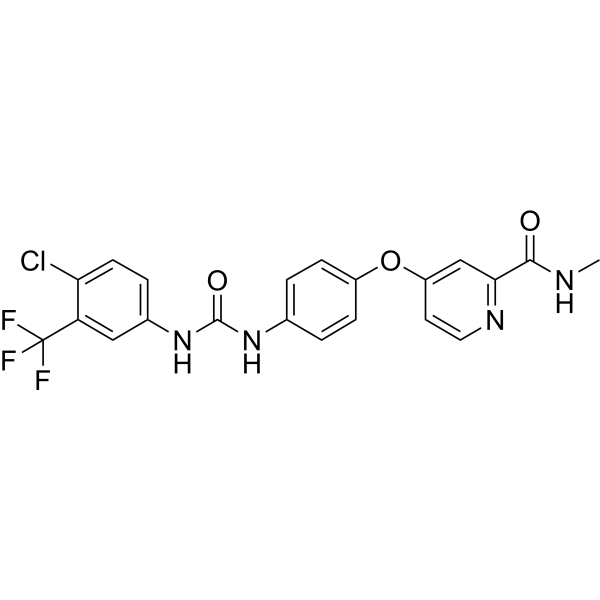
Cat. No.: HY-10201
CAS No.: 284461-73-0
Purity:  99.92%
Synonyms: Bay 43-9006
Sorafenib (Bay 43-9006) is a potent oral active multikinase inhibitor. Sorafenib blocks autophosphorylation and activity of receptor tyrosine kinases (VEGFR-2, VEGFR-3) and RAF family kinases, thereby suppressing the RAF/MEK/ERK and PI3K/Akt pathways, inhibiting STAT3 phosphorylation, and selectively inhibiting the MAPK pathway in cancer cells. Sorafenib induces cell cycle arrest, autophagy, apoptosis, and PARP cleavage, reduces Bcl-2, Bcl-XL, cyclin D1 levels, and activates Bak and Bax. Sorafenib inhibits tumor growth and metastasis in mouse and rat models. Sorafenib can be used for cancer research, such as colon, breast, non-small-cell lung cancer (NSCLC), ovarian, pancreatic, melanoma, colorectal and hepatocellular carcinoma .
loading...
    loading...
307
307 Publications Verification
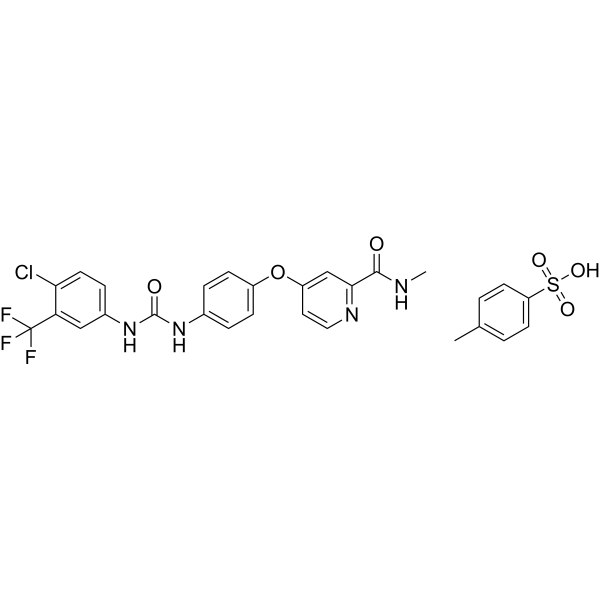
Cat. No.: HY-10201A
CAS No.: 475207-59-1
Purity:  99.75%
Synonyms: Bay 43-9006 tosylate
Sorafenib (Bay 43-9006) tosylate is a potent oral active multikinase inhibitor. Sorafenib blocks autophosphorylation and activity of receptor tyrosine kinases (VEGFR-2, VEGFR-3) and RAF family kinases, thereby suppressing the RAF/MEK/ERK and PI3K/Akt pathways, inhibiting STAT3 phosphorylation, and selectively inhibiting the MAPK pathway in cancer cells. Sorafenib tosylate induces cell cycle arrest, autophagy, apoptosis, and PARP cleavage, reduces Bcl-2, Bcl-XL, cyclin D1 levels, and activates Bak and Bax. Sorafenib tosylate inhibits tumor growth and metastasis in mouse and rat models. Sorafenib tosylate can be used for cancer research, such as colon, breast, non-small-cell lung cancer (NSCLC), ovarian, pancreatic, melanoma, colorectal and hepatocellular carcinoma .
loading...
    loading...
158
158 Cited Publications
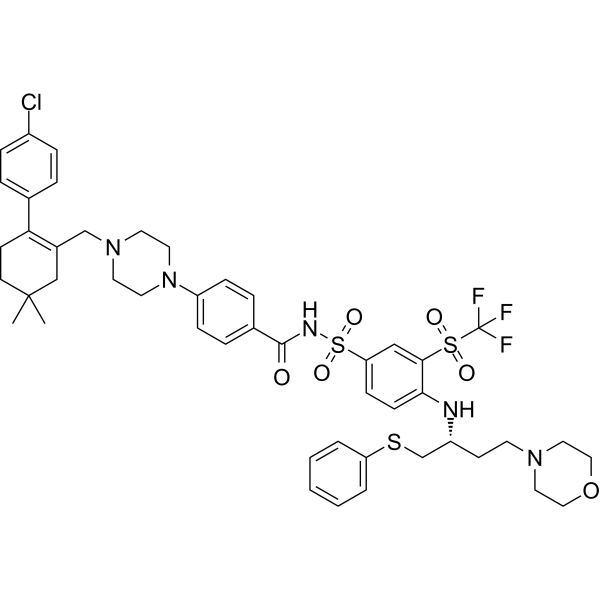
Cat. No.: HY-10087
CAS No.: 923564-51-6
Purity:  99.72%
Synonyms: ABT-263
Target:  

Bcl-2 Family

Research Areas:  

Cancer

Navitoclax (ABT-263) is a potent and orally active Bcl-2 family protein inhibitor that binds to multiple anti-apoptotic Bcl-2 family proteins, such as Bcl-xL, Bcl-2 and Bcl-w, with a Ki of less than 1 nM .
loading...
    loading...
126
126 Cited Publications
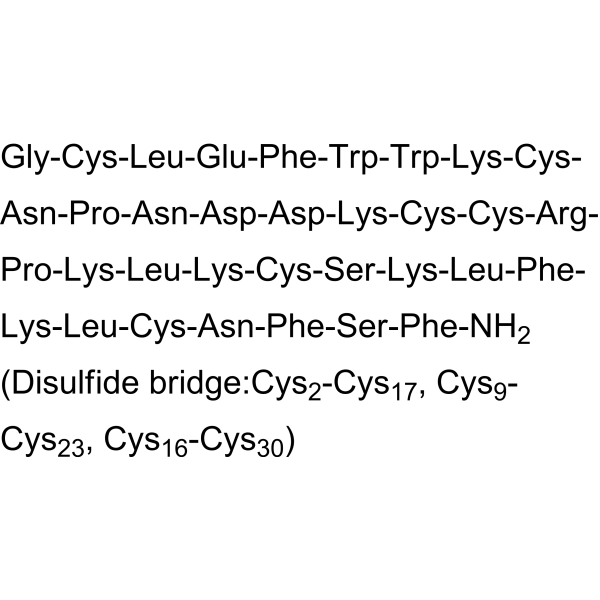
Cat. No.: HY-P1410
CAS No.: 1209500-46-8
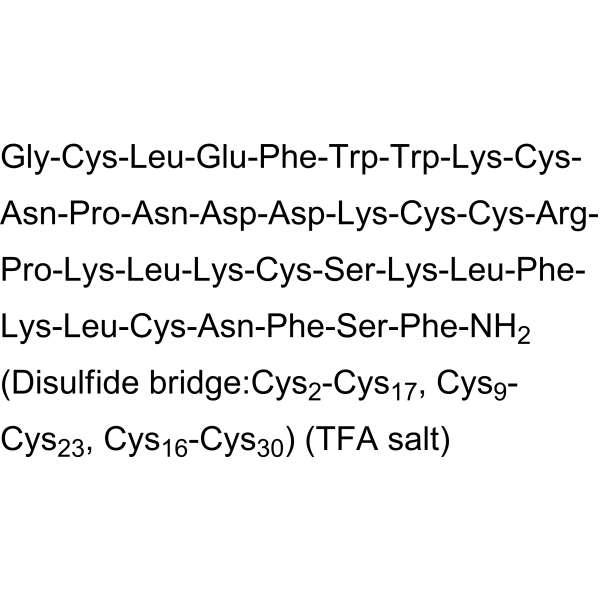
GsMTx4 is a spider venom peptide that selectively inhibits cationic-permeable mechanosensitive channels (MSCs) belonging to the Piezo and TRP channel families. GsMTx4 also blocks cation-selective stretch-activated channels (SACs) , attenuates lysophosphatidylcholine (LPC)-induced astrocyte toxicity and microglial reactivity. GsMTx4 is an important pharmacological tool for identifying the role of these excitatory MSCs in normal physiology and pathology .
loading...
    loading...
126
126 Cited Publications
Cat. No.: HY-P1410A
GsMTx4 TFA is a spider venom peptide that selectively inhibits cationic-permeable mechanosensitive channels (MSCs) belonging to the Piezo and TRP channel families. GsMTx4 TFA also blocks cation-selective stretch-activated channels (SACs) , attenuates lysophosphatidylcholine (LPC)-induced astrocyte toxicity and microglial reactivity. GsMTx4 TFA is an important pharmacological tool for identifying the role of these excitatory MSCs in normal physiology and pathology .
loading...
    loading...
111
111 Cited Publications
Cat. No.: HY-10261
CAS No.: 850140-72-6
Purity:  99.92%
Synonyms: BIBW 2992
Research Areas:  

Cancer

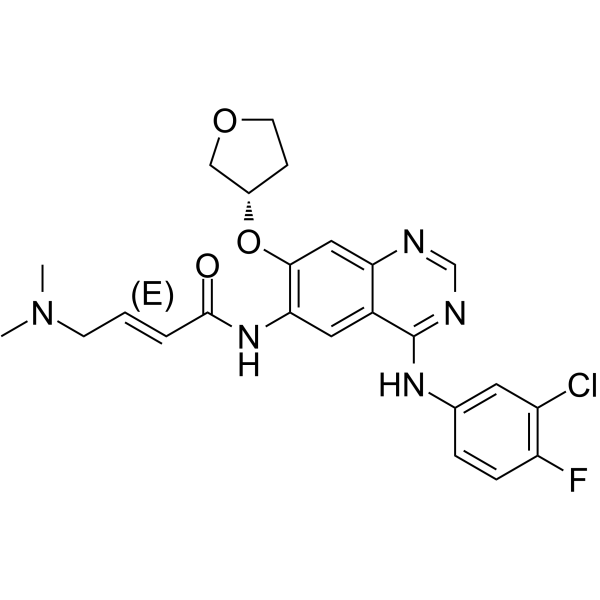
Afatinib (BIBW 2992) is an orally active, potent and irreversible dual specificity inhibitor of ErbB family (EGFR and HER2), with IC50 values of 0.5 nM, 0.4 nM, 10 nM and 14 nM for EGFR wt, EGFR L858R, EGFR L858R/T790M and HER2, respectively. Afatinib can be used for the research of esophageal squamous cell carcinoma (ESCC), non-small cell lung cancer (NSCLC) and gastric cancer .
loading...
    loading...
111
111 Cited Publications
Cat. No.: HY-10261A
CAS No.: 850140-73-7
Purity:  99.74%
Synonyms: BIBW 2992MA2
Research Areas:  

Cancer

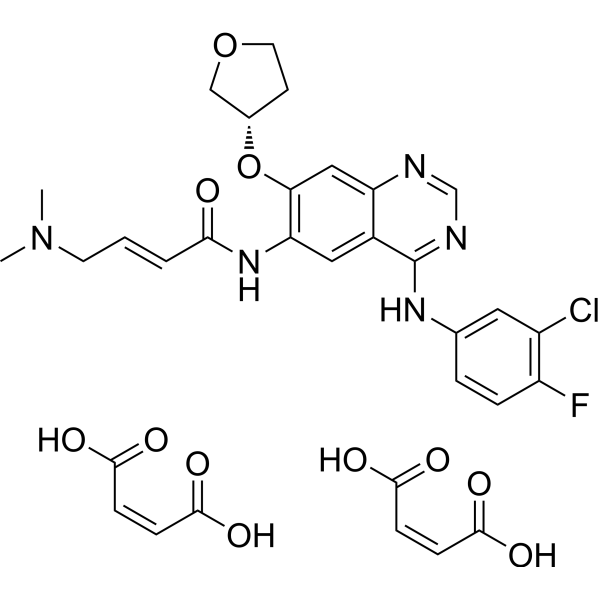
Afatinib (BIBW 2992) dimaleate is an orally active, potent and irreversible dual specificity inhibitor of ErbB family (EGFR and HER2), with IC50 values of 0.5 nM, 0.4 nM, 10 nM and 14 nM for EGFR wt, EGFR L858R, EGFR L858R/T790M and HER2, respectively. Afatinib dimaleate can be used for the research of esophageal squamous cell carcinoma (ESCC), non-small cell lung cancer (NSCLC) and gastric cancer .
loading...
    loading...
66
66 Cited Publications
Cat. No.: HY-15150
CAS No.: 1037624-75-1
Purity:  99.92%
Synonyms: R428; BGB324
Target:  

TAM Receptor

Research Areas:  

Cancer

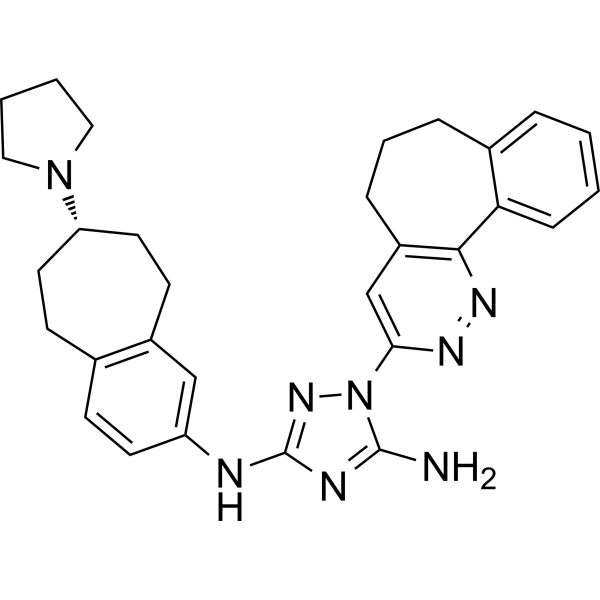
Bemcentinib (R428) is a selective and orally active Axl inhibitor with an IC50 of 14 nM. Bemcentinib retards cancer cell migration and invasion. Bemcentinib exhibits >100-fold selectivity for Axl versus Abl and 50- and >100-fold selectivity over TAM family kinases Mer and Tyro3, respectively, in cells. Bemcentinib blocks tumor spread and prolongs survival in models of metastatic breast cancer .
loading...
    loading...
64
64 Cited Publications
Cat. No.: HY-13805
CAS No.: 172889-27-9
Purity:  98.34%
Synonyms: AGL 1879
Target:  

Src

Research Areas:  

Cancer

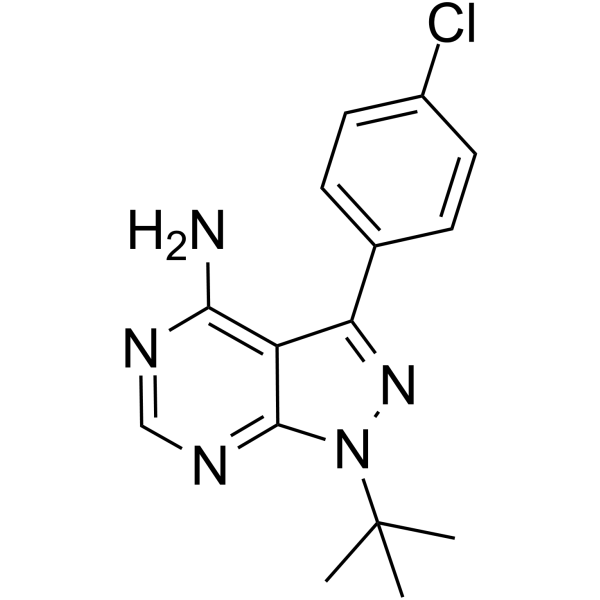
PP2 is a reversible and ATP-competitive Src family kinases inhibitor with IC50s of 4 and 5 nM for Lck and Fyn, respectively.
loading...
    loading...
56
56 Cited Publications
Cat. No.: HY-15723
CAS No.: 733767-34-5
Purity:  99.86%
Target:  

Ras

Research Areas:  

Cancer

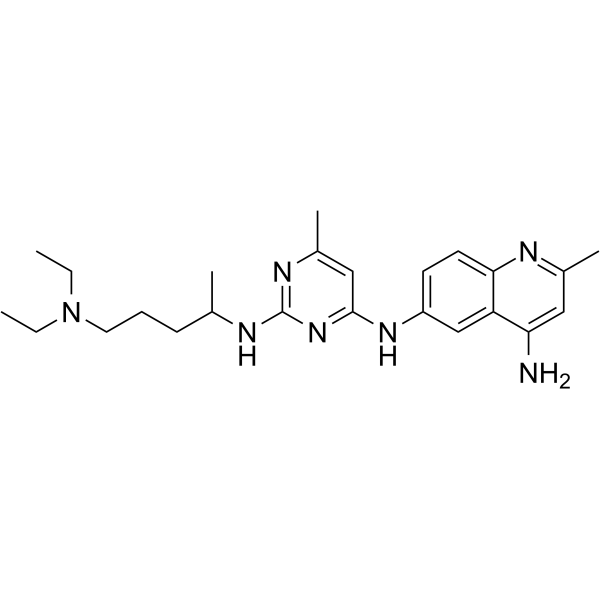
NSC 23766 is a cell-permeable, reversible and specific inhibitor of Rac GTPase, used for cancer treatment.
loading...
    loading...
48
48 Cited Publications
Cat. No.: HY-13311A
CAS No.: 1310746-10-1
Purity:  99.59%
Synonyms: BGJ-398 phosphate; NVP-BGJ398 phosphate
Target:  

FGFR

Research Areas:  

Cancer

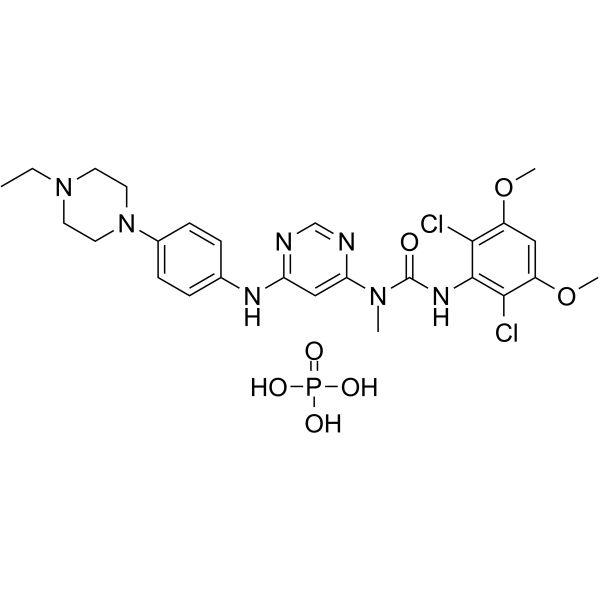
Infigratinib phosphate (BGJ-398 phosphate; NVP-BGJ398 phosphate) is a potent inhibitor of the FGFR family with IC50 of 0.9 nM, 1.4 nM, 1 nM, and 60 nM for FGFR1, FGFR2, FGFR3, and FGFR4, respectively.
loading...
    loading...
48
48 Cited Publications
Cat. No.: HY-13311
CAS No.: 872511-34-7
Purity:  99.82%
Synonyms: BGJ-398; NVP-BGJ398
Target:  

FGFR Apoptosis

Research Areas:  

Cancer

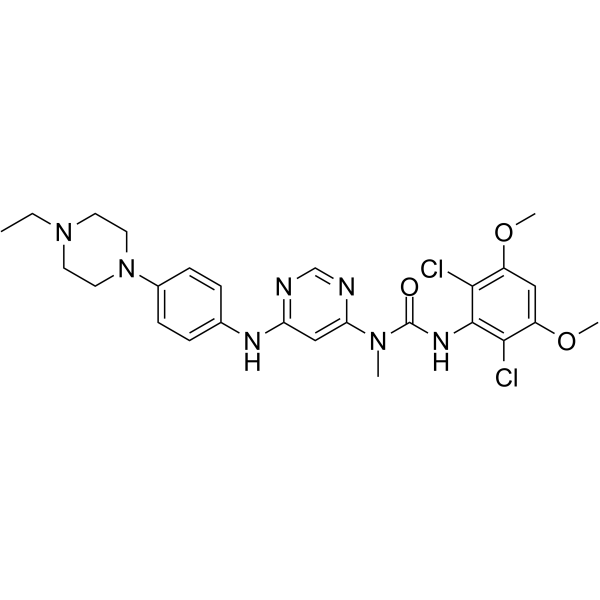
Infigratinib (BGJ-398; NVP-BGJ398) is a potent inhibitor of the FGFR family with IC50s of 0.9 nM, 1.4 nM, 1 nM, and 60 nM for FGFR1, FGFR2, FGFR3, and FGFR4, respectively.
loading...
    loading...
43
43 Cited Publications
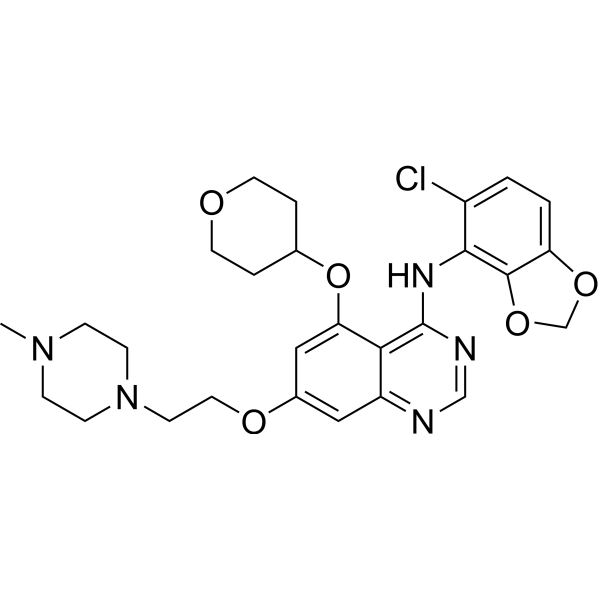
Cat. No.: HY-10234
CAS No.: 379231-04-6
Purity:  99.92%
Synonyms: AZD0530
Target:  

Src Autophagy

Research Areas:  

Cancer

Saracatinib (AZD0530) is a potent Src family inhibitor with IC50s of 2.7 to 11 nM for c-Src, Lck, c-YES, Lyn, Fyn, Fgr, and Blk. Saracatinib shows high selectivity over other tyrosine kinases .
loading...
    loading...
42
42 Cited Publications
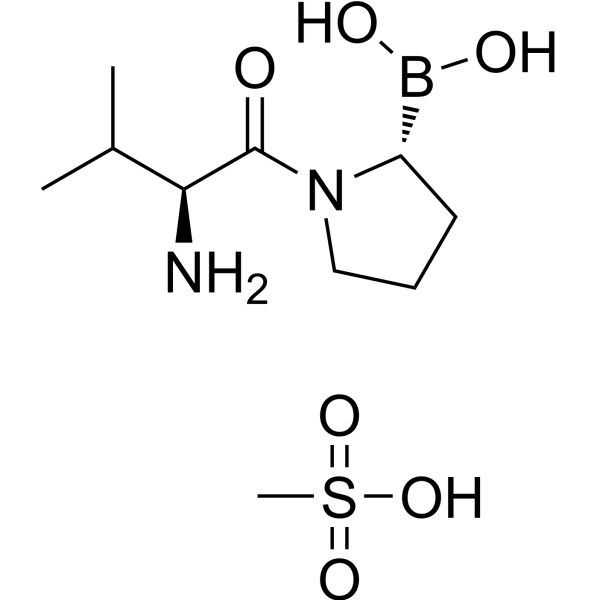
Cat. No.: HY-13233A
CAS No.: 150080-09-4
Purity:  98.35%
Synonyms: Val-boroPro mesylate; PT100 mesylate
Target:  

Dipeptidyl Peptidase

Research Areas:  

Inflammation/Immunology Cancer

Talabostat mesylate (Val-boroPro mesylate; PT100 mesylate) is an orally active and nonselective dipeptidyl peptidase IV (DPP-IV) inhibitor (IC50 < 4 nM; Ki = 0.18 nM) and the inhibitor of fibroblast activation protein (FAP) (IC50 = 560 nM), inhibits DPP8/9 (IC50 = 4/11 nM; Ki = 1.5/0.76 nM), quiescent cell proline dipeptidase (QPP) (IC50 = 310 nM), DPP2, and some other DASH family enzymes. Antineoplastic and hematopoiesis- stimulating activities .
loading...
    loading...
41
41 Cited Publications
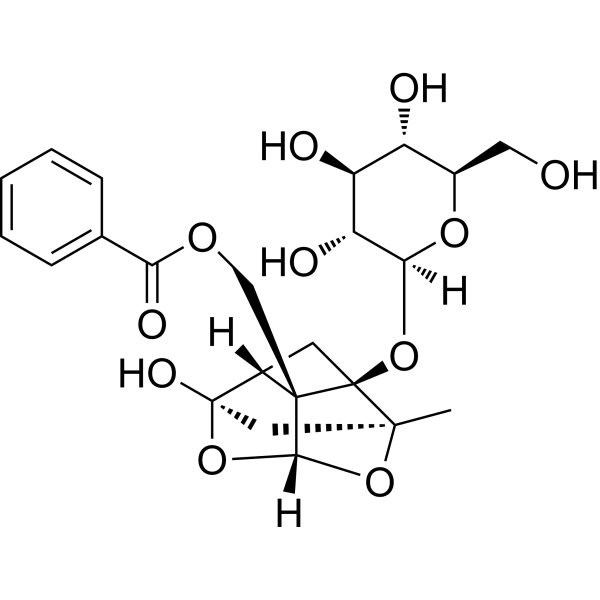
Cat. No.: HY-N0293
CAS No.: 23180-57-6
Synonyms: Peoniflorin
Paeoniflorin is a heat shock protein-inducing compound and commonly exists in the plants of Paeoniaceae family, with various biological activities, including anticancer activity, anti-inflammatory activity, enhancing cognition and attenuating learning impairment, anti-oxidative stress, antiplatelet aggregation, expansion of blood vessels, and reducing blood viscosity .
loading...
    loading...
39
39 Cited Publications
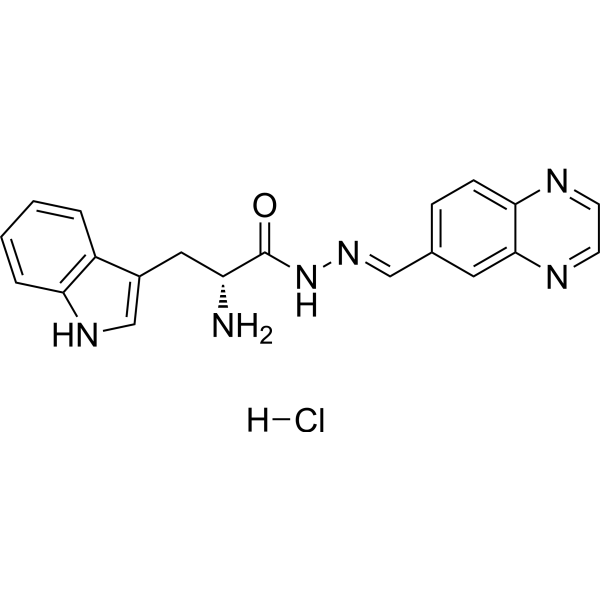
Cat. No.: HY-12646
CAS No.: 1281870-42-5
Purity:  99.93%
Target:  

Ras Apoptosis

Research Areas:  

Cancer

Rhosin hydrochloride is a potent, specific RhoA subfamily Rho GTPases inhibitor. Rhosin hydrochloride specifically binds to RhoA to inhibit RhoA-GEF interaction with a Kd of ~ 0.4 uM, and does not interact with Cdc42 or Rac1, nor the GEF, LARG. Rhosin hydrochloride induces cell apoptosis . Rhosin hydrochloride promotes stress resiliency through enhancing D1-MSN plasticity and reducing hyperexcitability .
loading...
    loading...
39
39 Cited Publications
Cat. No.: HY-12646A
CAS No.: 1173671-63-0
Purity:  95.08%
Target:  

Ras Apoptosis

Research Areas:  

Cancer

Rhosin is a potent, specific RhoA subfamily Rho GTPases inhibitor, which specifically binds to RhoA to inhibit RhoA-GEF interaction with a Kd of ~ 0.4 uM, and does not interact with Cdc42 or Rac1, nor the GEF, LARG. Rhosin induces cell apoptosis . Rhosin promotes stress resiliency through enhancing D1-MSN plasticity and reducing hyperexcitability .
loading...
    loading...
39
39 Cited Publications
Cat. No.: HY-18708
CAS No.: 1346242-81-6
Synonyms: JNJ-42756493
Target:  

FGFR Apoptosis

Research Areas:  

Cancer

Erdafitinib (JNJ-42756493) is a potent and orally available FGFR family inhibitor; inhibits FGFR1/2/3/4 with IC50s of 1.2, 2.5, 3.0 and 5.7 nM, respectively.
loading...
    loading...
36
36 Cited Publications
Cat. No.: HY-13330
CAS No.: 1035270-39-3
Purity:  99.85%
Synonyms: AZD4547; ADSK091
Target:  

FGFR

Research Areas:  

Cancer

Fexagratinib (AZD4547; ADSK091) is a potent inhibitor of the FGFR family with IC50s of 0.2 nM, 2.5 nM, 1.8 nM, and 165 nM for FGFR1, FGFR2, FGFR3, and FGFR4, respectively.
loading...
    loading...
35
35 Cited Publications
Cat. No.: HY-12755
CAS No.: 71203-35-5
Purity:  99.96%
Synonyms: CID-2950007
Target:  

Ras Apoptosis

Research Areas:  

Cancer

ML141 (CID-2950007) is a potent, allosteric, selective and reversible non-competitive inhibitor of Cdc42 GTPase. ML141 inhibits Cdc42 wild type and Cdc42 Q61L mutant with EC50s of 2.1 and 2.6 μM, respectively. ML141 shows low micromolar potency and selectivity against other members of the Rho family of GTPases (Rac1, Rab2, Rab7). ML141 do not show cytotoxicity in multiple cell lines .
loading...
    loading...

