12 Results for "

Artemisinin B

" in MedChemExpress (MCE) Product Catalog:
Products (12)

12 Results for "Artemisinin B" in MCE Product Catalog:

Cat. No.: HY-125447
CAS No.: 145941-07-7
Artemisinin B is an orally active sesquiterpene natural product with anti-neuroinflammatory activity, which can be found in Artemisia annua Linn.. Artemisinin B suppresses the TLR4-MyD88-NF-κB signaling pathway by reducing the protein levels of TLR4 and MyD88, as well as inhibiting the mRNA expression of NF-κB p65. Artemisinin B reduces the expression of pro-inflammatory cytokines and attenuates synaptic loss, which can be used for the research of cognitive and behavioral impairments in Alzheimer's disease. Artemisinin B shows no cytotoxicity against human cardiomyocytes and exhibits very weak binding to hERG, suggesting its potential for cardioprotective property research .
loading...
    loading...
3
3 Cited Publications
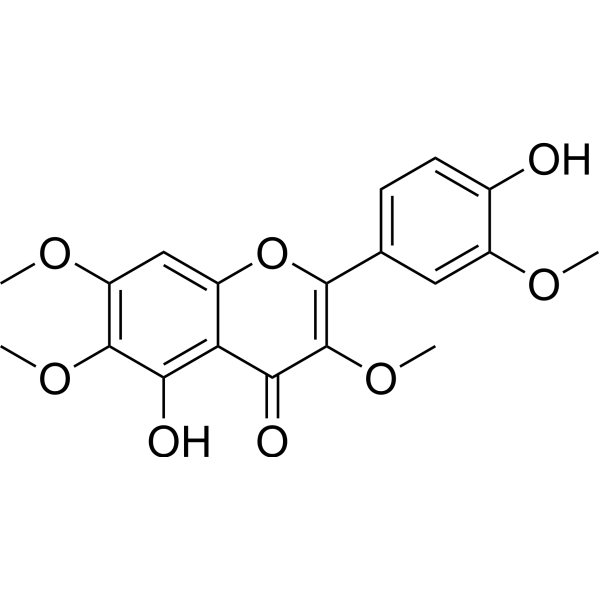
Cat. No.: HY-N1457
CAS No.: 603-56-5
Chrysosplenetin is an orally active polymethoxyflavone. Chrysosplenetin exerts anticancer effects by inhibiting topoisomerase, protecting DNA and inducing apoptosis. Chrysosplenetin acts as an antimalarial sensitizer, reverses Artemisinin (HY-B0094) resistance by inhibiting and downregulating P-glycoprotein, and enhances the efficacy of Artemisinin. Chrysosplenetin promotes bone formation by activating the Wnt/β-catenin pathway and exerts anti-osteoporotic effects .
loading...
    loading...
1
1 Cited Publications
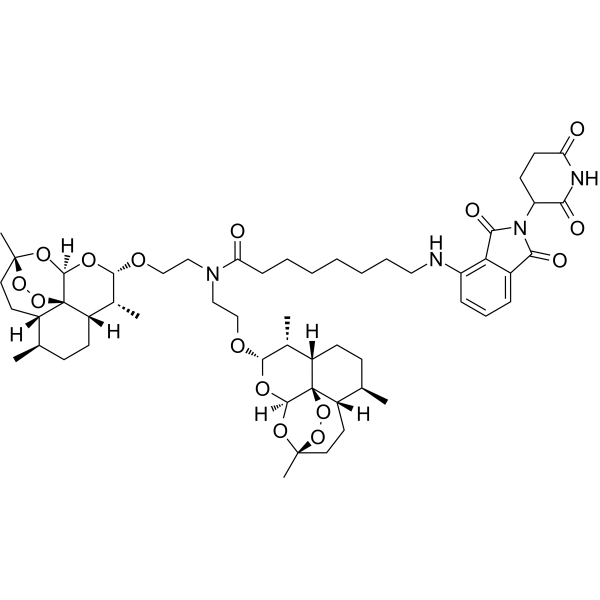
Cat. No.: HY-149428
CAS No.: 2918262-09-4
Purity:  98.01%
Research Areas:  

Cancer

AD4 is a PROTAC that induces the degradation of PCLAF by recruiting cereblon. AD4 is also an artemisinin derivative. AD4 directly binds to PCLAF with a KD of 6.1 μM, and induces apoptosis and G1-phase cell cycle arrest. By degrading PCLAF, AD4 upregulates p21, reduces Rb phosphorylation, downregulates Bcl-2 and upregulates Bax, thereby activating the p21/Rb axis. AD4 can be used in studies related to acute B-lymphoblastic leukemia and PCLAF-dependent anticancer mechanisms .
loading...
    loading...
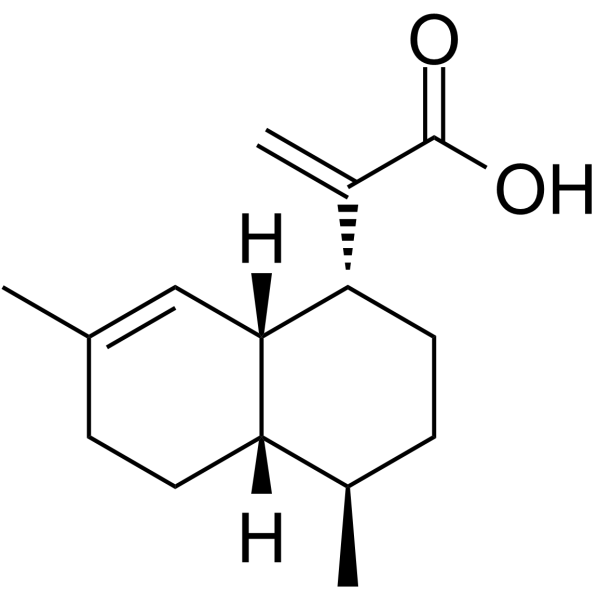
Cat. No.: HY-N1984
CAS No.: 80286-58-4
Synonyms: Qing Hao acid; Artemisinic acid; Arteannuic acid
Artemisinic acid (Qing Hao acid) is a sesquiterpene that can be isolated from Artemisia annua L. Artemisinic acid is also an important precursor for the synthesis of Artemisinin (HY-B0094). Artemisinic acid has various pharmacological activities, such as antimalarial activity, antitumor activity, antipyretic effect, antibacterial activity, allelopathic effect, and anti-adipogenic effect .
loading...
    loading...
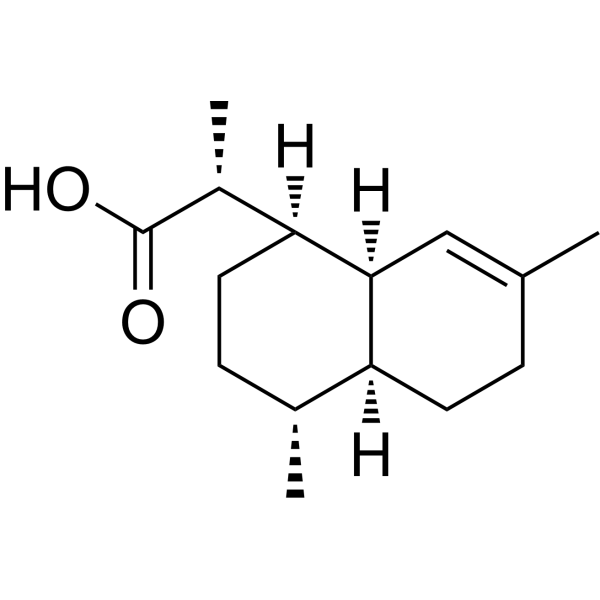
Cat. No.: HY-N4106
CAS No.: 85031-59-0
Synonyms: Dihydroqinghao acid
Dihydroartemisinic acid (Dihydroqinghao acid) is a biosynthetic precursor to the antimalarial agent Artemisinin (HY-B0094) .
loading...
    loading...
Cat. No.: HY-N9551
CAS No.: 14917-41-0
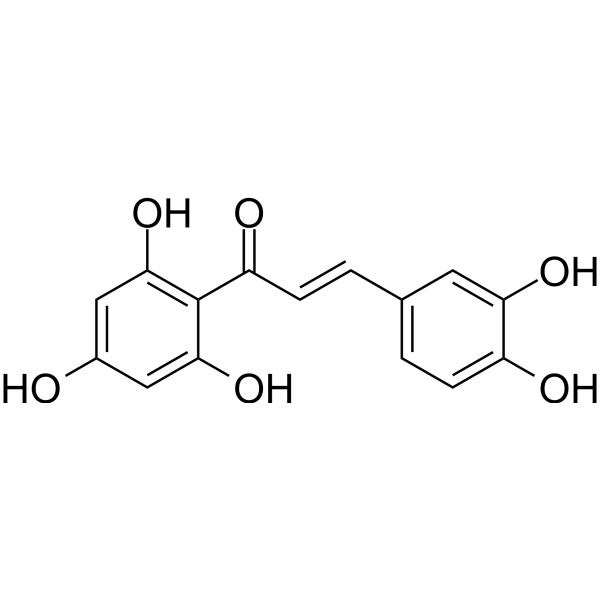
Eriodictyol chalcone is an antioxidant that inhibits multiple key enzymes including 5-LOX (IC50=0.043 μM), aromatase/CYP19A1 (IC50=2.8 μM), PTPase 1B (IC50=1.26 μM), and COX (IC50=34 μM). Eriodictyol chalcone exhibits excellent free radical scavenging activity. Eriodictyol chalcone not only inhibits the growth of plasmodia and enhances the efficacy of Artemisinin (HY-B0094), but also reduces depression-like behaviors in animal models. Eriodictyol chalcone serves as a biosynthetic precursor for Aureusidin (HY-N9834). Eriodictyol chalcone is a potential dietary supplement and herbicide, and it can be applied to research on malaria, depression, breast cancer and other related diseases .
loading...
    loading...
Cat. No.: HY-W587751
CAS No.: 125184-95-4
Synonyms: Amorpha-4,11-diene-12-ol
Target:  

Drug Intermediate

Research Areas:  

Infection

Arteannuic alcohol (Amorpha-4,11-diene-12-ol) is a precursor substance in the biosynthetic pathway of Artemisinin (HY-B0094). Alcohol dehydrogenase catalyzes the dehydrogenation reaction of chlorogenic alcohol to produce artemisinic aldehyde .
loading...
    loading...
Cat. No.: HY-N1984R
CAS No.: 80286-58-4
Synonyms: Qing Hao acid (Standard); Artemisinic acid (Standard); Arteannuic acid (Standard)
Artemisic acid (Standard) (Qing Hao acid (Standard)) is the analytical standard of Artemisic acid (HY-N1984). This product is intended for research and analytical applications. Artemisinic acid (Qing Hao acid) is a sesquiterpene that can be isolated from Artemisia annua L. Artemisinic acid is also an important precursor for the synthesis of Artemisinin (HY-B0094). Artemisinic acid has various pharmacological activities, such as antimalarial activity, antitumor activity, antipyretic effect, antibacterial activity, allelopathic effect, and anti-adipogenic effect .
loading...
    loading...
Cat. No.: HY-B0094S3
Synonyms: Qinghaosu-13C,d4; NSC 369397-13C,d4
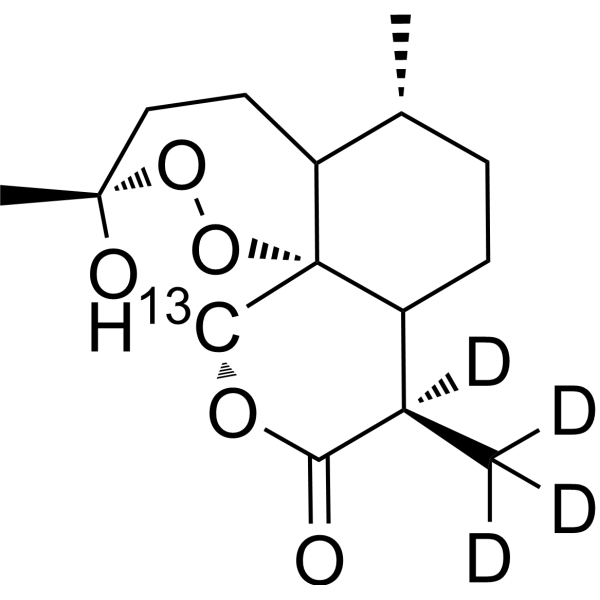
Artemisinin- 13C,d4 is 13C and deuterated labeled Artemisinin (HY-B0094). Artemisinin (Qinghaosu), a sesquiterpene lactone, is an anti-malarial agent isolated from the aerial parts of Artemisia annua L. plants . Artemisinin inhibits AKT signaling pathway by decreasing pAKT in a dose-dependent manner. Artemisinin reduces cancer cell proliferation, migration, invasion, tumorigenesis and metastasis and has neuroprotective effects .
loading...
    loading...
Cat. No.: HY-175221
Target:  

Apoptosis Autophagy

Research Areas:  

Cancer

WHN-11 is an amino-Artemisinin (HY-B0094) derivative with anti-cancer activity against various cancer cell lines. WHN-11 deprives the cell of ATP, activates autophagy, and causes subsequent cell death by apoptosis. WHN-11 alters cellular protein homeostasis pathways to induce mitochondrial fission and dysfunction. WHN-11's anti-cancer activity is independent of substantive ROS production. WHN-11 can be used for the study of triple-negative breast cancer (TNBC) .
loading...
    loading...
Cat. No.: HY-139288
CAS No.: 141204-94-6
Synonyms: Co-artemether
Target:  

Parasite

Research Areas:  

Infection

Artemether-lumefantrine (Co-artemether) is an Artemisinin (HY-B0094)-derived combination antimalarial. Artemether-lumefantrine is effective against malaria caused by P. falciparum .
loading...
    loading...
Cat. No.: HY-182685
CAS No.: 2446681-27-0
Research Areas:  

Infection

MMV693183 is an orally active inhibitor of Plasmodium falciparum acetyl-CoA synthetase (AcAS), with an IC50 of 300 nM against Plasmodium falciparum. MMV693183 exhibits potent inhibitory activity against clinical isolates of malaria parasites, including Artemisinin (HY-B0094)-resistant strains. MMV693183 is metabolized in vivo into the active antimetabolite CoA-MMV693183, which exerts effects of killing asexual blood-stage parasites and blocking transmission to Anopheles mosquitoes by binding to and inhibiting the function of acetyl-CoA synthetase, thereby reducing the levels of acetyl-CoA and 4'-phosphopantetheine. In humanized mouse models, MMV693183 shows favorable in vivo efficacy, drug-like properties, and no significant cytotoxicity or off-target activity against human cells. MMV693183 is widely used in malaria-related research as a parasiticide and metabolic disruptor .
loading...
    loading...
  • 1

