
1. Search Result
Search Result
Results for "

Barrier permeability

" in MedChemExpress (MCE) Product Catalog:

538

Inhibitors & Agonists

4

Screening Libraries

15

Fluorescent Dyes

6

Biochemical Assay Reagents

26

Peptides

5

Inhibitory Antibodies

55

Natural
Products

29

Isotope-Labeled Compounds

5

Click Chemistry

1

Oligonucleotides

Cat. No. Product Name Target Research Areas Chemical Structure
  • HY-128868A
    FITC-Dextran (MW 4000)
    Maximum Cited Publications
    90 Publications Verification

    Fluorescent Dye Others
    FITC-Dextran (MW 4000) is a fluorescent probe for fluorescein isothiocyanate (FITC) dextran (Ex=495 nm; Em=525 nm). FITC-Dextran (MW 4000) can be used as a marker to reveal heat shock-induced cell damage and to study the early and late stages of apoptosis. FITC-Dextran (MW 4000) can also be used for cell permeability studies, such as blood-brain barrier permeability and determination of the extent of blood-brain barrier disruption .
    FITC-Dextran (MW 4000)
  • HY-128868
    FITC-Dextran (MW 10000)
    Maximum Cited Publications
    90 Publications Verification

    Fluorescent Dye Others
    FITC-Dextran (MW 10000) is a fluorescent probe for fluorescein isothiocyanate (FITC) dextran (Ex=495 nm; Em=525 nm). FITC-Dextran (MW 10000) can be used as a marker to reveal heat shock-induced cell damage and to study the early and late stages of apoptosis. FITC-Dextran (MW 10000) can also be used for cell permeability studies, such as blood-brain barrier permeability and determination of the extent of blood-brain barrier disruption .
    FITC-Dextran (MW 10000)
  • HY-128868D
    FITC-Dextran (MW 40000)
    10+ Cited Publications

    Fluorescent Dye Others
    FITC-Dextran (MW 40000) is a fluorescent probe for fluorescein isothiocyanate (FITC) dextran (Ex=495 nm; Em=525 nm). FITC-Dextran (MW 40000) can be used as a marker to reveal heat shock-induced cell damage and to study the early and late stages of apoptosis. FITC-Dextran (MW 40000) can also be used for cell permeability studies, such as blood-brain barrier permeability and determination of the extent of blood-brain barrier disruption .
    FITC-Dextran (MW 40000)
  • HY-B1473
    Serotonin hydrochloride
    Maximum Cited Publications
    31 Publications Verification

    5-Hydroxytryptamine hydrochloride; 5-HT hydrochloride

    5-HT Receptor COMT Endogenous Metabolite Neurological Disease
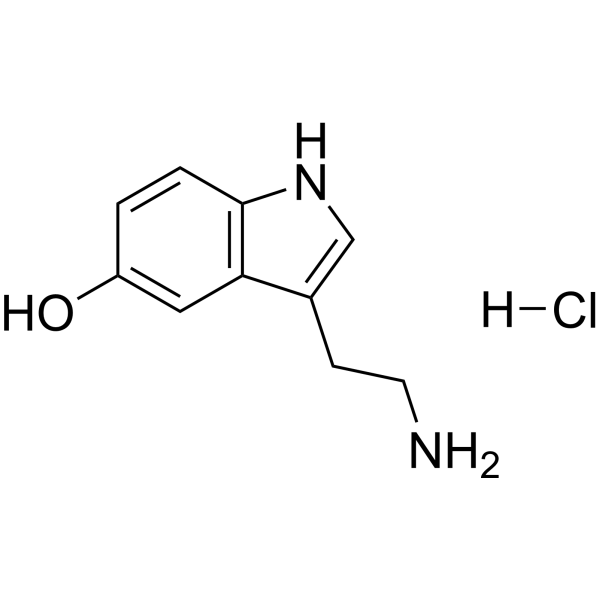
    Serotonin (5-Hydroxytryptamine) hydrochloride is a monoamine neurotransmitter in the CNS and an endogenous 5-HT receptor agonist, with blood-brain barrier permeability. Serotonin hydrochloride is also a catechol O-methyltransferase (COMT) inhibitor with a Ki of 44 μM.
    Serotonin hydrochloride
  • HY-112906
    C-176
    105+ Cited Publications

    STING Inflammation/Immunology
    C-176 is a selective and blood-brain barrier permeable STING inhibitor. C-176 covalently targets transmembrane cysteine residue 91 and thereby blocking activation-induced palmitoylation of STING .
    C-176
  • HY-18738

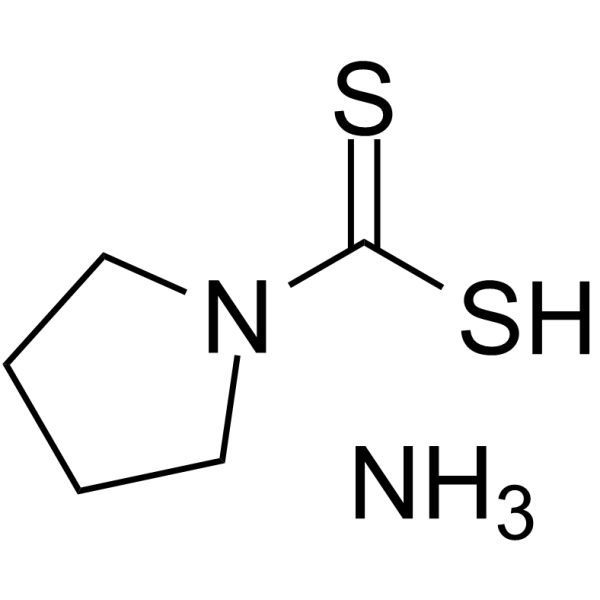
    Ammonium pyrrolidinedithiocarbamate; PDTC ammonium; APDC

    NF-κB Inflammation/Immunology Cancer
    Pyrrolidinedithiocarbamate ammonium (Ammonium pyrrolidinedithiocarbamate) is a selective and blood-brain barrier (BBB) permeable NF-κB inhibitor.
    Pyrrolidinedithiocarbamate ammonium
  • HY-128868B
    FITC-Dextran (MW 3000-5000)
    2 Publications Verification

    Biochemical Assay Reagents Others
    FITC-Dextran (MW 3000-5000) is a fluorescent probe for fluorescein isothiocyanate (FITC) dextran (Ex=495 nm; Em=525 nm). FITC-Dextran (MW 3000-5000) can be used as a marker to reveal heat shock-induced cell damage and to study the early and late stages of apoptosis. FITC-Dextran (MW 3000-5000) can also be used for cell permeability studies, such as blood-brain barrier permeability and determination of the extent of blood-brain barrier disruption . Storage: protect from light.
    FITC-Dextran (MW 3000-5000)
  • HY-B0167
    Salicylic acid
    10+ Cited Publications

    2-Hydroxybenzoic acid

    Environmental Pollutants Endogenous Metabolite COX Autophagy Apoptosis Mitophagy Infection Neurological Disease Inflammation/Immunology Cancer
    Salicylic acid (2-Hydroxybenzoic acid) inhibits cyclo-oxygenase-2 (COX-2) activity independently of transcription factor (NF-κB) activation. Salicylic acid has blood-brain barrier permeability .
    Salicylic acid
  • HY-B0007
    Baclofen
    10+ Cited Publications

    GABA Receptor Neurological Disease
    Baclofen, a lipophilic derivative of γ-aminobutyric acid (GABA), is an orally active, selective metabotropic GABAB receptor (GABABR) agonist with blood-brain barrier permeability. Baclofen mimics the action of GABA and produces slow presynaptic inhibition through the GABAB receptor. Baclofen has high blood brain barrier penetrance. Baclofen has the potential for muscle spasticity research .
    Baclofen
  • HY-113679

    Telomerase Metabolic Disease Endocrinology
    Ceramides Mixture is an endogenous ceramide and consists of hydroxy and non-hydroxy fatty acid-containing ceramides. Ceramides Mixture is a main lipid component of the permeability barrier in epidermis. Ceramides Mixture is involved in the regulation of growth inhibition, cell cycle arrest, and modulation of telomerase activity .
    Ceramides Mixture
  • HY-12354
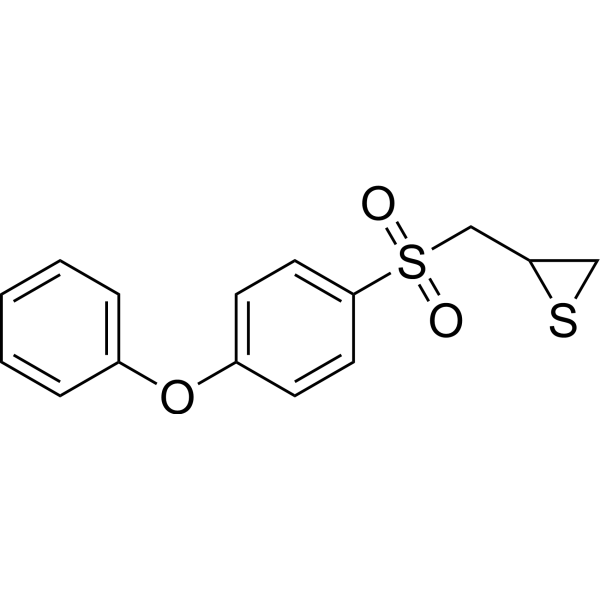
    SB-3CT
    25+ Cited Publications

    MMP Cancer
    SB-3CT is a potent and competitive matrix metalloproteinase MMP-2 and MMP-9 inhibitor with Ki values of 13.9 and 600 nM, respectively. SB-3CT has high selectivity for gelatinases. SB-3CT shows blood-brain barrier permeability and has neuroprotective effects and anticancer activity .
    SB-3CT
  • HY-D0799
    Sulfo-NHS-LC-Biotin sodium
    5+ Cited Publications

    Fluorescent Dye Others
    Sulfo-NHS-LC-Biotin sodium is an amine-reactive ester derivative of biotin and cannot pass the intact blood-retinal barrier. It can be used to assess vascular permeability of the brain and retinal vasculature.
    Sulfo-NHS-LC-Biotin sodium
  • HY-13930
    Miquelianin
    10+ Cited Publications

    Quercetin 3-O-glucuronide; Quercetin 3-glucuronide

    Endogenous Metabolite Neurological Disease Cancer
    Miquelianin (Quercetin 3-O-glucuronide) is a metabolite of quercetin and a type of natural flavonoid. Miquelianin is also a CBR1 inhibitor. Miquelianin is permeable to the blood-brain barrier .
    Miquelianin
  • HY-17029
    Epothilone B
    5+ Cited Publications

    EPO 906; Patupilone

    Microtubule/Tubulin Fungal Apoptosis Antibiotic Bacterial Infection Cancer
    Epothilone B is a microtubule stabilizer (MSA) with a Ki of 0.71μM, and is a MSA with blood-brain barrier permeability. Epothilone B acts by binding to the αβ-tubulin heterodimer subunit which causes decreasing of αβ-tubulin dissociation .
    Epothilone B
  • HY-18236
    MDL-28170
    15+ Cited Publications

    Calpain Inhibitor III

    Proteasome Neurological Disease Inflammation/Immunology
    MDL-28170 (Calpain Inhibitor III) is a potent, selective and membrane-permeable cysteine protease inhibitor of calpain that rapidly penetrates the blood-brain barrier following systemic administration . MDL-28170 also block γ-secretase .
    MDL-28170
  • HY-B0030
    D-Cycloserine
    5+ Cited Publications

    iGluR Bacterial Antibiotic Infection Neurological Disease Cancer
    D-Cycloserine is an antibiotic which targets sequential bacterial cell wall peptidoglycan biosynthesis enzymes, with blood-brain barrier permeability. D-Cycloserine is a partial NMDA agonist that can improve cognitive functions. D-Cycloserine can be used for multidrug-resistant tuberculosis research .
    D-Cycloserine
  • HY-128868G
    FITC-Dextran (MW 150000)
    4 Publications Verification

    Fluorescent Dye Others
    FITC-Dextran (MW 150000) is a fluorescent probe for fluorescein isothiocyanate (FITC) dextran (Ex=491 nm; Em=518 nm). FITC-Dextran (MW 150000) can be used as a marker to reveal heat shock-induced cell damage and to study the early and late stages of apoptosis. FITC-Dextran (MW 150000) can be used in perfusion studies in animals or in fluorescence microlymphography, to study processes that affect the permeability of the blood brain barrier (BBB) . FITC-Dextran (MW 150000) can be used as fluorescent probe to study cell permeability .
    FITC-Dextran (MW 150000)
  • HY-111653
    CycLuc1
    2 Publications Verification

    Reactive Oxygen Species (ROS) Others
    CycLuc1 is a blood-brain barrier permeable luciferase substrate that displays near-infrared (NIR) emission with a peak luminescence wavelength of 599 nm. CycLuc1 can be used for in vivo bioluminescence imaging .
    CycLuc1
  • HY-12705A
    Bromocriptine mesylate
    15+ Cited Publications

    CB-154

    Dopamine Receptor Autophagy Neurological Disease Cancer
    Bromocriptine mesylate is a potent dopamine D2/D3 receptor agonist, which binds D2 dopamine receptor with pKi of 8.05. Bromocriptine mesylate is permeable to the blood-brain barrier .
    Bromocriptine mesylate
  • HY-136964

    Biochemical Assay Reagents Neurological Disease
    Sulfo-NHS-Biotin sodium is a low-molecular-weight (MW 443.4 Da) tracer. Sulfo-NHS-Biotin sodium can used to assess blood-brain barrier permeability .
    Sulfo-NHS-Biotin sodium
  • HY-100347A
    SRI-011381 hydrochloride
    55+ Cited Publications

    TGF-beta/Smad Neurological Disease
    SRI-011381 hydrochloride is an orally active TGF-β signaling agonist, exhibits neuroprotective effects, with blood-brain barrier permeability .
    SRI-011381 hydrochloride
  • HY-17020A
    Miglustat hydrochloride
    5+ Cited Publications

    N-Butyldeoxynojirimycin hydrochloride; NB-DNJ hydrochloride; OGT 918 hydrochloride

    Glucosylceramide Synthase (GCS) Neurological Disease Inflammation/Immunology
    Miglustat (N-Butyldeoxynojirimycin) hydrochloride is an orally active and reversible ceramide glucosyltransferase inhibitor, with blood-brain barrier permeability. Miglustat hydrochloride can be used for the research of type I gaucher disease .
    Miglustat hydrochloride
  • HY-125017
    Bozitinib
    1 Publications Verification

    PLB-1001; CBT-101; Vebreltinib

    c-Met/HGFR Cancer
    Bozitinib (PLB-1001) is a highly selective c-MET kinase inhibitor with blood-brain barrier permeability. Bozitinib (PLB-1001) is a ATP-competitive small-molecule inhibitor, binds to the conventional ATP-binding pocket of the tyrosine kinase superfamily .
    Bozitinib
  • HY-111263
    NIAD-4
    1 Publications Verification

    Fluorescent Dye Amyloid-β Others
    NIAD-4 is a blood-brain barrier permeable fluorophore for optical imaging of amyloid-β () in the central nervous system (CNS) for Alzheimer’s disease (AD). NIAD-4 binds to the same Aβ site with the binding affinity (Ki) of 10 nM .
    NIAD-4
  • HY-117632
    Elcubragistat
    2 Publications Verification

    ABX-1431

    MAGL Neurological Disease
    Elcubragistat (ABX-1431) is a highly effective, selective, orally active, and blood-brain barrier-permeable monoacylglycerol lipase (MAGL) inhibitor, with an IC50 value of 14 nM .
    Elcubragistat
  • HY-175715

    Mitochondrial Metabolism Neurological Disease
    NRG1271 is an orally active mitochondrial permeability transition pore (mPTP) inhibitor with blood-brain barrier penetration. NRG1271 can be used for the study of Neurological Disease .
    NRG1271
  • HY-172412

    ALKS 2680

    Orexin Receptor (OX Receptor) Neurological Disease
    Alixorexton (ALKS 2680) is an orally bioavailable, blood-brain barrier-permeable OX2R-selective activator and wake-promoting agent. Alixorexton can be used for the research of narcolepsy and idiopathic hypersomnia .
    Alixorexton
  • HY-DY1016

    Fluorescent Dye Others
    FITC-Dextran (MW 10000) (solution) is a fluorescent probe for fluorescein isothiocyanate (FITC) dextran (Ex=495 nm; Em=525 nm). FITC-Dextran (MW 10000) can be used as a marker to reveal heat shock-induced cell damage and to study the early and late stages of apoptosis. FITC-Dextran (MW 10000) can also be used for cell permeability studies, such as blood-brain barrier permeability and determination of the extent of blood-brain barrier disruption .
    Solvent and Concentration: Sterile water: 2 mM
    FITC-Dextran (MW 10000) (solution)
  • HY-N6962

    TRP Channel COX Bacterial Infection Neurological Disease Metabolic Disease
    α-Spinasterol is an orally taken antagonist of transient receptor potential vanilloid 1 ( TRPV1), and it's also an inhibitor of COX-1 and COX-2, with IC50 values of 16.17 μM and 7.76 μM, respectively. α-Spinasterol exhibits antibacterial, anti-inflammatory, antidepressant, and antioxidant effects, has the ability to cross the blood-brain barrier, and can improve diabetes in mice .
    α-Spinasterol
  • HY-B0035
    Sulfamethazine
    3 Publications Verification

    Sulfadimidine; Sulfadimerazine

    Bacterial Antibiotic Infection
    Sulfamethazine (Sulfadimidine) is an antimicrobial agent with blood-brain barrier permeability. Sulfamethazine is widely used to treat and prevent various animal diseases (such as gastrointestinal and respiratory tract infections). In China and the European Commission, the maximum residue level for Sulfamethazine in animal product is set at 100 μg/kg .
    Sulfamethazine
  • HY-N0237
    Atractyloside A
    3 Publications Verification

    Toll-like Receptor (TLR) MyD88 NF-κB Mitochondrial Metabolism Interleukin Related Aquaporin Cardiovascular Disease Metabolic Disease Inflammation/Immunology
    Atractyloside A is an orally active inhibitor of the TLR4/MyD88/NF-κB signaling pathway and also an opener of the mitochondrial permeability transition pore (MPTP). Atractyloside A interferes with the activation of the TLR4/MyD88/NF-κB pathway, thereby inhibiting intestinal inflammatory responses. Atractyloside A reverses mucin synthesis impairment, improves intestinal barrier integrity, and restores homeostasis by altering the composition of the gut microbiota. Atractyloside A can be used in studies related to spleen deficiency diarrhea and myocardial injury .
    Atractyloside A
  • HY-154959

    Ras Cancer
    AZD4747 is a selective, blood-brain barrier-permeable mutant GTPase KRAS G12C inhibitor. AZD4747 has the potential to study cancer .
    AZD4747
  • HY-W275295

    PFDoA

    Reactive Oxygen Species (ROS) Caspase Mitochondrial Metabolism Neurological Disease Metabolic Disease
    Perfluorododecanoic acid (PFDoA) is an orally active, blood-brain barrier-permeable perfluorinated compound. Perfluorododecanoic acid increases Caspase 3 activity, disrupts mitochondrial membrane potential, and elevates ROS levels. Perfluorododecanoic acid induces cognitive deficits. Perfluorododecanoic acid exhibits hepatotoxicity .
    Perfluorododecanoic acid
  • HY-B0035A
    Sulfamethazine sodium
    3 Publications Verification

    Sulfadimidine sodium; Sulfadimerazine sodium

    Bacterial Antibiotic Infection
    Sulfamethazine sodium (Sulfadimidine sodium) is an antimicrobial with blood-brain barrier permeability. Sulfamethazine sodium is widely used to treat and prevent various animal diseases (such as gastrointestinal and respiratory tract infections). In China and the European Commission, the maximum residue level for Sulfamethazine sodium in animal product is set at 100 μg/kg .
    Sulfamethazine sodium
  • HY-153248

    Biochemical Assay Reagents Neurological Disease Inflammation/Immunology
    PBR28 is a translocator protein (TSPO) binding positron emission tomography (PET) radiotracer with blood-brain barrier permeability . PBR28 binds to TSPO, a marker of microglial activation and neuroinflammation, and is used for neuroinflammation imaging in brain diseases and HIV-infected individuals .
    PBR28
  • HY-19945
    DAA-1106
    1 Publications Verification

    GABA Receptor Neurological Disease
    DAA1106 is a peripheral benzodiazepine receptor (PBR) agonist that is permeable to the blood-brain barrier, but has no affinity for GABAA receptors.
    DAA-1106
  • HY-120332

    KH176 hydrochloride

    Reactive Oxygen Species (ROS) Metabolic Disease
    Sonlicromanol (KH176) hydrochloride, a chemical entity derivative of Trolox, is a blood-brain barrier permeable ROS-redox modulator. Sonlicromanol (KH176) hydrochloride is used in the study for mitochondrial disorders .
    Sonlicromanol hydrochloride
  • HY-161683

    JAK Neurological Disease
    Tyk2-IN-19 (Compound 1) is an orally active and blood-brain barrier (BBB) permeable Tyk2 inhibitor. Tyk2-IN-19 can be used for study of neurodegenerative diseases .
    Tyk2-IN-19
  • HY-160791

    Phosphatase Infection Cancer
    Claramine is a steroid polyamine with blood-brain barrier permeability. Claramine can regulate the properties of lipid membranes and protect cells from various biological toxins, including misfolded protein oligomers and biological protein-based toxins .
    Claramine
  • HY-126899

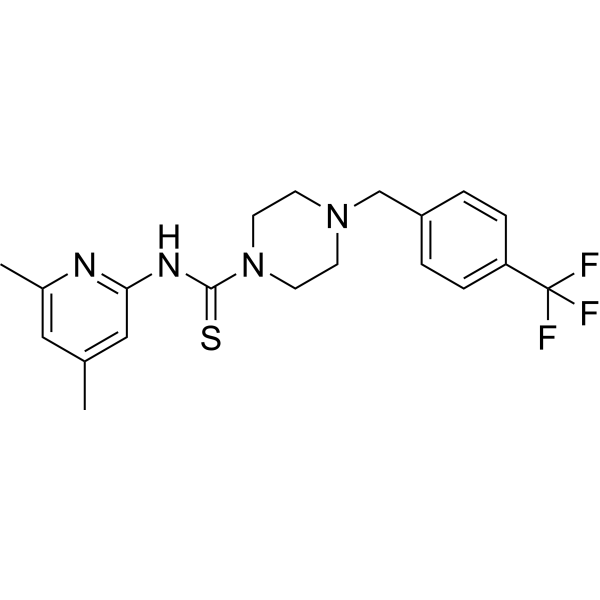
    Microtubule/Tubulin Cancer
    TPI-287, a blood-brain barrier-permeable microtubule stabilizer, can significantly reduce metastatic colonization of breast cancer in the brain .
    TPI-287
  • HY-14503

    DWK-1339

    Amyloid-β Neurological Disease
    MDR-1339 (DWK-1339) is an orally active and blood-brain-barrier-permeable Aβ-aggregation inhibitor, used in the research of Alzheimer's disease.
    MDR-1339
  • HY-125407

    N-Palmitoyl serinol

    Cannabinoid Receptor Inflammation/Immunology
    Palmitoyl serinol (N-Palmitoyl serinol) is an analog of the endocannabinoid N-palmitoyl ethanolamine (PEA). Palmitoyl serinol improves the epidermal permeability barrier in both normal and inflamed skin .
    Palmitoyl serinol
  • HY-163565

    Btk Neurological Disease
    BIIB129 is a covalent, selective, small molecule inhibitor of Bruton's tyrosine kinase (BTK) capable of penetrating the blood-brain barrier. BIIB129 inhibits the activity of BTK by covalently binding to Cys481 in BTK, thereby affecting the function of B cells and myeloid cells. BIIB129 can be used in multiple sclerosis (MS) research .
    BIIB129
  • HY-DY1018

    Fluorescent Dye Others
    FITC-Dextran (MW 4000) (solution) is a fluorescent probe for fluorescein isothiocyanate (FITC) dextran (Ex=495 nm; Em=525 nm). FITC-Dextran (MW 4000) can be used as a marker to reveal heat shock-induced cell damage and to study the early and late stages of apoptosis. FITC-Dextran (MW 4000) can also be used for cell permeability studies, such as blood-brain barrier permeability and determination of the extent of blood-brain barrier disruption .
    Solvent and Concentration: Sterile water: 2 mM
    FITC-Dextran (MW 4000) (solution)
  • HY-155939

    TGF-β Receptor Cancer
    M4K2163 dihydrochloride is a potent, selective, blood-brain barrier (BBB) permeable activin receptor-like kinase-2 (ALK2) inhibitor, with an IC50 of 19 nM. M4K2163 dihydrochloride can be used in the research of diffuse intrinsic pontine glioma (DIPG) .
    M4K2163 dihydrochloride
  • HY-P11315

    Biochemical Assay Reagents Cardiovascular Disease Neurological Disease
    MG1 peptide is an M1 microglia-targeting peptide with blood-brain barrier permeability. MG1 peptide can be used in studies related to ischemic stroke and cerebral ischemia-reperfusion injury .
    MG1 peptide
  • HY-160791B

    Phosphatase Infection Cancer
    Claramine hydrochloride is a steroid polyamine with blood-brain barrier permeability. Claramine hydrochloride can regulate the properties of lipid membranes and protect cells from various biological toxins, including misfolded protein oligomers and biological protein-based toxins .
    Claramine hydrochloride
  • HY-103534

    GABA Receptor Neurological Disease
    CI-966 hydrochloride is a potent, selective, orally active and brain-penetrant inhibitor of the GABA transporter GAT-1, with IC50s of 0.26 μM and 1.2 μM for hGAT-1, rGAT-1, respectively. CI-966 hydrochloride shows more than 200-fold selectivity over GAT-2, GAT-3, and BGT-3. CI-966 hydrochloride exhibits anticonvulsant and neuroprotective activities .
    CI-966 hydrochloride
  • HY-159527

    Glovadalen

    Dopamine Receptor Neurological Disease
    Glovadalenum (Glovadalen) is an orally active, selective, blood-brain barrier permeable positive allosteric modulator of dopamine D1 receptor. Glovadalenum selectively enhances the efficacy of dopamine in activating dopamine D1 receptor. Glovadalenum can be used for the research of Parkinson's disease .
    Glovadalenum
  • HY-161666

    Aminoacyl-tRNA Synthetase Parasite Infection
    mCMY416 is an orally active and blood brain barrier (BBB) permeability apicomplexan phenylalanine tRNA synthetase inhibitor, and shows antiparasitic activity .
    mCMY416

Inquiry Online

Your information is safe with us. * Required Fields.

Salutation


Country or Region *

Applicant Name *


Organization Name *

Department *


Email Address *


Product Name *

Cat. No.


Requested quantity *

Phone Number *


Remarks

Inquiry Online

Inquiry Information

Product Name:
Cat. No.:
Quantity:
MCE Japan Authorized Agent:

