16 Results for "

D-enantiomer

" in MedChemExpress (MCE) Product Catalog:
Products (16)

16 Results for "D-enantiomer" in MCE Product Catalog:

Cat. No.: HY-N3686
CAS No.: 488-82-4
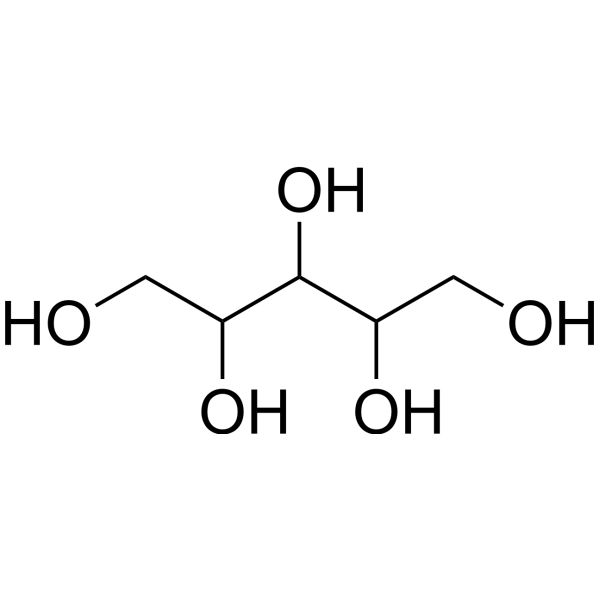
D-Arabitol is an orally active D-enantiomer of arabitol. D-Arabitol modulates the composition of gut microbiota, increases short-chain fatty acids, and promotes AMPK-PGC-1α-related browning of white adipose tissue. D-Arabitol improves weight gain, fat accumulation, insulin resistance, lipid deposition and inflammatory responses. D-Arabitol serves as the sole carbon/energy source for Bacillus methanolicus MGA3, a strain that can co-utilize it with mannitol. D-Arabitol is applicable to obesity-related research .
loading...
    loading...
Cat. No.: HY-W001941
CAS No.: 349-46-2
Research Areas:  

Others

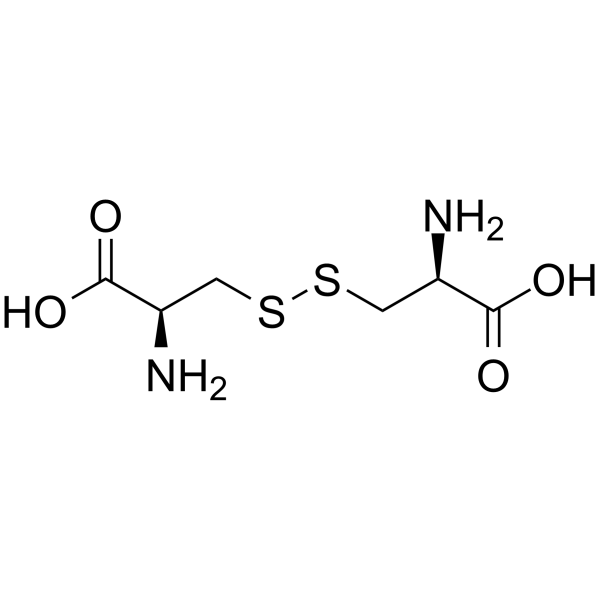
D-Cystine is the D-enantiomer of L-Cystine. D-Cystine inhibits L-aspartate-β-semialdehyde dehydrogenase (ASADH) from Escherichia coli .
loading...
    loading...
Cat. No.: HY-Y1091
CAS No.: 923-27-3
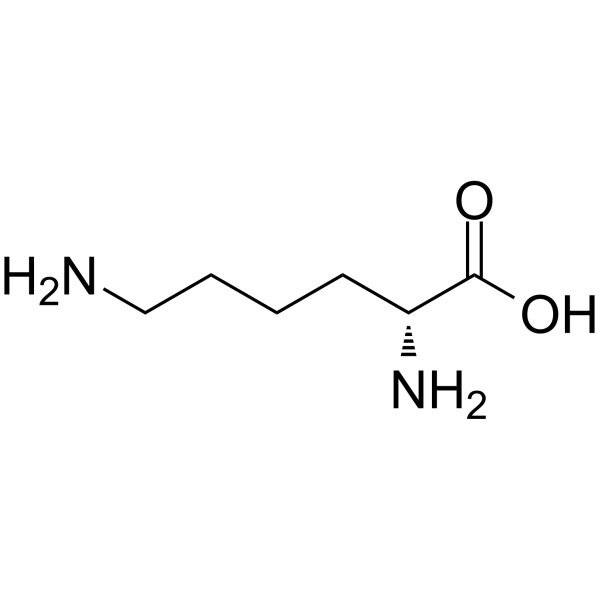
D-Lysine is the D-enantiomer of L-Lysine (HY-N0469). D-Lysine is metabolically inert and not utilized for protein synthesis by mammalian ribosomes. D-Lysine blocks renal uptake of 111In/ 90Y-Octreotide (HY-P0036)-based probes without inhibiting uptake by tumor/receptor tissues, and thus acts as a renoprotective agent in diagnostic imaging and peptide receptor radionuclide therapy (PRRT). D-Lysine specifically inhibits the early steps of non-enzymatic glycation by competing with glucose via its free amino group, theoretically, it can serve as a glycation competitor that "does not interfere with protein synthesis" under chronic hyperglycemia in diabetes. D-Lysine can be used in research related to cancer and diabetes .
loading...
    loading...
Cat. No.: HY-Y1804
CAS No.: 7274-88-6
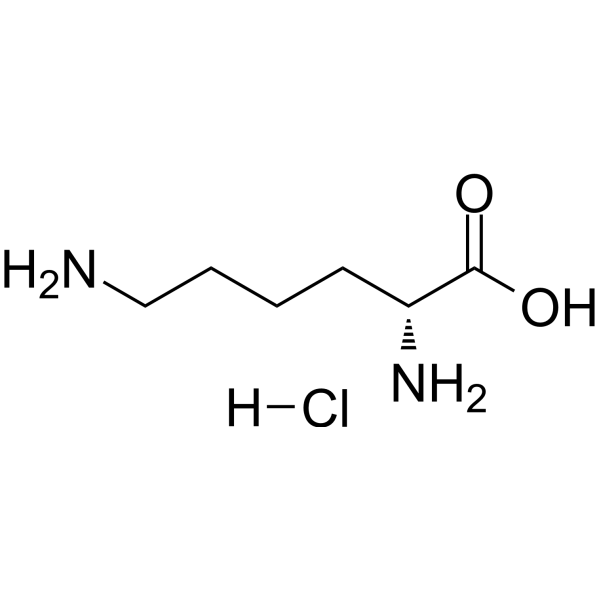
D-Lysine monohydrochloride is the D-enantiomer of L-Lysine (HY-N0469). D-Lysine monohydrochloride is metabolically inert and not utilized for protein synthesis by mammalian ribosomes. D-Lysine monohydrochloride blocks renal uptake of 111In/ 90Y-Octreotide (HY-P0036)-based probes without inhibiting uptake by tumor/receptor tissues, and thus acts as a renoprotective agent in diagnostic imaging and peptide receptor radionuclide therapy (PRRT). D-Lysine monohydrochloride specifically inhibits the early steps of non-enzymatic glycation by competing with glucose via its free amino group, theoretically, it can serve as a glycation competitor that "does not interfere with protein synthesis" under chronic hyperglycemia in diabetes. D-Lysine monohydrochloride can be used in research related to cancer and diabetes .
loading...
    loading...
Cat. No.: HY-W017442
CAS No.: 3130-87-8
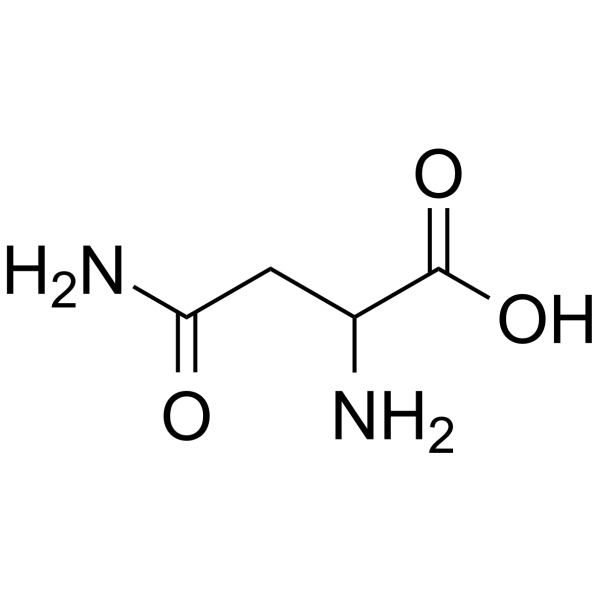
DL-Asparagine is a racemic melange of the Aparagine L and D-enantiomers. DL-Asparagine has been used in growth-media for bacteria-growth .
loading...
    loading...
Cat. No.: HY-N3686R
CAS No.: 488-82-4
D-Arabitol (Standard) is the analytical standard of D-Arabitol (HY-N3686). This product is intended for research and analytical applications. D-Arabitol is an orally active D-enantiomer of arabitol. D-Arabitol modulates the composition of gut microbiota, increases short-chain fatty acids, and promotes AMPK-PGC-1α-related browning of white adipose tissue. D-Arabitol improves weight gain, fat accumulation, insulin resistance, lipid deposition and inflammatory responses. D-Arabitol serves as the sole carbon/energy source for Bacillus methanolicus MGA3, a strain that can co-utilize it with mannitol. D-Arabitol is applicable to obesity-related research .
loading...
    loading...
Cat. No.: HY-W048995
CAS No.: 72002-30-3
Target:  

Endogenous Metabolite

Research Areas:  

Neurological Disease

D-6-Oxo-pipecolinic acid is the D-enantiomer of 6-Oxo-pipecolinic acid. 6-Oxo-pipecolinic acid is the biomarkers associated with pyridoxine-dependent epilepsy (PDE-ALDH7A1) .
loading...
    loading...
Cat. No.: HY-W035399S
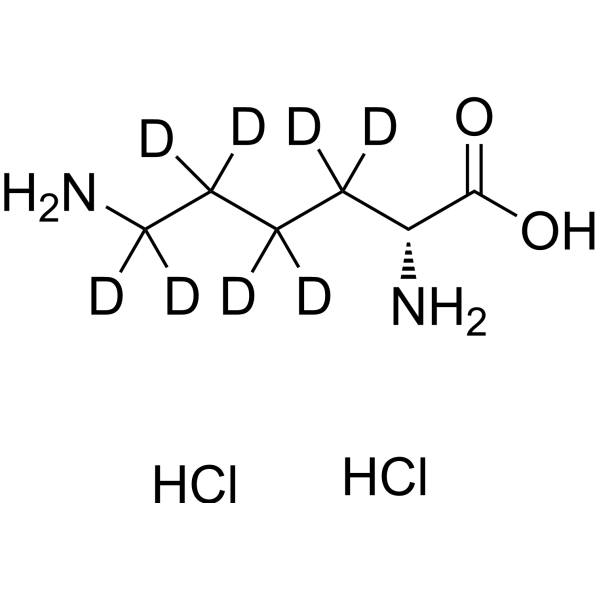
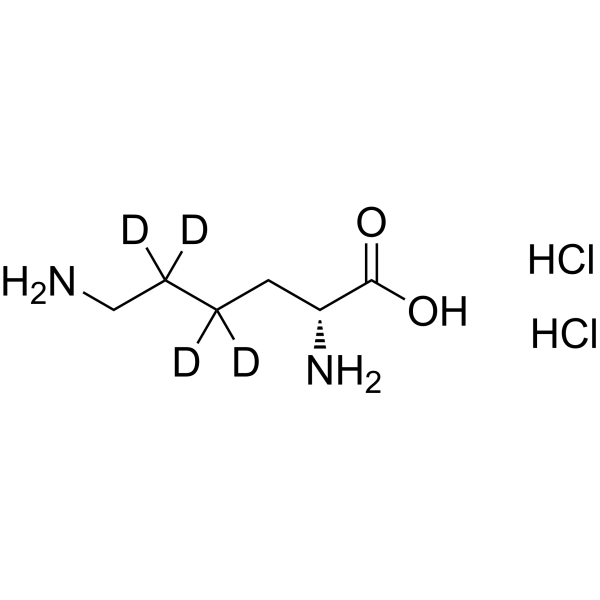
D-Lysine-d8 dihydrochloride is the d8-labeled D-Lysine (HY-Y1091). D-Lysine is the D-enantiomer of L-Lysine (HY-N0469). D-Lysine is metabolically inert and not utilized for protein synthesis by mammalian ribosomes. D-Lysine blocks renal uptake of 111In/ 90Y-Octreotide (HY-P0036)-based probes without inhibiting uptake by tumor/receptor tissues, and thus acts as a renoprotective agent in diagnostic imaging and peptide receptor radionuclide therapy (PRRT). D-Lysine specifically inhibits the early steps of non-enzymatic glycation by competing with glucose via its free amino group, theoretically, it can serve as a glycation competitor that "does not interfere with protein synthesis" under chronic hyperglycemia in diabetes. D-Lysine can be used in research related to cancer and diabetes .
loading...
    loading...
Cat. No.: HY-W017442R
CAS No.: 3130-87-8
DL-Asparagine is a racemic melange of the Aparagine L and D-enantiomers. DL-Asparagine has been used in growth-media for bacteria-growth .
loading...
    loading...
Cat. No.: HY-N3686S
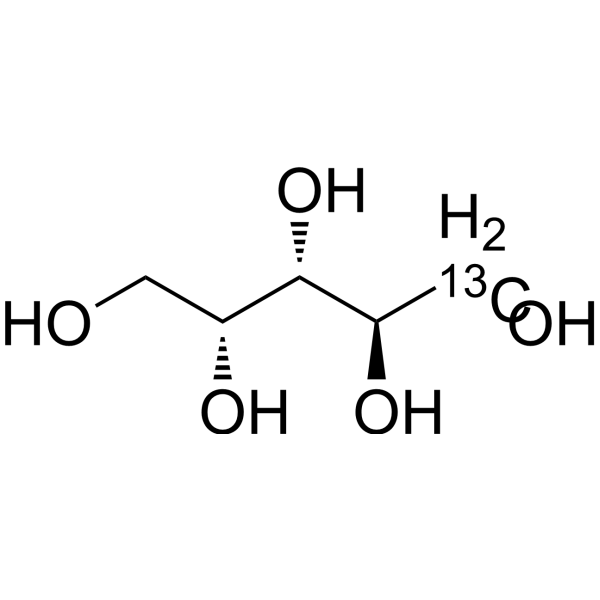
D-Arabitol- 13C is the 13C labeled D-Arabitol. D-Arabitol is an orally active D-enantiomer of arabitol. D-Arabitol modulates the composition of gut microbiota, increases short-chain fatty acids, and promotes AMPK-PGC-1α-related browning of white adipose tissue. D-Arabitol improves weight gain, fat accumulation, insulin resistance, lipid deposition and inflammatory responses. D-Arabitol serves as the sole carbon/energy source for Bacillus methanolicus MGA3, a strain that can co-utilize it with mannitol. D-Arabitol is applicable to obesity-related research.
loading...
    loading...
Cat. No.: HY-N3686S1
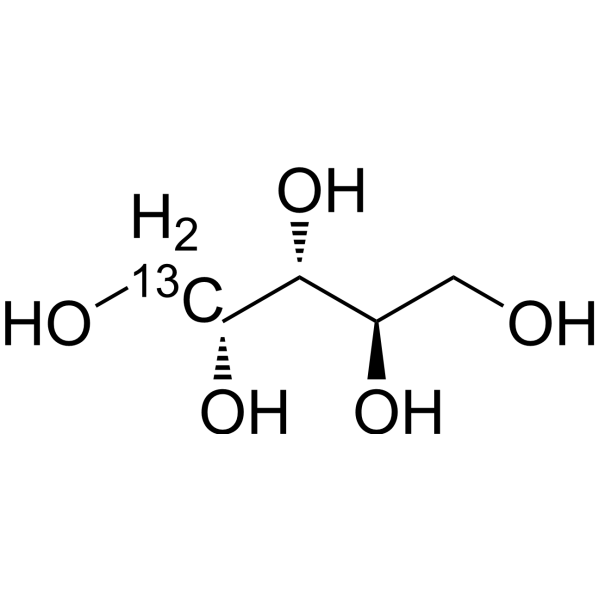
D-Arabitol- 13C-1 is the 13C labeled D-Arabitol. D-Arabitol is an orally active D-enantiomer of arabitol. D-Arabitol modulates the composition of gut microbiota, increases short-chain fatty acids, and promotes AMPK-PGC-1α-related browning of white adipose tissue. D-Arabitol improves weight gain, fat accumulation, insulin resistance, lipid deposition and inflammatory responses. D-Arabitol serves as the sole carbon/energy source for Bacillus methanolicus MGA3, a strain that can co-utilize it with mannitol. D-Arabitol is applicable to obesity-related research.
loading...
    loading...
Cat. No.: HY-N3686S2
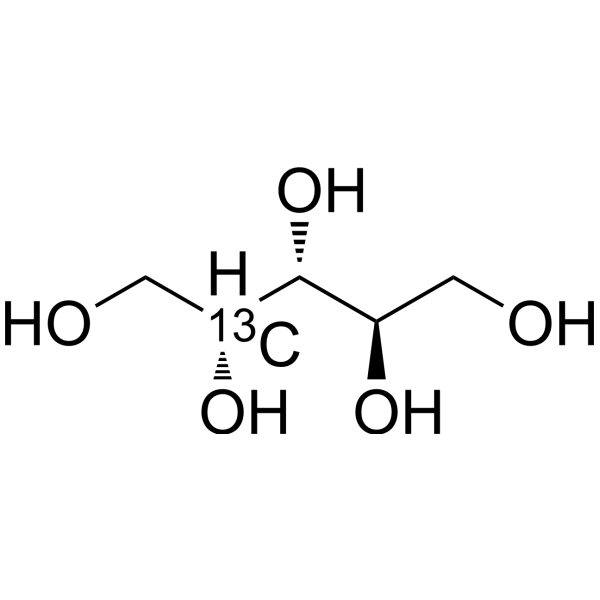
D-Arabitol- 13C-2 is the 13C labeled D-Arabitol. D-Arabitol is an orally active D-enantiomer of arabitol. D-Arabitol modulates the composition of gut microbiota, increases short-chain fatty acids, and promotes AMPK-PGC-1α-related browning of white adipose tissue. D-Arabitol improves weight gain, fat accumulation, insulin resistance, lipid deposition and inflammatory responses. D-Arabitol serves as the sole carbon/energy source for Bacillus methanolicus MGA3, a strain that can co-utilize it with mannitol. D-Arabitol is applicable to obesity-related research.
loading...
    loading...
Cat. No.: HY-W035399S1
CAS No.: 2708340-91-2
D-Lysine-d4 dihydrochloride is the d4-labeled D-Lysine (HY-Y1091). D-Lysine is the D-enantiomer of L-Lysine (HY-N0469). D-Lysine is metabolically inert and not utilized for protein synthesis by mammalian ribosomes. D-Lysine blocks renal uptake of 111In/ 90Y-Octreotide (HY-P0036)-based probes without inhibiting uptake by tumor/receptor tissues, and thus acts as a renoprotective agent in diagnostic imaging and peptide receptor radionuclide therapy (PRRT). D-Lysine specifically inhibits the early steps of non-enzymatic glycation by competing with glucose via its free amino group, theoretically, it can serve as a glycation competitor that "does not interfere with protein synthesis" under chronic hyperglycemia in diabetes. D-Lysine can be used in research related to cancer and diabetes .
loading...
    loading...
Cat. No.: HY-Y1804S
CAS No.: 2714413-18-8
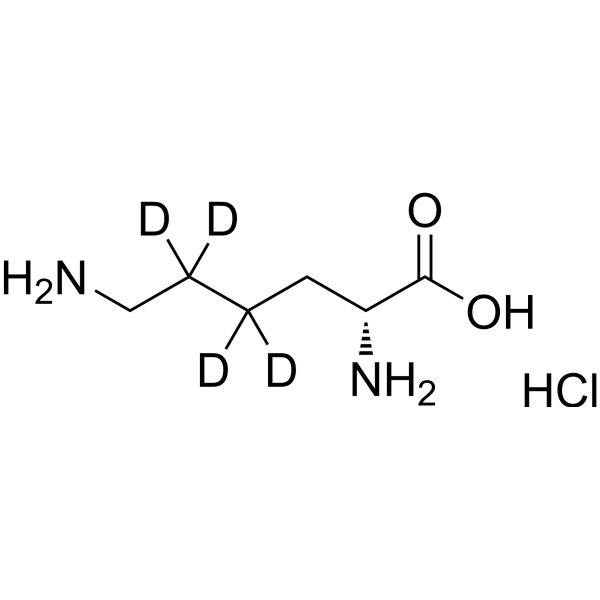
D-Lysine-d4 monohydrochloride is the d4 D-Lysine monohydrochloride (HY-Y1804). D-Lysine monohydrochloride is the D-enantiomer of L-Lysine (HY-N0469). D-Lysine monohydrochloride is metabolically inert and not utilized for protein synthesis by mammalian ribosomes. D-Lysine monohydrochloride blocks renal uptake of 111In/ 90Y-Octreotide (HY-P0036)-based probes without inhibiting uptake by tumor/receptor tissues, and thus acts as a renoprotective agent in diagnostic imaging and peptide receptor radionuclide therapy (PRRT). D-Lysine monohydrochloride specifically inhibits the early steps of non-enzymatic glycation by competing with glucose via its free amino group, theoretically, it can serve as a glycation competitor that "does not interfere with protein synthesis" under chronic hyperglycemia in diabetes. D-Lysine monohydrochloride can be used in research related to cancer and diabetes .
loading...
    loading...
Cat. No.: HY-W612175
CAS No.: 1668-13-9
Target:  

Leukotriene Receptor

Research Areas:  

Others

H-Ala-pNA is an L-amino acid p-nitroaniline (pNA) derivative and a specific substrate for leukotriene A4 hydrolase. The D-enantiomer of H-Ala-pNA shows no activity toward leukotriene A4 hydrolase. H-Ala-pNA can be catalytically hydrolyzed by leukotriene A4 hydrolase, and the p-nitroaniline produced during the reaction is monitored spectrophotometrically at 405 nm to enable quantitative detection of enzyme activity. H-Ala-pNA is used to evaluate the potency of inhibitors targeting the amidase activity of leukotriene A4 hydrolase .
loading...
    loading...
Cat. No.: HY-Y1804R
CAS No.: 7274-88-6
D-Lysine monohydrochloride (Standard) is the analytical standard of D-Lysine monohydrochloride (HY-Y1804). This product is intended for research and analytical applications. D-Lysine monohydrochloride is the D-enantiomer of L-Lysine (HY-N0469). D-Lysine monohydrochloride is metabolically inert and not utilized for protein synthesis by mammalian ribosomes. D-Lysine monohydrochloride blocks renal uptake of 111In/ 90Y-Octreotide (HY-P0036)-based probes without inhibiting uptake by tumor/receptor tissues, and thus acts as a renoprotective agent in diagnostic imaging and peptide receptor radionuclide therapy (PRRT). D-Lysine monohydrochloride specifically inhibits the early steps of non-enzymatic glycation by competing with glucose via its free amino group, theoretically, it can serve as a glycation competitor that "does not interfere with protein synthesis" under chronic hyperglycemia in diabetes. D-Lysine monohydrochloride can be used in research related to cancer and diabetes .
loading...
    loading...
  • 1

