
15 Results for "

Diphenylthiocarbazone

" in MedChemExpress (MCE) Product Catalog:
Products (15)

15 Results for "Diphenylthiocarbazone" in MCE Product Catalog:

Cat. No.: HY-W110793
CAS No.: 60-10-6
Synonyms: Diphenylthiocarbazone
Research Areas:  

Metabolic Disease

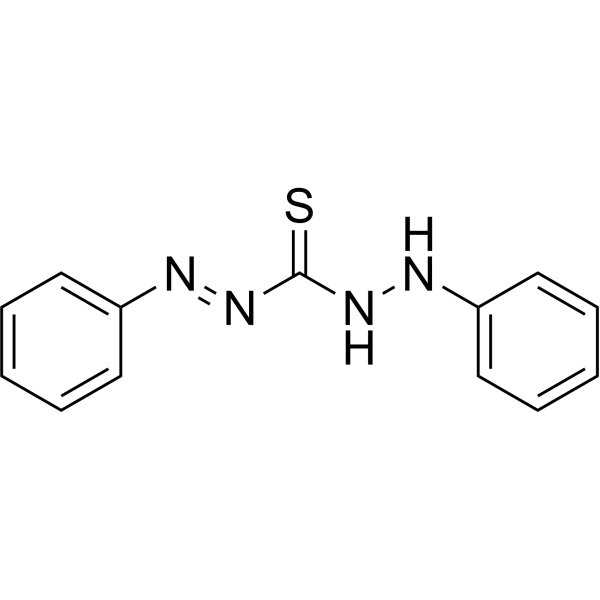
Dithizone can be toxic to pancreatic islet cells and cause experimental diabetes. Dithizone can be used for in vitro in vivo staining of transplanted islets and cytoplasmic granules of bone marrow cells. Dithizone can be used as a chelating agent and colorimetric indicator for the detection and extraction of various heavy metals, including lead and mercury, in analytical and biochemical applications. Dithizone forms stable colored complexes with metal ions and can be quantitatively analyzed by methods such as spectrophotometry .
loading...
    loading...
Cat. No.: HY-P1726
CAS No.: 1416983-77-1
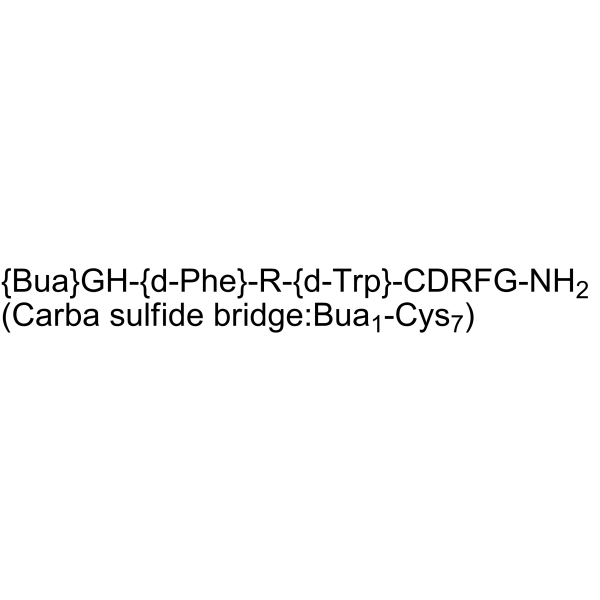
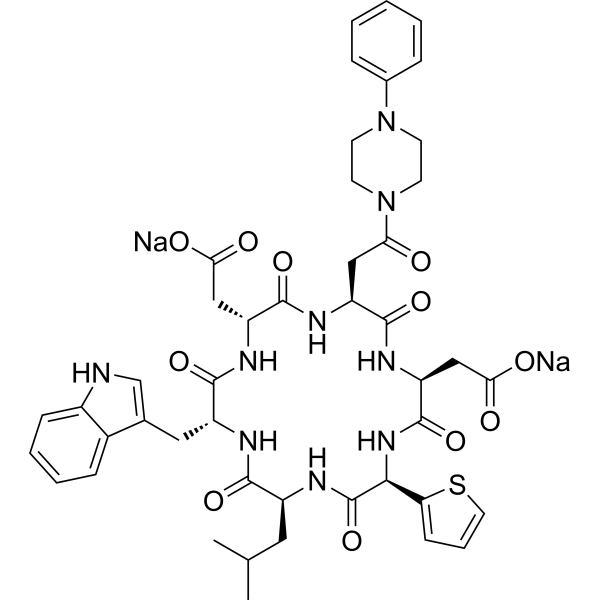
MSG606 is a selective melanocortin 1 receptor (MC1R) antagonist. MSG606 can abolish the neuroprotective effects of BMS-470539 (HY-15616) (MC1R agonist). MSG606 can inhibit cancer cell proliferation and transition from the G1 to the S phase. MSG606 can delay pain hypersensitivity and reduce cholesterol levels. MSG606 can be used for the researches of cancer, inflammation, neurological and metabolic disease, such as breast cancer and subarachnoid hemorrhage (SAH) .
loading...
    loading...
Cat. No.: HY-P10563
CAS No.: 2580150-96-3
Synonyms: BHV-1100
Target:  

CD38 IFNAR

Research Areas:  

Cancer

Noraramtide (BHV-1100) is an antibody-recruiting molecule. Noraramtide binds to CD38 and recruits natural killer (NK) cells to mediate antibody-dependent cellular cytotoxicity. Noraramtide enhances the capacity of autologous cytokine-induced memory-like (CIML) NK cells to produce IFNγ and CD107a, thereby improving their cytotoxicity against multiple myeloma cells. Noraramtide can be used in the research of multiple myeloma .
loading...
    loading...
Cat. No.: HY-P3350
CAS No.: 2892148-58-0
Target:  

Bacterial

Research Areas:  

Infection

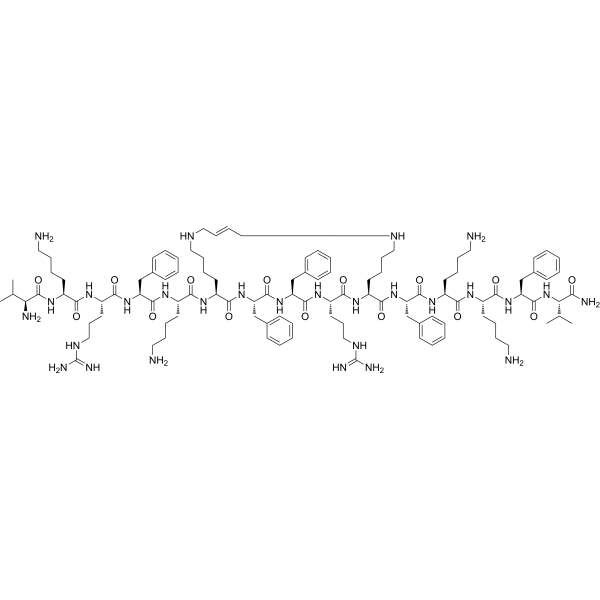
LS-BF1 is a stable and low toxic cationic antimicrobial peptide. LS-BF1 displays broad spectrum of antibacterial activity, including the challenging ESKAPE pathogens, by cell membrane disruptive mechanism. LS-BF1 shows good in vivo efficacy for elimination of bacteria in a mouse infection model[1].
loading...
    loading...
Cat. No.: HY-P0077
CAS No.: 1190083-57-8
Target:  

Oxytocin Receptor

Research Areas:  

Endocrinology

Merotocin is a selective, short-acting peptidic oxytocin receptor agonist. Merotocin can be used to support lactation .
loading...
    loading...
Cat. No.: HY-P1726A
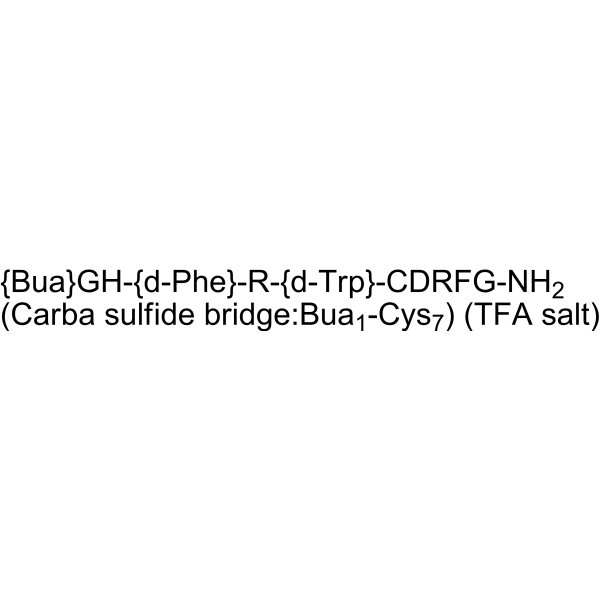
MSG606 TFA is a selective melanocortin 1 receptor (MC1R) antagonist. MSG606 TFA can abolish the neuroprotective effects of BMS-470539 (HY-15616) (MC1R agonist). MSG606 TFA can inhibit cancer cell proliferation and transition from the G1 to the S phase. MSG606 TFA can delay pain hypersensitivity and reduce cholesterol levels. MSG606 TFA can be used for the researches of cancer, inflammation, neurological and metabolic disease, such as breast cancer and subarachnoid hemorrhage (SAH) .
loading...
    loading...
Cat. No.: HY-105168
CAS No.: 157380-72-8
Target:  

Endothelin Receptor

Research Areas:  

Cardiovascular Disease

TAK 044 is an antagonist of Endothelin Receptor. TAK 044 strongly inhibits ET-induced deterioration in various animal models. TAK 044 can be used in study ET-related diseases such as acute myocardial infarction,acute renal failure, acute hepatic malfunction, and subarachnoid hemorrhage .
loading...
    loading...
Cat. No.: HY-P0041A
Target:  

Vasopressin Receptor

Research Areas:  

Neurological Disease

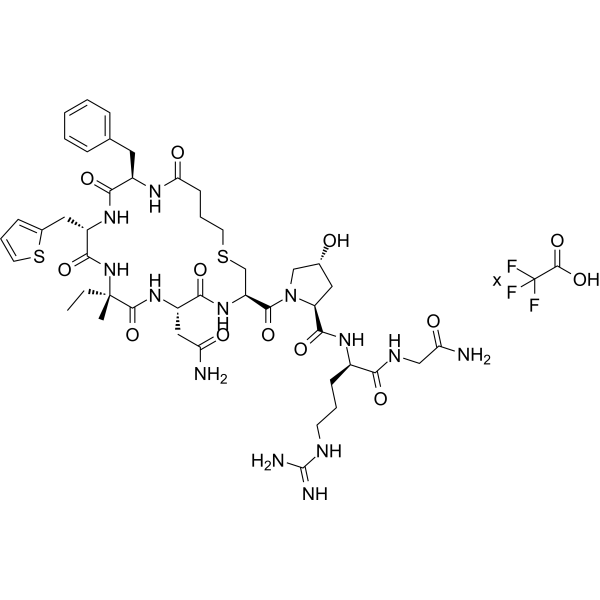
F992 TFA is an antidiuretic peptide and vasopressin (antidiuretic hormone) analogue .
loading...
    loading...
Cat. No.: HY-P2331
CAS No.: 59165-34-3
Synonyms: Antibiotic A 3802-IV-3; Gardimycin
Target:  

Antibiotic

Research Areas:  

Infection

Actagardin is a tetracyclic lantibiotic produced by several species of Actinoplanes. It is composed of macrocyclic rings formed by thioether bridges. Actagardin preferably targets Gram-positive bacteria, inhibiting the synthesis of peptidoglycan.
loading...
    loading...
Cat. No.: HY-P10014
CAS No.: 153507-46-1
Target:  

Inhibitory Antibodies

Research Areas:  

Cardiovascular Disease

Bibapcitide, a 26 amino acid, inhibits thrombosis .
loading...
    loading...
Cat. No.: HY-P0041
CAS No.: 162277-99-8
Target:  

Vasopressin Receptor

Research Areas:  

Neurological Disease

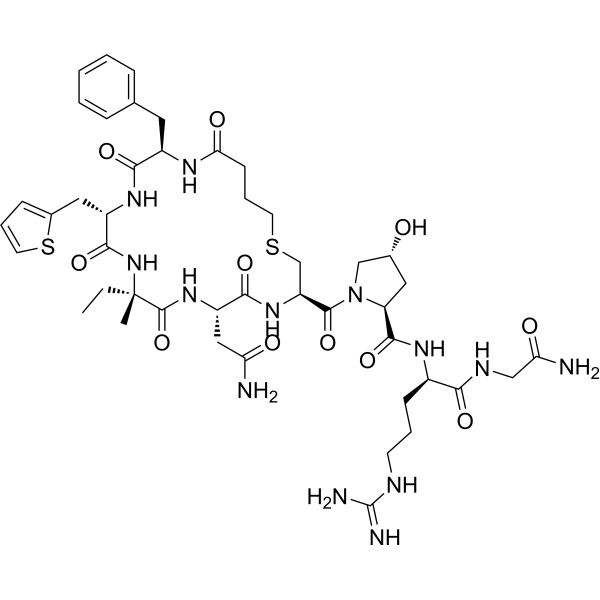
F992 is an antidiuretic peptide and vasopressin (antidiuretic hormone) analogue .
loading...
    loading...
Cat. No.: HY-P1981
CAS No.: 157381-54-9
Target:  

HIV Protease

Research Areas:  

Infection Inflammation/Immunology

Rpi-856 A is a competitive inhibitor of HIV-1 protease and HTLV-I protease, with an IC50 of 37 nM against HIV-1 protease and an IC50 of 27 nM against HTLV-I protease. Rpi-856 A inhibits Pepsin with an IC50 of 1.9 μM . Rpi-856 A does not inhibit chymosin, trypsin, chymotrypsin, papain, bromelain, thermolysin, prolyl endopeptidase, carboxypeptidase A or carboxypeptidase B. Rpi-856 A can be used in the research of acquired immunodeficiency syndrome (AIDS) and related diseases, as well as HIV infection .
loading...
    loading...
Cat. No.: HY-P1982
CAS No.: 157381-55-0
Rpi-856 C is an Aspartic protease inhibitor, with an IC50 of 5.5 nM against HIV-1 protease, 9.2 nM against HTLV-I protease, 2.0 μM against Cathepsin D, and 4.8 μM against Pepsin. Rpi-856 C is produced by the Streptomyces strain AL-322. Rpi-856 C does not inhibit chymosin, trypsin, chymotrypsin, papain, bromelain, thermolysin, prolyl endopeptidase, carboxypeptidase A or carboxypeptidase B. Rpi-856 C can be used in the research of acquired immunodeficiency syndrome (AIDS) and related diseases, as well as HIV infection .
loading...
    loading...
Cat. No.: HY-P4948
CAS No.: 1926163-49-6
Research Areas:  

Others

Coumarin-phalloidin is a kind of phalloidin labeled with Coumarin (HY-N0709). Coumarin-phalloidin is a new type of actin probe that can be used for triple immunofluorescence microscopic observation of the cell skeleton .
loading...
    loading...
Cat. No.: HY-P11823
Target:  

Fluorescent Dye

Research Areas:  

Inflammation/Immunology Cancer

FAPα/DPP4 fluorogenic substrate-1 is a fluorogenic macrocyclic peptide substrate that can be cleaved by FAPα and DPP4. FAPα/DPP4 fluorogenic substrate-1 can be used in the research of cancer and type 2 diabetes .
loading...
    loading...
  • 1

