13 Results for "

ER-stress-induced

" in MedChemExpress (MCE) Product Catalog:
Products (13)

13 Results for "ER-stress-induced" in MCE Product Catalog:

158
158 Publications Verification
Cat. No.: HY-13433
CAS No.: 67526-95-8
Purity:  99.87%
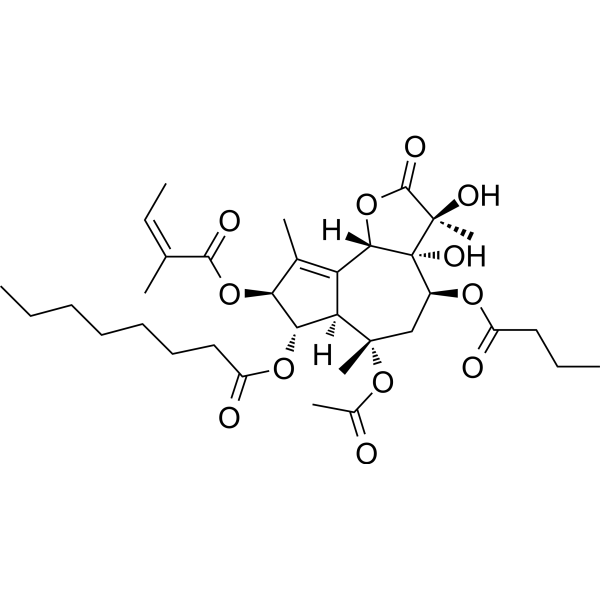
Thapsigargin, an endoplasmic reticulum (ER) stress inducer, is an inhibitor of microsomal Ca 2+-ATPase. Thapsigargin efficiently inhibits coronavirus (HCoV-229E, MERS-CoV, SARS-CoV-2) replication in different cell types .
loading...
    loading...
6
6 Cited Publications
Cat. No.: HY-128707
CAS No.: 1135688-25-3
Purity:  ≥98.0%
Target:  

Caspase Apoptosis

Research Areas:  

Cancer

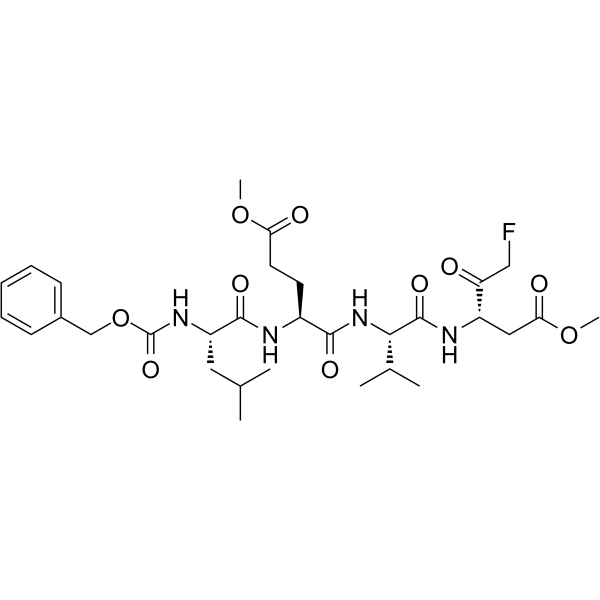
Z-LEVD-FMK is a cell-permeable caspase-4 inhibitor. Z-LEVD-FMK blocks ER stress-induced apoptosis in cancer cells .
loading...
    loading...
1
1 Cited Publications
Cat. No.: HY-W050044
CAS No.: 2133-34-8
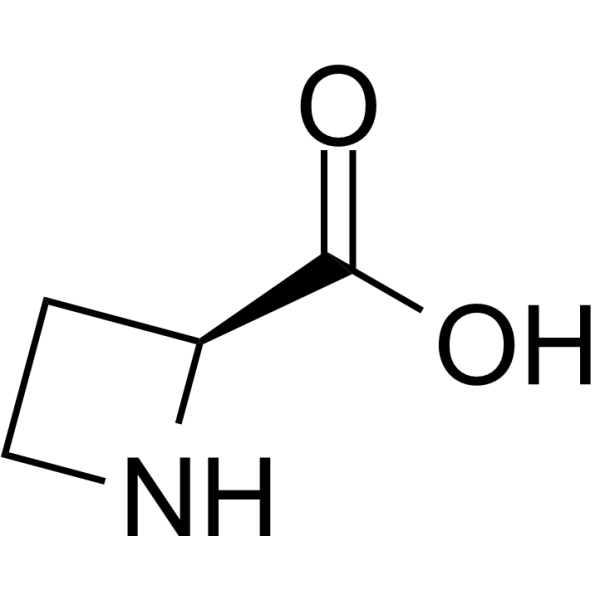
L-Azetidine-2-carboxylic acid is a proline analog. L-Azetidine-2-carboxylic acid upregulates the lipid autophagy marker LC3-II via activation of the PERK pathway. L-Azetidine-2-carboxylic acid increases pro-apoptotic BAX protein. L-Azetidine-2-carboxylic acid induces ATF6 cleavage and upregulates phosphorylated eIF2α levels. L-Azetidine-2-carboxylic acid induces ER stress, inducing protein misfolding and aggregation. L-Azetidine-2-carboxylic acid shows teratogenic, pro-inflammatory and pro-apoptotic effects .
loading...
    loading...
1
1 Cited Publications
Cat. No.: HY-136735
CAS No.: 2328097-41-0
Purity:  98.94%
Target:  

IRE1

Research Areas:  

Neurological Disease Cancer

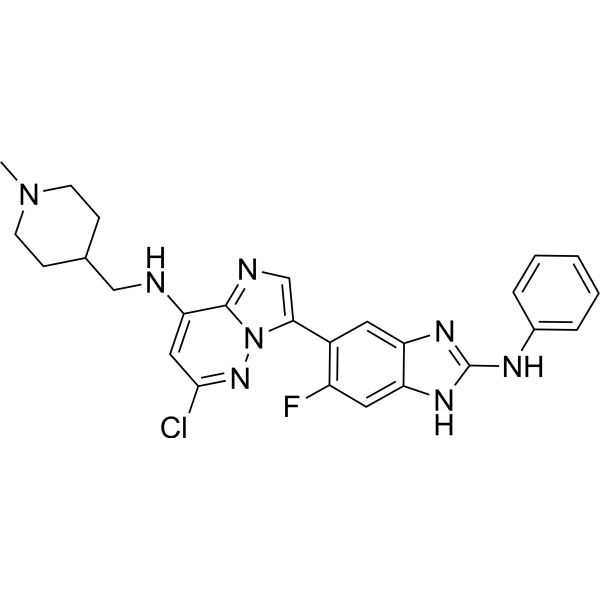
IRE1α kinase-IN-1 is a highly selective IRE1α (ERN1) inhibitor, with an IC50 of 77 nM. IRE1α kinase-IN-1 displays 100-fold selectivity for IRE1α over the IRE1β isoform. IRE1α kinase-IN-1 inhibits ER stress-induced IRE1α oligomerization and autophosphorylation, and also inhibits IRE1α RNase activity (IC50=80 nM) .
loading...
    loading...
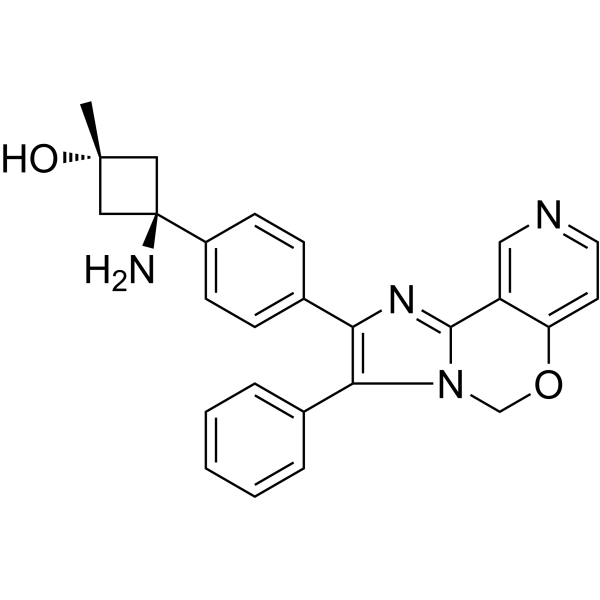
Cat. No.: HY-19934
CAS No.: 1402602-94-1
Synonyms: TAS-117
Target:  

Akt Apoptosis Autophagy

Research Areas:  

Cancer

Pifusertib (TAS-117) is a potent, selective, orally active allosteric Akt inhibitor (with IC50s of 4.8, 1.6, and 44 nM for Akt1, 2, and 3, respectively). Pifusertib triggers anti-myeloma activities and enhances fatal endoplasmic reticulum (ER) stress induced by proteasome inhibition. Pifusertib induces apoptosis and autophagy .
loading...
    loading...
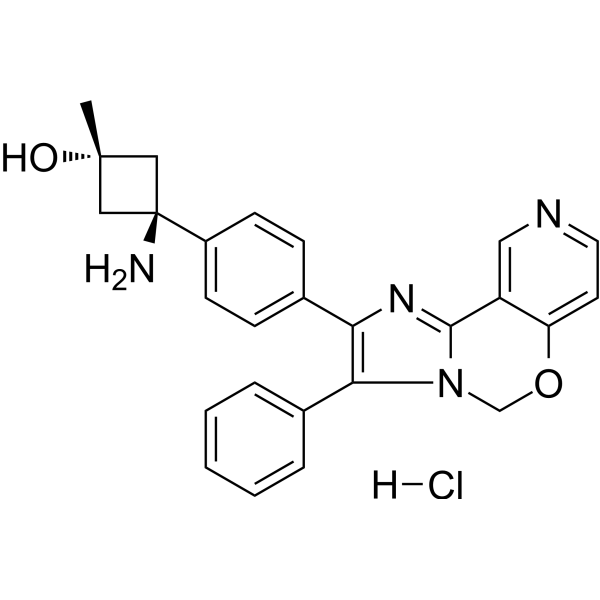
Cat. No.: HY-19934A
CAS No.: 2930090-28-9
Synonyms: TAS-117 hydrochloride
Target:  

Akt Apoptosis Autophagy

Research Areas:  

Cancer

Pifusertib (TAS-117) hydrochloride is a potent, selective, orally active allosteric Akt inhibitor (with IC50s of 4.8, 1.6, and 44 nM for Akt1, 2, and 3, respectively). Pifusertib hydrochloride triggers anti-myeloma activities and enhances fatal endoplasmic reticulum (ER) stress induced by proteasome inhibition. Pifusertib hydrochloride induces apoptosis and autophagy .
loading...
    loading...
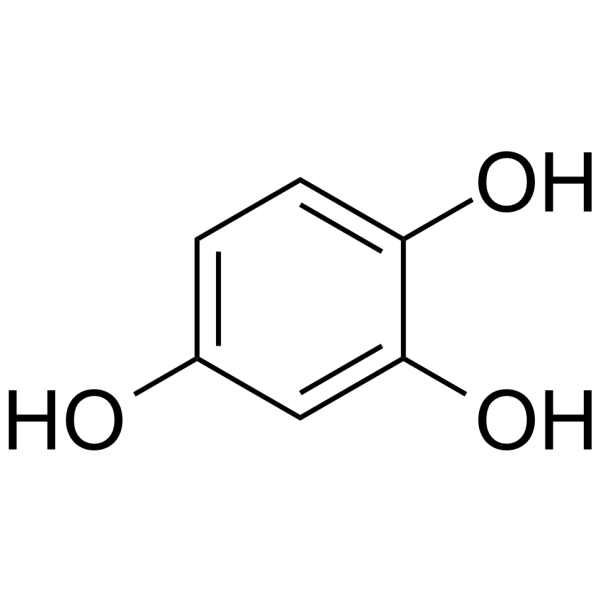
Cat. No.: HY-W010451
CAS No.: 533-73-3
Synonyms: Hydroxyhydroquinone
1,2,4-Trihydroxybenzene (Hydroxyhydroquinone) is an ER stress inducer that targets proteins such as PKR-like ER kinase PERK to induce cytotoxicity. 1,2,4-Trihydroxybenzene selectively activates eIF2α phosphorylation, activates the PERK-eIF2α signaling pathway and induces stress granule formation. 1,2,4-Trihydroxybenzene subsequently exacerbates oxidative stress and causes DNA double-strand breaks, destroying organelles such as mitochondria and ER, and inducing cell death. 1,2,4-Trihydroxybenzene also has the potential to exhibit anti-tumor effect, increase blood pressure, and relieve spasm .
loading...
    loading...
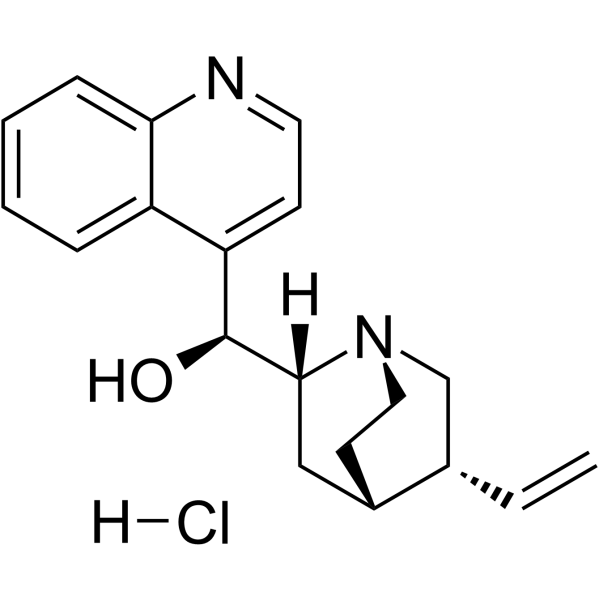
Cat. No.: HY-W011241
CAS No.: 5949-11-1
Synonyms: (8R,9S)-Cinchonine hydrochloride; LA40221 hydrochloride
Cinchonine hydrochloride ((8R,9S)-Cinchonine hydrochloride) is a natural alkaloid present in Cinchona bark, with antimalarial activity. Cinchonine hydrochloride activates endoplasmic reticulum (ER) stress-induced apoptosis in human liver cancer cells .
loading...
    loading...
Cat. No.: HY-114611
CAS No.: 2011754-00-8
Target:  

IRE1

Research Areas:  

Metabolic Disease

BDM44768 is an inhibitior of IDE. BDM44768 exacerbates ER stress-induced IRE1 activation and promotes lipid accumulation in hepatocytes. BDM44768 potentiates activation of the IRE1 pathway in the liver and exacerbates liver lipid accumulation in an acute mice model of ER stress .
loading...
    loading...
Cat. No.: HY-W050044R
CAS No.: 2133-34-8
L-Azetidine-2-carboxylic acid is a proline analog. L-Azetidine-2-carboxylic acid upregulates the lipid autophagy marker LC3-II via activation of the PERK pathway. L-Azetidine-2-carboxylic acid increases pro-apoptotic BAX protein. L-Azetidine-2-carboxylic acid induces ATF6 cleavage and upregulates phosphorylated eIF2α levels. L-Azetidine-2-carboxylic acid induces ER stress, inducing protein misfolding and aggregation. L-Azetidine-2-carboxylic acid shows teratogenic, pro-inflammatory and pro-apoptotic effects .
loading...
    loading...
Cat. No.: HY-159577
CAS No.: 2896739-91-4
Target:  

PI3K mTOR Akt

Research Areas:  

Cancer

Nic-15 (compound 4n) is an anti-constrictive agent used to antagonize the hypovascularity of pancreatic tumors. The hypovascularity allows cancer cells to adapt to the nutrient-deficient tumor microenvironment and develop drug resistance. Nic-15 can regulate the PI3K/Akt/mTOR pathway and alleviate ER stress induced by Gemcitabine (HY-17026). Nic-15 can significantly inhibit the migration and colony formation of MIA PaCa-2 and PANC-1 pancreatic cancer cells. The combination of Nic-15 and Gemcitabine can effectively solve the problem of pancreatic tumor resistance. In an in vivo xenograft model, Nic-15 can significantly enhance the efficacy of Gemcitabine .
loading...
    loading...
Cat. No.: HY-W010451R
CAS No.: 533-73-3
Synonyms: Hydroxyhydroquinone (Standard)
1,2,4-Trihydroxybenzene (Hydroxyhydroquinone) (Standard) is the analytical standard of 1,2,4-Trihydroxybenzene (HY-W010451). This product is intended for research and analytical applications. 1,2,4-Trihydroxybenzene (Hydroxyhydroquinone) is an ER stress inducer that targets proteins such as PKR-like ER kinase PERK to induce cytotoxicity. 1,2,4-Trihydroxybenzene selectively activates eIF2α phosphorylation, activates the PERK-eIF2α signaling pathway and induces stress granule formation. 1,2,4-Trihydroxybenzene subsequently exacerbates oxidative stress and causes DNA double-strand breaks, destroying organelles such as mitochondria and ER, and inducing cell death. 1,2,4-Trihydroxybenzene also has the potential to exhibit anti-tumor effect, increase blood pressure, and relieve spasm .
loading...
    loading...
Cat. No.: HY-13433R
CAS No.: 67526-95-8
Thapsigargin (Standard) is the analytical standard of Thapsigargin (HY-13433). This product is intended for research and analytical applications. Thapsigargin, an endoplasmic reticulum (ER) stress inducer, is an inhibitor of microsomal Ca 2+-ATPase. Thapsigargin efficiently inhibits coronavirus (HCoV-229E, MERS-CoV, SARS-CoV-2) replication in different cell types .
loading...
    loading...
  • 1

