Search Result
Results for "
Endophytic fungus
" in MedChemExpress (MCE) Product Catalog:
1
Isotope-Labeled Compounds
| Cat. No. |
Product Name |
Target |
Research Areas |
Chemical Structure |
-
- HY-D0027
-
|
Coumarin 120; AMC
|
Fluorescent Dye
Antibiotic
Fungal
|
Infection
|
|
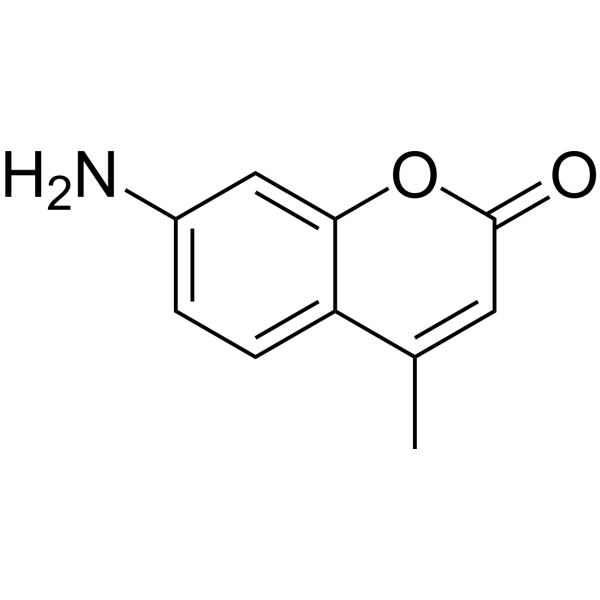
7-Amino-4-methylcoumarin belongs to the coumarin class, can be isolated from the endophytic fungus Xylaria sp. and has a broad spectrum of antibacterial activity. 7-Amino-4-methylcoumarin is also commonly used as an important laser dye that emits in the blue region, capable of analyzing glycoprotein monosaccharides and N-linked oligosaccharides, and is also utilized in tissue pathology analysis, enzyme activity measurement, and copper ion detection. The excitation wavelength and emission wavelength are 351 nm and 430 nm, respectively.
|
-
-
- HY-B1086
-
|
N-Acetyl-DL-phenylalanine
|
Endogenous Metabolite
|
Neurological Disease
|
|
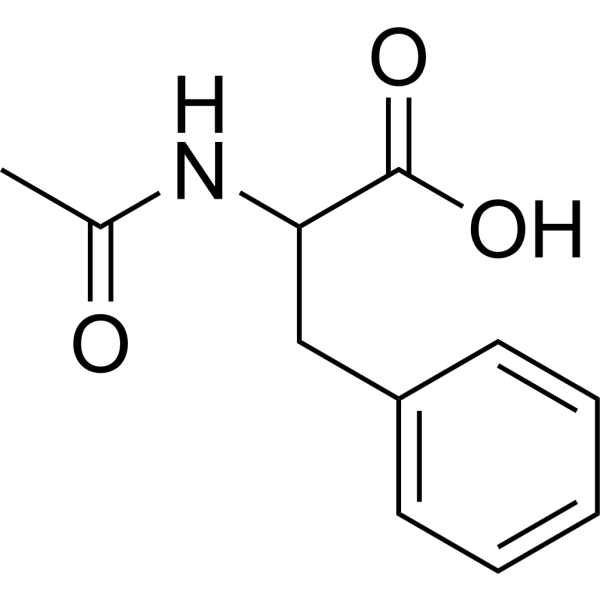
Afalanine (N-Acetyl-DL-phenylalanine) is an endogenous metabolite of an endophytic fungus with antidepressant activity. Afalanine can be used in combination with antibiotics to prevent renal damage.
|
-
-
- HY-75564
-
|
|
Endogenous Metabolite
|
Cancer
|
|
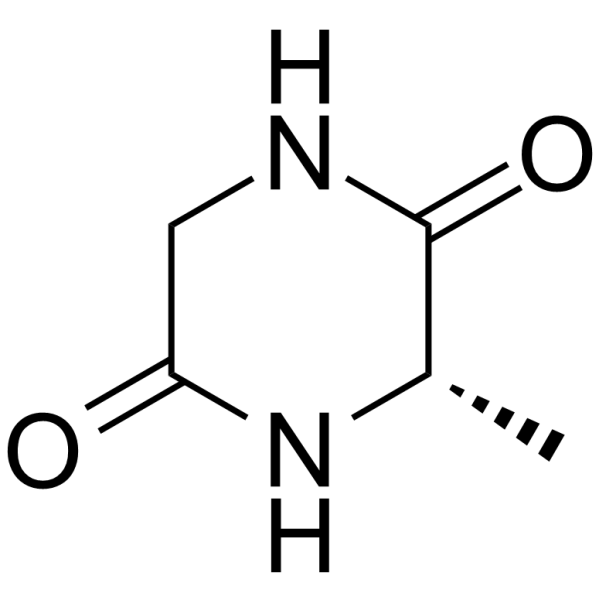
Cyclo(Ala-Gly), a metabolite of a mangrove endophytic fungus, Penicillium thomi, exhibits cytotoxicity against A549, HepG2 and HT29 cells. The IC50 values range from 9.5 to 18.1 μM .
|
-
-
- HY-N7023
-
|
7-O-Prenylumbelliferone
|
Fungal
|
Infection
|
|
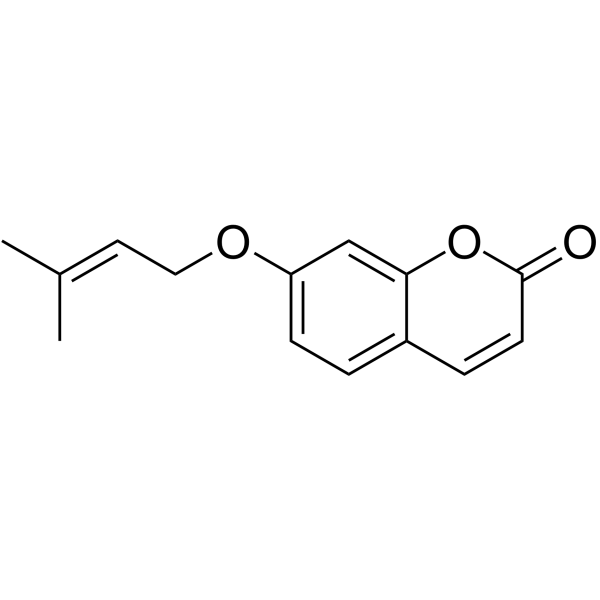
7-Prenyloxycoumarin (7-O-Prenylumbelliferone) is a secondary metabolite from the endophytic fungus of Annulohypoxylon ilanense .
|
-
-
- HY-N6294
-
|
|
Bacterial
Fungal
|
Infection
|
|
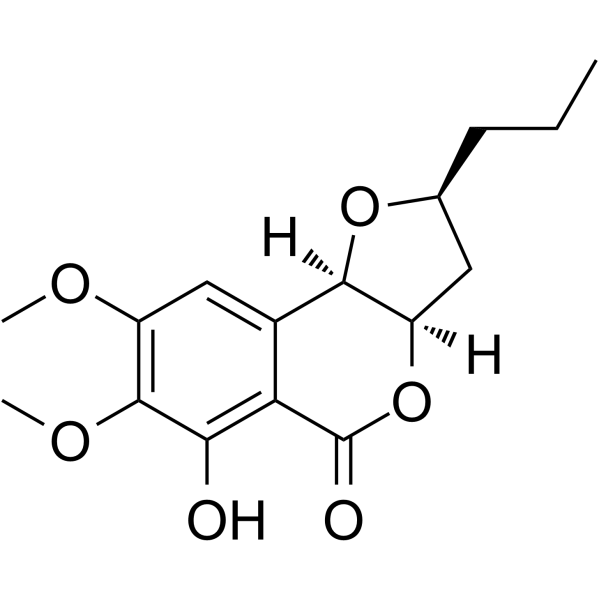
Monocerin is an isocoumarin derivative. Monocerin is isolated from Microdochium bolleyi, an endophytic fungus from Fagonia cretica. Monocerin shows good antifungal, antibacterial, and antialgal activities against Microbotryum violaceum, Escherichia coli, Bacillus megaterium, and Chlorella fusca .
|
-
-
- HY-W751002
-
|
(+)-Orthosporin
|
Endogenous Metabolite
Bacterial
HIV
Reverse Transcriptase
|
Infection
|
|
Orthosporin ((+)-Orthosporin), a phytotoxic isocoumarin compound, is a microbial secondary metabolite. Orthosporin can be isolated from the endophytic fungus Lasiodiplodia tbeobromae. Orthosporin has potent antibacterial activity against B. subtilis, E. coli and P. aeruginosa. Orthosporin also has antioxidant activity against DPPH radical and antiviral activities with inhibition of HIV-1 reverse transcriptase activity .
|
-
-
- HY-N12179
-
|
|
Bacterial
|
Others
|
|
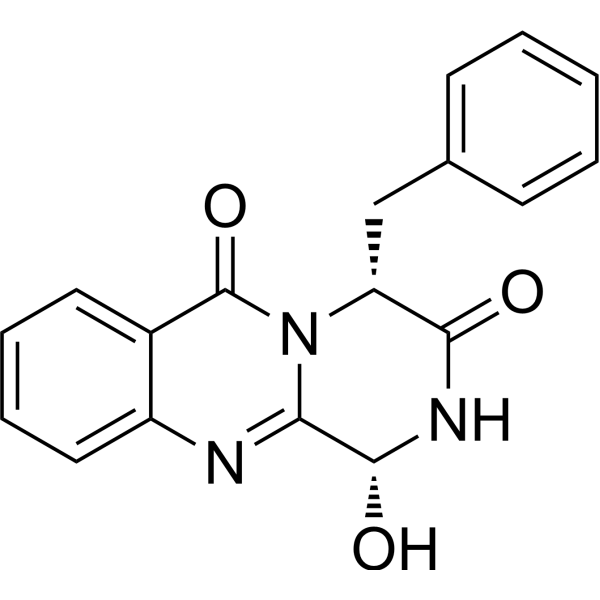
Brevianamide M (compound 4) is a metabolite of Aspergillus versicolor. This is an endophytic fungus isolated from the marine brown alga Sargassum. Brevianamide M has antimicrobial activity against Escherichia coli and Staphylococcus aureus .
|
-
-
- HY-W971442
-
|
|
Endogenous Metabolite
NF-κB
|
Inflammation/Immunology
|
|
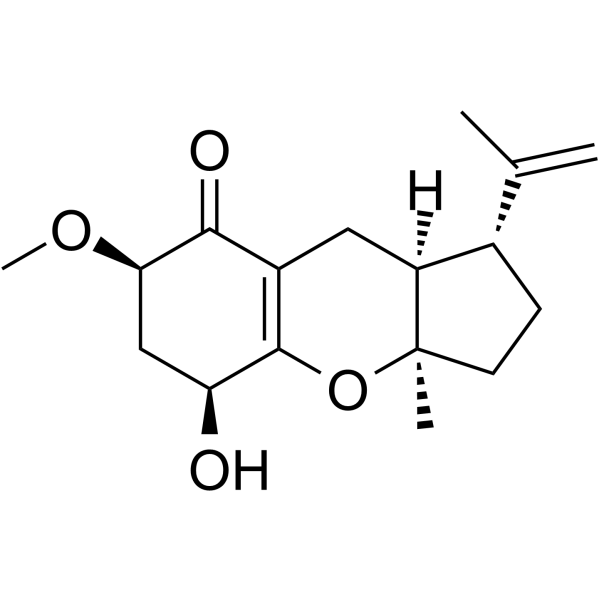
Moniliphenone (Compounds 5) is a secondary metabolite. Moniliphenone can be isolated from the endophytic fungus Penicillium chrysogenum. Moniliphenone has an anti-inflammatory activity and significantly inhibits TNF-α-stimulated NF-κB activation .
|
-
-
- HY-N8406
-
|
|
Bacterial
Antibiotic
|
Infection
|
|
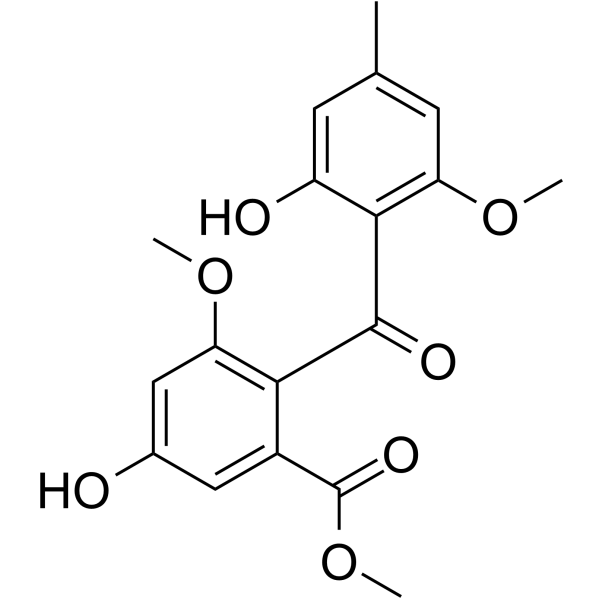
Monomethylsulochrin is a potent antibacterial metabolite from endophytic fungus Aspergillus fumigatus, isolated from Albizia lucidior leaves (fabaceae). Monomethylsulochrin exhibits anti-Staphylococcus aureus activity with minimum inhibitory concentration (MIC) of 31.25 μg/mL .
|
-
-
- HY-N10299
-
-
-
- HY-N7307
-
|
|
Bacterial
|
Infection
|
|
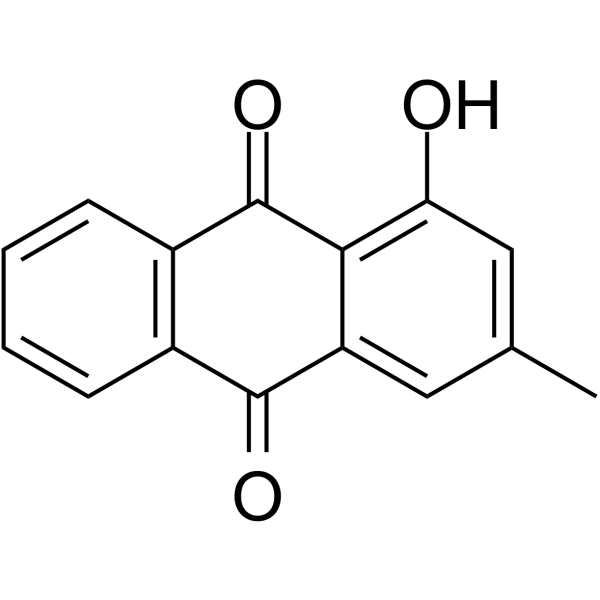
Pachybasin is a major metabolite from culture broth of endophytic coelomyceteous AFKR-18 fungus. Pachybasin showes antimicrobial activities against E. coli, B. subtilis, M. luteus, S. cerevisiae, C. albicans, A. niger, and A. flavus, with MIC values of 64.0 μg/mL, and against S. aureus and F. oxysporum with MIC values of 32.0 and 16.0 μg/mL respectively .
|
-
-
- HY-N10301
-
|
|
Toll-like Receptor (TLR)
|
Infection
|
|
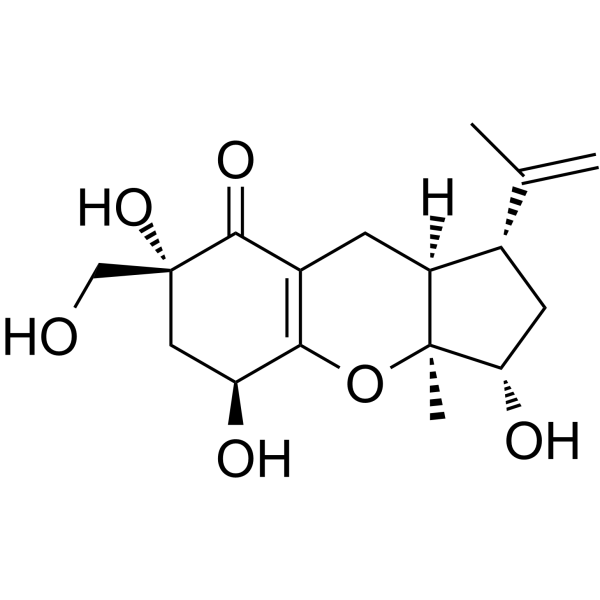
Guignardone L is a metabolite isolated from the endophytic fungus Guignardia mangiferae with toll-like receptor 3 regulating activity .
|
-
-
- HY-N8864
-
|
|
Others
|
Others
|
|
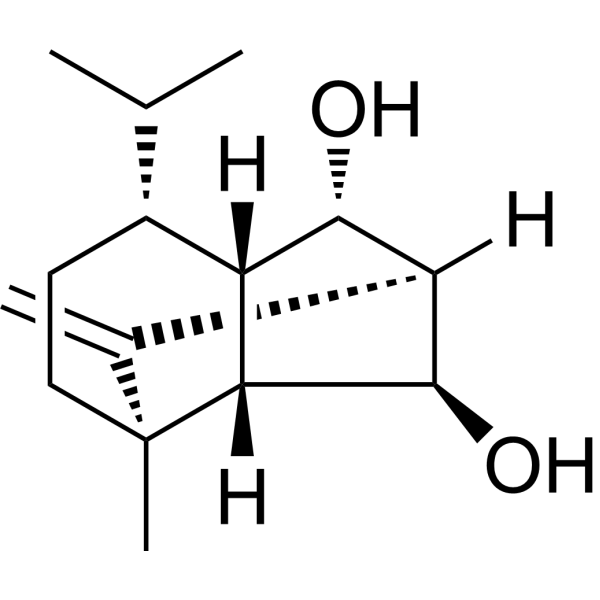
Isosativenediol is a sesquiterpene compound. Isosativenediol can be purified from Cochliobolus sativus, an endophytic fungus isolated from the desert plant Artemisia Desertorum .
|
-
-
- HY-N10285
-
|
|
Tyrosinase
|
Infection
|
|
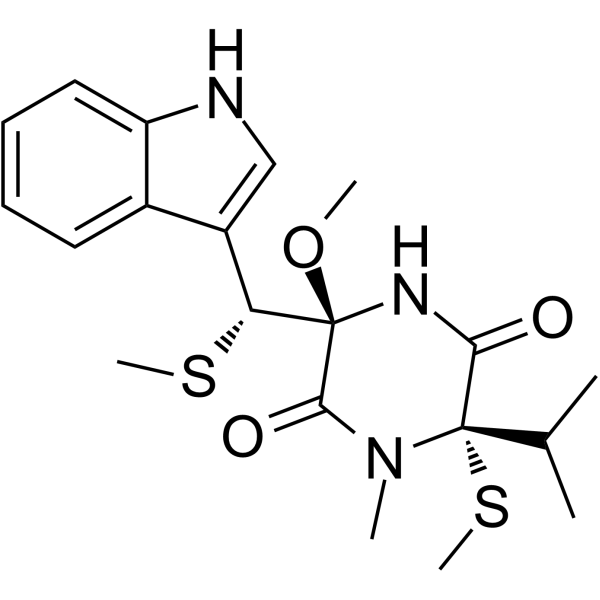
Phaeosphaone D is a thiodiketopiperazine alkaloid compound isolated from Phaeosphaeria fuckelii, an endophytic fungus. Phaeosphaone D displays mushroom tyrosinase inhibitory activity with an IC50 value of 33.2 μM .
|
-
-
- HY-158721
-
|
Marinamide
|
Endogenous Metabolite
Parasite
|
Infection
Cancer
|
|
Penicinoline (Marinamide) (Compound 1), a pyrrolyl 4-quinolinone alkaloid, is a microbial secondary metabolite. Penicinoline can be isolated from endophytic fungus Penicillium sp. Penicinoline has antimalarial activity against Chloroquine (HY-17589A) sensitive strain (pf3d7) and against Chloroquine resistant strain (pfDd2) of plasmodium falciparum. Penicinoline also has strong insecticidal activity against Aphis gossypii and selective anticancer effect with significant cytotoxicity for 95-D and HepG2 cells .
|
-
-
- HY-N10300
-
|
|
Fungal
|
Infection
|
|
Guignardone K is a meroterpene compound isolated from solid cultures of the endophytic fungus Guignardia sp.. Guignardone K has antifungal activity .
|
-
-
- HY-N10263
-
|
|
Parasite
|
Infection
|
|
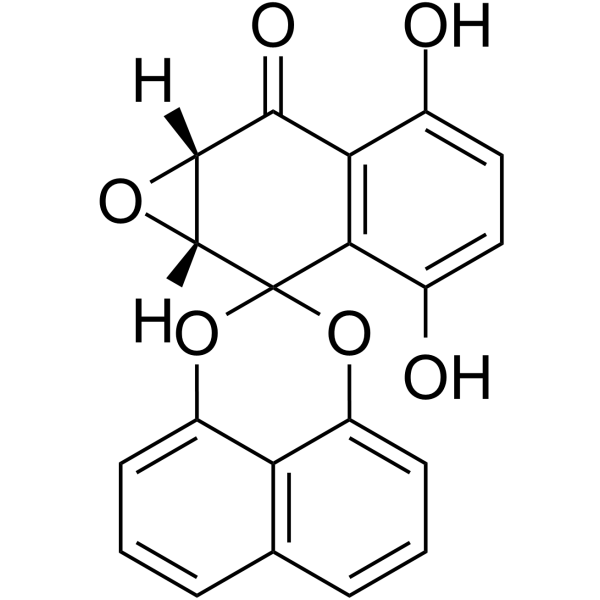
Palmarumycin C3 is a spirobisnaphthalene compound isolated from cultures of the endophytic fungus Berkleasmium sp. Dzf12 after treatment with 1-hexadecene. Palmarumycin C3 exhibits stronger antimicrobial and antioxidant activities .
|
-
-
- HY-W164451
-
|
|
Fungal
|
Infection
|
|
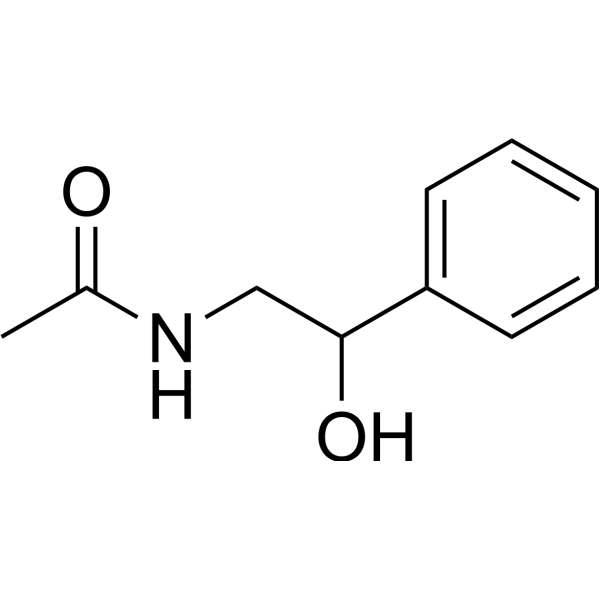
N-(2-hydroxy-2-phenylethyl)acetamide is isolated from the solid rice cultures of the endophytic fungus Diaporthe eucalyptorum KY-9. N-(2-hydroxy-2-phenylethyl)acetamide exhibits antifungal activities against Alternaria solani .
|
-
-
- HY-N12197
-
|
|
Others
|
Others
|
|
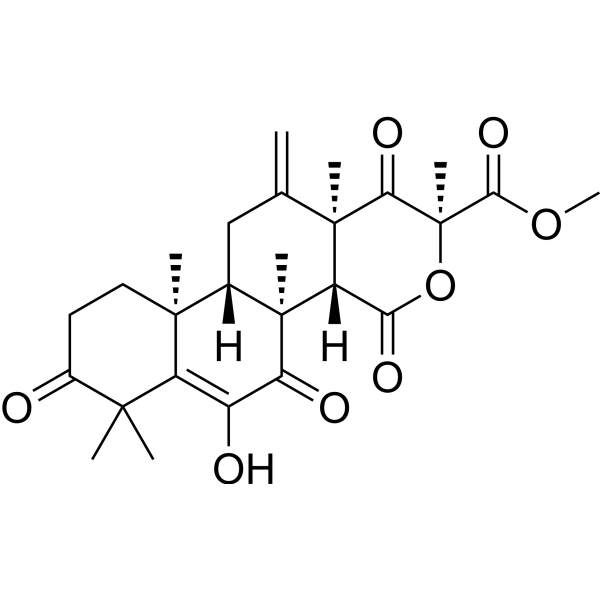
Terretonin A is a meroterpenoid that can be isolated from the endophytic fungus Aspergillus terreus .
|
-
-
- HY-119328
-
-
-
- HY-125298
-
|
|
Parasite
|
Infection
|
|
Cycloaspeptide A, isolated from the endophytic fungus Penicillium janczewskii, has antiparasitic activity .
|
-
-
- HY-N10427
-
|
|
Others
|
Others
|
|
5,6-Epoxyergosterol is a natural product that can be isolated from endophytic fungus Phyllosticta capitalensis .
|
-
-
- HY-N10256
-
|
|
Endogenous Metabolite
|
Infection
|
|
Varioxepine A is a 3H-oxepine-containing alkaloid with a new oxa-cage found in the marine algal-derived endophytic fungus Paecilomyces variotii. Varioxepine A inhibits plant pathogenic fungus Fusarium graminearum .
|
-
-
- HY-N10262
-
|
|
Endogenous Metabolite
|
Others
|
|
Piliformic acid is a fungal metabolite found in the endophytic fungus Xylariasp sp.(No. 2508) from mangrove trees from the coast of the South China Sea .
|
-
-
- HY-N13291
-
|
|
Fungal
|
Others
|
|
6-O-Methylreticulol (compound 1a) is an isocoumarin isolated from an endophytic fungus on the mangrove plant Avicennia marina in the Pearl River Estuary in southern China .
|
-
-
- HY-N12195
-
|
|
Fungal
|
Infection
|
|
Cytochalasin R (compound 17) is a cytochalasin analogue that can be isolated from the endophytic fungus Phomopsis sp. xz-18. Cytochalasin R shows potential antifungal activity .
|
-
-
- HY-N16401
-
|
|
Bacterial
Drug Derivative
|
Infection
|
|
Aspergillumarin B (Compound 2) is a derivative of dihydroisocoumarin. Aspergillumarin B can be isolated from the endophytic fungus Aspergillus sp.. Aspergillumarin B has a weak antibacterial activity against Staphylococcus aureus and Bacillus subtilis .
|
-
-
- HY-N8498
-
|
|
Apoptosis
|
Cancer
|
|
GKK1032B is an alkaloid compound that can be found in endophytic fungus Penicillium sp. GKK1032B can induce the apoptosis of human osteosarcoma MG63 cells through caspase pathway activation .
|
-
-
- HY-N8511
-
|
|
Fungal
|
Infection
|
|
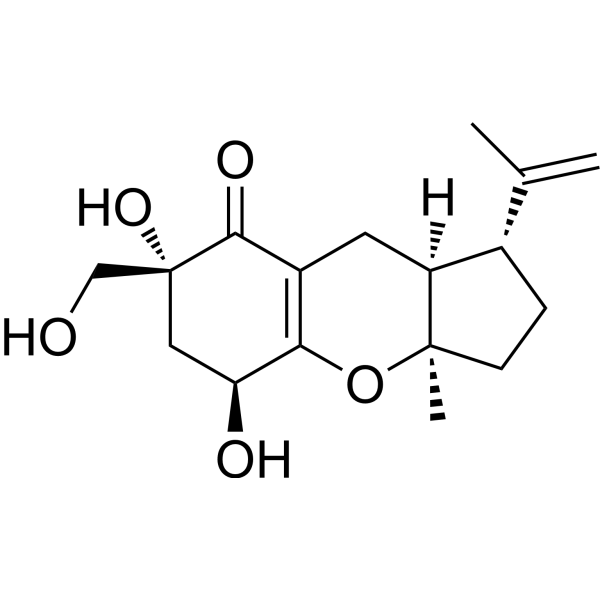
Acremine I is a fungi inhibitor and also a metabolite of the endophytic fungus Acremonium byssoides. Acremine I can effectively inhibit Plasmopara viticola. Acremine I can be used for research on plant diseases, such as grape downy mildew .
|
-
-
- HY-N10288
-
-
-
- HY-N15655
-
|
|
Bacterial
|
Infection
|
|
Ravenelin is a xanthone that can be isolated from the endophytic fungus Exserohilum rostratum. Ravenelin exhibits antiprotozoal and antibacterial activity. Ravenelin is active against gram-positive bacterial strains. Ravenelin can be studied for hit-to-lead development, especially for Chagas Disease .
|
-
-
- HY-126649
-
|
|
Antibiotic
|
Infection
|
|
Bacillosporin C is an oxaphenalenone dimer originally isolated from T. bacillosporus. Bacillosporin C, an anhydride, is formed from the lactone bacillosporin D in the mangrove endophytic fungus SBE-14. Similar oxaphenalenone dimers have antibiotic activity and inhibit acetylcholinesterase.
|
-
-
- HY-N10286
-
|
|
Tyrosinase
|
Others
|
|
Chetoseminudin B possesses mushroom tyrosinase inhibitory activity with IC50 of 31.7 μM .
|
-
-
- HY-N16442
-
|
|
Endogenous Metabolite
Prolyl Endopeptidase (PREP)
|
Cancer
|
|
Pyrrocidine B (Compound 6), an alkaloid, is a microbial secondary metabolite. Pyrrocidine B can be isolated from the endophytic fungus Neonectria ramulariae Wollenw KS-246. Pyrrocidine B has significant cytotoxicity against leukemia cells (IC50 of 4.6 μM for HL60 cells) with a weak Prolyl oligopeptidase (POP) inhibitory activity .
|
-
-
- HY-N15498
-
|
|
Insecticide
|
Infection
|
|
Gibepyrone D is an α-pyrone compound found in Gibberella fujikuroi and the endophytic fungus Fusarium oxysporum 162. Gibepyrone D exhibits significant lethal activity against nematodes with an LC50 value of 134 μg/mL (72 h) against the J2 larvae of Meloidogyne incognita. Gibepyrone D is promising for research of nematicides .
|
-
-
- HY-N16457
-
|
|
Endogenous Metabolite
Influenza Virus
|
Infection
|
|
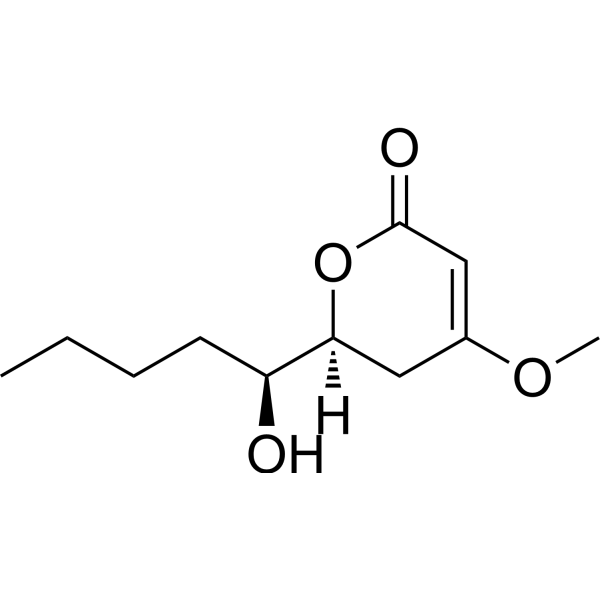
5,6-Dihydro-6-hydroxypenicillic acid (Compound 6) is a microbial secondary metabolite. 5,6-Dihydro-6-hydroxypenicillic acid can be isolated from the endophytic fungus Talaromyces sp. CPCC 400783 of Reynoutria japonica Houtt. 5,6-Dihydro-6-hydroxypenicillic acid has antiviral activity against influenza A virus with an IC50 of 65.45 μM .
|
-
-
- HY-N11528
-
|
7-Noreugenitin
|
Others
|
Infection
|
|
Eugenitol (Compound 3) is an antifungal metabolite isolated and purified from Diaporthe eucalyptorum. Eugenitol has inhibitory effect on four plant pathogenic fungi (Alternaria solani, Botrytis cinerea, Fusarium solani and Gibberella saubinettii) .
|
-
-
- HY-W162983
-
|
|
COX
|
Neurological Disease
Inflammation/Immunology
|
|
3,4-Diphenyl-5H-furan-2-one is a natural compound isolated from the endophytic fungus Aspergillus flavipes AIL8 derived from the mangrove plant Acanthus ilicifolius. 3,4-Diphenyl-5H-furan-2-one is a derivative of 2,3-diphenyltetrahydrofuran (DPTF), which is a COX-2 inhibitor. 3,4-Diphenyl-5H-furan-2-one can be used as a lead compound for inflammation and pain .
|
-
-
- HY-D0027R
-
|
Coumarin 120 (Standard); AMC (Standard)
|
Fluorescent Dye
Antibiotic
Fungal
Reference Standards
|
Infection
|
|
7-Amino-4-methylcoumarin (Standard) is the analytical standard of 7-Amino-4-methylcoumarin. This product is intended for research and analytical applications. 7-Amino-4-methylcoumarin belongs to the coumarin class, can be isolated from the endophytic fungus Xylaria sp. and has a broad spectrum of antibacterial activity. 7-Amino-4-methylcoumarin is also commonly used as an important laser dye that emits in the blue region, capable of analyzing glycoprotein monosaccharides and N-linked oligosaccharides, and is also utilized in tissue pathology analysis, enzyme activity measurement, and copper ion detection. The excitation wavelength and emission wavelength are 351 nm and 430 nm, respectively. [4]
|
-
-
- HY-N15306
-
|
|
Apoptosis
|
Cancer
|
|
Boerelasin E is the first cytochalasan possessing a cis-configured Δ21(22) double bond that can be isolated from endophytic fungus Boeremia exigua. Boerelasin E exhibits antiproliferative activity against MCF-7 cells (IC50=20.52 μM) more potent than cisplatin (HY-17394). Boerelasin E inhibits the complete cell division of MCF-7 cells by arresting them in the G2/M phase and inducing apoptosis[1].
|
-
-
- HY-N19681
-
|
|
Endogenous Metabolite
|
Neurological Disease
|
|
3-(2,6-Dihydroxyphenyl)-4-hydroxy-6-methylisobenzofuran-1(3H)-one is a polyketide compound found in the mangrove endophytic fungus Phomopsis sp. xy21. 3-(2,6-Dihydroxyphenyl)-4-hydroxy-6-methylisobenzofuran-1(3H)-one shows neuroprotective activity against Corticosterone (HY-B1618)-induced injury in neuronal cells .
|
-
-
- HY-N9553
-
|
|
Endogenous Metabolite
|
Others
|
|
Alternarian acid is a polyketide compound found in the endophytic fungus Alternaria alternata MT-47, an endophytic fungus isolated from the medicinal plant of Huperzia serrata. Alternarian acid shows little inhibitory activity against thrombin-activated platelets, acetylcholinesterase, or butyrylcholinesterase .
|
-
-
- HY-N12193
-
|
|
Others
|
Others
|
|
Cytochalasin N is a cytorelaxin derived from endophytic fungus Phomopsis sp.CIB-109 .
|
-
-
- HY-N19796
-
|
|
Drug Derivative
|
Others
|
|
Diaporol I is a pimarane-type sesquiterpene that can be isolated from the mangrove-derived endophytic fungus Diaporthe sp.
|
-
-
- HY-130052
-
|
|
Bacterial
|
Infection
|
|
Rosellichalasin is an antibacterial agent isolated from the endophytic fungus Aspergillus flavipes Y-62. Rosellichalasin exhibits antibacterial activity .
|
-
-
- HY-N13021
-
|
|
Endogenous Metabolite
|
Others
|
|
2-(2-Hydroxy-5-methoxyphenoxy)-acrylic acid is a metabolite, which can be isolated from endophytic fungus Phoma macrostoma inhabiting the inner tissue of medicinal plant Glycyrrhiza glabra Linn .
|
-
-
- HY-B1086R
-
|
N-Acetyl-DL-phenylalanine (Standard)
|
Endogenous Metabolite
Reference Standards
|
Neurological Disease
|
|
Afalanine (Standard) is the analytical standard of Afalanine. This product is intended for research and analytical applications. Afalanine (N-Acetyl-DL-phenylalanine) is an endogenous metabolite of an endophytic fungus with antidepressant activity. Afalanine can be used in combination with antibiotics to prevent renal damage.
|
-
-
- HY-N19754
-
|
|
Parasite
|
Infection
|
|
Cladospirone B is a secondary metabolite of the endophytic fungus Lasiodiplodia theobromae. Cladospirone B exhibits trypanocidal activity, with a MIC of 17.8 µM against Trypanosoma brucei. Cladospirone B can be used in the research of African human trypanosomiasis (sleeping sickness) .
|
-
-
- HY-N16428
-
|
NSC 356436
|
Endogenous Metabolite
Fungal
Bacterial
|
Infection
Cancer
|
|
Neoaspergillic acid (NSC 356436) (Compound 2) is a microbial secondary metabolite. Neoaspergillic acid can be isolated from the endophytic fungus Aspergillus sp. SPH2. Neoaspergillic acid has potent antifungal activity against Alternaria alternata, Botrytis cinerea and Fusarium oxysporum. Neoaspergillic acid appears during the exponential phase of fungal growth. Neoaspergillic acid also antitumor and antibacterial effects .
|
-
-
- HY-75564R
-
|
|
Reference Standards
Endogenous Metabolite
|
Cancer
|
|
Cyclo(Ala-Gly) (Standard) is the analytical standard of Cyclo(Ala-Gly). This product is intended for research and analytical applications. Cyclo(Ala-Gly), a metabolite of a mangrove endophytic fungus, Penicillium thomi, exhibits cytotoxicity against A549, HepG2 and HT29 cells. The IC50 values range from 9.5 to 18.1 μM[1].
|
-
- HY-118817
-
|
|
Reactive Oxygen Species (ROS)
Calcium Channel
JNK
ERK
p38 MAPK
Apoptosis
|
Neurological Disease
|
|
Evariquinone is an anthraquinone compound isolated from the endophytic fungus Colletotrichum sp. JS-0367 of mulberry. Evariquinone possesses direct antioxidant activity. It inhibits excessive phosphorylation of the JNK, ERK1/2 and p38 MAPK signaling pathways by suppressing ROS and Ca 2+, thereby reducing neuronal apoptosis. Evariquinone can be used to study glutamate excitotoxicity-related neurological disorders (such as Alzheimer's disease, Parkinson's disease, cerebral ischemia, etc.) .
|
-
- HY-N16448
-
|
|
Bacterial
|
Infection
|
|
Xanthoascin (Compound 1) is a natural phenolic metabolite with strong anti plant pathogen activity. Xanthoascin can be extracted from the solid fermentation product of endophytic fungus Aspergillus sp. IFB-YXS isolated from Ginkgo biloba leaves. Xanthoascin has a MIC of 0.3125 µg/mL against Clavibacter michiganense subsp. Sepedonicus and moderate inhibitory activity against other pathogens (MIC = 5-20 µg/mL). Xanthoascin can disrupt the permeability of bacterial cell membranes, leading to nucleic acid leakage .
|
-
- HY-182490
-
-
- HY-D0027S1
-
|
Coumarin 120-d4; AMC-d4
|
Isotope-Labeled Compounds
Fluorescent Dye
Antibiotic
Fungal
|
Infection
|
|
7-Amino-4-methylcoumarin-d4 (Coumarin 120-d4) is the deuterium labeled 7-Amino-4-methylcoumarin (HY-D0027). 7-Amino-4-methylcoumarin belongs to the coumarin class, can be isolated from the endophytic fungus Xylaria sp. and has a broad spectrum of antibacterial activity. 7-Amino-4-methylcoumarin is also commonly used as an important laser dye that emits in the blue region, capable of analyzing glycoprotein monosaccharides and N-linked oligosaccharides, and is also utilized in tissue pathology analysis, enzyme activity measurement, and copper ion detection. The excitation wavelength and emission wavelength are 351 nm and 430 nm, respectively .
|
-
- HY-N19907
-
|
|
Endogenous Metabolite
Fungal
Antibiotic
|
Infection
|
|
Phomopsinone A is an Antifungal agent. Phomopsinone A is isolated from Phomopsis sp. Phomopsinone A exhibits activity against plant and crop pathogens Pyricularia oryzae, Septoria tritici and Botrytis cinerea. Phomopsinone A can be used in the research of plant/crop fungal diseases .
|
-
| Cat. No. |
Product Name |
Type |
-
- HY-D0027
-
|
Coumarin 120; AMC
|
Fluorescent Dyes
|
|
7-Amino-4-methylcoumarin belongs to the coumarin class, can be isolated from the endophytic fungus Xylaria sp. and has a broad spectrum of antibacterial activity. 7-Amino-4-methylcoumarin is also commonly used as an important laser dye that emits in the blue region, capable of analyzing glycoprotein monosaccharides and N-linked oligosaccharides, and is also utilized in tissue pathology analysis, enzyme activity measurement, and copper ion detection. The excitation wavelength and emission wavelength are 351 nm and 430 nm, respectively.
|
-
- HY-D0027R
-
|
Coumarin 120 (Standard); AMC (Standard)
|
Fluorescent Dyes
|
|
7-Amino-4-methylcoumarin (Standard) is the analytical standard of 7-Amino-4-methylcoumarin. This product is intended for research and analytical applications. 7-Amino-4-methylcoumarin belongs to the coumarin class, can be isolated from the endophytic fungus Xylaria sp. and has a broad spectrum of antibacterial activity. 7-Amino-4-methylcoumarin is also commonly used as an important laser dye that emits in the blue region, capable of analyzing glycoprotein monosaccharides and N-linked oligosaccharides, and is also utilized in tissue pathology analysis, enzyme activity measurement, and copper ion detection. The excitation wavelength and emission wavelength are 351 nm and 430 nm, respectively. [4]
|
| Cat. No. |
Product Name |
Target |
Research Area |
-
- HY-75564
-
|
|
Endogenous Metabolite
|
Cancer
|
|
Cyclo(Ala-Gly), a metabolite of a mangrove endophytic fungus, Penicillium thomi, exhibits cytotoxicity against A549, HepG2 and HT29 cells. The IC50 values range from 9.5 to 18.1 μM .
|
| Cat. No. |
Product Name |
Category |
Target |
Chemical Structure |
-
- HY-75564
-
-
-
- HY-N7023
-
-
-
- HY-N6294
-
-
-
- HY-W751002
-
-
-
- HY-N12179
-
-
-
- HY-W971442
-
-
-
- HY-N8406
-
|
|
Microorganisms
Phenols
Source Classification
|
Bacterial
Antibiotic
|
|
Monomethylsulochrin is a potent antibacterial metabolite from endophytic fungus Aspergillus fumigatus, isolated from Albizia lucidior leaves (fabaceae). Monomethylsulochrin exhibits anti-Staphylococcus aureus activity with minimum inhibitory concentration (MIC) of 31.25 μg/mL .
|
-
-
- HY-N10299
-
-
-
- HY-N7307
-
-
-
- HY-N10301
-
-
-
- HY-N8864
-
-
-
- HY-N10285
-
-
-
- HY-158721
-
|
Marinamide
|
Structural Classification
Alkaloids
Microorganisms
Indole Alkaloids
Source Classification
|
Endogenous Metabolite
Parasite
|
|
Penicinoline (Marinamide) (Compound 1), a pyrrolyl 4-quinolinone alkaloid, is a microbial secondary metabolite. Penicinoline can be isolated from endophytic fungus Penicillium sp. Penicinoline has antimalarial activity against Chloroquine (HY-17589A) sensitive strain (pf3d7) and against Chloroquine resistant strain (pfDd2) of plasmodium falciparum. Penicinoline also has strong insecticidal activity against Aphis gossypii and selective anticancer effect with significant cytotoxicity for 95-D and HepG2 cells .
|
-
-
- HY-N10300
-
-
-
- HY-N10263
-
-
-
- HY-W164451
-
-
-
- HY-N12197
-
-
-
- HY-119328
-
-
-
- HY-125298
-
-
-
- HY-N10427
-
-
-
- HY-N10256
-
-
-
- HY-N10262
-
-
-
- HY-N13291
-
-
-
- HY-N12195
-
-
-
- HY-N16401
-
-
-
- HY-N8498
-
-
-
- HY-N8511
-
|
|
Natural Products
Microorganisms
Source Classification
|
Fungal
|
|
Acremine I is a fungi inhibitor and also a metabolite of the endophytic fungus Acremonium byssoides. Acremine I can effectively inhibit Plasmopara viticola. Acremine I can be used for research on plant diseases, such as grape downy mildew .
|
-
-
- HY-N10288
-
-
-
- HY-N15655
-
-
-
- HY-N10286
-
-
-
- HY-N16442
-
-
-
- HY-N15498
-
|
|
Microorganisms
Ketones, Aldehydes, Acids
Source Classification
|
Insecticide
|
|
Gibepyrone D is an α-pyrone compound found in Gibberella fujikuroi and the endophytic fungus Fusarium oxysporum 162. Gibepyrone D exhibits significant lethal activity against nematodes with an LC50 value of 134 μg/mL (72 h) against the J2 larvae of Meloidogyne incognita. Gibepyrone D is promising for research of nematicides .
|
-
-
- HY-N16457
-
-
-
- HY-N11528
-
|
7-Noreugenitin
|
Natural Products
Microorganisms
Source Classification
|
Others
|
|
Eugenitol (Compound 3) is an antifungal metabolite isolated and purified from Diaporthe eucalyptorum. Eugenitol has inhibitory effect on four plant pathogenic fungi (Alternaria solani, Botrytis cinerea, Fusarium solani and Gibberella saubinettii) .
|
-
-
- HY-W162983
-
|
|
Callicarpa cathayana Hung T. Chang
Natural Products
Acanthaceae
Plants
Source Classification
|
COX
|
|
3,4-Diphenyl-5H-furan-2-one is a natural compound isolated from the endophytic fungus Aspergillus flavipes AIL8 derived from the mangrove plant Acanthus ilicifolius. 3,4-Diphenyl-5H-furan-2-one is a derivative of 2,3-diphenyltetrahydrofuran (DPTF), which is a COX-2 inhibitor. 3,4-Diphenyl-5H-furan-2-one can be used as a lead compound for inflammation and pain .
|
-
-
- HY-N15306
-
|
|
Microorganisms
Ketones, Aldehydes, Acids
Phenols
Source Classification
|
Apoptosis
|
|
Boerelasin E is the first cytochalasan possessing a cis-configured Δ21(22) double bond that can be isolated from endophytic fungus Boeremia exigua. Boerelasin E exhibits antiproliferative activity against MCF-7 cells (IC50=20.52 μM) more potent than cisplatin (HY-17394). Boerelasin E inhibits the complete cell division of MCF-7 cells by arresting them in the G2/M phase and inducing apoptosis[1].
|
-
-
- HY-N19681
-
-
-
- HY-N9553
-
-
-
- HY-N12193
-
-
-
- HY-N19796
-
-
-
- HY-130052
-
-
-
- HY-N13021
-
-
-
- HY-N19754
-
-
-
- HY-N16428
-
|
NSC 356436
|
Natural Products
Microorganisms
Source Classification
|
Endogenous Metabolite
Fungal
Bacterial
|
|
Neoaspergillic acid (NSC 356436) (Compound 2) is a microbial secondary metabolite. Neoaspergillic acid can be isolated from the endophytic fungus Aspergillus sp. SPH2. Neoaspergillic acid has potent antifungal activity against Alternaria alternata, Botrytis cinerea and Fusarium oxysporum. Neoaspergillic acid appears during the exponential phase of fungal growth. Neoaspergillic acid also antitumor and antibacterial effects .
|
-
-
- HY-75564R
-
-
-
- HY-118817
-
-
-
- HY-N16448
-
|
|
Monophenols
Microorganisms
Phenols
Source Classification
|
Bacterial
|
|
Xanthoascin (Compound 1) is a natural phenolic metabolite with strong anti plant pathogen activity. Xanthoascin can be extracted from the solid fermentation product of endophytic fungus Aspergillus sp. IFB-YXS isolated from Ginkgo biloba leaves. Xanthoascin has a MIC of 0.3125 µg/mL against Clavibacter michiganense subsp. Sepedonicus and moderate inhibitory activity against other pathogens (MIC = 5-20 µg/mL). Xanthoascin can disrupt the permeability of bacterial cell membranes, leading to nucleic acid leakage .
|
-
-
- HY-182490
-
-
-
- HY-N19907
-
-
| Cat. No. |
Product Name |
Chemical Structure |
-
- HY-D0027S1
-
|
|
|
7-Amino-4-methylcoumarin-d4 (Coumarin 120-d4) is the deuterium labeled 7-Amino-4-methylcoumarin (HY-D0027). 7-Amino-4-methylcoumarin belongs to the coumarin class, can be isolated from the endophytic fungus Xylaria sp. and has a broad spectrum of antibacterial activity. 7-Amino-4-methylcoumarin is also commonly used as an important laser dye that emits in the blue region, capable of analyzing glycoprotein monosaccharides and N-linked oligosaccharides, and is also utilized in tissue pathology analysis, enzyme activity measurement, and copper ion detection. The excitation wavelength and emission wavelength are 351 nm and 430 nm, respectively .
|
-
Your information is safe with us. * Required Fields.
Inquiry Information
- Product Name:
- Cat. No.:
- Quantity:
- MCE Japan Authorized Agent:

