14 Results for "

Enzyme Mutations

" in MedChemExpress (MCE) Product Catalog:
Products (14)

14 Results for "Enzyme Mutations" in MCE Product Catalog:

Cat. No.: HY-N2533
CAS No.: 33012-73-6
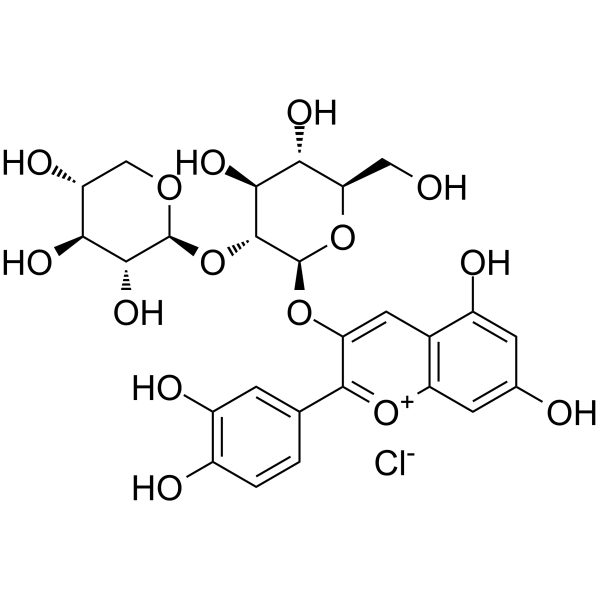
Synonyms: Cyanidin-3-O-sambubioside chloride
Cyanidin 3-sambubioside chloride (Cyanidin-3-O-sambubioside chloride), a major anthocyanin, a natural colorant, and is a potent NO inhibitor. Cyanidin 3-sambubioside chloride is a H274Y mutation inhibitor, and inhibits influenza neuraminidase activity with an IC50 of 72 μM. Cyanidin 3-sambubioside chloride inhibits angiotensin-converting enzyme (ACE) activity and has antioxidant, anti-angiogenic and antiviral properties .
loading...
    loading...
Cat. No.: HY-N12109
CAS No.: 585-23-9
Albizziin is an amino acid analog with activity as a competitive inhibitor of asparagine synthetase. Albizziin has been used to isolate Chinese hamster ovary cell mutants with altered levels of the target enzyme. Several mutational classes of albizziin can be distinguished based on cross-resistance to β-aspartic hydroxamic acid. Studies on asparagine synthetase have shown that resistance to albizziin may be associated with altered regulation of asparagine synthetase, structural mutations of the enzyme, and gene amplification .
loading...
    loading...
Cat. No.: HY-A0181AR
CAS No.: 18422-05-4
Synonyms: 5'-AMP monohydrate (Standard)
Cyanidin 3-sambubioside (chloride) (Standard) is the analytical standard of Cyanidin 3-sambubioside (chloride). This product is intended for research and analytical applications. Cyanidin 3-sambubioside chloride (Cyanidin-3-O-sambubioside chloride), a major anthocyanin, a natural colorant, and is a potent NO inhibitor. Cyanidin 3-sambubioside chloride is a H274Y mutation inhibitor, and inhibits influenza neuraminidase activity with an IC50 of 72 μM. Cyanidin 3-sambubioside chloride inhibits angiotensin-converting enzyme (ACE) activity and has antioxidant, anti-angiogenic and antiviral properties .
loading...
    loading...
Cat. No.: HY-119983
CAS No.: 194-59-2
Purity:  99.98%
Synonyms: DBC
Research Areas:  

Cancer

7H-Dibenzo[c,g]carbazole (DBC) is an azaarene with high lipophilicity. 7H-Dibenzo[c,g]carbazole has carcinogenic activity and induce DNA adducts in fish, DNA adducts, mutations in diploid human fibroblasts and micronuclei in human blood lymphocytes. 7H-Dibenzo[c,g]carbazole is activated by cytochrome P450 enzymes resulting mainly in the generation of phenolic metabolites .
loading...
    loading...
Cat. No.: HY-106791
CAS No.: 107740-67-0
Target:  

Antibiotic Bacterial

Research Areas:  

Infection

CGP 31608 is a semisynthetic penem derivative with antibacterial activity. CGP 31608 is resistant to many important beta-lactamases (including the mutationally derepressed chromosomal enzymes). CGP 31608 can be used for the research of infection .
loading...
    loading...
Cat. No.: HY-N2533R
CAS No.: 33012-73-6
Synonyms: Cyanidin-3-O-sambubioside chloride (Standard)
Cyanidin 3-sambubioside (chloride) (Standard) is the analytical standard of Cyanidin 3-sambubioside (chloride). This product is intended for research and analytical applications. Cyanidin 3-sambubioside chloride (Cyanidin-3-O-sambubioside chloride), a major anthocyanin, a natural colorant, and is a potent NO inhibitor. Cyanidin 3-sambubioside chloride is a H274Y mutation inhibitor, and inhibits influenza neuraminidase activity with an IC50 of 72 μM. Cyanidin 3-sambubioside chloride inhibits angiotensin-converting enzyme (ACE) activity and has antioxidant, anti-angiogenic and antiviral properties .
loading...
    loading...
Cat. No.: HY-134300A
Synonyms: 8-Dimethylamino-NAD+ sodium
Target:  

Endogenous Metabolite

Research Areas:  

Others

8-DMA-NAD+ (sodium) (8-Dimethylamino-NAD+ (sodium)) is a derivative of the signaling molecule and enzyme cofactor NAD+ (HY-B0445). 8-DMA-NAD+ (sodium) can be used in the screening of analog-sensitive poly (ADP-ribose) polymerase 1 (PARP1) gatekeeper mutations .
loading...
    loading...
Cat. No.: HY-134305A
Synonyms: 8-Methylamino-NAD+ sodium
Target:  

Endogenous Metabolite

Research Areas:  

Others

8-MA-NAD+ (sodium) (8-Methylamino-NAD+ (sodium)) is a derivative of the signaling molecule and enzyme cofactor NAD+ (HY-B0445). 8-MA-NAD+ (sodium) can be used in the screening of analog-sensitive poly (ADP-ribose) polymerase 1 (PARP1) gatekeeper mutations. 8-MA-NAD+ (sodium) can be used in the synthesis of cyclic ADP-ribose (cADPR) derivatives .
loading...
    loading...
Cat. No.: HY-E70894
Target:  

Endogenous Metabolite

Research Areas:  

Metabolic Disease

α,γ-Homocysteinase, Trichomonas vaginalis is a pyridoxal-5’-phosphate dependent enzyme. α,γ-Homocysteinase, Trichomonas vaginalis is a mutant of homocysteinase from Trichomonas vaginalis encoded by mgl1 gene, containing three point mutations, such as; Phe47Leu, Asp172Glu, Ser308Tyr. α,γ-Homocysteinase, Trichomonas vaginalis can metabolize homocysteine into α-keto butyrate, hydrogen sulfide and ammonia.
loading...
    loading...
Cat. No.: HY-148747
CAS No.: 138749-26-5
Research Areas:  

Neurological Disease Cancer

Ganglioside GD3 (d18:1/12:0) is a type of glycosphingolipid, the d18:1 indicates the sphingosine base, and the 12:0 represents the fatty acid part which is lauric acid. Ganglioside GD3 (d18:1/12:0) is a crucial intermediate in the biosynthesis pathway of gangliosides and is mainly found in the brain tissues of mammals. Ganglioside GD3 (d18:1/12:0) plays significant roles in development, cell signal transduction, and various diseases .
loading...
    loading...
Cat. No.: HY-181263
Target:  

SARS-CoV Virus Protease

Research Areas:  

Infection

Jun13698 is a SARS-CoV-2 main protease (M pro) inhibitor with Ki values of 65.6 nM, 510.0 nM, and 117.5 nM against the wild-type, E166V, and E166A mutants, respectively. Jun13698 forms stable complexes with wild-type and mutant M pro to mediate enzyme inhibition. Jun13698 exhibits antiviral activity against SARS-CoV-2 variants carrying the E166V/A mutation. Jun13698 is applicable to COVID-19-related research .
loading...
    loading...
Cat. No.: HY-185899
CAS No.: 72052-96-1
Synonyms: 5-Aza-2'-deoxycytidine-5′-triphosphate
Research Areas:  

Infection Cancer

5-Aza-dCTP (5-Aza-2'-deoxycytidine-5′-triphosphate) is a nucleotide analog that acts as a substrate for mammalian DNA polymerase α (Km = 3.0 μM) and a weak competitive inhibitor of this enzyme (Ki = 4.3 μM). 5-Aza-dCTP inhibits DNA polymerase α via incorporation into DNA through Watson-Crick base pairing, inhibits DNA methyltransferases via incorporation into hemimethylated DNA, and induces mutations in HIV-1 via incorporation into viral DNA during synthesis. 5-Aza-dCTP reverses the inhibitory effect of dTTP on dCMP deaminase, and allosterically activates dCMP deamination to the same extent as dCTP. 5-Aza-dCTP is applicable to research related to leukemia and type 1 human immunodeficiency virus infection .
loading...
    loading...
Cat. No.: HY-N19612
CAS No.: 9074-07-1
Proteasefrom aspergillus oryzae is a serine protease identified in the non-transgenic Aspergillus ochraceus strain AE-P. Proteasefrom aspergillus oryzae functions as a food enzyme and catalyzes protein hydrolysis with broad-spectrum specificity .
loading...
    loading...
Cat. No.: HY-L064
1,827 compounds

Glutamine is an important metabolic fuel that helps rapidly proliferating cells meet the increased demand for ATP, biosynthetic precursors, and reducing agents. Glutamine Metabolism pathway involves the initial deamination of glutamine by glutaminase(GLS), yielding glutamate and ammonia. Glutamate is converted to the TCA cycle intermediate α-ketoglutarate (α-KG) by either glutamate dehydrogenase (GDH) or by the alanine or aspartate transaminases (TAs), to produce both ATP and anabolic carbons for the synthesis of amino acids, nucleotides and lipids. During periods of hypoxia or mitochondrial dysfunction, α-KG can be converted to citrate in a reductive carboxylation reaction catalyzed by IDH2. The newly formed citrate exits the mitochondria where it is used to synthesize fatty acids and amino acids and produce the reducing agent, NADPH.

Cancer cells display an altered metabolic circuitry that is directly regulated by oncogenic mutations and loss of tumor suppressors. Mounting evidence indicates that altered glutamine metabolism in cancer cells has critical roles in supporting macromolecule biosynthesis, regulating signaling pathways, and maintaining redox homeostasis, all of which contribute to cancer cell proliferation and survival. Thus, intervention in glutamine metabolic processes could provide novel approaches to improve cancer treatment.

MCE owns a unique collection of 1,827 compounds targeting the mainly proteins and enzymes involved in glutamine metabolism pathway. Glutamine Metabolism compound library is a useful tool for intervention in glutamine metabolic processes.

  • 1

