



Cyanidin 3-sambubioside chloride

Based on 1 Customer Validation
Cyanidin 3-sambubioside chloride (Cyanidin-3-O-sambubioside chloride), a major anthocyanin, a natural colorant, and is a potent NO inhibitor. Cyanidin 3-sambubioside chloride is a H274Y mutation inhibitor, and inhibits influenza neuraminidase activity with an IC50 of 72 μM. Cyanidin 3-sambubioside chloride inhibits angiotensin-converting enzyme (ACE) activity and has antioxidant, anti-angiogenic and antiviral properties.
For research use only. We do not sell to patients.
- Purity: 98.40%
- CAS No.: 33012-73-6
- Formula: C26H29ClO15
- Molecular Weight:616.95
-
Storage:
4°C, sealed storage, away from moisture and light
* In solvent : -80°C, 6 months; -20°C, 1 month (sealed storage, away from moisture and light)
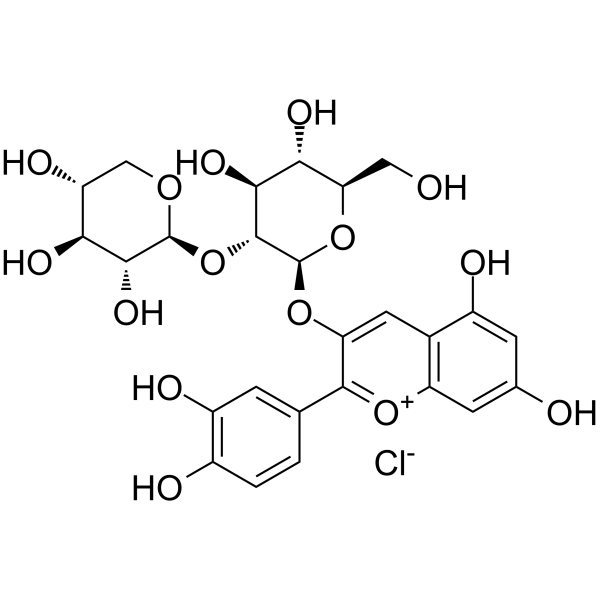

To place orders, for customer services and technical support, please contact: MedChemExpress USA
Tel: 609-228-6898 E-mail: [email protected] [email protected]


-
 Biological Activity
-
Chemical Information
-
Solvent & Solubility
- Purity & Documentation
- References
-
 Help & FAQs


-
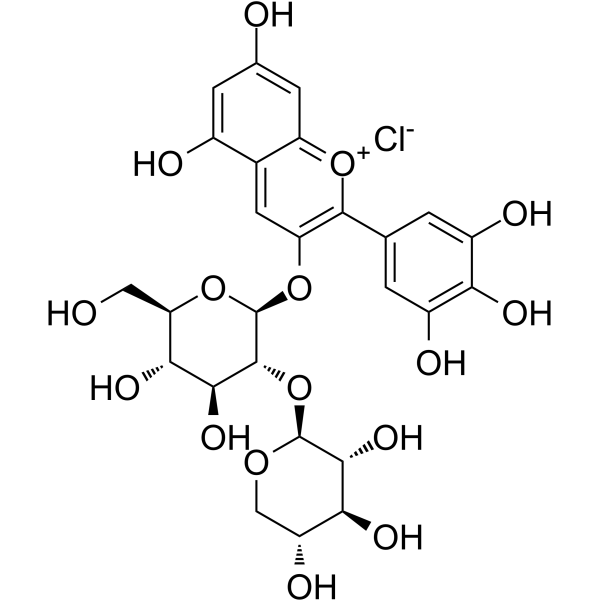
HY-129143
Delphinidin-3-sambubioside chloride -
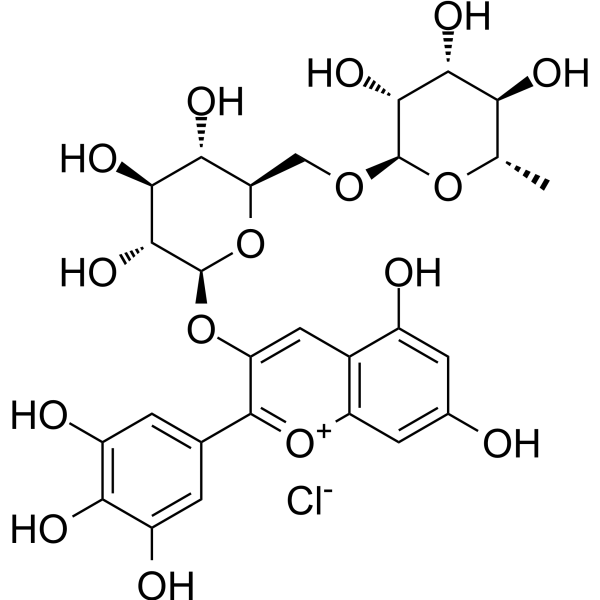
HY-114367
Delphinidin 3-rutinoside chloride -
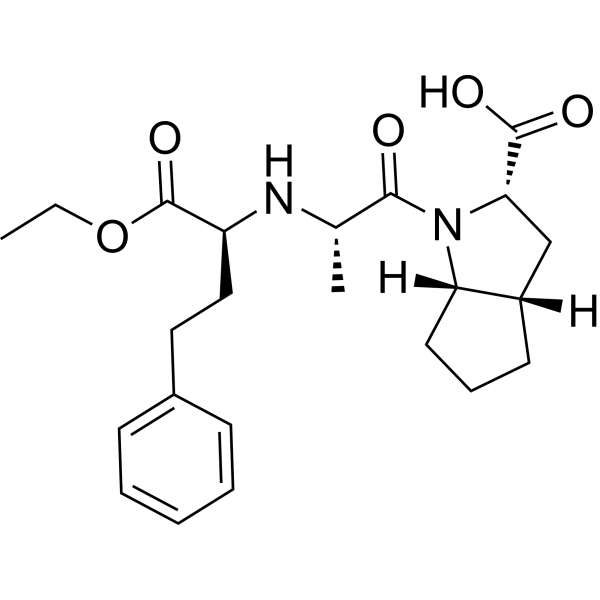
HY-B0279
Ramipril -
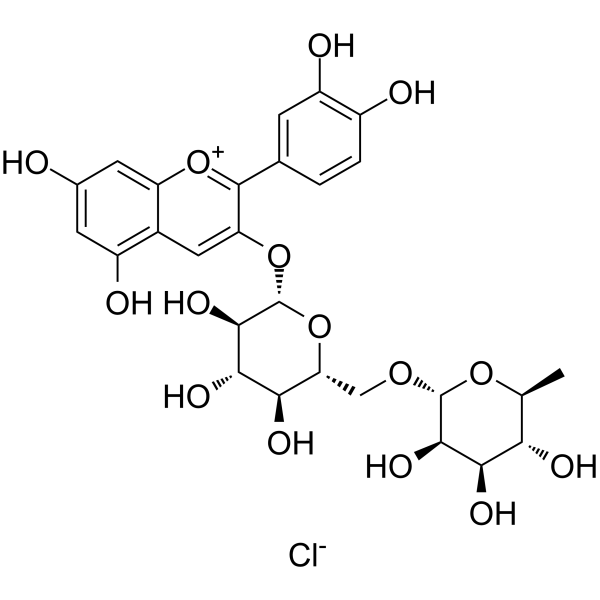
HY-105935
Keracyanin chloride -
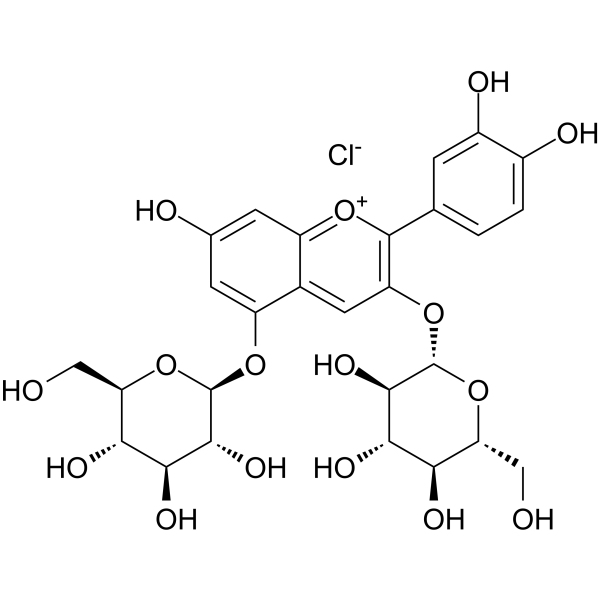
HY-129138
Cyanidin 3,5-diglucoside chloride -
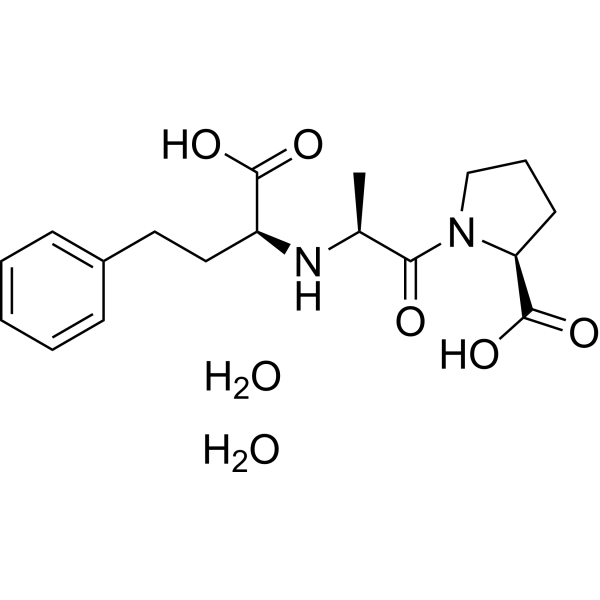
HY-B0231
Enalaprilat dihydrate -

HY-N2533R
Cyanidin 3-sambubioside chloride (Standard) -
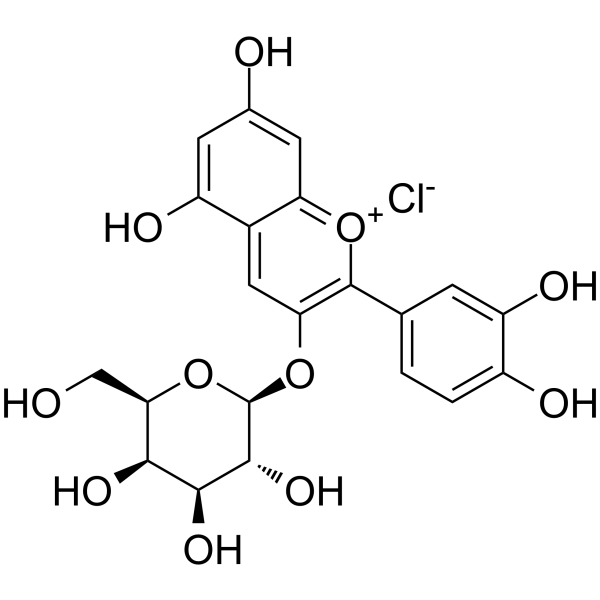
HY-N4142
Cyanidin-3-O-galactoside chloride -
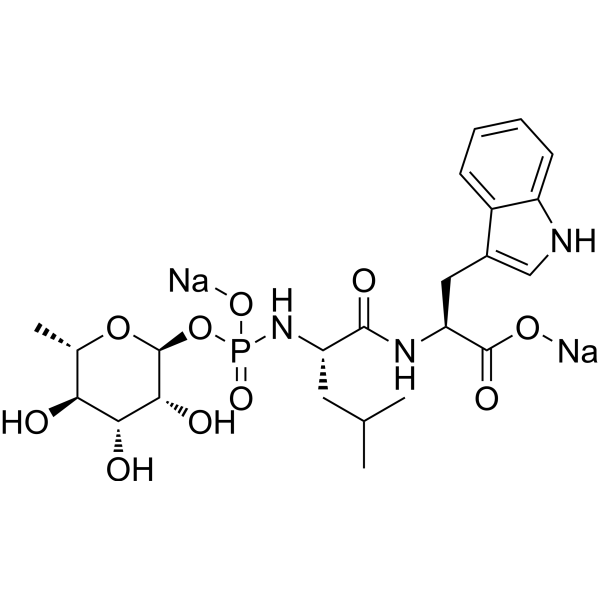
HY-N2021A
Phosphoramidon disodium -
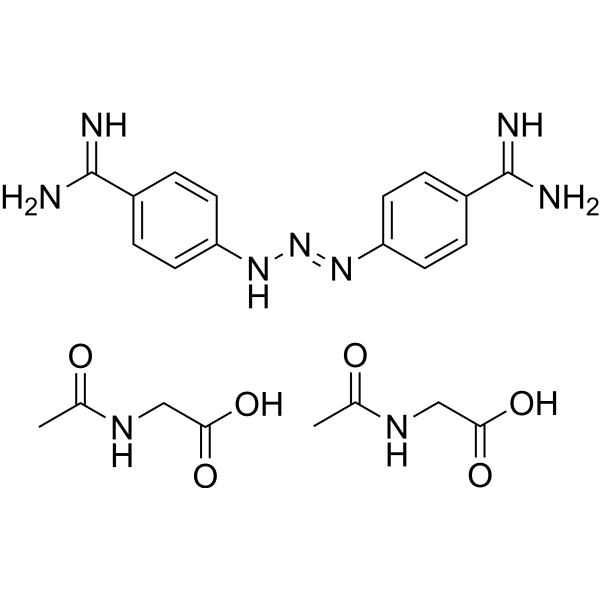
HY-12404
Diminazene aceturate -
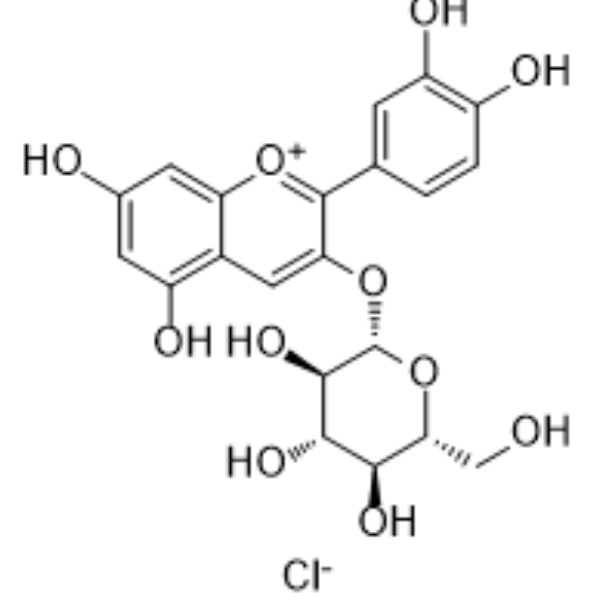
HY-N0640
Kuromanin chloride -

HY-B0279R
Ramipril (Standard)


Biological Activity
Description
In Vitro
Cyanidin 3-sambubioside chloride (5-25 μg/mL, 24 h) exhibits DPPH radical scavenging activity, antioxidative potency and reducing power[1].
Cyanidin 3-sambubioside chloride (50-400 μM, 24 h) inhibits LPS (HY-D1056)-induced NO production in RAW 264.7 cell[1].
Cyanidin 3-sambubioside chloride (1-30 µg/mL, 24 h) inhibits the angiogenesis in chick chorioallantoic membrane (CAM), inhibits the tube formation HUVEC cell, suppresses the migration and invasion of MDA-MB-231 through inhibition of Akt phosphorylation and MMP-9[2].
MedChemExpress (MCE) has not independently confirmed the accuracy of these methods. They are for reference only.


Chemical Information
-
CAS No. 33012-73-6
-
Appearance Solid
-
Molecular Weight 616.95
-
Formula C26H29ClO15
-
Color Brown to black
-
SMILES
OC1=CC(O)=CC2=C1C=C(C(C3=CC(O)=C(C=C3)O)=[O+]2)O[C@H]4[C@@H]([C@H]([C@@H]([C@H](O4)CO)O)O)O[C@H]5[C@@H]([C@H]([C@@H](CO5)O)O)O.[Cl-]
-
Synonyms
Cyanidin-3-O-sambubioside chloride
-
Structure Classification
-
Initial Source
-
Shipping
Room temperature in continental US; may vary elsewhere.
-
Storage
4°C, sealed storage, away from moisture and light
* In solvent : -80°C, 6 months; -20°C, 1 month (sealed storage, away from moisture and light)


Solvent & Solubility
In Vitro:
DMSO : 50 mg/mL (81.04 mM; Need ultrasonic; Hygroscopic DMSO has a significant impact on the solubility of product, please use newly opened DMSO)
Please refer to the solubility information to select the appropriate solvent. Once prepared, please aliquot and store the solution to prevent product inactivation from repeated freeze-thaw cycles.
Storage method and period of stock solution: -80°C, 6 months; -20°C, 1 month (sealed storage, away from moisture and light). When stored at -80°C, please use it within 6 months. When stored at -20°C, please use it within 1 month.
Please refer to the solubility information to select the appropriate solvent. Once prepared, please aliquot and store the solution to prevent product inactivation from repeated freeze-thaw cycles.
Storage method and period of stock solution: -80°C, 6 months; -20°C, 1 month (sealed storage, away from moisture and light). When stored at -80°C, please use it within 6 months. When stored at -20°C, please use it within 1 month.
Concentration (start) × Volume (start) = Concentration (final) × Volume (final)
In Vivo:
Select the appropriate dissolution method based on your experimental animal and administration route.
- For the following dissolution methods, please ensure to first prepare a clear stock solution using an In Vitro approach and then sequentially add co-solvents:
- To ensure reliable experimental results, the clarified stock solution can be appropriately stored based on storage conditions. As for the working solution for In Vivo experiments, it is recommended to prepare freshly and use it on the same day.
- The percentages shown for the solvents indicate their volumetric ratio in the final prepared solution. If precipitation or phase separation occurs during preparation, heat and/or sonication can be used to aid dissolution.
Add each solvent one by one: 10% DMSO 40% PEG300 5% Tween-80 45% Saline
Solubility: ≥ 2.5 mg/mL (4.05 mM); Clear solution
This protocol yields a clear solution of ≥ 2.5 mg/mL (saturation unknown).
Taking 1 mL working solution as an example, add 100 μL DMSO stock solution (25.0 mg/mL) to 400 μL PEG300, and mix evenly; then add 50 μL Tween-80 and mix evenly; then add 450 μL Saline to adjust the volume to 1 mL.
Preparation of Saline: Dissolve 0.9 g sodium chloride in ddH₂O and dilute to 100 mL to obtain a clear Saline solution.
Add each solvent one by one: 10% DMSO 90% (20% SBE-β-CD in Saline)
Solubility: ≥ 2.5 mg/mL (4.05 mM); Clear solution
This protocol yields a clear solution of ≥ 2.5 mg/mL (saturation unknown).
Taking 1 mL working solution as an example, add 100 μL DMSO stock solution (25.0 mg/mL) to 900 μL 20% SBE-β-CD in Saline, and mix evenly.
Preparation of 20% SBE-β-CD in Saline (4°C, storage for one week): 2 g SBE-β-CD powder is dissolved in 10 mL Saline, completely dissolve until clear.
In Vivo Dissolution Calculator
Please enter the basic information of animal experiments:
-
-
-
-
Recommended: Prepare an additional quantity of animals to account for potential losses during experiments.
Please enter your animal formula composition:
-
%DMSO +
Recommended: Keep the proportion of DMSO in working solution below 2% if your animal is weak.
-
%+
-
+%Tween-80 + +
-
%Saline +
The co-solvents required include: DMSO, . All of co-solvents are available by MedChemExpress (MCE). , Tween 80. All of co-solvents are available by MedChemExpress (MCE).
Working solution concentration: 0.22 mg/mL
Method for preparing stock solution: mg drug dissolved in μL DMSO. Stock solution concentration: mg/mL. * In solvent : -80°C, 6 months; -20°C, 1 month (sealed storage, away from moisture and light)
1. Take μL DMSO stock solution;
2. Add μL .
μL , mix evenly;
3. Then add μL Tween 80, mix evenly;
4. Then add μL
Please ensure that the stock solution in the first step is dissolved to a clear state, and add co-solvents in sequence. You can use ultrasonic heating (ultrasonic cleaner, recommended frequency 20-40 kHz), vortexing, etc. to assist dissolution.


Purity & Documentation
-
Data Sheet (281 KB)
-
SDS (254 KB)
- English - EN (254 KB)
- Français - FR (254 KB)
- Deutsch - DE (254 KB)
- Norwegian - NO (254 KB)
- Español - ES (254 KB)
- Swedish - SV (254 KB)
- Italian - IT (254 KB)
- Korean - KR (254 KB)
- Portuguese - PT (254 KB)
-
Handling Instructions (2659 KB)
References
[1]. Jung-Chu Cheng, et al. Detection of cyanidin in different-colored peanut testae and identification of peanut cyanidin 3-sambubioside. J Agric Food Chem. 2009 Oct 14;57(19):8805-11. [Content Brief]
[2]. S Kannan, et al. The inhibitory performance of flavonoid cyanidin-3-sambubiocide against H274Y mutation in H1N1 influenza virus. J Biomol Struct Dyn. 2018 Dec;36(16):4255-4269. [Content Brief]
[3]. Sang-Jin Lee, et al. Cyanidin-3-O-sambubioside from Acanthopanax sessiliflorus fruit inhibits metastasis by downregulating MMP-9 in breast cancer cells MDA-MB-231. Planta Med. 2013 Nov;79(17):1636-40. [Content Brief]


Complete Stock Solution Preparation Table
Please refer to the solubility information to select the appropriate solvent. Once prepared, please aliquot and store the solution to prevent product inactivation from repeated freeze-thaw cycles.
Storage method and period of stock solution: -80°C, 6 months; -20°C, 1 month (sealed storage, away from moisture and light). When stored at -80°C, please use it within 6 months. When stored at -20°C, please use it within 1 month.
| Optional Solvent | Concentration Solvent Mass | 1 mg | 5 mg | 10 mg | 25 mg |
|---|---|---|---|---|---|
| DMSO | 1 mM | 1.6209 mL | 8.1044 mL | 16.2088 mL | 40.5219 mL |
| 5 mM | 0.3242 mL | 1.6209 mL | 3.2418 mL | 8.1044 mL | |
| 10 mM | 0.1621 mL | 0.8104 mL | 1.6209 mL | 4.0522 mL | |
| 15 mM | 0.1081 mL | 0.5403 mL | 1.0806 mL | 2.7015 mL | |
| 20 mM | 0.0810 mL | 0.4052 mL | 0.8104 mL | 2.0261 mL | |
| 25 mM | 0.0648 mL | 0.3242 mL | 0.6484 mL | 1.6209 mL | |
| 30 mM | 0.0540 mL | 0.2701 mL | 0.5403 mL | 1.3507 mL | |
| 40 mM | 0.0405 mL | 0.2026 mL | 0.4052 mL | 1.0130 mL | |
| 50 mM | 0.0324 mL | 0.1621 mL | 0.3242 mL | 0.8104 mL | |
| 60 mM | 0.0270 mL | 0.1351 mL | 0.2701 mL | 0.6754 mL | |
| 80 mM | 0.0203 mL | 0.1013 mL | 0.2026 mL | 0.5065 mL |


Cyanidin 3-sambubioside chloride Related Classifications
HY-N2533 Related Classifications
 Powered by Bioz