



Kuromanin chloride
Based on 11 publication(s) in Google Scholar
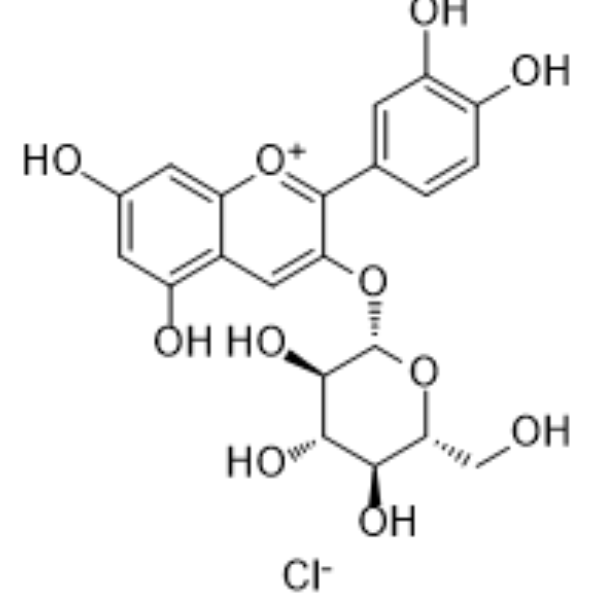
Kuromanin chloride (Chrysontemin) is derived from mulberry leaves and has the effect of increasing blood sugar concentration and maintaining lipid metabolism balance to reduce obesity. Kuromanin chloride can inhibit CD38 enzymatic activities.
For research use only. We do not sell to patients.
- Purity : 99.83%
- CAS No.: 7084-24-4
- Formula: C21H21ClO11
- Molecular Weight:484.84
-
Storage:
4°C, sealed storage, away from moisture
* In solvent : -80°C, 6 months; -20°C, 1 month (sealed storage, away from moisture)

To place orders, for customer services and technical support, please contact: MedChemExpress USA
Tel: 609-228-6898 E-mail: [email protected] [email protected]


-
 Biological Activity
-
Chemical Information
-
Solvent & Solubility
- Protocols
- Purity & Documentation
- References
-
 Help & FAQs


-
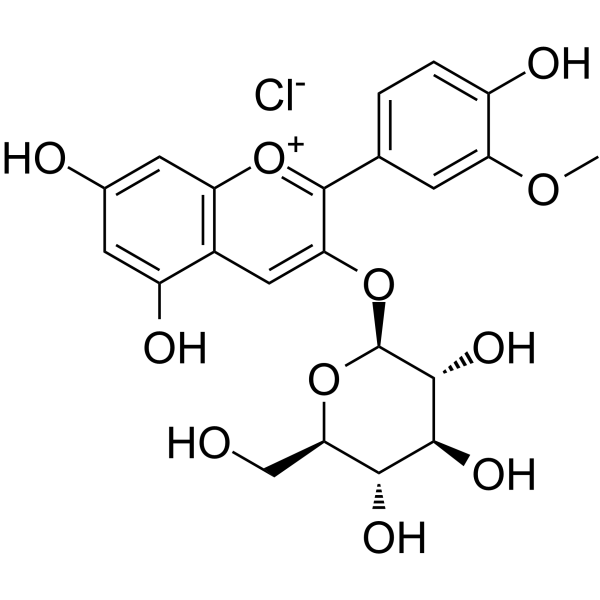
HY-W040127
Peonidin 3-O-glucoside chlorideInsulin Secretagogue -
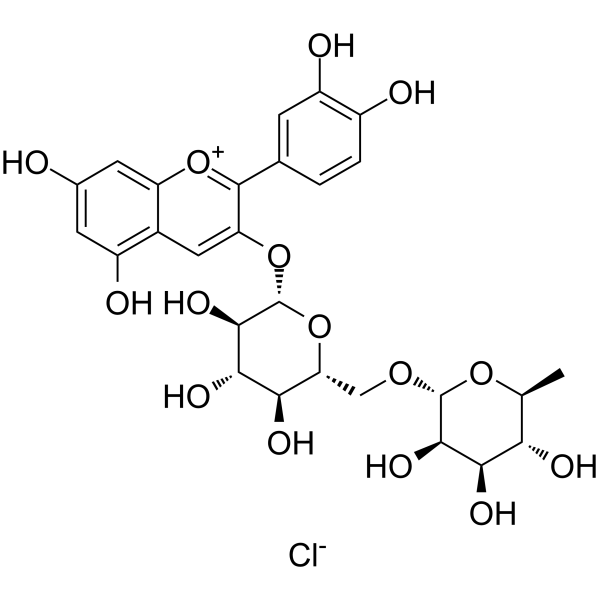
HY-105935
Keracyanin chlorideAntioxidant Agent -
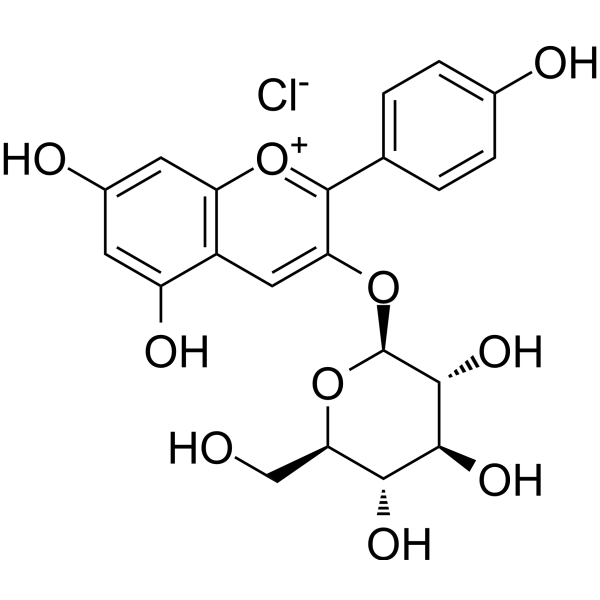
HY-W040045
Callistephin chlorideROS/iNOS/TNF-α/COX-2 Inhibitor -
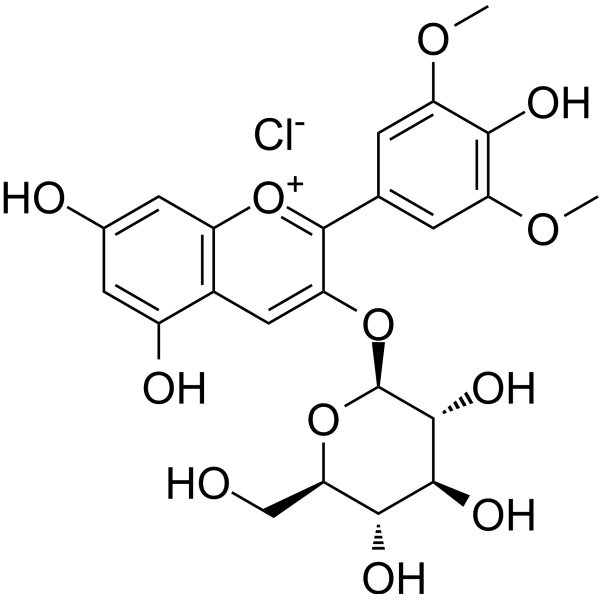
HY-125740
Malvidin-3-glucoside chlorideNF-κB Inhibitor -
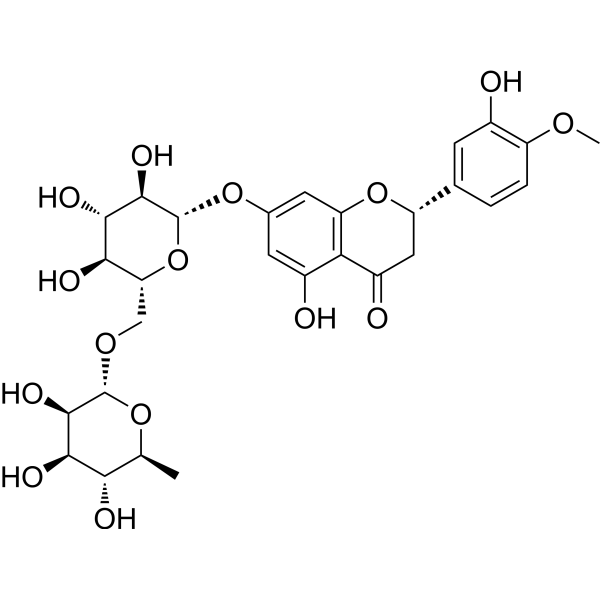
HY-15337
HesperidinAntioxidant -
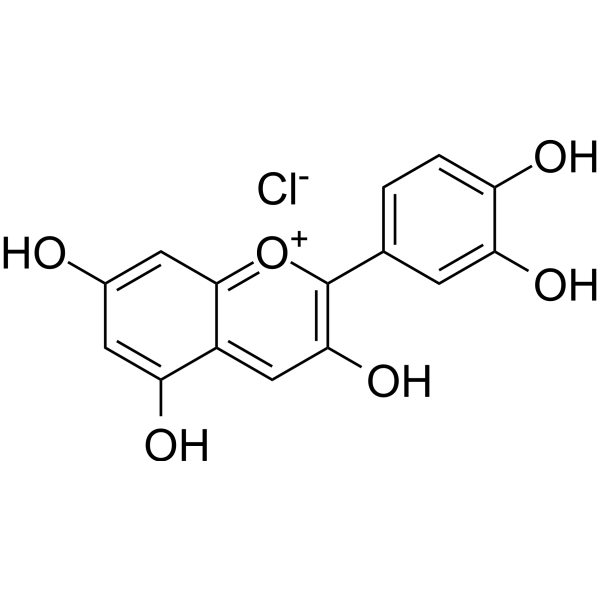
HY-N0499
Cyanidin ChlorideAntioxidant -
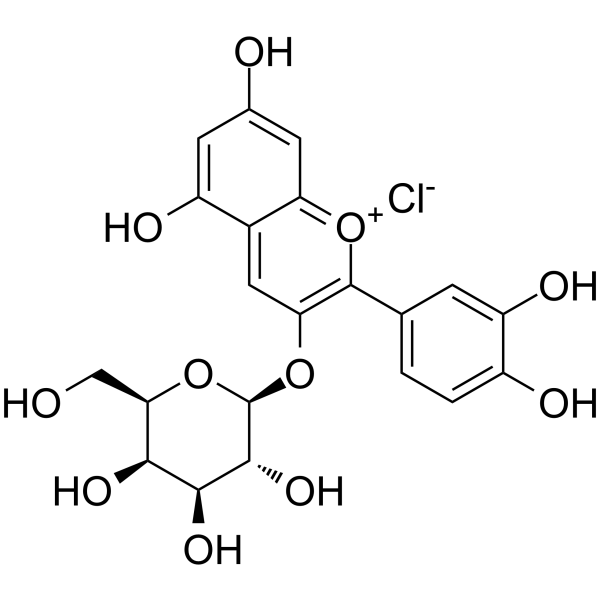
HY-N4142
Cyanidin-3-O-galactoside chlorideAntioxidant Agent -
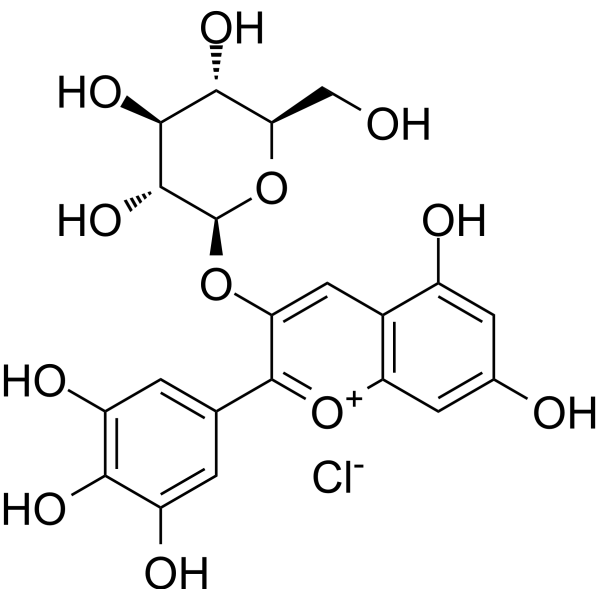
HY-108052
Delphinidin 3-glucoside chlorideEGFR Inhibitor -
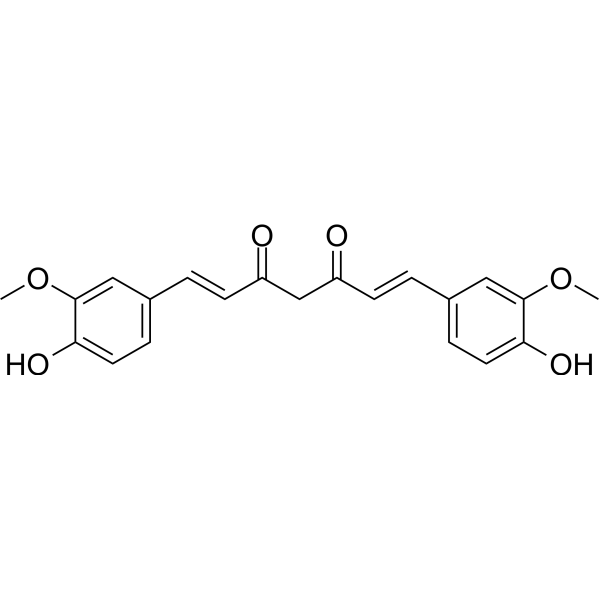
HY-N0005
Curcuminp300 Histone Acetylatransferase Inhibitor -
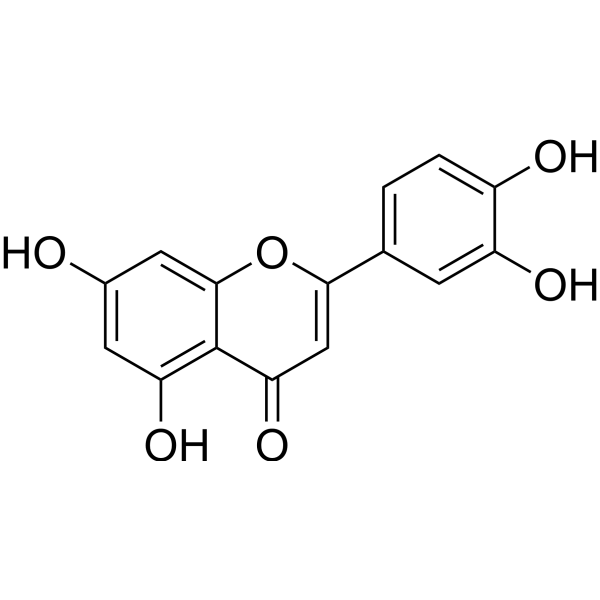
HY-N0162
LuteolinNrf2 Inhibitor -
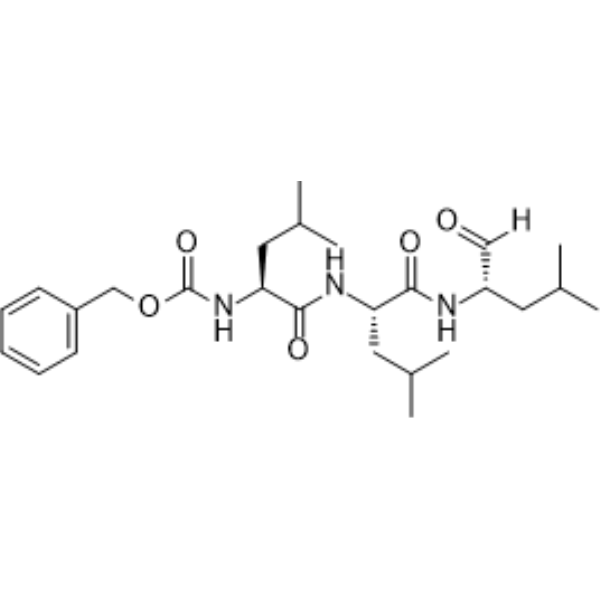
HY-13259
MG-132Proteasome Inhibitor -
HY-N1201
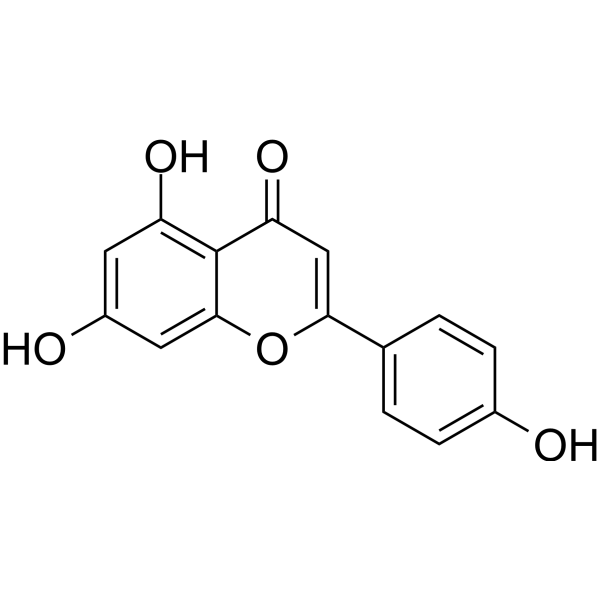
ApigeninCytochrome P450 Inhibitor
Publications Citing Use of MedChemExpress (MCE) Kuromanin chloride
More- Food Chem. 2025 Oct 15:489:144992. [Abstract]
- Food Chem. 2025 Jan 15;463(Pt 2):141312. [Abstract]
- LWT-FOOD SCI TECHNOL . 2021, 111791.
- Food Funct. 2025 Oct 27;16(21):8548-8563. [Abstract]
- Drug Des Devel Ther. 2020 Aug 19:14:3385-3391. [Abstract]
- Inflammation. 2020 Jun;43(3):1088-1096. [Abstract]
- J Chromatogr A. 2025 Aug 30:1757:466097. [Abstract]
- Phytochem Anal. 2025 Jun;36(4):1268-1277. [Abstract]
- Can J Physiol Pharmacol. 2021 Jun;99(6):589-598. [Abstract]
- Res Sq. 2026 May 30.
- SSRN. 2023 Oct 11.
 Customer Validation & Images

-
Cell Proliferation/Viability Assay
-
Apoptosis Analysis
-
IF
-
WB
-
ELISA


Biological Activity
Description
Cellular Effect
|
Cell Line

|
Type | Value | Description | References |
|---|---|---|---|---|
| HCT-116 | IC50 |
100 μM
Compound: 3
|
Cytotoxicity against human HCT 116 cells after 72 hrs
Cytotoxicity against human HCT 116 cells after 72 hrs
|
[PMID: 16933884] |
| HT-29 | IC50 |
100 μM
Compound: 3
|
Cytotoxicity against human HT-29 cells after 72 hrs
Cytotoxicity against human HT-29 cells after 72 hrs
|
[PMID: 16933884] |
| SW480 | IC50 |
100 μM
Compound: 3
|
Cytotoxicity against human SW480 cells after 72 hrs
Cytotoxicity against human SW480 cells after 72 hrs
|
[PMID: 16933884] |
In Vitro
Kuromanin chloride (5 μg/mL) reduces the expression of Ad36 E1A viral gene in 3T3L1 cells infected with 4 MOI of Ad36[1].
Kuromanin chloride (100 μM, 24 h) protects cerebellar granule neurons from nitric oxide (NO)-induced apoptosis[2].
Kuromanin chloride (30 and 100 μM, 30 min) inhibits enzymatic activities of CD38, and blocks chronic lymphocytic leukemia (CLL) chemotaxis in CD38+ CLL cells (a fluorimetric assay based on cGDPR generation from NGD)[3].
MedChemExpress (MCE) has not independently confirmed the accuracy of these methods. They are for reference only. Further protocols information, click here.


Chemical Information
-
CAS No. 7084-24-4
-
Appearance Solid
-
Molecular Weight 484.84
-
Formula C21H21ClO11
-
Color Brown to dark brown
-
SMILES
O[C@H]([C@@H](O)[C@@H]1O)[C@@H](O[C@@H]1CO)OC(C(C2=CC(O)=C(O)C=C2)=[O+]C3=CC(O)=C4)=CC3=C4O.[Cl-]
-
Synonyms
Chrysontemin; Cyanidin 3-O-glucoside chloride
-
Structure Classification
-
Initial Source
-
Shipping
Room temperature in continental US; may vary elsewhere.
-
Storage
4°C, sealed storage, away from moisture
* In solvent : -80°C, 6 months; -20°C, 1 month (sealed storage, away from moisture)


Publications (11)
-
Journal Impact Factor
-
Most Recent
-
Food Chem
Flavonoid-mediated metabolic underpinning quality variation in red bud-sport pear mutants. [Abstract]2025 Oct 15:489:144992. PMID: 40466530 -
Food Chem
Removal of polyphenols from anthocyanin-rich extracts using 4-vinylpyridine crosslinked copolymers. [Abstract]2025 Jan 15;463(Pt 2):141312. PMID: 39305668 -
-
Food Funct
Blackthorn juice from central Italy exhibits selective anticancer activity by inducing apoptosis and autophagy in gastric carcinoma cells. [Abstract]2025 Oct 27;16(21):8548-8563. PMID: 41085359 -
Drug Des Devel Ther
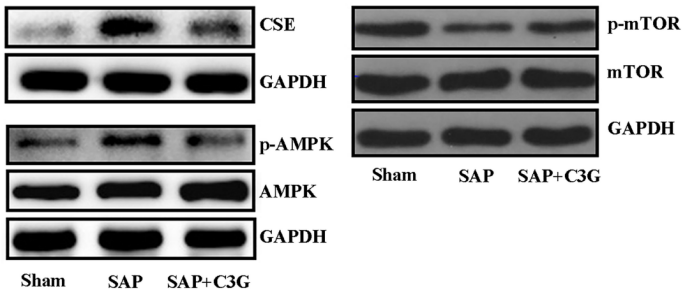
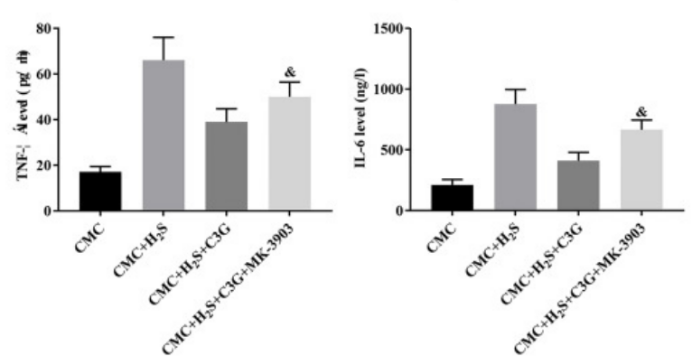
Cyanidin-3-O-Glucoside Improves Colonic Motility During Severe Acute Pancreatitis by Inhibiting the H2S-Regulated AMPK/mTOR Pathway. [Abstract]2020 Aug 19:14:3385-3391. PMID: 32943841
Kuromanin chloride purchased from MedChemExpress. Usage Cited in: Drug Des Devel Ther. 2020 Aug 19:14:3385-3391. [Abstract]
Kuromanin chloride (C3G) (100 mg/kg, i.g.) administration suppressed CSE expression and deactivated the AMPK/mTOR pathway.
Kuromanin chloride purchased from MedChemExpress. Usage Cited in: Drug Des Devel Ther. 2020 Aug 19:14:3385-3391. [Abstract]
Kuromanin chloride (C3G) (100 mg/kg, i.g.) induced cytokine production TNF-α and IL-6 by ELISA.
-
Inflammation
Cyanidin-3-O-Glucoside Attenuates Lipopolysaccharide-Induced Inflammation in Human Corneal Epithelial Cells by Inducing Let-7b-5p-Mediated HMGA2/PI3K/Akt Pathway. [Abstract]2020 Jun;43(3):1088-1096. PMID: 32248330 -
J Chromatogr A
Quantification of anthocyanins in Oryza sativa L. from Jammu and Kashmir, India by a validated high performance thin layer chromatography (HPTLC) method. [Abstract]2025 Aug 30:1757:466097. PMID: 40482381 -
Phytochem Anal
A Validated Method for Identification and Quantification of Anthocyanins in Different Black Rice (Oryza sativa L.) Varieties Using High-Performance Thin-Layer Chromatography (HPTLC). [Abstract]2025 Jun;36(4):1268-1277. PMID: 39837565 -
Can J Physiol Pharmacol
Cyanidin-3-O-glucoside attenuates high glucose-induced podocyte dysfunction by inhibiting apoptosis and promoting autophagy via activation of SIRT1/AMPK pathway. [Abstract]2021 Jun;99(6):589-598. PMID: 33049148
Kuromanin chloride purchased from MedChemExpress. Usage Cited in: Can J Physiol Pharmacol. 2021 Jun;99(6):589-598. [Abstract]
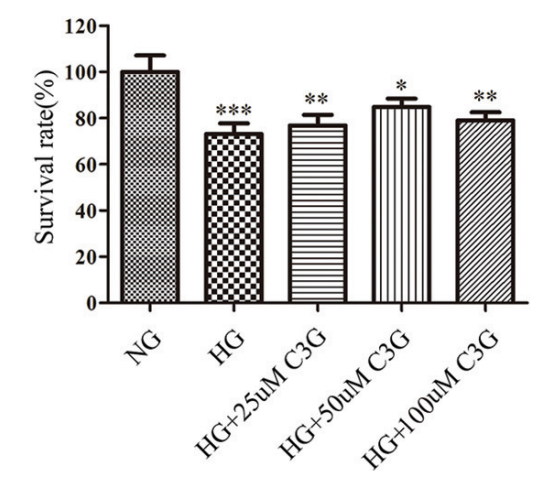
MPC5 cells were cultured in 96-well plates and treated with indicated concentration of glucose (normal glucose: NG, 5.6 mM; high glucose: HG, 25 mM) in the presence or absence of different concentrations of Kuromanin chloride (C3G) (25, 50, 100 μM) for 24 h. The survival rate of different groups was tested with an MTT assay.
Kuromanin chloride purchased from MedChemExpress. Usage Cited in: Can J Physiol Pharmacol. 2021 Jun;99(6):589-598. [Abstract]
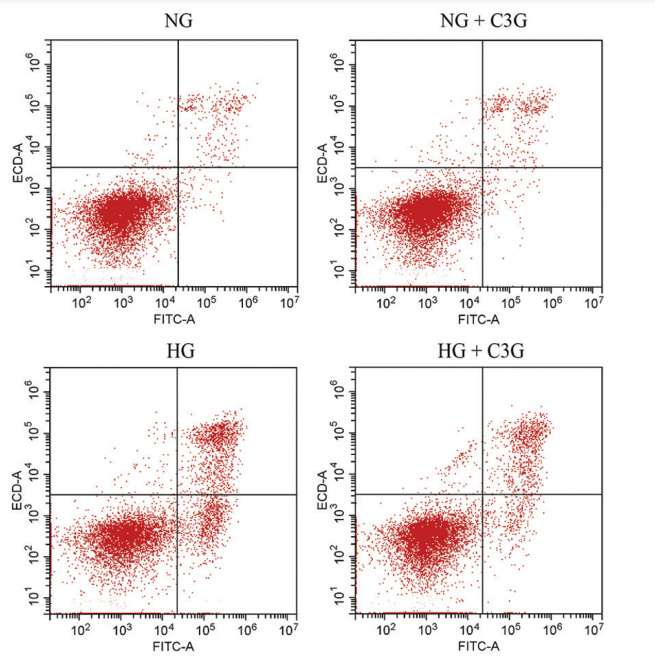
MPC5 cells were cultured in 24-well plates and treated with indicated concentrations of glucose (NG:5.6 mM; HG: 25 mM) in the presence or absence of 50 μM concentration of Kuromanin chloride (C3G) for 24 h. The cell apoptosis rate of different groups was tested by flow cytometry.
Kuromanin chloride purchased from MedChemExpress. Usage Cited in: Can J Physiol Pharmacol. 2021 Jun;99(6):589-598. [Abstract]
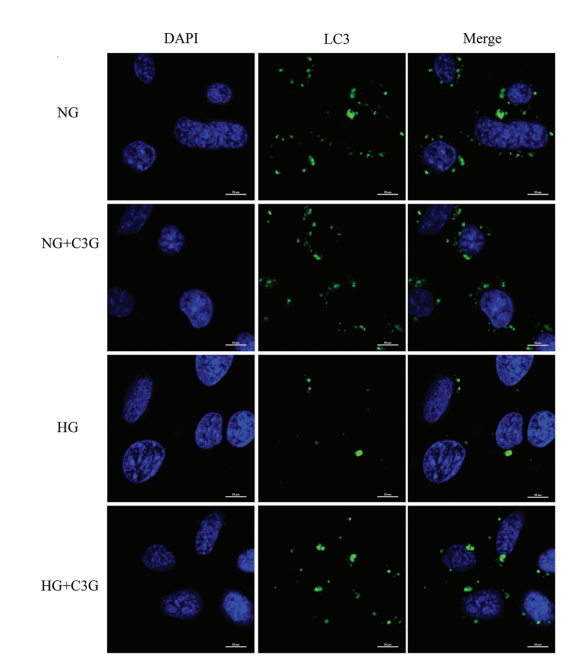
Kuromanin chloride (C3G) promotes autophagy in mouse podocytes under high glucose condition. MPC5 cells were treated with normal glucose (NG, 5.6 mM) or high glucose (HG, 25 mM) in the presence or absence of 50 μM C3G for 24 h. Measurement of LC3 foci level by immunofluorescence staining assay in MPC5 cells.
-
-


Solvent & Solubility
In Vitro:
DMSO : 25 mg/mL (51.56 mM; Need ultrasonic; Hygroscopic DMSO has a significant impact on the solubility of product, please use newly opened DMSO)
Please refer to the solubility information to select the appropriate solvent. Once prepared, please aliquot and store the solution to prevent product inactivation from repeated freeze-thaw cycles.
Storage method and period of stock solution: -80°C, 6 months; -20°C, 1 month (sealed storage, away from moisture). When stored at -80°C, please use it within 6 months. When stored at -20°C, please use it within 1 month.
Please refer to the solubility information to select the appropriate solvent. Once prepared, please aliquot and store the solution to prevent product inactivation from repeated freeze-thaw cycles.
Storage method and period of stock solution: -80°C, 6 months; -20°C, 1 month (sealed storage, away from moisture). When stored at -80°C, please use it within 6 months. When stored at -20°C, please use it within 1 month.
Concentration (start) × Volume (start) = Concentration (final) × Volume (final)
In Vivo:
Select the appropriate dissolution method based on your experimental animal and administration route.
- For the following dissolution methods, please ensure to first prepare a clear stock solution using an In Vitro approach and then sequentially add co-solvents:
- To ensure reliable experimental results, the clarified stock solution can be appropriately stored based on storage conditions. As for the working solution for In Vivo experiments, it is recommended to prepare freshly and use it on the same day.
- The percentages shown for the solvents indicate their volumetric ratio in the final prepared solution. If precipitation or phase separation occurs during preparation, heat and/or sonication can be used to aid dissolution.
Add each solvent one by one: 10% DMSO 40% PEG300 5% Tween-80 45% Saline
Solubility: ≥ 2.08 mg/mL (4.29 mM); Clear solution
This protocol yields a clear solution of ≥ 2.08 mg/mL (saturation unknown).
Taking 1 mL working solution as an example, add 100 μL DMSO stock solution (20.8 mg/mL) to 400 μL PEG300, and mix evenly; then add 50 μL Tween-80 and mix evenly; then add 450 μL Saline to adjust the volume to 1 mL.
Preparation of Saline: Dissolve 0.9 g sodium chloride in ddH₂O and dilute to 100 mL to obtain a clear Saline solution.
Add each solvent one by one: 10% DMSO 90% (20% SBE-β-CD in Saline)
Solubility: ≥ 2.08 mg/mL (4.29 mM); Clear solution
This protocol yields a clear solution of ≥ 2.08 mg/mL (saturation unknown).
Taking 1 mL working solution as an example, add 100 μL DMSO stock solution (20.8 mg/mL) to 900 μL 20% SBE-β-CD in Saline, and mix evenly.
Preparation of 20% SBE-β-CD in Saline (4°C, storage for one week): 2 g SBE-β-CD powder is dissolved in 10 mL Saline, completely dissolve until clear.
In Vivo Dissolution Calculator
Please enter the basic information of animal experiments:
-
-
-
-
Recommended: Prepare an additional quantity of animals to account for potential losses during experiments.
Please enter your animal formula composition:
-
%DMSO +
Recommended: Keep the proportion of DMSO in working solution below 2% if your animal is weak.
-
%+
-
+%Tween-80 + +
-
%Saline +
The co-solvents required include: DMSO, . All of co-solvents are available by MedChemExpress (MCE). , Tween 80. All of co-solvents are available by MedChemExpress (MCE).
Working solution concentration: 0.22 mg/mL
Method for preparing stock solution: mg drug dissolved in μL DMSO. Stock solution concentration: mg/mL. * In solvent : -80°C, 6 months; -20°C, 1 month (sealed storage, away from moisture)
1. Take μL DMSO stock solution;
2. Add μL .
μL , mix evenly;
3. Then add μL Tween 80, mix evenly;
4. Then add μL
Please ensure that the stock solution in the first step is dissolved to a clear state, and add co-solvents in sequence. You can use ultrasonic heating (ultrasonic cleaner, recommended frequency 20-40 kHz), vortexing, etc. to assist dissolution.

Protocols
-
Research Protocol for Metabolic Diseases
AMP-activated protein kinase, AMPK, is a conserved cellular energy sensor that responds to reduced cellular energy status and coordinates metabolism by increasing ATP-generating catabolic pathways while suppressing ATP-consuming anabolic processes. In metabolic disease research, the AMPK pathway is experimentally relevant because it regulates hepatic lipid synthesis, fatty acid oxidation, glucose production, skeletal-muscle glucose disposal, mTORC1-linked biosynthesis, autophagy, mitochondrial homeostasis, and whole-body energy balance. The central pathway logic is that energy stress, metformin, exercise-like stimulation, or direct AMPK activators increase AMPKα Thr172 phosphorylation and downstream substrate phosphorylation, including ACC and RAPTOR. Phosphorylation of ACC suppresses lipogenesis and supports fatty acid oxidation, whereas phosphorylation of RAPTOR suppresses mTORC1 signaling and links cellular energy status to growth and protein synthesis control. The pathway is linked


Purity & Documentation
-
Data Sheet (280 KB)
-
SDS (393 KB)
- English - EN (393 KB)
- Français - FR (393 KB)
- Deutsch - DE (393 KB)
- Norwegian - NO (393 KB)
- Español - ES (393 KB)
- Swedish - SV (393 KB)
- Italian - IT (393 KB)
- Korean - KR (393 KB)
- Portuguese - PT (393 KB)
-
Handling Instructions (2659 KB)
References
[2]. Winter AN, et al. Chemical basis for the disparate neuroprotective effects of the anthocyanins, callistephin and kuromanin, against nitrosative stress. Free Radic Biol Med. 2017 Feb;103:23-34. [Content Brief]
[3]. Vaisitti T, et al. The enzymatic activities of CD38 enhance CLL growth and trafficking: implications for therapeutic targeting. Leukemia. 2015 Feb;29(2):356-68. [Content Brief]


Complete Stock Solution Preparation Table
Please refer to the solubility information to select the appropriate solvent. Once prepared, please aliquot and store the solution to prevent product inactivation from repeated freeze-thaw cycles.
Storage method and period of stock solution: -80°C, 6 months; -20°C, 1 month (sealed storage, away from moisture). When stored at -80°C, please use it within 6 months. When stored at -20°C, please use it within 1 month.
| Optional Solvent | Concentration Solvent Mass | 1 mg | 5 mg | 10 mg | 25 mg |
|---|---|---|---|---|---|
| DMSO | 1 mM | 2.0625 mL | 10.3127 mL | 20.6254 mL | 51.5634 mL |
| 5 mM | 0.4125 mL | 2.0625 mL | 4.1251 mL | 10.3127 mL | |
| 10 mM | 0.2063 mL | 1.0313 mL | 2.0625 mL | 5.1563 mL | |
| 15 mM | 0.1375 mL | 0.6875 mL | 1.3750 mL | 3.4376 mL | |
| 20 mM | 0.1031 mL | 0.5156 mL | 1.0313 mL | 2.5782 mL | |
| 25 mM | 0.0825 mL | 0.4125 mL | 0.8250 mL | 2.0625 mL | |
| 30 mM | 0.0688 mL | 0.3438 mL | 0.6875 mL | 1.7188 mL | |
| 40 mM | 0.0516 mL | 0.2578 mL | 0.5156 mL | 1.2891 mL | |
| 50 mM | 0.0413 mL | 0.2063 mL | 0.4125 mL | 1.0313 mL |


Kuromanin chloride Related Classifications
HY-N0640 Related Classifications
 Powered by Bioz