5 Results for "

Eucalyptus citriodora

" in MedChemExpress (MCE) Product Catalog:
Products (5)

5 Results for "Eucalyptus citriodora" in MCE Product Catalog:

Cat. No.: HY-W100043
CAS No.: 42822-86-6
Target:  

Insecticide

Research Areas:  

Infection

p-Menthane-3,8-diol is a mosquito repellent derived from hydrated cyclized lemon eucalyptus oil. p-Menthane-3,8-diol exerts repellent effects by preventing laboratory-reared Aedes aegypti from landing/probing and biting on exposed skin. p-Menthane-3,8-diol can be used to repel Aedes aegypti .
loading...
    loading...
Cat. No.: HY-W100715
CAS No.: 6638-05-7
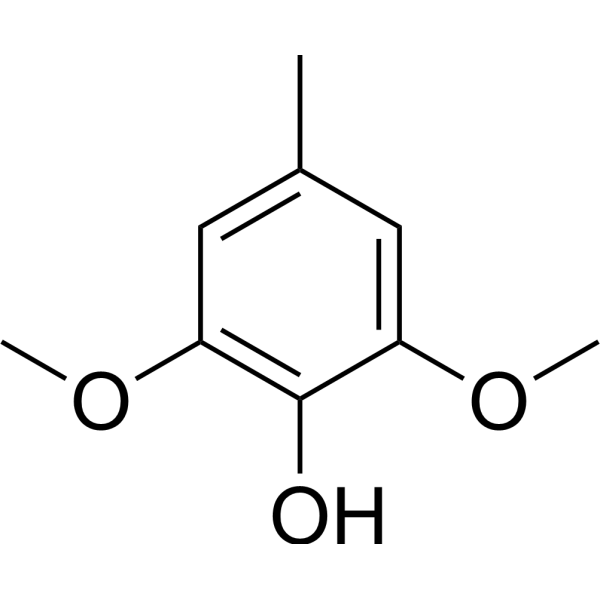
4-Methylsyringol is a phenolic syringol derivative found in a variety of plants. Phenolic compounds are widely present in food and plants and have high synthetic, medicinal, and industrial value. Polyphenols are compounds with various phenolic functions. Natural polyphenols can regulate the cell cycle, induce apoptosis, inhibit cell adhesion, migration, proliferation, and differentiation, and possess a variety of biological activities such as antioxidation, anti-inflammation, anticancer, and antimutagenic effects .
loading...
    loading...
Cat. No.: HY-W355141
CAS No.: 7786-67-6
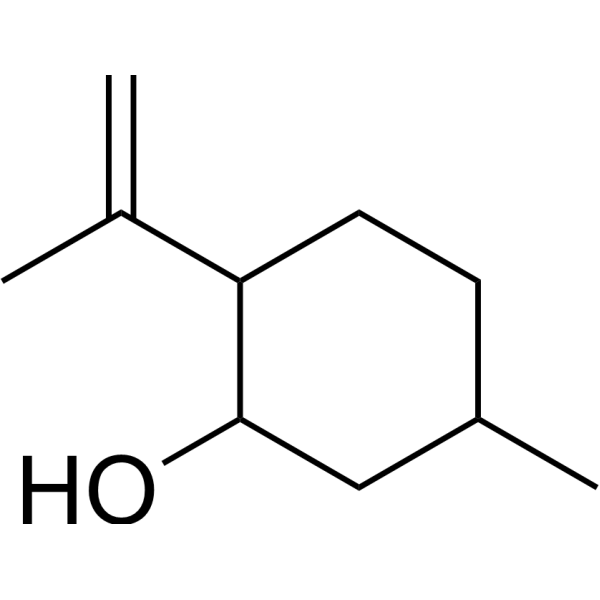
Isopulegol is one of the main components of ECO (Eucalyptus citriodora oil). ECO has antibacterial activity .
loading...
    loading...
Cat. No.: HY-W436777
CAS No.: 3564-98-5
(±)-p-Menthane-3,8-trans-diol is a chemosensory compound with inhibitory activity against germination and growth of lettuce (Lactuca satiua L.). (±)-p-Menthane-3,8-trans-diol can be isolated from lemon eucalyptus trees (E. citriodora) .
loading...
    loading...
Cat. No.: HY-W100715R
CAS No.: 6638-05-7
4-Methylsyringol (Standard) is an analytical standard for 4-Methylsyringol. This product is intended for research and analytical applications. 4-Methylsyringol is a phenolic syringol derivative found in a variety of plants. Phenolic compounds are widely present in food and plants and have high synthetic, medicinal, and industrial value. Polyphenols are compounds with various phenolic functions. Natural polyphenols can regulate the cell cycle, induce apoptosis, inhibit cell adhesion, migration, proliferation, and differentiation, and possess a variety of biological activities such as antioxidation, anti-inflammation, anticancer, and antimutagenic effects .
loading...
    loading...

