18 Results for "

GES-1

" in MedChemExpress (MCE) Product Catalog:
Products (18)

18 Results for "GES-1" in MCE Product Catalog:

3
3 Cited Publications
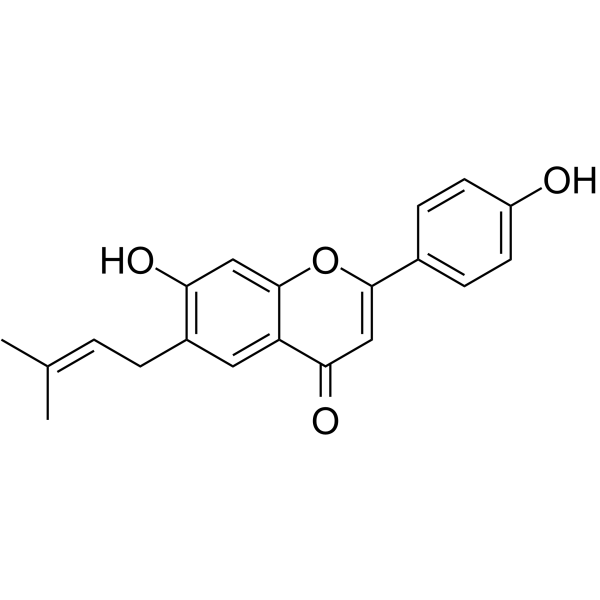
Cat. No.: HY-N4185
CAS No.: 61153-77-3
Licoflavone A is an orally active PTP1B/VEGFR-2 inhibitor, with an IC50 of 54.5 μM against PTP1B, an IC50 of 14.36 μM and a Kd of 142.38 nM against human VEGFR-2. Licoflavone A blocks the PI3K/AKT and MEK/ERK signaling pathways. Licoflavone A induces G1 phase cell cycle arrest, apoptosis via the intrinsic mitochondrial pathway (apoptosis), and inhibits migration, invasion and epithelial-mesenchymal transition (EMT) of gastric cancer cells. Licoflavone A inhibits the proliferation of gastric cancer cells in vitro and in xenograft models. Licoflavone A reduces the expression levels of HIF-1α, GLUT1, LDHA, PKM2 and HK2 in hypoxic gastric cancer cells, decreases glucose uptake and suppresses glycolysis. Licoflavone A can be used in research related to gastric cancer, type 2 diabetes and obesity [1] .
loading...
    loading...
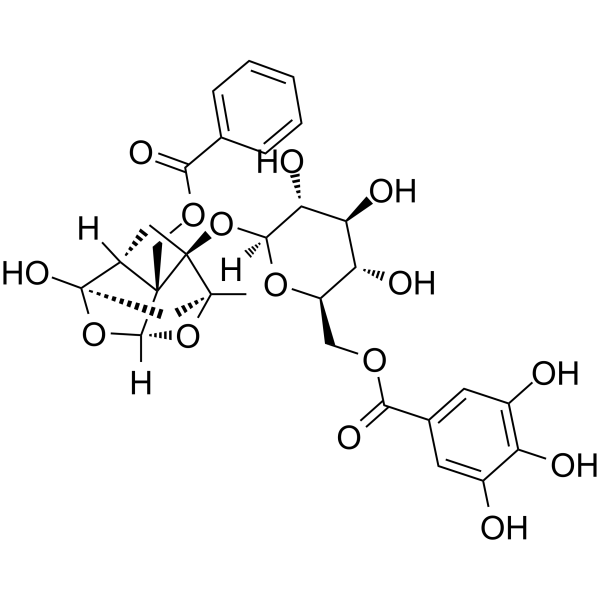
Cat. No.: HY-N5048
CAS No.: 122965-41-7
Synonyms: 6'-O-Galloyl paeoniflorin
Galloylpaeoniflorin (6'-O-Galloyl paeoniflorin) is an orally active galloylated derivative of Paeoniflorin (HY-N0293) found in peony roots with various anti-inflammatory and antioxidant activities. Galloylpaeoniflorin suppresses RANKL-induced activation of ERK, JNK, c-Fos, c-Jun, and NFATc1, and reduces osteoclast-specific gene expression. Galloylpaeoniflorin activates Nrf2 and PI3K/Akt pathways, inhibits NF-κB activation, and scavenges ROS to reduce oxidative DNA, lipid, and protein damage. Galloylpaeoniflorin attenuates neuroinflammation, inhibits apoptosis, reduces Helicobacter pylori-induced gastric mucosa injury and UVB-induced cell damage. Galloylpaeoniflorin can be used for the research of osteoporosis, gastritis, ischemic stroke and skin diseases [1] .
loading...
    loading...
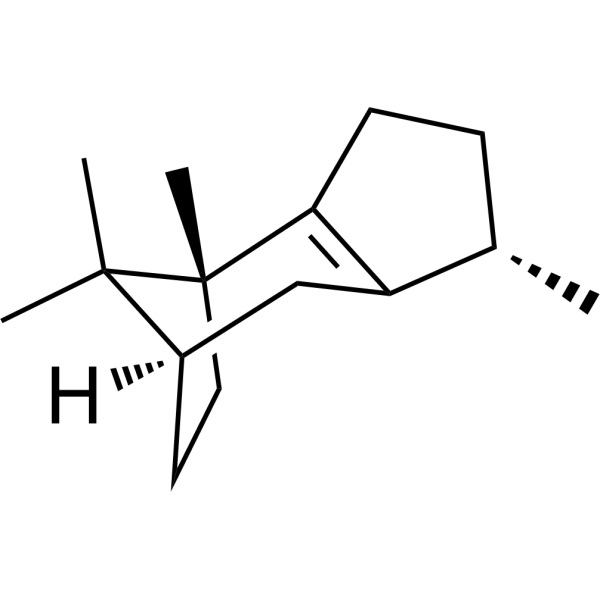
Cat. No.: HY-N12378
CAS No.: 514-51-2
β-Patchoulene is an orally active anti-inflammatory, antioxidant, and anti-apoptotic agent. β-Patchoulene inhibits the NF-κB, TLR4, and cAMP/PKA/CREB signaling pathways; activates the Sirt1/Nrf2 and AMPK signaling pathways; and targets Fas/FasL, Caspase-3, ERK1/2, ROCK1/MLC2 for inhibition. β-Patchoulene regulates cytokine secretion, inflammatory cell infiltration, lipid peroxidation, cell polarization, gut microbiota, and lipid metabolism, restores barrier function, mitochondrial function, and cell viability, and exhibits repellent activity against Spodoptera exigua larvae. β-Patchoulene can be used in research related to various inflammatory, ischemic, fibrosis-associated diseases, as well as hepatocellular carcinoma [1] .
loading...
    loading...
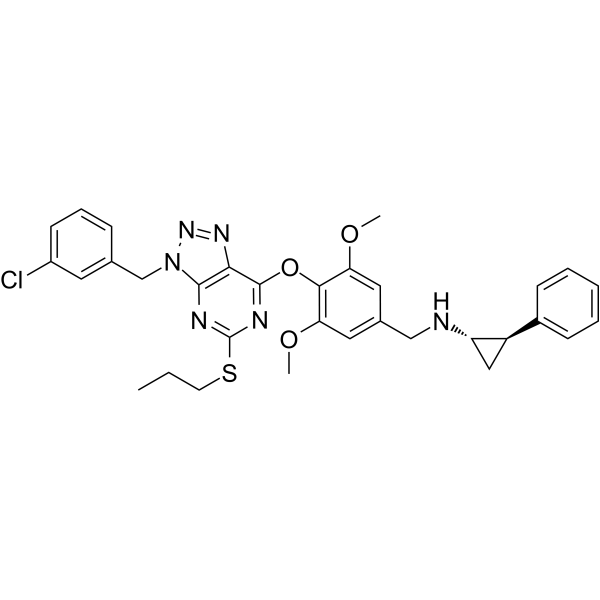
Cat. No.: HY-170937
CAS No.: 2998940-98-8
Urease-IN-20 (compound XBP2) is an inhibitor of Helicobacter pylori (H. pylori). Urease-IN-20 inhibits H. pylori with an IC50 of 0.14 μM. Urease-IN-20 reduces cell Apoptosis and decreases ROS and γH2AX in GES-1 cells infected with H. pylori. Urease-IN-20 exhibits significant gastric mucosal protective effects. Urease-IN-20 shows the potential for H. pylori research [1].
loading...
    loading...
Cat. No.: HY-176237
CAS No.: 3077970-44-3
Target:  

NAMPT Apoptosis

Research Areas:  

Cancer

Nampt-IN-16 (Compound 9a) is an orally active NAMPT inhibitor with an IC50 of 0.15 μM. Nampt-IN-16 can reduce intracellular NAD + and ATP levels. Nampt-IN-16 can inhibit the proliferation, migration, and invasion, induce cell cycle arrest and apoptosis, and alter cellular metabolism of gastric cancer cells. Nampt-IN-16 can be used in the research of tumors such as gastric cancer [1].
loading...
    loading...
Cat. No.: HY-149968
CAS No.: 2911585-60-7
Research Areas:  

Cancer

LSD1-IN-25 (Compound 9j) is a potent, selective and orally active LSD1 inhibitor with an IC50 of 46 nM (Ki = 30.3 nM). LSD1-IN-25 induces cancer cell apoptosis [1].
loading...
    loading...
Cat. No.: HY-126420
CAS No.: 57685-46-8
Purity:  ≥99.0%
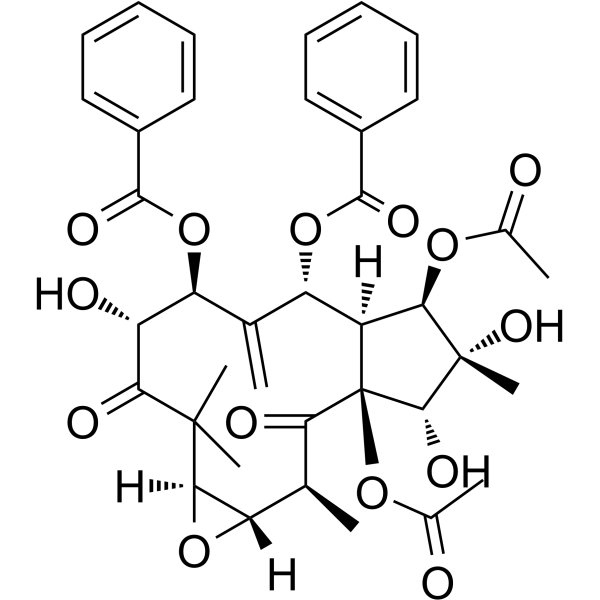
Kansuinine B is a natural diterpenoid compound with anti-inflammatory, anti-cancer and anti-viral activities, which can be isolated from the roots of Euphorbia kansui. Kansuinine B induces sustained ERK1/2 activation, inhibits IL-6-induced Stat3 activation and tyrosine phosphorylation, and enhances serine phosphorylation of Stat3. Kansuinine B negatively regulates the IL-6 signaling pathway by upregulating the expression of SOCS-3. Kansuinine B promotes the proliferation of mouse splenic lymphocytes in vitro and stimulates rat peritoneal macrophages to produce NO. Kansuinine B can be used in studies related to liver cancer and COVID-19 [1] .
loading...
    loading...
Cat. No.: HY-N7161
CAS No.: 466663-11-6
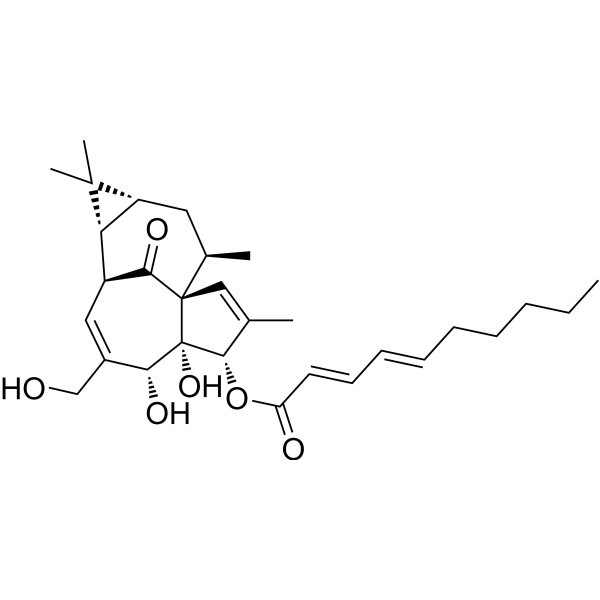
3-O-(2'E,4'E-Decadienoyl)-ingenol is a natural diterpenoid that shows cytotoxicity against human normal cell lines L-O2 and GES-1, with IC50s of 8.22 μM and 6.67 μM, respectively [1].
loading...
    loading...
Cat. No.: HY-175779
Research Areas:  

Cancer

TDP1-IN-4 (Compound 33) is a Tyrosyl-DNA phosphodiesterase 1 (TDP1) inhibitor with an IC50 of 0.90  μM. TDP1-IN-4 has a strong synergistic effect with Camptothecin (HY-16560) in SK-Mel-2 cells, but not in cancer cells (A549, HCT-116 and MCF-7 cells) and non-cancerous Ges-1 cells. TDP1-IN-4 can be used for cancer chemotherapy and radiotherapy research [1].
loading...
    loading...
Cat. No.: HY-116578R
CAS No.: 14008-44-7
Synonyms: EXP999 (Standard); RP9965 (Standard)
Metopimazine (Standard) is the analytical standard of Metopimazine. This product is intended for research and analytical applications. Metopimazine (EXP999) is a phenothiazine derivative used to prevent emesis during chemotherapy. Metopimazine belongs to the anti-dopaminergic anti-emetics (ADA) class. Metopimazine can be used for the research of gastroenteritis (GE) .
loading...
    loading...
Cat. No.: HY-149053
CAS No.: 41183-02-2
Target:  

P-glycoprotein

Research Areas:  

Cancer

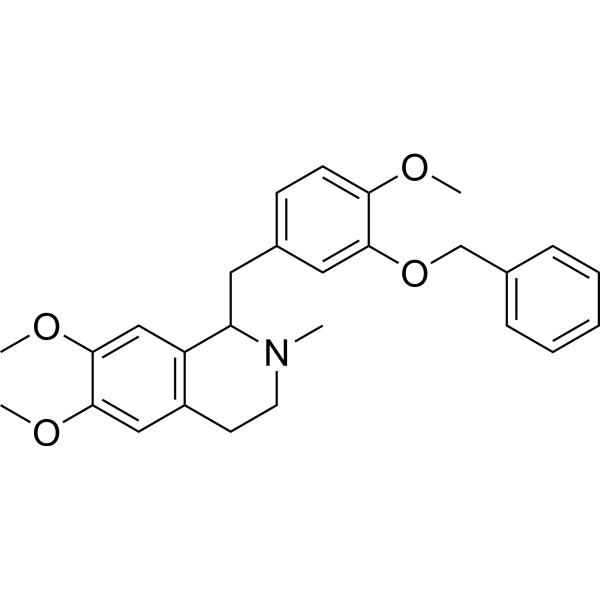
OY-101 is an orally active, potent and specific P-glycoprotein (P-gp) inhibitor. OY-101 can sensitize drug-resistant tumors and effectively reverse tumor multidrug resistance. OY-101 is improvements in water-solubility, cytotoxicity, and reversal activity compared to Tetrandrine (HY-13764) [1].
loading...
    loading...
Cat. No.: HY-175277
Research Areas:  

Inflammation/Immunology

PIM1-IN-8 is a PIM1/p65 pathway inhibitor. PIM1-IN-8 suppresses the expression of α-SMA and collagen I in activated fibroblasts and blocks TGF-β induced migration. PIM1-IN-8 alleviates pulmonary fibrosis in a Bleomycin (BLM) (HY-17565A)-induced pulmonary fibrosis mice model. PIM1-IN-8 can be used for the study of idiopathic pulmonary fibrosis (IPF) [1].
loading...
    loading...
Cat. No.: HY-163923
CAS No.: 2763063-09-6
Target:  

Apoptosis

Research Areas:  

Cancer

Apoptosis inducer 24 (Compound 4) inhibits the proliferation of gastric cancer cells with IC50 of 1.2-4.8 μM. Apoptosis inducer 24 arrests cell cycle at G2/M phase, induces apoptosis in cell BGC-823, and causes mitochondrial dysfunction. Apoptosis inducer 24 exhibits antitumor efficacy in mice, without significant toxicity (LD50 is 91.2 mg/kg) [1].
loading...
    loading...
Cat. No.: HY-183714
CAS No.: 2922798-57-8
Research Areas:  

Cancer

Anticancer agent 325 is an apoptosis/autophagy inducer and anticancer agent. Anticancer agent 325 exhibits cytotoxic activity against gastric cancer cells, with no significant effect on healthy gastric epithelial cells. Anticancer agent 325 enhances the expression of activated/cleaved Caspase-3 to promote apoptosis. Anticancer agent 325 also enhances the cleavage of PARP, a downstream marker of apoptosis, promotes LC3B lipidation, and activates autophagy. Anticancer agent 325 can be used in the research of gastric cancer [1].
loading...
    loading...
Cat. No.: HY-183274
CAS No.: 3068830-45-2
Research Areas:  

Cancer

Nur77 modulator 5 is a Nur77 modulator. Nur77 modulator 5 induces lysosomal dysfunction, impaired autophagic flux, and apoptosis with increased PARP cleavage, TUNEL positivity, and Annexin V/PI staining. Nur77 modulator 5 can be used for the research of gastric cancer [1].
loading...
    loading...
Cat. No.: HY-181863
Research Areas:  

Cancer

Nampt-IN-18 (Compound Q24) is an orally active NAMPT inhibitor with an IC50 of 8.0 nM against hNAMPT. Nampt-IN-18 inhibits NAMPT enzymatic activity. Nampt-IN-18 inhibits DNA synthesis and induces Apoptosis. Nampt-IN-18 exhibits anticancer activity against gastric cancer and colorectal cancer. Nampt-IN-18 can be used for the research of gastrointestinal cancers [1].
loading...
    loading...
Cat. No.: HY-120913
CAS No.: 1243184-62-4
AMPK activator 20 is an α1-selective AMPK activator. AMPK activator 20 inhibits Helicobacter pylori-induced ROS production. AMPK activator 20 induces AMPK-dependent expression of Heme oxygenase-1. AMPK activator 20 suppresses Helicobacter pylori-induced Apoptosis. AMPK activator 20 exerts protective activity against Helicobacter pylori-induced cytotoxicity via an AMPK-dependent pathway. AMPK activator 20 is applicable to research related to Helicobacter pylori infection and gastric diseases [1].
loading...
    loading...
Cat. No.: HY-181578
CAS No.: 3077970-78-3
Target:  

NAMPT Apoptosis

Research Areas:  

Cancer

Nampt-IN-17 is an selective orally active NAMPT inhibitor with a human NAMPT IC50 of 17 nM and Ki of 25.9 nM. Nampt-IN-17 depletes intracellular NAD + and ATP, disrupts mitochondrial membrane potential, suppresses cell proliferation, self-renewal, invasion, and migration, induces cell-cycle arrest and apoptosis. Nampt-IN-17 exhibits selective activity against NAPRT-deficient gastric cancer cells. Nampt-IN-17 can be used for the research of NAPRT-deficient gastric cancer [1].
loading...
    loading...
  • 1

